
You Are Here
You’re a surgical resident. Maybe PGY2 or PGY3. You just stared at a positive pregnancy test in your tiny bathroom between night floats, and your first clear thought was not “baby” or “crib.”
It was: “What is this going to do to my case numbers?”
You know the politics. You’ve heard the whispers about “she was out a ton” or “his case volume took a hit after parental leave.” You’ve seen seniors quietly redo rotations after a health issue. You’ve also heard the supposedly reassuring line: “Family comes first, we’ll make it work.” Right before someone side-eyed the ACGME minimums.
So you’re stuck in the tension between two true things:
- You want to protect your pregnancy and your health.
- You also want to graduate a competent surgeon who is not short 100 cases.
Let’s walk through what to do if you’re pregnant (or planning to be) during surgical training and you care very much about preserving your operative experience—without pretending you’re a robot who doesn’t get tired, sick, or high-risk.
Step 1: Get Clear On Your Real Numbers Early
Before you talk to anyone, get your own data straight. Not vibes. Numbers.
Pull your current ACGME case log and ask yourself three questions:
- Am I already on track, ahead, or behind for my PGY level?
- Which categories are thin? (Major bowel? Endoscopy? Laparoscopy? Trauma?)
- What rotations ahead of me are “workhorse operative” vs “scut-heavy, low-op”?
If you’re mid-residency (say PGY2-3), you can roughly project your volume.
| PGY Level | Approx Total Cases by End of Year | Notes |
|---|---|---|
| PGY1 | 100–200 | Mostly minor and assist cases |
| PGY2 | 200–350 | More lap appendectomies, choles, basic cases |
| PGY3 | 350–600 | Increasingly primary surgeon on bread-and-butter |
| PGY4 | 600–900 | Complex cases, more autonomy |
| PGY5 | 900–1100+ | Chief-level, leading cases |
You don’t need exact perfection here. You just need to know:
- Are you fragile (barely on track)?
- Or do you have cushion (already ahead in big categories)?
Because that will absolutely change how aggressive you need to be about protecting certain rotations and building makeup time.
Step 2: Timing and Disclosure – Strategy, Not Guilt
You don’t need to announce your pregnancy the minute you see two lines. But you also can’t treat this like a secret all the way to third trimester and expect your schedule and case volume to magically hold up.
The realistic compromise:
- Internally (your planning): start immediately.
- Officially (to program leadership): typically sometime after first trimester viability and before your schedule becomes impossible to adjust without screwing others.
If you’re on a high-yield rotation (say, trauma or transplant) when you find out, my advice is: do not rush to give that up unless there’s a real medical reason. Early pregnancy is often physically doable; later pregnancy plus 12-hour cases and nights gets much harder for many people.
The key sequence:
- Confirm the pregnancy and get an estimated due date.
- Pull your block schedule for the remainder of the year.
- Identify:
- High-yield operative rotations.
- Low-yield consult/ICU/clinic months.
- Mark what months you’re likely to:
- Need leave.
- Be third-trimester (often more fatigue/physical limitations).
- Be back postpartum.
You want to walk into the program director’s office not as a problem, but with a draft plan in hand.
Step 3: The Conversation With Leadership – What To Actually Say
You will likely have to talk to:
- Your program director (PD)
- Possibly your associate PD or chief residents for scheduling
- GME/HR for formal leave details
Approach the PD meeting like this:
Lead with facts, not apologies
“I’m pregnant, my due date is X. I’m committed to graduating on time with full case competency and also taking medically appropriate leave. I’ve looked at our schedule and my case logs, and I have some concrete ideas to make this work.”Lay out your current case volume
Be specific. “I’m currently at 420 total cases as a PGY3, strong in lap chole/appys, weaker in endoscopy and complex foregut.” It signals you’re serious about being a surgeon, not checking out.Present a proposed scheduling framework (not demands)
Example:- “If possible, I would like to keep my upcoming trauma and acute care surgery blocks before the third trimester. I’m okay with having clinic/consult-heavy or ICU blocks later in pregnancy when standing for long cases might be harder.”
- “If there’s flexibility, I’d like my leave to overlap with a lower-op block (like X rotation) and plan to make that up with an extra month of operative time as a senior.”
Ask explicitly about case log expectations and leave policy
“We need to make sure I still meet ACGME case minimums and our program’s expectations. What have you seen work well for previous residents?”
This is not being “extra.” This is what a serious surgeon does: anticipates, plans, and collaborates.
Step 4: Build a Protection Plan for Key Rotations
Your rotation calendar during pregnancy divides into three functional zones:
- High-yield operative months you want to protect.
- Low-yield or more flexible months that can be used for:
- Late pregnancy when you’re more limited.
- Leave overlap.
- Postpartum re-entry.
- Months after your return where you might want extra OR time.
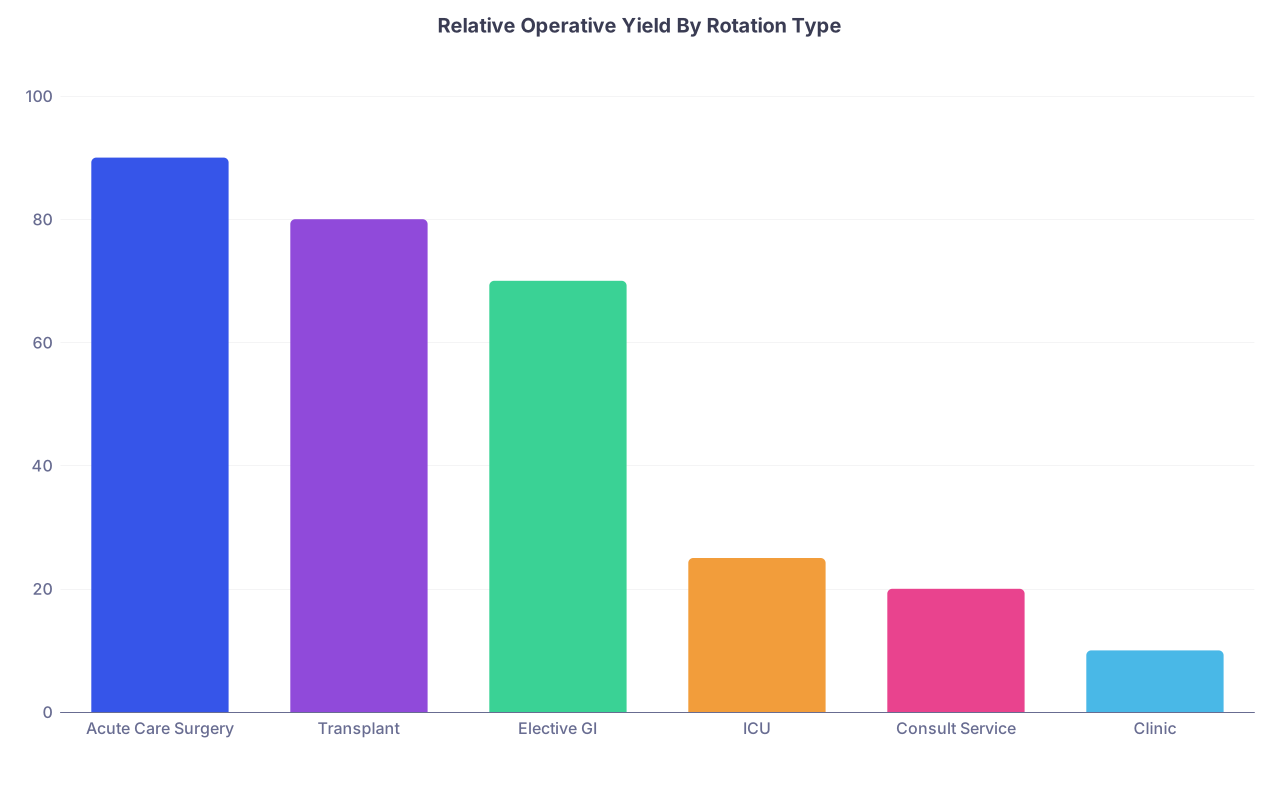
| Category | Value |
|---|---|
| Acute Care Surgery | 90 |
| Transplant | 80 |
| Elective GI | 70 |
| ICU | 25 |
| Consult Service | 20 |
| Clinic | 10 |
Some practical principles:
- Don’t voluntarily give up your highest-yield months early in pregnancy if you’re physically doing okay. You may be grateful later when postpartum fatigue + childcare chaos hit.
- If you must move a high-op rotation away from third trimester or right after expected delivery, try to reschedule it to senior years rather than lose it outright.
- Document informal agreements. After the meeting, send a short email to PD: “To summarize what we discussed…” so there’s a record.
And if your chiefs are good, they’ll help protect your big-OR months instead of dumping you on “ward from hell” in the last weeks you can still operate comfortably.
Step 5: Adjust How You Operate – Without Silently Disappearing
Pregnancy changes your physical limits. That doesn’t mean you have to take yourself out of the game more than necessary.
Here’s what actually helps maintain realistic case volume:
Be honest with yourself about your stamina
If you’re 26 weeks and can’t stand comfortably through a 9-hour Whipple, fine. But maybe you can still bang out 4 lap choles and an appy on the same day. Volume matters. Not every case needs to be a marathon.Proactively trade tasks within your team
Common pattern that works:- “I’ll take the three add-on lap appys and gallbladders this afternoon if you’re okay taking the 8-hour open liver.” Your coresident might love the big case; you get multiple bread-and-butter cases without dying on your feet.
Be deliberate with your role in the OR
Especially in 2nd–3rd trimester:- Primary on shorter, medium-complexity cases.
- Assist on the behemoths when you’re physically limited but still want exposure.
- Skip the 3-hour wound vac change at 2 AM if you’re having contractions or dizziness. That’s not heroics; that’s stupidity.
Communicate boundaries early in the day, not mid-case
Tell the attending:
“I’m in my third trimester; I’m still eager to operate. I can do full days, but if we have any marathon cases I may need to bow out or switch off once we’re in the closing phase.”
Most reasonable attendings will respect that if you show up prepared, scrubbed, and engaged.
Step 6: Plan for Leave Without Bleeding Cases Unnecessarily
You’re entitled to leave (length depends on program, state, institutional policies). The tension is: every week out is a week not generating cases.
Rather than arguing feelings, work with the math.
- Typical general surgery residents add 150–250 cases per year (very rough).
- That’s about 12–20 cases per month on average, but high-yield rotations can be 40+ and clinic months 5.
So a 6–8 week leave does not automatically crater your career if you’re smart about when it falls.
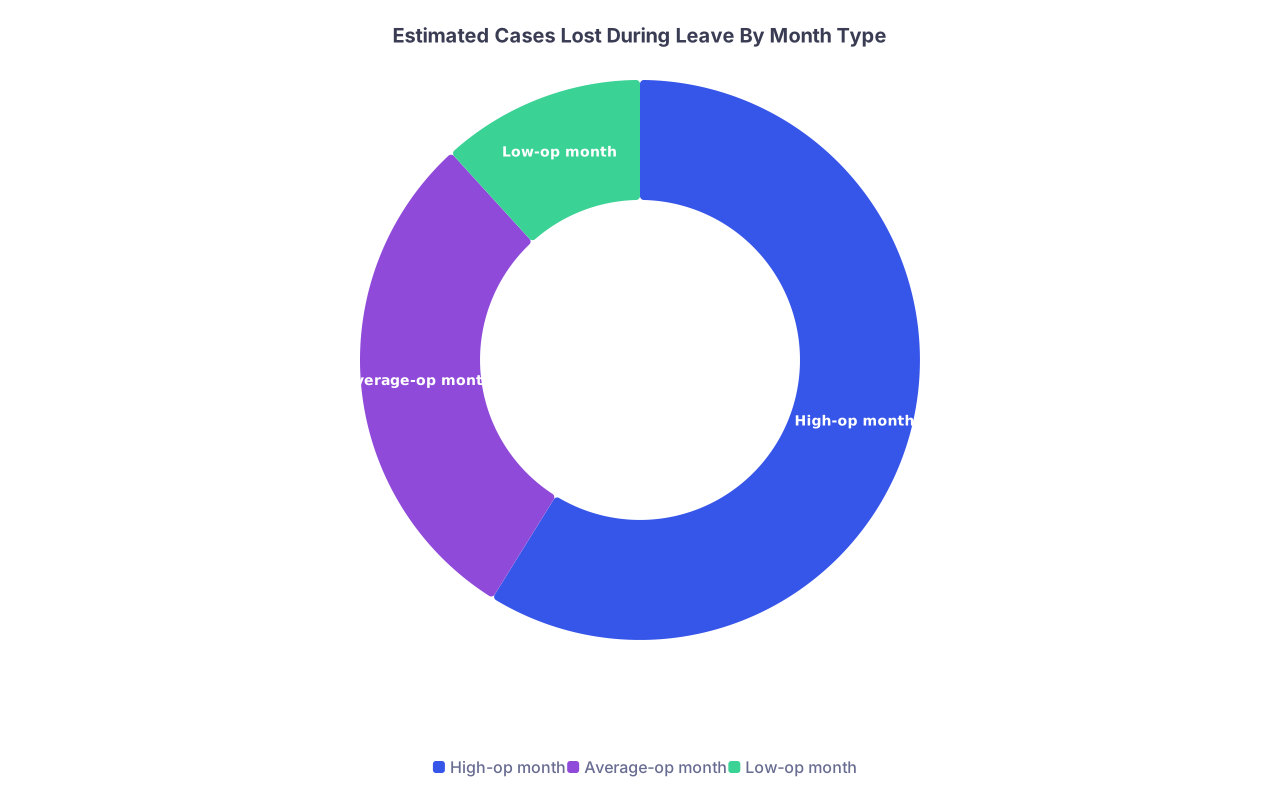
| Category | Value |
|---|---|
| High-op month | 40 |
| Average-op month | 20 |
| Low-op month | 8 |
Three concrete tips:
Try to align leave with lower-op blocks
If your due date is mid-ICU month that’s light on procedures for residents, that’s far less harmful to your logs than missing all of trauma in July.Negotiate makeup blocks rather than endless “extra calls”
“I’d like to add an additional month of acute care surgery as a PGY4 to balance the cases I’ll miss in my PGY3 trauma block.”Don’t martyr yourself by cutting leave so short you’re unsafe
The first weeks postpartum are not the moment to be managing bleeding anastomoses with zero sleep, torn perineum, and mastitis. I’ve seen residents try. It’s ugly. You are still a surgeon if you take reasonable leave.
Step 7: The Postpartum Reality – Regaining Volume Without Burning Out
Coming back is often harder than being pregnant. You’ve got:
- Physical healing
- Pumping or feeding
- Sleep deprivation
- Guilt from all sides
And you still care about your case log.
Here’s how to prevent a slow bleed of opportunities when you come back:
Use the first 1–2 months as a recalibration phase
Ask for:- An operative but not totally insane service (elective GI, bread-and-butter general).
- A predictable call schedule if possible (say, not trauma nights right away).
Be loud about wanting to operate
You do not want the unspoken “we’ll protect her, she just had a baby” turning into “we subtly cut her out of big cases.” You need to say:
“I’m back, I’m ready to operate, and I want to keep pushing my autonomy.”Pumping logistics – decide how you’ll handle OR time
Reality: leaving mid-case every 2 hours is not going to work. But you can:- Cluster pumping around cases.
- Choose shorter cases on days you’re particularly full/uncomfortable.
- Be honest with your attending about when you may need a 15-minute break between cases.
The goal isn’t perfection; it’s “sustainable enough that I don’t bail out of ORs constantly for months.”
Step 8: Backup Plans if Your Case Volume Really Does Take a Hit
Sometimes, despite your planning, you’re short. Complications, bed crunches, schedule changes, baby in the NICU, your own health—life happens.
Let me be blunt: if your case log is meaningfully low, you should not just “hope” it’s fine. You need a correction plan.
Options that actually work:
Add a focused extra operative month
“I’m 40 endoscopies short of where I should be. Can I do an elective senior endoscopy rotation?”Use electives strategically
Rather than a research elective as a senior, do another acute care surgery or subspecialty block heavy in the cases you’re missing.Negotiate timing of graduation/fellowship start only if truly necessary
Rare, but if you’re seriously deficient (combination of complex pregnancy and major leave), an extra few months of training can be the difference between marginal competence and strong readiness. That’s not failure; that’s professionalism.
The key is to catch the deficit by PGY4 latest, not in May of chief year when it’s too late.
A Quick Visual: Planning Around Pregnancy in Training
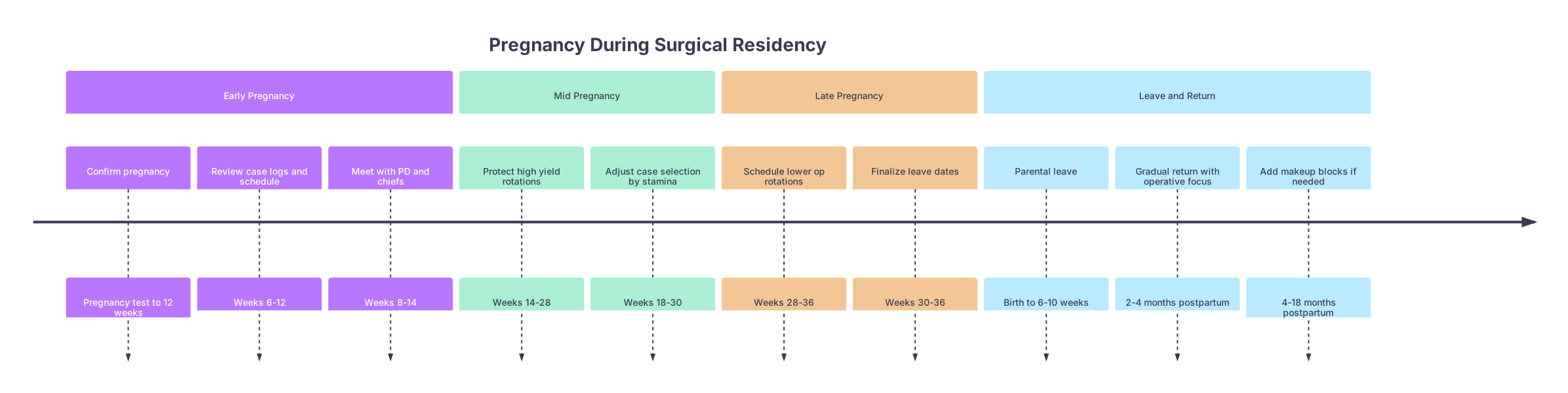
| Period | Event |
|---|---|
| Early Pregnancy - Confirm pregnancy | Pregnancy test to 12 weeks |
| Early Pregnancy - Review case logs and schedule | Weeks 6-12 |
| Early Pregnancy - Meet with PD and chiefs | Weeks 8-14 |
| Mid Pregnancy - Protect high yield rotations | Weeks 14-28 |
| Mid Pregnancy - Adjust case selection by stamina | Weeks 18-30 |
| Late Pregnancy - Schedule lower op rotations | Weeks 28-36 |
| Late Pregnancy - Finalize leave dates | Weeks 30-36 |
| Leave and Return - Parental leave | Birth to 6-10 weeks |
| Leave and Return - Gradual return with operative focus | 2-4 months postpartum |
| Leave and Return - Add makeup blocks if needed | 4-18 months postpartum |
Common Pitfalls That Quietly Kill Case Volume
I’ve watched residents fall into the same traps over and over:
- Handing away too many cases in early pregnancy “just in case” and then being furious later when they’re behind.
- Never actually pulling their case log and being shocked in PGY5 that they’re under in key categories.
- Letting others decide their schedule completely instead of walking in with a plan.
- Over-correcting postpartum and trying to be super-resident + super-parent and burning out so badly their performance tanks.
You’re allowed to be strategic. That’s not selfish; that’s how you protect your training and your future patients.
Small but Powerful Moves You Can Make This Month
- If you’re already pregnant: pull your logs, print your schedule, book the PD meeting. This week.
- If you’re planning pregnancy: cluster high-yield rotations earlier in your planning horizon if you can.
- Start tracking your “must have” case types for your comfort level as a graduating chief. Then make sure your future blocks can realistically supply them.
And if someone tries to guilt you for caring about your case numbers while pregnant, that person either:
- Forgot what training actually requires, or
- Likes the idea of “supporting pregnancy” more than the work of building realistic accommodations.
You’re not wrong to care about both your baby and your hands.
FAQ (Exactly 5 Questions)
1. Should I delay pregnancy until after residency to avoid hurting my case volume?
Not automatically. For some people, yes—especially in ultra-competitive subspecialties or if you already know you have fertility issues and need specific timing. But waiting “just because” residency is busy is overrated advice. Many residents carry a normal or even strong case log through pregnancy with good planning. The real question is your age, fertility, partner situation, and how rigid your program is. I’ve seen concrete, proactive planning matter far more than theoretical ideal timing.
2. How much leave can I realistically take without risking my graduation or board eligibility?
You need to know your program’s and ABMS board’s specific limits (often framed as maximum time away per year and total across training). In many surgery programs, 6–8 weeks of leave can be absorbed without delaying graduation, especially if it overlaps a lower-op block and you adjust future rotations. More than that may still be doable but could require adding time to training. Ask GME for the exact numbers, then work backward.
3. What if my PD is not supportive and implies my pregnancy is “hurting the program”?
Document everything. After each meeting, send a brief summary email. Be calm but direct about wanting to meet case minimums and asking for options. Loop in GME or a faculty mentor you trust if you’re getting subtly or overtly penalized beyond reason. There’s a difference between honest constraints (“We literally don’t have another person to cover that month”) and punitive behavior (“You chose to be pregnant, so you lose key rotations”). If it’s the latter, escalate.
4. Is it reasonable to ask coresidents to trade cases or calls to help me protect volume?
Yes—if you’re willing to trade back in ways that are fair. For example, you might say, “I’ll take your weekend call once I’m past third trimester if you let me keep the lap cases this week.” It becomes a problem if everything flows one direction for months. Be transparent, keep trades roughly balanced over time, and don’t play the pregnancy card for every inconvenience. Most residents are fine helping when they feel respected, not exploited.
5. Will being pregnant or having a lower case volume hurt my fellowship chances?
Programs care about two things: your competence and your reputation. If your overall case log is solid and your letters say you’re technically strong and reliable, having taken maternity leave is not a red flag. What will hurt you is showing up underprepared, with obvious skills gaps, and a vague story about “life stuff.” Protect your training now, and be ready to explain succinctly on interviews: “I had a child during PGY3, we adjusted my schedule, I added an extra acute care month as a senior, and my final case volume and autonomy are fully in line with our grads.” That’s not a liability; that’s resilience.
Key points to remember:
- Treat pregnancy in residency like a complex, high-stakes scheduling problem: gather data, plan early, and adjust.
- Protect high-yield operative time before and after leave, and use low-op blocks and electives for flexibility and makeup.
- If your numbers are truly low, don’t hide it—build a concrete correction plan with your PD before it’s too late.