
Most residents are chasing the wrong cases—and fellowship directors can tell in five minutes.
You do not impress a fellowship director by bragging about “doing 1,000 lap choles.” You impress them with the right cases, done the right way, with evidence that you understood complexity, owned responsibility, and actually improved over time.
Let me lay this out specialty by specialty and then translate it into what really matters when someone reads your case log and letters.
The Core Principle: Complexity + Ownership > Raw Volume
Fellowship directors are not counting your cases like RVUs. They are asking three questions:
- Did this resident seek out and handle complex work, not just routine bread-and-butter?
- Did they have real responsibility in those cases (primary operator, key portions)?
- Does their experience match what we expect for someone serious about this subspecialty?
They glance at your ACGME log, maybe a CV “selected cases” section, then they read your letters and interview notes. They’re looking for patterns:
- Rising responsibility: assistant → primary → leading complex cases
- Consistency: not 10 random big cases spread over 3 years, but a clear trend
- Judgment: knowing when to operate, when to convert, when to call for help
Now the part you actually care about: which cases carry the most weight.
High-Impact Cases by Fellowship Type
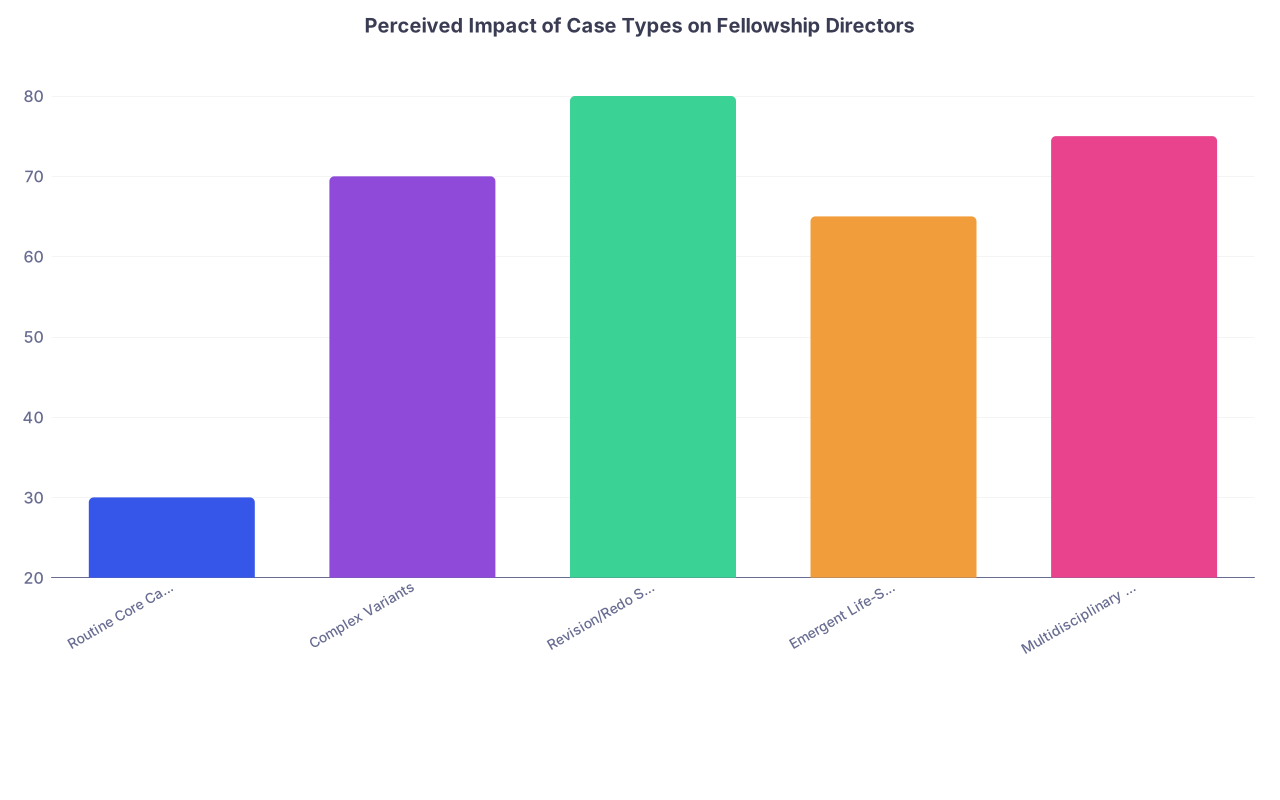
| Category | Value |
|---|---|
| Routine Core Cases | 30 |
| Complex Variants | 70 |
| Revision/Redo Surgery | 80 |
| Emergent Life-Saving Cases | 65 |
| Multidisciplinary Cases | 75 |
1. Surgical Oncology
If you want surg onc, nobody is impressed by your 500 appendectomies.
Cases that get attention:
- Pancreatic resections (especially Whipple / pancreaticoduodenectomy)
- Major hepatic resections (right/left hepatectomy, trisectionectomy, ALPPS)
- Cytoreductive surgery with HIPEC
- Complex gastric, esophageal, retroperitoneal sarcoma resections
- Resections after neoadjuvant chemoradiation with tricky planes
What they really care about:
- Were you first assistant or primary for parts of these, not just retracting?
- Did you participate in pre-op workup and tumor board?
- Can you talk fluently about margins, lymph node harvest, and perioperative oncologic decisions?
If your log shows repeated involvement in Whipples, big liver cases, and CRS-HIPEC, and your letters say “relied on for resection planning and intra-op strategy,” that’s gold.
2. Minimally Invasive / Bariatric
High-volume sleeve gastrectomy and bypass is expected. It’s not what sets you apart.
The cases that move the needle:
- Revisional bariatric surgery (band-to-sleeve, sleeve-to-bypass, complex revisions)
- Advanced foregut: paraesophageal hernia with mesh, redo fundoplication, LINX removal
- Complex MIS colectomies, redo pelvis, reoperative foregut
- Emergency MIS (perforated ulcer repair, gangrenous chole with subtotal, etc.)
They like to see:
- A balanced log: many standard MIS cases plus a subset of difficult ones
- Low conversion rates—but conversion used appropriately, not stubborn heroics
- Experience troubleshooting: dense adhesions, difficult exposures, revisional anatomy
If you can say, “I was primary on 100+ bariatric cases, including 15+ revisional operations,” that reads very differently than “I assisted 250 sleeves.”
3. Colorectal
Colorectal directors are pattern-recognition machines. They know immediately who actually lived in the pelvis.
Standout cases:
- Low anterior resections (LAR) with TME, especially very low anastomosis
- Intersphincteric resections, coloanal anastomoses, and TaTME (if your program does it)
- Redo pelvic surgery, fistula repairs, IBD with high-complexity abdomen
- Sphincter-saving approaches vs APR for distal rectal cancer
- Complex perianal disease, advancement flaps, complex fistulas
They’re watching for:
- Volume of LAR/TME as primary or key operator
- Experience with stoma creation, closure, and revision
- Comfort with both open and minimally invasive approaches in hostile pelvises
Listing “primary surgeon: low pelvic anastomosis in irradiated field; salvage after leak” in a case discussion impresses more than any sheer number of hemorrhoid bandings.
4. Surgical Critical Care / Trauma
If you’re going for trauma/critical care, fellowship directors want evidence that you weren’t hiding from the trauma bay.
Cases that stand out:
- Exploratory laparotomies for trauma with multi-visceral injury
- Damage control laparotomies, packing, open abdomen management
- Thoracotomy for trauma, resuscitative thoracotomy
- Vascular repairs after trauma (arterial repairs, shunts, ligations)
- ICU procedures coupled with operative management: tracheostomies, ECMO cannulation exposure, complex line placement in unstable patients
They’re impressed by:
- A large number of penetrating and high-acuity blunt trauma cases
- Repeat involvement in the same patient from ED → OR → ICU
- Experience making intra-op decisions under pressure, not just following attending orders
If your chairman writes “they are the one we call at 2 a.m. for the sickest trauma,” that outweighs a middling total hernia count.
5. Vascular Surgery
For vascular, complexity, precision, and continuity matter:
- Open aortic surgery (AAA repair, aorto-bifem bypass, TAAA exposure/assist)
- Complex endovascular aortic repair (EVAR, TEVAR, branched/fenestrated if available)
- Limb salvage: distal bypasses, tibial bypass, complex endovascular limb salvage
- Redo vascular reconstructions, infected grafts, carotid endarterectomy
They look for:
- Direct involvement in planning (imaging review) and execution
- Mix of open and endovascular in challenging anatomies
- Call experience with ruptured aneurysms, acute limb ischemia, and complicated access
You want your log to show you didn’t just balloon some SFA stenoses—you dealt with real limb- and life-threatening problems.
6. HPB / Upper GI
For HPB, “big, risky, unforgiving” is the theme.
High-value cases:
- Whipples, again (yes, they matter in more than one fellowship)
- Major hepatectomies and segmentectomies with complex biliary reconstructions
- Complex biliary surgery: hilar strictures, CBD injuries, revisional biliary surgery
- Gastrectomies with D2 dissections, esophagectomies, revisional foregut
What impresses:
- Multiple complex HPB cases where you were not just “extra hands”
- Comfort with vascular involvement—portal vein resections, major bleeding control
- Understanding of liver remnant, portal vein embolization, staging diagnostics
Being able to walk through a complex Whipple you helped lead—pre-op, intra-op choices (e.g., vein reconstruction vs. abandonment), post-op course—that sticks in a director’s head.
7. Transplant
For transplant, repetition and continuity are everything.
Key cases:
- Deceased donor liver and kidney transplants
- Living donor nephrectomy and transplant (if offered)
- Multi-organ retrievals (liver, kidney, pancreas, sometimes heart-lung involvement)
- Re-transplants, complex reoperations, biliary and vascular complications management
They look for:
- Nights in the donor OR, not just showing up for skin incision
- Participation in pre-transplant selection and post-transplant ICU care
- Handling complications: hepatic artery thrombosis, biliary leaks, delayed graft function
You impress them by demonstrating that you’ve lived the lifestyle and still want it.
8. Pediatric Surgery
Peds fellowship directors want to see a specific pediatric case mix, not just “I like kids.”
High-impact pediatric cases:
- Neonatal cases: NEC, intestinal atresia, malrotation with volvulus, CDH
- Pediatric oncology: Wilms tumor, neuroblastoma, sarcoma resections
- Pediatric thoracic: congenital lung lesions, TEF/EA repairs, mediastinal masses
- Complex abdominal wall defects: gastroschisis, omphalocele
They’re impressed by:
- Real numbers of NICU/OR days, not one or two “interesting” cases
- Logs that separate pediatric work clearly
- Insight into growth, development, fluid management, and kid-specific physiology
The Cases That Do Not Impress (By Themselves)
Let’s be blunt. These are necessary, but not differentiating:
- Hundreds of basic lap choles without mention of acute, gangrenous, or difficult cases
- Endless straightforward inguinal hernias
- Uncomplicated appendectomies
- Routine port placements, simple cyst excisions
Nobody’s offended by them—but they’re background noise. Unless:
- You highlight unusual complexity (e.g., “lap chole in severe cirrhosis, conversion decision reasoning”)
- You connect them to systems improvement (e.g., reduced SSI, ERAS, same-day pathways)
Bread-and-butter cases prove you’re safe. Complex cases prove you’re special.
How Fellowship Directors Actually Judge Your Experience
They rarely say this out loud, but here’s how the evaluation really functions.
| Signal Source | What They Look For |
|---|---|
| ACGME Case Log | Complexity clusters, primary vs assist |
| Letters of Reference | Direct comments on judgment, ownership |
| Interview Discussion | How you talk through 1–2 big cases |
| CV / Case Highlights | Selected key cases and project involvement |
| Training Program Rep | Whether your program is known for that area |

The most impressive profile usually has:
- A visible cluster of relevant complex cases in the subspecialty you’re applying for.
- At least one letter saying some version of: “I trusted them with the hardest cases.”
- A coherent story in your personal statement and interview that links what you did to what you want.
Directors are not expecting full attending-level independence. They are expecting that you leaned into complexity, not away from it.
How to Build an “Impressive” Case Portfolio as a Resident
If you’re early or mid-residency, here’s the practical playbook.

| Step | Description |
|---|---|
| Step 1 | Decide Target Fellowship |
| Step 2 | Identify High Value Case Types |
| Step 3 | Talk to Key Faculty Early |
| Step 4 | Actively Request Complex Cases |
| Step 5 | Track Role and Complexity |
| Step 6 | Develop 3 Signature Cases to Discuss |
| Step 7 | Get Letters That Reference These Cases |
- Decide your likely target by PGY-3 or early PGY-4
- Find out which cases matter most for that field at your institution
- Tell faculty explicitly: “I’m interested in colorectal; I’d like exposure to X, Y, Z cases”
- Show up early, read imaging, know the patient—the usual, but consistently
- Track your key cases with detail: presenting problem, dilemmas, complications, what you learned
- When the time comes, use 1–3 of those as your signature stories in your personal statement and interviews
The resident who can say, “Let me walk you through three cases that shaped how I think as a surgeon” sounds very different from the one who just quotes numbers.
Future Direction: What Will Impress Directors More in the Next 5–10 Years?
It is not just about index operations anymore. Future fellowship directors will increasingly value:
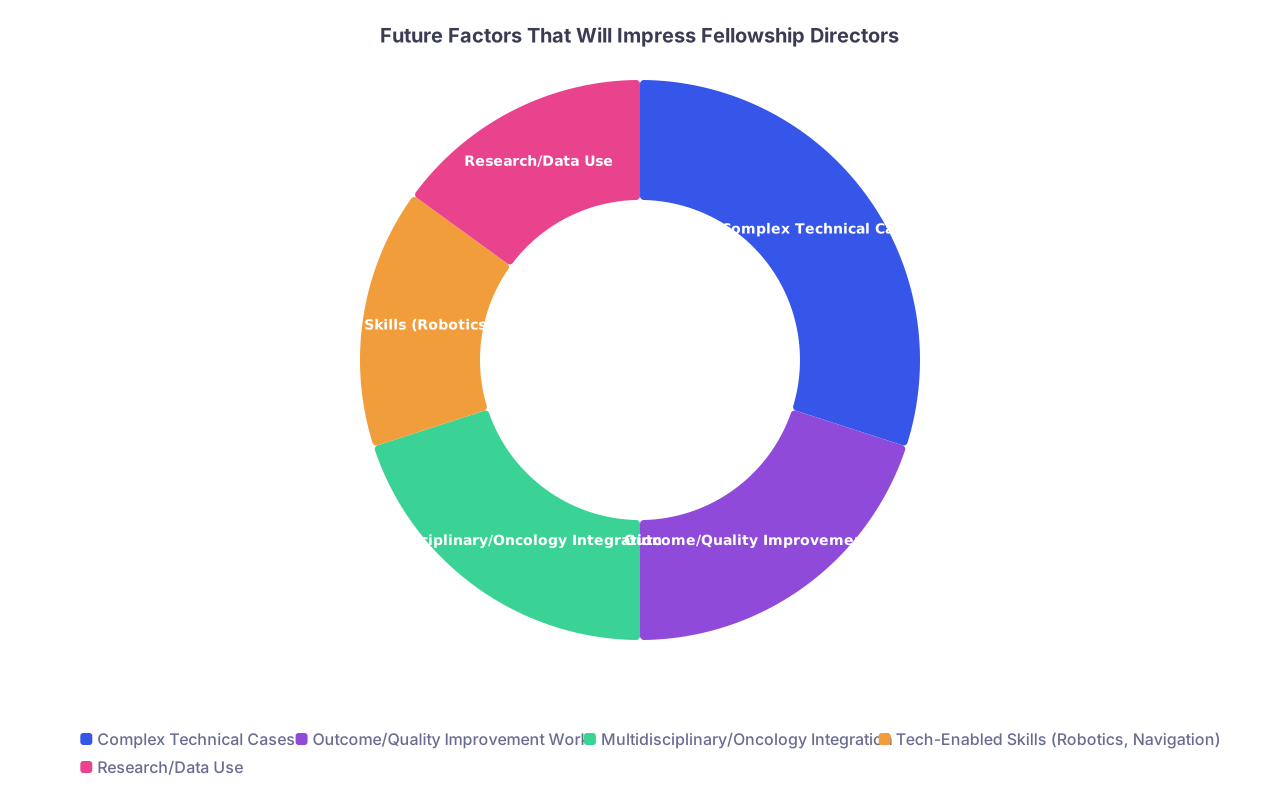
| Category | Value |
|---|---|
| Complex Technical Cases | 30 |
| Outcome/Quality Improvement Work | 20 |
| Multidisciplinary/Oncology Integration | 20 |
| Tech-Enabled Skills (Robotics, Navigation) | 15 |
| Research/Data Use | 15 |
Emerging “bonus points”:
- Robotics and advanced MIS: Being comfortable with console time on complex cases, not just docking
- Image-guided and navigation-assisted surgery: HPB, colorectal, spine, vascular EVAR/TEVAR with fusion imaging
- Perioperative optimization roles: leading ERAS pathways, enhanced discharge planning, prehab for high-risk patients
- Data and outcomes: Using your own institution’s data to modify practice, not just quoting national guidelines
- Multidisciplinary work: Real participation in tumor boards, transplant selection committees, MDT case conferences

The resident who can say, “I helped redesign our approach to complex colorectal resections, and here’s how our leak rate changed,” is signaling they’re ready for the next era of surgery.
How to Present Your Case Experience on Applications
Do not just dump your case numbers and hope someone is impressed. Shape the narrative.
You should:
- Pull out 3–5 “representative” complex cases tied directly to your chosen field
- For each, know:
- The pre-op dilemma
- The key intra-op decision points
- The complication (there should be at least one across your set) and what changed in your practice
- Make sure your letter writers know these cases and can reference them
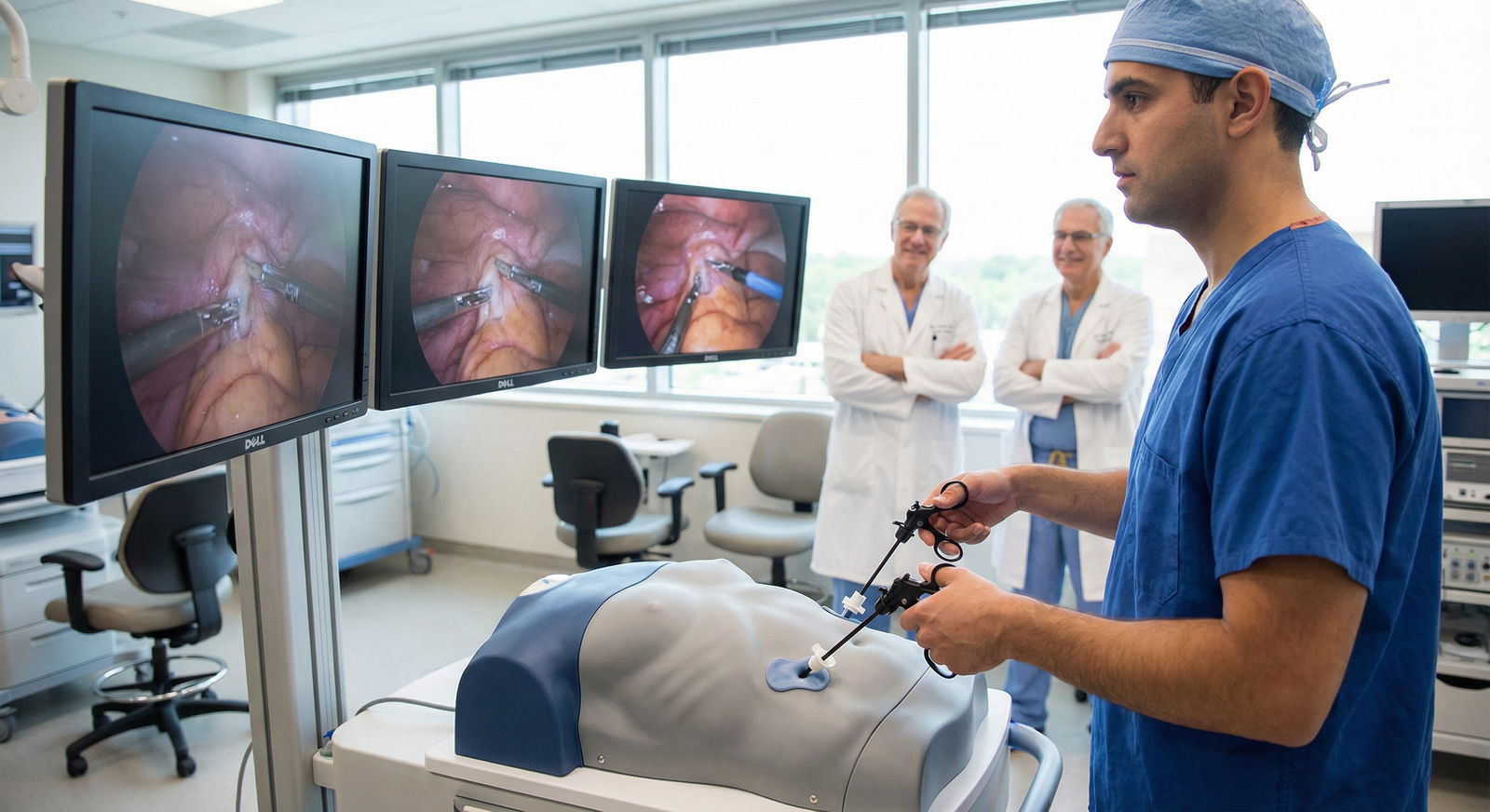
If your CV has a small subsection called “Selected Complex Cases – Relevant to Colorectal Fellowship,” and each bullet shows responsibility and reflection, that’s exactly the kind of detail serious programs appreciate.
FAQs
1. Does total case volume still matter, or is it all about complexity now?
Total volume matters up to a point. Directors want to know you’ve done enough cases to be safe and efficient with basic operations. But beyond baseline competency, extra volume in simple cases adds very little. Ten well-documented complex cases in your desired field can outweigh 200 more routine procedures.
2. How many “impressive” cases do I need for a competitive fellowship?
You do not need dozens. If you can point to:
- 10–20 clearly relevant complex cases in that subspecialty, and
- 3–5 of them where you had major responsibility and can recall details
you’re in good shape. Quality and depth of involvement beat raw count.
3. I’m at a small program with fewer complex cases. Am I doomed?
No. Directors know program variability. What matters is that you:
- Maximize the complex cases you do get
- Show clear ownership and learning from them
- Supplement with away rotations, electives, or research in your target field
A resident from a smaller program with clear initiative can beat a resident from a big-name place who just floated along.
4. Should I chase rare “zebra” cases to seem impressive?
Not if it means neglecting foundational operations or being unsafe. One or two unusual cases (e.g., complex sarcoma, rare congenital anomaly) can be good stories, but directors care more about consistent exposure to the common complex problems in their field than one exotic case you saw once.
5. How do I prove I was more than a retractor holder in big cases?
You prove it through:
- Specifics in your interview case discussions
- Letters saying you performed key portions or led major components
- Your role documented in operative notes at times (when appropriate)
Vague phrases like “assisted with many Whipples” raise suspicion. Concrete statements like “performed vascular anastomosis in X/Y cases” carry more weight.
6. Do complication cases hurt me or help me?
Handled honestly, they help you. Fellowship directors expect you’ve seen—and participated in—the management of complications. If you can describe a complication, take appropriate responsibility, and explain how it changed your approach, that signals maturity. Pretending everything you did was perfect is a fast way to lose credibility.
7. When should I start focusing my case mix toward a specific fellowship?
By PGY-3, you should have a tentative direction. That’s when you start:
- Requesting particular rotations
- Asking to be assigned to relevant complex cases
- Building relationships with faculty in that field
Waiting until late PGY-4 or PGY-5 is possible, but you’ll have fewer high-yield cases and less time to get strong, targeted letters.
Remember three things: fellowship directors care most about the right complex cases, your real responsibility in those operations, and your ability to think and grow from them. Shape your training toward that, and your case log will speak for itself.