
The biggest mistake MS2s make in the spring is pretending they can “do both” — ace classes and casually ramp up for Step 1. You can’t. At some point, you must flip into Step mode. And the timing of that flip matters more than you think.
I’ll walk you through exactly when that switch should happen and what you should be doing week by week as spring unfolds.
Big Picture: Your Spring Step 1 Timeline
At this point you should stop guessing and anchor your entire semester around one date: your actual Step 1 test date. Everything works backward from that.
Here’s the typical structure if you’re taking Step 1 late May–late June (most schools):
| Timeframe | Primary Focus |
|---|---|
| January – mid February | Classes first, light Step |
| Mid February – mid March | 50/50 classes + Step |
| Mid March – last day of MS2 | 70/30 Step + classes |
| Dedicated (4–8 weeks) | 100% Step 1 |
That’s the default. You’ll shift earlier if:
- Your class exams are easy / low stakes
- You’ve already done a strong UWorld pass
- You’re targeting very competitive specialties and want a rock-solid foundation before rotations
You’ll shift a bit later if:
- Your school has brutal cumulative spring exams
- You’re barely holding your class rank / pass status
- Your Step date is very late (July/August)
Let’s stop being abstract. Time to go month by month, then week by week.
January of MS2: Keep It Mostly Class-Focused
At this point you should not be “in Step mode” yet. You’re in class-first with Step awareness.
Week 1–2 of January: Stabilize Classes, Light Touch on Step
Your goals:
- Lock down your class schedule
- Find your high-yield study rhythm
- Reintroduce Step-style questions
What you should do each week:
- Classes (primary):
- Attend or stream all required sessions
- Same-day review of lectures (do not build a 3-week backlog; I’ve watched that kill Step prep every year)
- Step (secondary, 10–15% of time):
- 10–15 UWorld questions/day only in systems you’re currently studying
- Start Anki or your school’s deck if you haven’t already
- Add First Aid/Boards & Beyond/Sketchy references only where they overlap with current blocks
You are not yet doing:
- 40-question timed blocks
- Full-length NBME practice tests
- All-systems random questions
Late January: Run a Self-Check
At this point you should know:
- Are you passing classes comfortably?
- Are you already drowning in content?
If classes are under control:
- Increase to 15–20 UWorld questions/day, still system-based
- Begin one weekly Step “mini-block”: 20 questions timed, random, just to feel the exam style
If you’re struggling:
- Fix your class study plan now. If you barely pass spring blocks, you’ll get shoved into remediation, which detonates your Step timeline.
February: Start the Shift Toward Step
February is when the real transition begins. If you wait until April, you’re late.
Early February (Weeks 1–2): Move to 50/50 Planning
At this point you should:
- Map out your exact Step 1 date and dedicated period
- Get your NBME baseline on the calendar (not yet taken, just scheduled — usually late February or early March)
Your weekly structure now:
- Classes (60–70% time):
- Still non-negotiable: keep up or you’ll pay in panic later
- Shorten your note-taking. Use board-style resources to learn material straight the first time (e.g., watch Boards & Beyond for renal instead of a 3-hour lecture + separate Step video later)
- Step (30–40% time):
- 20–25 UWorld questions/day, 5–6 days per week
- Timed, tutor mode mix:
- 1–2 blocks system-based on current content
- 1 block per week random, timed
- Daily Anki (minimum 30–60 minutes)
- Start systematically touching First Aid/Pathoma/Sketchy aligned to your current organ system
The goal: your brain starts thinking “Step-style” while still inside the curriculum.
Late February: Take Your First Real Temperature
By the end of February or very start of March, you should have:
- Baseline NBME or school-provided CBSE scheduled and taken under test-like conditions
At this point you should:
- Accept that the score is diagnostic, not destiny
- Use it to set your urgency level
Rough interpretation for pass/fail Step (translating old-score mindset into tiers):
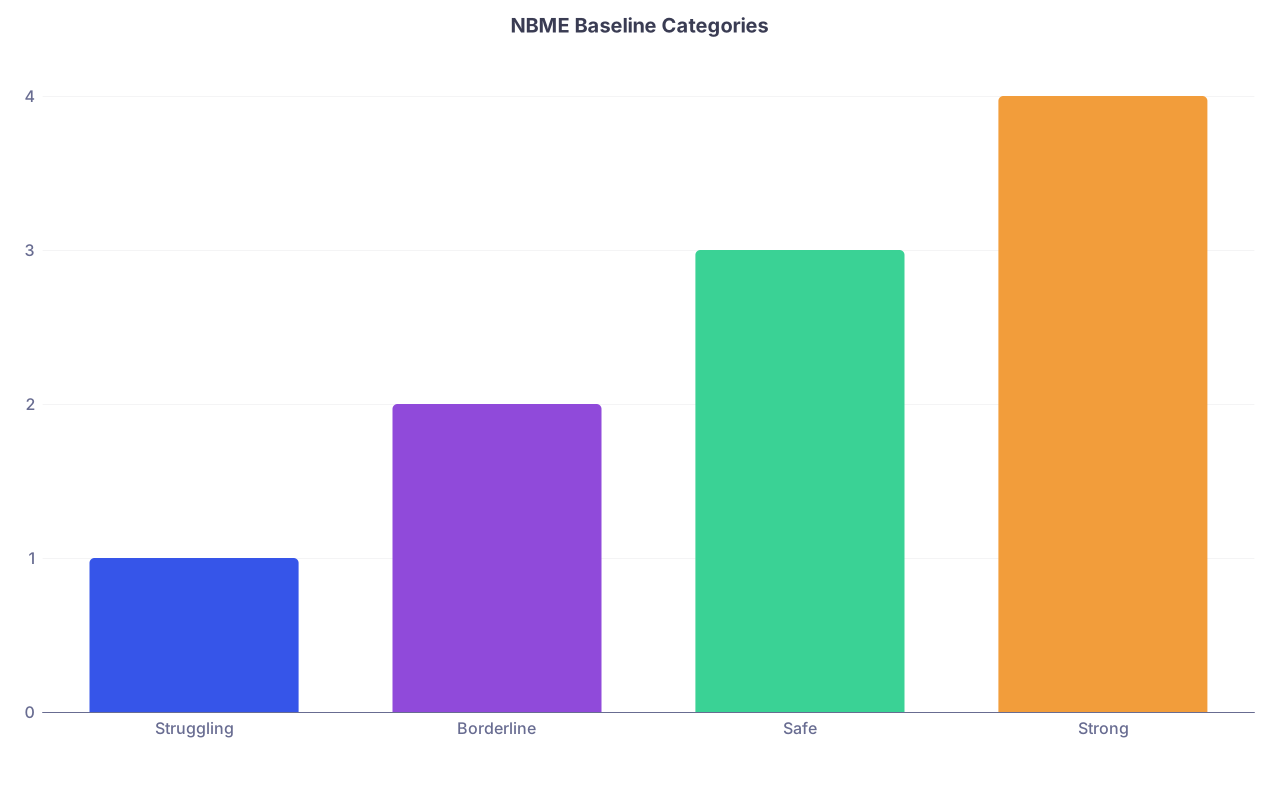
| Category | Value |
|---|---|
| Struggling | 1 |
| Borderline | 2 |
| Safe | 3 |
| Strong | 4 |
- Struggling (well below pass / practice score very low):
- You must shift earlier into Step mode
- Dedicated may need to be 6–8 weeks instead of 4
- Borderline:
- Stay aggressive with integration during the rest of MS2
- Dedicated around 5–6 weeks
- Safe / Strong:
- You can afford to maintain class effort, but don’t coast
March: This Is When You Enter True Step 1 Mode
March is the pivot. If you’re still treating Step as “extra” by late March, you’re behind.
Early March (Weeks 1–2): 50/50 Becomes 60/40 in Favor of Step
At this point you should:
- Start protecting uninterrupted Step blocks during your week
- Trim anything non-essential: random campus events, extra notes, unnecessary meetings
- Step (55–60%):
- 40 UWorld questions/day on 4–5 days per week
- Mix of system-based (matching class content) and random
- Active review of wrongs:
- Don’t just read explanations — write 1–2 key teaching points in Anki or a running document
- 60–90 minutes of core content:
- Pathoma chapters aligned to your current or recent systems
- First Aid skim of the same sections
- Sketchy for micro/pharm holes
- 40 UWorld questions/day on 4–5 days per week
- Classes (40–45%):
- Minimum necessary to:
- Pass
- Avoid remediation
- Replace low-yield lecture review with board resources whenever possible
- Minimum necessary to:
Mid–Late March: Start Thinking in Weeks, Not Months
At this point you should:
- Have your dedicated prep start date locked (often right after last MS2 exam)
- Map each week from now until then with explicit targets:
Example structure for mid-March to end-of-classes (usually ~4–6 weeks):
- Week A: Finish UWorld for systems A/B, NBME practice #2
- Week B: Finish remaining cardio/resp/renal; heavy Pathoma
- Week C: Hit neuro/MSK/review micro/pharm
- Week D: Shore up weakest systems from NBME #2
Drop the idea of “I’ll review everything once dedicated starts.” That’s fantasy. Dedicated is for:
- Consolidation
- High-yield repetition
- Practice tests and timed blocks
Not for first-pass learning of entire organ systems.
April: Classes Become Background Noise, Step Becomes the Job
April is where many students either break through or crack. The ones who crack are usually still pretending classes are the main character.
Early April: 70/30 in Favor of Step
At this point you should:
- Be doing 40–60 UWorld questions/day, nearly every day
- Have covered most of the big systems at least once (cardio, pulm, renal, neuro, GI, heme/onc, micro, pharm)
Your typical weekday might look like:
- Morning (Step):
- 40-question timed UWorld block
- 60–90 minutes reviewing explanations
- Midday (Classes):
- Required labs / small groups
- Quick skim of slides to survive quizzes
- Afternoon (Step):
- 20-question targeted block on weak topics
- Pathoma/Sketchy for that system
- Evening:
- 30–60 minutes Anki / flashcards
Your weekend:
- One NBME or school CBSE every 2–3 weeks, under true test conditions
- Half-day deep review of that exam
Late April: Last Class Exams, Maximum Integration
At this point you should:
- Use your final block exams as forced Step review
- When you study for finals, use:
- UWorld
- NBME-style questions
- First Aid / Boards & Beyond
That way, every hour for school = at least 0.7 hours for Step.
If your school ends classes in late April:
- Final 2–3 weeks will be an overlap of:
- Final exams
- First half of “dedicated values” (question volumes, content review intensity)
May and June: Dedicated Step 1 Prep, Week by Week
Once classes end, transition is done. You’re fully in Step 1 mode.
The length of dedicated varies, but the structure doesn’t change much. Here’s a common 6-week dedicated breakdown with the transition clearly marked.
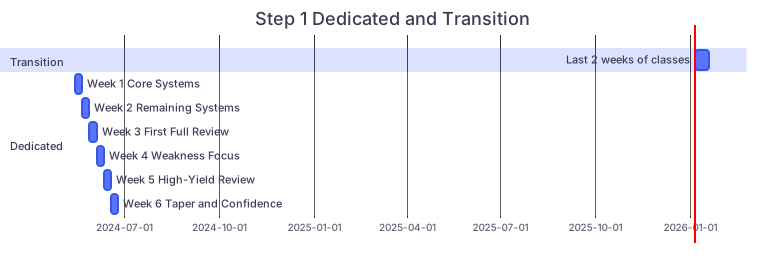
| Task | Details |
|---|---|
| Transition: Last 2 weeks of classes | a1, 2024-05-01, 14d |
| Dedicated: Week 1 Core Systems | a2, 2024-05-15, 7d |
| Dedicated: Week 2 Remaining Systems | a3, 2024-05-22, 7d |
| Dedicated: Week 3 First Full Review | a4, 2024-05-29, 7d |
| Dedicated: Week 4 Weakness Focus | a5, 2024-06-05, 7d |
| Dedicated: Week 5 High-Yield Review | a6, 2024-06-12, 7d |
| Dedicated: Week 6 Taper and Confidence | a7, 2024-06-19, 7d |
Week 0 (Last 1–2 Weeks of Classes): Soft Dedicated
At this point you should:
- Already be at 60–80 questions/day on days without big exams
- Take an NBME at the end of classes to mark the start of true dedicated
Week 1 of Dedicated: Core Systems Push
Focus:
- Cardio, pulm, renal, neuro — the heavy hitters
Daily:
- 2 blocks of 40 UWorld questions (or 1 full 40 + 1 half block if you’re slower)
- 2–3 hours content review on those systems
- Anki / flashcards for reinforcement
One day:
- Lighten load for sanity (maybe 1 block + half day off)
Week 2: Remaining Systems + Micro/Pharm Consolidation
Focus:
- GI, endocrine, repro, heme/onc, MSK, derm, psych
At this point you should:
- Be almost done with your first pass of UWorld (or well into second if you started early)
- Start tagging or writing down your chronic weak topics (e.g., immuno, renal tubular disorders, biostats)
Mid-week:
- NBME or school CBSE to track slope
- Adjust content plan based on pattern of misses
Week 3: First True Full Review
Focus:
- Begin integrated review instead of system silos
Your days:
- Mostly random 40-question blocks
- Review by topic, not just by organ:
- Acid–base
- Shock states
- Cardiac murmurs
- Renal path patterns
- Bacteria by systems
- Re-hit Pathoma chapters on persistently weak systems
You should feel:
- Less “I don’t remember ever seeing this”
- More “I know I’ve seen this, need to recall faster”
Week 4: Targeted Weakness Assault
At this point you should:
- Know your personal “black holes”:
- Biostats
- Endocrine details
- Immunology
- Repro hormone regulation
- Build 2–3 day themed micro-blocks:
- Morning: 40-question random block
- Afternoon: 40 questions filtered for weak topics (from UWorld, AMBOSS, or leftover qbanks)
- Evening: Focused content review for that theme
NBME again near end of week:
- Confirmation you’re trending in the right direction
- If flat or dropping, shorten question volume a bit and lean more into targeted content
Week 5: High-Yield, High-Repetition
At this point you should:
- Have no untouched topic in First Aid / your primary resource
- Start tapering brain strain, not intensity:
- Slightly fewer new questions
- More review of curated “high-yield notebook,” wrong question logs, and summary tables
Emphasize:
- Micro cards
- Pharm mechanisms and side effects
- Classic path buzzwords / image associations
- Biostats formulas and problem patterns
Week 6: Taper, Confidence, and Sleep
- 5–6 days out: Final NBME or practice exam
- 3–4 days out: Only light to moderate blocks, mostly review
- 2 days out: One light question set, then high-yield skim (no new topics)
- Day before: No questions. Short, low-stress review (if you must) + logistics + sleep
At this point you should:
- Know your test-day routine
- Have transport, ID, snacks, and break strategy ready
Red Flags That You’re Transitioning Too Late
Quick gut-check. If, by late March, any of these are true, your transition is off:
- You’re still doing < 20 UWorld questions/day most days
- You haven’t taken any NBME/CBSE yet
- You’re “saving Pathoma/First Aid for dedicated”
- You’re spending more time polishing lecture notes than doing board-style questions
- You have no written week-by-week plan leading into dedicated
If that’s you:
- Choose a Step date a bit later if possible
- Cut down non-essential class perfectionism
- Go straight to 40 questions/day + 1–2 hours of board resources, starting this week
A Simple Visual: When Classes vs Step Should Dominate
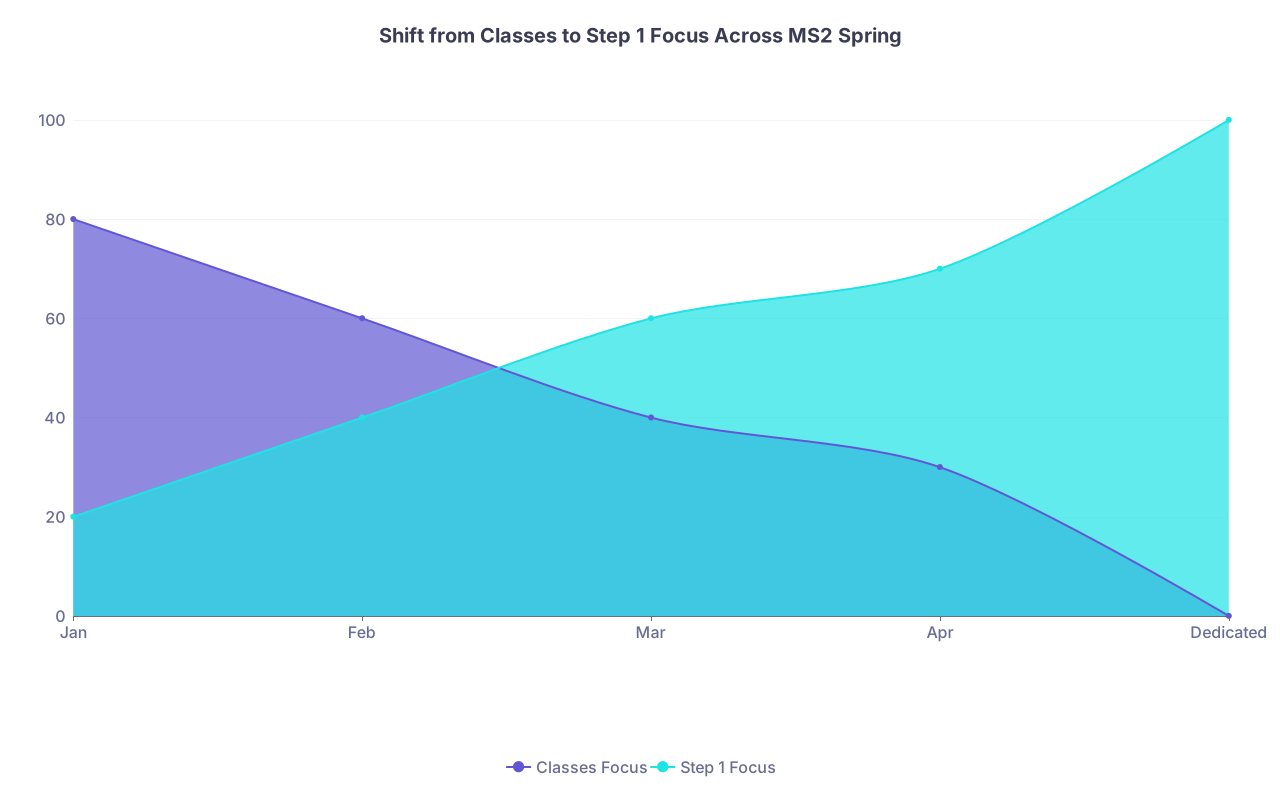
| Category | Classes Focus | Step 1 Focus |
|---|---|---|
| Jan | 80 | 20 |
| Feb | 60 | 40 |
| Mar | 40 | 60 |
| Apr | 30 | 70 |
| Dedicated | 0 | 100 |
You don’t flip a switch in one day. You slide from classes to Step over 3–4 months.
Final Checklists by Phase
Late January – Early February: Pre-Transition
At this point you should:
- Be passing classes without constant crisis
- Have UWorld account active, doing 10–20 Q/day
- Have a consistent flashcard routine
- Know your planned Step 1 test month
Early–Mid March: Active Transition
At this point you should:
- Have taken at least one NBME/CBSE
- Be doing ~30–40 UWorld questions/day
- Be watching/reviewing board-style resources tied to current systems
- Have a written week-by-week plan through last day of classes
Early April – Start of Dedicated: Full Step Mode
At this point you should:
- Prioritize Step over class perfection (while still passing)
- Be doing 40–60 UWorld Q/day most days
- Have touched every major system once
- Have at least 2 NBME/CBSE scores to show progress
- Have your dedicated calendar broken into weekly focus themes
Key Takeaways
- You don’t wake up one day “in Step mode” — you start the shift in February, hit true 50/50 by early March, and let Step dominate by April.
- Use NBME/CBSE checkpoints to decide how aggressively to transition; don’t fly blind.
- By the time dedicated starts, Step studying should already feel like your real job and classes like background noise you manage, not the other way around.