
The usual Step 1 study advice—“just do Anki every day”—is lazy and incomplete. Some topics absolutely need daily contact. Others are fine once a week. If you treat everything the same, you waste time and forget what actually matters.
Here’s how to separate Step 1 content into “daily review” vs “weekly review” with a clear, practical system you can actually run while you’re in med school.
The Core Rule: Daily = High Yield + High Forgettability
Think in two axes:
- How high-yield is this for Step 1?
- How fast do you forget it when you stop seeing it?
Daily review topics are both:
- heavily tested
- easy to lose in a few days if you don’t see them
Weekly review topics are either:
- less frequently tested
- or “stickier” concepts that don’t evaporate overnight
To make this concrete, let’s break down by subject.
What Deserves Daily Review?
If you’re serious about Step 1, these categories should hit your brain every single day in some form (Anki, questions, quick sheets).
1. Pharmacology: Mechanisms, Side Effects, Prototypes
Pharm is brutal if you let it drift to “once in a while.” The brain dumps unreinforced drug facts fast.
Daily review:
- Mechanism of action and prototypical drugs
- Beta blockers: propranolol, metoprolol
- ACE inhibitors: captopril, enalapril
- Calcium channel blockers: verapamil, diltiazem, amlodipine
- Classic adverse effects and buzzwords
- Doxorubicin → cardiotoxicity
- Aminoglycosides → nephro/ototoxicity
- Clozapine → agranulocytosis
- Contraindications and major interactions
- ACEi in pregnancy
- Nitrates with PDE-5 inhibitors
These are the cards that flip from “I know this” to “what the hell is this?” in 3 days if you stop seeing them. If you’ve ever opened Anki after a long weekend and blanked on every antibiotic mechanism, you’ve already proven this to yourself.
Good rule:
If it’s a tiny fact about a specific drug that can kill or save someone → daily.
2. Microbiology: Bugs, Virulence, and Treatments
Micro is the other big “use it or lose it” domain.
Daily review:
- Bug → disease associations
- Strep pyogenes → rheumatic fever, glomerulonephritis
- Pseudomonas → burn infections, CF pneumonia, hot tub folliculitis
- Morphology/ID clues
- Gram status, shape, hemolysis, lactose fermentation
- “Currant jelly sputum” → Klebsiella
- First-line treatment patterns
- Syphilis → penicillin G
- MRSA → vancomycin/linezolid/daptomycin
- Core virology
- DNA vs RNA, enveloped vs non
- Classic viruses + diseases (HBV, HCV, HIV, HSV, HPV, etc.)
You don’t need to re-read an entire micro chapter daily. But your flashcards on bugs and drugs should turn over every day. Even 30–50 well-chosen cards is enough to keep it alive.
3. Biochemistry Pathways and “Named” Diseases
Nobody “remembers” biochem by inspiration. You remember it by seeing it 1000 times.
Daily review:
- Central pathways
- Glycolysis, TCA cycle, ETC
- Urea cycle
- Fatty acid synthesis/oxidation
- Purine/pyrimidine synthesis basics
- Vitamin deficiencies and cofactor roles
- B1 → dehydrogenase complexes
- B6 → transamination, decarboxylation
- Inborn errors you always see on UWorld
- PKU, alkaptonuria
- Galactosemia variants
- Von Gierke, Pompe, McArdle
- Rate-limiting steps and key enzymes
If there’s a pathway diagram, it’s a good candidate for daily exposure until you can redraw at least the skeleton of it from memory.
4. Pathology: Mechanisms and Pattern Recognition
Path is broad, so you don’t hit everything daily. You prioritize pattern recognition and mechanisms that show up everywhere.
Daily review:
- Immune and inflammation basics
- Hypersensitivity types I–IV
- Complement roles (C3, C5a, MAC)
- Chronic vs acute inflammation cells/mediators
- Neoplasia
- Oncogenes vs tumor suppressors (RAS, MYC, p53, RB)
- Hallmarks of cancer
- Paraneoplastic syndromes (ACTH, PTHrP, etc.)
- Vascular and thromboembolic basics
- Virchow triad
- DVT → PE logic
- Classic “can’t miss” pathology patterns
- RPGN crescents
- Reed-Sternberg cells
- “Onion-skinning” in hyperplastic arteriolosclerosis
What usually works: a small daily deck of mixed path cards that forces you to recognize “x description → y disease” in seconds.
5. High-Yield Physiology Foundations
You don’t need full systems physiology every day. But the core conceptual frameworks that show up across systems? Those should be daily.
Daily review:
- Acid–base
- Metabolic vs respiratory
- Expected compensation formulas
- Cardiac curves
- PV loops basics
- Preload/afterload/contractility changes
- Renal basics
- Clearance, GFR, RPF logic
- Where Na+, water, bicarb are handled
- Autonomics
- Sympathetic vs parasympathetic effects
- Receptor types and locations (α1, β1, β2, M2, M3, etc.)
If you routinely get these conceptual questions wrong in UWorld, move them into your daily bucket.
6. Core Behavioral Science & Biostats Formulas
You can’t “logic” your way through most Step 1 biostats formulas under time pressure if you haven’t seen them all week.
Daily review:
- Sensitivity, specificity, PPV, NPV
- LR+, LR− and what they mean
- Odds ratio, relative risk
- Type I vs Type II error (and what happens when you change alpha, beta, sample size)
You only need a handful of cards for each. But they should resurface daily, not every 10 days.
7. Personal Weaknesses and “Leak Points”
Anything you’ve repeatedly missed on:
- UWorld
- NBME practice tests
- Shelf exams
…should graduate to daily review until it’s boring.
If endocrine pathways always trip you up? Daily.
If neuroanatomy localizations are a black box? Daily.
If you confuse Gram-positive rods constantly? You get the idea.
What Can Be Weekly Review?
Some topics are important but don’t justify daily bandwidth, especially during busy blocks. You still need to see them regularly—once a week is usually enough to keep them online.
1. Gross Anatomy (Except Neuroanatomy Nuances You Struggle With)
Most people massively over-review anatomy. Step 1 doesn’t care about every nerve in the arm. It cares about patterns and classic injuries.
Weekly review:
- Brachial plexus injuries and resulting deficits
- Common fracture + nerve associations
- Humerus midshaft → radial nerve
- Surgical neck → axillary nerve
- Pelvic and perineal basics
- Imaging orientation and common cross-sectional cuts
Neuroanatomy is different. If you’re weak on brainstem lesions, visual pathway lesions, spinal cord tracts—move those cards up to daily until you’re comfortable.
2. Embryology and A Few Niche Systems
Embryology is testable but not daily-card-worthy for most:
Weekly review:
- Pharyngeal arches/pouches derivatives
- Cardiac embryology (shunts, septation)
- GI rotation and gut malformations
- Reproductive tract derivatives (Müllerian/Wolffian)
Also weekly:
- Rare diseases and zebras that only show up once in a blue moon
- Some vasculitides
- Exotic infectious diseases
- Very detailed histology beyond the “what organ is this” level
3. Long-Form Notes and Concept Summaries
Your condensed notes, one-page summaries, and mind maps should be weekly, not daily.
Examples:
- 1-page acid–base interpretation sheet
- Full summary of heart murmurs and maneuvers
- Comprehensive nephritic vs nephrotic compare-and-contrast
You don’t need to read a whole page on murmurs every day. But scanning that page once a week keeps the structure intact.
4. “Integration” Passes Through Resources
Weekly is a good rhythm for:
- A quick flip through a system chapter in First Aid
- Reviewing your highlights in Pathoma or Boards & Beyond notes
- Skimming missed UWorld questions from the week
Think of weekly reviews as “big-picture stitching” so your daily cards don’t become disconnected trivia.
Putting It Together: A Realistic Weekly Structure
Here’s what this looks like when you’re not in dedicated, just in regular medical school life trying to not drown.
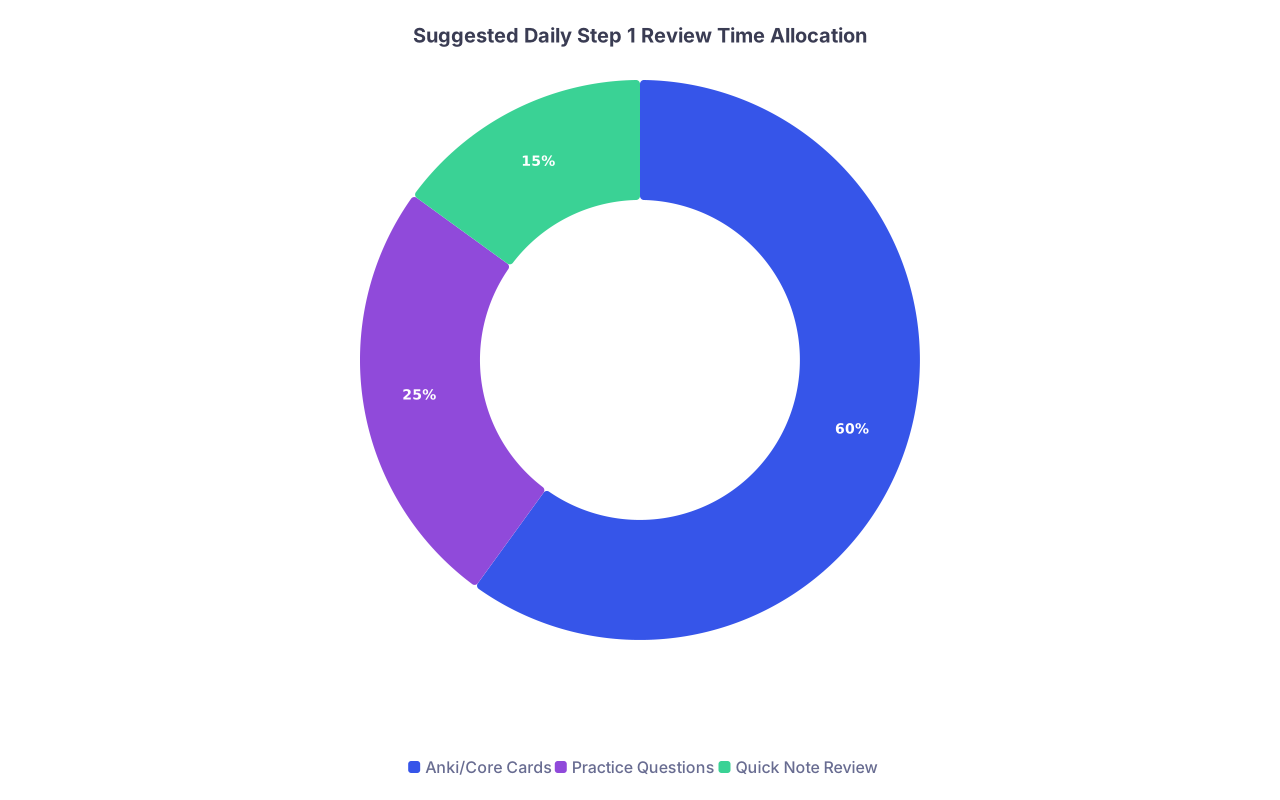
Daily (30–60 minutes total)
Anki (or similar) for:
- Pharm mechanisms, side effects, prototype drugs
- Micro: bugs, morphology, classic diseases, first-line treatments
- Biochem pathways + high-yield inborn errors
- Core path patterns and mechanisms
- Foundational phys (acid–base, renal, cardio basics)
- Biostats/behavioral formulas
- Personal weak spots
5–10 mixed Step-style questions (if bandwidth allows)
- Not full blocks. Just to keep question muscle alive.
| Category | Value |
|---|---|
| Anki/Core Cards | 60 |
| Practice Questions | 25 |
| Quick Note Review | 15 |
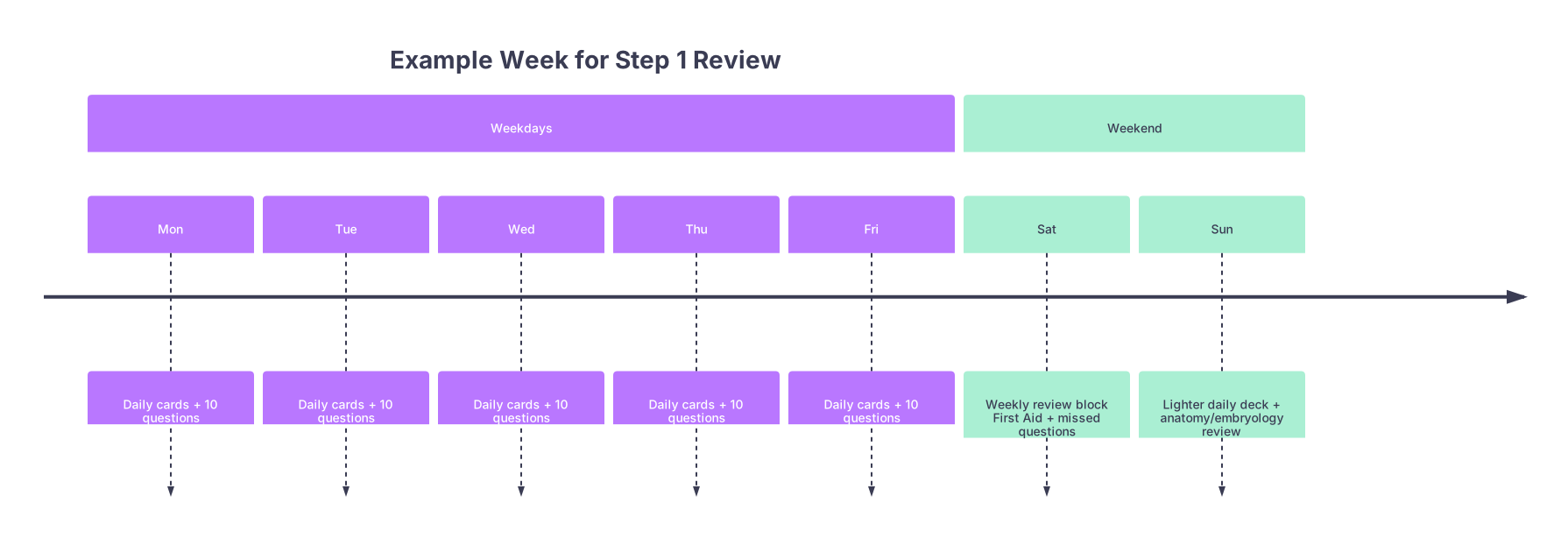
Weekly (1 longer block, or two shorter)
Once or twice a week, add:
1–2 hours of:
- Scanning a system in First Aid or your main Step book
- Reviewing marked/missed UWorld questions
- Hitting anatomy/embryology decks
- Flipping through 1–2 “summary” pages (murders, renal, endocrine, etc.)
Optional:
- A “theme” review each week (e.g., one week cardio-heavy, next week renal-heavy) to keep systems linked.
| Period | Event |
|---|---|
| Weekdays - Mon | Daily cards + 10 questions |
| Weekdays - Tue | Daily cards + 10 questions |
| Weekdays - Wed | Daily cards + 10 questions |
| Weekdays - Thu | Daily cards + 10 questions |
| Weekdays - Fri | Daily cards + 10 questions |
| Weekend - Sat | Weekly review block First Aid + missed questions |
| Weekend - Sun | Lighter daily deck + anatomy/embryology review |
Quick Classification Table
Use this as a sanity check when building your own schedule.
| Topic Area | Review Priority | Typical Frequency |
|---|---|---|
| Pharm (MOA, side effects) | Daily | Every day |
| Micro (bugs + treatments) | Daily | Every day |
| Biochem pathways | Daily | Every day |
| Biostats formulas | Daily | Every day |
| Gross anatomy | Weekly | 1–2x / week |
| Embryology | Weekly | 1–2x / week |
How to Decide for Yourself: A Simple Rule-of-Thumb System
Use this simple decision framework for any topic you’re unsure about:
Ask: “If I don’t see this for 7 days, will I probably miss it on a question?”
- Yes → daily
- No → go to 2
Ask: “Does this show up in most UWorld blocks / NBME practice tests?”
- Yes → daily or every-other-day
- No → weekly
Ask: “Is this a recurring personal weakness?”
- Yes → daily, no argument
- No → it can live in weekly
| Category | Value |
|---|---|
| Week 1 | 2 |
| Week 2 | 5 |
| Week 3 | 9 |
| Week 4 | 14 |
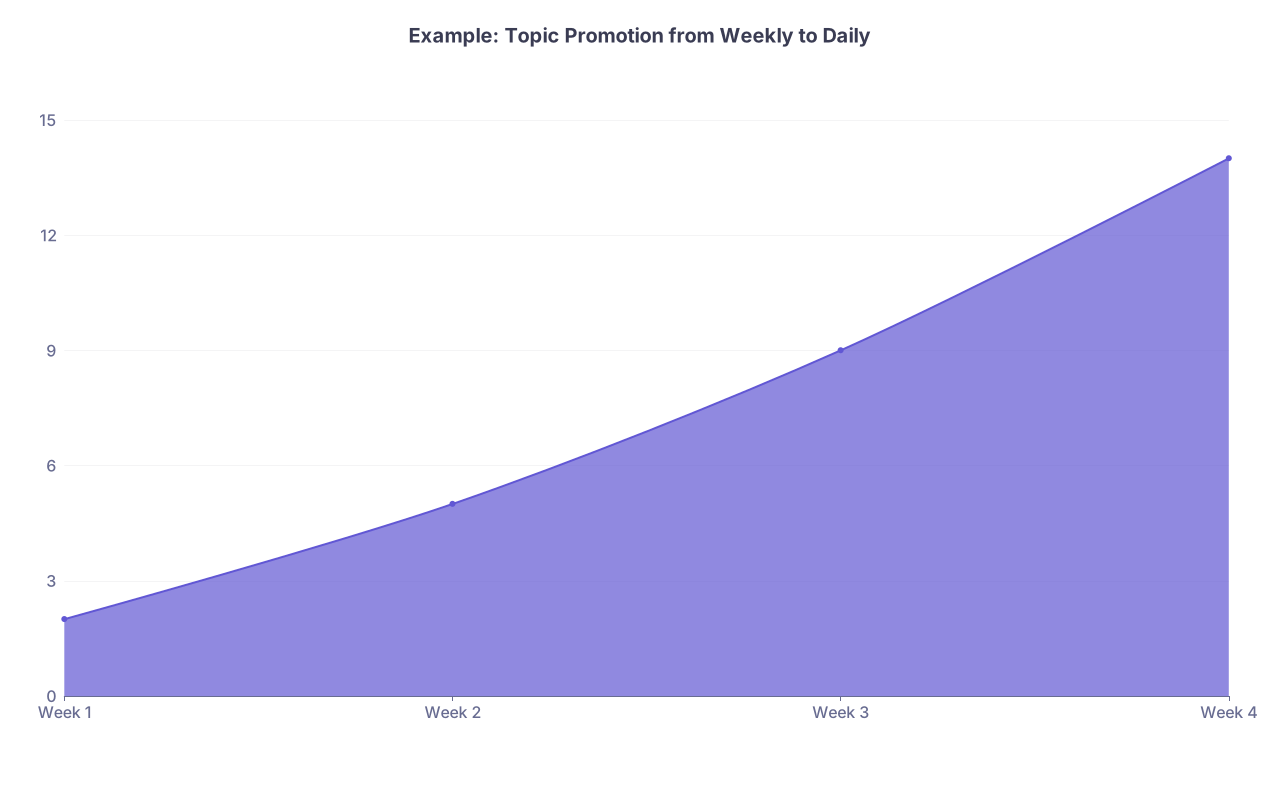
That “promotion” idea is key. Your schedule shouldn’t be static. If you bomb endocrine questions on a practice exam, endocrine moves into your daily deck for the next few weeks.
Tools and Tricks That Make This Actually Work
A few real-world tips from people who’ve survived this:
Use tags or decks in Anki like:
Daily-Core(pharm, micro, biochem, biostats, core phys/path)Weekly-Anat-EmbryoWeakness-*(e.g., Weakness-Endocrine)
Don’t let the Anki algorithm be your only brain.
If something feels fragile but Anki doesn’t show it often enough, tag it and force it into daily rotation.Keep a running “error log”
After question blocks, jot down repeating themes of what you miss. Those themes become daily categories for the next 2–3 weeks.Protect your daily core time
Even during heavy exam weeks, squeeze in at least 20–30 minutes on your daily Step 1 core deck. That’s how you avoid “relearning everything from scratch” in dedicated.

The Big Mistake to Avoid
Trying to do everything daily.
When you pretend you’ll hit pharm, micro, path, phys, anatomy, embryo, all systems, every day—what actually happens is:
- You get crushed by review load
- You start hitting “good enough” on cards
- You stop thinking, you just click
- And then on NBMEs you realize you’ve been memorizing words, not ideas
The fix is exactly what you’re doing here: protect daily bandwidth for high-yield, high-forget topics; treat everything else as structured weekly maintenance.

FAQs
1. How many minutes per day should I spend on “daily review” topics?
For most med students not in dedicated: 30–60 minutes. That’s enough to cover a lean daily card set (pharm, micro, biochem, path/phys basics, biostats) without eating your whole day. In dedicated, this can stretch to 60–90 minutes, but if daily review is taking more than that, you’re labeling too many things “daily.”
2. Should I ever stop daily review in the last week before Step 1?
No. You can shrink it, but don’t stop. Last week should be lighter, but you still want a small daily pass through high-yield, high-forget topics—especially pharm, micro, and biochem. Think “maintenance dose,” not “full loading dose”: maybe half your usual card count, focused only on the highest-yield tags.
3. Is it okay to skip weekly review if my class schedule is insane?
Occasionally, yes. If you have an exam week, you can miss a structured weekly review session and be fine as long as you keep your daily core alive. But don’t skip it for weeks on end. Aim for at least one decent weekly systems review every 7–10 days, even if it’s just 60–90 minutes on a Sunday.
4. How do I deal with Anki showing me tons of old Step 1 cards during organ blocks?
Be ruthless. Suspend or re-tag cards that aren’t truly Step 1–core or that overlap heavily with your current system in lecture. Then create a small, protected “Daily-Core” deck with only the few hundred highest-yield cards (pharm, micro, biochem, biostats, core phys/path). Let everything else rotate more slowly or into weekly review.
5. Where do question banks fit in—daily or weekly?
Both, but with different goals. Daily, you can do a small number of mixed questions (5–10) to keep your test-taking brain engaged. Weekly, you use full blocks (20–40 questions) to test integration and identify new weaknesses. Those weaknesses then feed back into your daily deck. The worst approach is bingeing huge blocks once a month and learning nothing from them.
6. What if I’m already behind—should I expand daily or weekly topics?
Tighten. Not expand. When you’re behind, you cut your daily deck down to the absolute core: pharm, micro, biochem, biostats, your biggest 1–2 weaknesses. Then you slowly reintroduce other topics as you stabilize. Drowning yourself in more “daily” topics when you’re already behind is how people burn out and stop reviewing entirely.
Key takeaways:
- Daily review is for high-yield, high-forget topics: pharm, micro, biochem, core phys/path, biostats, and your personal weak spots.
- Weekly review is for anatomy, embryology, long-form notes, and big-picture integration across systems.
- Protect your daily core time, adjust weekly depth based on your schedule, and constantly promote recurring weaknesses into the daily bucket until they’re solid.