Why Virtual Interview Strategy Matters So Much for Caribbean IMGs
For a Caribbean IMG, the residency interview has always been high stakes—but virtual interviews raise the bar in new ways. Your USMLE scores, clinical evaluations, and letters get you noticed; your performance in the virtual residency interview often determines whether you match.
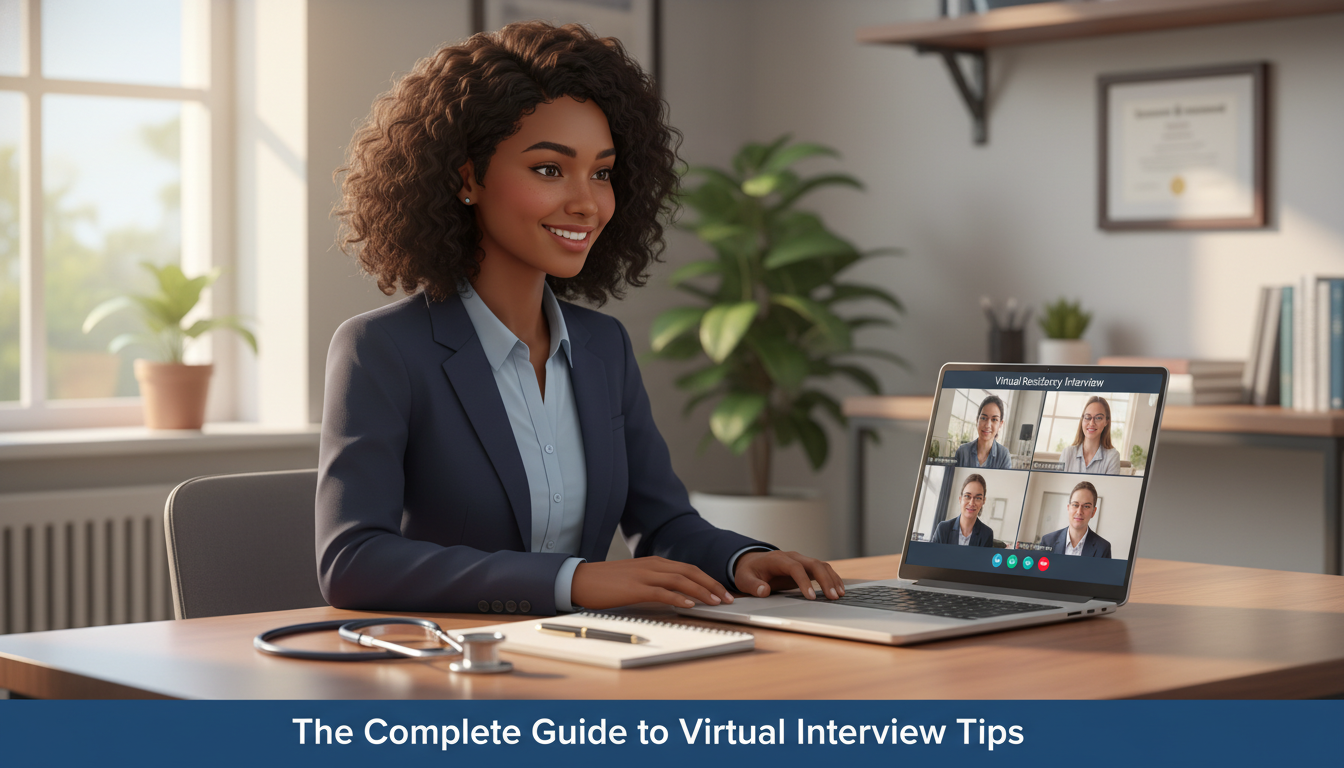
Programs are now expert at evaluating applicants over Zoom, Thalamus, Webex, Teams, or proprietary platforms. Many of the same communication skills apply as in-person interviews, but the online format introduces new variables: technology, environment, non-verbal communication through a screen, and “Zoom fatigue.”
This matters especially for Caribbean medical school residency applicants because:
- You may feel you need to “prove” you are as strong as US graduates.
- You often interview at a distance, without visiting the hospital or seeing the city.
- You rely more heavily on the interview to compensate for bias or misconceptions about Caribbean schools.
- You may have multiple interview days scheduled tightly together, increasing fatigue.
A strong performance in a virtual residency interview can help overcome concerns about school name, Step attempts, or gaps. Residency programs routinely rank Caribbean IMGs highly when they see maturity, professionalism, and excellent communication on screen. Many SGU residency match and other Caribbean success stories hinge on how well applicants adapted to virtual formats.
The good news: virtual interviewing is a skill you can learn and master with focused, structured preparation.
Preparing Your Technology and Environment
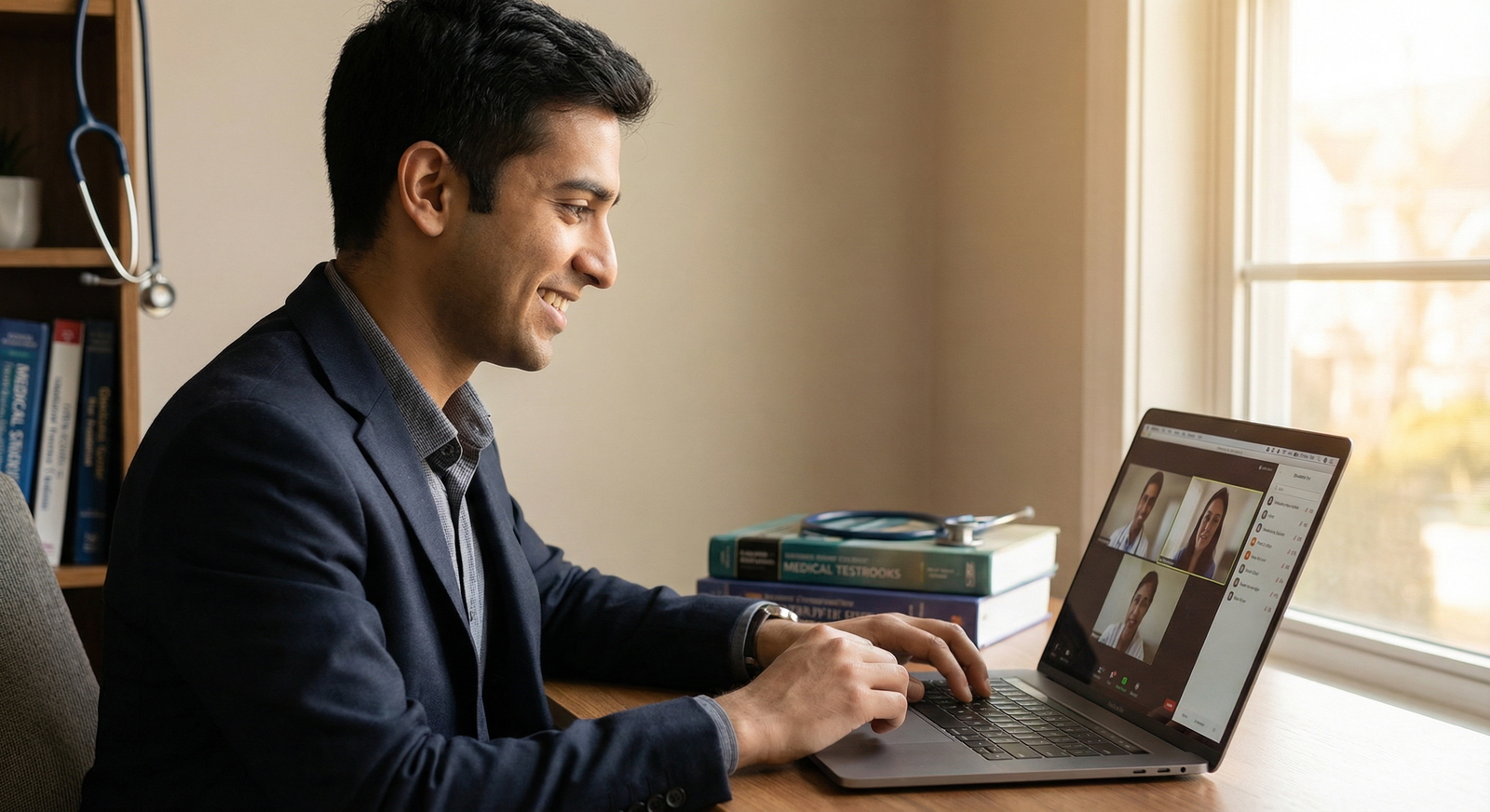
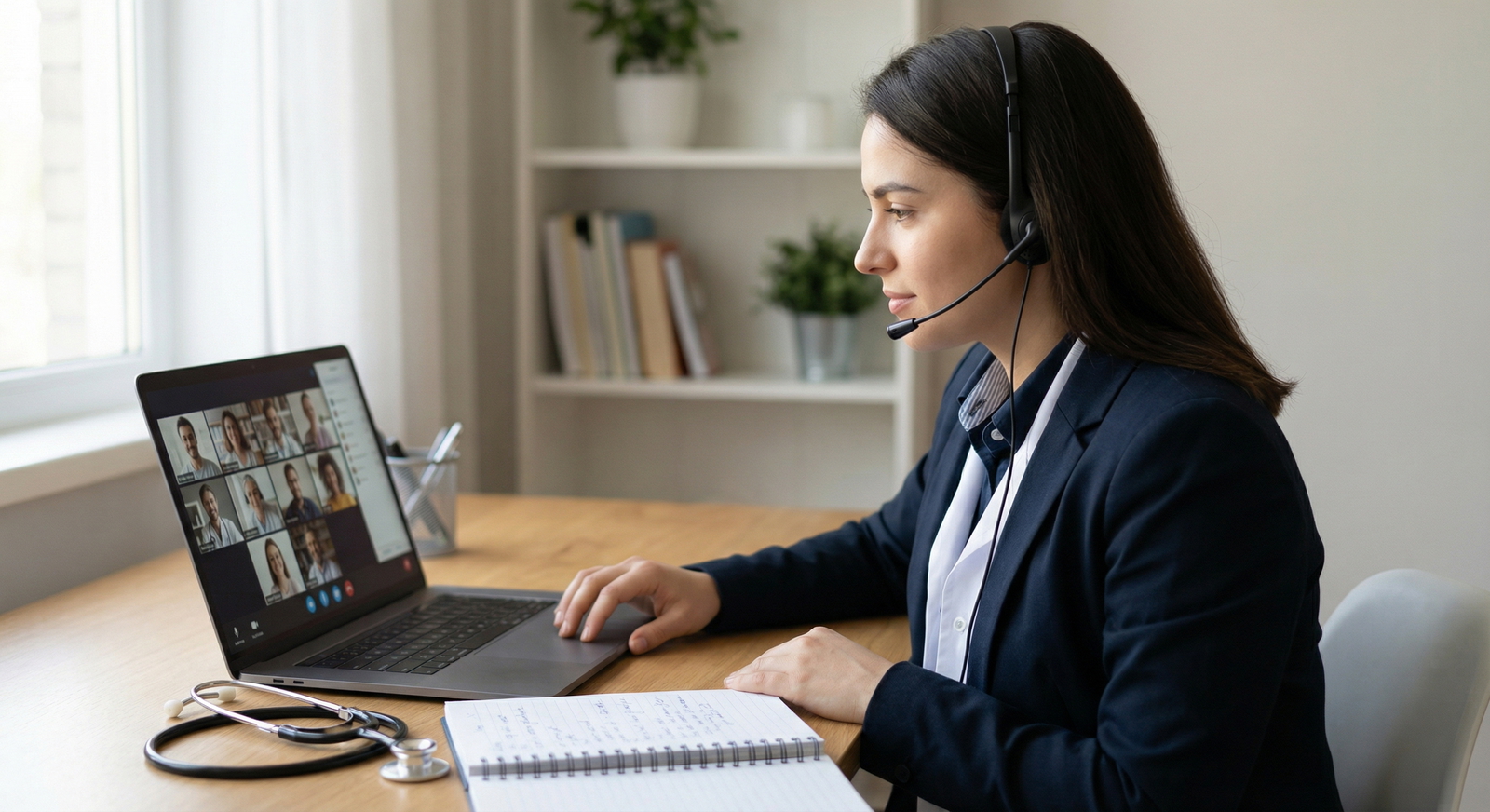
Your environment and tech setup are part of your “application” now. Before you say a word, programs form an impression based on what they see and hear. That impression should say: reliable, organized, and professional.
1. Hardware and Internet Basics
Computer vs. phone
- Use a laptop or desktop, never a phone.
- Ensure the device can handle video without lag.
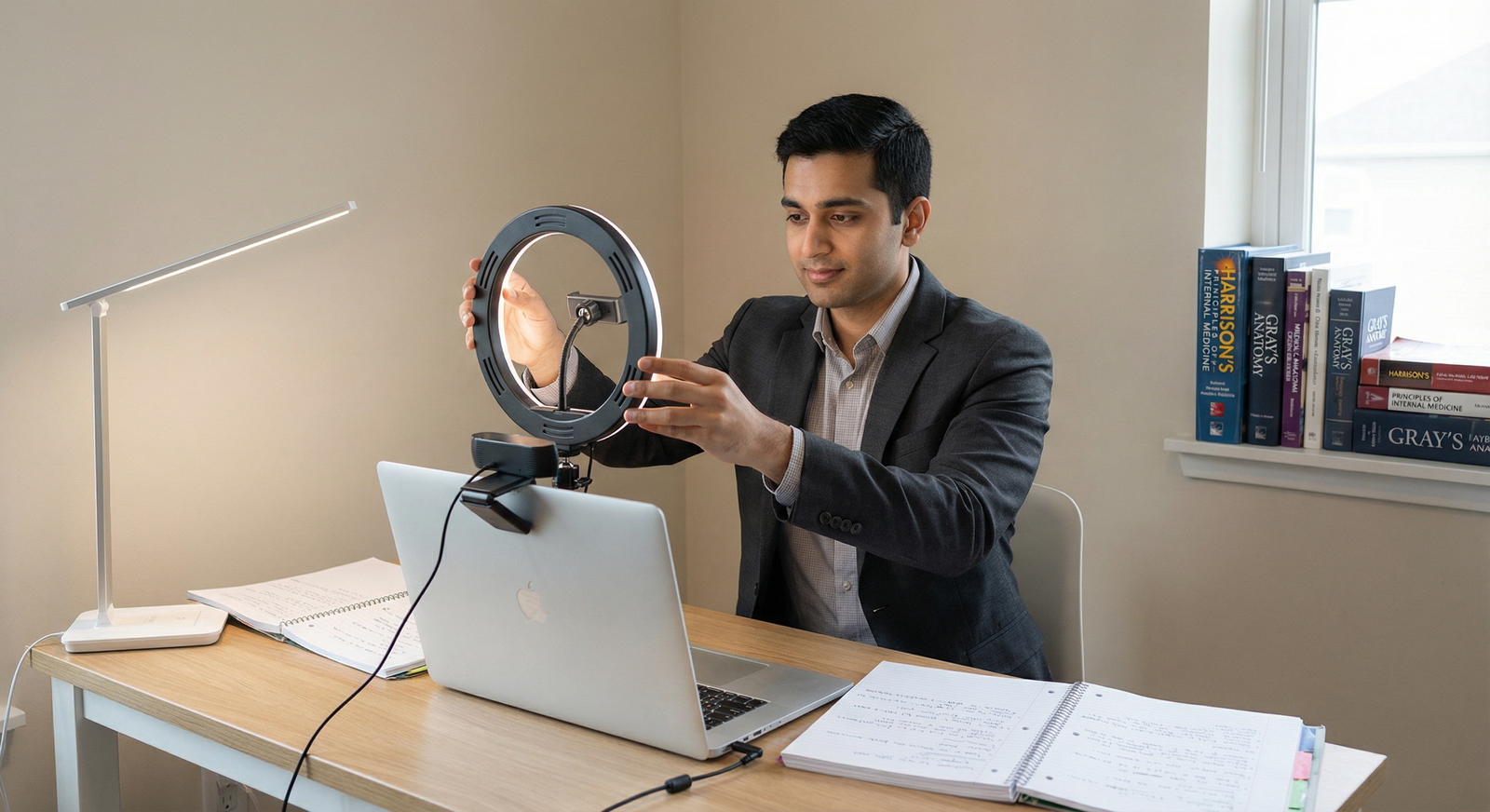
- Elevate your camera to eye level using a stand, books, or a laptop riser.
Internet connection
- Use wired Ethernet if possible; if not, position yourself close to the router.
- Minimum recommended: 10 Mbps down / 5 Mbps up; more is better.
- Run a speed test (e.g., speedtest.net) at the same time of day as your scheduled interviews.
Audio
- Use wired earbuds or a wired headset with a built-in microphone.
- Avoid relying on your computer’s internal mic unless it’s high quality and you test it thoroughly.
- Turn off noisy devices (fans, AC units, TV, phone notifications) during the interview.
Backup plan
Have a clear Plan B:
- A second device (tablet or another laptop) with the software installed.
- Phone number for the program coordinator ready and easily visible.
- Email template drafted for last-minute technical emergencies (e.g., laptop failure, power outage).
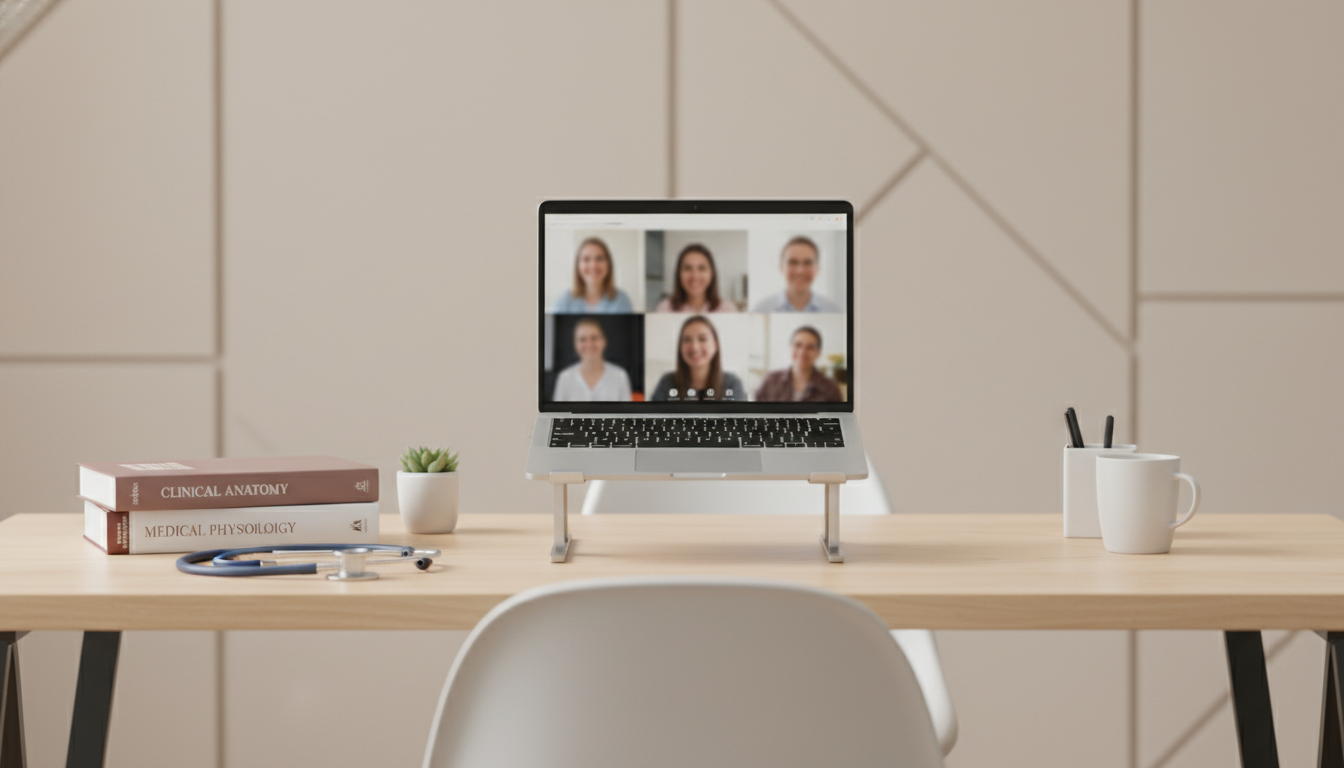
2. Setting Up Your Background and Lighting
Your background sends messages about your organization, professionalism, and respect for the process.
Ideal background
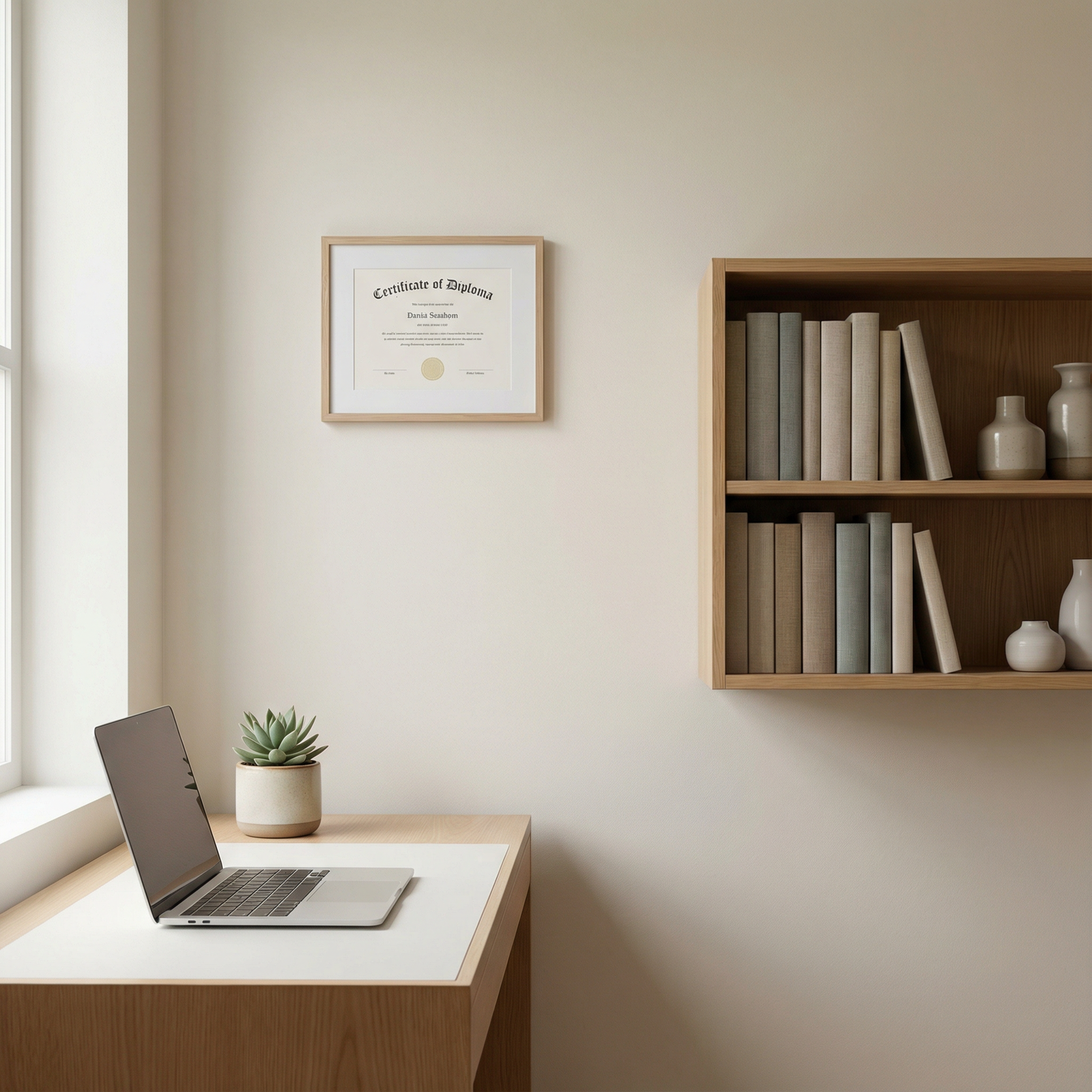
- Neutral wall or tidy office/bedroom.
- Minimal decor: 1–2 tasteful items (e.g., small plant, framed diploma or neutral artwork).
- Avoid visible clutter, unmade beds, busy patterns, or anything that could be controversial.
Virtual backgrounds
- If your real environment cannot be made professional, use a simple, neutral virtual background.
- Avoid animated or branded backgrounds that distract or look artificial.
- Test to ensure your outline is not flickering or “cut off” when you move.
Lighting
- Face a window or light source; never sit with a bright window behind you.
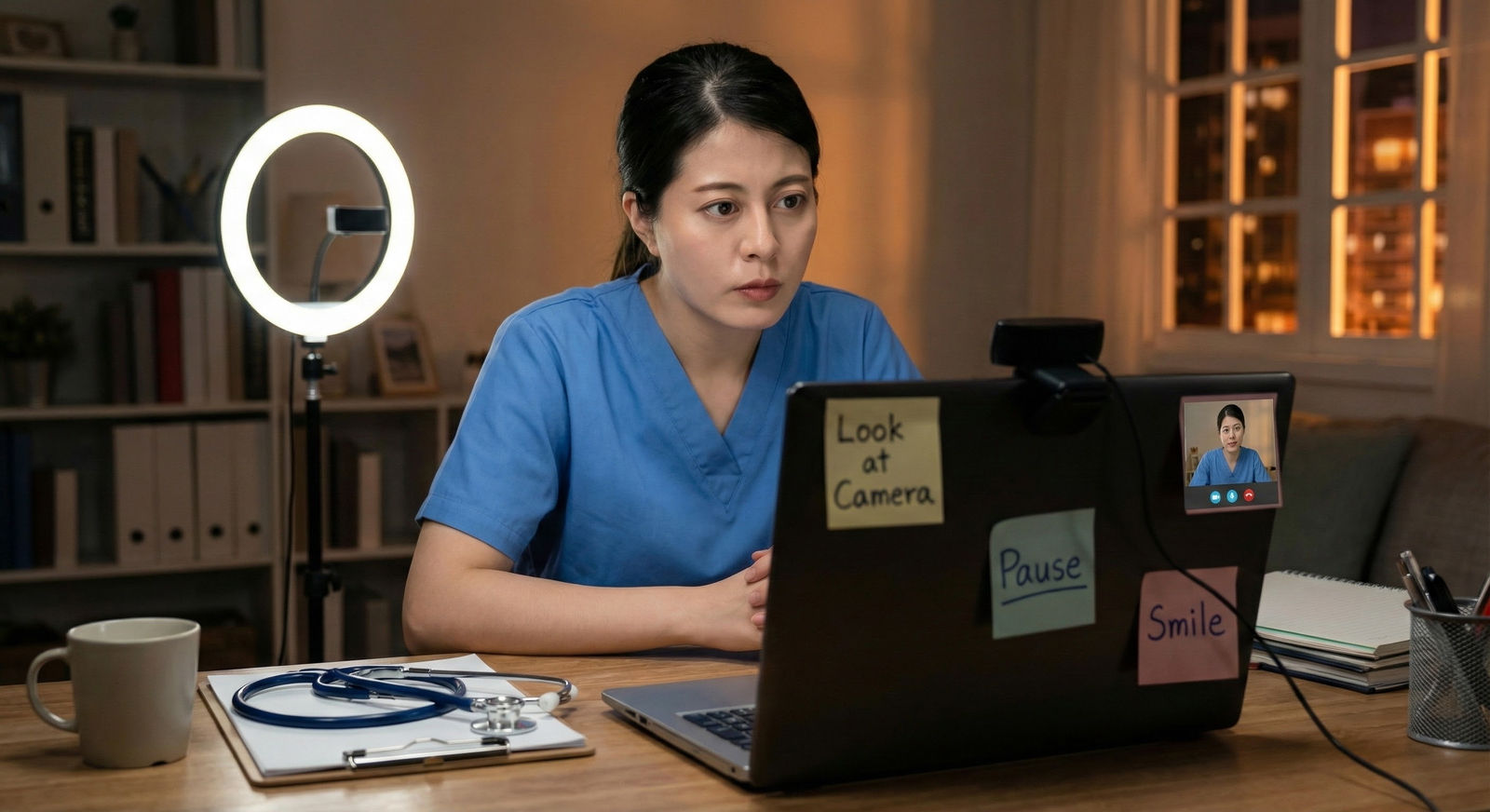
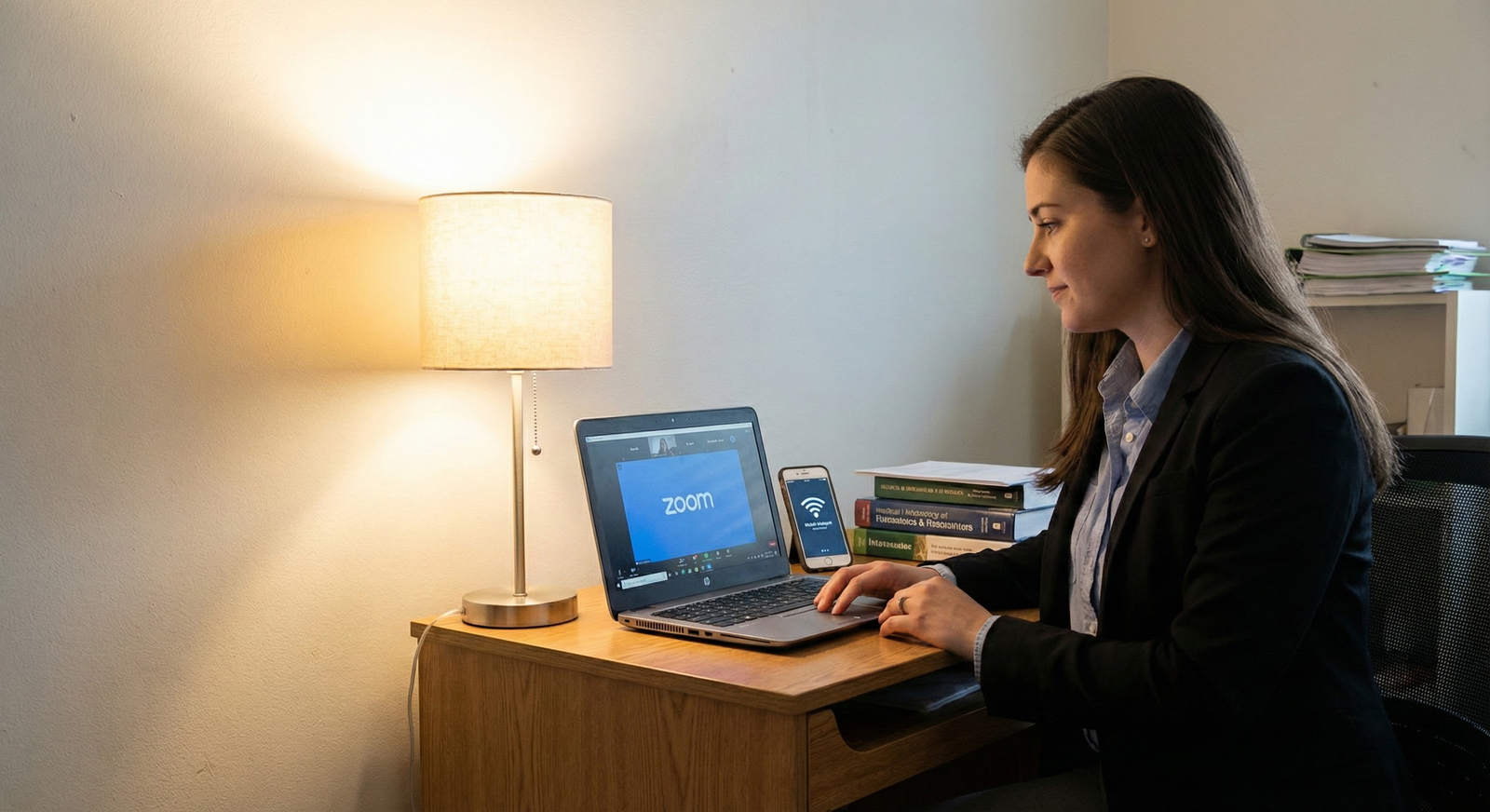
- Use a desk lamp or ring light positioned in front of you, slightly above eye level.
- Check for harsh shadows or glare (especially if you wear glasses).
Camera framing
- Frame from mid-chest or shoulders upward, with a bit of space above your head.
- Center yourself in the frame.
- Look into the camera when speaking, not at your own image.
3. Test Runs and Platform Familiarity
Treat online interview preparation like a clinical skills exam: you must know the “equipment” and environment.
- Download and update Zoom, Teams, Webex, or the program’s chosen platform in advance.
- Practice:
- Muting/unmuting quickly.
- Turning camera on/off.
- Sharing screen (for rare cases when they ask you to review something).
- Entering and exiting breakout rooms.
- Schedule mock calls with:
- A fellow Caribbean IMG.
- A resident or mentor in the US, if available.
- Career or advising staff from your school (many Caribbean schools now provide virtual mock interviews).
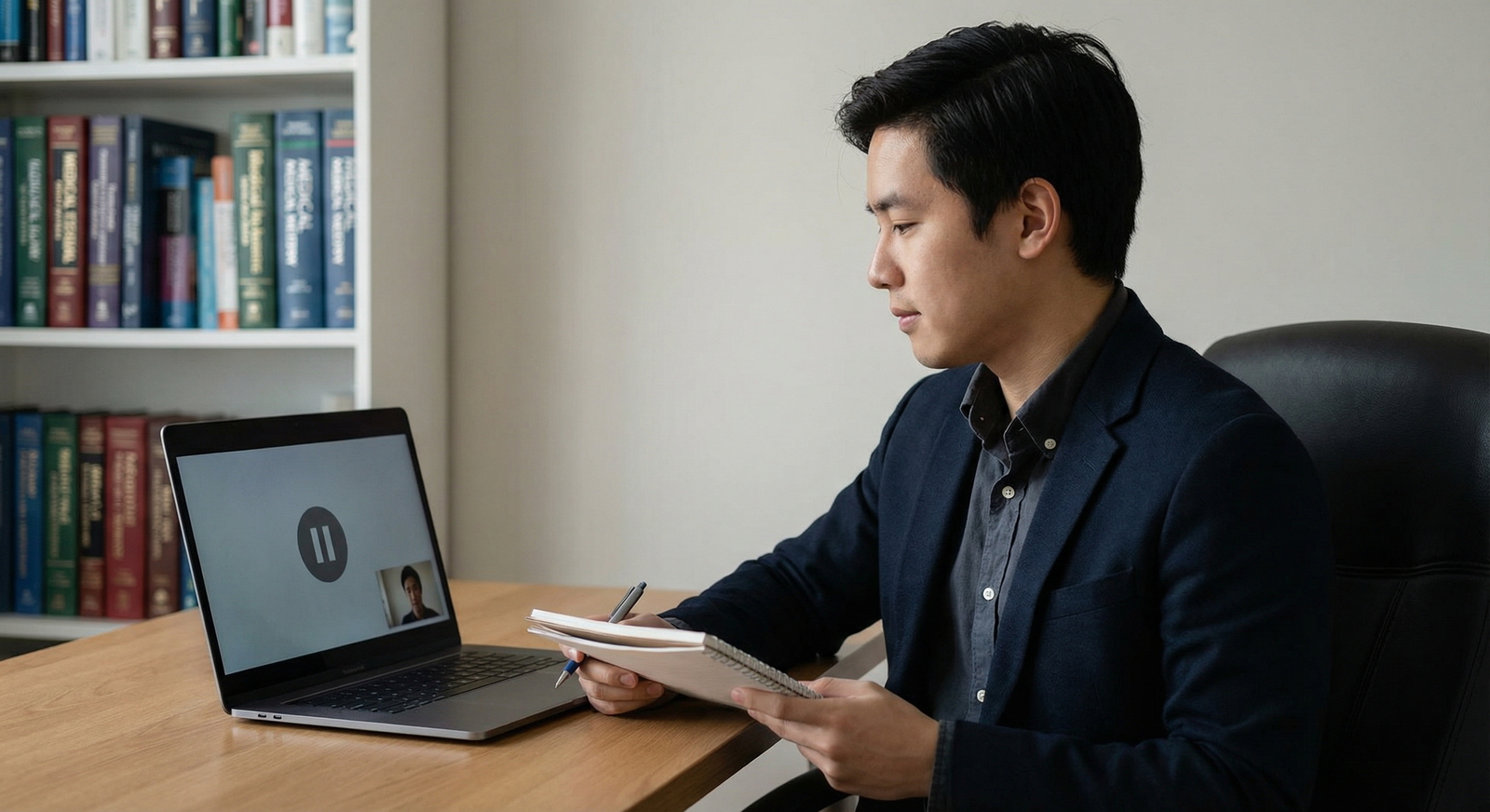
Record yourself (with permission if practicing with others). Watch for:
- Eye contact with the camera.
- Filler words like “um,” “like,” “you know.”
- Speaking too fast (common when nervous).
- Distracting hand movements or chair rocking.
This feedback loop is essential for refining your virtual presence.
Professional Image and Communication On Screen
Even though you are at home, the interview is not casual. Program directors and faculty expect the same level of professionalism as an in-person day.
1. Dress Code for Virtual Interviews
Aim for exactly what you would wear if you were meeting the program in person.
General principles
- Solid colors (blue, gray, or white) photograph best online.
- Avoid stripes, small patterns, or pure black/white, which can distort on camera.
- Dress fully (top and bottom) in interview attire—unexpected moments happen.
For all genders
- Blazer or suit jacket (navy, charcoal, or black).
- Collared shirt or professional blouse.
- Simple, professional grooming.
- Minimal jewelry; nothing that clinks against your microphone.
As a Caribbean IMG, dressing sharply helps counter unconscious bias; it subtly communicates that you are serious, prepared, and ready for US training environments.
2. Body Language Adapted to Video
Body language still matters—it’s just compressed into a smaller frame.
Posture
- Sit upright, with your back supported.
- Keep shoulders relaxed; avoid leaning too far forward or slouching.
- Choose a stable chair, not a swivel or rocking chair if possible.
Eye contact
- When speaking, look into the camera lens to simulate eye contact.
- When listening, you may look at the interviewer’s image, but don’t constantly shift your gaze.
Gestures
- Use natural hand gestures but keep them near your torso so they remain within the frame.
- Avoid touching your face or fidgeting with pens, hair, or jewelry.
Facial expressions
- Maintain a neutral-to-positive expression.
- Nod occasionally to show engagement.
- Small smiles when appropriate; avoid forced or constant smiling.
3. Speaking Style and Clarity
Virtual audio can make it harder to interpret accent, tone, and emphasis—especially across different cultures. As a Caribbean IMG, clarity is your ally.
- Pace: Speak slightly slower than normal; pause briefly between key points.
- Volume: Aim for medium loudness; check this in your practice recordings.
- Enunciation: Pronounce endings of words clearly; avoid mumbling.
- Structure: Use clear, concise answers—avoid long monologues.
A helpful pattern is the “Bullet-Point Answer”:
- State your main point in one sentence.
- Give 1–2 supporting examples.
- Conclude with a brief link back to the question or the program.
Example (for “Tell me about yourself”):
“I’m a Caribbean medical graduate from [School], deeply interested in internal medicine with a strong foundation in patient-centered care.
First, during my core rotations in [US city], I worked mainly with underserved populations and developed strong skills in managing chronic disease in complex social contexts.
Second, I’ve been actively involved in [research/leadership], which taught me how to work in interdisciplinary teams and stay organized.Together, these experiences shaped my interest in your program’s strong emphasis on [specific program feature], and I’m excited about the opportunity to contribute to and grow within your residency.”
This structure is clear, professional, and easy to follow even over video.
Content Preparation: What to Say and How to Say It
Technology and presence open the door; your content—what you actually say—gets you ranked. Online interview preparation for Caribbean IMGs should target common themes and tailor responses to bridge any perceived gaps.
1. Know Your Application Cold
Expect interviewers to draw directly from your ERAS application:
- Personal statement
- MSPE/dean’s letter
- Clinical evaluations
- Publications, posters, and research
- Work and volunteer experiences
- Any gaps, repeats, or leaves
You should be ready to discuss:
- Why you chose a Caribbean medical school.
- How you maximized your opportunities there.
- What you learned during US clinical rotations.
- Any red flags (Step failure, gap year, leaves of absence) in a calm, honest, and growth-oriented way.
Create a simple Application Review Sheet:
- 3–5 key strengths you want to highlight.
- 3–4 stories that demonstrate these strengths (each 1–2 minutes).
- 1–2 challenges or failures and how you grew from them.
- 3–4 program-specific reasons you’re interested in each interview site.
2. Core Residency Interview Questions (Virtual or In-Person)
Prepare and practice your answers to these categories:
Motivation and fit
- “Tell me about yourself.”
- “Why this specialty?”
- “Why our program?”
- “Where do you see yourself in 5–10 years?”
Behavioral questions
- “Tell me about a time you had a conflict with a team member.”
- “Describe a time you made a mistake.”
- “Tell me about a challenging patient interaction.”
- “How do you handle stress or long hours?”
Use the STAR method (Situation, Task, Action, Result) to keep stories organized and concise.
Academic performance and USMLE
- “Tell me about your board scores.”
- “Tell me about your Step failure/repeat.” (if applicable)
- “What did you learn from that experience?”
Answer honestly, without excuses, focusing on:
- Insight: What you realized about your preparation or study habits.
- Action: Specific changes you made.
- Outcome: How your performance or skills improved afterward.
Caribbean IMG–specific questions
You might not be asked directly, but you should address perceptions proactively:
- “What advantages did you gain from attending a Caribbean medical school?”
- “How have your experiences as an IMG prepared you for residency?”
- “What challenges have you faced relocating for your education, and how did you handle them?”
Example framing:
“Attending a Caribbean medical school required a great deal of adaptability and self-discipline. I relocated far from home, adjusted to a new system, and learned to self-advocate for rotations and opportunities. That experience prepared me well for the transitions and responsibilities of residency.”
3. Tailoring Answers to Each Program
Programs can tell when an applicant is giving a generic answer. Before each virtual residency interview:
Research:
- Program website (curriculum, tracks, call schedule).
- Current residents’ backgrounds.
- Any Caribbean IMG or SGU alumni in the program.
- Location benefits and patient population.
Connect your story to their features:
- “Your strong outpatient curriculum aligns with my interest in primary care in underserved communities.”
- “Your program’s history of taking and successfully training Caribbean IMGs, including graduates from SGU, gives me confidence that I’ll be supported yet challenged.”
When discussing SGU residency match or other Caribbean schools’ match success, you can say:
“My school has a strong track record of matching graduates into [X specialty] in the US, and I’ve seen upperclassmen and mentors thrive in programs like yours. I’ve modeled my preparation on what worked for them while also focusing on my own growth areas.”
4. Asking Intelligent Questions
You will usually have chances to ask questions to faculty and residents. Prepare 6–10 questions you can rotate.
Strong questions:
- “How does your program support international medical graduates in transitioning into US training?”
- “Can you describe the level of autonomy interns have in managing patients on the wards?”
- “How are residents involved in quality improvement or research?”
- “What qualities make residents particularly successful in this program?”
Avoid questions that:
- Are clearly answered on the website.
- Focus only on salary or vacation.
- Suggest you are not serious (e.g., “How easy is it to moonlight as an intern?”).
As a Caribbean IMG, ask at least one question about mentorship, support, or IMG integration—it signals self-awareness and maturity.
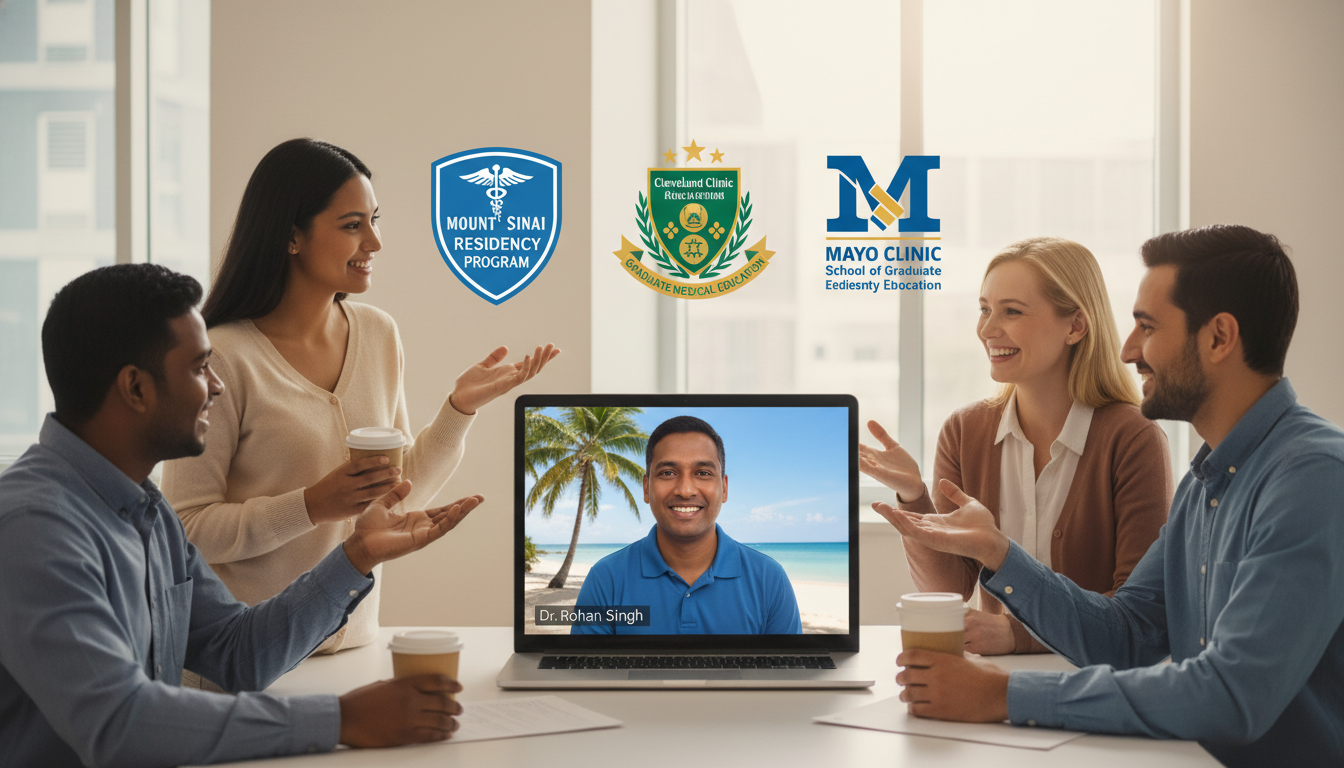
Mastering the Interview Day: Logistics, Timing, and Etiquette
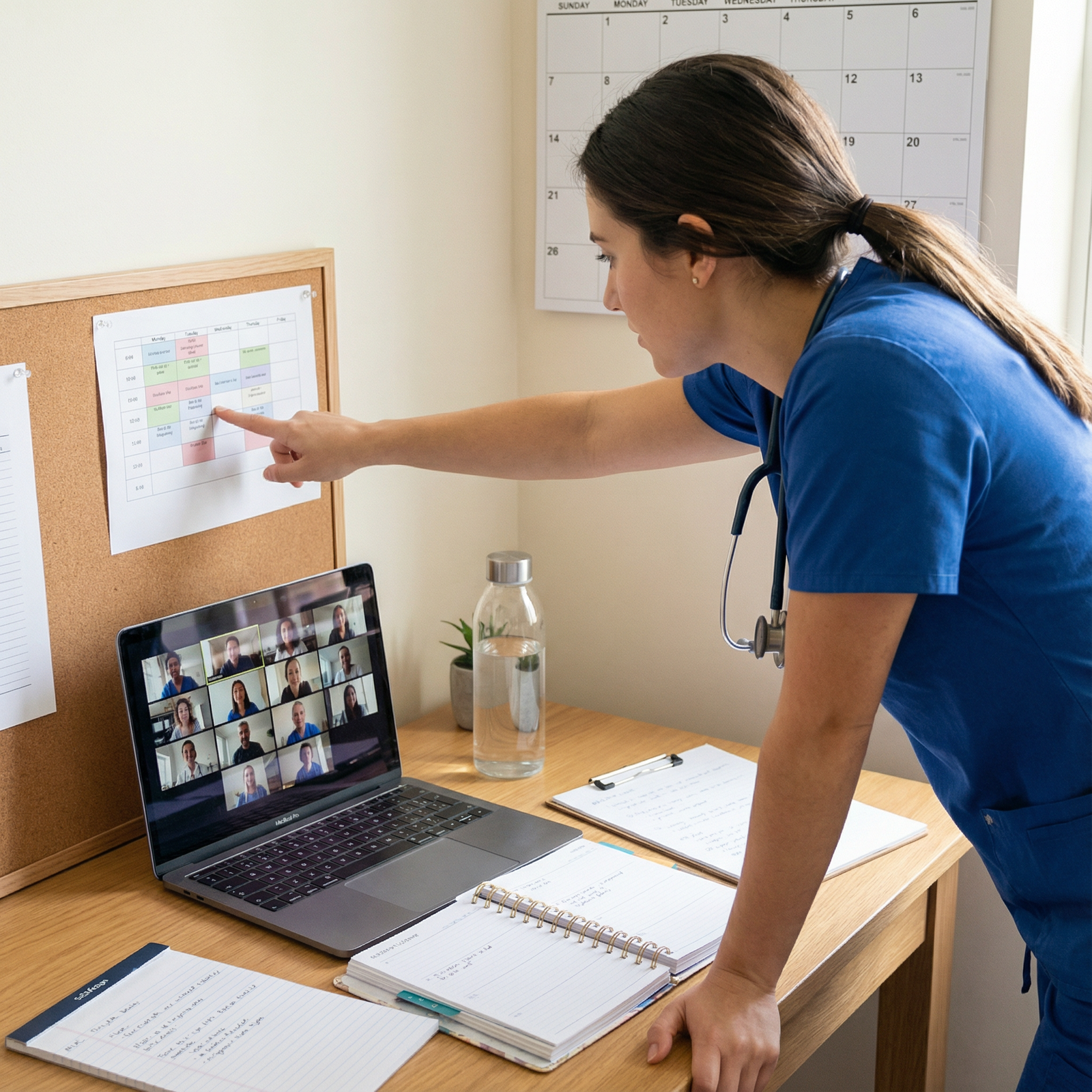
Virtual interview days can be long and fragmented. Many programs include orientation sessions, multiple one-on-one interviews, group interviews, and virtual socials—often all on Zoom.
1. Before the Interview Day
The day before:
- Print or open:
- Interview schedule with names/roles of interviewers.
- Your ERAS application and personal statement.
- Brief notes on the program (1–2 pages).
- Prepare:
- A bottle of water and light snacks.
- Notepad and pen.
- Phone on silent but nearby for emergencies.
- Sleep:
- Protect your sleep 1–2 nights before, especially if you’re in a different time zone than the program.
2. On the Day: Timing and Transitions
- Log in 15–20 minutes early to check your connection.
- Use your full name as it appears in ERAS.
- Keep your camera on unless instructed otherwise.
- Mute when not speaking in group sessions but stay visibly attentive.
Between interviews:
- Stand up, stretch, and rest your eyes.
- Avoid checking social media or emails that might distract or upset you.
- Quickly jot down notes about each interaction while it’s fresh.
If there is a technical glitch:
- Stay calm; these happen even to faculty and PDs.
- Apologize briefly: “I’m sorry, it seems my connection froze for a moment.”
- Re-answer any question you suspect they missed.
- If disconnected entirely, rejoin immediately; if you cannot, email or call the coordinator.
3. Virtual Socials and Resident Interactions
Programs now rely heavily on virtual socials to showcase culture. These sessions may feel informal, but they still matter.
- Attend if at all possible; your presence demonstrates interest.
- Stay engaged: camera on, attentive posture.
- Ask residents about:
- Actual work-life balance vs what’s on paper.
- Support systems for residents relocating from far away.
- How IMGs are integrated into the team.
- Strengths and areas for improvement honestly.
Avoid:
- Asking residents to reveal their rank list or confidential information.
- Complaining about other programs, Caribbean schools, or Step exams.
- Dominating the conversation—allow others to participate.
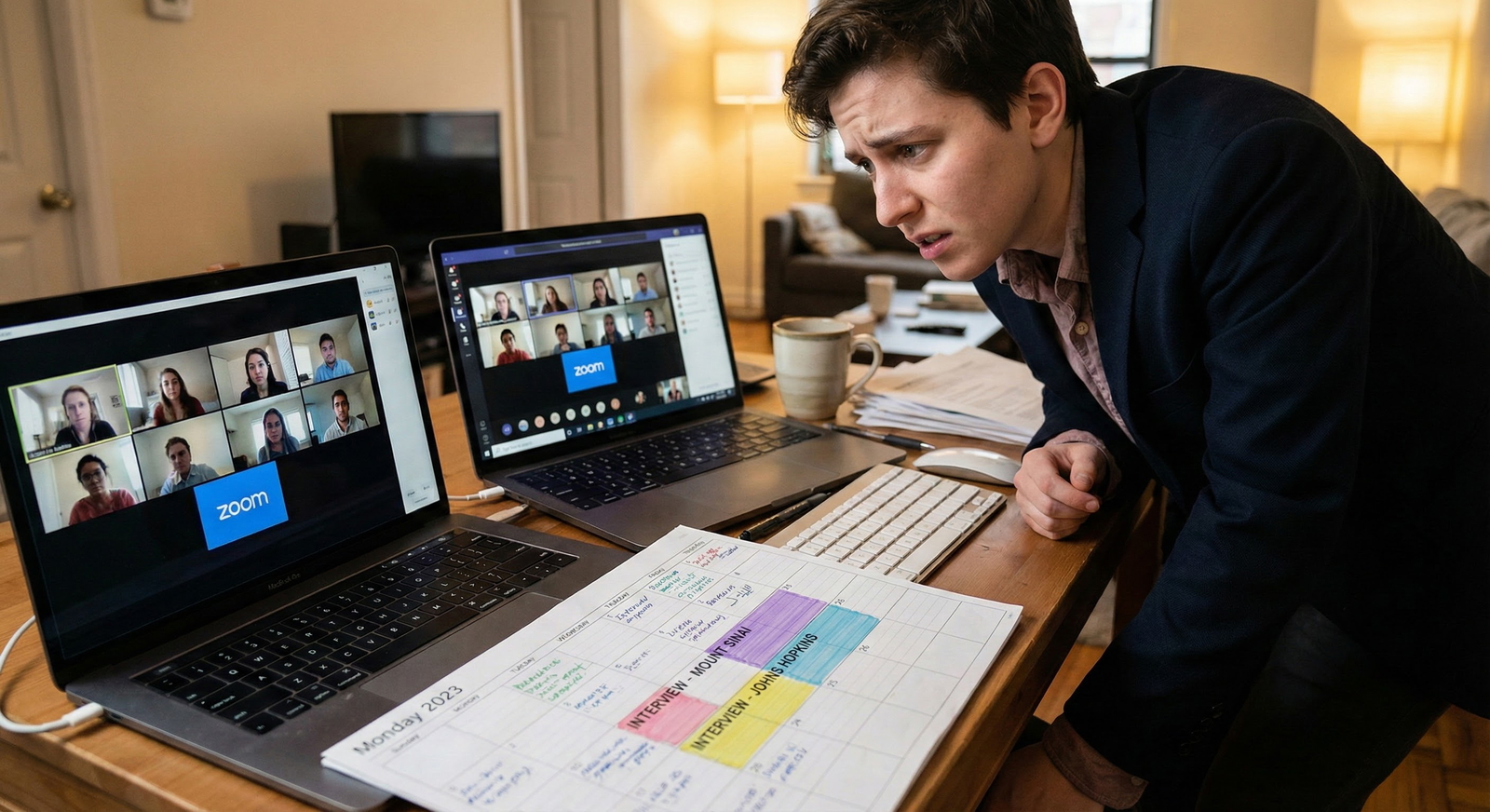
4. Managing Multiple Interviews and Fatigue
Caribbean IMGs often schedule many interviews in a short span to maximize match chances. Virtual format makes it tempting to overbook.
To manage:
- Limit to one major interview day per calendar day whenever possible.
- Build in “off days” for rest and reflection.
- Develop a short post-interview routine:
- Immediately after: write down impressions of the program, pros/cons, red flags.
- That evening: draft thank-you emails while details are fresh.
If you must do two in one day (e.g., different time zones):
- Clearly separate the two: change room lighting or small background details, change tie or accessory.
- Mentally “reset” between them: short walk, breathing exercises, brief snack.
Following Up and Maximizing Match Outcomes as a Caribbean IMG
How you handle the period after interviews can influence your rank list decisions and, in subtle ways, your standing with programs.
1. Thank-You Emails and Professional Communication
Within 24–48 hours:
- Send brief, sincere thank-you emails to:
- Program director.
- Associate director or key faculty who interviewed you.
- Residents with whom you had extended conversations.
Structure:
- Greeting by name.
- 1–2 specific references to your conversation.
- One sentence linking your interest to a specific program feature.
- Professional closing with full name and AAMC ID.
Example:
Subject: Thank You – [Your Name], [Interview Date]
Dear Dr. [Name],
Thank you for the opportunity to interview with [Program Name] on [date]. I especially appreciated our discussion about [specific topic]. It reinforced my strong interest in your program’s emphasis on [specific program strength], which aligns closely with my goals in [specialty/interest area].
I am grateful for your time and consideration.
Sincerely,
[Full Name], MD
AAMC ID: [#######]
Keep tone professional; avoid statements that could be interpreted as promises about rank order unless you are absolutely certain and understand NRMP rules.
2. Evaluating Programs from Virtual Impressions
Without on-site visits, Caribbean IMGs must rely more heavily on:
- Interactions with residents and faculty.
- How honestly they answer your questions.
- How organized and respectful the interview day feels.
- Evidence of support for IMGs (visa sponsorship, prior Caribbean graduates, structured orientation).
Create a simple comparison spreadsheet:
- Columns: Program Name, Location, Visa Support, IMG-Friendly, Faculty Impression, Resident Culture, Education Quality, Call Schedule, Research/QI opportunities, “Gut Feeling.”
- Fill in right after each interview to avoid mixing them up.
Use this to build a thoughtful rank list that balances:
- Chances of matching.
- Fit with your learning style and career goals.
- Support for an IMG’s unique transition.
3. Confidence and Mindset as a Caribbean IMG
Virtual interviews can feel intimidating, especially if you worry about school bias. Remember:
- Many programs highly value the resilience and adaptability of Caribbean IMGs.
- Successful Caribbean medical school residency matches happen every year across multiple specialties.
- A polished, prepared performance in your virtual residency interview can strongly counteract initial skepticism.
Anchor your mindset in preparation, not comparison. You are not competing to prove your school is “good enough”; you are demonstrating that you, personally, are ready to be an excellent resident and colleague.
FAQ: Virtual Residency Interviews for Caribbean IMGs
1. Do programs view virtual interviews differently for Caribbean IMGs vs. US grads?
Programs officially evaluate all applicants by the same standards, but the virtual format gives you an important chance to counter any bias related to being an IMG. They will be looking closely at your professionalism, communication, and maturity. A strong virtual presence, clear motivation, and well-prepared answers can demonstrate that you are at least as residency-ready as US graduates.
2. How can I handle questions about why I chose a Caribbean medical school?
Be honest, positive, and forward-looking:
- Briefly explain the reason (e.g., competitiveness, timelines, life circumstances).
- Emphasize that it was a deliberate decision, not a last resort.
- Highlight what you gained—resilience, adaptability, exposure to diverse patient populations.
- Connect your training to your success in US clinical rotations and readiness for residency.
Avoid negative comments about other systems or sounding defensive.
3. Are virtual backgrounds acceptable for residency interviews?
Yes, if your real environment cannot be made professional. Choose a simple, neutral background (e.g., plain wall or office-like setting). Test it to ensure there’s no distortion around your outline. If your real background is clean and quiet, that’s often preferable because it feels more natural.
4. What are the most important Zoom interview tips specifically for Caribbean IMGs?
For Caribbean IMGs, the highest-yield zoom interview tips include:
- Test your tech and environment thoroughly to avoid preventable glitches.
- Practice speaking clearly and slightly slower to ensure easy understanding over video.
- Prepare thoughtful, structured answers to questions about your IMG path, USMLE performance, and US clinical rotations.
- Research each program thoroughly and reference specific features during the conversation.
- Show confidence without arrogance—your journey already demonstrates resilience; let that come through in how you speak about your experiences.
By aligning strong online interview preparation with consistent professional behavior on camera, you significantly increase your chances of a successful Caribbean medical school residency match in the virtual era.