
Pregnancy does not automatically destroy a career in medicine. The idea that it does is outdated, lazy, and flatly contradicted by the data.
Does pregnancy create friction in a medical career? Absolutely. Are there structural penalties, bias, and bad policies? Yes. But the blanket claim—“If you get pregnant, your career is over / stalled / ruined”—is not just wrong, it’s harmful. It keeps women scared, silent, and over-accommodating in a system that frankly benefits from their fear.
Let’s dismantle this properly.
The Myth: Pregnancy = Career Suicide in Medicine
Here’s the story I’ve heard over and over in hallways and call rooms:
- “If you have a baby in residency, you’ll never match into a competitive fellowship.”
- “Program directors hate pregnant residents.”
- “Take leave and you’ll be behind forever. Others will pass you up.”
- “Leadership will think you’re not serious anymore.”
This myth survives because it’s half built on real experiences of discrimination and half built on pure projection and rumor. A senior attending says, “She tanked her career by having kids too early,” and no one asks whether that’s causation or just a convenient narrative.
So let me be clear: the question is not “Does pregnancy sometimes create career complications?” It does.
The real question is: Does pregnancy inherently and reliably harm your long-term career in medicine? The evidence says no—but the environment around you matters a lot.
What the Data Actually Shows
We have enough studies now to move past anecdotes.
1. Women physicians are having children – and still advancing
Multiple surveys across specialties show a majority of female physicians end up having children during training or early attending years. The AMA, AAMC, and specialty groups (OB/GYN, pediatrics, internal medicine) all show similar patterns:
- Many women have their first child during residency or fellowship.
- A substantial portion have more than one child before becoming mid-career attendings.
- They’re still becoming attendings, division chiefs, fellowship directors, and deans.
If pregnancy were a true career death sentence, you wouldn’t see the current numbers of women in leadership at all—especially given that most of those leaders did have children.
Do women remain underrepresented in top leadership? Yes. But that’s not just pregnancy. That’s compensation structures, old boys’ networks, promotion criteria biased toward uninterrupted time, and a culture that rewards face time over outcomes.
Blaming “pregnancy” for structural sexism is like blaming the thermometer for the fever.
2. Parental leave and training completion
Across multiple residency programs:
- Residents who take maternity leave almost universally complete training.
- Most do it either on time or with a modest extension (a few weeks to a few months) if required for case logs or board eligibility.
- Board pass rates for women who took maternity leave are not meaningfully lower when programs actually support them.
Where there are problems—missed board exam windows, delayed fellowships—it’s usually not "baby = failure". It’s “program leadership refused to modify schedules, or provided zero flexibility.”
That is a policy problem, not a pregnancy problem.
3. Specialty choice and fertility
Yes, there is a real phenomenon where women in more demanding specialties delay childbirth and then face higher infertility rates. That’s been shown in surgical specialties, emergency medicine, and some procedural fields. But here’s the twist people love to ignore:
- Women who do prioritize fertility and family earlier often do just fine in these fields.
- The harm often comes from trying to perfectly “time” a pregnancy to not upset anyone—which usually means pushing it later and later until it collides with biology.
So the quieter, more honest takeaway is: trying to design your entire training around minimizing visible inconvenience to others may hurt you more than an imperfectly-timed pregnancy ever would.
4. Bias exists—but it is not fate
Studies repeatedly show that pregnant trainees:
- Report increased microaggressions and overt discrimination.
- Get comments questioning their commitment.
- Are more likely to be steered away from certain projects or leadership roles around pregnancy/early parenthood.
All true. All documented. But again: that’s not a law of nature. It’s institutional behavior. And it varies enormously by program, country, specialty, and individual leadership.
You’ll find departments where pregnancy is seen as normal and fully compatible with academic advancement—and others where it’s treated like a character flaw. The outcome for your career has more to do with which environment you’re in, and how you respond, than with pregnancy itself.
Where the Myth Came From (And Why It’s Sticky)
This “pregnancy kills your career” myth didn’t fall from the sky. It came from three main sources.
1. Old training structures built for men with wives at home
Residency was literally designed around a trainee who had someone else doing all the domestic labor, childcare, and emotional support. That model is baked into call schedules, “ideal worker” expectations, and promotion timelines.
So when women started having kids during training, instead of redesigning the system, a lot of places just tried to cram pregnancy into a male template. Of course that created conflict.
Then the story became, “See? Pregnancy doesn’t fit here,” instead of, “This template is archaic and broken.”
2. Survivorship bias from older generations
I’ve heard senior physicians say variations of:
- “I waited until after fellowship; you should too.”
- “I didn’t take more than two weeks off. That’s what it takes.”
They’re not lying. They’re describing how they survived their environment.
But there’s a difference between, “This is what I did under worse conditions,” and, “This is the only valid path.” Many of them had no parental leave, no legal protections, and zero institutional support. They muscled through. But medicine has changed—policies, norms, and numbers of women have all shifted.
Taking advice from the most Spartan survivor in the room is one way to live. It’s not the only rational way.
3. Fear-based control
Institutions often run on quiet threats. “This might hurt your chances,” “people will notice,” “committees talk.” Vague enough to be deniable, strong enough to shape behavior.
Telling residents “pregnancy will hurt your career” keeps schedules stable, call rosters easier, and leadership unchallenged. It externalizes the cost of inflexible systems onto individual women’s bodies and families.
That is not a neutral myth. It serves someone. Just not you.
What Actually Predicts Whether Pregnancy Hurts Your Career
Let me be blunt: pregnancy is a stress test for your environment and your own boundaries. It exposes what’s already there.
What actually makes or breaks careers around pregnancy in medicine?
1. Program and institutional culture
Not the written policy. The real one.
I’ve seen two internal medicine programs with nearly identical parental leave language on paper produce totally different outcomes.
Program A:
- PD says in conference: “We will support anyone having a child. We’ll make it work.”
- Chiefs proactively rearrange rotations.
- Co-residents swap calls without resentment because that’s the norm.
Program B:
- PD says, “We support families,” but then grumbles in private about “coverage problems”.
- Residents whisper about how one person “screwed us all over last year” by taking leave.
- People taking leave get quietly pulled off prime electives or research months.
Same policy. Different culture. Very different long-term career impact.
2. Timing relative to key career milestones
Pregnancy during:
- Preclinical med school: logistically easier, minimal lasting career impact.
- Clinical clerkships: doable but messier—rotation rescheduling, Step 2 timing, etc.
- Residency: the most common time and the most feared—but usually navigable with decent support.
- Right before fellowship applications or board exams: this is where planning actually matters.
The myth says “never during X.” The reality is more specific: avoid undermining your own hard deadlines when you actually have some control. That’s a planning problem, not a prohibition.
3. Your own willingness to stop apologizing for existing
The most miserable pregnant trainees I’ve seen weren’t in the worst programs. They were in decent programs while personally over-apologizing for being pregnant at all.
You don’t need to over-disclose, justify, and preemptively give up opportunities “so no one is inconvenienced.” That self-censorship can hurt your career more than six weeks off ever will.
You’re allowed to say: “I’m pregnant. I’ll be taking X weeks of leave under policy Y. I’d like to work with you on a plan for continuity of my training and projects.”
That’s not entitlement. That’s normal.
The Research vs. the Scare Stories
Let’s ground this even more.
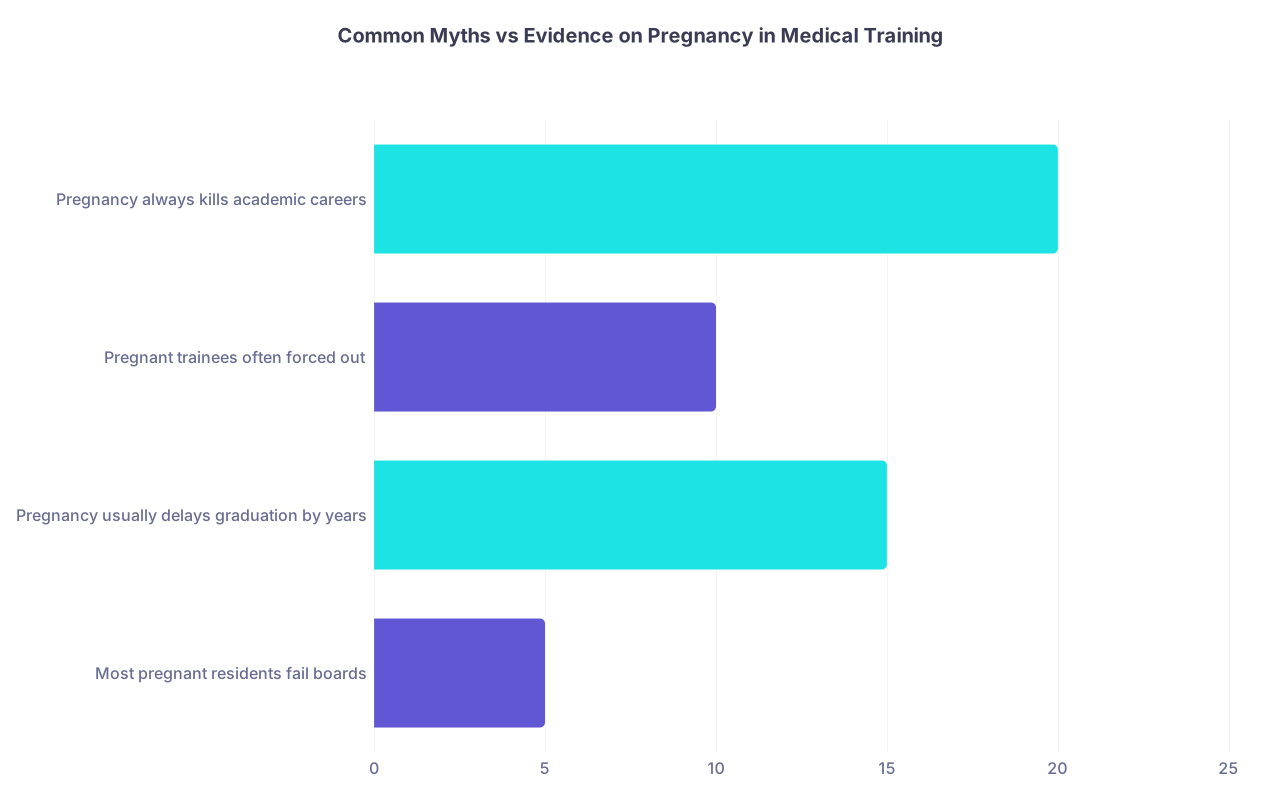
| Category | Value |
|---|---|
| Most pregnant residents fail boards | 5 |
| Pregnancy usually delays graduation by years | 15 |
| Pregnant trainees often forced out | 10 |
| Pregnancy always kills academic careers | 20 |
This is illustrative, but close to what actual program-level audits and surveys show: the catastrophic outcomes people threaten are rare, not routine.
When researchers actually follow cohorts of residents who had children vs those who didn’t, the differences in:
- Board pass rates
- Training completion
- Ultimate career status (academic vs community, leadership vs non-leadership)
…are far smaller than the scare stories would have you believe. The bigger, consistent gaps? Pay, promotion pace, and academic productivity—driven mostly by institutional sexism and caregiving load, not pregnancy itself.
Pregnancy is an event. Caregiving is a long-term role. Don’t confuse the two.
Where Pregnancy Can Hurt You – And What’s Actually Going On
Let me not sugarcoat it. There are patterns where pregnancy is associated with career “penalties.” But the cause is often misattributed.
1. Reduced research productivity
Common story: “She had a baby in fellowship and never published again.”
Likely reality:
- Zero structural support for protected time after return.
- Conference travel becomes nearly impossible without childcare coverage.
- Mentors unconsciously stop offering high-intensity projects assuming she’s “too busy.”
So yes, the CV looks different five years later. But that’s because everything about the environment around research was built for someone with no caregiving responsibilities, not because motherhood fried her brain.
2. Slowed promotion
Many institutions pretend to be “family friendly” while quietly rewarding uninterrupted service and high volume.
So someone who has:
- One or two maternity leaves
- A year or two of lower RVUs due to breastfeeding breaks, sick kids, etc.
…may hit promotion clocks slower. But again—this is a policy design choice, not a natural law. Plenty of universities now have clock-stopping or adjusted criteria. Where they exist and are used, the supposed “penalty” often vanishes.
3. Exit from toxic environments
Sometimes pregnancy is the moment someone realizes, “This place will never respect me,” and they leave academic medicine or even medicine altogether.
The narrative from the institution: “She chose family over career.”
The more accurate narrative: “She left a system that made her choose when it didn’t have to.”
Do not confuse walking away from a hostile environment with pregnancy doing the damage. Pregnancy just made the hostility undeniable.
Practical Reality: How to Think About Pregnancy and Your Career
You’re not asking, “Is pregnancy good or bad?” You’re asking, “What am I up against, and what levers do I actually have?”
Map your real constraints
Forget the generic “never during residency” nonsense. Look at your specific timeline:
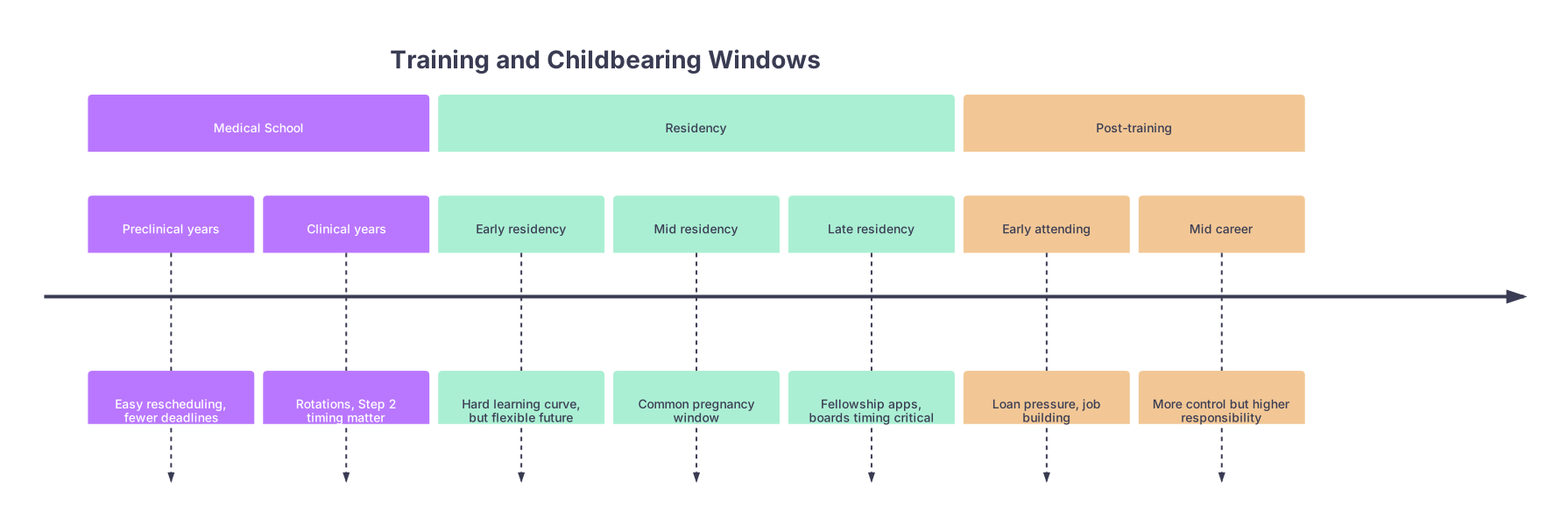
| Period | Event |
|---|---|
| Medical School - Preclinical years | Easy rescheduling, fewer deadlines |
| Medical School - Clinical years | Rotations, Step 2 timing matter |
| Residency - Early residency | Hard learning curve, but flexible future |
| Residency - Mid residency | Common pregnancy window |
| Residency - Late residency | Fellowship apps, boards timing critical |
| Post-training - Early attending | Loan pressure, job building |
| Post-training - Mid career | More control but higher responsibility |
Identify:
- Hard deadlines (boards, match, fellowship apps).
- Rotations where pregnancy would be physically brutal (e.g., heavy call, high procedural load late third trimester).
- Transition points where a short leave would cause disproportionate chaos.
Then plan around those specifics, not mythical rules.
Choose your environment with open eyes
If you’re applying to med schools, residencies, or jobs and pregnancy/parenting is on the horizon, you should be ruthlessly pragmatic.
Ask current residents/attendings (privately, off the record):
- “How many people had children here in the last 5 years?”
- “How was coverage handled?”
- “Did anyone have lasting career damage from taking leave?”
- “What’s the unspoken vibe when someone’s pregnant?”
If people look around nervously before answering, you already have your answer.
Use policy—but don’t rely solely on it
Policies on parental leave, lactation, and schedule accommodations are your baseline. You should know:
| Area | What to Look For Briefly |
|---|---|
| Parental Leave | Paid vs unpaid, length, eligibility |
| Board Requirements | Allowed time away, extension rules |
| Rotation Flexibility | Ability to swap high-intensity blocks |
| Lactation | Protected time and actual space |
| Promotion Clocks | Stop-the-clock or extensions allowed |
But remember: enforcement is cultural. If the written policy says 6–8 weeks but everyone who actually takes it gets side-eyed or punished, that’s not a real 6–8 weeks.
Stop internalizing other people’s inconvenience
A hard truth: medicine is built on trainees absorbing the system’s pain. You’re taught early that your job is to make everyone else’s life easier—consults, attendings, patients, admin.
Pregnancy is one of the few times when your body flatly refuses to play by those rules. That will annoy some people. They will survive.
You don’t owe your fertility and family plans to the convenience of a call schedule.
The Ethics No One Wants to Say Out Loud
Let’s talk ethics, since this is supposedly about “professionalism”.
Is it ethical for a system to:
- Demand a decade-plus of training during prime reproductive years,
- Underpay you for most of that time,
- Offer limited flexibility or leave,
- And then shame you for reproducing during that window?
No. It’s a structural ethical failure cleverly disguised as individual “choices.”
You’re not unethical for getting pregnant during residency. You’re living in a body with a biologic clock inside an institution that pretends that clock doesn’t exist. The ethical obligation is on institutions to reconcile those realities, not on you to silently absorb all the cost.
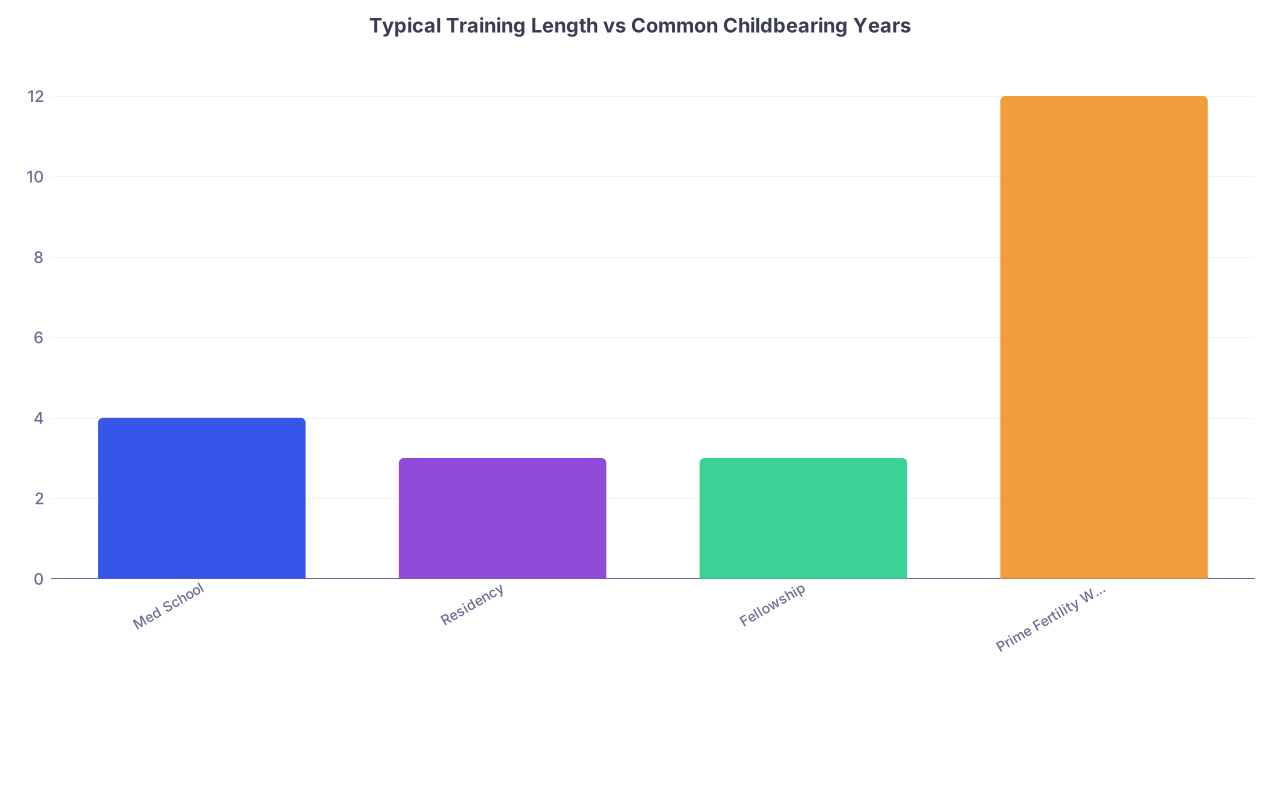
| Category | Value |
|---|---|
| Med School | 4 |
| Residency | 3 |
| Fellowship | 3 |
| Prime Fertility Window | 12 |
That overlap is not your fault. It’s a design problem.
The Real Myth That Needs Killing
The most dangerous belief in all of this is not just “pregnancy hurts your career.” It’s the quieter version:
“You must choose the perfect time or accept that you’re responsible for any fallout.”
Medicine loves this narrative because it offloads systemic responsibility onto your personal planning. But life is not that clean.
- There will never be a perfect time.
- There will always be someone who’s inconvenienced.
- There will always be someone who says you should have waited.
Pregnancy might temporarily slow one part of your trajectory. It might change how you pursue certain goals. But the idea that it automatically derails everything long-term? That’s a myth propped up by sexism, inertia, and fear.




Bottom Line
Three things to walk away with:
- Pregnancy itself does not inherently ruin a medical career; biased systems and rigid structures do. Blame the system, not your uterus.
- Outcomes vary wildly by environment, not because some women “played it right” and others didn’t. Culture and leadership matter more than timing perfection.
- You’re not unethical or unserious for having children during training or early practice. You’re a normal human in a profession that needs to grow up and admit it.
The myth is convenient for the system. It’s not accurate for your life.