
The biggest mistake women in residency make about “allies” is waiting for them to appear instead of deliberately building them.
You do not get strong male and female allies on your residency program by being “nice,” “low maintenance,” or “a hard worker who keeps her head down.” You get them by thinking like a strategist: mapping power, choosing the right people, and giving them reasons to invest in you.
This is not about politics for its own sake. It is about survival, growth, and ethics in a system that still treats women—especially women of color, LGBTQ+ women, and mothers—unequally.
Let us fix that with a concrete plan.
1. Understand What a Real Ally Looks Like (And What They Are Not)
Before you try to “get allies,” you need a clear filter. Not everyone who is friendly is an ally. Some are just pleasant bystanders.
Functional definition of an ally in residency
An effective ally in a residency program:
- Has influence (formal or informal) in your environment
- Uses that influence to reduce harm to you and increase access to opportunities
- Will speak up when you are not in the room, not just comfort you afterward
- Is willing to take some risk—social, reputational, or time—to support you
This can be an attending, senior resident, chief resident, nurse manager, program coordinator, or even another intern with strong peer credibility.

Allies vs. cheerleaders vs. saviors
Here is how I separate them:
Cheerleader: “You’re amazing! That attending is just difficult with everyone.”
- Emotionally nice. Functionally useless if they never act.
Savior: “I will handle everything for you.”
- Sounds good. Often disempowering. Can become controlling or resentful.
True ally: “That was out of line. At the next faculty meeting I will raise this pattern of interruptions. For now, at tomorrow’s rounds, if you start presenting and get cut off, I will redirect back to you. Are you ok with that?”
You are trying to cultivate the third group.
2. Map the Power Structure of Your Program
You cannot build allies without understanding where power actually lives. Title does not always equal influence.
Do this as an explicit exercise.
Step 1: Draw your ecosystem
Grab a sheet of paper (or a note app) and sketch:
- Program director and associate PDs
- Chief residents
- Key attendings (by rotation / service)
- Senior residents who “set the tone”
- Nursing leaders (charge nurses, nurse managers)
- Admin staff who control schedules, credentials, conference calendars
Mark each name with two scores from 1–5:
- Formal power (role, decision-making authority)
- Informal power (who people listen to, who shapes culture)
You are looking for people with at least one “4” or “5.”
| Role | Name | Formal Power (1–5) | Informal Power (1–5) |
|---|---|---|---|
| Program Director | Dr. A | 5 | 4 |
| Associate PD | Dr. B | 4 | 5 |
| Chief Resident | Dr. C | 3 | 5 |
| Senior Resident | Dr. D | 2 | 4 |
| Charge Nurse (ICU) | Ms. E | 3 | 5 |
This is your initial “ally candidate” list.
Step 2: Notice gender and diversity balance
You want both male and female allies, and ideally some from historically marginalized groups. Why?
- Men with power are often gatekeepers for promotions, letters, fellowships
- Women with lived experience of bias often “get it” faster and offer tactical survival strategies
- Mixed-gender ally network reduces the narrative that you are “aligned with one camp”
Look at your map. If it is heavily male at the top (very common), then be very intentional in identifying:
- A few high-power men who are open, fair, and respected
- A few women (even if their formal power is lower) who are culture carriers and truth-tellers
Both are necessary.
3. Make Yourself Easy to Back Professionally
Allyship is not pity. It is investment. People back residents they believe in.
Let me be blunt: some residents want allies to rescue them from consequences of unreliability. That is not allyship, that is damage control, and it burns bridges.
You do not need to be perfect, but you need to be:
- Clinically safe
- Reasonably prepared
- Open to feedback
The “backable” resident checklist
For the first 3–6 months on a new service or in a new program, focus on:
Baseline competence
- Know your patients cold on rounds
- Read for your cases / common diagnoses
- Ask focused questions, not endless “teach me everything” pleas
Predictability under pressure
- Respond to pages
- Admit when you do not know something before it becomes a safety issue
- Document clearly
Professional behavior
- Show up on time; if late, own it without a long story
- Avoid gossip, especially upward gossip about other residents
Once people see you are solid, they are far more willing to stick their neck out when you are treated unfairly.
Strong allies often say some version of: “She is excellent and this pattern she is describing worries me.” That pairing—competence plus concern—is powerful.
4. How to Approach Potential Allies (Without Being Awkward)
You are not asking people “Will you be my ally?” You are building a working relationship that can grow into allyship.
Use the “3 touch” method
For each potential ally from your map, aim for three kinds of interactions over a few weeks:
- Substantive professional interaction
- Present on rounds, discuss a patient, ask for specific feedback
- Brief 1:1 interaction
- “Could I grab you for 5 minutes after rounds for some quick feedback on how I am doing?”
- Structured meeting (15–20 minutes)
- “I am trying to be intentional about my development in residency. Would you be open to a short meeting about goals and how to get the most out of this program?”
After those three, you will usually know:
- Do they take you seriously?
- Do they give thoughtful, specific feedback?
- Do they show any interest in your development beyond polite phrases?
If yes, you have the start of an ally relationship.

| Step | Description |
|---|---|
| Step 1 | Identify Potential Ally |
| Step 2 | Professional Interaction |
| Step 3 | Quick Feedback Chat |
| Step 4 | Short Goal Meeting |
| Step 5 | Maintain and Grow Allyship |
| Step 6 | Deprioritize and Move On |
| Step 7 | Helpful and Respectful? |
Example outreach scripts
For a male attending you respect:
“Dr. Shah, I have appreciated how you run rounds and the way you balance efficiency with teaching. I am trying to be very deliberate about growing early in residency. Would you be open to a 15–20 minute meeting sometime this month so I can get your feedback on what you see as my strengths and weaknesses and how I can best position myself for an academic career?”
For a senior female resident:
“Sara, I have noticed interns seem comfortable asking you for help, and you are clearly trusted on this service. As a junior woman in the program, I would really value your perspective. Would you mind if I asked you sometime about how you approached building credibility here and handling challenges?”
You are not asking for protection. You are asking for guidance. That is much easier for people to say yes to.
5. Turn Good Colleagues into Active Allies
Friendly rapport is stage one. You now need to convert that into actual ally behavior: speaking up, opening doors, and backing you when needed.
Step 1: Share your goals and values
In one of those early meetings, say clearly:
- What you care about (patient care, teaching, research, specific subspecialty)
- How you hope to grow (confidence on rounds, leadership, procedural skills)
- What kind of environment you are trying to help create (respectful, safe for questions, equitable)
This context lets them see you not just as “an intern” but as a future colleague.
Example:
“Longer term I am interested in critical care and academic medicine, and I care a lot about inclusive teaching environments. I want medical students and junior residents to feel safe speaking up and asking questions. I would love to learn how you have done that.”
You are flagging yourself as someone who cares about culture and ethics. That can trigger ally instincts in the right people.
Step 2: Give them small, specific ways to support you
People are more likely to act if you give them:
- A clear situation
- A specific ask
- Permission to support in a way that fits their style
For example, after being talked over in conferences repeatedly:
“Dr. Shah, I have noticed that in our ICU rounds, when I start to present, I am sometimes interrupted before I finish the assessment and plan. I have tried tightening my presentations, but it keeps happening. If you notice that again, would you be comfortable saying something like ‘Let her finish her plan and then we will discuss’? I think hearing that from you would reset the tone.”
Most decent attendings will say yes. And once they do it once, they often keep doing it because they see the effect.
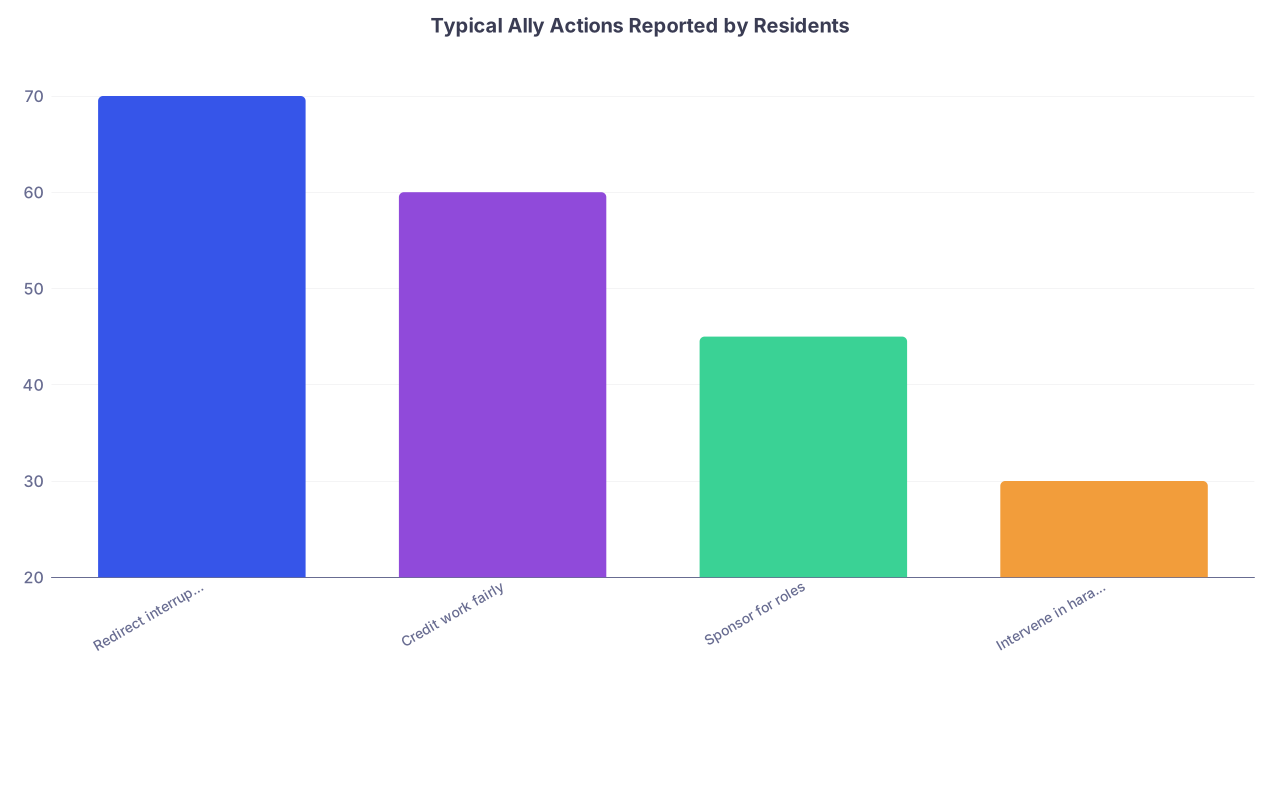
| Category | Value |
|---|---|
| Redirect interruptions | 70 |
| Credit work fairly | 60 |
| Sponsor for roles | 45 |
| Intervene in harassment | 30 |
(Percentages are illustrative, but the ranking matches what I have seen: small culture shifts are more common than dramatic interventions.)
6. Handling Gendered Bias and Microaggressions: A Playbook
You are in medicine. You will face gendered garbage: being mistaken for a nurse automatically, being described as “emotional” where a male colleague is “passionate,” getting called by first name while male peers are “Doctor.”
You need two layers of response:
- On-the-spot micro-interventions you can use yourself
- Escalation paths where allies act with you or for you

Quick scripts you can use personally
Being mistaken for non-physician staff
- “I am the resident on your team today. Your nurse is [name], and she is excellent.”
- To staff: “Just a reminder, I am the resident. When we introduce the team, can we clarify roles up front?”
Interrupted repeatedly on rounds
- “I will finish my assessment and plan, then we can discuss.”
- If a colleague cuts in for the third time: “Let me complete my thought, then I want to hear your perspective.”
Gendered language in evaluations or conversation
- “When you say I am ‘too assertive,’ can you give me examples, and how that differs from what you would expect from a male resident at my level?”
These are not magic bullets, but they signal to potential allies nearby that you care about this and can hold your own. That often prompts them to step in the next time.
How and when to activate allies
If the behavior is recurrent or significant (harassment, threats to safety or career), you bring in allies.
Here is a simple framework:
Document
- Date, time, who, what was said/done, witnesses
Debrief with a trusted ally (ideally one man and one woman if possible)
- “Can I run a situation by you and get your thoughts on how to handle it?”
Specific ask depending on their role
For a senior resident:
“Next time Dr. X raises his voice like that at me in front of the team, could you say something in the moment like ‘Let us keep feedback constructive’ or ‘We should step aside to discuss’? I think that boundary from a senior would help.”
For an attending:
“Would you be willing to mention at the faculty meeting that residents have reported gendered comments and that we need consistent professional norms?”
For a chief or PD:
“I need this documented and addressed formally. I am concerned about retaliation and how this may affect my evaluations. How do we protect against that?”
You are not just venting. You are giving them a job.
7. Special Focus: Securing Strong Male Allies Without Playing Into Stereotypes
You will hear two toxic myths:
- “Men are the problem, women should just support each other.”
- “If you work too closely with male attendings, people will talk.”
Both are garbage.
You need strong male allies because men still hold a disproportionate share of power, titles, and gatekeeping positions.
The trick is to structure those relationships so they are clearly professional and clearly principled.
What strong male allies look like in practice
The best male allies in residency I have seen:
- Model public respect for women colleagues
- Interrupt sexist jokes or “boys club” side conversations
- Give credit for work in front of others instead of absorbing it
- Put women forward for visible roles: presenting at conference, leading QI projects, co-authoring papers
- Ask: “How would this policy/feedback land differently for women in our program?”
You can set up those dynamics intentionally.
How to invite men into allyship explicitly
Use direct language. Men who want to help usually appreciate clarity.
Example approach:
“Dr. Lopez, I have noticed you are very fair with feedback and call out interruptions on rounds. As a woman resident, I care a lot about equity in our program. I am trying to be proactive about finding attendings who are willing to be strong allies for women trainees. Is that something you are open to? Practically, that sometimes looks like redirecting when women are talked over or helping flag biased language in evaluations.”
You are naming the behavior, not asking for vague “support.” It also gives them language to use with other men.
8. Build a Parallel Network of Strong Female Allies
You also need women—peers and seniors—who can:
- Normalize what you are experiencing (“No, you are not crazy; that is bias”)
- Share strategic scripts and local intel (“With Dr. Y, you email before rounds”)
- Back you when you push for changes (“We have noticed this pattern, not just her”)
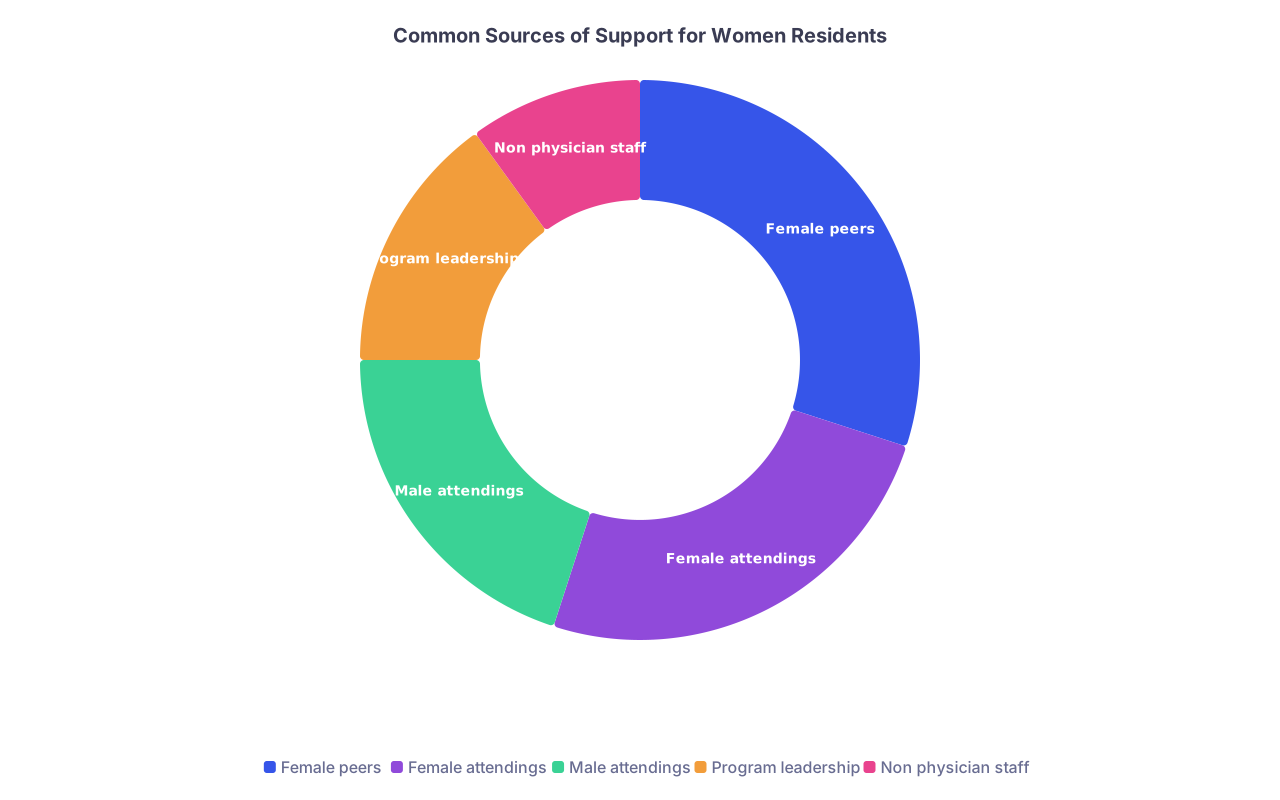
| Category | Value |
|---|---|
| Female peers | 30 |
| Female attendings | 25 |
| Male attendings | 20 |
| Program leadership | 15 |
| Non physician staff | 10 |
Again, the numbers are illustrative, but the pattern holds: peers and female attendings are huge.
How to deepen female ally relationships
Create small, regular touchpoints
- Occasional coffee after clinic
- Monthly “women in our program” lunch (informal, not a complaint session only)
Share scripts and strategies, not only stories
- “When Dr. X called me ‘young lady,’ I answered, ‘It is Dr. Khan, and here is the plan.’ It shifted the tone.”
- “When I needed to negotiate pumping time, I emailed [this language] and CC’d [these people]. It helped.”
Agree on some shared norms
- “We will back each other on rounds if one of us is being interrupted.”
- “If an attending critiques one of us inappropriately, we will try to add context rather than pile on.”
Female allies do not have to like each other socially. They need a minimal professional solidarity agreement.

9. Protect Yourself from Toxic “Allies”
Some people will offer “help” that carries strings or risk. You do not need them.
Watch for:
Boundary crossing disguised as mentorship
- Late-night texts not about patient care
- “Let us discuss this over drinks, just us” from someone with power over your evaluation
Possessive behavior
- “You do not need to work with anyone else, I will take care of you”
- Discouraging you from talking to other mentors
Using you for their politics
- “You should file a complaint, that will show them” (when they will not put their own name on anything)
Your safety and reputation matter. If a supposed ally makes you uncomfortable, talk to a second person you trust and consider quietly distancing:
- Decline 1:1 social invitations outside professional norms
- Keep communication to email or group chats
- Request that feedback or meetings happen with a third party present (another attending, chief, etc.)
Allies do not require secrecy.
10. Turn Allyship into Structural Change
Personal allies are short-term protection. The real win is when you help convert their support into program-level improvements.
Once you have a small coalition (a couple of attendings, a chief, a few residents), you can push for concrete things:
- Rounding norms: No public shaming, no yelling, everyone presents their own patients
- Evaluation audits: Looking at gendered language (“bossy,” “emotional,” “too quiet”) in evaluations
- Protected time for lactation, prenatal care, or caregiver responsibilities
- Faculty development sessions on bias and feedback

| Step | Description |
|---|---|
| Step 1 | Personal Ally Relationships |
| Step 2 | Identify Repeated Issues |
| Step 3 | Small Coalition Forms |
| Step 4 | Define Concrete Policy Ask |
| Step 5 | Present to Leadership |
| Step 6 | New Norms or Policies |
| Step 7 | Monitor and Adjust |
You do not have to lead all of this. But you can be the one who quietly connects the dots:
- “Dr. Lopez, the chiefs and a few of us have noticed the same pattern. Could you back us if we propose a change at the next CCC meeting?”
That is how personal allies become institutional advocates.
FAQ (Exactly 3 Questions)
1. How do I build allies if I am introverted or hate “networking”?
Skip fake networking. Focus on doing your job well and then choose 3–5 people you genuinely respect. Ask them for very specific, time-limited things: a 15-minute feedback meeting, their perspective on one decision, their thoughts on one case. Consistency beats volume. You can build deep ally relationships with a small number of people if you show up prepared, listen carefully, and follow through on their advice.
2. What if my program culture is so bad that there are almost no safe potential allies?
Then your strategy shifts to risk management and external support. Identify at least one person outside your program: a mentor from medical school, a faculty member in another department, a national organization (e.g., Women in Medicine groups, specialty societies). Use them for documentation, strategy, and, if necessary, letters. Inside the program, even one decent chief, associate PD, or nurse leader can be an ally on specific issues like scheduling, call coverage, or stepping in during acute situations.
3. How do I ask for ally support without being labeled “difficult” or “oversensitive”?
You frame concerns around patient care, educational quality, and professional norms, not personal grievance. For example: “I am concerned that being interrupted constantly on rounds affects my ability to communicate patient plans clearly and safely. I would appreciate your help in setting a more consistent structure.” You also pair concerns with evidence (dates, patterns, specific quotes) and with a concrete, reasonable ask. Reasonable people respect that. If someone labels you “difficult” for that, they were never going to be a good ally in the first place.