Call month does not destroy you by accident. It destroys you because you walk into it without a plan.
Here is the fix: you treat call month like an athletic event. You script your food, your sleep, and your studying before day one. Then you execute. Not perfectly. Just reliably.
I am going to give you a blueprint you can literally copy-paste into your calendar and weekly planner. No fluff. Just systems.
Step 1: Build a Call Month Map Before It Starts
Most residents “see how it goes.” That is code for “I will be exhausted, reactive, and constantly behind.” You are going to do the opposite: you will pre-plan the month.
1. Collect the raw data
Sit down for 30 minutes, no distractions, and pull up:
- Your call schedule (in-house, home call, night float, weekends)
- Your clinic/OR/school days
- Any known exams, presentations, or evaluations
- Personal immovable events (partner’s graduation, kid’s birthday, religious holidays, critical appointments)
Now map these in a simple structure you can see at a glance.
| Day | Day/Evening | Night/Call | Notes |
|---|---|---|---|
| Monday | Regular | Post-call sleep | Light admin only |
| Tuesday | Regular | Pre-call | Heavy meal prep |
| Wednesday | Regular | 24h in-house | No obligations next AM |
| Thursday | Post-call | Recovery | Short study only |
| Friday | Regular | Night float | Early nap |
| Saturday | Post-night | Night float | Minimal social plans |
| Sunday | Post-night | Off | Long sleep, reset |
Do not skip this map. If it lives only in your head, you will underestimate how brutal the stacking can get.
2. Identify red zones, yellow zones, green zones
Use a pen, not your brain.
- Red zones = High-risk for meltdown
- Back-to-back calls
- 24h call followed by early clinic
- Night float stretches (3+ nights)
- Yellow zones = Manageable but tight
- Single call in a week
- One post-call clinic
- Green zones = Relatively open
- Days off
- Evenings after an easy day
- Post-call when you are allowed to go home by noon and next day is light
Circle or highlight each day accordingly. That classification drives your food, sleep, and study plan.
Now you know where to frontload, where to maintain, and where to cut ruthlessly.
Step 2: Meal Planning That Survives Call
Most call misery is blood sugar and dehydration disguised as “stress.”
You do not need perfect nutrition. You need automatic nutrition.
1. Decide your food strategy once for the month
Pick a primary strategy and one backup:
- Strategy A: Full meal prep at home
- Strategy B: Hybrid (breakfast/snacks prepped, buy one meal at hospital)
- Strategy C: Outsource (meal delivery, grocery prepared foods, partner helping)
If you try to “decide daily,” you will default to vending machines and cold pizza.
Minimum nutrition standard for call month
Non-negotiables:
- 2 real meals per 24 hours (not just snacks)
- Protein at every meal (20–30 g)
- One fruit or vegetable every 12 hours
- 2 L water minimum daily
- Caffeine cutoff plan (different for day vs night shifts)
You can hit that on gas station food if you must, but we want better.
2. Build a 7-day repeatable meal template
You are not cooking “recipes.” You are assembling components.
Pick:
- 2–3 proteins
- Rotisserie chicken
- Ground turkey or beef
- Tofu / beans / lentils
- 2–3 carbs
- Rice, quinoa, couscous
- Tortillas, whole grain bread
- 2–3 vegetables
- Frozen mixed vegetables
- Prewashed salad kits
- Baby carrots, snap peas, cherry tomatoes
- 2 easy breakfasts
- Overnight oats / Greek yogurt + granola
- Eggs + toast / breakfast sandwich
- 3–4 “grab and go” snacks
- String cheese, nuts, protein bars
- Hummus + crackers
- Fruit (bananas, apples, oranges)
Then set a standard weekly prep block:
- If mostly days with occasional call → 2-hour prep on Sunday
- If heavy nights / 24s → split: 1 hour two days before the heavy run, 1 hour mid-run
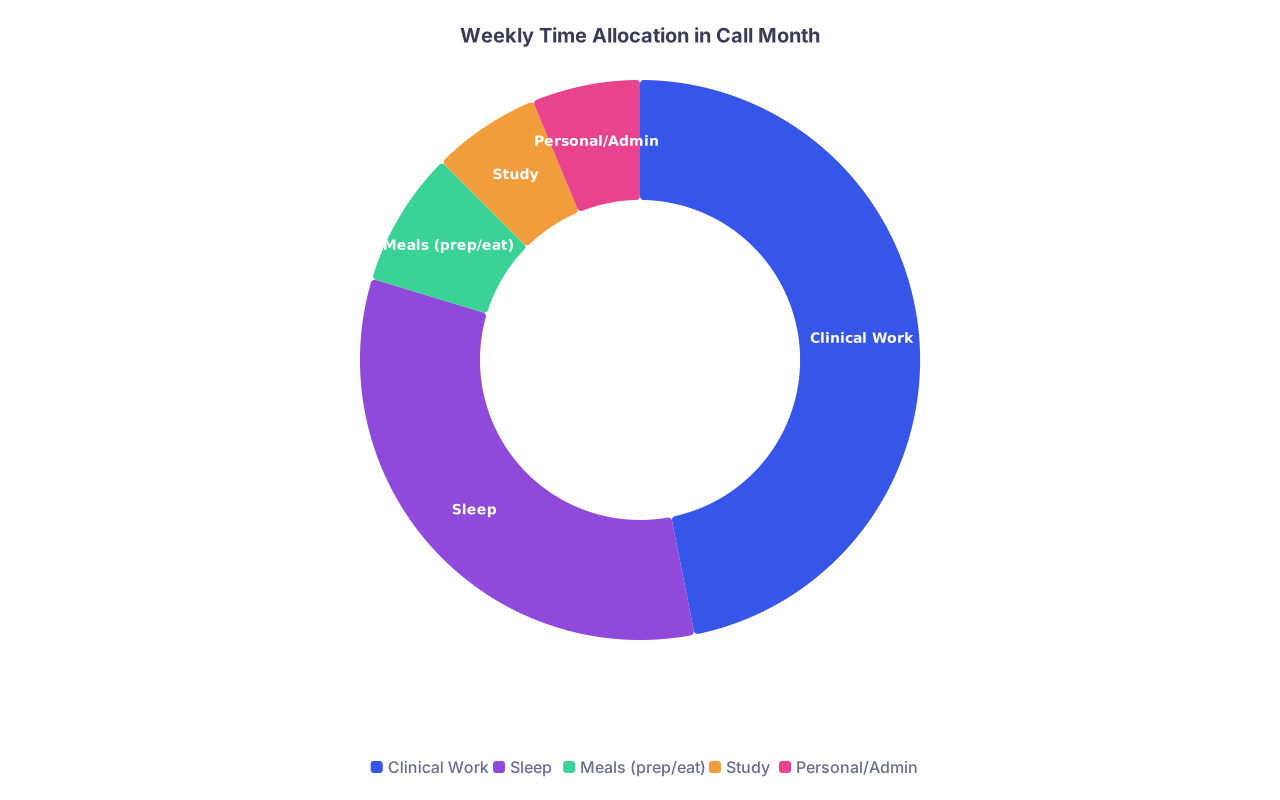
| Category | Value |
|---|---|
| Clinical Work | 60 |
| Sleep | 42 |
| Meals (prep/eat) | 10 |
| Study | 8 |
| Personal/Admin | 8 |
You are not training for MasterChef. You are trying to stay conscious, ethical, and sane.
3. Hard rules for call-day food
On any day you are in-house overnight, follow this exact protocol:
- Before shift (home or cafeteria):
- Full meal with protein + complex carb
- 500–750 mL water
- Caffeine if needed, but not within 6 hours of anticipated end-of-shift sleep
- During shift:
- Set alarms for 2 planned “food events” (e.g., 23:30 and 03:30)
- Snack at each: handful of nuts, bar, yogurt, fruit
- Minimum: 1 L water over the night; keep a bottle at the workstation
- Last 2 hours:
- Caffeine: only if you must drive home and you are dangerous without it
- Avoid heavy greasy food right before leaving; it will wreck your post-call sleep
And yes, you set alarms. "I will eat when I am free" is a lie your brain tells you at 2 a.m. while charting a septic shock admission.
4. Post-call nutrition reset
When you are post-call and heading home:
- Drink 300–500 mL water before leaving
- Eat something light but real before sleeping
- Half sandwich + fruit
- Yogurt + granola
- Leftovers in a small portion
It prevents that brutal 15:00 “I feel like I am dying” crash after 4–5 hours of post-call sleep.
5. If you completely blow the plan
Because you will. Here is the damage control protocol:
- You missed meals, you are wrecked, you ate trash:
- Next 24 hours → focus on hydration, one real meal, and sleep; forget being “healthy”
- Avoid the guilt spiral. Call month is survival mode, not performance nutrition.
Ethically, you do not get bonus points for martyrdom. Fainting during rounds because you skipped food is not dedication. It is negligence toward your patients and yourself.
Step 3: Sleep Architecture for Call Month
You do not “catch up” on sleep during call month. You minimize how badly you destroy yourself.
You design your sleep around your pattern of calls.

| Step | Description |
|---|---|
| Step 1 | Identify Call Type |
| Step 2 | Anchor Night Sleep |
| Step 3 | Pre-call Sleep Bank |
| Step 4 | Night Float Strategy |
| Step 5 | Consistent Bed/Wake Time |
| Step 6 | 2h Pre-call Nap |
| Step 7 | Split Sleep Blocks |
| Step 8 | Day Call? |
| Step 9 | 24h Call? |
1. For mostly day call (in-house, but not full nights)
- Anchor sleep: choose a consistent bedtime and wake time for non-call days
- Example: 23:00–06:00
- Night before call:
- Prioritize full 7 hours if at all possible
- Screen cutoff 45 minutes before bed
- Night of call:
- Micro-nap only if actually safe and allowed
- Post-call:
- Go home, immediate sleep for 3–4 hours
- Wake by 14:00–15:00 at the latest
- Short walk, light food, plenty of water
- Back to bed at your anchor time if you can
The key: Do not sleep 8 hours post-call and then be wide awake at 3 a.m. before a regular workday.
2. For 24-hour in-house call
You treat 24s like a storm you see on radar.
Pre-call day:
- Target 8–9 hours of sleep the night before
- If schedule allows, add a 60–90 minute nap within 4–6 hours of start time (e.g., 14:00 nap for a 18:00–18:00 call)
- Hydrate early, cut caffeine by 14:00 if start is late afternoon/evening
During call:
- If there is downtime:
- Micro-naps of 10–20 minutes with an alarm are better than nothing
- Go horizontal if possible; body position matters
- Avoid long groggy 60-minute naps that leave you worse
Post-call:
- Standard: 3–5 hours of sleep immediately after reaching home
- Wake, eat, sunlight for 20–30 minutes
- Do not schedule meaningful obligations late afternoon; block it as “recovery and essentials only”
3. For night float / blocks of nights
Your target is not one big perfect sleep. It is total hours in 24.
Example structure for 19:00–07:00 nights:
- 11:00–12:00: Wake up
- 12:00–17:00: Main sleep block (5 hours)
- 17:00–18:00: Light activity, food, shower
- 18:00–18:30: Commute, pre-shift routine
- 07:30–08:00: Home, light snack, wind-down
- 08:00–10:00: Supplemental sleep (2 hours)
Total = 7 hours split. Imperfect but realistic.
Last night of the block:
- Sleep 3–4 hours when you get home
- Force yourself to wake up midday
- Short walk, light exposure to sunlight
- Try to go to bed around 22:00–23:00 to rejoin normal humans
4. Non-negotiable sleep rules
Even during call month:
- No alcohol “to help sleep.” It wrecks sleep architecture.
- Caffeine:
- Days: avoid after 15:00 if you are sleeping that night
- Nights: avoid in the last 4–6 hours of your shift whenever feasible
- Screens:
- 30–45 minutes of no phone in bed before serious sleep. You are not that special; you will doomscroll otherwise.
From an ethics perspective, chronic self-imposed sleep deprivation is not heroic. You are entrusted with people’s lives. You owe them a minimally functional brain.
Step 4: Study Planning That Accepts Reality
Here is where ambitious residents blow themselves up. They pretend call month will be a big “catch-up” period for studying.
Stop. Call month is about maintenance, not acceleration, unless your schedule is bizarrely light.
1. Set a realistic goal tier for the month
Choose one for this specific call month:
- Tier 1 – Maintenance Only
- 10–30 focused minutes most days
- Goal: do not lose ground
- Tier 2 – Light Progress
- 30–45 minutes on non-call days, 10–20 minutes on call days
- Goal: slow, steady improvement
- Tier 3 – Exam Push (only if call is light or exam is near)
- 60 minutes most non-call days, 20–30 minutes call days
- Goal: targeted prep for imminent exam (Step 3, in-service, boards)
If you pick Tier 3 with heavy 24s and nights, you are lying to yourself. You will do zero on most days and then feel like a failure.
2. Set non-negotiable minimums and “nice to haves”
Example for a heavy call month, Tier 1 (Maintenance):
- Minimum: 10 questions OR 10 pages OR 1 short video every day you are not post-call
- Post-call minimum: zero. You are allowed. The rule is: no guilt.
- “Nice to have”: one 45-minute focused block on each green zone day
This minimum is tiny on purpose. It keeps the muscle moving without wrecking you.
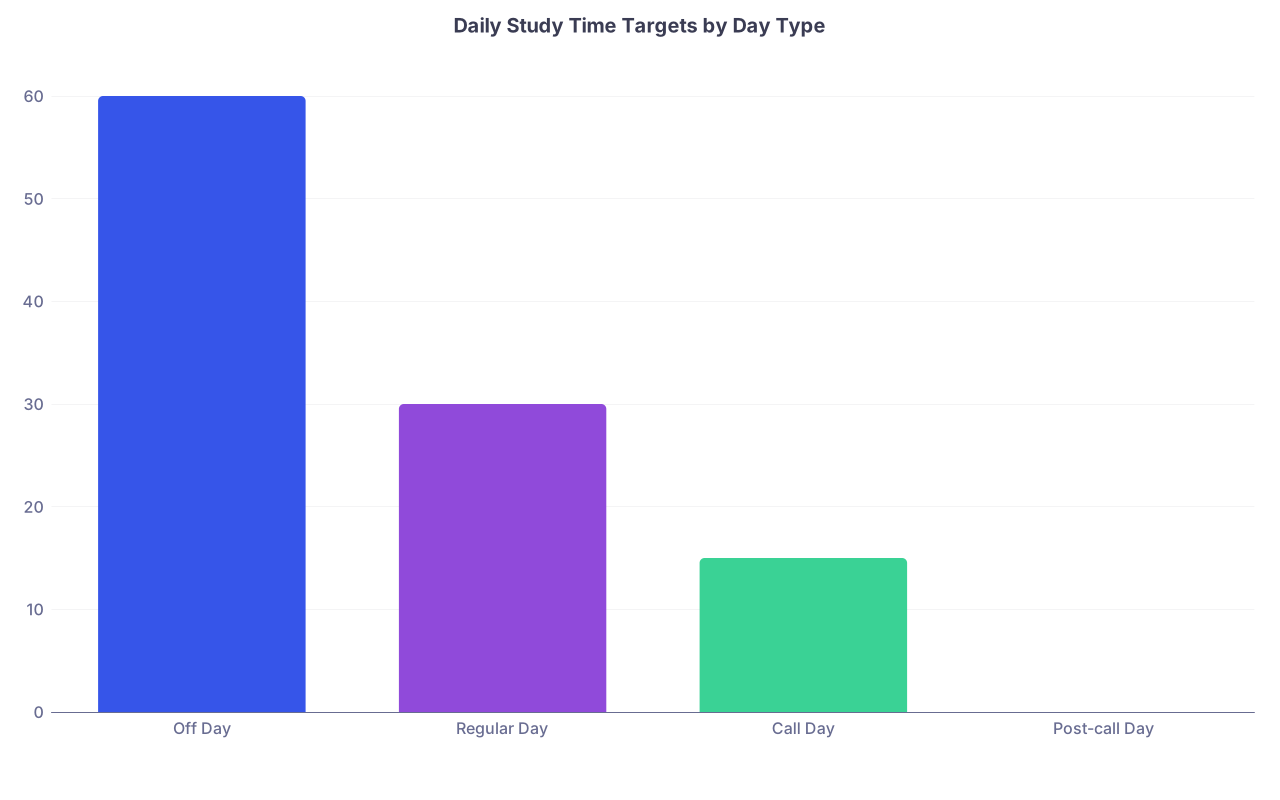
| Category | Value |
|---|---|
| Off Day | 60 |
| Regular Day | 30 |
| Call Day | 15 |
| Post-call Day | 0 |
3. Batch content selection up front
Again, the biggest enemy is “deciding later.” You pick your materials before the month starts:
- For question banks:
- Pre-select daily blocks: “10 IM questions,” “10 surgery trauma questions,” etc.
- For reading:
- Bookmark specific chapters or guideline sections
- For video:
- Create a “Call Month Playlist” with short, high-yield videos (≤15 minutes)
Then, on the day, you just open the next item. Zero thinking required.
4. Use micro-blocks, not long sessions
During call, your study pattern will look like this:
- 5–10 minutes between pages in the ED
- 15 minutes before sign-out
- 10 questions during a lull at 3 a.m. if your brain is still online
For each shift, set a simple target:
- If days are chaotic: “Today, just 5 questions”
- If nights are manageable: “One 15-minute block at 01:00”
And yes, sometimes you skip. Because there is a code, a crashing patient, or you are unsafe to think critically. That is not failure. That is judgment.
5. Protected non-call study blocks
Look at your green zones and block:
- 1–2 x 45–60 minute sessions per week, calendar-protected
- Phone in another room
- One clear task per block: “Finish 20 GI questions and review explanations"
Treat these like clinic. You would not blow off clinic because you are “tired.” Give your long-term brain the same respect.
Step 5: Integrating All Three: A Sample Call Week Blueprint
Let’s put this together. Imagine this schedule:
- Mon: Regular day
- Tue: Regular day, pre-call
- Wed: 24h in-house (07:00–07:00)
- Thu: Post-call
- Fri: Regular day
- Sat: Night float (19:00–07:00)
- Sun: Post-night, off
Here is the blueprint.
Monday (Regular – Yellow)
- Sleep: 23:00–06:00
- Meals:
- Breakfast at home
- Lunch packed (leftovers + fruit)
- Dinner at home, plus prep extra protein and carbs for Tue/Wed
- Study:
- 30–45 minutes in the evening (Tier 2 style day)
Tuesday (Pre-24h Call – Yellow)
- Sleep: same anchor
- Meals:
- Breakfast at home
- Lunch packed
- After work: 60–90 minutes meal prep for Wed/Thu (easy to reheat: chili, rice, roasted vegetables)
- Study:
- 15–20 minutes only. Do it right after work, before prep if possible.
Wednesday (24h Call – Red)
- Pre-shift:
- Breakfast at home
- Pack substantial lunch and 2–3 snacks, 1.5 L water bottle
- Optional: 45–60-minute nap if schedule allowed
- During call:
- Eat lunch early, snack by alarm twice
- Minimum 1 L water, no heavy fast food at 02:00
- Study:
- Optional: 5–10 questions if there is a stable lull and you are clear-headed
- If slammed, skip. No guilt.
Thursday (Post-call – Red)
- Sleep: 3–4 hours as soon as home
- Wake: by 14:00, eat something balanced, natural light exposure
- Meals: reheat prepped food; do not plan to cook from scratch
- Study: zero required; optional 10–15 minutes in early evening if you feel human
- Bed: 22:30–23:00 to re-anchor
Friday (Regular – Yellow)
- Sleep: full night
- Meals: pack lunch; easy dinner (leftovers, simple stir fry)
- Study: 30–45 minutes in the evening, protected block
Saturday (Night Float – Red)
- Morning: wake 08:00–09:00 if possible
- Midday: 90-minute nap around 13:00–14:30
- Meals:
- Pre-shift dinner: protein + carb
- Pack 2 snacks and maybe a light second meal
- Study:
- 10–15 minutes before shift OR at early-night lull
Sunday (Post-night – Yellow/Green)
- Sleep: 3–4 hours from 08:00–12:00
- Wake: eat, hydrate, 20–30 minutes outdoors
- Afternoon: low-key activities, maybe light meal prep for Mon/Tue
- Study: one 45–60-minute block late afternoon if not destroyed
- Bed: 22:00–23:00
That is a real, workable week. If you try to cram “2 hours study every day” into that, you will break.
Step 6: Personal Development and Ethics During Call Month
Call month will expose your character more than your knowledge.
1. Decide your non-negotiable ethical rules in advance
Examples:
- “I will not skip handwashing because I am tired.”
- “I will not sign out incomplete critical information to the next team.”
- “If I feel cognitively unsafe to make a decision, I will say so, even if it is uncomfortable.”
- “I will not chart shortcuts that misrepresent what I did.”
Write 2–3 of these. Literally write them. When you are sleep deprived and hungry, your “default” behavior slides. Written rules give you a line you do not cross.
2. Micropause protocol for critical decisions
When you are exhausted and about to make a big call:
- 10–15 second mental pause:
- “Do I have all the necessary data?”
- “Is there someone I should loop in?”
- “If this were my family member, would I be comfortable with this plan?”
If the answer to any of those is shaky, you escalate. That is professionalism, not weakness.
3. Protecting basic humanity on call
This is where work-life balance and ethics intersect.
Minimum human behaviors that matter:
- You eat and hydrate → you are safer for patients
- You sleep as much as you can → you reduce errors
- You take 30 seconds to look at a frightened patient and say, “I know this is scary” → you are practicing humane medicine, not just technical medicine
The system is flawed. You cannot fix that this month. But you can refuse to let call month strip away your core values.
Step 7: Implementation: Turn Blueprint Into Reality
Planning without execution is just stationery abuse.
Here is how you lock this in.
1. Calendar it
Before call starts:
- Block:
- Weekly meal prep windows
- Sleep anchors / naps for 24s and nights
- Study blocks in green zones
- One small personal thing per week (coffee with friend, short run, phone call home)
You live by your calendar, not your mood.
2. Create two physical checklists
- Pre-call checklist (keep near your door):
- Badge, stethoscope, chargers
- Water bottle
- 2 snacks + 1 real meal
- Light layer/hoodie
- Meds you personally take
- Post-call checklist:
- Water before leaving
- Short, safe commute (no falling asleep at wheel; call ride if needed)
- Eat something light at home
- Darken room, sleep 3–4 hours
- Set alarm to avoid 8-hour post-call coma
Tape these somewhere obvious.
3. Weekly review and adjust
Every 7 days in call month, 10 minutes:
- What actually worked this week?
- Where did I break the plan—and why?
- Too ambitious?
- Unpredictable service?
- One tweak for the next week:
- Smaller study goals
- More pre-call meal prep
- Earlier caffeine cutoff
You are not failing if the original blueprint does not survive contact with reality. You are failing if you keep repeating what obviously does not work.
Open your upcoming call schedule right now and mark your red, yellow, and green days. Then block one meal prep session, one sleep anchor, and one study block for next week. Do that, and you have already started turning this call month from chaos into a controlled operation.