
Your schedule is not the problem. Your lack of a framework is.
Most medical trainees try to “fit everything in” by sheer willpower: staying up later, waking up earlier, cramming notes on the bus, answering family texts between cases. Then they are shocked when they burn out, their relationships suffer, and their studying becomes shallow and ineffective.
Let me be blunt: if you do not learn to deliberately divide time between family, study, and sleep, you are violating your own professional ethics. You are making choices that will eventually harm your patients, your family, and you.
The fix is not another productivity app. You need a system that is simple enough to actually use on a bad call week and robust enough to last through residency.
Here is that system.
Step 1: Start With Non‑Negotiables (Ethics First, Not Last)
Before you touch a calendar, set your ethical guardrails. You are training to be a physician. That means three priorities must stay intact over the long term:
- Safe, sustainable sleep
- Minimum viable family connection
- Deep, consistent study
The order is intentional.
1. Sleep: The First Line of Medical Ethics
If you are chronically sleep‑deprived by choice, you are training yourself to be an unsafe physician. The data on sleep and cognitive performance is brutal and clear.
For most adults, the real range for sustainable function is:
- Baseline: 7–8 hours per night
- Short stretches of 6 hours: tolerable during heavy rotations, only if compensated later
- Below 6 hours long term: performance impairment whether you “feel fine” or not
So your first job is to define a sleep floor: the absolute minimum number of sleep hours you will protect even on bad days.
- Preclinical or lighter rotations: 7 hours minimum
- Heavy wards / ICU / nights: 6 hours minimum, with structured catch‑up on lighter days
Then you work backwards.
If you must wake up at 5:30 to be at the hospital by 6:30, and you know it takes you 30 minutes to fall asleep:
- Target sleep time: 10:00 pm
- In bed by: 10:00 pm
- Screens off by: 9:30 pm
If that sounds impossible, good. That means your current life is incompatible with safe practice and something has to give.
2. Family: Define “Enough” So Guilt Does Not Run the Show
Vague goals like “spend more time with my spouse / kids / parents” are useless. You need clear, minimal, repeatable commitments.
Examples for different situations:
- Spouse / partner:
- 20–30 minutes of phone‑free connection daily (talk, walk, dinner)
- 2–3 hours together once per week (date, errand day, or just relaxed time)
- Kids:
- 10–15 minutes of undistracted time per child on weekdays (play, read, talk)
- 1–3 “anchor blocks” on weekends (park, breakfast outing, game night)
- Long‑distance family:
- One 20–30 minute call weekly
- One thoughtful message / check‑in mid‑week
The key: schedule “enough” family time first, so you are not constantly bargaining with guilt. You cannot train effectively while feeling like you are failing your family every single day.
3. Study: Protect the Right Kind of Time
You do not need 8 hours of studying daily. You need 2–4 hours of focused, high‑quality work, more during exam periods.
Your study time must include:
- Deep work blocks (no phone, no email, no multitasking)
- A question pipeline (Anki, practice questions, cases)
- Regular review (spaced repetition)
We will structure this in a moment. For now: accept that study time is not optional. It is your job.
Step 2: Use the 24‑Hour Reality Check
Every framework must pass the 24‑hour test. If your “ideal plan” requires 28 hours, it is fantasy.
Let us quantify where your time actually goes on average.
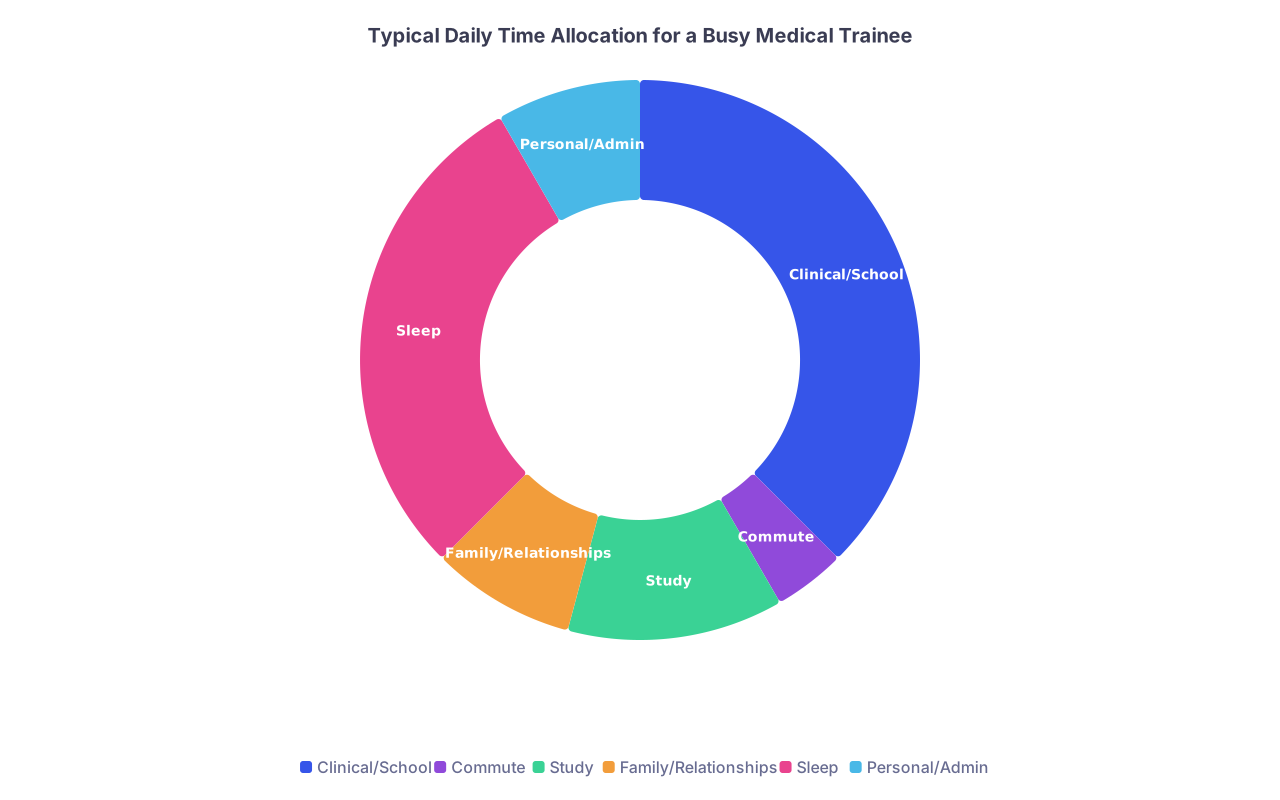
| Category | Value |
|---|---|
| Clinical/School | 9 |
| Commute | 1 |
| Study | 3 |
| Family/Relationships | 2 |
| Sleep | 7 |
| Personal/Admin | 2 |
This is a pretty common distribution on a “normal” day. Your specifics will differ, but not as much as you think.
Now do this yourself on one honest day:
- List big buckets:
- Hospital / school time (door to door)
- Commute
- Sleep
- Study
- Family
- Personal (eating, shower, chores, admin, mindless scrolling, etc.)
- Write actual hours for each from yesterday. Not what you wish. What happened.
- Confirm they add to 24. If they do not, your estimates are wrong.
You will probably see:
- Sleep under 7 hours
- Study and family squeezed
- Personal/admin inflated with phone time or random tasks
Do not “fix” it yet. You need reality as your baseline.
Step 3: Apply the 3‑Block Daily Framework
Here is the simple, brutal framework that works in preclinical, clinical, and residency:
Divide every day into 3 blocks:
- Block A: Work / School (fixed by schedule)
- Block B: Study + Micro‑Family (structured)
- Block C: Anchor Family + Sleep Wind‑Down (protected)
That is it. Three blocks. Each block has a role, not just “time that exists.”
Let me show you a concrete example for a clinical rotation day:
Assume: hospital 6:30–5:30, commute 30 min each way, wake 5:00.
Example Day Using the 3‑Block Framework

| Step | Description |
|---|---|
| Step 1 | Wake |
| Step 2 | Block A - Work School |
| Step 3 | Commute Home |
| Step 4 | Block B - Study + Micro Family |
| Step 5 | Block C - Anchor Family + Wind Down |
| Step 6 | Sleep |
Block A – Work / School (5:00–18:00 including commute)
- 5:00–5:30: Wake, basic routine, quick breakfast
- 5:30–6:00: Commute
- 6:00–17:30: Hospital / clinic
- 17:30–18:00: Commute home
Non‑negotiable. You mostly cannot shrink this. So stop fantasizing about it and work with the remaining hours.
Block B – Study + Micro‑Family (18:00–20:30)
- 18:00–18:30: Quick connection with family
- Talk with spouse about their day
- Play with kids / do bath time
- If living alone: call a friend or family member once or twice weekly here
- 18:30–20:30: Study block (2 hours)
- 90 minutes focused (questions, Anki, reading)
- 10–15 minute break in the middle
- 20–30 minutes admin: schedules, emails, planning
Block C – Anchor Family + Wind‑Down (20:30–22:30)
- 20:30–21:15:
- Time with spouse / partner: talk, show, game, walk, whatever actually connects
- Or solo decompression if no partner: book, light TV, hobby
- 21:15–21:45:
- Night routine, prep for next day, devices off
- 21:45–22:00:
- In bed, low‑stimulation activity (short reading, calm music)
- 22:00–5:00:
- Sleep (7 hours)
You will notice what is missing:
Random scrolling. Endless chores. Responding to every message instantly. They are not free. They steal from sleep, study, or real connection.
Step 4: Customize by Phase – Preclinical, Clinical, Residency
You cannot run the same exact schedule in M1 and as a senior resident. But the underlying framework stays: 3 blocks, with different sizes.
Preclinical (More Control, More Temptation to Waste Time)
You usually have:
- Fewer mandatory hours on campus
- Exams every few weeks
- A lot of “study when you want” time
The danger: you dilute your day with low‑quality half‑studying, half‑browsing.
Sample Preclinical Day (Lecture heavy, 8:00–15:00)
- 6:30–7:30: Morning (wake, breakfast, light review)
- 7:30–8:00: Commute / walk
- 8:00–15:00: Class / lab / school things (Block A)
- 15:30–18:00: Study block (Block B – deep work)
- 2–2.5 hours serious studying
- Anki, questions, targeted review of that day’s content
- 18:00–20:00: Family + dinner (Block C – early)
- 20:00–21:30: Light study or admin (if needed) or decompression
- 22:30–6:30: Sleep
Here you can create a second, lighter study block after family time if exams are close. But you still must respect the sleep floor.
Clinical / Clerkships (Less Control, More Fatigue)
You now have:
- Long, inflexible days
- Variable call schedules
- More emotional and physical fatigue
So you tighten your study into shorter, brutal focus blocks, and you compress family time into reliable, protected anchors.
Clinical rules of thumb:
- On long days (10–12 hours at hospital):
- 90–120 minutes study
- Short micro‑family touch on weekdays
- Bigger family time on off days
- On off days:
- 3–4 hours study in 2 blocks
- Several hours quality family time
Residency (Chaos by Default – Framework Becomes Survival)
Residents often say “I will fix my life after training.” That is how marriages and health fail. You cannot put your life on hold for 3–7 years and expect to pick it up undamaged.
You apply the same 3‑block idea, but you must be ruthless and flexible:
- Post‑call days:
- Prioritize crash sleep + short family check‑in
- No heroics with extra studying when you are cognitively impaired
- Golden weekends:
- At least one heavy family block each day
- One solid study block each day
- Night float:
- Invert schedule but keep the same logic:
- Work block (nights)
- Study block (before or after, modest)
- Family block (anchored by call or messages)
- Sleep block (protected, even if at strange times)
- Invert schedule but keep the same logic:
Step 5: Allocate Time by Percentages, Not Feelings
To get this under control, stop relying on “I will study more tomorrow” or “I will catch up with my kids this weekend.”
Use percent targets. Here is a realistic weekly framework for a typical busy trainee.
| Category | Target Hours/Week | Percent of 168 hrs |
|---|---|---|
| Sleep | 49–56 | 29–33% |
| Work/School | 45–60 | 27–36% |
| Study | 14–20 | 8–12% |
| Family/Relationships | 10–20 | 6–12% |
| Personal/Admin | 10–15 | 6–9% |
You adjust within these ranges based on rotation intensity, exams, and family needs. But if any category falls far outside these ranges for weeks in a row, you have a structural problem.
Example:
- Sleep consistently at 35–40 hours/week? You are barely functional, whatever stories you tell yourself.
- Family down at 3–5 hours/week for months? You are living like you are single even if you are not. Expect trouble.
- Study under 8 hours/week outside of vacation? You are setting up for exam disasters.
Step 6: Lock in Three Types of Family Time
Family time is not one blob of “be home more.” It has structure. That structure reduces guilt and fights.
You need three layers:
- Daily Micro‑Moments (5–20 minutes)
- Daily Anchor Blocks (30–90 minutes)
- Weekly Deep Time (2–4 hours)
1. Daily Micro‑Moments
These are tiny but intentional. Examples:
- 10 minutes reading to a child at bedtime
- 15 minutes sitting with your spouse, no screens, after you get home
- 5‑minute video message to long‑distance family
They usually sit on the boundary between Blocks B and C. You treat them like brushing your teeth. Not optional.
2. Daily Anchor Blocks
This is where your family actually feels you are present. Usually:
- 30–60 minutes for dinner + conversation
- Or 45–90 minutes late evening with partner (talk, show, cuddling, planning)
Anchor rules:
- No work or study materials out
- Phone on silent or in another room
- You are not “half there” checking UpToDate
3. Weekly Deep Time
This repairs the damage of the week. It might be:
- A Saturday morning outing with kids (2–3 hours)
- A weekly date night, even at home after kids sleep (2–3 hours)
- A half day with extended family once or twice a month
On heavy rotations, deep time might shrink but should not disappear. If it keeps disappearing, something else has to go. Often it is low‑quality screen time or extra “just in case” studying that does not actually move the needle.
Step 7: Build a Study System That Fits Inside the Framework
Most students destroy their schedule because their study strategy is inefficient. So they panic and keep stealing from sleep and family.
You need a lean, high‑yield study system that fits into 2–4 hours most days.
Core Pieces
- Spaced repetition (Anki or similar) – 30–60 minutes daily
- Question practice (UWorld, AMBOSS, NBME, etc.) – 40–90 minutes most days
- Targeted review of weak areas – 20–60 minutes
Example 2‑Hour Study Block (Clinical Day)
- 18:30–19:00: Anki / flashcards (no breaks, just grind)
- 19:00–19:45: 10–15 questions, timed, with focused review
- 19:45–20:00: Quick note of 3–5 key learning points, plan for next day
- 20:00+: Stop. You did your job.
For exam periods, you might add a second block:
- Morning: 60–90 minutes before hospital on lighter rotations
- Evening: 90–120 minutes after
But you still respect your sleep floor. A week of 4–5 hour nights before a big exam is how people walk in with brain fog and score below their practice range.
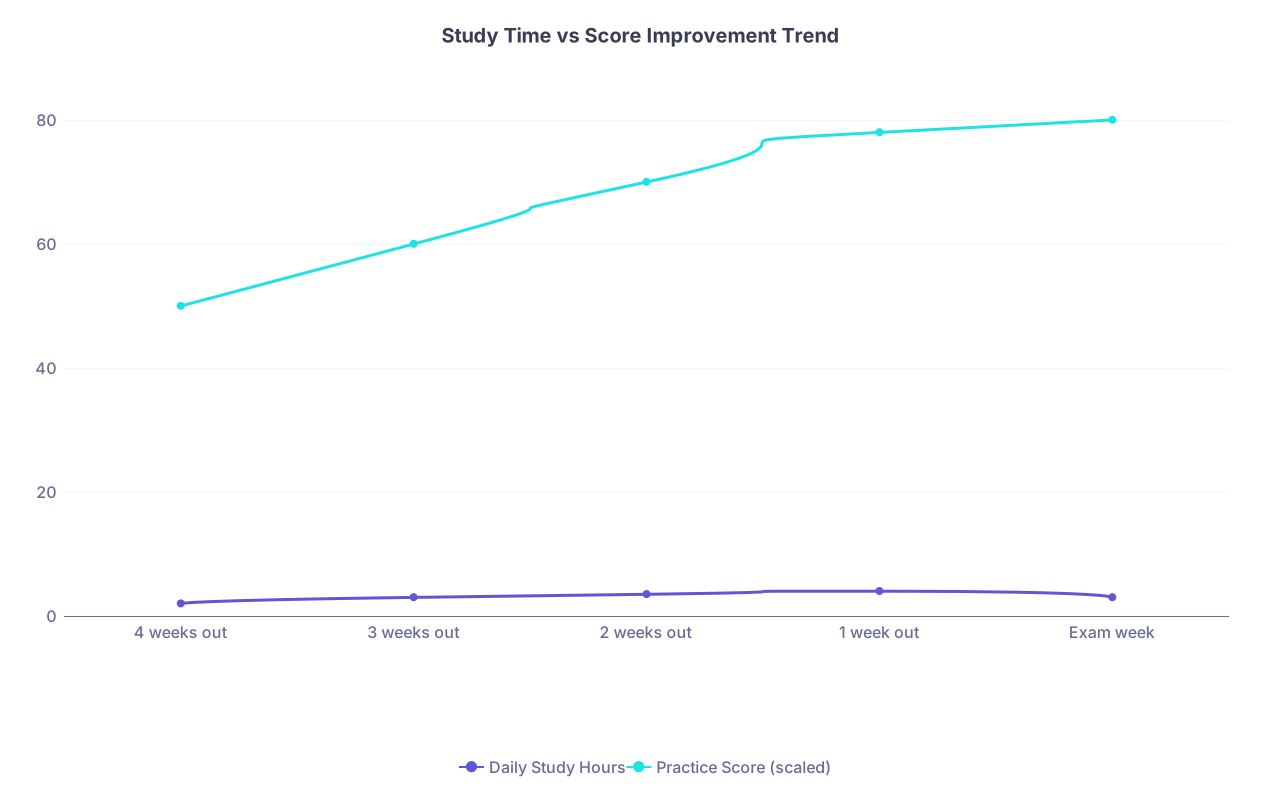
| Category | Daily Study Hours | Practice Score (scaled) |
|---|---|---|
| 4 weeks out | 2 | 50 |
| 3 weeks out | 3 | 60 |
| 2 weeks out | 3.5 | 70 |
| 1 week out | 4 | 78 |
| Exam week | 3 | 80 |
Notice: study hours increase reasonably, not explosively. Scores rise steadily. No last‑minute all‑nighters.
Step 8: Protect Sleep Like an ICU Patient
If a patient needed 7 hours of monitored rest, you would not casually yank them out of bed for no reason. You would guard that time.
Treat yourself the same. Concrete steps:
Set a hard “lights‑out” alarm
- 45 minutes before bed: stop screens, caffeine, intense conversations
- 15 minutes before: be in your sleep routine, not still “wrapping one more thing up”
Pre‑decide your exceptions
- True medical emergencies in the family
- Critical exam situation maybe once or twice a year
- Unexpected crisis (death, urgent travel, etc.)
If you are breaking your sleep rule three nights a week, those are not exceptions. That is your actual system.
Use wind‑down rituals
- Same steps nightly (shower, brush teeth, fill water bottle, next‑day prep)
- Low stimulation activity: physical book, stretching, journaling
Stop lying to yourself about “catch‑up sleep”
- One or two late nights? Sure, catch‑up helps
- Chronic deprivation? Weekend sleeping in does not fully fix cognitive deficit
Step 9: Add a Weekly 20‑Minute Review Ritual
This is non‑negotiable if you want the system to last more than two weeks.
Once a week, usually on a weekend:
Look back at the past week
- How many nights did you hit your sleep floor?
- Rough hours of study? (not perfect, just ballpark)
- Real family time – did anchors and deep time happen?
Identify the main leak
- Too much screen time?
- Over‑committed to volunteer/research/social stuff?
- Underestimating how long tasks take?
Adjust just one or two things
- Move your study block earlier in the evening
- Put your phone in another room during anchor family time
- Cut one non‑essential commitment

| Step | Description |
|---|---|
| Step 1 | Start Weekly Review |
| Step 2 | Check Sleep |
| Step 3 | Check Study |
| Step 4 | Check Family Time |
| Step 5 | Move Bedtime Earlier |
| Step 6 | Protect Study Block |
| Step 7 | Schedule Anchor Blocks |
| Step 8 | Set Next Week Plan |
| Step 9 | Done |
| Step 10 | Biggest Problem? |
You do not rebuild your life every week. You make small corrections so you do not drift into disaster.
Step 10: Handle Common Failure Scenarios
You will break your framework. That is expected. What matters is how you correct.
Scenario 1: Exam Week Panic
You have a big exam in 5 days. You feel behind. You are tempted to cut sleep to 4–5 hours, ditch family, and study nonstop.
Fix:
- Cap study time at 6–8 hours/day if you have time off, 3–4 if on rotation.
- Maintain your sleep floor at 6–7 hours. No exceptions multiple nights in a row.
- Explain to family:
- “This week is heavier. I will still do 15‑minute daily check‑ins and a 1‑hour block on Saturday, but most of my extra time goes to the exam.”
- After the exam, schedule a rebound:
- Enhanced family time
- Return to usual sleep and study balance within 48–72 hours
Scenario 2: Relationship Tension (“You are never really here”)
Your partner complains that even when you are home, you are on your phone or thinking about work.
Fix:
- Re‑commit to daily phone‑free anchor time:
- 30–60 minutes every night, nondisruptable like a meeting
- Ask directly:
- “If I could do one thing differently this week to show up better, what would it be?”
- Adjust 1–2 small behaviors, not everything:
- Put phone in another room during dinner
- Stop opening laptop after 21:00 unless true emergency
Scenario 3: Chronic Under‑Studying
You keep ending the week disappointed with your study hours.
Fix:
- Shorten your goal blocks but make them sacred:
- Instead of planning 3 hours and doing 1, plan 90 minutes and do all 90
- Study at your highest‑energy time:
- Morning before work if evenings are a disaster
- Immediately after getting home before you sit on the couch
- Remove friction:
- Pre‑decide: “At 18:30 I open UWorld and do 10 questions. No decisions.”
- Keep materials ready: charged laptop, set workspace

Scenario 4: Newborn or Major Family Change
Everything explodes with a new baby, illness in the family, or moving cities. Frameworks crack.
Fix:
- Accept that for 4–8 weeks, the ratios will shift:
- More family, less study, potentially fragmented sleep de facto
- Define a minimum viable academic pattern:
- 30–45 minutes Anki
- 20–30 minutes questions or reading
- That is all, 5–6 days per week
- Over‑communicate with your program / school:
- Ask about temporary accommodations if needed
- Then slowly rebuild toward your previous framework once the acute phase passes.
Visual Summary: The Three‑Block Day At a Glance
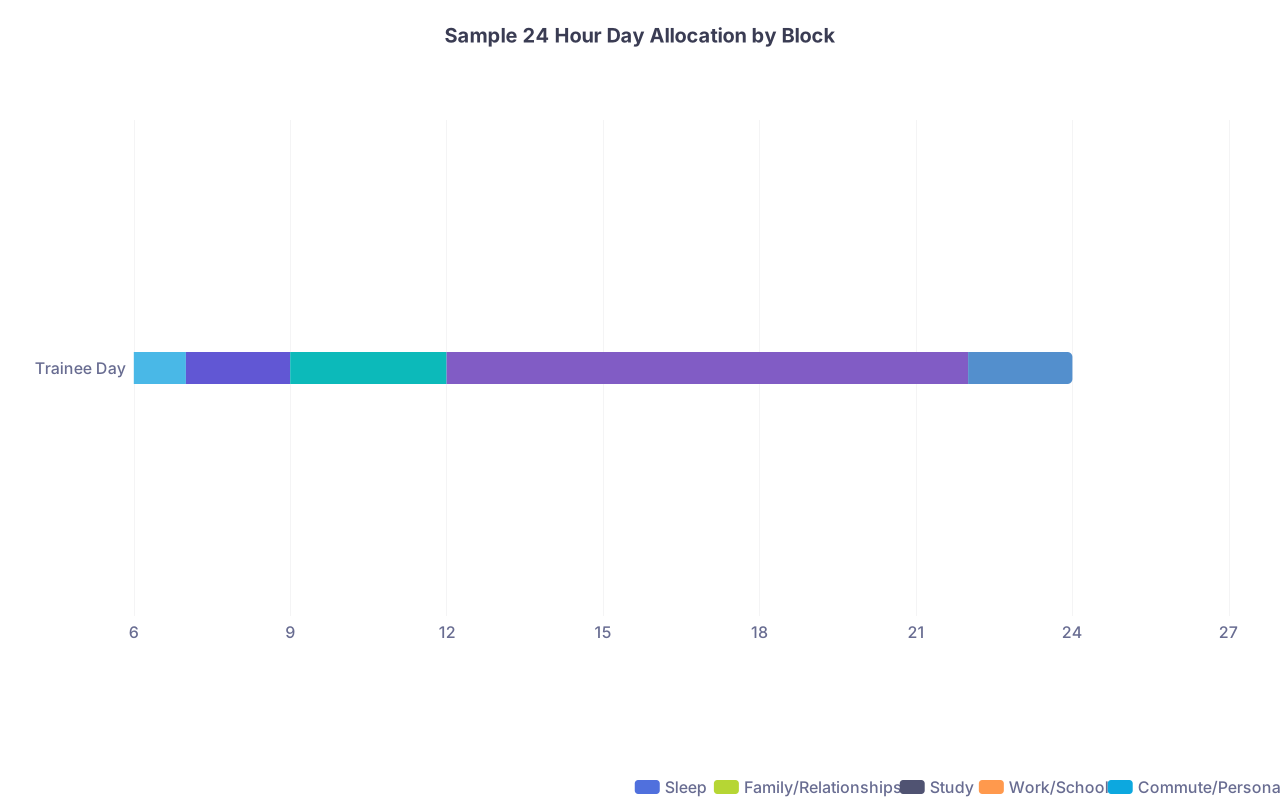
| Category | Sleep | Family/Relationships | Study | Work/School | Commute/Personal |
|---|---|---|---|---|---|
| Trainee Day | 7 | 2 | 3 | 10 | 2 |
And mentally, tie it back to:
- Block A: Work / school (fixed)
- Block B: Study + micro‑family (structured)
- Block C: Anchor family + sleep wind‑down (protected)
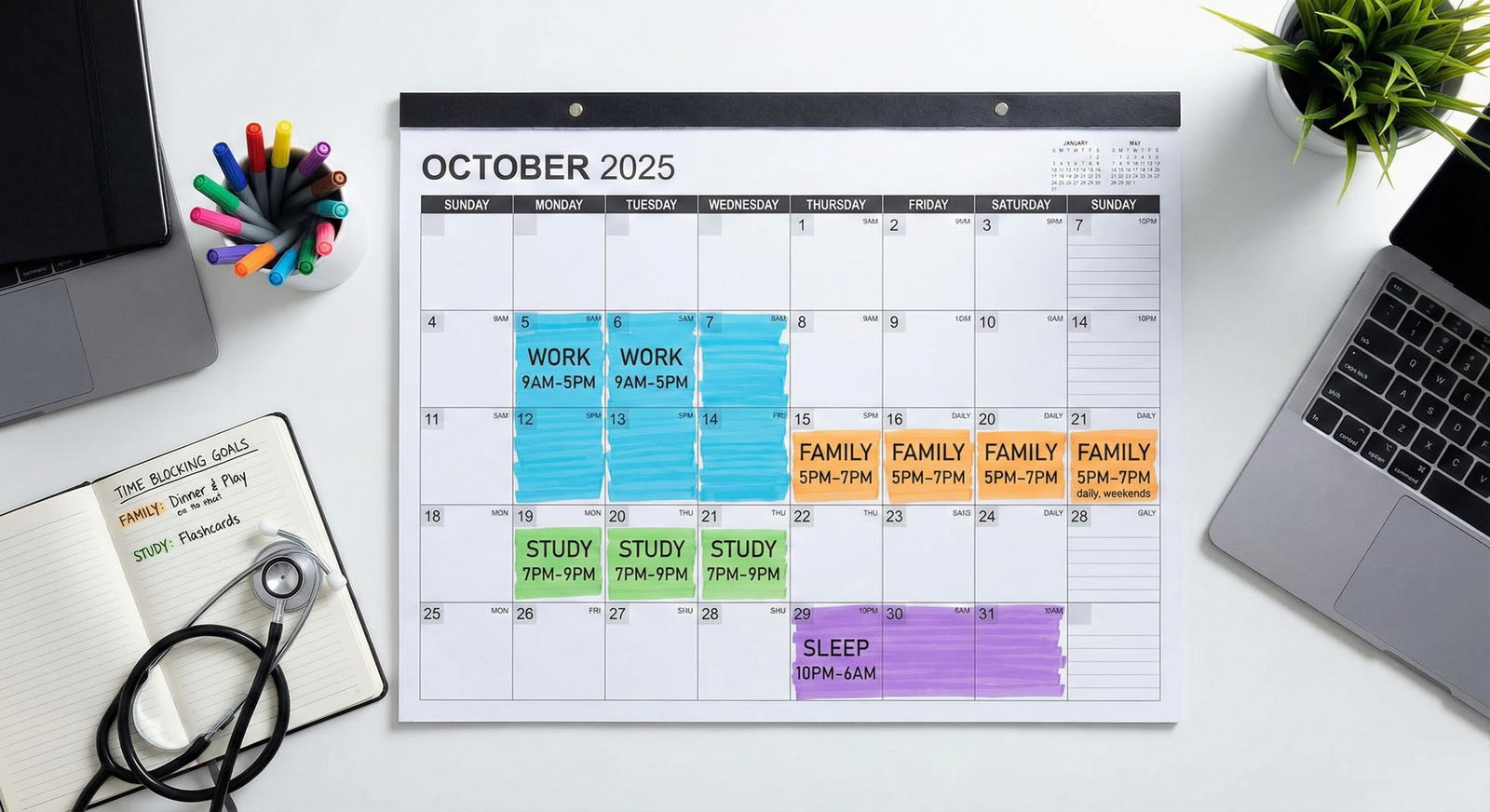
Final Calibration: What “Balance” Actually Looks Like
Balance does not mean equal hours. It means each domain gets enough, consistently, over months, not days.
So be realistic:
- Some weeks will tilt heavily toward work and study.
- Some weekends will tilt heavily toward family.
- Some days your only “win” is hitting your sleep floor and one decent study block. That is still a win.
What you must not do is let any of these become permanent casualties:
- Sleep under 6 hours on most nights
- Family time under 5–7 hours per week, every week
- Study dropping below 8–10 hours per week for long stretches
If that is happening, your framework is not the issue. Your commitments are.

The Core Takeaways
- Use the 3‑block framework every day: Work/School, Study + Micro‑Family, Anchor Family + Sleep. Simple, repeatable, hard to fake.
- Protect your non‑negotiables: sleep floor, minimum family anchors, and lean high‑yield study blocks. If one is always the sacrifice, your system is broken.
- Review and adjust weekly: find the biggest leak (sleep, family, or study), fix one or two behaviors, and keep moving. Over months, this is how you maintain both your career and your life.