
The way most residents spend weekends is broken. Not because you are lazy or disorganized, but because you are trying to recover from a 70–80 hour week using a system designed for a normal job.
You are not in a normal job.
You cannot “wing” your weekends and expect to feel rested, sane, and still move your life forward. You need a designed weekend. A protocol. Something that works with your physiology, your schedule, and the brutal math of residency.
This is that protocol.
The Core Problem: Why Your Weekends Do Not Work
Let me be blunt: most residents treat weekends as a vague wish list.
- “Catch up on sleep.”
- “Maybe work out.”
- “See friends if I am not dead.”
- “Study a bit if I can.”
You wake up post-call or post-week, exhausted. You scroll for 45 minutes. You drift into random chores. Suddenly it is 4 p.m. You feel guilty for not studying, guilty for not resting “properly,” and slightly resentful you have to be back in the hospital in 16 hours.
You did not rest. You also did not progress. Worst of both worlds.
What you are up against:
- Residency steals your decision-making power. By Friday, your prefrontal cortex is mush. If your plan depends on “I will decide later,” you have already lost.
- Fatigue makes you choose the path of least resistance. That is usually your phone, Netflix, and junk food. None of which actually restore you.
- Guilt fills any unstructured time. If there is no clear “this is rest” vs “this is work,” your brain runs all its unfinished to-do lists on loop.
So you need structure. But not some rigid, productivity-guru nonsense that assumes you sleep 8 hours a night and have evenings free.
You need a resident-grade weekend design.
Step 1: Classify Your Weekend Type Before It Starts
If you only do one thing from this article, do this: classify your upcoming weekend by Wednesday night.
There are only three weekend types for residents:
- Recovery Weekend – you are fried, behind on sleep, emotionally thin.
- Maintenance Weekend – you are tired but functional; baseline residency fatigue.
- Growth Weekend – you feel relatively okay, and you want to push on a personal or professional goal.
Stop pretending every weekend can be a Growth Weekend. That is how people burn out and end up crying in a call room at 3 a.m.
How to classify in 5 minutes
On Wednesday evening, ask yourself:
Sleep debt
- Have you slept ≥ 6 hours on at least 3 of the past 4 nights?
- If not, lean toward Recovery.
Emotional bandwidth
- How snappy, numb, or cynical have you been this week?
- If you are snapping at nurses or fantasizing about quitting medicine, that is Recovery.
Cognitive function
- Are you rereading the same line of UpToDate three times?
- Struggling to focus in sign-out? Recovery again.
Upcoming month
- About to start ICU, nights, or a brutal consult month?
- Protect this weekend more aggressively.
Then pick one:
- If 2+ of those domains are red → Recovery Weekend
- If 1 is red, others yellow → Maintenance Weekend
- If all are mostly green → Growth Weekend
Write it down. Literally: “This weekend is a Recovery Weekend.” Put it in your notes app or on a Post-it on your desk.
You have just made the most important decision of your week.
Step 2: Assign the Right Time Budget by Weekend Type
You cannot design a weekend without deciding where the hours go. Residency does not care that you need rest. You have to make the math work.
Use this as a starting template (adjust for calls and specific rotations):
| Weekend Type | Sleep (hrs) | Chores/Errands (hrs) | Relationships (hrs) | Study/Projects (hrs) |
|---|---|---|---|---|
| Recovery | 18–20 | 2–3 | 3–4 | 2–3 |
| Maintenance | 14–16 | 3–4 | 4–5 | 4–5 |
| Growth | 14–16 | 3–4 | 3–4 | 6–8 |
You are not locking down every minute. You are setting realistic bands.
If you are on 24-hour call Saturday, redo this math with what is actually available. Maybe Sunday is an 8–10 hour “mini-weekend.” Fine. Design that.
Step 3: Build a Simple Weekend Skeleton
Once you know your weekend type and rough time budget, you need a skeleton. A loose structure that prevents drift.
Think in 3 blocks per day, not hour-by-hour obsessiveness:
- Morning block
- Afternoon block
- Evening block
Then assign one primary purpose to each block. Not five. One.
Example for a Recovery Weekend:
Saturday
- Morning: Sleep + slow wake + movement
- Afternoon: Chores (light) + admin
- Evening: Social connection (low energy)
Sunday
- Morning: Focused study (2–3 hours)
- Afternoon: Hobby/joy + light prep for week
- Evening: Wind-down ritual + early bed
Notice what is missing: “maybe I’ll also squeeze in…” No. That is how you ruin weekends.
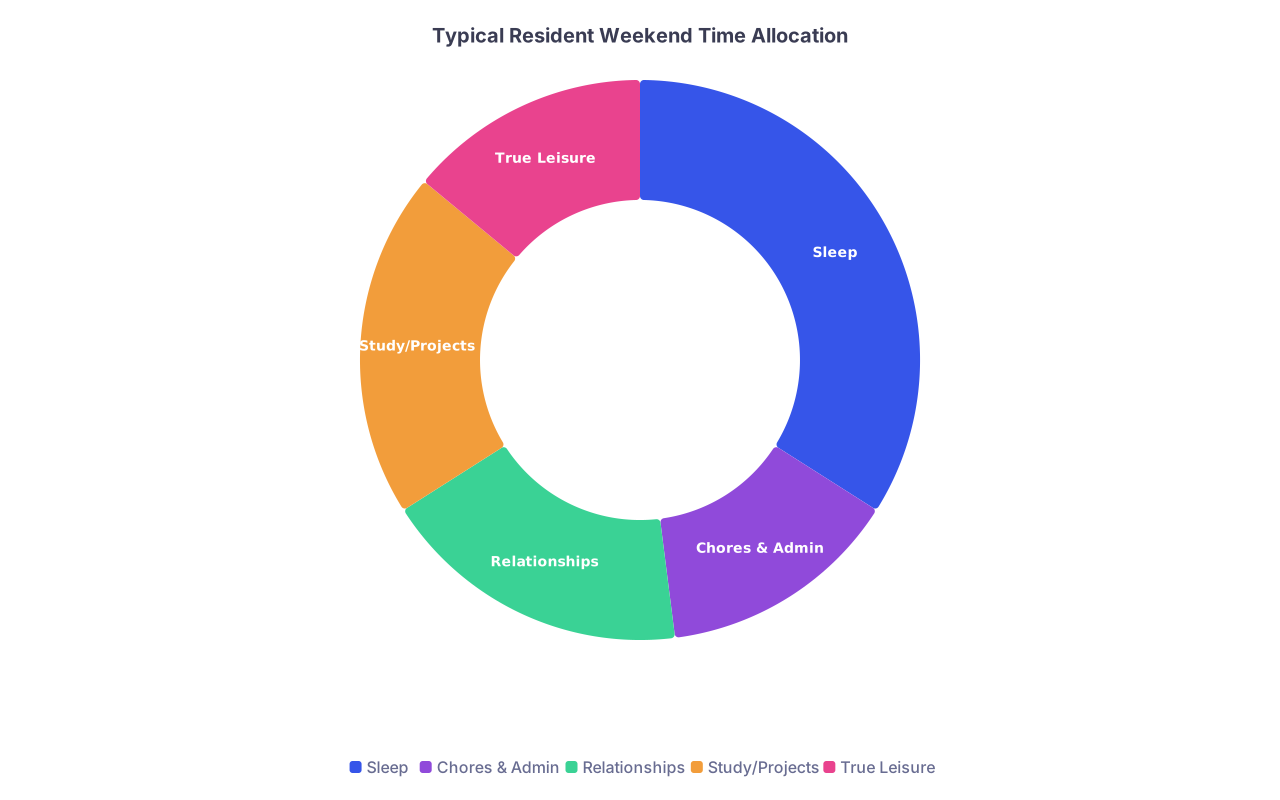
Here is what a lot of residents have found helpful: a clear visual of how those weekend blocks feel when balanced.
| Category | Value |
|---|---|
| Sleep | 34 |
| Chores & Admin | 14 |
| Relationships | 18 |
| Study/Projects | 20 |
| True Leisure | 14 |
That is a reasonable target for a Maintenance or Growth Weekend. Recovery Weekends will skew more heavily to sleep and low-demand leisure.
Step 4: Non-Negotiables – The 5 Things Every Weekend Needs
Regardless of weekend type, there are five elements you build around. These are not “nice to have.” They are the load-bearing walls.
1. Sleep Reboot
This is not “sleep as long as possible and destroy your circadian rhythm.”
Protocol:
- Night before day off: Anchor bedtime within 1–2 hours of your weekday bedtime if possible.
- First day off:
- If coming off call: sleep until you naturally wake, then decide if you need a 90-minute nap later.
- If not on call: set a wake-up window (ex: between 8–9 a.m.), not a single time.
- Naps: Limit to 20–30 minutes or one full 90-minute cycle. Multiple unplanned 3-hour naps guarantee Sunday-night insomnia.
You are trying to reduce sleep debt without wrecking the next week.
2. Real Nutrition (Not Just “Food”)
Weekend pattern I see over and over: skip breakfast, huge random lunch, DoorDash at 10 p.m., feel like trash Monday.
Minimum standard:
- One protein-heavy, vegetable-containing meal each day that you either cook or intentionally select.
- One hydration reset block: drink 0.5–1L of water over an hour while you are at home and not rushed.
No macros spreadsheets. Just stop living on sugar and cafeteria fries for 48 hours.
3. Body Reset: Movement + Sunlight
Think minimum effective dose, not “start marathon training.”
- One 20–30 minute walk outside each day, no phone calls, ideally in daylight.
- One short strength or mobility session (15–25 minutes) once per weekend: bodyweight circuits, yoga, basic dumbbell work.
If you are post-call and wrecked, your “workout” can be a 10-minute slow walk plus stretching. The point is: tell your nervous system you are not trapped under fluorescent lighting 24/7.
4. Human Connection That Is Not About Medicine
You need at least one interaction per weekend that is:
- With someone who cares about you as a person.
- Not dominated by complaining about residency.
Could be a 30-minute FaceTime with your sibling, coffee with a friend, or a walk with a partner. If you live alone and work nights, this is twice as critical. Isolation quietly rots you from the inside.
5. Intentional Joy
This is the one residents consistently skip. Netflix while scrolling does not count.
You need at least one activity that you actively look forward to, that has nothing to do with medicine or productivity:
- Reading fiction.
- Cooking something you actually enjoy eating.
- Playing music.
- A low-stakes game night.
- A creative hobby.
You are not a machine that converts calories, coffee, and suffering into patient care. Treating yourself like one will backfire.
Step 5: Design Each Weekend Type
Now let’s make this concrete.
A. Recovery Weekend Protocol
This is for when you are bordering on full burnout.
Goals:
- Lower physiological stress.
- Pay down sleep debt.
- Stabilize mood.
- Do the minimum to keep life from falling apart.
Saturday (or first full day off)
Morning
- Sleep until you wake naturally (set a hard cap, e.g., 10–11 a.m.).
- Hydrate, light snack.
- 10–15 minutes of gentle movement (walk, yoga, easy stretching).
Afternoon
- 60–90 minutes: essential chores only
- Laundry.
- Dishes.
- Trash.
- Quick surface clean of kitchen/bathroom.
- 30–60 minutes: life admin triage
- Open mail.
- Pay any urgent bills.
- Answer only necessary emails/texts.
- 60–90 minutes: essential chores only
Evening
- 1–3 hours: low-demand social connection or solitary joy.
Examples: dinner with one safe person, movie at home, reading. - Bedtime: aim for something that allows 8–9 hours overnight.
- 1–3 hours: low-demand social connection or solitary joy.
Sunday
Morning
- Keep wake time within 1–2 hours of Saturday.
- 2-hour focused work block max (study, notes, applications).
Use a timer: e.g., 3 x 30-minute sprints with breaks.
Afternoon
- 1–2 hours: enjoyable activity (not a screen if you can manage it).
- 30–45 minutes: week prep
- Glance at schedule.
- Plan 3 weekday dinners (even if that is “frozen burrito + salad”).
- Pack your bag for Monday.
Evening
- 60–90 minutes: wind-down ritual
- Phone on Do Not Disturb.
- Warm shower.
- Light reading or calming show.
- In bed at a consistent time.
- 60–90 minutes: wind-down ritual
Key rule: On Recovery Weekends, cap all structured “work” (study + chores) at ~4–5 hours total. If you blow past that, you are lying to yourself about needing recovery.
B. Maintenance Weekend Protocol
You are tired but stable. This is the most common weekend.
Goals:
- Maintain baseline health.
- Keep life organized.
- Make modest progress on professional goals.
Saturday
Morning
- Wake at a consistent time (±1 hour).
- 30–45 minutes: movement (walk + basic strength).
- Breakfast with real protein.
Afternoon
- 2–3 hours: chores and errands.
Batch them: groceries, cleaning, laundry, pharmacy in a single outing/block. - 30 minutes: admin (email, scheduling, financial check-in).
- 2–3 hours: chores and errands.
Evening
- Social block (2–4 hours).
You choose high-quality, not 6-hour social marathons that leave you wrecked. - Protect bedtime: no “just one more drink” that turns into 2 a.m. You pay for it all week.
- Social block (2–4 hours).
Sunday
Morning
- 2–3 hour focused study/project block.
This is where you prepare for conference, board questions, or applications. - Use a specific task list: “10 UWorld questions + review,” not “study cards.”
- 2–3 hour focused study/project block.
Afternoon
- 1 hour: joy/hobby.
- 30–45 minutes: upcoming week preview
- Check rotation days, conferences, required readings.
- Decide which nights you are absolutely not available socially.
Evening
- Light dinner.
- 30–60 minutes: light review or reading if needed.
- Wind-down ritual, consistent bedtime.
C. Growth Weekend Protocol
Use these sparingly—maybe 1–2 per month. This is where you push on bigger goals: fellowship apps, research, debt planning, or major personal projects.
Goals:
- Make measurable, non-trivial progress on a defined target.
- Avoid borrowing so much energy that you crash the following week.
Saturday
Morning
- Movement (20–40 minutes) + decent breakfast.
- 3-hour deep work block on single priority.
Examples:- Draft 2 fellowship personal statement sections.
- Analyze 50 charts for research database.
- Build your budget and loan repayment plan in a spreadsheet.
Afternoon
- 1–2 hours: chores and errands (kept lean).
- 1–2 hours: secondary priority (lighter work) or pure leisure if you feel your tank dropping.
Evening
- Short social block or intentional rest.
- Hard stop on work by 7–8 p.m. You are not in business school; you still have clinical weeks ahead.
Sunday
Morning
- 2-hour focused block to continue priority project.
- Quick review of any clinical learning you are behind on.
Afternoon
- 1–2 hours: joy/hobby. Non-negotiable.
- 30–45 minutes: week setup (meals, outfits, bag, schedule).
Evening
- Low-stimulation wind-down.
- Early bed.
If you stack Growth Weekends back to back for a month on top of demanding rotations, expect trouble. Use them intentionally.
Step 6: Use Micro-Planning, Not Fantasy Planning
Residents do not need complex productivity systems. They need something that survives being paged 14 times in 20 minutes.
Here is a planning protocol that works:
Wednesday Night (5–10 minutes)
- Classify weekend type.
- Roughly assign blocks (morning/afternoon/evening for each day).
Friday Evening (10–15 minutes max)
- Fill in each block with 1–3 specific actions.
Example for Saturday morning of a Maintenance Weekend:- Wake by 9.
- 30-minute walk.
- Make omelet.
- Start laundry.
- Fill in each block with 1–3 specific actions.
Each Morning (3–5 minutes)
- Reconfirm or slightly adjust based on actual fatigue.
- Pick your “must-do” item for the day in each of these domains:
- Health (sleep/movement/food).
- Relationships.
- Work/Study.
- Joy.
Write that on a sticky note. That is your day.
Step 7: Build Phone Boundaries Into the Design
Left unchecked, your phone will eat 4–6 hours of your weekend and trash your attention span. You do not need a digital detox. You need better fences.
Practical rules that real residents actually stick to:
- No phone in bed on wake-up. Put it across the room or in another room.
First 15 minutes: water, bathroom, stretch. Then phone. - Social media windows. Two windows per day, 15–20 minutes each. That is it.
- Do Not Disturb blocks. For any 60–90 minute focus block, DND is on. Family can be on “Favorites” bypass if needed.
- One “scroll guilt-free” block per weekend. You want to lie on the couch and scroll TikTok for 45 minutes? Fine. But label it and time-box it.
If you think this is overkill, check your screen time from last weekend. Then decide.
Step 8: Align Weekends With Your Ethics, Not Just Your Energy
You are in a profession that bleeds into identity. That is not entirely bad. But it means your weekend design is also an ethical choice.
Ask yourself, bluntly, once a month:
- Am I living in a way that I can respect, not just survive?
- Would I want my future patient, student, or child to copy my current lifestyle?
No, you cannot have perfect balance. But you can avoid the ethical drift that comes from chronic self-neglect:
- Showing up so exhausted that your empathy is gone.
- Cutting corners on learning because you are perpetually last-minute.
- Letting your relationships decay until all that is left is your “doctor” identity.
Designing real rest is not indulgence. It is professional maintenance.
A rested resident:
- Makes fewer errors.
- Lies less to themselves about what they can handle.
- Has more honest conversations with patients and colleagues.
- Is less likely to treat patients as tasks.
Weekend structure is one of the few levers you still control. Use it.
Putting It All Together: A Sample Realistic Resident Weekend
Let’s say you are an IM PGY-2, on wards, not on call this weekend. You are tired but not destroyed. You choose Maintenance Weekend.
By Wednesday night
You decide:
- Type: Maintenance.
- Priorities:
- Health: fix the awful food week you just had.
- Work: finish 2 H&Ps you are behind on, review for Monday’s conference.
- Life: clean the bathroom before it turns into a hazmat situation.
Friday 9:30 p.m. (end of shift)
You sketch:
Saturday
- Morning:
- Wake by 9.
- 30-minute walk.
- Groceries + quick breakfast.
- Afternoon:
- Laundry + bathroom clean (1.5–2 hours).
- Pay credit card + answer 3 important emails.
- 45-minute nap if needed.
- Evening:
- Dinner with friend 6–8 p.m.
- Home, shower, in bed by 11:30.
- Morning:
Sunday
- Morning:
- 2.5 hours study (10 UWorld questions, review Monday’s topic).
- Light brunch at home.
- Afternoon:
- 1 hour reading fiction.
- 30 minutes look at schedule, pack bag, prep scrubs.
- Evening:
- Phone off at 9:30.
- Stretch.
- In bed by 10:30–11.
- Morning:
You are not hitting 100% of this every time. But even at 70%, your weekend is unrecognizably better than “I will just rest and catch up.”
To visualize this as a repeatable pattern, it can help to see the flow:

| Step | Description |
|---|---|
| Step 1 | Wed - Classify weekend |
| Step 2 | Set time budget |
| Step 3 | Assign morning/afternoon/evening blocks |
| Step 4 | Protect sleep and movement |
| Step 5 | Schedule chores and admin |
| Step 6 | Add relationships and joy |
| Step 7 | Plan small study/work blocks |
| Step 8 | Run phone boundaries |
| Step 9 | Sunday night reset |
Common Pitfalls (And How To Fix Them Fast)
Over-scheduling a Recovery Weekend
- Fix: Draw a line through at least 50% of planned “extra” work. If it is not essential (bills, safety, required prep), it moves to a later weekend.
Letting Chores Expand To Fill The Day
- Fix: Put chores in a 1–3 hour block and set a hard end time. What does not get done waits. You are not running a hotel.
Beating Yourself Up For Not Sticking To The Plan Perfectly
- Fix: Evaluate by direction, not perfection. Did this weekend move you closer to rested and prepared, or farther? Adjust one thing for next week.
Using Study As A Way To Avoid Uncomfortable Rest
- Fix: If you never feel “allowed” to rest, you will burn out. Force at least one 60-minute joy block per weekend that has nothing to do with medicine.
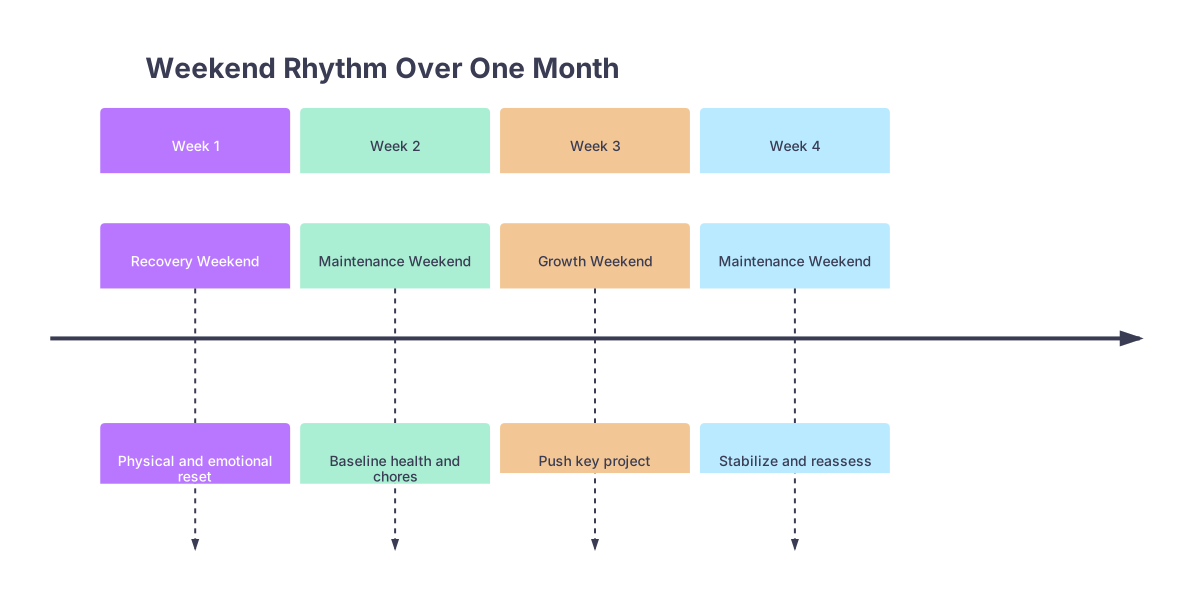
To keep track without overcomplicating it, some residents like a simple weekly rhythm diagram.
| Period | Event |
|---|---|
| Week 1 - Recovery Weekend | Physical and emotional reset |
| Week 2 - Maintenance Weekend | Baseline health and chores |
| Week 3 - Growth Weekend | Push key project |
| Week 4 - Maintenance Weekend | Stabilize and reassess |
Rotate through that pattern instead of unconsciously making every weekend a Growth Weekend.
The Move You Can Make Today
Do not “decide to be better with weekends.” That is vague and worthless.
Instead, right now:
- Open your calendar or notes app.
- Label the next two weekends: Recovery, Maintenance, or Growth.
- For the upcoming one, sketch three blocks per day and assign one main goal to each block.
If you actually write that down, you have started designing your weekend instead of surviving it.