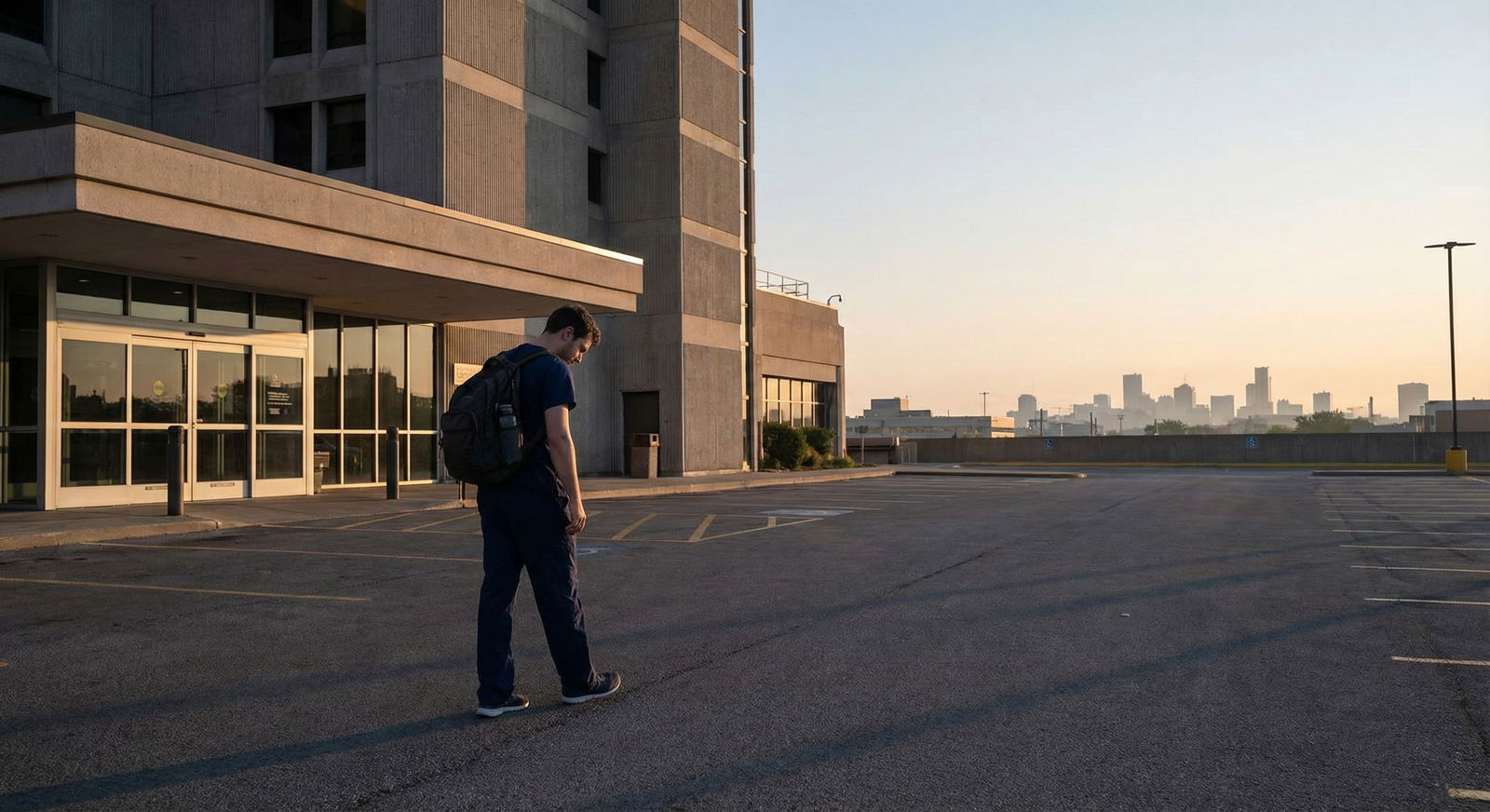
Post-call “just push through” culture is broken. It is unsafe for patients, brutal on your body, and a slow-motion way to burn out a generation of physicians.
You do not need more willpower. You need an actual protocol.
What follows is a step-by-step post-call survival plan I have seen work in residents who went from barely functioning after call to being consistently safe, less miserable, and frankly more human. This is not “self-care fluff.” This is operational medicine for your own brain.
Step 0: Decide Your Non‑Negotiables Before You Go On Call
If you try to design your post-call recovery when you are half-delirious at 8 a.m., you will fail. Post-call you are not a rational planner. You are a drunk driver with a badge.
You need a standing protocol. Written. Simple. Boringly repeatable.
Set these non-negotiables now:
No driving home if you are fighting sleep.
- If your eyes are closing at red lights, you are impaired.
- Options:
- Hospital call room nap 60–90 minutes.
- Ride share / taxi.
- Co-resident carpool / call room couch.
- This is an ethical issue, not a lifestyle choice. Falling asleep at the wheel is not “part of training,” it is negligence.
Minimum sleep block before optional activities.
- Decide your rule:
- Example: “I do not schedule anything that requires thinking or driving until I have slept at least 3 hours.”
- This means:
- No post-call clinic “just this once.”
- No “quick Target run.”
- No major family commitments before your sleep block.
- Decide your rule:
Pre-packed post-call kit. Have a small bag ready in your locker or car with:
- Eye mask
- Ear plugs or noise-canceling earbuds
- Small bottle of water, electrolyte pack
- 1 protein bar / simple snack
- Phone charger
- Travel-size toothpaste / toothbrush
- Simple face wipes
You are building a system that assumes you will be tired, irritable, and making dumb decisions. Because you will.
Step 1: The Last 2 Hours Of Call – Set Up Tomorrow-You To Win
What you do between 5–7 a.m. (or the last couple hours of your shift) determines how brutal your day becomes.
Focus on three things: caffeine, calories, and closure.
1. Tame your caffeine
If you are slamming coffee at 6:30 a.m., you are guaranteeing fragmented, useless post-call sleep.
Use a simple cutoff rule:
- Hard stop caffeine 4–6 hours before sign-out.
- For a 7 a.m. sign-out, no caffeine after 2–3 a.m.
- If you are dragging at 5 a.m., use:
- Cold water on your face
- Walking the unit
- Light, not coffee
This feels punishing at first. It pays off when you actually get effective sleep instead of a jittery 2-hour doze.
2. Eat like you respect your brain
Post-call cravings are garbage: sugar, grease, and “whatever is free in the resident lounge.” That stuff guarantees a glucose crash right when you need to stay awake to get home safely.
Aim for:
- Light, balanced intake 1–2 hours before leaving:
- Protein: eggs, yogurt, nuts, leftover chicken.
- Slow carb: oatmeal, banana, small portion of rice.
- Hydration: 500–750 mL water.
Avoid:
- Massive greasy breakfast
- Large sugary drinks
- Energy drinks (they trash your recovery sleep)
You are not fueling for a marathon. You are stabilizing the landing.
3. Close your loops before sign-out
Cognitive overload is what keeps people awake in bed post-call. The “Did I order that CT?” loop. The “What if that potassium comes back critical?” loop.
Do this 20–30 minutes before sign-out:
- Quick chart sweep:
- Outstanding labs, stat imaging, time-sensitive orders.
- Any “ticking bombs” you can either resolve or explicitly hand off.
- Write a quick micro-summary note to yourself in your phone (no PHI):
- “Code: CHF decomp, intubated, stable now. Handoff: f/u echo, family meeting planned.”
- The goal is to signal your brain: this is contained; the team has it now.
Then give a clean, organized sign-out:
- Clear “if-then” instructions:
- “If BP <90, do X. If fever >38.5, do Y.”
- Explicit worries:
- “I am most worried about bed 14; early sepsis. Please eyeball them by 9 a.m.”
Your future sleep quality depends on how much trust you have in your handoff.
Step 2: Post-Call Immediate Phase (0–60 Minutes After Sign-Out)
This is the danger zone. You are exhausted, your judgment is impaired, and yet you are about to commute and make decisions.
Your protocol for this window should be boring and the same every time.
1. Micro self-assessment before leaving
Right after sign-out, do a 60-second check:
- Am I nodding off sitting still?
- Are my eyes burning and hard to keep open?
- Am I having trouble following simple conversation?
If yes to any of these and you are supposed to drive:
- Do not drive yet. Go to a call room / quiet area and:
- Set an alarm for 60–90 minutes.
- Darken the room, eye mask, ear plugs.
- Sleep horizontally if possible.
A 60–90 minute nap can literally move you from “falling asleep at the wheel” to “tired but competent enough to commute.”
2. The commute: make it safe, not heroic
If you are marginal but not outright unsafe:
- Hydrate: finish 250–500 mL water.
- Brief movement: 5 minutes of walking or light stretching before you get in the car or on public transit.
- No loud podcasts that make you zone out. Use:
- Windows cracked open
- Cooler temperature
- Simple, familiar music or silence
If during the drive you:
- Miss an exit because you zoned out
- Drift across lanes
- Find your eyes closing at lights
Pull over. That is not optional. Call a ride share. Nap in the car for 20–30 minutes if you must. Better late than a highway fatality.
This is both personal safety and professional ethics. Falling asleep at the wheel is not “part of training,” it is preventable harm.
Step 3: The Sleep Block – Your Non-Negotiable Core Recovery
Post-call, your brain and body do not care about your productivity fantasies. They care about one thing: a protected, consolidated sleep block.
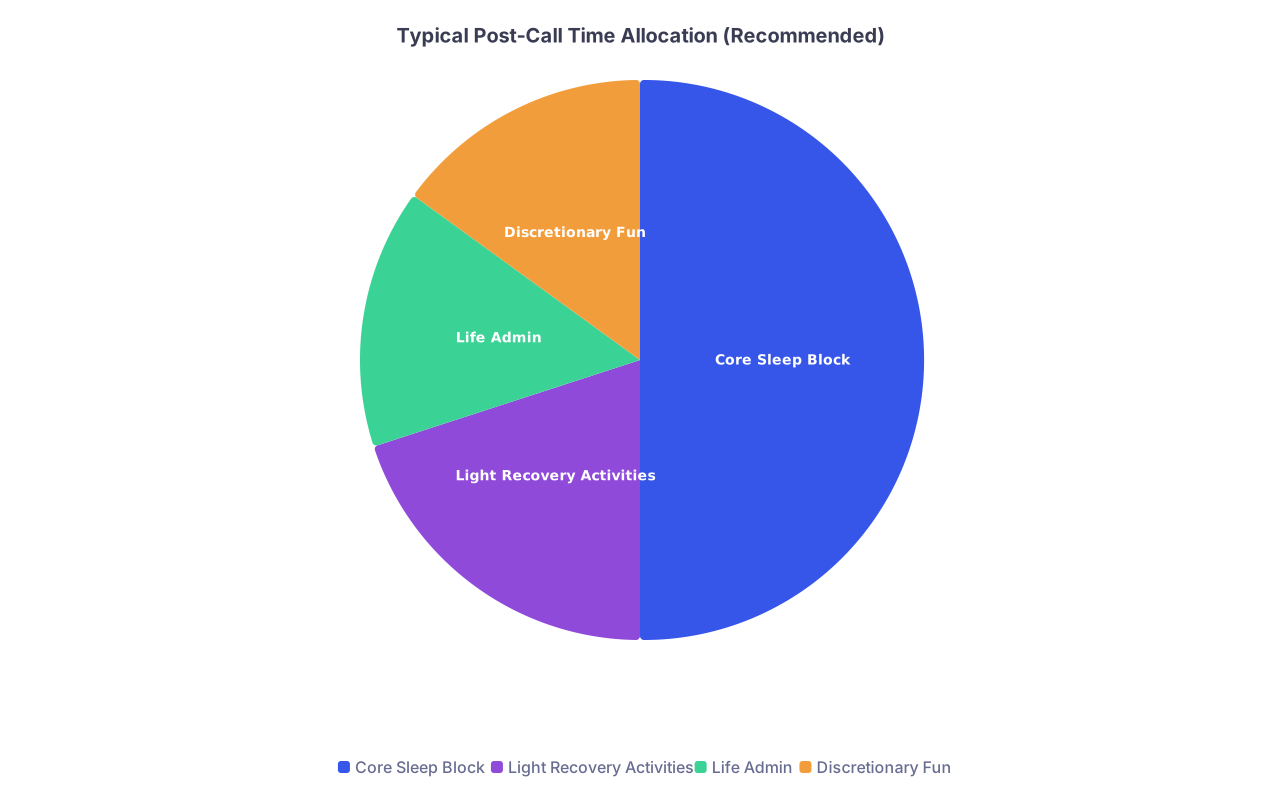
| Category | Value |
|---|---|
| Core Sleep Block | 50 |
| Light Recovery Activities | 20 |
| Life Admin | 15 |
| Discretionary Fun | 15 |
Here is what actually works.
1. Target sleep amount
You are not going to “catch up” completely. That is fine. Your goal is functional recovery, not perfection.
Reasonable target:
- 3–5 hour uninterrupted sleep block as soon as you get home.
- After that, optional 20–30 minute nap later in the day, but not after 4–5 p.m. (or it will crush your night sleep).
2. Pre-sleep wind-down (10–15 minutes)
Fight the temptation to “just quickly check email” or scroll. That is how you lose an hour of your recovery.
Standard script when you walk in the door:
- Drop bag and keys in the same spot every time.
- Quick hygiene triage:
- Remove shoes, wash face, brush teeth.
- Quick shower if it helps you sleep; keep it short.
- Phone:
- Silence.
- Set alarm for your planned wake time.
- Put it face down or in another room.
Lights low. Curtains closed. Eye mask on.
You are not “going to bed.” You are going under anesthesia. Treat it with that level of decisiveness.
3. Sleep environment hacks (that actually matter)
Focus on 3 levers:
- Darkness.
- Blackout curtains if you can manage it.
- Otherwise, eye mask. Non-negotiable.
- Noise.
- Ear plugs or white noise app.
- Tell roommates / family your “do not disturb” window ahead of time.
- Temperature.
- Cool room (around 65–70°F / 18–21°C).
Avoid:
- Alcohol “to help you sleep.” It destroys restorative stages.
- Heavy meal right before bed. Eat a small snack if hungry, then real meal after you wake.
Step 4: The First 2 Hours After Waking – Reboot Sequence
This is where most people sabotage themselves. They wake up groggy, eat like trash, start doom-scrolling, and wonder why they feel wrecked for 48 hours.
You need a deliberate “reboot” protocol.
1. Light first, then caffeine
When you wake up:
- Open curtains / step onto a balcony / sit by a window for 5–10 minutes.
- Hydrate: 250–500 mL water.
- Delay caffeine for 20–30 minutes after waking if you slept 3+ hours.
- Your natural cortisol is rising.
- Slamming coffee immediately can worsen the wired-but-exhausted feeling.
Then have a modest amount of caffeine:
- 1 normal cup of coffee or tea.
- No giant energy drink. You are not on night shift anymore.
2. Eat a real, balanced meal
You probably under-ate or ate poorly on call. Fix that now.
Aim for:
- Protein (eggs, chicken, tofu, Greek yogurt)
- Complex carb (rice, quinoa, whole grain toast)
- Some fat (avocado, nuts, olive oil)
- A bit of color (fruit or vegetables)
Low effort options that work for residents:
- Pre-made frozen meals that are not pure junk (there are decent ones now).
- Pre-cooked rice, rotisserie chicken, microwave-steamed veggies.
- Greek yogurt + fruit + granola + nut butter.
Your brain needs fuel to reset. Junk food will feel good for 15 minutes and then make you more sluggish.
3. Move your body, gently
You do not need a full workout. In fact, a hard workout immediately post-call often backfires and prolongs fatigue.
Do 10–20 minutes of:
- Easy walk outside
- Light stretching or yoga
- Simple mobility routine
The goal:
- Get blood moving
- Signal to your body: “We are off-duty now, but alive and safe.”
Step 5: Structured “Life Admin” – Don’t Let Your Day Disappear
Here is where people lose the rest of their post-call day: mindless phone time, random errands, vague guilt about “not doing enough.”
You are not going to be at 100% cognitively. Accept that. But you can still reclaim 2–4 functional hours if you are deliberate.
I like using a very simple block schedule for the remaining waking hours.
| Time | Focus Block |
|---|---|
| 08:00–09:00 | Commute + Sleep Prep |
| 09:00–13:00 | Core Sleep Block |
| 13:00–15:00 | Reboot (meal, light walk) |
| 15:00–17:00 | Light Life Admin |
| 17:00–19:00 | Low-Key Social / Family |
| 19:00–22:00 | Wind-Down + Early Bedtime |
Adjust times based on when your shift ends, obviously. The concept stays.
1. Pick 1–2 “must-do” tasks only
Your post-call brain cannot handle a 15-item checklist. Aim low on purpose.
Examples:
- Pay 2 bills.
- Respond to 3 important emails.
- Do 1 load of laundry.
- Refill prescriptions.
- Quick grocery run with a list.
That is it. Anything else is a bonus.
2. Use timers to contain tasks
If you sit at your computer “to answer a few emails,” you will be there for two hours. Do this instead:
- Set a timer for 25 minutes (Pomodoro style).
- Work on one category (email / bills / etc.).
- When timer ends, stand up, walk around, drink water.
- Do a second 25-minute block if you have it in you.
Once you hit your 1–2 must-do tasks, you have “won” the post-call admin game.
3. Avoid high-stakes decisions
Post-call is not the time to:
- Sign a lease.
- Make major financial decisions.
- Agree to major new responsibilities.
- Write angry emails.
You are tired, emotionally thin, and more likely to regret what you commit to. If something truly urgent comes up, try to defer a firm decision by 24 hours.
Step 6: Relationships, Boundaries, and Saying “No” Without Burning Bridges
This is where ethics and work–life balance collide. You have professional duties, but also duties to yourself and the people who love you.
You cannot honor either if you are chronically wrecked.

1. Pre-negotiate with family / partner
Do this on a non-call day:
- Explain your post-call protocol.
- Share your approximate schedule:
- “From 9–1 I will be asleep. From 1–3 I will be a zombie but available for low-key time.”
- Agree on:
- When it is okay to wake you (true emergencies).
- What household tasks you will not handle on post-call days.
This prevents the classic resentment cycle:
- “You are always sleeping.”
- “You never help with X.”
- “You can see patients but not your own kids?”
You cannot fix that at 6 p.m. when you are exhausted and snappy. You fix it in advance with clear communication.
2. Say “no” to extra shifts, strategically
There is real financial pressure to pick up more nights and calls. I get it. But there is a hard line between hustling and self-harm.
Use a mental checklist before agreeing to extra call:
- Have I had at least one true day off (no call, no post-call) in the last 7 days?
- Am I already behind on sleep by >10–12 hours this week?
- Have I been more irritable, forgetful, or making small mistakes lately?
If you are already red-lining, saying yes to more call is not noble. It is dangerous.
A simple script that works with chiefs / schedulers:
- “I want to help when I can, but I am currently post two heavy calls and not safe to add another this week. Can we revisit next month?”
You owe your patients a clinician who is reasonably functional. You are allowed to say no in service of that.
Step 7: Ethical Dimension – You Owe Yourself Minimum Standards
Here is the blunt truth: medicine has a long history of romanticizing self-neglect. The “I worked 36 hours straight and then did clinic” stories get told like war medals.
That mindset is ethically broken. It normalizes unsafe care and devalues your humanity.
Your post-call survival plan is not just “wellness.” It is about:
- Non-maleficence (do no harm) – including not harming patients by being cognitively impaired.
- Justice – not shifting the consequences of your impaired performance onto vulnerable patients or co-residents.
- Respect for persons – which includes you.
You have an ethical obligation to:
- Recognize when fatigue is impairing your performance.
- Use available systems (nap rooms, duty hour reporting, calling out when truly unsafe).
- Advocate, even quietly, for sane scheduling and genuine recovery time.

| Step | Description |
|---|---|
| Step 1 | End of Call Shift |
| Step 2 | Self Check - Falling Asleep? |
| Step 3 | Use Call Room Nap 60-90 min |
| Step 4 | Plan Commute |
| Step 5 | Reassess Fitness to Drive |
| Step 6 | Ride Share or Pickup |
| Step 7 | Arrive Home Safely |
I have seen residents quietly normalize a healthier standard:
- Refusing to drive when dangerously tired.
- Pushing back on being scheduled for full clinic days post heavy calls.
- Covering for each other strategically so someone completely destroyed can go home early.
That is what ethical professional culture looks like. Not martyrdom.
Step 8: Iteration – Audit and Adjust Your Protocol
You are not going to nail this the first time. Or the fifth.
Every few weeks, do a 5-minute review:
- On which post-call days did I feel least wrecked the next morning?
- What did I do differently those days?
- Where did my plan fall apart? (Usually: phone, caffeine, or overcommitting.)
Common adjustments that help:
Move heavier life tasks to pre-call days.
- Pay bills, deep clean, major grocery shopping before call weekend.
- Keep post-call days for maintenance-level tasks only.
Standardize one recovery meal.
- Same go-to smoothie, bowl, or simple plate every post-call.
- It removes decision fatigue and improves consistency.
Lock in a bedtime alarm the night after call.
- Use an alarm not just to wake up, but to go to bed.
- Example: alarm at 21:00 = “Screens off; start wind-down.”
- You are trying to re-anchor your circadian rhythm.
Watch your phone habits ruthlessly.
- If you consistently lose 2 hours to scrolling, you have to treat that as a problem, not a personality quirk.
- Use app limits on social media for that day.
- Plug the phone in across the room, not in your hand.
You are a clinician. Treat your own recovery like a quality improvement project: identify failure modes, test small changes, keep what works.
Quick Recap: The Core of a Real Post-Call Survival Plan
Keep these three points front and center:
Protect the sleep block like a life-saving intervention.
3–5 hours of dark, quiet, uninterrupted sleep immediately post-call is non-negotiable if you want to be safe and vaguely human.Standardize the routine, not the willpower.
Pre-decided rules about caffeine, driving, meals, and life admin remove 90% of the dumb, tired decisions that wreck your recovery.Treat recovery as an ethical obligation, not a luxury.
You are not more professional when you run yourself into the ground; you are more dangerous. A sane post-call protocol honors your duty to patients, colleagues, and yourself.