
The way most residents transition off night float is broken. You are treating a full circadian reprogramming like a long weekend nap.
Let me give you a system instead of vibes.
You are not just “tired.” You are acutely jet-lagged, hormonally deranged, and emotionally unstable for a few days. That is not weakness. It is physiology. If you wing this transition, your sleep, mood, and judgment will be trash for 1–2 weeks. That bleeds directly into patient safety and your own sanity.
Here is a 7‑day, step‑by‑step reset protocol I have used and refined with residents who actually had to show up and function, not just fill out a survey.
The Core Problem You Are Actually Dealing With
You are not “switching from nights to days.” You are:
- Shifting your circadian phase by 6–12 hours
- Undoing cumulative sleep debt
- Managing abrupt changes in light exposure, caffeine, cortisol, and social routine
- Trying to be a safe physician while your brain is lagging 3–6 time zones behind
Most people focus only on “sleep more.” Wrong target. You must coordinate:
- Light (strongest circadian signal)
- Sleep timing (gradual phase shift)
- Caffeine (used like medicine, not comfort)
- Activity and meals (secondary time-givers)
- Mood protection (because the first 3–4 days feel awful if you do not plan for it)
So I will give you:
- A concrete 7‑day schedule after your last night shift
- Rules for light, caffeine, naps, and exercise
- A mood and ethics safeguard plan so you do not take this out on patients or your family
You follow the system; your brain does the rest.
The 7-Day Night Float Reset Plan
Assume:
- Your last night: 7 PM–7 AM (adjust by 1–2 hours for other schedules)
- You want to return to a “normal” daytime schedule (wake 06:00–07:00, sleep 22:00–23:00)
We will use a step‑down approach: you do not slam yourself into a full day schedule in 24 hours. You land the plane.
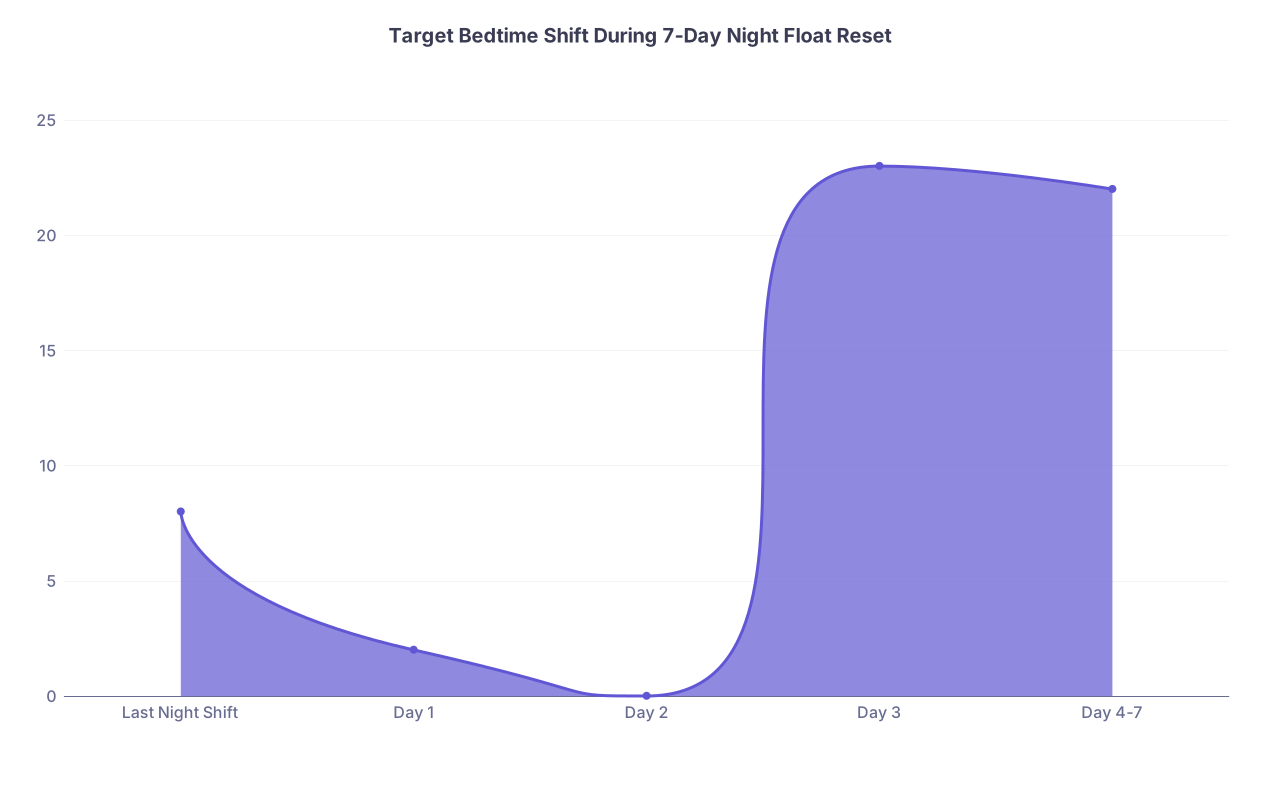
| Category | Value |
|---|---|
| Last Night Shift | 8 |
| Day 1 | 2 |
| Day 2 | 0 |
| Day 3 | 23 |
| Day 4-7 | 22 |
Think of “8” as 8 AM bedtime post-shift; “22” as 10 PM.
Day 0 – Last Night Shift (7 PM–7 AM)
Goal: Survive the shift safely and prevent making Day 1 worse than it has to be.
During the shift
- Caffeine: stop by 03:00. No exceptions unless patient care crisis.
- Bright light: stay in well‑lit areas. Use the workroom lights, not a dark call room, if you are fighting sleep.
- Food: small, light meals. Heavy greasy food at 3 AM will punish you mid-morning when you try to sleep.
07:00–08:00 – Commute home
- Sunglasses on. This is not vanity; it is circadian management.
- Avoid scrolling on a bright phone at maximum brightness on the bus. Dim screen or use blue‑light filter.
08:30–14:00 – Anchor sleep block
- Get 5–5.5 hours. Not 10. Not “whenever I wake up.”
- Dark, cool room. Phone on airplane mode if possible.
- White noise if you live with roommates/family.
Why only 5–5.5 hours? Because if you sleep 08:30–16:00, your brain will be convinced you are still on nights. You will be wide awake at 01:00 and miserable.
14:00–20:00 – Controlled wakefulness
- Get out of bed by 14:00. No “just 30 more minutes.”
- Bright light exposure: open blinds, go outside for 15–30 minutes.
- No caffeine after 14:00.
- Gentle activity only: walk, easy errands. No intense workout.
19:00–22:00 – First transition night
- Target bedtime ~21:00–22:00. You will feel weird and wired. That is normal.
- Use a wind‑down routine: shower, light snack, book or podcast, no screens in your face.
- If you absolutely cannot fall asleep by 23:00: get up, sit somewhere dim, read a boring book for 20–30 minutes, then try again. Do not lie there doom‑scrolling.
Day 1 After Nights
You will feel hungover. This is your hardest day. You are not “back to normal” yet.
Target schedule:
- Wake time: 07:30–08:30
- Bedtime: 22:30–23:00
Concrete plan:
Morning (07:30–10:00)
- As soon as you wake: open blinds, step outside, or sit by a bright window for 20 minutes.
- One normal‑sized coffee or tea with breakfast. Then stop until noon.
Late morning / early afternoon
- If you are off this day (ideal):
- Light walk 20–30 minutes outside. Movement + sun = signal to your brain.
- Short nap allowed between 13:00–15:00: 20–30 minutes only. Set an alarm. You overshoot, you destroy your night.
- If you are off this day (ideal):
Evening
- Dim lights after 20:30. Screen brightness down.
- No caffeine after 14:00.
- If you are staring at the ceiling at 23:30: same rule as Day 0. Get up, low‑stimulation activity, then retry.
You should be able to get 7–8 hours this night, fragmented maybe, but trending better.
Day 2
Now you refine, not improvise.
- Wake time: 07:00–08:00
- Bedtime: 22:00–22:30
- No naps if you can avoid it. If you must, same 13:00–15:00 window, 20 minutes.
Light again is your drug:
- 15–30 minutes bright light within 1 hour of waking
- Another 10–15 minutes outdoors mid‑day if possible
You should feel:
- Less fogged
- Still emotionally flat or irritable
- Like your body “catches up” mid‑afternoon instead of the morning
That is normal.
Days 3–4
These two days lock in your new rhythm.
Targets (stable):
- Wake: 06:00–07:30
- Bed: 21:30–22:30
- Sleep: 7–9 hours
Rules:
- No naps unless you had <6 hours total the night before, and even then keep it 20 minutes before 15:00.
- Exercise: start bringing back moderate workouts (30–40 minutes). Best window: late afternoon or early evening. Heavy exercise right before bed delays sleep.
- Social life: yes, you can see people, but do not push your bedtime past 23:00 “just this once.” Every late night is like pulling one brick from a freshly built wall.
By Day 4, genuine daytime functionality should be back. If you are still completely wrecked, that is a flag I will come back to.
Days 5–7
Now you are in maintenance and mood stabilization territory.
Keep:
- Wake: within a 60‑minute range every day (e.g., 06:30–07:30)
- Bed: within a 60‑minute range (e.g., 21:30–22:30)
- Sleep: minimum 7 hours, preferably 8
Add:
- Regular exercise 3–4 days per week
- Predictable mealtimes (your gut has a clock too)
- Build in one hour daily that is not work, not chores, not studying. Something you chose. Reading, gaming, calling a friend, whatever. That is not luxury; it is how you tell your brain the threat is over.
By Day 7, most residents report:
- Sleep onset normal
- Mood more stable
- Less feeling like “I am in a different universe” during the day
- Ability to focus for a full clinic or ward day without fighting to stay awake
If you are nowhere near this by Day 7, or your mood is tanking hard, you may have pushed too fast, or something else is going on (depression, anxiety, or just too many months of cumulative burnout).
The “Hard Rules” That Make Or Break This
These are the things that, when violated, blow up all your careful planning. I am blunt because I have watched people learn this the hard way.
1. Light: You Cannot Ignore This
Your brain sets its clock from light at the eyes. Not from your intentions.
During nights:
- On shift: stay in bright indoor light as much as feasible.
- Going home: sunglasses, avoid bright light exposure.
Post‑nights:
- First 3 mornings: at least 15–20 minutes bright light within an hour of waking. Outside > inside > overhead lights.
- Evenings: dim house lights after 20:30. Reduce phone/monitor brightness. Use night‑shift mode.

If you do everything else right and ignore light, you will reset in 2–3 weeks instead of 5–7 days.
2. Caffeine: Treat It Like a Medication, Not a Personality Trait
Classic self-sabotage: slamming coffee all the way to pre‑rounds after nights because you are wrecked.
Rules:
- Last night shift: no caffeine after 03:00
- Day 0: no caffeine after 14:00
- Days 1–7: keep caffeine before 12:00 if you can; absolutely before 14:00
You are training your brain. Caffeine too late is like telling it, “The day is still going.” Then you complain you “just cannot fall asleep early.” Of course you cannot. You drugged yourself.
3. Naps: Used Sparingly Or Not At All
Post‑nights, daytime sleep is seductive. You “just need a bit” and wake up 3 hours later at 18:00, heart pounding, completely inverted again.
If you must nap:
- Window: 13:00–15:00
- Duration: 20–30 minutes (set two alarms if you do not trust yourself)
Anything longer:
- Kills sleep drive at night
- Deepens sleep inertia when you wake
- Increases the odds you end up scrolling in bed at 01:00 wondering why you are not tired
4. Shift Your Schedule In Chunks, Not Chaos
Do not do this:
- Last night shift ends 07:00
- Sleep 08:00–17:00
- Stay up to 03:00 watching Netflix “because I am off tomorrow”
- Sleep 03:00–13:00
- Try to be up at 06:00 the next day
Your circadian system has no idea where to go. Pick a direction and move steadily.
Mood, Ethics, and Not Being a Jerk While Jet-Lagged
Let me be blunt: post‑night‑float you are more likely to:
- Snap at nurses and students
- Miss early signs of deterioration
- Cut ethical corners because you “just need to get out on time”
- Make lousy judgment calls around consent, difficult conversations, and end‑of‑life care
This is not a character flaw. It is impaired bandwidth. So you build guardrails.
1. Assume You Are Impaired For 72 Hours
You would not let a colleague drive post‑propofol. Treat your executive function the same way.
Practical guardrails:
- Double check orders on high‑risk meds and infusions.
- Ask: “Can you read that back?” more often.
- If you feel yourself getting irritable with staff, mentally tag it: “Post‑night brain.” Take a breath before speaking.
| Task Type | Strategy |
|---|---|
| New anticoagulation | Double-check dosing and labs |
| Opioid prescribing | Reassess pain, check prior doses |
| Critical lab calls | Ask for read-back and document |
| Goals of care talks | Delay 24 hours if safely possible |
If you can, avoid scheduling major family decisions or big life conversations during the first 2–3 days off nights. You are not at your best.
2. Name The Mood Distortion
A lot of residents tell me:
“After nights I always feel like my life is a mess, my career is a mistake, and I am a terrible doctor.”
Then, 5 days later:
“Actually, things are okay.”
That whiplash is not insight. That is physiology.
So you pre‑label it:
- “The next 3 days my brain lies to me about my life.”
- Put a note in your phone or on your fridge: “No big decisions until Day 4.”
If you have a partner or close friend, tell them:
- “If I start talking about quitting medicine or blowing up my life in the next few days, remind me this is my post‑night brain and tell me to wait a week.”
3. Minimum Mental Health Protocol
You do not need therapy for every rough patch. You do need a floor.
For Days 1–7, commit to:
- One mood check per day: literally ask yourself, “1–10, how am I doing?” If you are staying ≤4 for 3+ days, that is data.
- One human contact per day outside work: a text, a 5‑minute call, sitting with your roommate. Isolation magnifies everything.
- One thing you genuinely like per day (and no, collapsing in front of a random show you do not care about does not count).
If you notice:
- Passive suicidal thoughts
- Complete emotional numbness
- No pleasure from anything for 2+ weeks
That is when this moves out of “normal post‑night fallout” into “talk to someone.” At minimum, a trusted attending or program leadership; ideally, a mental health professional.
A Visual of the Weekly Reset Flow
Here is the overall structure in one place.

| Step | Description |
|---|---|
| Step 1 | Last Night Shift |
| Step 2 | Day 0 Anchored Nap 5h |
| Step 3 | Day 0 Early Bed 21-22 |
| Step 4 | Day 1 Fixed Wake and Morning Light |
| Step 5 | Day 2 No Late Naps and Caffeine Cutoff |
| Step 6 | Days 3-4 Stable Schedule and Exercise |
| Step 7 | Days 5-7 Mood and Sleep Maintenance |
| Step 8 | Evaluate - Back to Baseline? |
When The System Is Not Enough
Some situations do not respond fully to a 7‑day reset. Recognize them.
1. Rotations Designed To Break You
If your institution does this:
- 7 nights in a row
- 1 day off
- 6 day shifts immediately
…you are fighting a structural problem, not a personal failing.
Do the best you can with the protocol above, then:
- Log how long it takes you to regain normal function.
- Bring this, politely but directly, to program leadership with possible alternatives (split nights, protected transition day, etc.).
Ethically, programs have a duty not to repeatedly put you in situations where your function is impaired and you are still responsible for high‑stakes decisions. That is not “being soft.” That is patient safety.
2. Underlying Sleep Disorders
If, after multiple cycles of nights and this reset, you consistently:
- Take >60–90 minutes to fall asleep, even when tired
- Wake up multiple times and cannot return to sleep
- Snore loudly or wake up choking / unrefreshed
- Have restless, jerking legs every night
You may have insomnia, sleep apnea, or restless legs. Night float will unmask all of these. They are treatable, but not with grit.
Get:
- At minimum: a conversation with occupational health or your PCP
- Ideally: a referral to sleep medicine
3. Long-Term Burnout Masquerading As “Post-Night Hangover”
If you never feel fully recovered, even weeks off nights, look broader.
Red flags:
- You dread work every day, not just after nights
- You feel detached from patients and colleagues
- You are increasingly cynical or numb about bad outcomes
- Your performance is slipping and you do not care
That is not a sleep problem anymore. That is burnout or depression layered on top of a brutal schedule. The 7‑day reset will help, but it will not fix the core problem. You will need structural changes, boundaries, maybe therapy, maybe career adjustment.
Putting It All Together: A Concrete Weekly Template
Let me spell out an example week assuming:
- Last night shift: Sunday 19:00–Monday 07:00
- Next day shift rotation starts: Thursday 07:00
| Day | Wake Time | Main Sleep | Naps |
|---|---|---|---|
| Mon (Day 0) | 14:00 | 08:30–14:00 | None |
| Tue (Day 1) | 08:00 | 22:30–06:30 | 20 min 13:30 |
| Wed (Day 2) | 07:00 | 22:00–06:00 | None |
| Thu (Day 3) | 06:00 | 21:30–05:30 | None |
| Fri (Day 4) | 06:30 | 22:00–06:30 | 20 min optional |
Adjust 30–60 minutes earlier or later to match your personal baseline, but keep the relative shifts and rules the same.

How To Actually Implement This (Without Overcomplicating It)
Here is what you do before your night float block ends:
Print or write out a 7‑day plan with:
- Target wake times
- Target bedtimes
- Caffeine cutoff time
- Nap rules
Tell one person (partner, friend, co‑resident):
“I am running a 7‑day reset system after nights. If I start saying my life is terrible or making big plans, remind me to wait until Day 4.”Prep your environment:
- Blackout curtains or eye mask
- White noise app or fan
- Sunglasses in your bag
- A low‑stimulation activity queued up (book, podcast, puzzle game) for sleepless nights
Decide now:
- Which days you will exercise lightly
- What your “one genuinely enjoyable thing” per day will be
Then when the last night comes, you are not deciding from a foggy brain. You are just executing.
Final Point: This Is About Ethics As Much As Comfort
Recovering from night float is not just about feeling less miserable. It is about:
- Not making errors because your brain is three time zones behind
- Not unloading your irritability onto nurses, students, or family
- Not normalizing a culture where being wrecked is a badge of honor
So:
- Treat the 7‑day reset as part of your job, not an optional wellness perk.
- Use structure: light, caffeine, sleep windows, and naps on purpose, not by habit.
- Protect mood and judgment: assume impairment for 72 hours, add guardrails, and get help if you never fully recover.
You cannot control how many nights your program gives you. You can control whether you come out of them with a plan or just hope your brain figures it out.