
Most physicians and scientists are vaguely aware “med comms” exists—and have no idea how structured, sophisticated, and competitive this career track actually is.
Let me break this down specifically. If you are clinically trained or scientifically trained and considering alternative careers, medical communications agencies are one of the most realistic landing spots: stable, intellectually challenging, and genuinely impactful on how medicine is practiced.
But you cannot treat this like a random writing job. These agencies run on a very specific structure, with clearly defined roles and a promotion ladder that is closer to consulting than to academia.
We are going to walk straight through:
- How medical communications agencies are structured
- What the core roles actually do day-to-day
- How the promotion path works (titles, timelines, expectations)
- Where a physician / PhD / allied health professional fits and what they are worth
1. What Exactly Is a Medical Communications Agency?
Medical communications agencies sit in the weird no-man’s-land between pharma, academia, and marketing.
They are usually hired by pharmaceutical, biotech, device, or sometimes diagnostic companies to handle one or more of the following:
- Scientific strategy and communication for a therapy area or brand
- Publication planning and execution (manuscripts, posters, abstracts)
- Medical education for HCPs (slides, symposia, advisory boards, online modules)
- Medical affairs support (scientific platforms, value dossiers, MSL materials)
- Occasionally, promotional materials (branded slides, sales training, detail aids) within compliance rules
You are not doing basic science. You are not seeing patients. You are turning data into strategy and communication that moves prescribing behavior and informs clinical practice, but within tight regulatory and ethical boundaries.
Two broad types of agencies, often under the same umbrella:
- “Med comms / medical affairs / publications” focused: heavier on scientific depth, less on overt promotional spin
- “Healthcare advertising / promo” focused: more creative, more marketing language, more branding and campaigns
Most medically trained people land in the first type. Some drift into promo once they understand the landscape.
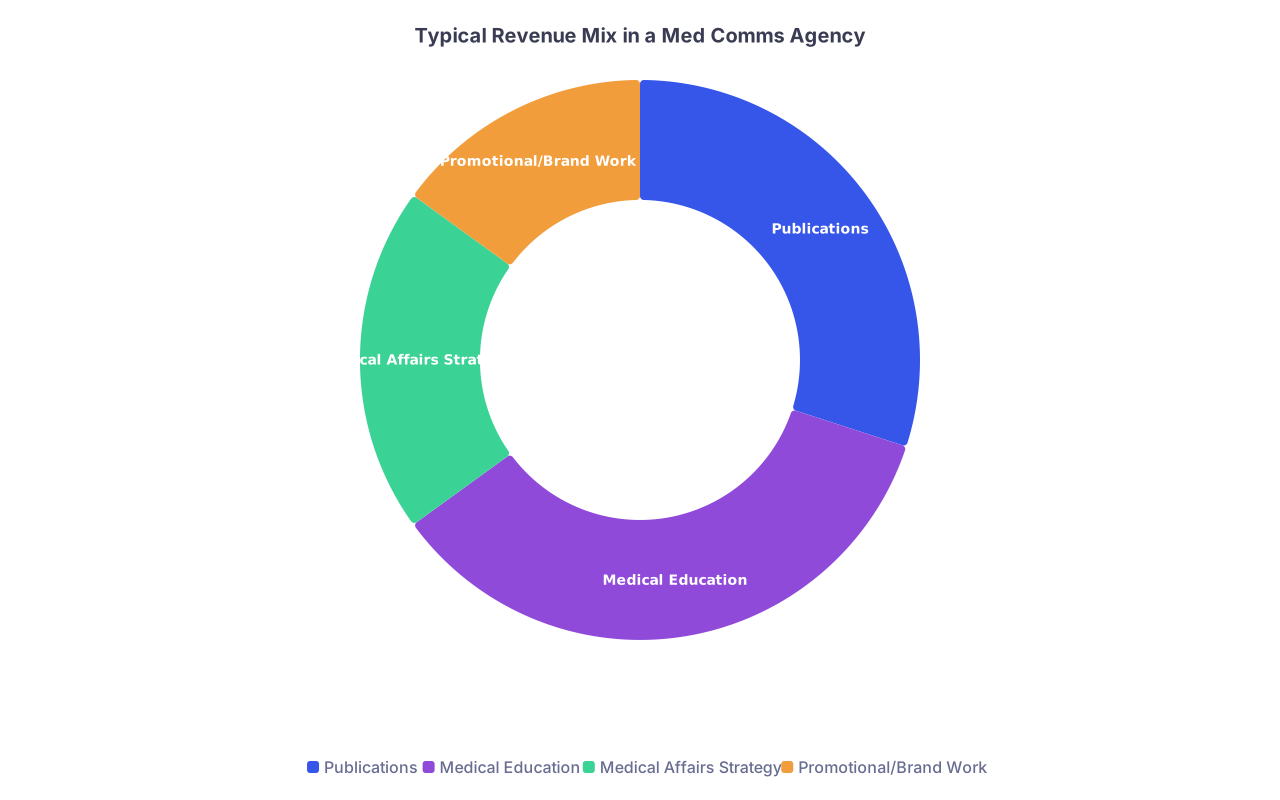
| Category | Value |
|---|---|
| Publications | 30 |
| Medical Education | 35 |
| Medical Affairs Strategy | 20 |
| Promotional/Brand Work | 15 |
That mix varies by agency, but the structure of teams is surprisingly consistent across the industry.
2. Core Structural Model: Three Pillars
If you want to understand medical communications agencies, remember this: they are built on three operational pillars.
- Scientific / Editorial
- Client Services / Accounts
- Creative / Design / Digital
Then optionally:
- Strategy / Planning
- Business Development / New Business
- Operations / Project Management / Finance / HR
Let’s walk through the meat of it.
2.1 Scientific / Editorial (Where Most Doctors and PhDs Land)
This is the engine room. If there is a slide deck, symposium, or manuscript, someone in Scientific wrote or shaped it.
Typical titles on the scientific side:
- Associate Medical Writer (AMW) / Junior Medical Writer
- Medical Writer (MW)
- Senior Medical Writer (SMW)
- Lead Medical Writer / Principal Medical Writer
- Scientific Director / Principal Scientific Director
- Group Scientific Director / VP, Scientific Services
Day-to-day responsibilities:
- Reviewing clinical trials, guidelines, real-world evidence
- Writing: manuscripts, abstracts, posters, slide decks, monographs, training modules, FAQs
- Building scientific narratives: mechanisms, clinical value, treatment algorithms
- Being the scientific point person on client calls
- Troubleshooting: “The client hated this data story; how do we reframe without lying?”
- Ensuring everything is accurate, referenced, and compliant with regulations
This pillar is where deep clinical or scientific training actually matters. You are expected to understand Kaplan–Meier curves, non-inferiority margins, hazard ratios, subgroup analyses—without needing a babysitter.
2.2 Client Services / Accounts
If Scientific is the engine, Client Services is the steering wheel.
Typical titles:
- Account Executive (AE) / Senior Account Executive
- Account Manager / Senior Account Manager
- Account Director / Senior Account Director
- Group Account Director / VP, Client Services
What they actually do:
- Own the client relationship: the brand team, medical affairs, sometimes global marketing
- Run the day-to-day operations: timelines, budgets, scopes of work
- Translate client business goals into project briefs the scientific and creative teams can execute
- Deflect unreasonable requests (and yes, there are many) before they hit the writers
- Drive revenue growth: “What else could we do for this client next quarter?”
These people come from a variety of backgrounds: life sciences degrees, business backgrounds, sometimes ex-pharma marketers. Medical training is not typical here, but it is not impossible.
2.3 Creative / Design / Digital
Less relevant for physicians but you need to know it exists because it explains half the internal meetings.
Roles:
- Graphic Designers, Art Directors
- UX/UI Designers, Web Developers
- Motion Graphics / Video Editors
- Creative Directors
They turn dense science into something a human can look at without glazing over:
- Poster layouts, CME websites, congress booth visuals
- Animations of mechanisms of action
- Interactive iPad tools for MSLs or sales teams
They rarely own the science. That is the job of Scientific. But they know how to present it so the client looks good, and the message lands.
3. Typical Organizational Structure: Who Reports to Whom
Strip the branding, logos, and “boutique” language away, and most agencies look like this.

| Step | Description |
|---|---|
| Step 1 | Agency CEO/MD |
| Step 2 | Head of Scientific |
| Step 3 | Head of Client Services |
| Step 4 | Head of Creative |
| Step 5 | Scientific Director |
| Step 6 | Senior Medical Writer |
| Step 7 | Medical Writer |
| Step 8 | Associate Medical Writer |
| Step 9 | Group Account Director |
| Step 10 | Account Director |
| Step 11 | Account Manager |
| Step 12 | Account Executive |
| Step 13 | Creative Director |
| Step 14 | Art Director |
| Step 15 | Graphic Designer |
Some agencies bolt on:
- Strategy / Planning Director (sits between Scientific and Client Services, focusing on brand/medical strategy)
- Project Management (schedulers, traffic managers) who sit horizontally across accounts
But the core hierarchy above is your baseline.
4. Roles on the Scientific Side: What You Actually Do
Let’s go rank by rank. Because this is where most medically trained professionals plug in.
4.1 Associate Medical Writer (AMW) / Junior Medical Writer
Entry-level. You are hired for potential, not polish.
Profile:
- Usually: PhD in a biomedical field, or MSc with writing experience
- Less often but absolutely possible: MD/DO/PharmD / PA/NP transitioning from clinical
Core tasks:
- Literature searches and basic data summaries
- Drafting pieces of larger deliverables (a few slides, a section of a manuscript)
- Formatting references, chasing down missing citations
- Taking notes on client calls, preparing action points
- Learning house style, client preferences, regulatory constraints
You are not expected to manage clients. You are expected to be accurate, fast, and coachable.
Time to next step: roughly 12–24 months if you are competent and the agency is busy.
4.2 Medical Writer (MW)
This is where you are a fully billable asset.
Responsibilities:
- Taking full ownership of standard deliverables under supervision
- Drafting slide decks from scratch based on data and a brief
- Writing manuscripts end-to-end with input from KOLs and clients
- Presenting content on internal calls, sometimes on client calls
- Handling revisions and responding constructively to sometimes incoherent feedback
You start to see more nuanced tasks:
- Figuring out how to keep a data story scientifically honest but commercially aligned
- Understanding how different stakeholders (marketing, medical affairs, legal, regulatory) view content
4.3 Senior Medical Writer (SMW)
This is the first real leverage point. Strong SMWs carry projects.
You are now:
- Leading the scientific execution for a project or small account
- Running content discussions on client calls
- Mentoring AMWs and MWS—reviewing their drafts, giving feedback
- Anticipating problems before they blow up timelines
- Contributing to scientific strategy discussions (“How do we position this therapy vs the new competitor?”)
You are also being evaluated for leadership potential. Can you keep calm when a client changes the brief 48 hours before a symposium? Or do you melt?
4.4 Scientific Director / Principal Medical Writer
This is senior territory.
Responsibilities:
- Owning the scientific relationship with one or more brands or therapy areas
- Developing scientific platforms: comprehensive disease/brand narratives, message maps
- Leading advisory boards, content discussions, and higher-stakes client meetings
- Shaping publication strategies, congress plans, education roadmaps
- Reviewing and signing off scientific work from the entire team on that account
You may start to:
- Participate heavily in new business pitches
- Influence hiring and resource planning
- Push back strategically against unrealistic or non-compliant client requests
At this level, you are judged not just on writing but on thinking. Can you see five steps ahead in a therapeutic landscape?
4.5 Group Scientific Director / VP Scientific
Now you are at leadership level.
- Overseeing multiple therapy areas / accounts
- Setting quality standards and processes for the Scientific team
- Managing Scientific Directors and Senior Writers
- Interfacing with agency leadership on growth, resourcing, profitability
You are closer to executive politics than to sentence-level editing.
5. Promotion Path: Titles, Timeframes, Expectations
Most agencies follow a similar ladder, with small variations in title. Here is a broad sketch for the scientific track.
| Level | Typical Time at Level | Core Focus |
|---|---|---|
| Associate Medical Writer | 1–2 years | Learning, execution |
| Medical Writer | 1.5–3 years | Independent delivery |
| Senior Medical Writer | 2–4 years | Leadership on projects |
| Scientific Director | 3–6+ years | Brand/therapy area leadership |
| Group Sci Director / VP | Variable (senior) | Department and strategic leadership |
Key point: this is not like academia where you stagnate for ten years then maybe move up one step. In well-run agencies, if you are good, you move. And you move based on three axes:
- Scientific quality and accuracy
- Ability to manage clients and teams
- Commercial awareness (budgets, scopes, efficiency)
You do not get promoted for being a brilliant yet slow or chaotic writer. Agencies live and die on timelines and margins.
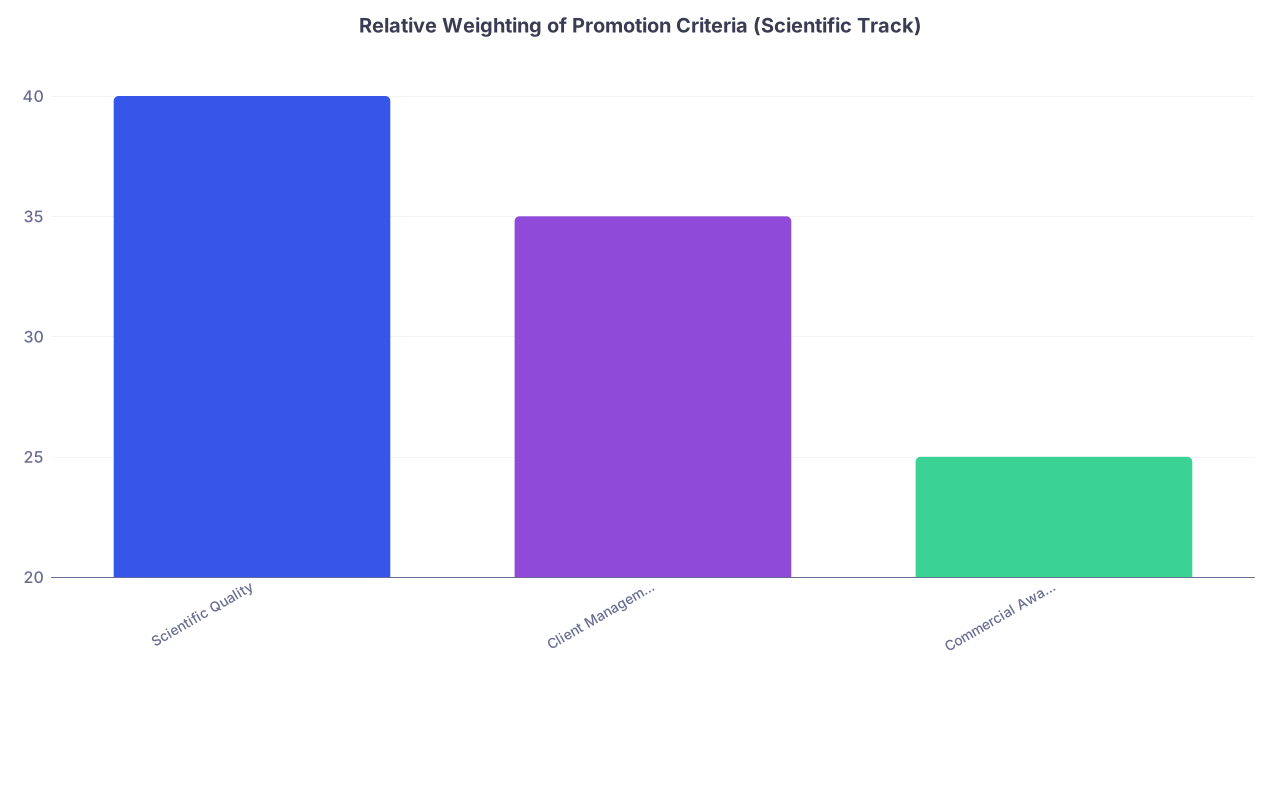
| Category | Value |
|---|---|
| Scientific Quality | 40 |
| Client Management | 35 |
| Commercial Awareness | 25 |
That weighting shifts slightly as you get more senior: at the Director level, client and commercial factors can outweigh pure wordsmithing skills.
6. Where Do Physicians and Other Clinicians Fit?
Here is where a lot of MDs misunderstand the game.
Your MD does not automatically drop you into a director-level seat. Agencies care about:
- Your ability to write structured, clear English for a non-academic audience
- Reliability under pressure
- Team fit and humility (yes, really)
Common entry points for physicians:
- Medical Writer or Senior Medical Writer: common for board-certified clinicians or those with residency plus some publications
- Occasionally Scientific Director: for very experienced physicians with industry or KOL experience
If you come straight from residency or clinical practice with minimal writing experience, you are more likely to start at Medical Writer level, not Director. And that is not an insult. There is a skill set here that has nothing to do with billing codes.
Clinicians have several advantages once they adapt:
- Faster comprehension of trial design, endpoints, and clinical nuance
- Credibility with KOLs and medical affairs clients
- Intuitive sense of what matters at the bedside
But you must unlearn some habits:
- Overly academic writing (journals care; marketing teams do not)
- Perfectionism that ignores timelines and budgets
- Hierarchy assumptions—your MD does not trump the Account Director who actually runs the business
7. Day-to-Day Reality: What Your Week Actually Looks Like
Let’s strip the gloss.
A typical week for a midlevel Medical Writer or Senior Medical Writer:
- 2–4 client calls: status updates, content reviews, planning next deliverables
- 60–70% of time: heads-down writing or revising (slides, manuscripts, ad board materials, training modules)
- Regular internal check-ins: with Account, with your Scientific lead, with Creative
- Time spent in references: PubMed, clinicaltrials.gov, conference abstracts
- Admin: timesheets, project documentation, internal reviews
Hours? It depends heavily on agency culture and where you sit.
- 40–45 hours/week at more humane or well-resourced shops
- 50–60+ when deadlines stack (congress season, big launches, poor resourcing)
The worst weeks involve:
- Last-minute data drops (new topline results) the client wants in all materials immediately
- Multiple congresses hitting at the same time
- Poorly scoped projects where timelines were unrealistic from the start
You are not on call like in residency. But big pitches and launch phases can feel a bit like a light call schedule.
8. Compensation: What You Actually Get Paid
Ranges vary by country, agency size, and whether you are in-house vs freelance. I will stick to rough patterns for major markets (US/UK/EU). These are directional, not exact.
| Role | Approx. Base Salary (USD) |
|---|---|
| Associate Medical Writer | 65k–85k |
| Medical Writer | 80k–110k |
| Senior Medical Writer | 100k–135k |
| Scientific Director | 130k–170k+ |
| Group Sci Director / VP | 160k–220k+ (sometimes higher) |
Clinicians with prior practice experience sometimes land at the upper ends or enter at SMW/Director level, but only if they are demonstrably capable in this environment.
Freelancers/contractors can earn more per hour, with obvious tradeoffs: instability, need to self-manage benefits, constant BD.
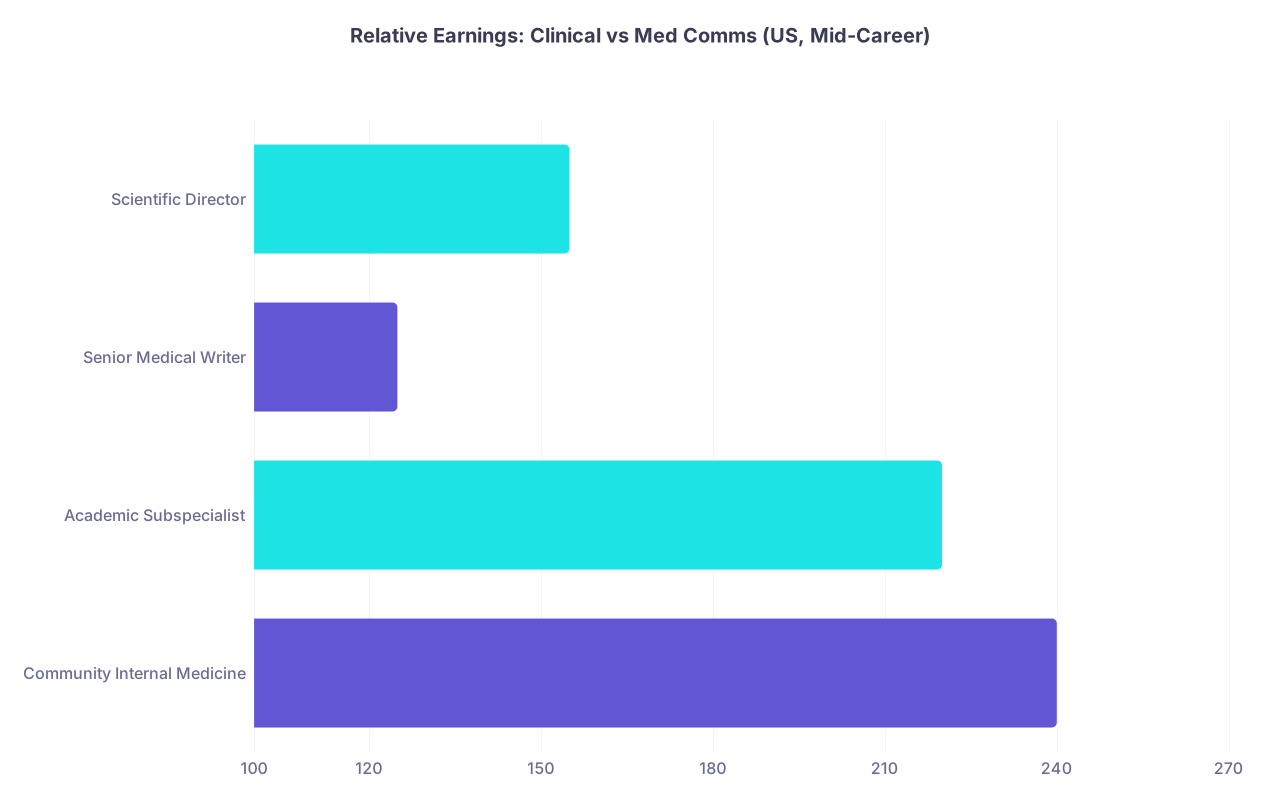
| Category | Value |
|---|---|
| Community Internal Medicine | 240 |
| Academic Subspecialist | 220 |
| Senior Medical Writer | 125 |
| Scientific Director | 155 |
You trade some peak earnings (especially in procedure-heavy specialties) for predictability, geographic flexibility (often remote), and a non-clinical lifestyle.
9. Promotion Mechanics: How You Actually Move Up
Promotions are not given simply because you have “been here two years.”
Common promotion triggers at each step:
AMW → MW: You can take a standard brief, produce a solid first draft with minimal handholding, and respond to revisions without spiraling. You understand basic compliance boundaries.
MW → SMW: You can independently manage the scientific workstream for a project or small account. You can lead content discussions with clients. You are a net positive for team efficiency, not a drain.
SMW → Scientific Director: You show real strategic input, can manage multiple writers, and can interface with senior client stakeholders. You start to understand scopes, hours, and profitability.
Sci Director → Group Sci Director / VP: You can think beyond one brand. You help shape departmental hiring, training, and quality frameworks. You contribute to agency growth, new business, and reputation.
Things that accelerate promotion:
- Reliability in crisis. When a key deck must be rewritten overnight and you do it with minimal drama, people remember.
- Good behavior on calls. You speak up intelligently, do not waffle, and do not undermine the Account team.
- Mentoring. If juniors consistently improve under your guidance, leadership notices.
Things that quietly kill your trajectory:
- Chronic lateness on deliverables.
- Defensiveness when receiving feedback.
- Acting like you are “too good” for basic tasks because you have an MD or PhD.
10. Future of Med Comms: Where This Is Heading
You are not stepping into a static industry. Three shifts are already reshaping medical communications.
10.1 Digital and Modular Content
The old model: linear slide decks, static PDFs, in-person symposia.
The new model:
- Modular content that can be chopped, repurposed, and personalized
- Omnichannel strategies: webinars, micro-learning, interactive tools, social snippets for HCP platforms
- Integration with CRM and engagement data (“What did physicians click, skip, re-watch?”)
If you are comfortable with digital formats and thinking in chunks, you will be ahead of your peers.
10.2 Data Sophistication and Real-World Evidence
Communication is no longer just about pivotal RCTs.
You will increasingly deal with:
- Real-world evidence (RWE) datasets
- HEOR (health economics and outcomes research)
- Subgroup analyses, network meta-analyses, registries
Agencies that can translate complex data to actionably simple stories will win. Writers who can understand and not mangle such data will be invaluable.
10.3 Regulatory and Ethical Scrutiny
Regulatory bodies and the academic community are watching pharma-sponsored communication like hawks.
Expect:
- More stringent publication ethics and authorship scrutiny
- Tighter medical/legal/regulatory (MLR) review cycles
- Greater emphasis on transparency and data integrity
The old-school “spin this beyond recognition” messaging is dying. Good agencies know this. They want people who can be persuasive without being dishonest.
11. How to Break In (If You Are Coming from Medicine or Academia)
Three practical moves. No fluff.
Build actual writing samples.
- Rewrite a clinical guideline section as a short HCP summary.
- Create a 15–20 slide pseudo-deck explaining a trial in clear, concise language.
- Volunteer to write patient or HCP materials for your institution, specialty societies, or non-profits.
Learn the basics of the industry.
- How pharma is structured: medical affairs vs marketing vs clinical development.
- What “publications planning,” “MSL deck,” “ad board,” and “scientific platform” actually mean.
- Read a few ISMPP or GPP guidelines (for publications ethics and standards).
Targeted applications and conversations.
- Apply for Medical Writer roles, not “Chief Medical Strategy” fantasies.
- Talk to people already in med comms (LinkedIn, alumni, conferences). Ask them blunt questions about culture and workload.
- Accept that your first role is a pivot, not your final destination. Once inside, lateral moves—to strategy, to account leadership, even to pharma—are far easier.
12. Is This Career Actually Good?
Bluntly: for many physicians and PhDs who do not want full-time clinical or academic lives, yes, it is one of the better options.
Pros:
- Intellectually engaging, especially in rapidly evolving therapy areas (oncology, immunology, rare disease).
- Clear promotion ladder and relatively transparent expectations.
- Remote or hybrid work increasingly standard.
- Exposure to pharma decision-making without being swallowed by corporate bureaucracy.
Cons:
- It is still client service. That means deadlines, scope creep, last-minute chaos.
- Your work is usually under NDA and anonymous. No ego boost from first-author PubMed entries (though some agency work does yield authorship).
- Not all agencies are healthy. Some run on chronic overwork and poor planning. Culture shopping matters.
If you need direct patient contact or crave the prestige of being “the doctor in the room,” you will miss clinical practice. If you care more about being close to the science and shaping how it is communicated at scale, you may not.
With a clear-eyed understanding of the structure, roles, and promotion path, you can actually choose instead of drifting.
You now have the skeleton. The next step in your journey is tactical: identifying the right agencies, reading job specs properly, and crafting a portfolio and CV that makes hiring managers take you seriously. But that is a story for another day.