
The biggest mistake MS3s make about industry careers is waiting until fellowship to get serious. By then, half the doors you wanted are already closed.
You can pivot from MS3 to a strong first industry role. But only if you treat it like a multi‑year project, not a last‑minute escape plan.
Below is a year‑by‑year, then semester‑by‑semester, then month‑scale timeline from MS3 through early post‑residency. I am assuming you want something in the common “first step out” bucket:
Pharma/biotech (medical affairs, clinical development, safety), health tech, consulting, or related roles where an MD is valuable but you are not yet a seasoned attending.
Big Picture: The 6–8 Year Arc
At this point, you need a map before you need motivation.
Think in four phases:
- MS3–MS4: Exploration + Signaling
- Intern–PGY2: Skills + Portfolio
- PGY3–PGY4 (or Chief): Positioning + Transition
- Post‑residency Year 1–2: First True Industry Role
| Stage You Exit | Common First Role Type | How Competitive |
|---|---|---|
| After Residency | MSL, Associate Medical Director | Moderate |
| After PGY2 | Clinical Scientist, Research Associate | Moderate–High |
| After Fellowship | Medical Director, Clinical Lead | Lower (you are overqualified) |
| Straight from MS4 | Very rare (startup, niche roles) | Extremely High |
You are starting at MS3. Good. That gives you enough time to look intentional instead of desperate.
MS3: Reality Check and Early Positioning
Third year is when most students get pinned into a clinical identity by their evaluations and mentors. You are going to quietly build a second identity: “clinician who speaks industry.”
MS3 – First Half (Q1–Q2): Awareness and Data Gathering
At this point, you should stop thinking “industry” as a single thing.
Over the first 3–4 months of MS3:
Map the actual job families
- Medical affairs (MSL, medical information, medical communications)
- Clinical development / clinical research (clinical scientist, study physician)
- Drug safety / pharmacovigilance
- Health tech / digital health (clinical product, clinical strategy)
- Consulting (healthcare, life sciences)
- Policy / payer / value and access
Spend one evening per week doing targeted reading:
- Job descriptions on LinkedIn for “Medical Science Liaison,” “Associate Medical Director,” “Clinical Scientist.”
- Bios of medical directors at major pharma (Roche, Novartis, Pfizer).
- Alumni pages from your med school: who ended up at pharma/tech?
Schedule 2–3 exploratory calls
- Ask your school’s career office to connect you with:
- 1 alum in pharma
- 1 in health tech
- 1 in consulting or policy
- 20–30 minutes each. Ask very blunt questions:
- “If you could go back to MS3, what would you do differently?”
- “What actually got you the interview?”
- Ask your school’s career office to connect you with:
Choose a working hypothesis By the end of this period, you need a provisional target, even if it changes:
- Example: “Most likely: post‑residency medical affairs or clinical development in oncology.”
This is not branding, it is a filter. It tells you which projects to say yes to.
Watch your rotation choices
- Prioritize:
- Academic centers with active clinical trials.
- Services with research‑heavy attendings (oncology, cardiology, critical care).
- On each rotation, identify:
- Who is PI or sub‑I on trials.
- Who has industry relationships (they will mention “our sponsor” or “the CRO” in passing).
- Prioritize:
You are not doing big projects yet. You are doing reconnaissance.
MS3 – Second Half (Q3–Q4): First Signals and Concrete Output
At this point, you should start creating visible, quantifiable outputs that scream: “I am not just another MS3.”
Over the next 6–8 months aim for:
One meaningful research or quality project
- Ideal:
- Prospective or retrospective clinical project tied to trials, outcomes, or implementation.
- Minimum bar:
- Poster or abstract at a recognizable meeting, or a co‑authored paper (even case reports, if done well).
- Strategy:
- On rotations, say this out loud to the right attending:
- “I am planning a long‑term path into industry or clinical research. Is there a project you wish someone would pick up that I can own over the next year?”
- On rotations, say this out loud to the right attending:
- Ideal:
Basic “industry literacy”
- Over 3–4 months, work through:
- One fundamental drug development course (Coursera/edX, or DIA short course).
- Learn these terms cold: Phase 1–4, IND, NDA/BLA, protocol, SAP, CRO, KOL, HEOR, RWE, GCP.
- Over 3–4 months, work through:
Clean up your professional footprint
- LinkedIn:
- Create or overhaul your profile.
- Headline: “MS3 interested in clinical research and medical affairs” (or your target).
- Add: current research, any data‑relevant skills (R, Python, Excel with proof).
- Remove the undergrad premed club fluff. Nobody in pharma cares.
- LinkedIn:
End‑of‑MS3 networking goal
- 5–10 industry‑adjacent connections:
- Alumni in pharma/tech.
- CRCs, research nurses, trial coordinators you met on rotations.
- Add them on LinkedIn with a short personal note: where you met, what interested you.
- 5–10 industry‑adjacent connections:
You finish MS3 with a direction, a starter project, and a small network nucleus. That is enough.
MS4: Intentional Electives and “Plan A / Plan B” Design
MS4 is where students sabotage themselves. They either:
- Go full “industry dream” and ignore residency, or
- Pretend they are 100% clinical and hide their industry interest until PGY3.
Both are bad. You are going to run parallel tracks: a credible residency application and an obvious industry trajectory.
MS4 – Early (Pre‑ERAS, roughly April–August)
At this point, you should make a concrete 4‑year plan on one page.
1. Decide your clinical anchor specialty
Industry almost always prefers:
- Internal Medicine and subspecialties
- Oncology, Cardiology, Neurology, Rheumatology, ID
- Sometimes EM, Anesthesiology, Psych
Can you go into Family Medicine and still transition? Yes. Is it as easy for oncology trials at a top pharma? No.
Choose:
- Primary plan: e.g., Internal Medicine with eventual heme/onc.
- Industry domain: e.g., solid tumors or immuno‑oncology, or at least “clinical development / medical affairs in oncology or immunology.”
2. Build electives around that domain
Use your MS4 schedule deliberately:
- Sub‑I in your chosen specialty – for match credibility.
- Research / advanced electives where you:
- Touch clinical trials.
- Join a lab or outcomes group doing sponsor‑funded work.
- Optional: Industry‑focused electives if your school has them:
- “Clinical Trials Design”
- “Healthcare Innovation / Digital Health”
- Anything that pairs you with a hospital innovation office.
At this point, each block should either:
- Strengthen your residency application, or
- Add a bullet that is legible to industry.
3. Lock in at least one concrete deliverable
By mid‑MS4 (when ERAS is going in), aim to have:
- One of:
- Accepted abstract.
- Manuscript submitted or near‑final.
- Substantial role in trial coordination (documented in LORs).
This becomes:
- A talking point in residency interviews.
- A line that recruiters later recognize as “real” experience.
MS4 – ERAS Season and Match Year
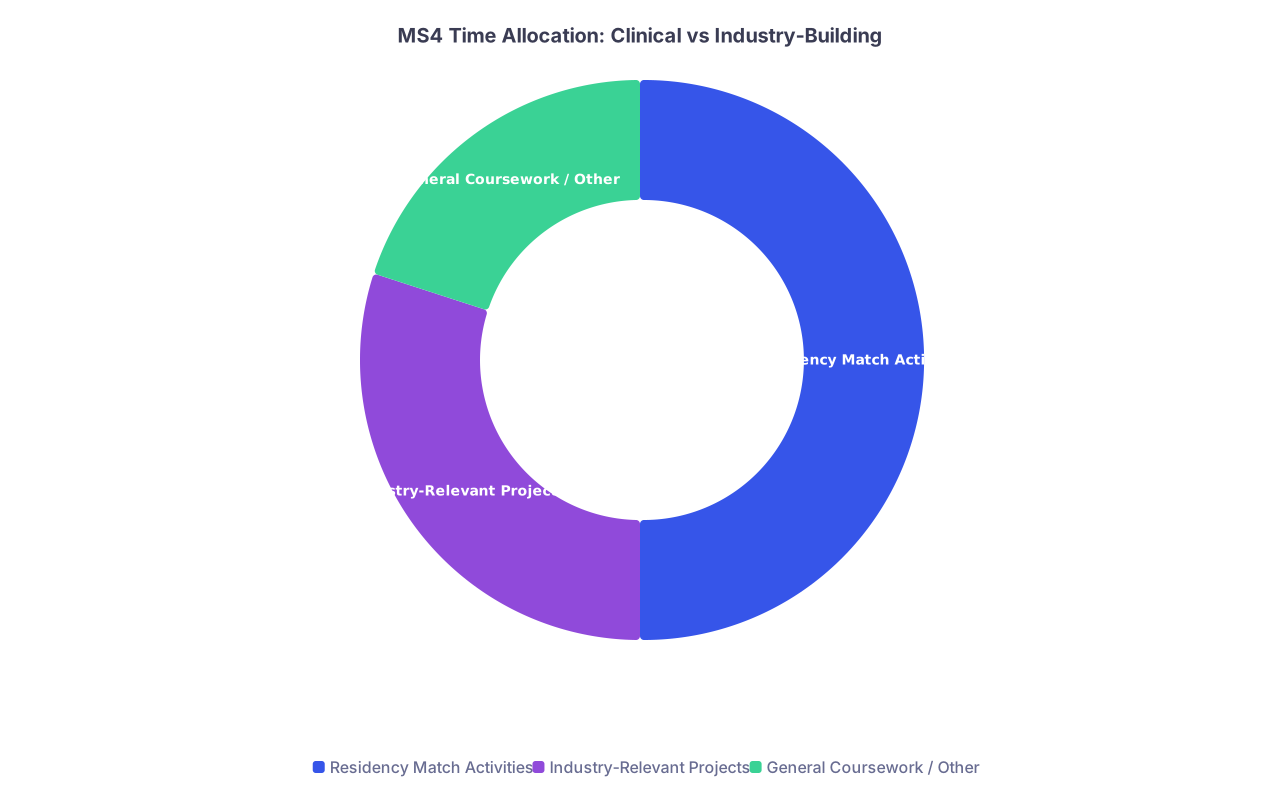
| Category | Value |
|---|---|
| Residency Match Activities | 50 |
| Industry-Relevant Projects | 30 |
| General Coursework / Other | 20 |
At this point, your main job is still to match well. But you keep the industry thread visible.
Month‑by‑month, roughly:
June–September (ERAS prep and submission)
- Personal statement and CV:
- Include 1–2 sentences about interest in clinical research, trials, or innovation, not “I want to leave medicine.”
- Ask one letter writer to explicitly mention:
- Your work on research/quality projects.
- Your ability to handle data / protocolized work.
- Personal statement and CV:
October–January (Interviews)
- When program directors ask about career goals, use a two‑tier answer:
- “Clinically, I see myself in X field with a focus in Y (e.g., gen onco with lung cancers).”
- “I also expect to be involved in clinical trials or industry collaborations. I like the intersection of patient care and drug development.”
You are not hiding your interest, but you are not saying “I plan to bail after PGY2.”
- When program directors ask about career goals, use a two‑tier answer:
February–March (Rank and Match)
Rank programs according to:- Strength in your clinical field.
- Access to trials and research infrastructure.
- NCCN/academic center > community without research office.
- Look at number of trials on clinicaltrials.gov for that institution.
You enter residency with a program that at least gives you exposure to industry‑adjacent work, even if it is not a top 10 name.
PGY1–PGY2: Skills, Portfolio, and Quiet Credibility
Intern year will tempt you to put everything on hold. That is how you end up PGY3 with no portfolio and a vague LinkedIn.
You cannot do everything, but you can do one thing per quarter that moves the industry needle.
PGY1 – Survival + Light Positioning
At this point, your main job is to not drown. So keep it realistic.
Quarter 1–2 (first 6 months):
Prove yourself clinically.
Industry will absolutely judge you for weak clinical training or bad references.Identify:
- Which attendings are PIs or heavily involved in trials.
- Whether your hospital has:
- A clinical research office.
- An industry‑sponsored trials portfolio.
Low‑lift tasks:
- Update LinkedIn with “Internal Medicine Resident, [Institution].”
- Add a line: “Interests: clinical research, oncology drug development” (or your target).
Quarter 3–4 (second 6 months):
Now you add one or two small but high‑yield moves:
Join or re‑join a research project
- Talk to that attending PI:
- “I want to keep one foot in research with an eye on future clinical trials or industry roles. Is there a discrete piece I can manage over the next year?”
- Aim for:
- Data collection role that becomes co‑authorship.
- Secondary analysis project using existing datasets.
- Talk to that attending PI:
Begin methodologic upskilling
- Pick one:
- Intro to R or Python for data analysis.
- Practical biostatistics course.
- Goal: by end of PGY1, you can truthfully say:
- “Comfortable with basic data analysis in R (logistic regression, survival curves, data cleaning).”
- Pick one:
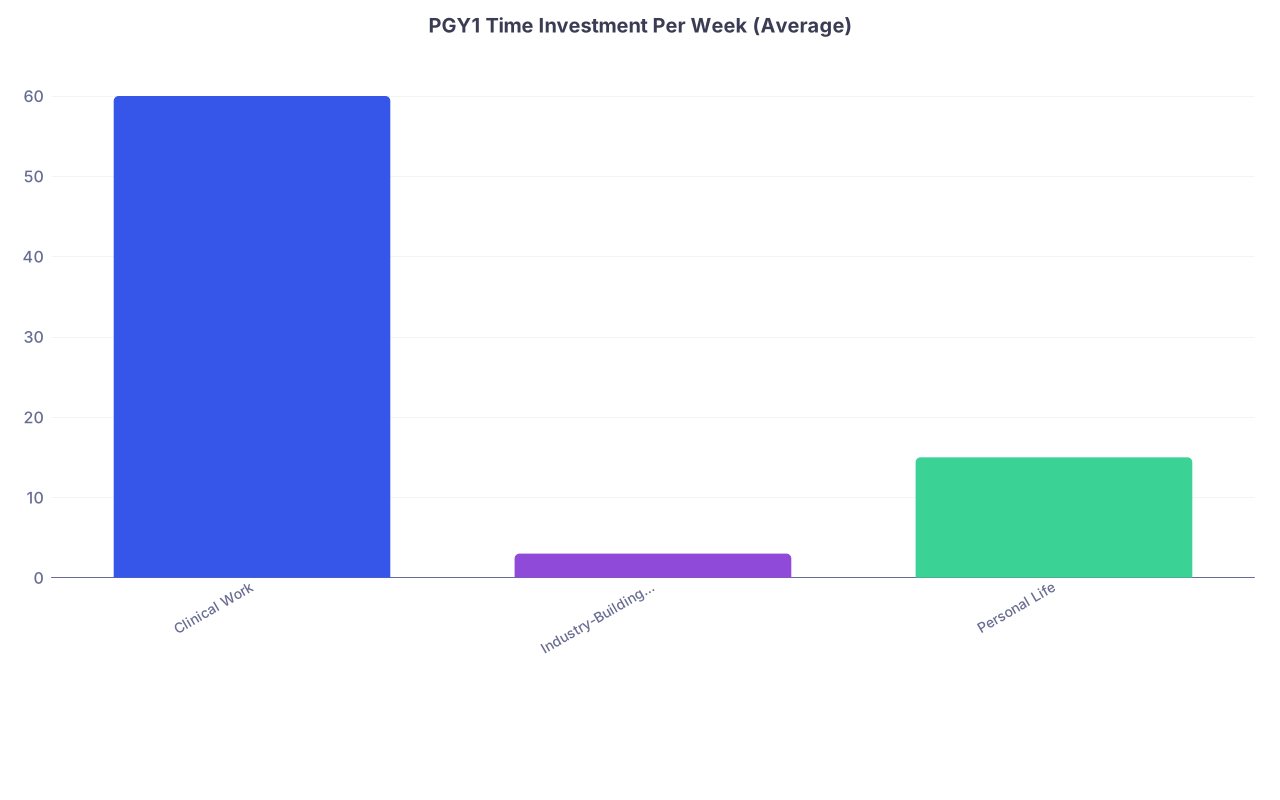
| Category | Value |
|---|---|
| Clinical Work | 60 |
| Industry-Building Activities | 3 |
| Personal Life | 15 |
3 hours per week is realistic. More and you will burn out.
PGY2: Portfolio Building and External Visibility
PGY2 is the pivot year. At this point, you should stop being “interested in industry” and start looking like a junior collaborator in that world.
Quarter 1 (months 13–15): Clarify your exit horizon
Decide:
- Do you expect to:
- Finish residency and then exit?
- Leave after PGY2 or PGY3 for a rare but possible role (e.g., Clinical Scientist at a biotech, health tech role)?
If you are planning a post‑residency exit (most common), your goal now is credibility and network.
Quarter 2–3: Concrete output and visibility
Over 6–9 months, aim for:
1–2 substantial scholarly outputs
- Manuscript (original research, outcomes, or strong review) in your target area.
- Oral or poster presentations at:
- ASCO, AHA, ATS, AAN, etc., depending on your field.
- These matter:
- Hiring managers in pharma literally scan CVs for these acronyms.
Micro‑leadership in clinical research
- Run or co‑run:
- A resident research group.
- A small QI project that touches metrics industry cares about (readmission, complication rates, adherence).
- Run or co‑run:
Careful external branding
- Start engaging publicly:
- Comment thoughtfully on LinkedIn posts by medical directors, MSLs, and clinical scientists.
- Share a couple of short, non‑whiny reflections on clinical trials, guideline changes, or data interpretation.
- Do not rant about residency misery. Industry leadership sees this.
- Start engaging publicly:
Quarter 4: Light‑touch industry exploration
Now you start peeking outside:
- Attend:
- One industry‑heavy conference or track (DIA, ASCO industry symposia).
- Reach out for:
- 3–5 informational interviews with:
- MSLs in your target therapeutic area.
- Clinical scientists at companies running trials you are recruiting for.
- 3–5 informational interviews with:
- Ask:
- “What did your hiring manager care about on your CV?”
- “If I want to be competitive 2 years from now, what should I focus on?”
You end PGY2 with:
- Several publications / presentations.
- Real trial exposure.
- A small but real network in your intended space.
PGY3–PGY4 (and Chief): Positioning for the Actual Jump
At this point, you should stop pretending this is hypothetical. You are either aiming for a first industry role in 12–24 months or you are not.
PGY3 – Early: Decide Your Exit Year
Use the first 3–4 months of PGY3 to answer:
- Do you want a:
- Medical Affairs / MSL type role?
- Clinical Development / Clinical Scientist role?
- Health tech / product role?
- Are you:
- Willing to skip fellowship?
- Financially and psychologically prepared to leave the traditional track?
Once you decide, the strategy diverges.

Path A: Finish Residency, No Fellowship, Then Exit
This is the most common.
PGY3–PGY4 Core Goals (12–24 months before exit):
Deepen niche expertise
- Double down on one therapeutic area:
- E.g., breast oncology, heart failure, MS.
- Seek:
- Case mix that leans toward that area.
- More presentations at conferences in that space.
- Double down on one therapeutic area:
Take on a visible role in a trial
- Ideal:
- Sub‑I or co‑I level responsibility with documented tasks:
- Patient screening, data review meetings, protocol amendments input.
- Sub‑I or co‑I level responsibility with documented tasks:
- Collect:
- A letter from the PI describing your role that uses words like “study design,” “data review,” “protocol compliance.”
- Ideal:
Formal training check‑box
- One of:
- GCP certification.
- Short course in clinical trial design or regulatory science.
- These are small but powerful signals in CV screening.
- One of:
Targeted networking (not random)
- Identify 10–15 people in your target companies/roles:
- 5 medical affairs.
- 5 clinical development.
- 2–3 recruiters specialized in life sciences.
- Over 12 months:
- Have at least 8–10 real conversations, not just connection requests.
- Identify 10–15 people in your target companies/roles:
Path B: Fellowship First, Then Industry
If you choose fellowship (heme/onc, cards, neuro, etc.), shift the above one level up:
- Same structure, but now your fellowship topic and research focus become the main story.
- Timeline:
- Fellowship Year 1–2: exactly what I described for PGY2–3.
- Last Fellowship Year: same as PGY3–4 above, just with more subspecialty focus.
Final Year Before Exit: Month‑by‑Month Countdown
Now we get granular. Assume you will start an industry role in July of Year X (after finishing residency or fellowship). Here is your T‑12 timeline.
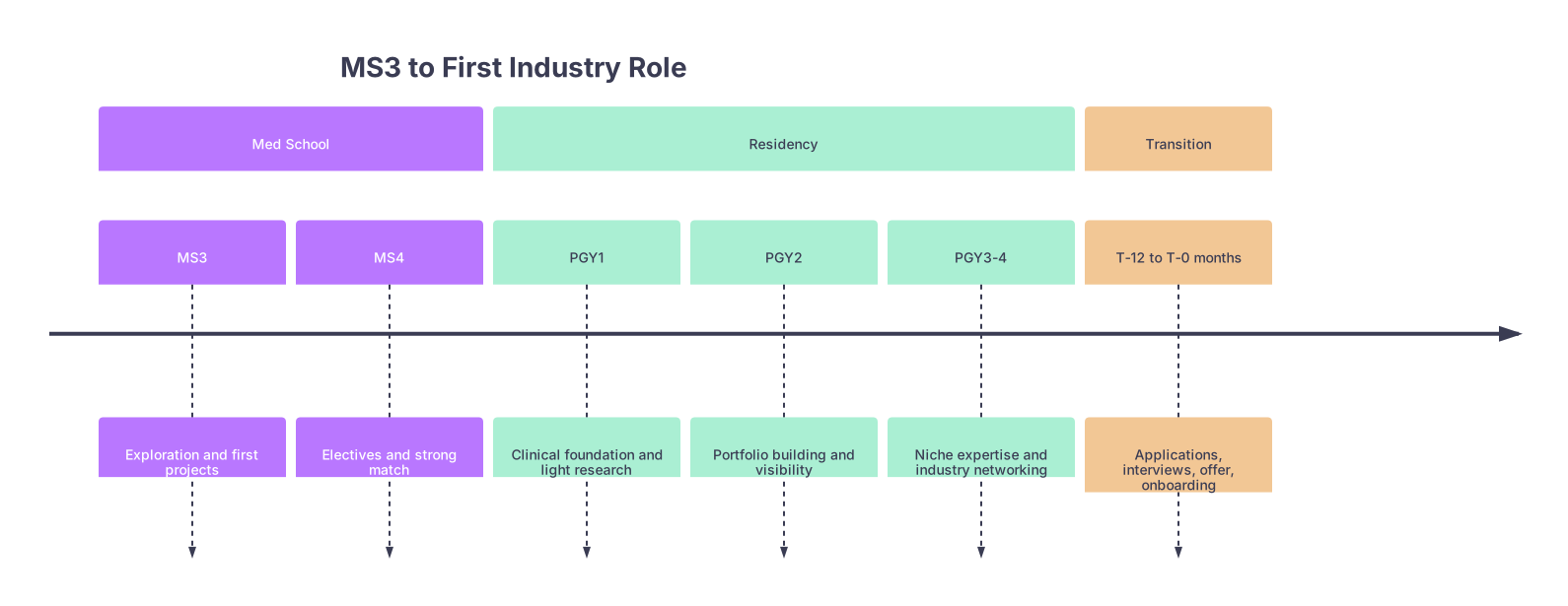
| Period | Event |
|---|---|
| Med School - MS3 | Exploration and first projects |
| Med School - MS4 | Electives and strong match |
| Residency - PGY1 | Clinical foundation and light research |
| Residency - PGY2 | Portfolio building and visibility |
| Residency - PGY3-4 | Niche expertise and industry networking |
| Transition - T-12 to T-0 months | Applications, interviews, offer, onboarding |
T‑12 to T‑10 Months: CV, Story, and Target List
At this point, you should:
Finalize:
- Industry‑style CV (results‑focused, not just rotation lists).
- One coherent story:
- “Over the past 5–7 years I have built expertise in X disease area, contributed to Y trials, and I am now looking to apply that in a medical affairs / clinical development capacity.”
Build a company short‑list:
- 10–20 target companies:
- 5–10 big pharma/biotech.
- 3–5 mid‑size or emerging biotechs.
- 1–3 health tech, if relevant.
- 10–20 target companies:
T‑9 to T‑7 Months: Warmup Networking and Recruiter Outreach
Focus:
Informational to semi‑formal conversations:
- “I will be finishing residency/fellowship in July. I am interested in associate medical director or clinical scientist roles in [therapeutic area]. What would you want to see on my CV?”
Start contacting:
- Specialized recruiters (e.g., life sciences executive search firms).
- Talent acquisition people at your target companies.
You are not asking “Do you have an opening for me tomorrow?” You are signaling upcoming availability and getting on their radar.
T‑6 to T‑4 Months: Active Applications and First Interviews
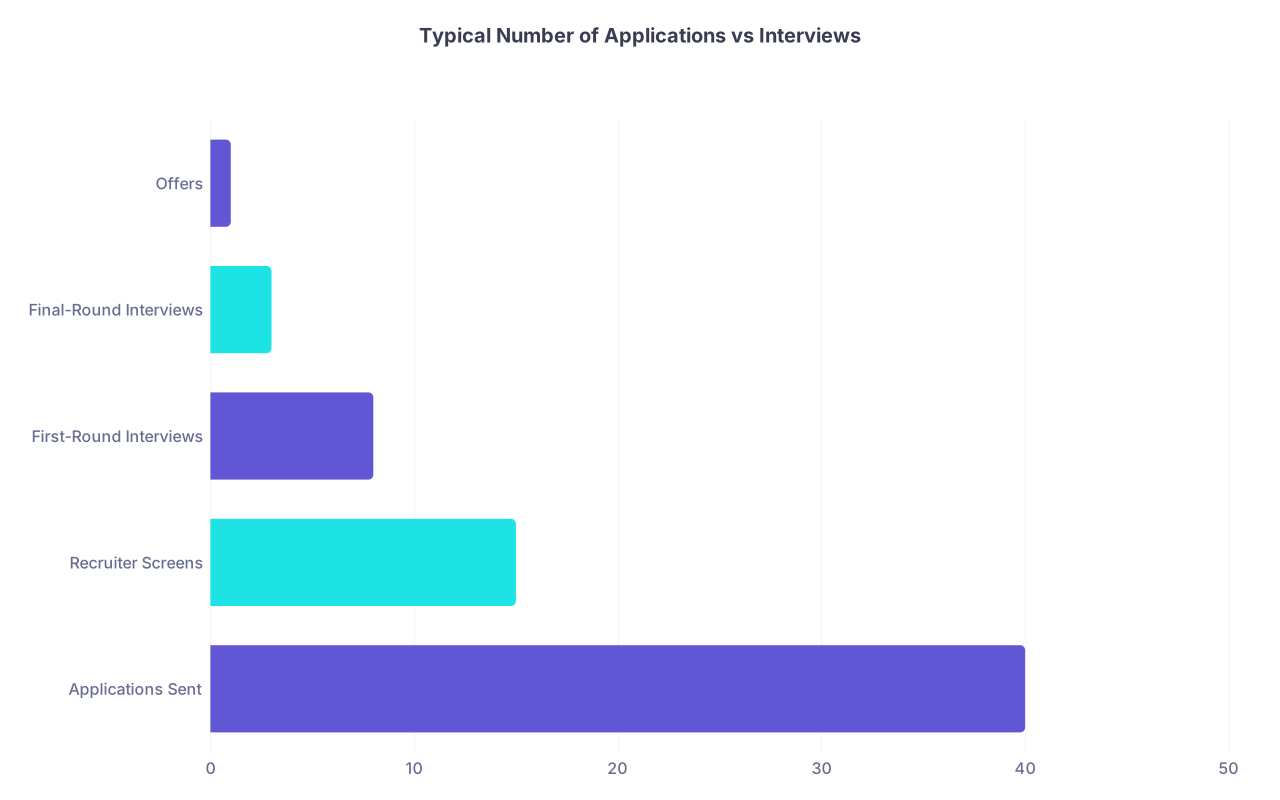
| Category | Value |
|---|---|
| Applications Sent | 40 |
| Recruiter Screens | 15 |
| First-Round Interviews | 8 |
| Final-Round Interviews | 3 |
| Offers | 1 |
These numbers are realistic for a good but not celebrity candidate.
Tasks:
Start applying to:
- Associate‑level medical director roles.
- MSL roles in your therapeutic area.
- Clinical scientist positions that accept residents/fellows.
Prepare stories for:
- Trial experience.
- Cross‑functional work (nurses, pharmacists, data teams).
- Handling ambiguity, protocol changes, and stakeholder conflict.
Simultaneously:
- Keep your clinical obligations intact. Do not flame out of your last months of training. References still matter.
T‑3 to T‑1 Months: Final Rounds and Offer Negotiation
At this point, you should:
- Be in late‑stage interviews at 1–3 companies.
- Start comparing:
- Role type.
- Location (or remote/hybrid).
- Travel expectations (MSL roles: often 50–70%).
- Compensation and sign‑on.
| Role Type | Travel | Patient Care | Typical Title Level |
|---|---|---|---|
| MSL | High | None | Field-based |
| Associate Med Director | Low | None | HQ-based |
| Clinical Scientist | Low | None | HQ-based |
| Health Tech Clinician | Variable | Possible (tele) | Manager/Lead |
Close one loop cleanly:
- Once you sign:
- Notify your residency/fellowship leadership early.
- Offer to help with transition planning.
- Do not vanish on your co‑residents.
T‑0: Exit and Onboarding
Your first 90 days in industry will feel alien.
Prepare by:
- Resting 1–2 weeks between residency and start date if you can.
- Reviewing:
- Basic corporate concepts: matrix organizations, OKRs, KPIs.
- The company’s pipeline and flagship products.
You are no longer trying to prove you can manage an ICU list of 18 patients. You are now proving you can think in systems, data, and strategy.
Quick Recap: What Actually Matters
Boiling this down:
Start early and pick a lane. By the end of MS3, you should have a working hypothesis: which industry domain, which therapeutic area. This drives every later choice.
Build a portfolio, not vibes. Abstracts, trials, letters that say “study design,” GCP, data skills, and visible engagement in a niche disease area beat vague “interest in pharma.”
Treat the last 12–18 months as a real transition project. Company short‑list, recruiter relationships, tightly written story, and a defined exit horizon. If you reach PGY4 and you are “seeing what comes up,” you are already behind.
Follow this timeline with discipline and you move from MS3 daydreaming to a competitive first industry role, instead of becoming the burned‑out attending googling “how to leave clinical medicine” at 2 a.m.