
It’s 9:30 p.m. You just finished with an add-on patient whose “quick blood pressure check” turned into a 45‑minute unraveling of uncontrolled diabetes, social chaos, and no follow-up options within 50 miles. You walk out of the last exam room, stare at the waiting room chairs, and think:
“I can’t keep doing this. But I’m in the middle of nowhere. What else can I even do?”
If that’s you—a physician, PA, NP, or other clinician in a rural setting, feeling boxed in by geography and obligations—medical writing is one of the most realistic remote exits you can build. Not “maybe someday.” Over 6–18 months if you treat it like a job, not a hobby.
Let me walk you through exactly how to do that while you’re still in this rural role. No fantasy. Just a concrete exit plan.
1. Get Real About Where You’re Starting
Before we talk exit, I want you to see your actual constraints and your actual leverage. Both matter.
Your constraints (be honest)
You probably have:
- Limited time (full panels, call, maybe hospital coverage)
- Spotty internet some days
- Family/school/community ties you’re not just going to blow up
- Possibly a non-compete or employment contract you’re wary of
- Emotional exhaustion that makes “side hustle grind” sound like a joke
And yet:
- You do have 3–8 hours per week you could reallocate if you stop pretending your phone scroll time is “decompression”
- You do have clinical knowledge that businesses will pay for
- You do not need to move, retrain for four years, or take on new debt to start med writing
First decision: Are you trying to:
- Supplement income, stay in medicine long-term, and just have options?
- Replace a chunk of clinical work over 1–3 years?
- Fully exit clinical medicine if/when writing income matches some minimum?
Your answer changes the timeline and aggressiveness.
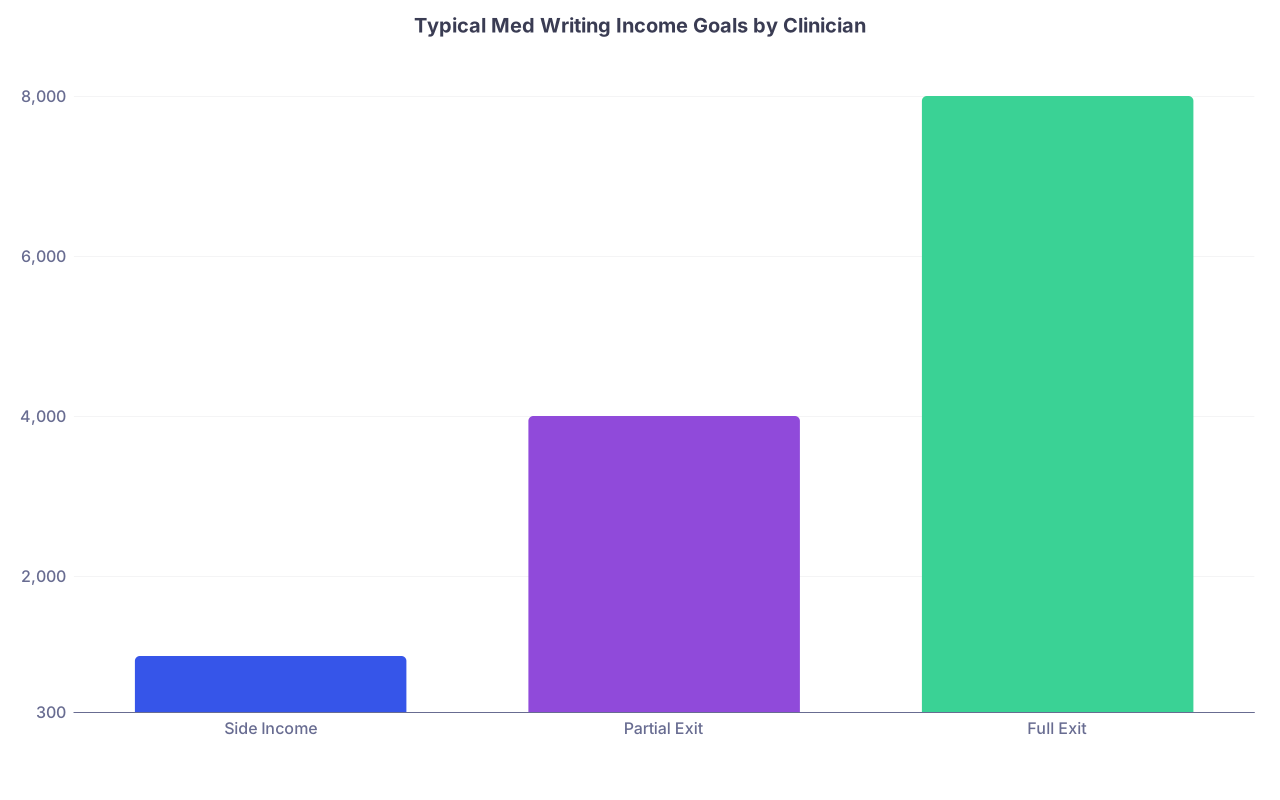
| Category | Value |
|---|---|
| Side Income | 1000 |
| Partial Exit | 4000 |
| Full Exit | 8000 |
Those numbers are realistic monthly targets people hit after they’re established. Not month one. But they’re reachable.
Right now, pick one:
- “I want $1–2k/month from writing in 12 months.”
- “I want the option to cut to 0.6 FTE within 2 years via writing income.”
Write it on a sticky note and put it where you chart. You’re not building a cute hobby. You’re building runway.
2. Understand What “Medical Writing” Actually Pays For
“Medical writing” is uselessly broad. If you just say “I want to be a medical writer,” you’ll spin.
Let’s narrow it to types of work that:
a) pay decently,
b) can be done remotely,
c) fit a rural clinician’s background.
Here’s the short list you should actually care about:
| Type of Work | Typical Pay Range (USD) | Good Fit For |
|---|---|---|
| Health content blogs | $0.20–$0.60/word | Strong educators |
| Patient education | $75–$200/page | Primary care, NP/PA |
| CME / clinician education | $100–$200/hour est. | Specialists, academics |
| Regulatory/clinical docs | $70–$150/hour | Research background |
| Copywriting (marketing) | $300–$1500/project | Those ok with “selling” |
You’re in a rural job. You likely see broad pathology, do a lot of explaining, and translate guidelines into real-world language daily. That screams:
- Patient education materials
- Health content/blog articles
- Basic clinician education content (case-based, overviews)
You may be a fit for:
- Regulatory writing, if you’ve done serious research or trials
- Copywriting, if you’re willing to lean into marketing language and outcomes
Pick one primary lane to start. Don’t try to be all of them at once. It dilutes your pitch and your portfolio.
If you like talking to patients in plain English and explaining “what this means for you,” start with health content and patient education. That’s the most straightforward entry.
3. Design an Exit Timeline That Won’t Break You
You’re tired. So we’re not building a fantasy 30‑hour/week side gig. We’re carving a disciplined 4–8 hours from the chaos.
Here’s a realistic 12‑month build, assuming you’re starting from zero.
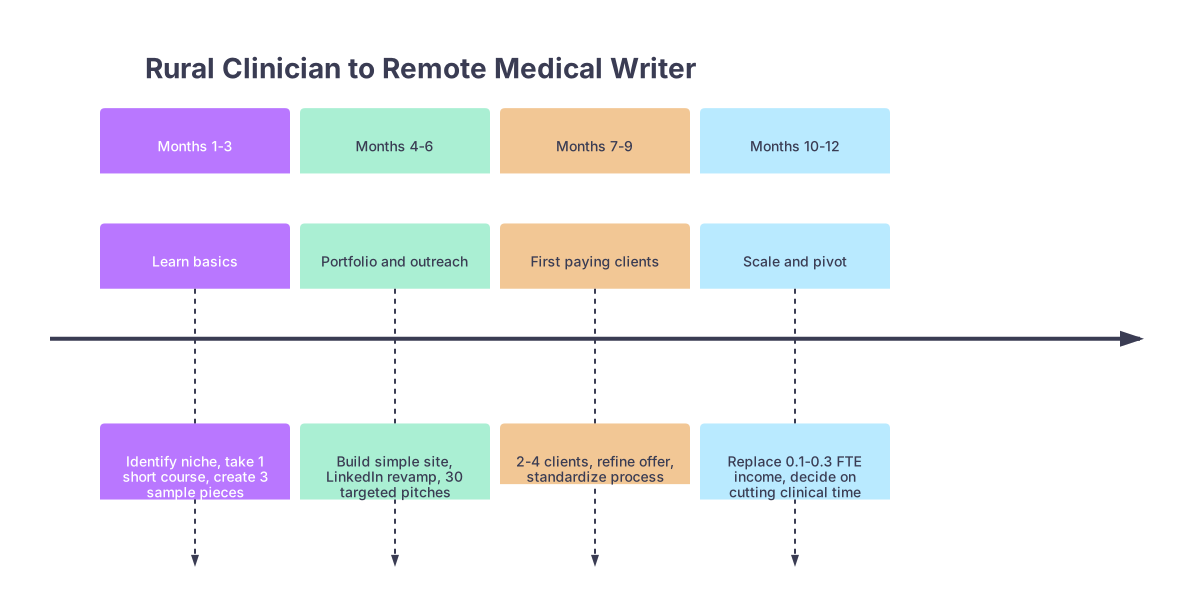
| Period | Event |
|---|---|
| Months 1-3 - Learn basics | Identify niche, take 1 short course, create 3 sample pieces |
| Months 4-6 - Portfolio and outreach | Build simple site, LinkedIn revamp, 30 targeted pitches |
| Months 7-9 - First paying clients | 2-4 clients, refine offer, standardize process |
| Months 10-12 - Scale and pivot | Replace 0.1-0.3 FTE income, decide on cutting clinical time |
You can compress this to 6–9 months if you’re aggressive. But treat 12 months as your steady-state plan.
Weekly commitment target:
- Minimum: 4 hours/week dedicated
- Ideal: 6–8 hours/week once you’re in outreach and client work
Schedule it. Literally. Example:
- Tuesday, 7–9 p.m.: Learn / write samples
- Thursday, 7–9 p.m.: Outreach / portfolio work
- Sunday, 1–3 p.m.: Client work (when you have it)
Non-negotiable: these blocks are meetings with your future self. You do not skip them “because notes.”
4. Build Skills Fast (Without Vanishing into Courses)
You don’t need a writing MFA. You need enough skill to deliver clean, accurate, readable work that doesn’t create headaches for an editor.
For a rural clinician aiming at health content/patient education, your skill build should focus on:
- Basic web writing skills
- Structure and clarity for non-clinicians
- SEO fundamentals (just enough to talk to marketers without sounding lost)
Skip the $3,000 mega-programs. You won’t finish them.
Do this instead over 4–6 weeks:
- Pick a reputable short course on medical or health writing (e.g., AMWA basics, a focused Udemy/Coursera course). One, not five.
- Read high-quality health content from places like Mayo Clinic, UpToDate patient pages, Harvard Health. Pay attention to:
- Headings
- How they explain risk/benefit
- How they define jargon or avoid it
- Write 3–5 draft articles (1000–1500 words each) on conditions you know cold:
- “Living with COPD in a Rural Area: What Your Doctor Wants You to Know”
- “Type 2 Diabetes When You’re 45 and Working Outdoors: A Realistic Guide”
- “What That ‘Mildly Abnormal’ Lab Really Means”
Then get feedback. Not from your spouse. Not from your partner who already thinks you’re great. From:
- A practicing medical writer (find them on LinkedIn, offer to pay for 1–2 hours of their time)
- A health content editor (there are freelance editors on Upwork and Reedsy who specialize in health)
Paying $150–300 for real critique on your first 2–3 pieces is a better investment than yet another generic course.
5. Build a Portfolio That Actually Gets You Work
No portfolio, no clients. But you also don’t need something fancy.
Your goal: when someone asks, “Can I see samples?” you send a single link that screams, “This person can write and knows medicine.”
Bare-minimum setup:
- Simple website (Wix, Squarespace, or Carrd). One page is fine.
- Custom domain (yournameMD dot com, or something close)
- Professional email (not doclover1990 at gmail)
Your site needs 4 things, no fluff:
Who you are
- “I’m a board-certified family physician practicing in rural Montana, specializing in clear, practical health content about chronic disease and access barriers.”
What you write
- “Patient education handouts, blog articles, condition overviews, and consumer health explainers.”
Who you serve
- “Health websites, telehealth companies, hospital systems, and digital health startups.”
3–5 samples
- Hosted as blog posts or simple pages on your site
- Clean, formatted, no obvious typos
If you want to level up slightly, add:
- A short “How I work” section: timelines, revision limits, communication preferences
- A 30‑minute discovery call link (Calendly, etc.)
Then fix your LinkedIn. The people who might hire you actually use it.
Key changes:
- Headline: change from “Rural Family Physician” to “Family Physician and Medical Writer | Patient Education and Consumer Health Content”
- About section: 2–3 paragraphs, specific, ending with “I write X for Y so they can Z.”
- Featured section: link to your website and best 2–3 samples
6. Start Getting Clients While You’re Still In That Rural Clinic
This is where most clinicians stall. They keep “preparing” and never pitch.
Do not do that.
There are 4 main ways you’ll realistically land early work:
- Direct outreach to health businesses
- Warm connections (colleagues, hospital PR, local networks)
- Platforms (yes, including “lowly” Upwork, used strategically)
- Content marketing (slower burn, builds inbound leads over time)
You’re in a rural job. Use that.
1. Direct outreach (targeted, not spam)
You want small–medium companies that:
- Need a clinician voice
- Publish health content regularly
- Are not so huge they have 40 internal writers
Think:
- Regional hospital systems with blogs
- Telehealth startups
- Chronic disease management apps
- Rural health organizations, FQHC networks
- Health tech companies with patient-facing platforms
Find them. Look at their blog or resource pages. If the content is:
- Outdated
- Obviously non-clinical fluff
- Inconsistent
- Full of “lorem ipsum” placeholders
They’re candidates.
You send a short, specific email. Rough structure:
- Line 1: Reference something specific they published / their mission
- Line 2–3: Who you are clinically + what you write
- Line 4: A tangible way you can help them
- Line 5: Link to 2–3 relevant samples + a soft call to action
Example:
I saw your recent post on managing hypertension but noticed there’s nothing tailored to rural patients who drive 40+ miles for care.
I’m a board-certified NP working in a critical access clinic in [state] and I also write patient-facing health content for telehealth and hospital blogs.
I’d love to help you expand your library with content that reflects the barriers your rural population actually faces—med access, long travel, and limited specialty support.
Here are a few sample pieces similar to what I could create for you: [link, link].
If you’d like, I can suggest 3–5 specific article topics tailored to your audience.
You send 5–10 of these a week for 8–12 weeks. Yes, even after night shifts. Treat it as non-negotiable.
2. Warm connections
You already have organizations in your orbit:
- Your hospital’s marketing/PR department
- Local public health departments
- State medical society
- Regional health plans or ACOs
- Rural health associations
Email one person you actually know in each, not some generic inbox.
Ask: “Who handles patient education or community outreach content for your organization?” Then ask that person if they ever use clinicians as freelance writers or reviewers.
Do not underestimate how much low-hanging work exists in:
- Community newsletter content
- Health fair handouts
- Clinic brochures and website updates
Unsexy, yes. Paid, also yes.
3. Platforms (used like a professional, not a desperate grad student)
Upwork, Contra, Mediabistro, even LinkedIn Jobs—everyone sneers at them, then quietly uses them.
Your rules:
- Only apply to jobs that:
- Are clearly in health/medical
- Pay at least moderately decently (you’re not doing 3 cents/word)
- Are posted by real businesses you can look up
- Customize each proposal with:
- Short opener referencing their description
- 1–2 sentences on your clinical background
- 1–2 sentences on relevant writing experience/samples
- Link to 2 samples and your website
- A straightforward rate or a suggestion to talk scope before quoting
Your first 1–3 clients may come from here. That’s fine. They’re proof of concept and testimonials.
4. Content marketing (slow but powerful)
This is the “build once, reap later” channel. Don’t let it eat all your time early, but don’t ignore it.
Options:
- Publish 1–2 articles per month on your own blog, addressing problems health companies care about (patient adherence, clear communication, rural barriers)
- Write on LinkedIn weekly: short posts about health communication, rural medicine challenges, and examples of better patient education
- Guest post once or twice for established health blogs (often unpaid) purely to get clips and backlinks
Your rural angle is gold here. Don’t water it down. There are a hundred generic internists writing “5 tips for lowering cholesterol.” There are far fewer people writing, “What cholesterol management looks like when the nearest lab is 90 minutes away.”
Lean into that.
7. Money, Rates, and When to Cut Back Clinically
Let’s talk numbers, because you’re not doing this for fun.
Early on, your income curve will look like:
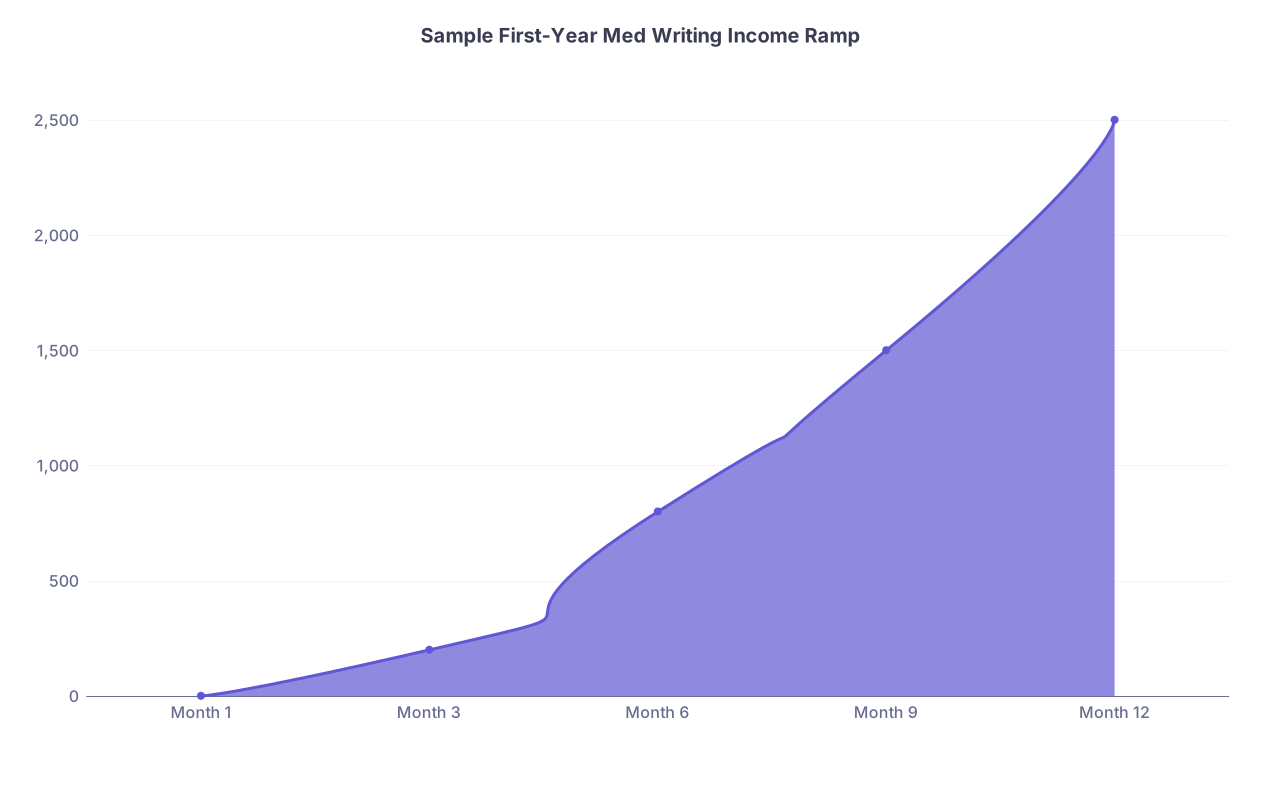
| Category | Value |
|---|---|
| Month 1 | 0 |
| Month 3 | 200 |
| Month 6 | 800 |
| Month 9 | 1500 |
| Month 12 | 2500 |
You’ll spend the first few months learning, building samples, and pitching. Real income probably starts around months 4–6 if you’re consistent.
Reasonable beginner targets
For health content/patient education, as a clinically trained writer:
- Starting: $0.20–$0.30 per word, or $150–$250 for a 1000-word article
- Within a year: $0.30–$0.50 per word, or $300–$500 per similar article
Do not underprice just because you’re “new” to writing. You are not new to medicine. That matters.
Realistic ramp, if you do 2–4 pieces per month at $200–$350 each:
- Months 4–6: $300–$700/month
- Months 7–9: $700–$1500/month
- Months 10–12: $1500–$2500/month
At that point, you start having a real decision:
- Do I cut 0.1–0.3 FTE clinically so I can take more/better writing work?
- Or do I hold steady clinically, build savings, and aim for a larger exit next year?
The way out of a suffocating rural job is options. Not necessarily an immediate full exit.
When your writing income consistently covers a meaningful fixed expense—say your mortgage or student loan payment—you’ve bought leverage. That’s when you can talk to your employer about dropping clinic days and not sound like you’re begging.
8. Practical Safeguards: Contracts, Licensure, Burnout
You’re still a clinician. Don’t accidentally light your career on fire while you’re trying to escape.
Non-competes and contracts
Read your employment contract. If it bans “outside clinical practice” or “competing clinical services within X miles,” fine. You’re not doing that. You’re writing.
If it bans “any consulting or external income without written approval,” you need to:
- Decide whether you’re going to disclose and clear it
- Or quietly proceed if the language is vague and risk feels low (I’m not your lawyer, but I’ve watched a lot of clinicians make reasonable calculations here)
If you do disclose, frame it as:
“I write general health education content for national/international companies. It doesn’t mention our clinic or local competitors and doesn’t involve treating patients outside my current role.”
Licensure and malpractice
You are not providing care in your writing. Make that clear in:
- Your website disclaimer
- Any bylines that allow for a short author note
Something like: “This article is for educational purposes only and does not replace care from your own clinician.”
If you write for clinical decision support tools, guidelines, or CME, make sure:
- The company carries appropriate content liability coverage
- Your role is clearly “contributor/author,” not providing direct patient-specific advice
Burnout management
You are layering a second job on top of a rough first job. You cannot do this on fumes forever.
Two guardrails:
- Cap clinical overtime. Stop picking up “just one more” extra shift a month. That time is your exit time now.
- Pre-decide a minimum self-care floor: sleep hours, one protected non-work block per week, something that prevents your brain from turning into paste.
Your new writing career dies if you’re too fried to think, much less pitch.
9. A Simple 4-Week Starter Plan (Do This, Not Everything)
If you’re overwhelmed, here’s the exact next month laid out.

| Step | Description |
|---|---|
| Step 1 | Week 1 - Decide & Learn |
| Step 2 | Week 2 - Write Samples |
| Step 3 | Week 3 - Build Portfolio |
| Step 4 | Week 4 - Start Outreach |
| Step 5 | Pick niche and income goal |
| Step 6 | Choose 1 short course |
| Step 7 | Draft 2 sample articles |
| Step 8 | Revise using best practice examples |
| Step 9 | Set up simple website |
| Step 10 | Polish LinkedIn profile |
| Step 11 | Send 10 targeted emails |
| Step 12 | Apply to 5 platform jobs |
Week 1
- Decide: niche + 12‑month income goal
- Block 2 recurring weekly writing slots
- Enroll in one short med writing/health content course
Week 2
- Draft 2 sample articles (1000–1500 words) in your niche
- Read 5–10 high-quality health articles to copy structure
Week 3
- Set up a one-page website with your bio and samples
- Update your LinkedIn headline and About section
Week 4
- Send 10 targeted outreach emails to potential clients
- Apply to 5 relevant jobs on a platform like Upwork or LinkedIn
- Reach out to one medical writer for paid feedback on your samples
By the end of a month, you’re no longer “thinking about transitioning.” You’re a clinician with a real, visible writing side career in motion.
FAQ (Exactly 3 Questions)
1. Do I need formal certification (like AMWA) before anyone will hire me?
No. Certifications can help with confidence and sometimes signaling, but clients care far more about three things: your clinical credibility, the clarity and accuracy of your writing, and whether you’re reliable with deadlines. If you enjoy structured learning, do one focused course or certificate. Don’t hide behind endless coursework as an excuse to avoid pitching. You can start pitching once you have 3–5 solid samples, even if you’re still finishing a course.
2. What if my writing is slow and painful at first—am I just not cut out for this?
Everyone is slow at first. You’re shifting from SOAP notes and EMR-clicking to narrative, structured, audience-focused writing. Expect your first 1000-word piece to take 5–8 hours. That’s fine. With repetition, you’ll get that down to 2–3 hours. The real red flag isn’t slowness—it’s hating the process. If outlining an article and refining explanations feels satisfying (even if tiring), you’re likely a good fit. If you dread every moment at the keyboard, consider adjacent roles (medical editing, consulting, education design) instead.
3. When is it actually safe to cut down my rural clinical hours?
Use numbers, not vibes. Look at your last 3–6 months of writing income and your last 6–12 months of expenses. A conservative guideline: when your writing income has consistently covered at least 25–30% of your essential monthly expenses for 3–6 months, you’re in reasonable shape to drop 0.1–0.3 FTE clinically. Before making the jump, also check: do you have 3+ recurring clients or one anchor client with a contract, a 3–6 month emergency fund, and a pipeline of prospects you’re actively pitching? If yes, that’s a rational point to have a serious conversation about reducing your rural workload.
Open your calendar right now and block two 2‑hour slots in the next 7 days for “med writing work.” Then, in the first block, draft a 1000‑word patient article on a condition you treat every week. That’s your first real brick in the exit ramp.