
You’re post‑residency, finally an attending. Supposed to be the payoff. Instead, it’s 6:45 pm, you’re still charting, you hate your schedule, your RVU target is a joke, your “protected time” evaporated after week one, and you’re starting to dread going in.
And in between notes you find yourself googling “medical affairs physician jobs,” “clinical development roles,” “nonclinical careers for doctors,” and scrolling LinkedIn like it’s TikTok.
You’re not just tired. You’re thinking, “I need out. But I can’t blow up my life.”
That’s the situation this is for: you’re in (or about to start) your first attending job, you strongly dislike it, and you’re seriously eyeing industry (pharma, medtech, health tech, consulting, payer, etc.) but you don’t know how to pivot without torching your career or your finances.
Let’s walk through what to do, step by step, not in theory but in reality.
Step 1: Diagnose the Problem Before You Burn the Bridge
First thing: do not quit your attending job impulsively. Industry moves slow. Your bills do not.
You need to be crystal clear on two things:
- What exactly you hate about this job.
- Whether industry actually solves those specific problems.
Grab a piece of paper (or a note on your phone) and split it into three columns:
- Column A: I absolutely cannot tolerate this long‑term
- Column B: This sucks but is fixable or tolerable
- Column C: This is actually okay or good
Examples I’ve seen when I ask people to do this:
Column A might have:
- “24‑hour calls q4 forever”
- “Toxic group – passive aggressive partners, gossip, zero support”
- “Admin playing games with my compensation – broken promises”
- “Constant fear of being sued with minimal support”
Column B might have:
- “Commute is horrible”
- “Too many clinic patients, no MA support”
- “EHR is brutal”
Column C might have:
- “Love teaching residents”
- “Like the actual medicine”
- “Enjoy protocols, QI, structure, systems thinking”
Why this matters:
Industry can fix:
- Schedule predictability
- Call burden (usually zero)
- A lot of the day‑to‑day patient volume stress
- Malpractice anxiety in many roles
Industry does not necessarily fix:
- Toxic culture (there are toxic companies)
- Feeling underappreciated
- Lack of autonomy (you trade one kind of control for another)
- Needing to learn to work with non‑physicians and corporate structures
Don’t romanticize industry as a magical escape. It can be great. It can also be another flavor of frustration.
But if your Column A is dominated by things like RVUs, night call, direct patient care burnout, and malpractice fear, industry probably fits your needs better than just “finding another clinical job.”
Step 2: Understand Your Realistic Industry Landing Zones
“Industry” is too vague. You need to target actual roles that hire physicians, especially early in their attending life.
The most common entry points:
| Role Type | Typical Title | Direct Patient Care? |
|---|---|---|
| Pharma/Med Affairs | Medical Director, MSL | No |
| Pharma/Clinical Dev | Clinical Scientist, Medical Lead | No |
| Medtech/Devices | Medical Affairs, Clinical Affairs | No |
| Health Tech | Medical Director, Clinical Lead | Minimal/None |
| Payer/Insurance | Medical Director, UM Physician | No |
Pharma / Biotech – Medical Affairs and Clinical Development
Most common transition, especially from specialties with drug‑heavy management (onc, rheum, ID, neurology, cardiology, heme/onc).
You’ll see roles like:
- Medical Director, Medical Affairs
- Associate Medical Director, Medical Affairs
- Clinical Scientist
- Clinical Development Physician
What they care about:
- Board certification (or at least board‑eligible)
- Strong clinical credibility in a relevant area
- Ability to communicate clearly with non‑physicians
- Some evidence you understand trials, evidence generation, or guidelines beyond “I just follow UpToDate”
You do not need a PhD. You do not need 20 publications. They help, but they’re not mandatory.
Medical Science Liaison (MSL)
Field‑based role, lots of travel (or remote with regional visits). You’re the liaison between the company and key opinion leaders (KOLs).
Pros:
- Good pay
- Less corporate ladder junk if you just want to be a high‑performing field person
- Clear metrics
Cons:
- Heavy travel
- It’s sales‑adjacent, whether they say “non‑promotional” or not
- Some physicians hate the idea of “managing relationships” as their main job
Health Tech / Digital Health
Titles like:
- Medical Director
- Clinical Lead
- Head of Clinical Strategy
- Chief Medical Officer (at early‑stage startups – usually a red flag for a first job, but possible)
Pros:
- Often fully remote
- Fast‑moving, interesting problems
- You can leverage your real clinical pain points to improve products
Cons:
- High instability (layoffs, pivots)
- You can get stuck in “token doctor” land with no real decision power
- Early‑stage equity is a lottery ticket, not a plan
Payer / Utilization Management
Insurance medical director roles:
- Review cases
- Approve/deny coverage
- Work with guidelines and cost‑containment
Pros:
- 9‑5, usually remote/hybrid
- Stable
- Decent pay, good benefits
Cons:
- Soul‑crushing for some: saying no all day, angry clinicians
- Repetitive
- Your colleagues may side‑eye you for “going to the dark side” (ignore them)
Step 3: Get Your House in Order Financially – Before You Jump
You cannot pivot safely if your finances are on fire. You’re likely making the most money you’ve ever made. Use that to buy yourself options.
Bare minimum before you make a serious move:
Emergency fund:
3–6 months of bare‑bones expenses in cash. Not “lifestyle at current level,” but rent/mortgage, basic food, loan minimums, insurance.Debt reality check:
You don’t need loans paid off, but you do need to know:- Monthly minimums
- When any variable rates reset
- Whether you’ll stay on IDR if you lose attending income
Lifestyle deflation:
If you just bought the doctor house, the German car, and signed up for three kids’ private schools, you’ve boxed yourself in. Start unwinding:- Delay big purchases
- Keep housing and cars modest
- Do not assume attending income is permanent
Industry salaries are often comparable or slightly higher than clinical…but not always at first, and bonuses and equity are variable. Assume a temporary pay cut is possible.
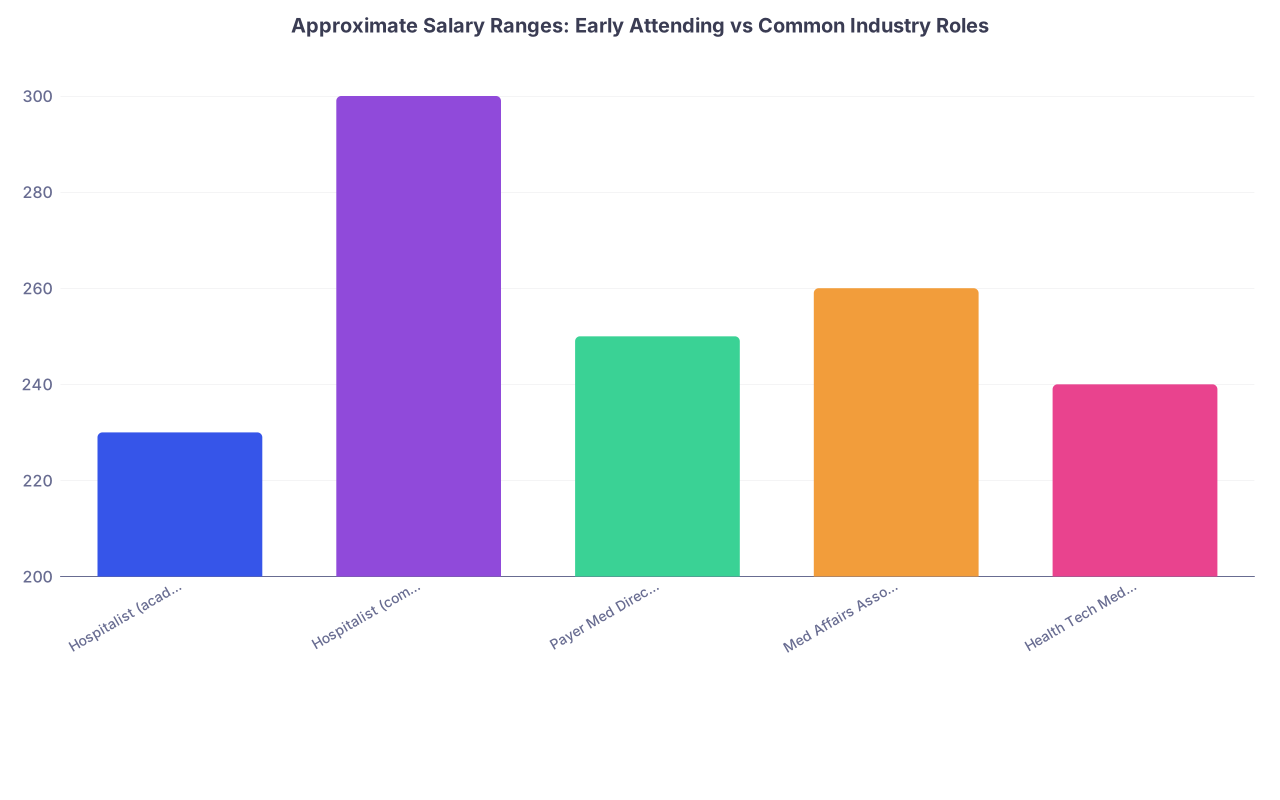
| Category | Value |
|---|---|
| Hospitalist (academic) | 230 |
| Hospitalist (community) | 300 |
| Payer Med Director | 250 |
| Med Affairs Assoc Director | 260 |
| Health Tech Med Director | 240 |
These are ballpark numbers in thousands of USD. Geography matters, but the point stands: you might be flat or slightly down at first. Plan for that.
Step 4: Quietly Start Building Your Industry Profile (Without Getting Fired)
You do not need a second degree. You need positioning.
Over the next 3–6 months, while you’re still working clinically, you’re going to:
1. Fix your LinkedIn like it’s your new CV
Right now your LinkedIn probably says “Attending Physician – XYZ Hospital” with your residency under it. That’s not enough.
You need:
- Headline that points toward industry:
“Board‑certified Internist | Clinical Trials Experience | Interested in Medical Affairs and Clinical Development,” not “Hospitalist at ABC Health” - About section that speaks their language:
Brief summary of:- Clinical area of focus
- Experience with trials, protocols, QI, guideline committees, registries
- Interest in evidence generation, education, cross‑functional work
- Bullet points under your jobs that include:
- Any protocol development
- Participation in trials
- Committee work (P&T, QI, guideline updates)
- Teaching, presenting, data review
2. Start targeted networking – 1–2 calls a week
This is non‑negotiable. You will not “apply your way” into industry. They screen by keywords and referrals.
Very simple approach:
Search LinkedIn for: “Medical Director” + your specialty, or “MSL” + your therapeutic area
Filter by “Past Company” or “Past education” to find any weak connections
Send short, specific messages:
“Hi Dr. Smith – I’m a [specialty] attending at [institution]. I’m exploring medical affairs roles in [therapeutic area] over the next year and would love to learn how you made the transition. Would you be open to a 15‑minute call sometime this month?”
On the call:
- Ask about their path
- Ask which roles are realistic for someone like you
- Ask what gaps they’d want to see filled on your CV
- Do not ask: “Can you get me a job?”
Instead: “If you see a role where my background fits, would it be okay if I mention you when I apply?”
You do this consistently for 3–6 months and you’ll have real leads.
Step 5: Translate Your Skills Into Industry Language
You can be an amazing clinician and still look totally unqualified on paper if you don’t translate your work.
Instead of:
- “Rounded on 15–18 patients per day”
Think:
- “Led multidisciplinary team caring for high‑acuity internal medicine patients, collaborating with nursing, case management, and pharmacy to implement evidence‑based care pathways.”
Instead of:
- “Member – Sepsis Committee”
Say:
- “Served on hospital sepsis committee to review outcomes data and refine internal protocols; contributed to implementation plan and provider education.”
Instead of:
- “Taught residents and students”
Say:
- “Developed and delivered educational sessions on [topic] to residents and medical students; created slide decks and case‑based materials.”

Industry screens for:
- Cross‑functional collaboration
- Comfort with data
- Communication skills (written and verbal)
- Project or program experience
You almost certainly have some of this. You just haven’t named it that way.
Step 6: Decide Your Exit Timing Strategically
Timing your exit is a big part of “safely.”
Reality: many attending contracts have:
- Tail coverage obligations
- Non‑competes (for clinical only, usually)
- Notice requirements (60–180 days)
You’re not a resident anymore. You cannot just “give 2 weeks’ notice” and expect no blowback.
You want overlapping runway:
- Still employed clinically → actively interviewing for industry
- Verbal offer in hand → start formal notice clock with your group
Do not:
- Quit with nothing lined up unless you have at least 12 months of expenses banked and have already had serious late‑stage interviews
- Tell your group “I’m going to pharma” while you’re still early in the search. Some will see you as “checked out” and start treating you accordingly.
Reasonable pattern I’ve seen:
- Spend 3–6 months building network and doing exploratory calls.
- Apply, interview, and move to final rounds for 1–3 good roles.
- Once an offer is likely (you’ve had conversations about comp, they’re asking for references), start reviewing your contract for notice/tail coverage.
- When the written offer is in hand, negotiate your start date with the company around your notice period.
If your current job is truly toxic and harming your mental health:
- You may decide to leave before landing another job. That’s not irrational, but then your financial prep needs to be excellent and you should drop your spending aggressively.
Step 7: Use Your Remaining Clinical Time to Stack “Industry‑Flavored” Experience
While you’re still in your attending job (or even before you start), you can quietly shape your work.
Things that play very well:
Get involved with any ongoing clinical trials at your site:
- Sub‑investigator work
- Enrollment support
- Protocol adherence meetings
Join or revive a QI project:
- Designing or implementing new order sets
- Measuring outcomes pre‑ and post‑implementation
- Presenting results at grand rounds or a local conference
Say yes (strategically) to educational content:
- Present CME talks
- Help create patient education materials
- Serve as the “doc” on a digital health initiative in your system
Even one or two of these framed correctly on your CV and LinkedIn can move you from “generic doc” to “doc who understands systems and data.”
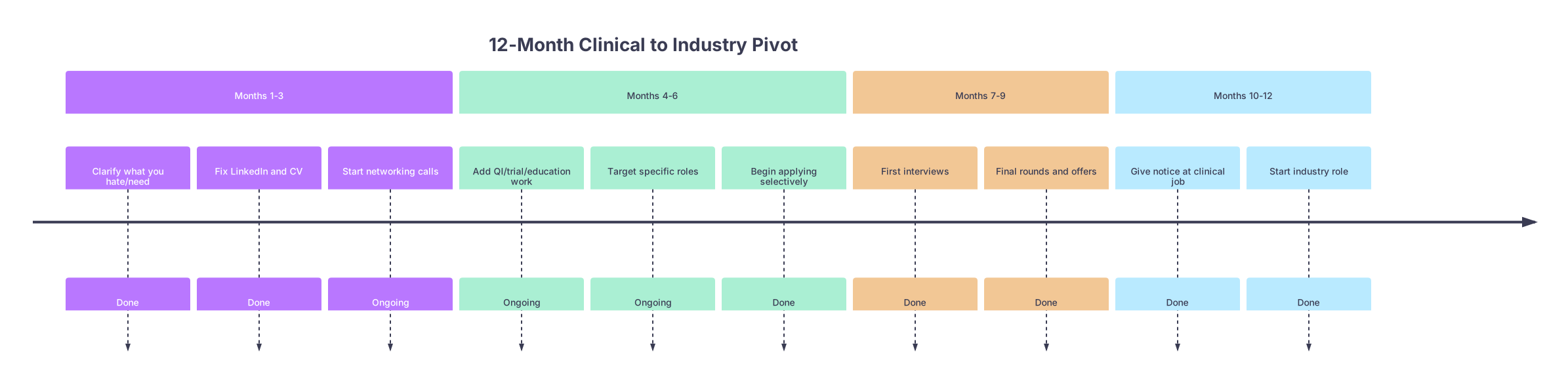
| Period | Event |
|---|---|
| Months 1-3 - Clarify what you hate/need | Done |
| Months 1-3 - Fix LinkedIn and CV | Done |
| Months 1-3 - Start networking calls | Ongoing |
| Months 4-6 - Add QI/trial/education work | Ongoing |
| Months 4-6 - Target specific roles | Ongoing |
| Months 4-6 - Begin applying selectively | Done |
| Months 7-9 - First interviews | Done |
| Months 7-9 - Final rounds and offers | Done |
| Months 10-12 - Give notice at clinical job | Done |
| Months 10-12 - Start industry role | Done |
You can compress this if you’re aggressive, but 9–12 months from “I hate this job” to “I’m established in industry” is a realistic, safe range.
Step 8: Manage Identity Whiplash (So You Don’t Self‑Sabotage)
A lot of physicians underestimate this piece and then implode halfway through the transition.
You’ve been trained for a decade that your value = your clinical skill + patient contact. Industry will challenge that identity.
Common mental traps:
- “Am I wasting my training?”
- “What will people think if I’m not ‘really’ a doctor anymore?”
- “Is reading slides and writing decks actually meaningful?”
Let me be blunt: nobody else is living your life. The colleagues saying “I could never do that” are often the same ones texting “Hey, can you look over my CV? I’m thinking of leaving in a few years.”
Also: you’re not “wasting” anything. You’re leveraging your clinical training to influence guidelines, trials, policies, products, and systems that can affect thousands of patients instead of 15 per day.
But you need to anticipate the shock:
- Less immediate feedback (“patient got better”)
- More meetings, more email, more politics
- Slower cycles of impact
If you go into industry expecting constant dopamine hits like a great clinical day, you’ll be disappointed. If you go in looking for long‑term leverage and more sustainable life structure, you’ll be fine.
Step 9: Watch Out for Common Landmines
A few specific things I’ve seen repeatedly:
Jumping to the first company that loves you
Red flag: they’re desperate to hire any MD and have no idea what they actually want you to do. You’ll end up being a glorified checkbox.Taking a “Chief Medical Officer” title at a tiny startup as your first role
You get a big title, small salary, massive risk, zero mentorship. Bad combo as a first step.Not reading the fine print on “remote” roles
Some “remote” jobs actually expect you in the office monthly or weekly. If you’re tied to one location, clarify expectations.Assuming once you leave clinical, you can waltz right back
You might be able to. But not always. And not always in the same way. If maintaining options matters to you:- Consider part‑time clinical moonlighting for 1–2 years after transition
- Keep licensure and CME up to date
Taking a huge lifestyle jump right before you pivot
That new house or private school might be what keeps you stuck in a job you hate for five more years.
Step 10: If You’re Early – Use Your First Job as a Launchpad, Not a Life Sentence
You may not be able to pivot in 3 months. That’s okay. Use this first attending job tactically:
- Extract exactly what you need:
- Board certification
- Letters and reputation
- Some leadership titles (Medical Director of X, Committee Lead, QI project PI)
- Build your network:
- Attend a few specialty conferences with industry presence
- Introduce yourself to MSLs and company reps as peers, not just “the doc they detail”
- Document everything:
- Keep a simple running list of projects, talks, committees with dates and your actual impact
- This becomes CV gold later
Think of this job as a 1–3 year residency in “post‑grad real world medicine,” not your forever home.

A Quick Reality Check: What Industry Actually Feels Like
Just so you’re not walking into a fantasy.
Upsides:
- Predictable schedule. Nights and weekends are mostly yours.
- Often remote/hybrid options.
- Less acute stress. You’re not making life‑or‑death decisions in real time.
- Use your brain differently – more systems, strategy, evidence.
Downsides:
- Slides. So many slides.
- Meetings where nothing gets decided.
- You’re one node in a large machine. You don’t “own” outcomes the way you do clinically.
- Performance reviews, corporate lingo, reorgs, layoffs.
If your current pain is intense clinical burnout plus zero control over your time? Industry will feel like oxygen.
If your current pain is “I hate bureaucracy”? Make sure you aim for the right kind of company (smaller, more agile) and go in with open eyes. There’s bureaucracy everywhere. It just wears different clothes.
Your Next Concrete Step (Today)
Do not just close this and go back to doom‑scrolling jobs.
Do this right now:
Open LinkedIn.
Edit your headline so it says something like:
“Board‑certified [specialty] physician | Experience in [trials/QI/education] | Exploring roles in [medical affairs/clinical development/health tech].”
Then send two short messages to physicians in industry asking for 15‑minute conversations about their path.
That’s it. Headline + two messages.
You’re not committing to leaving medicine forever. You’re opening a door so that, if you decide to pivot out of this attending job, you’re doing it on your terms – and safely.