
You’re halfway through third year, sitting in the call room at 1:30 a.m. You’ve just admitted your sixth patient, your back hurts, and your attending casually mentions their compensation package like it’s Monopoly money. Then you remember the $280,000 in loans sitting on your head.
So the question hits you hard: How much should income actually matter when you choose a medical specialty?
Let me be direct: income should matter more than many idealistic people claim, and less than a lot of panicked MS3s think. The trick is understanding how it should matter and where it sits in your overall decision hierarchy.
This is the decision framework you should be using.
1. The Real Numbers: What Income Differences Actually Look Like
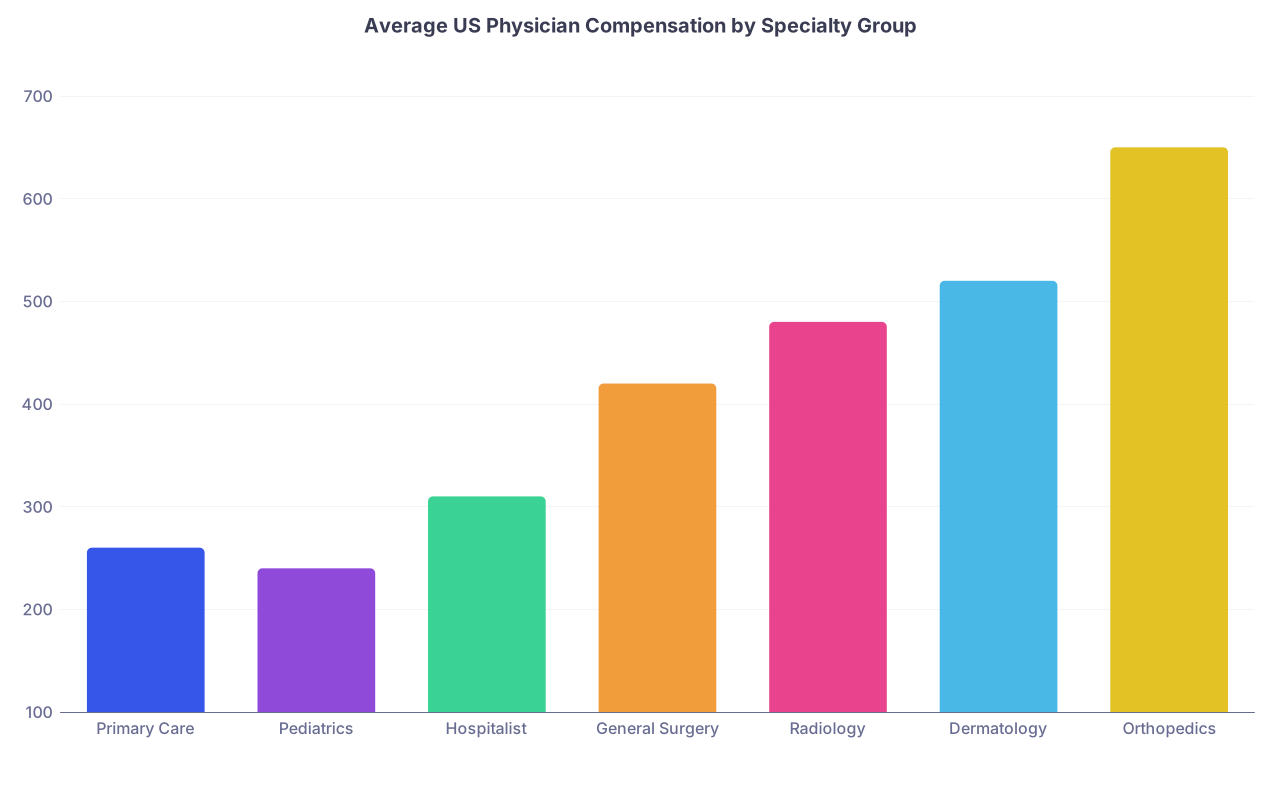
Start here. Because hand‑waving about “following your passion” without knowing the financial gap is naive.
| Category | Value |
|---|---|
| Primary Care | 260 |
| Pediatrics | 240 |
| Hospitalist | 310 |
| General Surgery | 420 |
| Radiology | 480 |
| Dermatology | 520 |
| Orthopedics | 650 |
Ballpark U.S. averages (rounded, recent survey territory, actual numbers vary by region and practice type):
- Pediatrics: ~$230–260k
- Internal Medicine (outpatient): ~$260–300k
- Family Medicine: ~$250–280k
- Hospitalist: ~$300–350k
- Emergency Medicine: ~$350–450k
- General Surgery: ~$380–450k
- Anesthesiology: ~$420–500k
- Radiology: ~$450–550k
- OB/GYN: ~$350–430k
- Cardiology: ~$500–650k
- GI: ~$500–650k
- Ortho / Neurosurgery: $600k+ frequently, sometimes much more
Now translate that into lifetime impact, even conservatively. Say:
- Outpatient IM: $275k
- Ortho: $650k
Difference: ~$375k per year.
Over a 25-year career, even discounting taxes and time value of money, you’re talking multiple millions of dollars difference. Not a rounding error.
So yes, income is objectively a big lever. Pretending it’s not is dishonest.
But here’s the counterweight.
2. The Single Most Important Question: “Can I See Myself Doing This Daily?”
Income should never outrank this question:
“Can I see myself doing the core work of this specialty, most days, for decades, without hating my life?”
Not “Do I like the prestige?” Not “Did I have a fun rotation?” The core repetitive work.
If you hate clinic, primary care is off the table, no matter how “mission‑driven” people say you should be.
If you’re bored stiff reading imaging, radiology will suffocate you, even at $500k+.
If you find the OR miserable, surgery is going to break you, no matter the paycheck.
I’ve watched people chase dermatology for the lifestyle and money, match, then quietly admit in PGY-2: “I actually miss sick patients. I don’t love biopsy clinic.” That’s a long career to feel mismatch.
So rule #1:
- Income is a filter, not the driver.
- First decide what kinds of patients, settings, and tasks you can stand for 20–30 years.
- Then use income to choose within that zone, not to drag you into something completely wrong.
3. Where Income Should Matter A Lot
There are three situations where income absolutely deserves a heavy weight in your decision.
A. You Have Significant Debt and Little External Support
If you’re sitting on $300k+ of loans, maybe private med school, no family help, plus you want:
- Kids in the next 5–8 years
- A home in a high-cost city (SF, NYC, Boston)
- Reasonable retirement savings before age 40
Then pretending income differences are irrelevant is fantasy.
| Specialty (Example) | Approx Net After Tax (Yearly) | Realistic Loan Payoff Time (300k debt) |
|---|---|---|
| Pediatrics | $160k–$180k | 10–15+ years |
| Hospitalist | $200k–$230k | 7–10 years |
| Radiology | $260k–$300k | 4–7 years |
| Orthopedics | $320k–$380k | 3–5 years |
Those are simplified, sure. But directionally right.
If the choice is between two specialties you like equally—say outpatient IM vs cards, or general surgery vs ortho—then income should be a major tiebreaker, especially with heavy loans.
B. You Have Concrete, Expensive Life Goals
You want:
- Private school for three kids
- A large house in an expensive area
- Aggressive FIRE-style early retirement at 50
Those require math, not vibes. If you genuinely love both fields, picking the one that supports your long‑term life design is rational, not greedy.
C. You’re Choosing Within a Specialty Group
Examples:
- You like medicine and are debating: outpatient IM vs hospitalist vs cardiology vs GI.
- You like procedures and are deciding: general surgery vs ortho vs ENT.
Here, income, lifestyle, and training length all belong in the equation. If the clinical work feels similarly acceptable, income differences are fair game as a major factor.
4. Where Chasing Income Backfires Hard
Now the ugly side. I’ve seen this more than once.
Mismatch + Money = Burnout on a Delay
You can tolerate a bad fit when you’re 30 and the paycheck is shiny. Around 40, when the glamour wears off and you still hate your day‑to‑day, it hits different.
- The ortho resident who really preferred neurology but was told, “Ortho is smarter financially.”
- The radiology fellow who misses actual patient contact but felt “too good” for primary care.
- The surgeon who wanted more predictable family time but went full throttle because “I can’t waste my scores.”
They often end up:
- Cutting back FTE
- Changing practice settings
- Moving into administration / nonclinical work
- Or just chronically unhappy at work
Notice something: almost all of those choices reduce their eventual income anyway. So they traded early misery for a financial advantage that they partially undo later.
Lifestyle Mismatch, Not Just Content Mismatch
It’s not just “Do you like the medicine?” It’s “Do you like the life around that medicine?”
- Ortho/trauma: nights, call, emergencies.
- OB: unpredictability, deliveries at 3 a.m.
- EM: shift work, nights, circadian chaos.
- Cards: consults, cath lab at odd hours.
- Outpatient fields: clinic grind, RVU pressure.
If you hate nights, hate emergencies, hate being interrupted constantly, you can only bribe yourself for so long with a higher salary.
5. Income vs Lifestyle: Stop Treating Them as the Same Thing
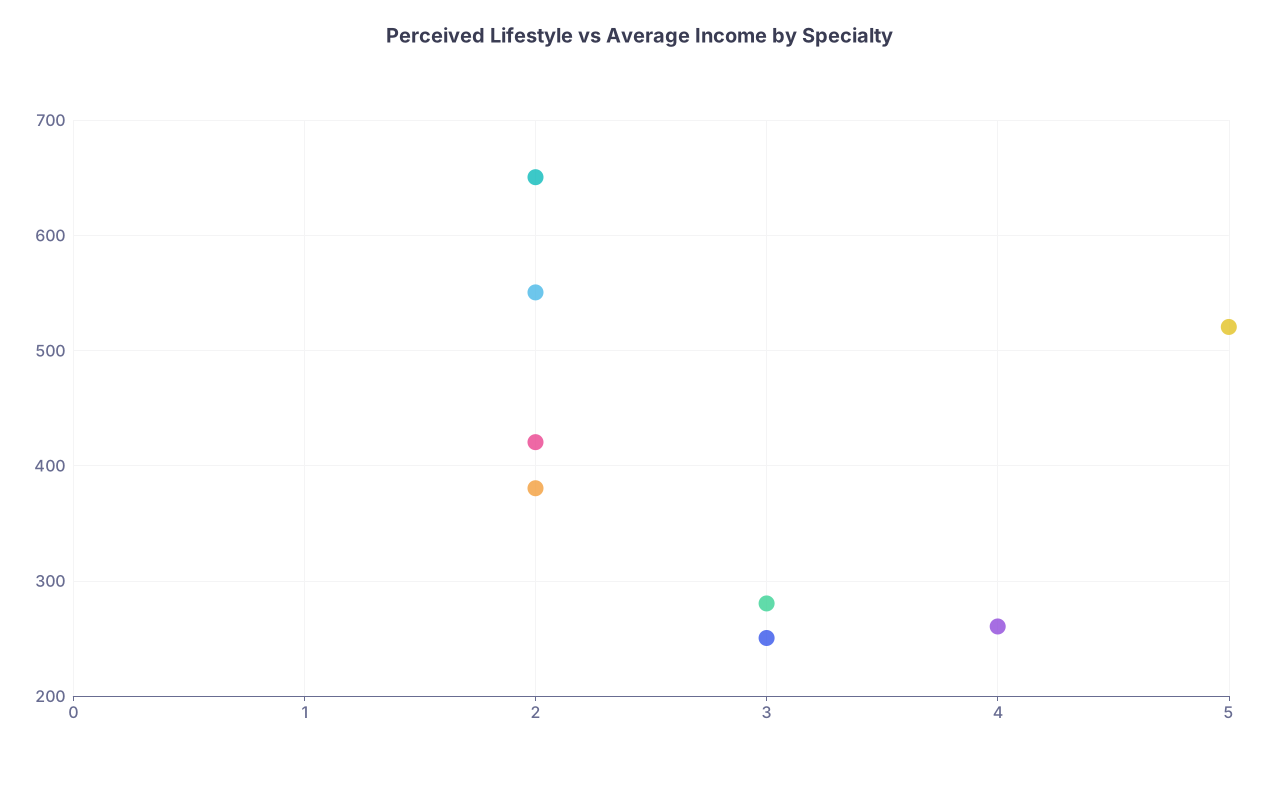
A lot of students confuse “high income” with “good lifestyle.” That’s wrong.
Some high-paid fields have miserable hours (certain surgical subspecialties, some cards jobs).
Some moderately paid fields have fantastic control and flexibility (outpatient psych, some primary care setups, derm, pathology with flexible schedules).
| Category | Value |
|---|---|
| Peds | 3,250 |
| FM | 4,260 |
| IM | 3,280 |
| EM | 2,380 |
| Gen Surg | 2,420 |
| Cards | 2,550 |
| Derm | 5,520 |
| Ortho | 2,650 |
(values are [lifestyle score 1–5, income in $k], rough perceptions, not gospel)
So ask two separate questions:
- How much money do I realistically need to fund the life I want?
- What kind of day-to-day and week-to-week schedule can I live with?
Don’t conflate them.
6. A Simple Decision Framework: Where Does Income Sit?
Here’s the hierarchy I recommend for most med students. Not a slogan—an actual order of operations.

| Step | Description |
|---|---|
| Step 1 | Start: Choosing a Specialty |
| Step 2 | Reject Specialty |
| Step 3 | Shortlist Specialty |
| Step 4 | Can I see myself doing the daily work long-term? |
| Step 5 | Does the lifestyle roughly fit my life goals? |
| Step 6 | Does the income support my financial reality? |
| Step 7 | Between shortlists, use income as tiebreaker |
Priority stack:
Fit with the actual work
– Patient type, acuity, procedures vs thinking, clinic vs OR vs reading room.Lifestyle reality
– Call, nights, weekends, schedule control, geographic flexibility.Income adequacy
– Adequacy, not maximization. Does it reasonably cover:- Loans
- Your expected cost of living
- Reasonable savings and retirement?
Income optimization (tiebreaker)
– When 1–3 are all satisfied by multiple fields, then use income (and training length) as a legitimate, rational tiebreaker.
If you invert this order—put income at 1 or 2—you’re playing a dangerous game.
7. Training Length and Delayed Earning: Don’t Ignore the Timeline
Another piece students underestimate: time.
A 3-year residency vs a 7-year residency plus 1–2 years fellowship is not just “more training.” It’s:
- Extra years at $60–80k instead of attending salary
- Extra years before aggressive loan payoff
- Extra years of lifestyle sacrifice
So when you compare, you should think career earnings, not just peak salary.
Very rough simplified example:
- Outpatient IM: 3-year residency, then $280k
- Cards: 3-year IM + 3-year fellowship, then $550k
If you start attending life 3 years later, the higher income may still absolutely win in the long run, but the calculation isn’t trivial. And more training means more chance your life circumstances change (kids, spouse’s career, burnout in training).
Again, if you love cards, the extra training is fine. If you’re neutral and just chasing cash, it’s a slog.
8. How to Make Income Matter Without Letting It Dominate
Here’s how to be financially smart and sane:
Run actual numbers on your debt and future budget.
Put in:- Loan total and interest rate
- City you want to live in (look at rents or mortgage costs)
- Realistic lifestyle (kids? car type? travel?)
Decide a minimum acceptable income band.
Not, “I want to be rich.”
Something like: “I need at least ~$250k in a medium COL area, or ~$300k+ in NYC/SF to do what I want without constant stress.”Eliminate specialties that routinely sit below that unless you truly love them.
If you’re obsessed with pediatrics and accept the lower pay, fine. But that’s a conscious trade, not a surprise.Within your “fit” specialties, consider practice variation.
Many fields have income range based on how you practice:- Outpatient psych vs interventional psych with procedures
- Low-RVU primary care vs high-efficiency group with shared resources
- Academic vs private vs hybrid models
Remember: You can modify income later; you can’t easily change your core specialty.
Inside IM, you can:- Become a hospitalist, outpatient doc, concierge physician, telemedicine, admin-heavy, etc.
Same with other flexible specialties.
Switching from neurosurgery to dermatology at 45? Basically not happening.
- Become a hospitalist, outpatient doc, concierge physician, telemedicine, admin-heavy, etc.
9. So, How Much Should Income Matter?
If you want an actual answer, not a platitude, here’s where I land:
It should be a dealbreaker if the typical income in that specialty cannot reasonably support:
- Your loan burden
- The cost of living where you need to be
- A modest but real savings/retirement plan
and you’re not willing to modify those expectations.
It should be a major factor if:
- You’re choosing between two or three specialties where the work and lifestyle all feel acceptable, but income differs by hundreds of thousands per year over decades.
It should not override:
- Clear dislike of the daily work
- Clear mismatch with desired lifestyle or schedule
- Strong passion for another specialty that still allows a stable, if lower, financial life
In plain terms:
Income should matter a lot once you’ve confirmed you’re in the right neighborhood of fit and lifestyle. But it should almost never be the thing that drags you into a neighborhood you do not want to live in.
| Category | Value |
|---|---|
| Daily Work Fit | 40 |
| Lifestyle/Hours | 30 |
| Income Adequacy | 20 |
| Prestige/Status | 10 |
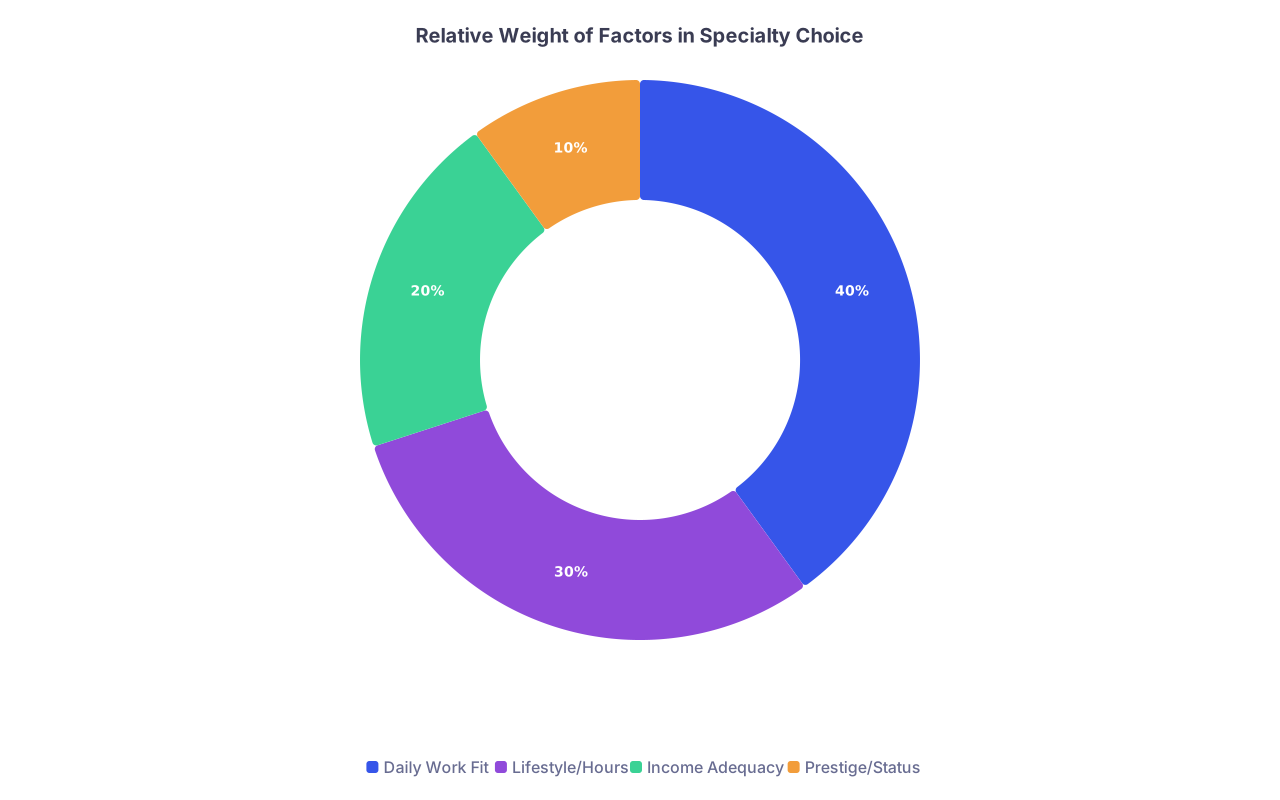
That’s the rough weighting I’d use for most students. Tweak the numbers slightly for your reality, but if “income” is more than “daily work fit” in your head, you’re setting up future regret.
Key Takeaways
- Income differences between specialties are huge and absolutely do matter, especially with big loans and expensive life goals. Ignore that, and you’re just lying to yourself.
- But fit with the day‑to‑day work and lifestyle has to sit above income. Chasing a high-paying specialty you dislike is a slow-motion train wreck.
- Use income as a strong tiebreaker within specialties you already like and can see yourself doing for decades—never as the main reason to force yourself into a field that feels wrong.