
The worst specialty advice med students get is: “Just pick whatever lifestyle you want.”
That sounds empowering. It’s lazy. And dangerous if you take it literally, especially early in med school.
You should absolutely factor lifestyle into your specialty choice. You should not let it drive the bus this early. Here’s how to think about it like an adult instead of a TikTok algorithm.
The short answer: lifestyle matters, but not the way you think
Here’s the direct answer you’re looking for:
If you’re in pre‑clinicals or early clinicals, lifestyle should be:
- A filter, not the driver
- A constraint, not the goal
- A tiebreaker, not the sole reason
If you build your entire specialty choice on “I want 9–5 and no call” before you actually understand:
- what work you like,
- what type of patients drain you,
- how you handle acuity and uncertainty,
- and what you’re realistically competitive for,
you’re setting yourself up for regret.
I’ve watched students chase “lifestyle” into specialties they hate:
- The “I want derm because good hours” person who hates outpatient, repetitive procedures, and chronic rashes.
- The “I want radiology for flexibility” student who realized they cannot stand sitting in a dark room interpreting image after image.
- The “I want EM for shift work” person who underestimated emotional burnout from endless crises at 2 a.m.
Same pattern every time: they let the structure of the job dictate their path before they understood their fit with the actual work.
Reality check: lifestyle reputations are outdated (and often wrong)
You’re probably hearing things like:
- “Derm and ophtho = amazing lifestyle”
- “Surgery = no life”
- “Psych = chill, easy”
- “EM = work 12 shifts a month and you’re done”
This is half‑true at best and flat‑out wrong in plenty of contexts.
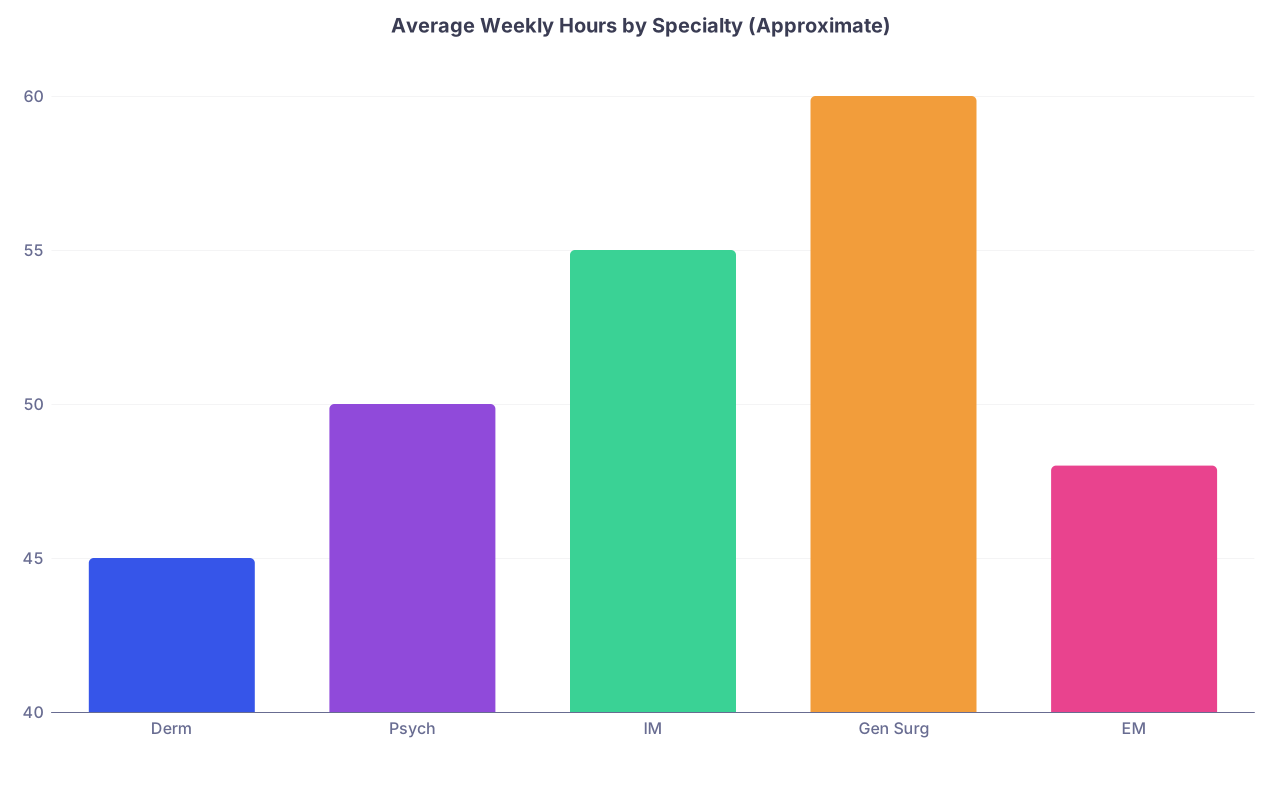
| Category | Value |
|---|---|
| Derm | 45 |
| Psych | 50 |
| IM | 55 |
| Gen Surg | 60 |
| EM | 48 |
These numbers are averages, and they hide massive variation based on:
- Practice setting (academic vs community vs private)
- Location (rural vs urban)
- Group culture (some groups expect 55 hours, some 40)
- Career stage (new attendings often hustle more)
Example: dermatology
Yes, many derm jobs are 4‑day weeks with predictable hours. But I also know a derm group that runs 5 packed clinic days, cosmetic side work, and business admin after hours. Partners work harder than some hospitalists.
Example: surgery
No, not every surgeon lives in the hospital. A community general surgeon with a well‑run group and good partners can have:
- 2–3 OR days
- 1–2 clinic days
- 1:4 call Busy, yes. Miserable by definition, no.
Point: “Lifestyle” is not a property of the specialty alone. It’s a property of:
- The local market
- The specific job
- The way you choose to practice
So making a decision in MS1 based on Reddit stereotypes of hours is like choosing a spouse based on their LinkedIn headline.
What you should let drive your choice early
At your stage (med school, heavy on didactics and early rotations), these should drive your thinking more than lifestyle:
What type of problems you enjoy solving
- Do you like clear, mechanical solutions (cut it out, fix the vessel)? That leans procedural/surgical.
- Do you enjoy diagnostic puzzles with incomplete information? Think IM, EM, ID, rheum.
- Do you like longitudinal, relationship‑based care (seeing the same people for years)? Primary care, psych, some subspecialties.
Your tolerance for uncertainty and acuity
- Some people thrive in chaos: codes, traumas, crashing patients.
- Some feel constantly on edge and miserable in that environment.
Your day‑to‑day anxiety level matters more than whether you work 45 vs 55 hours.
The setting you want to work in
- Hospital‑based vs clinic‑based
- Operating room vs procedure suite vs reading room vs bedside
- Team‑heavy vs relatively independent
If you hate clinics but pick a “good lifestyle” outpatient specialty, you’re going to be miserable. With great hours. That you resent.
Your competitive profile
“I want derm for lifestyle” is irrelevant if your performance profile doesn’t line up. Harsh but real. You should still aim high, but you cannot disconnect desire from reality indefinitely.
How to use lifestyle correctly at your stage
So no, you’re not supposed to ignore lifestyle. That’s just the old “medicine is a calling, sacrifice everything” nonsense.
Use it differently.
1. Define your non‑negotiables, not fantasy
Ask yourself:
What’s an absolute hard no for me?
Examples:- “I will not take q3 home call for the rest of my life.”
- “I don’t want a job that routinely keeps me past 8 p.m.”
- “I need at least one full day off on weekends most weeks.”
What’s actually flexible if I love the work?
Maybe you’d accept:- 1:4 call
- Some weekends
- Occasional late nights
Write these down. Be honest, not aspirational.
Then specialties become:
- Out if they blatantly violate your hard nos across most realistic jobs
- Still in play if lifestyle is variable and potentially compatible
2. Use rotations as lifestyle experiments, not final verdicts
Rotations are terrible at showing true lifestyle:
- Residents work harder than attendings
- Academic centers differ from community jobs
- Short rotations can be skewed by one bad attending or one heavy call week
But you can still learn a lot if you ask the right questions.
On every rotation, ask at least 3 attendings:
- “What does a typical week look like for you – hours, call, weekends?”
- “How has your schedule changed from residency to now?”
- “If you wanted to cut back or ramp up, how possible would that be in your specialty?”
You’ll hear a range. That’s the point. It will break the myth that “X specialty = Y lifestyle always.”
The real risk of letting lifestyle drive things too early
You’re not likely to end up destitute or divorced because you picked the “wrong” lifestyle specialty in MS2.
The bigger, quieter risks are:
You choose something you’re mediocre at and bored by
You might survive a boring 9–5 specialty; you probably will not excel in it. Burnout is not just “too many hours.” It’s “too much time doing work I don’t care about.”You close doors you should have kept open
Once you decide, “I’m a lifestyle‑first person, so I won’t consider procedural fields,” you unconsciously:- Avoid rotations that might change your mind
- Don’t seek mentors there
- Put less effort into core rotations (surg, OB, EM) that actually affect your competitiveness
You underestimate how much lifestyle evolves
Your priorities at 25 and at 40 will not be the same.
Most specialties offer at least some path to:- Part‑time
- Locums
- Outpatient‑heavy roles
- Administrative mixes The “lifestyle” of a 30‑year‑old early attending is not the only version of that career.
What actually happens across training (and why that matters now)
This is where a lot of med students get misled: they compare specialties based on anecdotes instead of the actual training arc and career options.
| Stage | Hours & Control | Key Lifestyle Point |
|---|---|---|
| MS1–MS2 | Long study hours, flexible schedule | You control time, but mental load is high |
| Core rotations | Unpredictable, long days | Not reflective of any single specialty |
| Residency (all) | Hardest hours overall | Do NOT judge lifelong lifestyle on this alone |
| Early attending | Busy establishing practice | Some control, still building reputation |
| Mid-career attending | Most flexibility | Can negotiate role, hours, focus area |
Why this matters:
If you hate your IM rotation because the resident is pre‑rounding at 4:30 a.m. and the work room is chaos, that tells you about residency. Not necessarily about your eventual outpatient IM practice or hospitalist job.
You can’t ignore residency entirely, but you also shouldn’t decide, “I’ll never do X because interns there look tired.”
A better framework: 4 pillars, lifestyle as #4
When I work through this with students, I use a simple structure. You want a specialty that fits you on four pillars, in this order:
Day‑to‑day work content
Could you tolerate the average day in this specialty for decades? Not the coolest cases — the boring Tuesday afternoons.Patient and problem type
- Age group
- Chronic vs acute
- Physical vs mental health focus
- Degree of patient compliance needed
Practice environment
- Outpatient vs inpatient
- OR/procedure vs cognitive
- Team vs solo
Lifestyle envelope
- Is there a version of this specialty that fits my non‑negotiables?
- Am I willing to accept the tradeoffs to get that version? (location, pay cut, group choice)
Lifestyle is pillar #4, not #1. But it’s still a pillar. If a specialty flunks #4 badly, it’s a bad fit even if you like the work.
Practical steps you can take this semester
Let me make this concrete. Here’s what you can do right now, without knowing your final specialty:
Write your current lifestyle constraints
One page, quick:- What are you afraid of lifestyle‑wise? (ex: never seeing family, constant pager anxiety)
- What do you think you want? (ex: clinic‑heavy, minimal nights)
- What are you willing to trade for it? (location flexibility, higher income, certain procedures)
Pick 3 specialty “archetypes” to explore
Not specific fields yet, just buckets:- Hospital procedural (surgery, OB, some cards)
- Outpatient cognitive (psych, FM, endo)
- Mixed/hybrid (EM, anesthesia, hospitalist, GI)
Then actively seek:
- 1–2 shadowing experiences in each
- Honest lifestyle talks with at least 2 attendings in each category
- Track your energy, not just your interest
After every clinical day (or simulated/patient exposure), ask:- Am I mentally wiped or pleasantly tired?
- Did I dread going back tomorrow?
- Which parts drained me the most?
Over a few months, patterns appear. Use those to guide which specialties you keep in the running. Then ask: can any of these be practiced in a way that fits a reasonable lifestyle for me?
FAQ: Lifestyle and Specialty Choice (7 questions)
1. Is it a mistake to rule out “bad lifestyle” fields like surgery early?
Yes, if your only reason is lifestyle. No, if you’ve:
- Done enough exposure to know you actively dislike the OR and the culture
- Honestly know you’d be miserable with that call burden even if you liked the cases
You do not have to “keep everything open” forever. But do not close doors based solely on memes and horror stories you heard as an MS1.
2. What if I know I want a family‑friendly specialty?
Good. Own that. But define “family‑friendly” like an adult:
- What hours are acceptable on weekdays?
- How many weekends a month are okay?
- How much call can you tolerate?
Then you’ll see that many fields can be family‑friendly in the right job: outpatient IM, psych, peds, derm, path, radiology, even some surgical jobs. The point is not the label. It’s the actual role.
3. Should I completely ignore salary when thinking about lifestyle?
No. Salary and lifestyle are intertwined. Higher‑paying specialties sometimes allow:
- Fewer hours for the same income if you’re willing to earn less than max
- Geographic flexibility that lets you pick jobs with better schedules
But chasing income alone is as dumb as chasing lifestyle alone. Once your basic financial security is covered, your day‑to‑day satisfaction will matter more than the last $50k on your W‑2.
4. How do I handle people (attendings, residents) telling me “don’t pick my specialty, it’s terrible”?
Ask them specific questions instead of internalizing the drama:
- “What exactly do you dislike — hours, admin, patient population, pay, culture?”
- “Is your experience typical or is your group/hospital particularly rough?”
- “If you could redesign your job within your specialty, what would change?”
Often they hate their job (or their leadership), not their specialty.
5. Are “lifestyle specialties” like derm, ophtho, and radiology really that different?
They do often offer:
- More predictable hours
- Less overnight in‑house call (or none)
- Less physical wear than heavy procedural/hospital fields
But they come with:
- High competitiveness (score pressure, research, strong CV)
- Often narrow work content (you really must like that niche)
- Still‑real burnout and admin hassles (EMR, prior auths, volume pressure)
They’re not magic. They’re just different tradeoffs.
6. What if my personality screams one specialty, but my lifestyle desires scream another?
That’s where you do actual grown‑up decision making. You:
- List the top 2–3 realistic specialties that fit your abilities and personality
- Look at the best and worst lifestyle scenarios for each (different practice types)
- Decide which combination of “work I like” + “lifestyle I can accept” is best overall
Sometimes that means picking the specialty that’s a 9/10 fit for your interests and a 7/10 lifestyle rather than a 6/10 fit and a 9/10 lifestyle. Only you can make that call, but at least you’re being honest about the trade.
7. What’s one concrete way to reality‑check lifestyle for a specialty I’m curious about?
Email or ask to meet one junior attending in that field at your institution or in town. Ask just three questions:
- “What’s your typical week (start/end times, call, weekends)?”
- “If you wanted to cut back to 0.8 or shift to fewer nights, how realistic would that be in your field?”
- “What do your partners who prioritize family/time do differently schedule‑wise?”
Their answers will tell you far more than Reddit ever will.
Open your notes app right now and write down your three hard lifestyle non‑negotiables and three specialty “archetypes” you’ll explore this year. That simple list will stop you from making an early, lifestyle‑only decision you regret later.