
It’s 3:15 p.m. You’re on your pediatrics rotation, you just had an awesome time doing a lumbar puncture on a febrile neonate and distracting a toddler with bubbles while placing an IV. Then you step into the room with the parents. One is filming you, the other is aggressively Googling your every word in real time and asking why you’re “refusing” antibiotics for a viral URI.
You walk out thinking:
“I love the kids. I like the medicine. I even like the procedures. But if this job is 70% managing parents, I’m going to lose my mind.”
You’re not wrong to think about this now. And no, you’re not doomed to hate your career just because you don’t find parent-management “fulfilling.” You just have to be very intentional about how you shape your path within pediatrics—or decide if another kid-focused field actually fits you better.
Let’s break down what to do if this is you.
Step 1: Get Honest About What Exactly You Dislike
Do not just label it “I hate parents” and stop there. That’s lazy and it will mess up your decision-making.
Sit down and be specific. You’re reacting to something. It’s usually one or more of these:
Conflict
You hate arguing with vaccine-hesitant, Dr. Google, or non-adherent parents. The emotional tug-of-war. The feeling of “I know what’s right and you’re blocking it.”Emotional intensity
You feel drained by anxious, tearful, or angry parents. The crying, the repetition, the questions. You feel like a therapist, not a doctor.Boundary issues
You hate the “I want an answer now” MyChart messages, the late-night calls, the “I know it’s Sunday but…” mentality.Entitlement and mistrust
You bristle when parents treat you like customer service, not a professional. Or when they question basic, evidence-based practice as if you’re trying to harm their child.Chronic, longitudinal drama
Same family, same crisis flavor, every few months. Complex social issues, custody disputes, CPS involvement, no-shows, lost scripts. You feel stuck in a social work loop.
You have to identify which piece makes you want to walk out of the room.
Because different pediatric paths either:
- Minimize that issue
- Change the type of parent interaction
- Or… make it worse
Write this down somewhere. Literally list: “What about parent interactions drains me?”
Step 2: Understand the Parent-Load Across Pediatric Roles
You’re not choosing between “pediatrics with parents” and “pediatrics without parents.” They’re always there. The real question: how much and what kind.
Here’s the blunt breakdown.
| Role / Setting | Parent Interaction Level | Typical Style of Interaction |
|---|---|---|
| General outpatient peds | Very High | Repetitive, longitudinal, emotional |
| Inpatient hospitalist peds | High | Acutely stressed, crisis-focused |
| PICU | High | Intense, high stakes, more deference |
| NICU | Moderate–High | High emotion, but more structured |
| Pediatric EM | High but brief | Acute, short-term, sometimes adversarial |
| Pediatric subspecialist (clinic-heavy) | High | Complex, demanding, chronic |
| Pediatric subspecialist (procedure-heavy) | Moderate | Focused, often grateful, more technical |
If you absolutely cannot stand talking to parents: pure pediatrics is probably the wrong house for you. But if your problem is certain types of parent interactions, there’s room to maneuver inside that house.
Step 3: Clarify What You Actually Like: Kids vs Pathology vs Procedures
You said you love kids and procedures. That’s good, but we need to sharpen that.
Ask yourself:
Do you like all ages or specific ones?
Neonates vs toddlers vs teens—very different worlds.Do you like acute problems (status asthmaticus, sepsis) or chronic ones (CF, diabetes, epilepsy)?
Do you want fast decisions (ED, PICU) or long relationships (general peds, complex care)?
What procedures actually excite you?
- Lines, LPs, intubations → more critical care / ED
- Bronchs, endoscopies, caths → subspecialties
- Simple office procedures (lacs, abscesses) → ED/urgent care
Those preferences matter more than whatever your attending glibly says about “parents are part of pediatrics.”
Step 4: Where Parents Are Most Central vs Most Tolerable
Let me walk you through key options given your starting point: “I like kids and procedures, not parents.”
1. Places Where You’ll Probably Be Miserable
General outpatient pediatrics
This is ground zero for parent-heavy medicine:
- Vaccine debates
- Sleep training dramas
- School notes and sports forms
- “He’s not talking yet, is that OK?” x 100
- “But my last pediatrician always gave antibiotics.”
If you already feel your soul leaving your body during well-child visits, this is not a “maybe it gets better as an attending” scenario. It gets more intense when you own the panel.
Complex care / developmental / behavioral peds
You’ll be running long visits with:
- Families dealing with chronic neurologic or developmental issues
- Endless coordination with schools, PT/OT, social services
- Parents who are overwhelmed and need heavy emotional support
This is noble work. Also heavily parent-centric. If conversations drain you, hard pass.
2. Middle Ground: Kids + Procedures + Still Lots of Parents, But Different Flavor
Pediatric ED
You get:
- Procedures: lacs, splints, IVs, LPs, reductions
- Variety: trauma, respiratory, fever workups, everything
- Interaction style: short-term, crisis-oriented, sometimes intense, but they leave
Downside: Parent behavior can be extreme. You will get:
- “We’ve been waiting 4 hours”
- “Why can’t you do a CT ‘just to be safe’?”
- “My other doctor always gives antibiotics.”
But you are not in a long-term “relationship” with them. You fix (or triage) the problem and move on. That’s a big psychological difference.
Pediatric hospitalist
Parents here:
- Are usually more scared than combative
- Often more deferential (“You’re the one keeping my kid alive right now”)
- Present for rounds and want comprehensive updates
You’ll explain a lot. Repeat a lot. But you’re dealing with real acute pathology, not wellness visits. If your annoyance is mostly with the low-acuity outpatient drama, hospitalist may feel better.
General NICU (as a pediatrician via NICU fellowship)
NICU parents are stressed, terrified, and emotional. No question. But:
- Interactions are structured (family meetings, planned updates)
- There’s a strong multidisciplinary team (nurses, social work) to share the emotional work
- The baby is the clear focus. Conversations are more aligned with medical goals and prognosis than “why can’t she eat only organic mango?”
Still not parent-light, but more “contained” than outpatient chaos.
3. Best Matches for “Kids + Procedures + Less Soul-Sucking Parent Drama”
This is where it gets interesting for you.
PICU (Pediatric Critical Care)
You get:
- High-level procedures: intubation, central lines, arterial lines, chest tubes
- Sick kids, complex physiology, a lot of “real medicine”
- Families who usually understand “this is serious”
Parents here:
- Are intensely emotional, yes
- Tend to defer more to medical expertise (“Do what you need to do”)
- Interact with you in a more focused way—big family discussions, goals-of-care talks, clear decisions
If your issue is whiny, entitled, or trivial-demand dynamics, PICU tends to have less of that and more, “We are grateful you are keeping my child alive.”
Procedure-heavy pediatric subspecialties
Think:
- Pediatric GI (endoscopy, PEGs)
- Pediatric pulmonology (bronchs, bronchoscopies with BAL, sometimes bronchial stenting)
- Pediatric cardiology (caths, echos)
- Pediatric interventional radiology (via radiology route)
- Pediatric anesthesia (non-peds residency route but still kids)
These are great for:
- Technical skills, procedures, defined problems
- Being “the expert” called in for specific issues
- Slightly more “filtered” parents—by the time they see you, they know they need a specialist
You will definitely still counsel. But the nature of discussion is more: “Here’s the plan to manage your child’s [specific disease] and here’s the procedure we’re doing and why.”
If you like clarity and focus in conversations, this is much better than debating Tylenol dosing for the fifth time that day.
Pediatric anesthesia
Strictly speaking this is anesthesia, not pediatrics, but functionally:
- Tons of procedures (airways, lines, regional blocks)
- Short, highly focused discussions with parents: consent, risk discussion, immediate peri-op concerns
- You aren’t their long-term point person
If you truly love the physiology and procedures of kids more than the holistic “pediatrician” identity, this can be a very smart direction.
Step 5: Compare Peds vs Non-Peds Kid-Focused Paths
If you like kids and procedures but the entire idea of regular parent conversations feels awful, broaden your lens beyond pediatrics.
Here’s the basic menu:
| Pathway | Training Route | Kid Exposure | Parent Interaction | Procedure Density |
|---|---|---|---|---|
| Pediatric EM | Peds or EM → fellowship | High | High, brief | High |
| PICU | Peds → fellowship | High | High, intense | High |
| Pediatric Anesthesia | Anesthesia residency | High | Moderate, focused | Very High |
| Pediatric Radiology / IR | Radiology residency | Moderate–High | Low–Moderate | High (IR) |
| Pediatric Surgery | Gen Surg → fellowship | High | Moderate, serious | Very High |
You need to decide:
- Do you want your core identity to be “pediatrician”?
Or are you OK with being “anesthesiologist who works a lot with kids” or “radiologist who reads mostly peds studies”?
This matters more than people admit. Some people need that pediatrician ethos. Some absolutely do not.
Step 6: How to Test Your Preferences Now as a Med Student
Do not guess. Run experiments.
A. On rotations
You’re on peds now or will be. Use it intentionally:
Track your energy
After which interactions do you feel charged vs drained?
A resuscitation? A vaccine discussion? A family goals-of-care talk?Shadow variety
Ask to spend time in:- NICU
- PICU
- Pediatric ED
- A peds subspecialty clinic with procedures (GI, cards, pulm)
You’re not annoying anyone by saying: “I’m trying to figure out if I like more acute/procedural pediatrics versus general clinic. Can I spend an afternoon in ___?”
B. Electives and sub-Is
Plan strategically:
- 1 sub-I on a general inpatient peds service
- 1 PICU or NICU rotation
- 1 pediatric ED or procedure-heavy subspecialty
By the end of those three, you’ll know a lot more about:
- How much ongoing family counseling you can tolerate
- Whether you like “big decisions with families” (PICU/NICU)
- Whether short, sharp parent interactions (ED) feel better
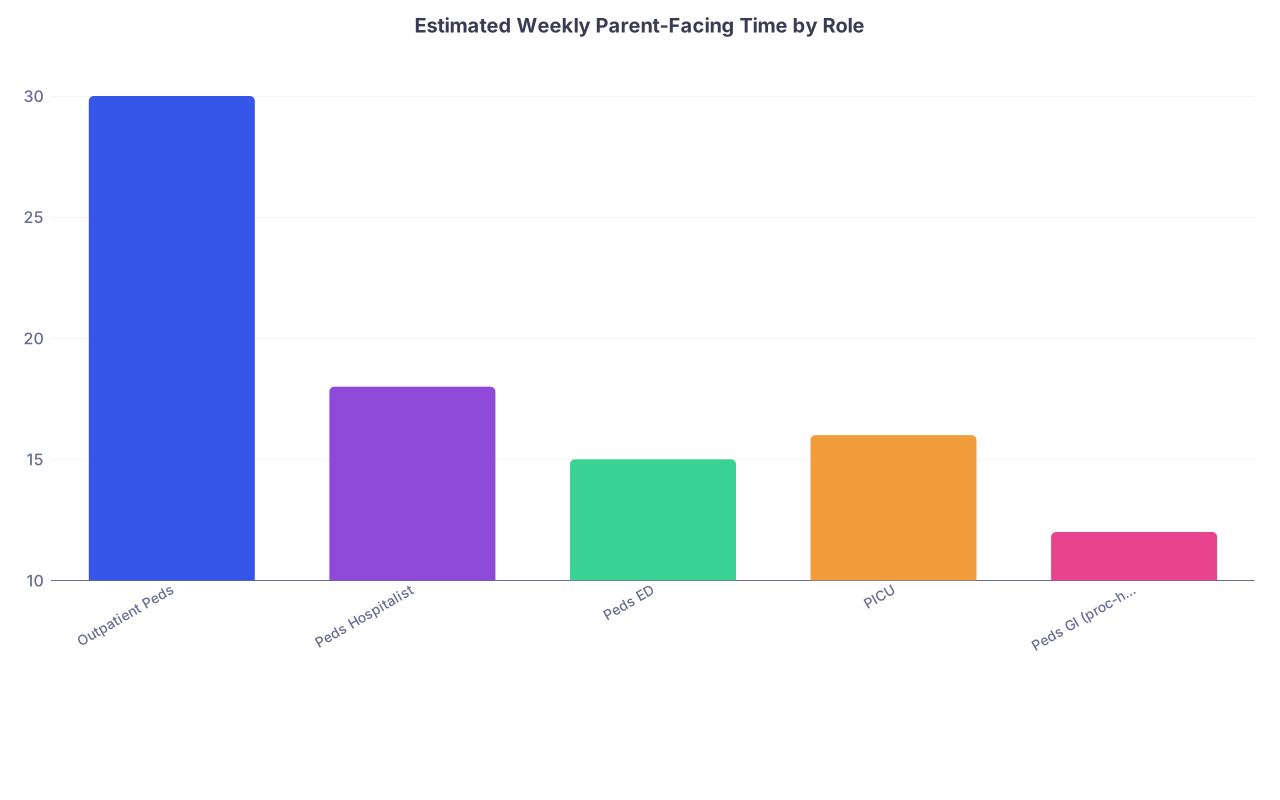
| Category | Value |
|---|---|
| Outpatient Peds | 30 |
| Peds Hospitalist | 18 |
| Peds ED | 15 |
| PICU | 16 |
| Peds GI (proc-heavy) | 12 |
Numbers are rough and vary by institution, but the relative pattern is real.
Step 7: Building Skills So Parents Don’t Drain You Completely
I’m going to say something you might not want to hear:
Some of your “I hate parents” feeling will shrink if your communication skills improve.
Not disappear. But shrink.
A few tactical things that help:
Script key phrases
For vaccine hesitancy, sleep, antibiotics—have go-to lines. You should not reinvent the wheel each visit.Use the “two tries then pivot” rule
Explain twice using different language. If no traction:
“I don’t think we’re going to agree fully today, but here’s what I can safely recommend…”
Then set a clear boundary.Name the emotion, not just the fact
“You’re scared that if we don’t scan her, we could miss something major. That’s a very normal fear.”
This alone de-escalates a ton of conflict.Practice clean boundaries early
If you go into general peds or a clinic-heavy field and you’re a doormat about access, messages, exceptions—you will burn out hard.
If after learning to handle difficult conversations you still hate parent-facing parts of the job, then you know it’s not just insecurity; it’s preference. That’s useful data.
Step 8: Red Flags That Pediatrics (As a Whole) May Be Wrong for You
I’m not going to sugarcoat it. There are some cases where you should seriously consider stepping away from peds entirely:
- You feel annoyed at almost all parent emotions—sadness, fear, anxiety, not just entitlement.
- You find yourself judging most families quickly and harshly, even before conflict arises.
- You don’t like the idea of advocating for kids outside the hospital (schools, public health, social determinants).
- The idea of repeatedly explaining basic things to laypeople feels insulting or pointless to you.
If this is you, consider fields where interaction is more adult-to-adult and more limited:
- Anesthesia (adult or mixed)
- Radiology
- Pathology
- EM (adult-preds mixed, if kids are fine but parents of kids specifically trigger you, test this carefully)
- Surgical subspecialties where family interaction is focused and not longitudinal
No shame in this. Better to be honest now than become the bitter pediatrician everyone avoids.
Step 9: How to Talk About This (Without Sounding Like a Monster)
You cannot say on your pediatrics personal statement or in an interview:
“I love kids but I don’t like parents.”
You can, however, shape this into a mature narrative:
Emphasize what you are drawn to:
“I’m particularly drawn to acute care and procedural work, where family conversations are focused around serious, time-sensitive decisions.”Be honest but professional about fit:
“I’ve realized I’m less suited to longitudinal wellness counseling and more energized by high-acuity scenarios and technically demanding interventions.”
That’s code, and everyone in the room understands it.
A Visual: How Paths Diverge From “I Love Kids and Procedures”

| Step | Description |
|---|---|
| Step 1 | Love kids + procedures |
| Step 2 | General Peds / Outpatient + Procedures |
| Step 3 | Peds ED or Hospitalist |
| Step 4 | Subspecialty Clinic with Procedures |
| Step 5 | Peds Anesthesia / Peds IR / Peds Surgery |
| Step 6 | PICU / NICU / Procedure-heavy Peds Subspecialty |
| Step 7 | Tolerate lots of parent talk? |
| Step 8 | Prefer acute or chronic? |
| Step 9 | OK with non-peds training? |
Follow the branch that feels least miserable. That’s usually the right direction.
Step 10: Concrete Next Steps You Can Take This Month
Do this in order:
Write down:
- 3 things you like about peds so far
- 3 very specific situations with parents that made you think “never again”
Email your clerkship director or a friendly peds attending:
“I’m trying to figure out if I’m a better fit for general peds, acute care, or more procedural subspecialties. Could I spend a few shifts in the PICU/ED/NICU to compare?”On your next shift, intentionally watch the attending in family interactions:
- How do they phrase bad news?
- How do they shut down unreasonable requests without a fight?
- What did they not say?
Look at your upcoming electives and sub-Is. Block at least:
- 1 acute care (ED, PICU, NICU)
- 1 outpatient peds block
- 1 procedure-heavy subspecialty elective (GI, cards, pulm, anesthesia, IR)
Start a simple 1–10 rating system in your notes app:
- After each day, rate: “Parent interaction drain level.”
- After 3–4 weeks in each setting, compare.
That’s your actual data. Not vibes. Not one bad day with a nightmare family.
FAQs
1. If parents annoy me now as a med student, will it definitely be the same as an attending?
Not definitely, but assume the core feeling stays unless something changes substantially. What does change: your confidence, efficiency, and control of the encounter. Early on, everything feels harder because you do not have scripts, you’re slow at explaining, and you’re anxious about being wrong. Once you get more comfortable, some of the frustration drops. But if the basic dynamic of repeating explanations to anxious people feels like torture, that part does not magically vanish with more letters after your name.
2. Is it unethical to go into pediatrics if I don’t “love” dealing with parents?
No. It’s unethical to treat them poorly. You can absolutely be a technically excellent, respectful pediatric specialist who sees parent management as part of the job but not the part that “feeds your soul.” Plenty of great pediatric intensivists, anesthesiologists, or subspecialists feel exactly like you. The key is self-awareness and choosing a lane where you can still show up professionally.
3. Should I just pick a non-pediatrics specialty if I’m this conflicted?
Not automatically. Your conflict is actually normal for a lot of students on peds. Before you bail, you owe it to yourself to test:
- A PICU or NICU block
- A pediatric ED shift
- A procedure-heavy subspecialty
You may discover that you love pediatrics in the right context. If after those experiences you still dread the family side enough that it colors everything, then it’s reasonable to look at anesthesia, radiology, EM, or surgery with a peds emphasis.
4. Which single rotation will give me the clearest signal about whether I can tolerate parents?
Honestly: a general outpatient pediatrics month. That is the maximal parent-exposure environment. If you hate every minute of that and find no redeeming joy, that’s a strong sign you should not do general peds. Then contrast that with a PICU or ED rotation. If you find that the parent interactions there feel more purposeful and less grating, you’ve probably narrowed your lane to acute or critical care pediatrics.
5. How do I bring this concern up with mentors without sounding unprofessional?
Say it like this:
“I’ve realized I’m much more energized by direct patient care and procedures than by longitudinal counseling with families. I respect how vital that is, but I’m not sure it’s where I’m strongest. I’m trying to figure out if I’d be a better fit in acute or procedural pediatric fields like PICU, ED, or certain subspecialties. Do you have suggestions for rotations or people I should talk to?”
That communicates insight, not “I hate parents.”
Open your notes app right now and list the last three times a parent interaction made you think, “I can’t do this forever.” Then, for each one, write what exactly bothered you: conflict, repetition, entitlement, or emotional intensity. That list is your starting compass for shaping a pediatric path that fits how you’re actually wired—not how you’re “supposed” to feel.