
You just finished another 28-hour call. It’s 7:15 a.m. You’re standing in the parking lot, your scrubs smell like cafeteria coffee and chlorhexidine, and you just had that thought you’ve been trying to push away for months:
“I cannot do this night call thing for the rest of my life.”
You like medicine. You like patients (most of them). You even like the cerebral part of managing sick people. But the pager at 2:47 a.m.? The dread at 4 p.m. on call days? The post‑call emotional crash? That feels unsustainable.
So now you’re in that uncomfortable middle ground: you’re early enough in training that you could still shape your future… but late enough that this isn’t theoretical anymore. You know what night call actually feels like, and you know you hate it.
Let’s treat this like a clinical problem: you hate night call, you’re in (or heading into) med school, and you have to pick a specialty and practice setup that doesn’t wreck your sleep or your sanity.
Here’s how to think about it – concretely, not in fantasy-land.
Step 1: Be Brutally Clear About What You Hate About Night Call
“Night call” is vague. You need to dissect it.
There are at least four different things people mean when they say they hate night call:
- Staying awake all night (the physical part)
- Being alone or feeling unsafe/unsupported at night
- Constant interruptions / pager anxiety
- Unpredictable schedule and inability to plan your life
You need to know which ones are deal-breakers for you. Because different choices fix different problems.
If your main issue is:
- “I turn into a zombie past midnight and my body never adjusts” → you want daytime‑heavy specialties and practices with little or no in‑house call.
- “I’m okay being awake but I hate the stress of being responsible when everything is falling apart” → you might be okay with rare nights, but you need strong team setups and limited solo responsibility.
- “I can’t stand the random 3 a.m. interruptions forever” → you want either no call, or highly predictable call in low‑acuity settings (think elective specialties, clinic‑only).
Take five minutes and literally write down:
“What exactly about night call makes me miserable?” Three bullets. No fluff.
That list will matter as we go through options.
Step 2: Understand the Reality – Residency vs. Attending Life
I’ve watched a lot of students make a bad assumption: “I hate night call now, so I can never do [insert specialty].” Sometimes that’s true. Sometimes it’s completely wrong.
Here’s the rule:
Residency call ≠ Attending call.
Many fields have brutal resident call and relatively chill attending call if you pick the right practice. Others are bad forever unless you intentionally choose a niche. A few are basically night‑call‑free from the start.
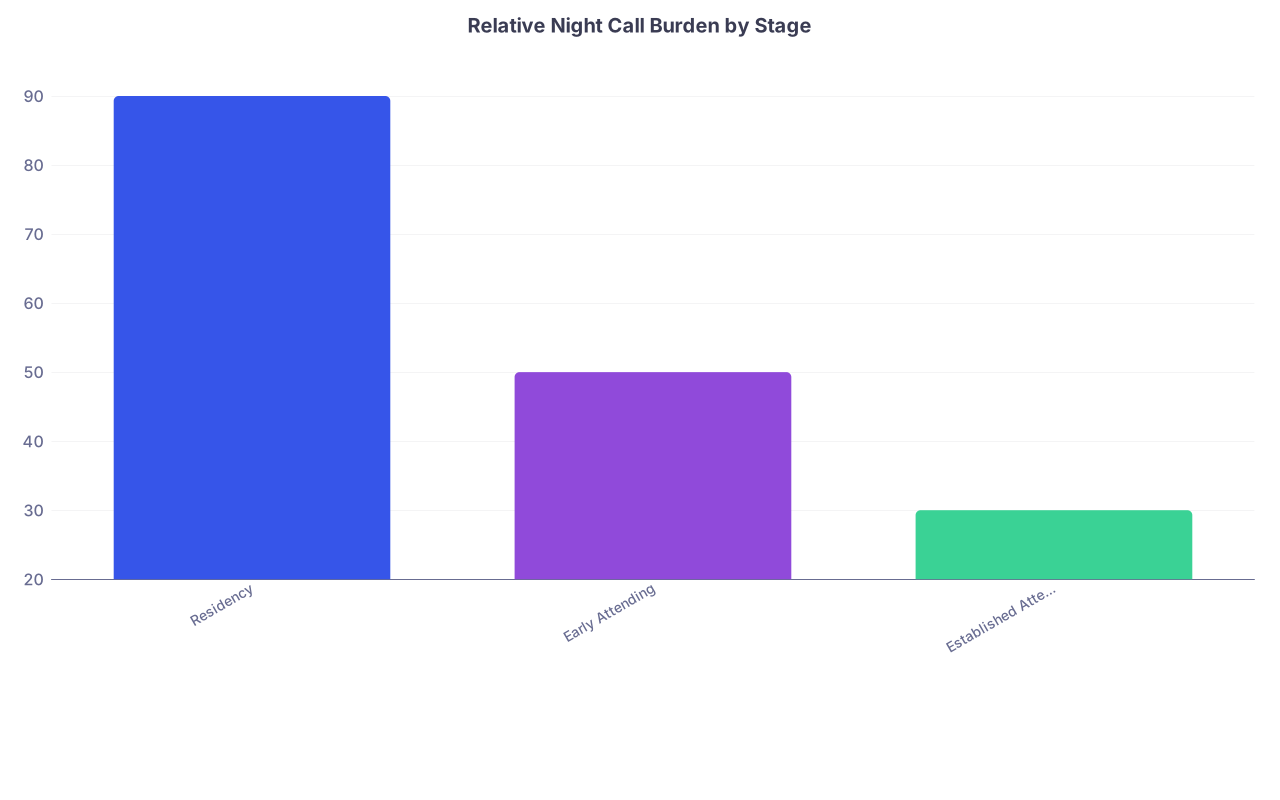
| Category | Value |
|---|---|
| Residency | 90 |
| Early Attending | 50 |
| Established Attending | 30 |
The chart is conceptual, but the pattern is real: as an attending in certain settings you can:
- Drop in‑house nights completely
- Move to outpatient‑only work
- Share call with a big group so you’re on once a month instead of q4
- Choose jobs that have nocturnists or 24/7 in‑house teams
But some specialties structurally live at night:
- EM: nights are baked into the job
- Adult ICU: you’re covering very sick people 24/7, and night work is normal
- Trauma surgery: trauma doesn’t respect bedtime
- OB hospitalist / L&D‑heavy OB: babies arrive when they want
You cannot “out‑negotiate” the core work of those fields.
The goal is to line up:
- A specialty whose daytime work you actually like
- A practice model in that specialty that minimizes or eliminates the kind of nights you hate
Let’s go through specialties like you’re triaging call exposure.
Step 3: Specialties That Are Naturally Low on Night Call
These are the “if you hate night call, start here” options. I’m not sugar‑coating. Every field has some exceptions, but these are your lowest‑risk categories.
Pathology
If you want almost no night call, pathology is near the top of the food chain.
Typical patterns:
- Regular daytime hours most of the time
- Some subspecialties (like transfusion medicine) have phone call or rare emergent consults, but it’s nothing like cross‑covering a medicine floor
- Many pathologists report going months without a true middle‑of‑the‑night emergency
Caveat: you need to actually like looking at slides, grossing, and being okay away from the bedside. If you picked medicine for talking to people all day, this may feel wrong.
Radiology (Especially Outpatient / Non‑Interventional)
Diagnostic radiology can be tailored to an almost entirely daytime gig.
- During residency: yes, you will do nights. You will be in the reading room at 2 a.m. reading CTs for ED rule‑outs.
- As an attending:
- Teleradiology groups have 24/7 systems, but many daytime radiologists have zero night shifts
- In many private groups, the younger folks or dedicated “nighthawks” take nights; you might take home call for rare issues, but you’re not in the hospital all night
Interventional radiology is different: procedures, bleeds, emergent cases. You will have more true night call. If you hate being woken up, IR is not your friend.
Dermatology
Derm is the classic “no night call” meme, and it’s not totally wrong.
- General outpatient derm: clinic hours, minimal emergencies
- Most practices: little to no weekend work, no in‑house nights
- Hospital consult derm: a bit more unpredictable, but still very low midnight action compared to medicine or surgery
You will have a normal residency call schedule (still lighter than most), but attending life can be essentially no nights if you pick standard outpatient practice.
Ophthalmology (Clinic‑Based)
Ophtho can range from basically no night work to quite a bit, depending on:
- Whether you’re attached to a major trauma center
- How your group handles call
But the average community ophtho with a clinic‑heavy practice:
- Days only
- Home by early evening most days
- Shared call with the group, usually home call, often low‑acuity
You’ll still get 2 a.m. calls for retinal detachments sometimes, but with enough partners, that’s rare.
Psychiatry (Outpatient‑Focused)
Psych has a wide spectrum, but if you steer away from inpatient and ED crisis work, you can build a life with essentially no night call.
- Pure outpatient or tele‑psych: daytime hours, scheduled patients, emergencies routed through crisis services / ER
- Group practices often have one person on “backup” for urgent issues, but actual wake‑you‑up events are infrequent
If you end up in C&L psych at a big academic center tied to the ED, expect more call. But that’s a choice, not a requirement of the field.
Step 4: “Middle‑Ground” Specialties Where Setup Matters More Than Field
These are specialties where your practice setup matters almost more than the specialty label. You can have a cushy, low‑call life or a brutal one in the same field.
Internal Medicine → Outpatient Primary Care / Concierge / Niche Clinics
If you’re in med school, you’ve mostly seen inpatient IM: sick patients, codes at 3 a.m., q4 or night float. That’s not the only version.
You can design internal medicine around:
- Outpatient primary care clinics
- Specialty clinics (HIV, rheum‑heavy outpatient, obesity medicine, etc.)
- Concierge practices with limited patient panels
Call patterns in those setups:
- Often phone‑only call shared among multiple providers
- Many systems now use 24/7 nurse triage or urgent care to filter calls
- True middle‑of‑the‑night calls are rare, and you’re almost never physically driving in
The trap: if you join a tiny rural group with two docs, you are going to get hammered by call no matter what. Choose large systems or groups with robust after‑hours support.
Pediatrics → Outpatient / Hospitalist with No Nights
Similar story.
- Outpatient pediatrics in a big multi‑specialty group: low night call, mostly parent phone calls, triage nurses filtering nonsense
- Academic pediatric subspecialties that are clinic‑heavy (developmental‑behavioral, some allergy/asthma, etc.) can also have minimal night work
Hospitalist peds can be wild if you’re at a big children’s hospital with night shifts. But community hospitals with pediatric hospitalists sometimes use nocturnists or moonlighters to cover nights.
Anesthesiology – If You Choose the Right Practice
Anesthesia seems night‑heavy during residency because you’re covering traumas, potential STAT C‑sections, emergent cases. As an attending the spectrum is huge.
There are anesthesiologists who:
- Work at outpatient surgery centers only: Monday–Friday, day shifts, rare weekends, essentially no nights
- Pick hospitals with strong in‑house night coverage and do mostly daytime elective cases
- Do pain medicine only (clinic‑based, procedure heavy, mostly daytime)
And there are those who:
- Staff trauma centers with q3 or q4 home or in‑house call
- Cover OB 24/7 with frequent middle‑of‑the‑night C‑sections
Same specialty. Completely different lifestyle. If you’re anesthesia‑curious but night‑call‑averse, your future practice needs to be outpatient or light OB/trauma from day one.
Step 5: Specialties That Are Night‑Call Landmines
If you truly cannot tolerate nights, these are fields where you’re playing life on “hard mode.” Can you find niches with less nights? Sometimes. But you’re fighting the core nature of the job.
Emergency Medicine
The work is the night.
As an EM attending:
- Many groups require “fair share” of nights
- You will rotate shifts: mornings, afternoons, nights
- Even senior attendings often do nights unless they buy out of them or move to administrative roles or very specific shops
If your body and mind hate the flipped schedule, this is going to beat you up. I’ve watched residents white‑knuckle it through EM because they love the cases, then burn out five years out because the circadian chaos never stops.
General Surgery (Especially Trauma/Acute Care)
PGY‑2 trauma call is often what makes med students swear off nights forever. And that intensity doesn’t magically disappear.
- Trauma and acute care surgery are inherently 24/7
- General surgeons covering small community hospitals carry heavy home call; they do get called in
- Even elective surgeons cover their own complications
Are there elective‑only setups with limited call? Yes. Bariatric, breast, plastics, some private practice groups. But getting to a call‑light “only elective clinic + OR” job in surgery is a much steeper and longer path than, say, outpatient IM or derm.
OB/GYN (L&D‑Heavy, Hospital‑Based)
Babies do not care about your sleep. Labor is inherently a round‑the‑clock thing.
Reality for most OB/GYNs:
- Night call is baked in through residency
- As attendings, if you’re doing deliveries, you’re dealing with nights—either in‑house shifts or home call with real chances of driving in
- Hospitalist OB gigs are shift work; many include nights as a core expectation
There are gynecology‑only practices with little to no night work, but you’re competing for relatively fewer spots.
Adult ICU / Critical Care
If your main complaint is the timing (not the intensity) of work, ICU is a problem.
- Many intensivist groups run 24/7 in‑house coverage
- Tele‑ICU options still function 24/7; somebody is working nights at the monitors
- Sick patients crash at night; you can’t “turn off” the service
This is a “love the nights or at least tolerate them” field.
Step 6: Practice Setups That Kill or Tame Night Call
Here’s where a lot of students fail: they think “I picked the right specialty, I’m safe.” Not enough. Within each field, you have to target the right type of job.
Big levers that dramatically reduce night call:

1. Outpatient‑Only Jobs
Any specialty with a strong outpatient side can give you a no‑night‑call life if you commit to clinic‑only work:
- IM → outpatient primary care, concierge, specialty clinics
- Peds → outpatient group practice, school‑based, developmental
- Psych → office‑based, tele‑psych
- Neuro → headache clinic, epilepsy clinic tied to EMU with robust on‑call structure
- Cards → noninvasive imaging‑heavy or clinic‑predominant groups (still some call, but less)
Outpatient‑only usually means:
- No in‑house nights
- Shared call that’s often phone triage, with low‑acuity, filtered cases
2. Large Groups with Shared Call
Compare these two IM setups:
- Dr. A: 2‑physician practice in a rural town, both do hospital and clinic → they’re on call literally half of all nights (q2), often coming in.
- Dr. B: 30‑doc multi‑specialty group with hospitalists → Dr. B has essentially zero night call; hospitalists do the heavy lifting, triage nurses screen after‑hours calls.
Same specialty. Night call completely different.
When you interview for future jobs, you must ask:
- “How many physicians share call?”
- “Is call in‑house or from home?”
- “How often do you actually get called in between 11 p.m. and 6 a.m.?”
- “Roughly how many nights per month will I be on call?”
If they dodge, or give only vibes (“Oh, it’s not that bad”), you assume it’s bad.
3. Hospitalist vs. Clinic Split
Some people actually prefer a few concentrated night blocks over being “always a little bit on call.”
Example:
Hospitalist with 7‑on/7‑off schedules:
- You might do dedicated “day” blocks; nights covered by nocturnists
- Or you rotate: 7 days, then 7 nights, then off
- If the group has full‑time nocturnists, you might live a night‑free life as a day hospitalist
This is why you don’t just say “I hate nights, so I can’t do hospital medicine.” You need to see how that particular hospitalist group is structured.
Step 7: Med School Strategy – How to Test This Before You Commit
You’re not picking from a brochure. You’re picking from reality.
Here’s what to do during med school and early residency if nights are a real concern:
1. On Every Rotation, Shadow Day vs. Night Life
During your core clerkships, don’t just see the day‑shift highlight reel. Ask specifically:
- “Can I tag along for one night shift?” (even if just a half‑night)
- “What does your call schedule look like as an attending?”
Notice:
- How wrecked people look the day after call
- Whether attendings are still doing nights in their 50s, or if they all bailed to admin
- Whether people complain about call constantly, or shrug it off
2. Talk to Attendings Who’ve Changed Setups
Every hospital has at least one: the doc who started in trauma/ICU/academic hell and then bailed to a cushier setup.
Ask them:
- “What about nights finally pushed you to change?”
- “Which job structures actually fixed it, and which just moved the pain around?”
- “If you could go back to med school, what would you have ignored or focused on differently?”
You’ll get more honest answers from them than from the gung‑ho trauma attending who hasn’t slept normally since fellowship.
3. Use Electives to Sample “No‑Call” Lifestyles
If you’re even slightly curious about one of the low‑call fields, do a real elective there:
- Derm clinic month
- Outpatient psych
- Community radiology
- Pathology with both sign‑out and lab exposure
- Ophtho clinic and minor OR
And pay attention to the lifestyle:
- What time do they show up and leave?
- Are their evenings actually free, or are they charting from home until midnight?
- Are they checking messages all night on their phones?
Step 8: Cold Reality – You Probably Can’t Avoid Nights in Training
Here’s the blunt part: during residency, almost every path has some exposure to nights. Even derm and psych have call. Path has frozen sections and transfusion issues.
So if your thinking is: “I refuse to ever work a single night shift,” you’re not really choosing a specialty problem, you’re choosing a career‑in‑medicine problem. Medicine is a 24/7 system. Trainees are cheap and present.
You should aim for:
Minimizing nights in your career
Surviving nights in your training with strategies:
- Protect post‑call sleep aggressively (no social heroics)
- Use caffeine strategically, not constantly
- Schedule real days off after call blocks, not “catch‑up” days packed with errands
- If nights are wrecking your mental health, talk to someone early (program director, GME, mental health services)
But don’t throw away a field you love just because residency nights are rough, if you know that attending life in your intended setup is mostly days.
Step 9: Summary – Matching “I Hate Night Call” to Real Options
Let’s tie this together with a quick comparison.
| Specialty / Setup | Typical Night Call Pattern |
|---|---|
| Outpatient Derm | Essentially none |
| Pathology (general, non-transfusion) | Rare phone call, almost no in-person |
| Outpatient Psych | Rare urgent calls, no in-house |
| Outpatient‑only IM / Peds (large group) | Phone triage, low chance of true nights |
| General Radiology (large group, days) | No in-house nights; rare backup coverage |
| Anesthesia (ASC / outpatient only) | Days only, minimal weekends |
| EM (standard ED job) | Regular nights as core duty |
| Trauma Surgery / ICU | Frequent nights and high-acuity calls |
| OB/GYN with deliveries | Nights common, in-house or home call |
You’re not choosing between “good” and “bad” specialties. You’re choosing:
- What problems you’re willing to live with
- Which parts of medicine energize you enough that the unavoidable pain (some nights in training, some occasional calls) is actually bearable
Your Next Concrete Step (Do This Today)
Open up whatever you use to take notes. Title a page:
“Night Call – What I Can and Cannot Tolerate.”
Then:
- Write three bullets under: “What I specifically hate about night call right now.”
- List three specialties you’re actually considering.
- For each, add two versions:
- “Worst‑case night call reality”
- “Best‑case, low‑call practice setup”
When that’s done, email or message one attending or senior resident in each of those specialties and ask for a 15‑minute chat about their actual call schedule and how it’s changed from residency to now.
You’ll get more clarity from those three short conversations than from another month of vague anxiety about “hating nights.”