Otolaryngology is not “moderately competitive.” The data show it is one of the most numerically unforgiving specialties in the match, and most applicants underestimate just how tight the margins are.
You are not competing against “people who like ENT.” You are competing against a self-selected group that already looks strong on paper before they ever click “apply”: high Step 2 scores, heavy research, many with home programs and strong letters. If you approach ENT like a generic surgical field, you get generic results. In this specialty, generic = unmatched.
Let’s dissect the numbers.
1. Competitiveness in Context: Where ENT Actually Sits
First, zoom out. How does ENT compare against other surgical and competitive specialties?
Across recent NRMP data releases (up to 2024), otolaryngology consistently lands in the “top tier” competitiveness cluster alongside:
- Dermatology
- Plastic surgery
- Orthopedic surgery
- Neurosurgery
For U.S. MD seniors, the match rate into ENT typically hovers around the mid‑70s to low‑80s percent range. That sounds “not terrible” until you remember who is in that denominator: many with 250+ Step 2, strong research, and robust clinical narratives.
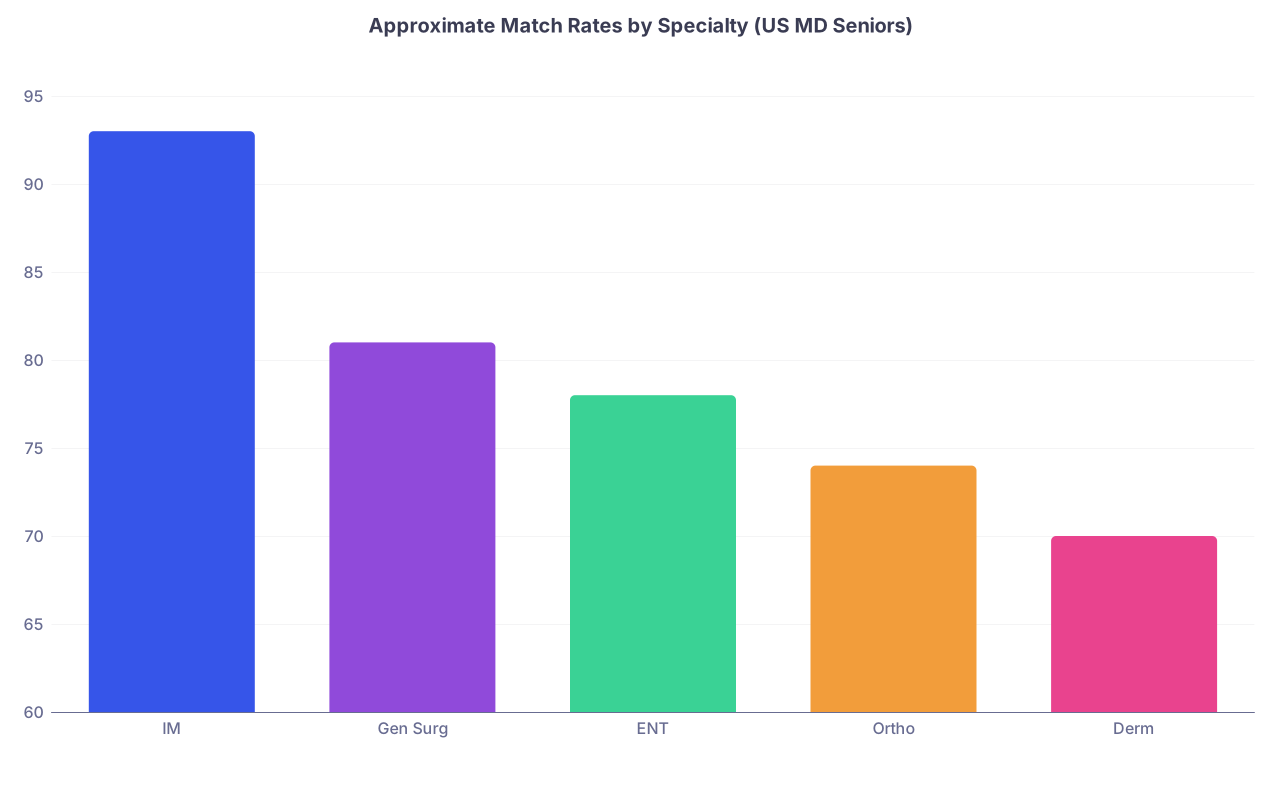
| Category | Value |
|---|---|
| IM | 93 |
| Gen Surg | 81 |
| ENT | 78 |
| Ortho | 74 |
| Derm | 70 |
Interpretation is straightforward:
- Internal medicine: high match rate, broad range of applicants.
- ENT: clustered with ortho and derm, but with fewer total positions and strong concentration of highly prepared applicants.
This is why mediocre strategy kills ENT applicants. The margin for error is thinner than in general surgery and orders of magnitude thinner than in internal medicine.
2. Step Scores: The Filter You Cannot Ignore
Program directors do not magically stop caring about test scores because Step 1 went pass/fail. They just shifted to Step 2 CK as the primary quantitative screen.
Based on aggregated trends from NRMP Charting Outcomes and PD survey data:
- Competitive ENT applicants (US MD matched) often report Step 2 CK means in the 250–255 range.
- Unmatched ENT applicants often still sit in the 245–250 band. The gap is not massive, which means small differences matter.
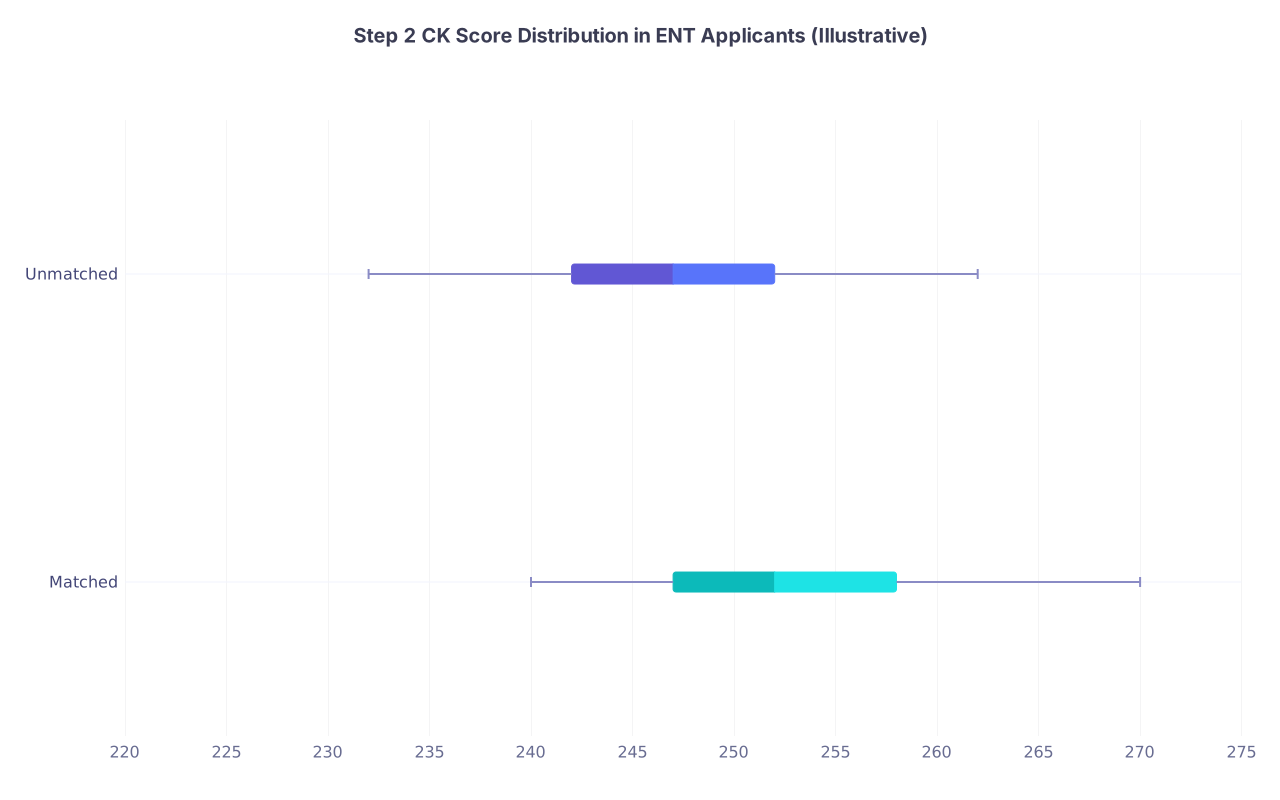
| Category | Min | Q1 | Median | Q3 | Max |
|---|---|---|---|---|---|
| Matched | 240 | 247 | 252 | 258 | 270 |
| Unmatched | 232 | 242 | 247 | 252 | 262 |
This is the critical point: ENT is not a specialty where a 240 Step 2 is comfortable. It can match, but it is not safely above the noise.
I have seen the same pattern over and over:
- Applicant A: Step 2 = 260, decent research (3–4 pubs/abstracts), strong home institution
- Applicant B: Step 2 = 244, more research, away rotations, good letters
Applicant A reliably gets more interview invitations from top‑ and mid‑tier programs. Applicant B can still match, but the invite list shrinks and skews more toward mid‑ and lower‑tier academic or community programs. That is the practical, lived effect of a ~15‑20 point Step 2 gap.
Score tiers and realistic expectations
Here is a rough, data‑aligned way to think about Step 2 CK bands for ENT:
| Step 2 CK Band | ENT Interview / Match Outlook (Approximate) |
|---|---|
| ≥260 | Strong shot at broad interview list, including top programs; academic career paths wide open |
| 250–259 | Competitive range; good interview yield if research and letters are solid |
| 240–249 | Possible, but needs strong compensators (research, away rotations, institutional support) |
| 230–239 | High risk; consider parallel planning or very targeted ENT strategy |
| <230 | Very high risk; most applicants in this range either do not apply ENT or heavily parallel plan |
Are there exceptions? Of course. But ENT is a small field. Outliers exist; they are not a strategy.
3. Research: Volume, Type, and Signal Value
ENT is research‑sensitive. The data show a clear gradient: the higher your number of scholarly products, especially ENT‑focused, the more you resemble a typical matched applicant.
Recent ENT Matched vs. Unmatched comparisons from NRMP-style datasets usually show:
- Matched applicants: ~8–12 total research products (publications, abstracts, posters, presentations). Many have considerably more.
- Unmatched applicants: ~4–6 research products.
The absolute counts are not perfect, but the directional relationship is consistent: more (and better aligned) research predicts stronger match outcomes.
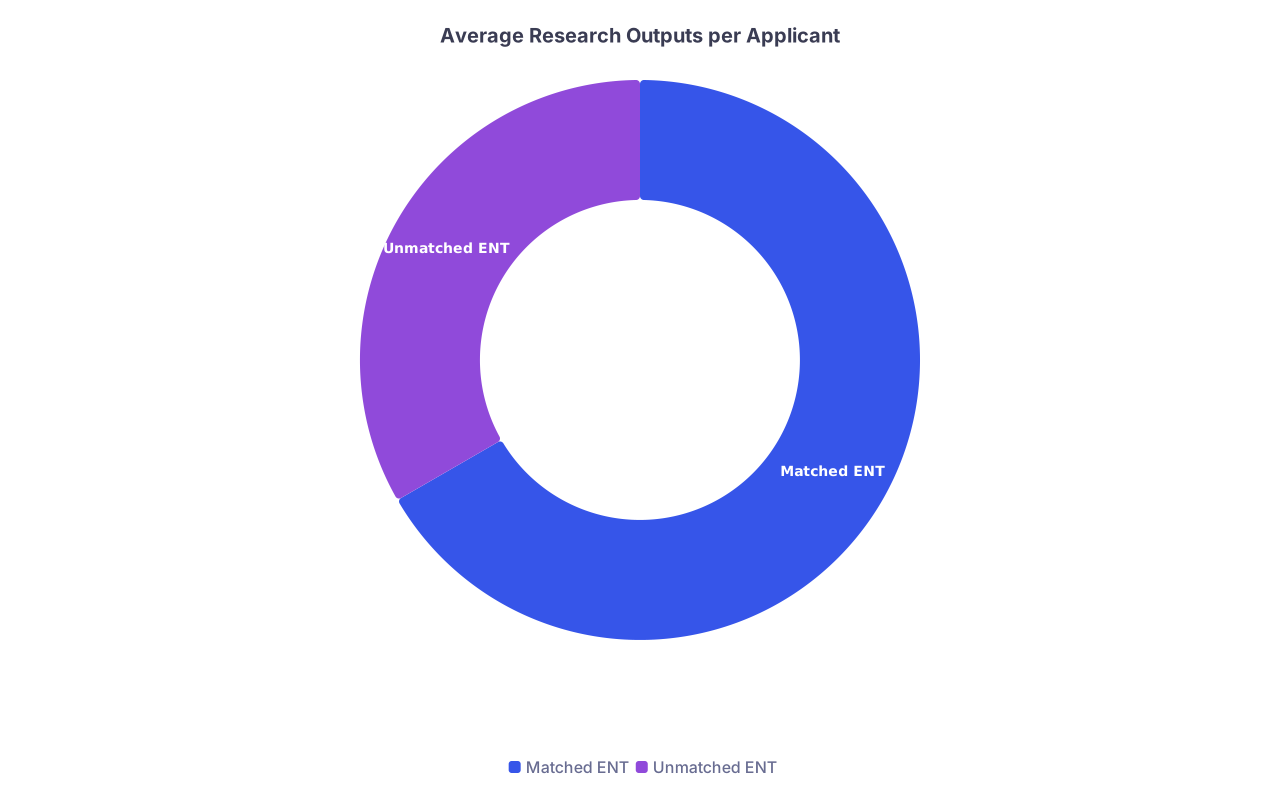
| Category | Value |
|---|---|
| Matched ENT | 10 |
| Unmatched ENT | 5 |
Crucial nuance: not all research is equal.
- ENT‑specific work (otology, head and neck, airway, sinus, laryngology) carries more signal than generic bench work disconnected from clinical ENT.
- Multi‑author case series or clinical studies with ENT attendings on the masthead help both for content and for letters.
- Conference abstracts and posters still count. Programs know students do not generate five first‑author RCTs in medical school.
What I see repeatedly:
- Applicants with ENT‑branded academic identity (multiple ENT projects, department relationships, recognizably ENT‑focused mentors) punch above their raw publication count.
- Applicants with very high generic research volume but no ENT link often get viewed as “strong but not clearly ENT‑committed.”
How much research is “enough”?
If you want a target, use this:
- US MD aiming ENT only, no backup: push toward 8+ total products, with at least 3–4 clearly ENT‑focused.
- US MD with weaker scores: aim to overshoot the typical numbers—10–12+, with heavy ENT emphasis.
- DO / IMG: you need to treat research as a weapon. The closer you get to >12–15 ENT‑related products and real involvement, the more you disrupt default screening biases.
Do not get cute with “quality not quantity.” The people reviewing you have stacks of ERAS applications with candidates who have managed both.
4. Interview Yield: From Applications to IVs
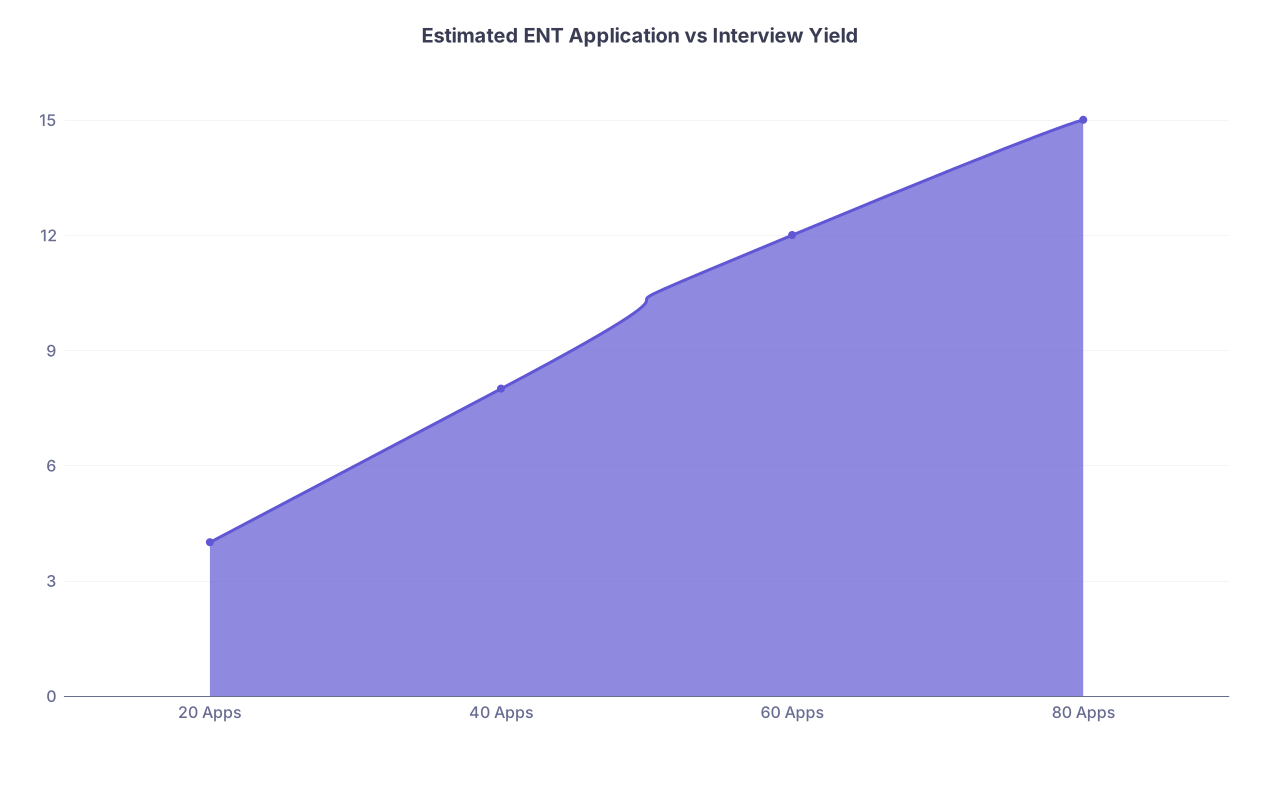
Now to the piece almost nobody tracks carefully: interview yield. How many interviews per application, and what does that mean?
Across competitive surgical subspecialties like ENT, the pattern usually looks like this:
- Applicants apply to 60–80+ programs.
- Interview invitations often fall in the 10–20 range for a successful US MD candidate.
- That gives you a crude yield of ~15–25% interviews per application sent.
| Category | Value |
|---|---|
| 20 Apps | 4 |
| 40 Apps | 8 |
| 60 Apps | 12 |
| 80 Apps | 15 |
This is not linear. The data and real outcomes suggest:
- The first 30–40 applications tend to be more productive; you are hitting a mix of safety, mid‑tier, and reach programs.
- Beyond about 60–70 programs, marginal interview yield per additional application often drops. You are paying more for relatively fewer incremental interviews.
You see the same thing anecdotally in applicant spreadsheets: huge lists of applied‑to programs, but the interview invites cluster heavily at a handful of “fit” and realistic‑target programs. The rest is expensive noise.
How many interviews do you need to feel reasonably safe?
NRMP data across specialties show a pattern:
- For highly competitive fields, ~10–12 ranked programs starts to give a solid chance of matching for US MDs.
- ENT follows this pattern: candidates with ≥10 interviews who actually rank them tend to have a good probability of matching.
This is not a guarantee, but the curve is brutal below that:
- 1–3 interviews: very high risk
- 4–6 interviews: better, but still shaky
- 7–9 interviews: borderline but plausible
- 10–12+: generally competitive, assuming no catastrophic interview problems
So, in concrete terms: you are trying to convert a 60–80 application blast into at least 10+ invitations. If you end up with 4–6, your risk profile is dramatically higher and you should be thinking hard about backup options.
5. ENT vs Other Surgical Fields: Data Contrast
It helps to anchor ENT against other fields that applicants often cross‑shop: general surgery and orthopedic surgery.
| Metric (US MD Seniors) | ENT | Ortho | General Surgery |
|---|---|---|---|
| Match rate | ~75–80% | ~70–75% | ~80–85% |
| Typical Step 2 matched mean | ~250–255 | ~250–255 | ~245–250 |
| Research products (matched) | ~8–12 | ~6–10 | ~4–8 |
| Programs applied to | 60–80+ | 60–80+ | 40–60 |
| DO / IMG match rates | Very low | Low | Higher (still limited) |
Three observations:
- ENT and ortho live in the same “Step 2 expectation” neighborhood. You are not escaping test pressure by choosing ENT over ortho.
- ENT is more research‑heavy than general surgery. If you hate research, your odds drop.
- Non‑US‑MD status (DO or IMG) hits ENT harder than it hits general surgery. The data consistently show very low DO/IMG representation in matched ENT cohorts.
If you are deciding between ENT and a slightly less competitive surgical field, this is the tradeoff: higher bar for Step 2, more research, fewer total positions, and lower tolerance for outlier backgrounds.
6. Application Strategy: Using the Data to Design Your Plan
You cannot change the baseline competitiveness of ENT. You can control how mathematically sane your strategy is relative to your profile.
6.1 Profile assessment: where do you actually sit?
Be honest with yourself in three dimensions:
- Step 2 CK score
- Research volume and ENT‑specific work
- Institutional support (home ENT program, strong ENT letters, AOA / class rank)
If I reduce it to a crude scoring model:
Step 2:
- ≥260 = 3 points
- 250–259 = 2 points
- 240–249 = 1 point
- <240 = 0 points
ENT research (number and quality):
- ≥10 ENT‑relevant products = 3 points
- 6–9 products, at least 3 ENT‑focused = 2 points
- 3–5 products, some ENT = 1 point
- ≤2 or none ENT‑focused = 0 points
Home program / letters / class rank:
- Home ENT program + top‑tier letters + top quartile = 3 points
- Home or strong away letters + decent ranking = 2 points
- Good but not stellar support = 1 point
- No home program / weak letters / mid‑to‑low rank = 0 points
Total possible: 9 points.
Now interpret:
- 7–9 points: ENT‑only is reasonable; you still need to apply broadly (60–80 programs), but your parameters align with typical matched applicants.
- 4–6 points: ENT is possible but risky. You should strongly consider a parallel plan or a very thoughtful program list.
- 0–3 points: ENT only is mathematically ugly. People sometimes still match from here, but they are statistical outliers, not a baseline expectation.
This model is simplistic, but I have watched it track outcomes disturbingly well across recent classes.
7. Timeline and Tactical Moves
Your timing decisions affect how your quantitative profile looks when programs first scan you.
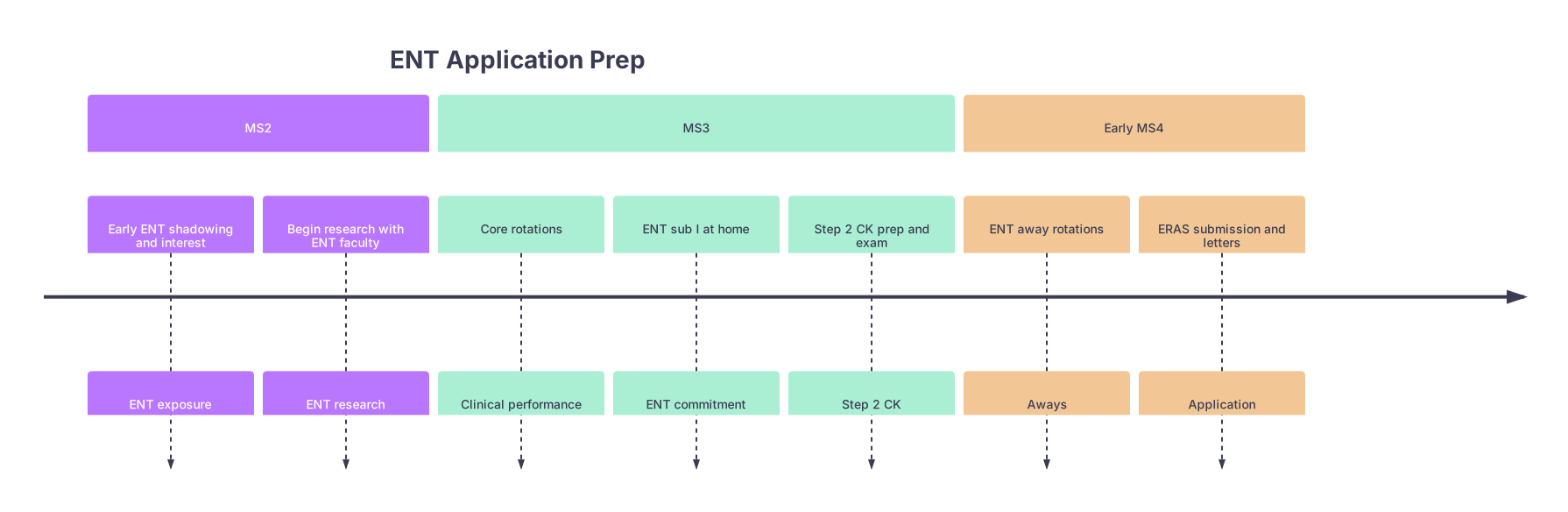
| Period | Event |
|---|---|
| MS2 - Early ENT shadowing and interest | ENT exposure |
| MS2 - Begin research with ENT faculty | ENT research |
| MS3 - Core rotations | Clinical performance |
| MS3 - ENT sub I at home | ENT commitment |
| MS3 - Step 2 CK prep and exam | Step 2 CK |
| Early MS4 - ENT away rotations | Aways |
| Early MS4 - ERAS submission and letters | Application |
Three data‑driven points here:
Step 2 CK timing
Programs rely heavily on Step 2. Taking it late and applying without a score is a handicap. You lose the opportunity to clear the quantitative screen early. For ENT, you want that number front and center.Away rotations and letters
ENT is still very much an away‑rotation field. A strong away rotation at a realistic‑reach program can translate into both a powerful letter and a substantially better chance of an interview at that site. The conversion rate from away rotation to interview is often high (think 60–90% at many places if you do well), while your cold‑application probability might be under 20%.Pre‑MS4 research push
Squeezing in a wave of last‑minute research in late MS4 is almost useless for the match you are entering. The ERAS snapshot for most programs is effectively fixed by early fall. If you want your research volume to impact perceived competitiveness, the main work has to happen by the end of MS3 / early MS4.
8. Special Populations: DOs and IMGs in ENT
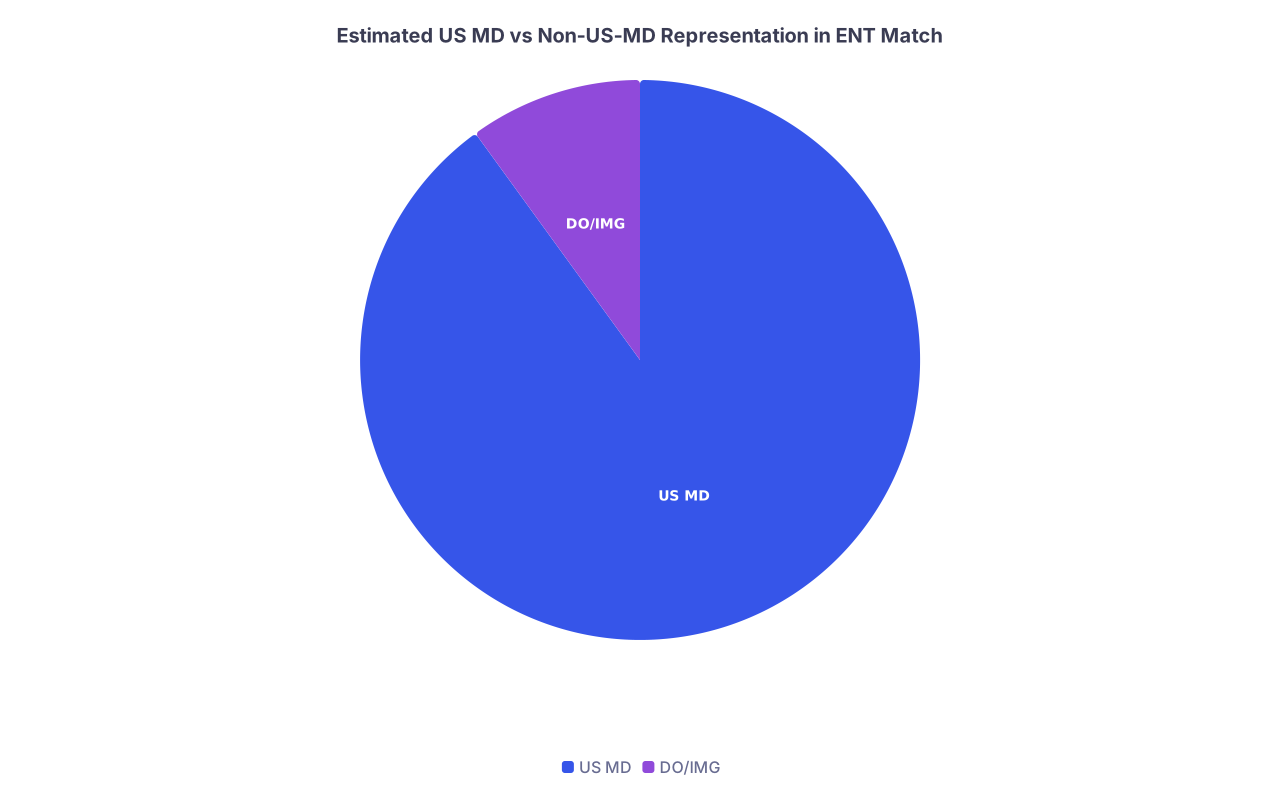
The uncomfortable reality from the data: ENT is hostile territory for DOs and IMGs relative to many other specialties.
NRMP data consistently show:
- DO and IMG representation among matched ENT residents is extremely low.
- Many programs either historically have not taken DO/IMGs or take them at very low frequencies.
| Category | Value |
|---|---|
| US MD | 90 |
| DO/IMG | 10 |
If you are DO or IMG and serious about ENT, the data essentially force your hand. You must:
- Push Step 2 CK into the top of the range (ideally ≥255 to stand out).
- Amass substantial ENT‑specific research.
- Build visible, long‑term connections with academic ENT departments and mentors who can advocate for you.
- Be willing to apply extremely broadly and accept that your yield will be lower than a comparable US MD.
Does it happen? Yes. I have seen DO applicants with 260+ Step 2, 15+ ENT pubs/abstracts, and strong letters match into solid academic ENT programs. But these profiles are outliers, and they worked for years to get there.
9. What the Data Actually Say You Should Do
Strip away the anecdotes and look at the patterns. If you are aiming for ENT:
Step 2 CK is the first gate.
Aim for the 250+ range if you want to be in the mainstream ENT applicant pool. Below 245, you are swimming upstream and need strong compensators.Research is not optional decoration.
Typical matched applicants carry 8–12 scholarly products, many ENT‑branded. You should assume you need to be in that range, especially if any other part of your application is average.Interview yield drives match probability.
The critical threshold is ~10+ interviews. Design your application (program list, aways, letters, timing) to maximize your odds of hitting double‑digit interviews.
If you treat ENT like a standard surgical match, you are ignoring what the numbers say. Treat it like what it is: a small, research‑sensitive, score‑filtered field where planning and data alignment are the difference between “matched at a strong academic program” and “reapplying from a prelim year wondering what went wrong.”