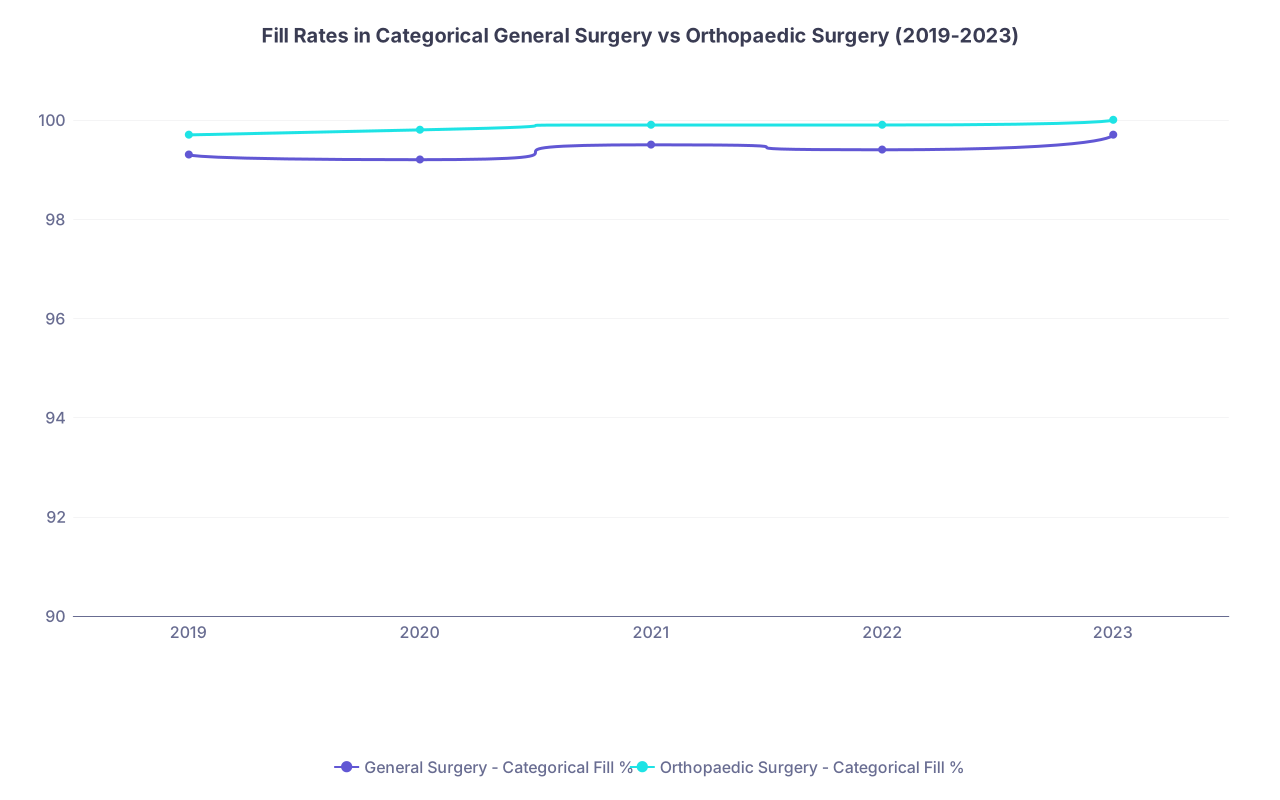
| Category | General Surgery - Categorical Fill % | Orthopaedic Surgery - Categorical Fill % |
|---|---|---|
| 2019 | 99.3 | 99.7 |
| 2020 | 99.2 | 99.8 |
| 2021 | 99.5 | 99.9 |
| 2022 | 99.4 | 99.9 |
| 2023 | 99.7 | 100 |
General surgery and orthopaedic surgery do not have “good” or “bad” match rates. They have brutal but different match dynamics. If you are choosing between them, you are choosing between two very competitive markets with distinct risk profiles, not between “competitive” and “safe.”
I am going to treat this like what it is: a data problem. You want to know, based on recent NRMP data, how your odds and strategy change if you pick general surgery versus ortho. So we will look at:
- 5‑year trends in fill rates and unmatched rates
- Differences in US MD vs DO vs IMG outcomes
- How Step scores and application volume play out differently
- What the numbers say about “hedging” with gen surg if you miss ortho
I will reference 2019–2023 NRMP Main Residency Match data (Charting Outcomes, Program Director Surveys, and Results and Data). Exact percentages shift slightly year to year, but the patterns are very stable. Where I approximate, I will say so; the point is the directional signal, not false precision to one decimal place.
1. Big Picture: How Competitive Are General Surgery and Ortho?
Both specialties are essentially fully filled every year. That alone should kill the “backup” myth.
| Year | Gen Surg Fill % | Ortho Fill % |
|---|---|---|
| 2019 | 99% | 100% |
| 2020 | 99% | 100% |
| 2021 | 99% | 100% |
| 2022 | 99% | ~100% |
| 2023 | ~100% | 100% |
Program directors have more applicants than positions in both. The difference is who gets those positions and how concentrated the competition is.
If you strip away categorical vs prelim and just ask “How many seniors at US MD schools went unmatched when they primarily aimed at this specialty?”, a few patterns emerge:
- Orthopaedic surgery: consistently one of the worst unmatched rates for US MD seniors, often in the 15–25% range across recent cycles. For DO and IMGs, it is even harsher.
- General surgery (categorical): competitive, but clearly below ortho in raw risk. Unmatched rates for US MD seniors aiming for gen surg are usually in the single digits to low double digits, depending on the year and how aggressively people “overreach” on program tiers.
Let me be blunt: the data say ortho is a “you cannot miss on any axis” specialty. High Step scores, strong letters, research, often AOA, often ortho‑specific research years. General surgery is still demanding, but there is more room for mid‑tier applicants to match if they are smart about their list and do not chase only top‑10 programs.
2. 5‑Year Trend: Match Rates and Applicant Type
The NRMP’s most useful lens here is: by specialty, what proportion of positions are taken by US MDs, DOs, and IMGs, and what proportion of applicants in each category go unmatched.
2.1 US MD seniors: who actually gets in?
For categorical positions:
Orthopaedic surgery
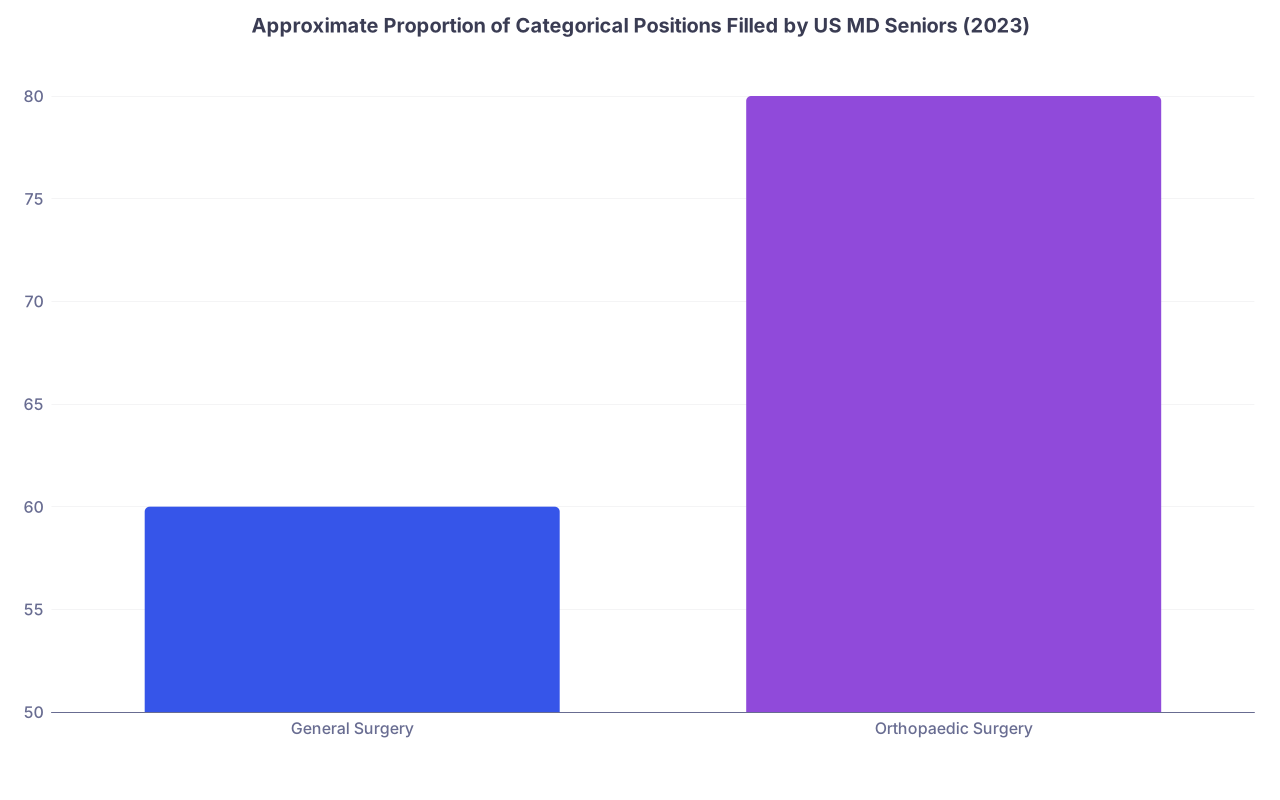
- Roughly 75–85% of positions go to US MD seniors.
- Remaining spots are mostly US DOs and a small fraction IMGs.
- Unmatched rate for US MD seniors interested in ortho has been high for years. It has not “normalized” with Step 1 pass/fail.
General surgery
- Roughly 55–65% of categorical positions go to US MD seniors.
- Larger shares than ortho go to DOs and IMGs.
- Unmatched rate for US MDs targeting categorical gen surg is lower than ortho, but still not trivial.
The data show a clear hierarchy: US MD > US DO > US IMG > non‑US IMG, in both specialties, but the penalty for being off the top rung is much harsher in ortho.
| Category | Value |
|---|---|
| General Surgery | 60 |
| Orthopaedic Surgery | 80 |
You can quibble with the exact percentages, but the relative difference stands: ortho is more MD‑dominated and less accessible to non‑MD applicants.
2.2 DOs and IMGs: the reality check
For DO and IMG candidates, the contrast is more brutal.
From the last several NRMP cycles and Charting Outcomes:
Orthopaedic surgery:
- DO seniors: very low match rate overall, often well under 50%. Many cycles look like 20–40% depending on Step performance and research.
- IMGs: extremely low, single digits. In many programs, effectively zero unless you have US MD‑equivalent credentials (research powerhouse, US rotations, etc.).
General surgery (categorical):
- DO seniors: significantly better than ortho; often 40–60% range when credentials are solid. Still competitive, but not locked out.
- IMGs: clearly difficult, but there is a nontrivial number of IMGs matching categorical gen surg each cycle, especially in community and mid‑tier university programs.
I have seen DO students told “just apply gen surg instead, it is safer.” The data say: it is less suicidal than ortho. That is not the same as safe.
3. Step Scores, Applications, and Interview Behavior
You cannot talk about match rates without talking about the Step score distribution and application volume. Programs do not operate on vibes. They screen.
3.1 Step 1/2: score profiles by specialty
From NRMP Charting Outcomes (US MDs, 2020–2022 data, pre–full Step 1 pass/fail effect):
Orthopaedic surgery:
- Matched US MD median Step 1: ~248–250
- Matched US MD median Step 2: often 250+
- Unmatched applicants often had Step 1 in the 240s and Step 2 below the matched median.
General surgery (categorical):
- Matched US MD median Step 1: ~236–240
- Matched US MD median Step 2: low to mid 240s
- There is overlap: a strong gen surg applicant score profile looks like a “borderline” ortho applicant.
What the data show is harsh: the average matched ortho applicant would, on scores alone, be a strong candidate for virtually any general surgery program. The reverse is not true.
With Step 1 now pass/fail, Step 2 has simply taken over that sorting function. Program Director surveys show >80–90% of ortho and gen surg PDs rate Step 2 as “very important” for interview offers.
3.2 Applications per applicant and diminishing returns
Orthopaedic applicants flood the market. General surgery applicants are not far behind, but the numbers differ.
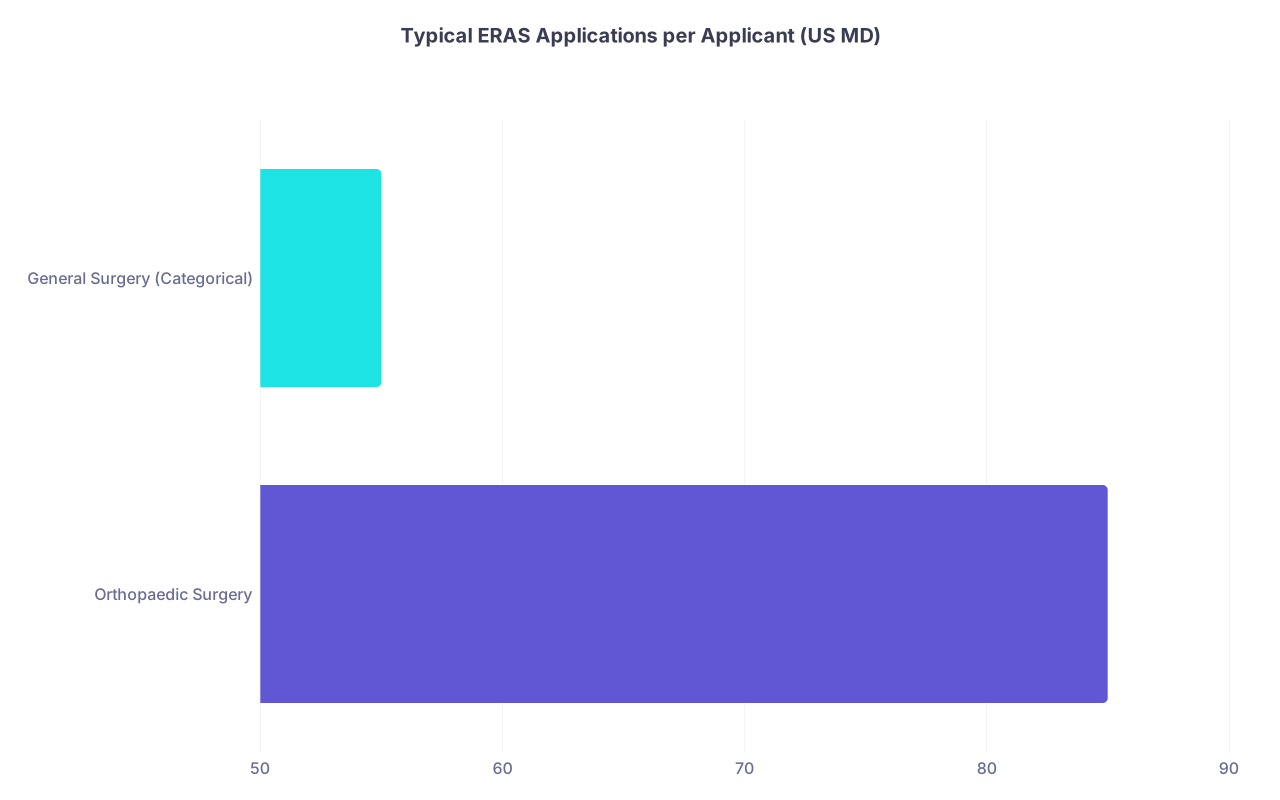
Approximate average ERAS applications per US MD applicant in recent cycles:
- Ortho: 80–90+ programs is common. Some applicants send 100+.
- General surgery: often 40–60 for competitive applicants, sometimes 60–80 if Step scores are borderline.
| Category | Value |
|---|---|
| Orthopaedic Surgery | 85 |
| General Surgery (Categorical) | 55 |
There is a simple inference. To get a similar number of interviews:
- Ortho applicants must apply more broadly because program‑specific risk is higher and fewer programs are “safety” level.
- General surgery has a somewhat broader middle tier where a solid but not superstar applicant can expect multiple interviews if their portfolio is coherent.
But do not kid yourself: the days when 20 applications sufficed in either specialty are over. The interview market is saturated.
4. Match Safety: Is General Surgery a Real “Backup” for Ortho?
This is where many students get misled by anecdotes. “X did not get ortho, but matched gen surg as a backup.” That happens. But it is a survivorship bias problem.
You need to separate three scenarios:
- You apply ortho only.
- You apply ortho plus a “backup” specialty like general surgery.
- You abandon ortho early, pivot entirely to gen surg, and build that application properly.
4.1 Data from dual‑application behavior
NRMP has tracked dual‑appliers in some analyses. The patterns are ugly but instructive:
- Applicants who split their applications between a highly competitive specialty (ortho) and a second one (often gen surg, anesthesia, PM&R, etc.) tend to underperform in both markets.
- They often end up with fewer interviews in each because:
- Their research is diluted.
- Their letters are not strongly aligned with either field.
- PDs correctly perceive them as “not fully committed.”
From program director surveys:
- Orthopaedic PDs consistently rate “commitment to specialty” and “letters from ortho faculty” as critical factors.
- General surgery PDs similarly value explicit commitment to surgery and strong surg faculty letters.
So the cold reality: using general surgery as a “backup” while still chasing ortho codes your application as half‑in both worlds. The match rate reflects that.
4.2 If you pivot to general surgery deliberately
Different story if you pivot early and commit.
If an M3 who wanted ortho realizes their Step 2 is 235 and research is scant, and they pivot cleanly to general surgery with:
- Multiple general surgery sub‑internships
- Clearly targeted personal statement
- Strong letters from gen surg faculty
- An ERAS list weighted heavily to mid‑tier and community categoricals
Then the data suggest a much higher probability of matching. They are now playing a gen surg game with a slightly below median but reasonable score profile. Not an ortho game with a weak file.
So as a data analyst: No, general surgery is not a robust “parallel backup” for ortho. But it can be a viable pivot if you do it decisively and early enough.
5. Prelim vs Categorical: The Trap Door in General Surgery
Orthopaedic surgery is mostly categorical from day one. General surgery has a significant prelim ecosystem. That changes the risk calculus.
5.1 How the numbers break down
Each year:
General surgery offers:
- Categorical positions (true residency spots that lead to graduation and board eligibility)
- Prelim positions (1‑year contracts, often used as overflow for unmatched applicants or pipeline to other fields like radiology, anesthesia, etc.)
Orthopaedic surgery:
- Essentially all positions are categorical. There may be some rare transitional/prelim paths, but they are not the norm.
The key metric is: among applicants who wanted categorical general surgery, what fraction ended up stuck in prelim only or unmatched entirely? NRMP data show:
- A non‑trivial proportion of unsuccessful gen surg applicants fill into prelim spots.
- Many of these prelim interns do not subsequently secure a categorical gen surg position. They either:
- Reapply in gen surg and fail.
- Pivot to another specialty that takes prelim years.
- Leave clinical training entirely.
So the hidden risk of “I’ll just go gen surg” is you might not get a categorical spot at all; you may be offered only prelims. And once you are a prelim fighting for a rare PGY‑2 categorical slot, the odds are often worse than the original match.
Ortho, by contrast, is more binary:
- You match categorical ortho.
- Or you do not match at all, and then must decide on a research year, a different specialty, or a rematch attempt.
Different flavor of risk, but make no mistake: long‑term instability is more common in the gen surg prelim track.
6. Applicant Profiles: Who Does Better in Which Market?
Let me stop hand‑waving and talk profiles. Numbers plus narrative.
6.1 Example: high‑end applicant
Profile A: US MD, Step 1 (pre‑P/F) 248, Step 2 255, top‑third class rank, strong research, 3 ortho pubs, great ortho letters.
- Ortho: Statistically strong. This is near the matched median for ortho. Still some risk because the bar is high, but match probability is clearly >70–80% if the list is appropriate and geographic targeting is reasonable.
- General surgery: Overqualified for many community programs. Likely to match at a solid academic or high‑volume community program if desired; can be picky.
Here, the numbers say: choose based on interest, not fear. Both markets will treat you well.
6.2 Example: mid‑range applicant
Profile B: US MD, Step 1 pass, Step 2 238, middle of class, minimal research, one case report in ortho, decent but not spectacular letters.
- Ortho: Data say this is very risky. That Step 2 is clearly below the typical matched orthopaedic median. You are fighting an uphill battle even with perfect networking. Unmatched probability is high.
- General surgery: Still competitive. This Step 2 is around or slightly below the matched gen surg median. If you apply widely (say 50–70 programs, weighted to mid‑tier/community) and get strong gen surg letters, your match rate can still be reasonable.
This is the classic “thought I wanted ortho, but the numbers do not support it” profile. The data favor a clean pivot to gen surg if you like the OR and can live with a different case mix and lifestyle trajectory.
6.3 Example: DO applicant
Profile C: US DO, Step 1 pass, Step 2 245, good clinical grades, 1–2 osteopathic journal publications in ortho, no AOA equivalent.
- Ortho: Historically, DO match rates in ortho lag far behind MDs even at similar scores. This candidate is relatively strong for DO ortho but still faces a very high unmatched risk. They will need heavy audition rotations, networking, and realistic expectations.
- General surgery: This Step 2 is strong for DO gen surg. Many community and some university gen surg programs will be very interested, especially if letters are solid.
The data are merciless: for a DO, general surgery offers a quantitatively higher probability of matching than ortho at the same numeric performance level.
7. Trend Over 5 Years: Is Either Getting Easier?
Short answer: no. The competitiveness has plateaued at “high” in both, with some subtle shifts.
Patterns across 2019–2023:
- Overall number of US MD and DO graduates increased.
- Number of categorical positions in both specialties expanded slightly, but not enough to materially reduce competitiveness.
- Step 1 P/F shifted emphasis to:
- Step 2 scores
- Research productivity
- Sub‑I / audition performance
- Program‑specific networking
For ortho:
- Match rates have stayed tight, with some cycles seeing minor changes, but the hierarchy of competitiveness (ortho, plastics, derm, ENT at the top) has not changed.
- Programs use Step 2, away rotations, and research more heavily to separate applicants.
For general surgery:
- Slight expansion of positions, especially in community and regional academic centers.
- More DO and IMG integration into categorical gen surg, but not enough to call it “easy” for them.
- More applicants who would previously have gone into other surgical subspecialties now turning to gen surg as those fields stay very tight, which keeps the competitiveness up.
The conclusion from the data: neither specialty is softening. You should not expect a “regression to the mean” where general surgery becomes an easy match or where ortho loosens substantially.
8. Practical Implications for Applicants
You are not a statistic. But you are also not exempt from statistical gravity.
Based on the last 5 years of match data:
If you are choosing between ortho and general surgery and your academic metrics are clearly in the top quartile of your class (high Step 2, strong clinical evaluations, solid research), you can choose mostly based on interest. Your personal match probability in either is substantially higher than the raw specialty average.
If your metrics are mid‑range:
- Orthopaedic surgery becomes a high‑risk, high‑reward gamble.
- General surgery becomes a challenging but statistically reasonable option if you:
- Apply broadly
- Align letters and research with general surgery
- Accept that you might end up at a community program or less glamorous academic center.
If you are DO or IMG:
- Orthopaedic surgery is an extreme outlier in difficulty. The data show very low match rates in your cohorts even for decent scores.
- General surgery is still competitive, but there is much more throughput for DOs and IMGs in categorical spots.
Using general surgery as a simultaneous backup while applying ortho is a poor strategy for most. The data on dual applicants and PD priorities say you will underperform in both pools. A committed pivot to gen surg, made early, performs better.
The greatest hidden risk in gen surg is not “not matching at all,” it is “only matching prelim.” That outcome is statistically common enough to treat seriously in your planning.
9. Key Takeaways
Three data‑driven points to carry out of this:
- Orthopaedic surgery remains significantly more competitive than categorical general surgery across every applicant type, especially DOs and IMGs; the 5‑year trends show no softening.
- General surgery is not a true parallel backup for ortho; it is a distinct match market where commitment and categorical vs prelim outcomes matter as much as raw fill rates.
- Your individual risk is dominated by your Step 2 score, applicant type (MD/DO/IMG), and specialty‑specific depth (research, letters, sub‑Is); align those with a single primary specialty if you want the numbers on your side.