What do you actually do if you want to be in the OR and in the lab—and every surgery program you talk to swears they’re “very supportive of research”?
You’re an MD-PhD (or heavy research MD) looking at surgical residencies. You’ve heard the buzzwords: “protected time,” “NIH-funded faculty,” “mentorship,” “T32,” “K-suitable environment.” On interview day, every place looks good. Then you talk to a PGY-4 who quietly says, “Yeah, I used my only elective to do a chart review.”
This is the gap: what programs say versus what they let you do.
Let’s walk through how to choose a surgical residency that will not slowly suffocate your research career. I’m going to assume you’re serious about being an academic surgeon who actually publishes and gets funded, not just “I like research in theory.”
1. First, be honest about which category you’re in
Before you even look at programs, you need to know what you actually want out of your career. Not the answer you give in interviews—the real one.
You’re probably in one of three buckets:
| Type | Research Priority | Ideal Setup |
|---|---|---|
| Research-Centric | Want R01-level, PI career | Strong lab culture, 2+ yrs protected |
| Hybrid Academic | Want clinical + steady scholarship | Flexible time, mentorship, QI/clinical research |
| Research-Interested Clinician | Want some papers, teaching | Supportive but not rigid structure |
Category 1: Research-centric MD-PhD
You want to run a lab, write R01s, mentor postdocs. You’re thinking about K08/K23, R21, T32, intramural funding. You’re okay with 1–2 extra years of residency for real research.
You need:
- Established research years (not “we might carve something out”).
- NIH-funded surgeon-scientists in your field.
- Real infrastructure: T32, CTSA, biostatistics, cores.
Category 2: Hybrid academic surgeon
You want to operate a lot, be clinically strong, and consistently publish—maybe get a K award, maybe not, but you want to be in the game. You care more about flexibility and a culture that takes scholarship seriously than about hardcore basic-science infrastructure.
You need:
- One or two well-structured research years OR strong “research blocks.”
- Mentors who actually publish with residents.
- Division chiefs who value academic output for promotion.
Category 3: Clinically dominant with research on the side
You like research but it’s not your identity. You want case volume, good training, and the option to do some projects or QI.
You need:
- A program that doesn’t block your research.
- Some research-friendly faculty and accessible data.
- Maybe one year of research, maybe not.
If you’re in Category 1 and you pick a program that’s built for Category 3, you’re going to be miserable and stalled by PGY-3.
2. Learn the actual types of “research-friendly” surgical programs
Not all “research” programs are built the same. The label is meaningless; structure matters.
The classic academic powerhouses
Think: MGH, BWH, UCSF, Hopkins, WashU, Michigan, Duke, Penn, Stanford, UTSW.
Typical pattern:
- 2 dedicated research years, often between PGY-2 and PGY-3.
- Many residents publish 5–20+ papers in that window.
- There are NIH-funded surgical PIs, T32 training grants, and a clear pipeline to faculty jobs.
If you’re a research-centric MD-PhD and you do not have these kinds of options on your list, you need a good reason.
The mid-tier academic programs “with research”
Think: solid university programs, sometimes state flagships or strong regionals.
Pattern:
- 1–2 research years, sometimes optional.
- Real variation: one resident might do bench work with a serious PI; another just does outcomes research at night for a fellow.
- Infrastructure is hit-or-miss. One or two divisions may be incredible; others are research deserts.
These can be fantastic for hybrid academic careers if you match yourself to the right division/mentor.
The “we’re growing our research” programs
This is where you need your guard up.
Pattern:
- No mandatory research years, but they’ll say “residents absolutely can take time out if they want.”
- One or two junior faculty with K awards, but no deep bench.
- No T32, inconsistent funding, minimal track record of residents going on to big-name fellowships or junior faculty roles as surgeon-scientists.
If you’re Category 3, this might be fine. If you’re Category 1, this is how you slowly drift into “I used to do research, but then residency happened.”
3. The hard filters: what you should check before you apply
Do this before you burn time on 60 applications.
| Signal | Strong Program | Weak/Red Flag |
|---|---|---|
| Dedicated research years | 2 years, built-in | Ad hoc, “we can maybe arrange” |
| NIH/T32 funding | Multiple surgeon PIs / T32 | None, vague plans |
| Resident output | Multiple first-author papers | Occasional case reports |
| Culture | Residents proud of research | “We’re mostly clinical” vibe |
Check the basics online
Look at the program’s website and departmental pages:
- Do they explicitly describe 1–2 dedicated research years with structure, timing, and expectations?
- Do they list recent resident publications and research destinations?
- Can you find surgeon faculty with current R01s, K awards, or equivalent?
If the research section is two vague paragraphs and one photo from 2017, that’s not a research program. That’s marketing.
Use PubMed and NIH RePORTER like a grown-up
Pick the departments you’re interested in (e.g., surgical oncology, vascular, CT, transplant).
PubMed search:
[Institution] [Department of Surgery] [Last 5 years]
or specific attendings you’ve heard about.NIH RePORTER:
Search the institution. Filter to “Surgery” or related.
Ask: are there multiple active grants with surgeons as PIs? Or is it all medicine, pediatrics, and basic science departments?
You’re not just counting papers. You’re measuring:
- How many surgical faculty are actually driving research.
- Whether this is a place that knows how to support grants.
Look at resident research years and outcomes
Most serious programs will brag about:
- How many residents go to lab for 1–3 years.
- Where they go (in-house vs top external labs).
- Fellowships and first jobs.
If they can’t name recent residents who became surgeon-scientists, you’re being told indirectly: “That’s not who we train here.”
4. On interview day: what to ask, and who to ask
The interviews and socials are where the truth leaks out—if you ask targeted questions.
Your goal: verify three things
- Is there real protected research time?
- Do residents actually produce substantial work?
- Does the culture support MD-PhDs or just tolerate them?
Questions for the PD or chair (ask directly, without fluff)
- “How many of your residents in the last 5 years took 1+ years for research? What did they go on to do?”
- “If I want to pursue a K award or long-term lab career, can you point to residents who have done that here recently?”
- “Is there a T32 or institutional support for surgery residents doing research?”
- “How is resident salary and benefits handled during research years? Is it GME-funded or dependent on grants?”
You’re listening for:
- Concrete numbers and names, not hand-waving.
- A clear description of the structure (PGY timing, required vs optional).
- Confidence. If they struggle to think of a single surgeon-scientist who came from their own residency, that’s the signal.
Questions for residents (this is where you get the real story)
Do not waste your time asking, “Do you feel supported in research?” Everyone will say yes.
Ask:
- “How many full months in the first 2 years are truly researchable—no call, no clinical distractions?”
- “If you want to do bench research, is that common here, or are most projects QI/retrospective?”
- “Who are the go-to people for serious research mentorship? Which attendings are actually in the lab regularly?”
- “How many of your chiefs this year did dedicated research time? Did any get K awards, major fellowships, or junior faculty spots focusing on research?”
- “Is it culturally normal to aspire to be a surgeon-scientist here, or does that feel like swimming upstream?”
And one very telling question:
- “If you had a sibling who was an MD-PhD wanting to be an R01-funded surgeon, would you tell them to come here?”
If they hesitate, that’s an answer.
5. Reading the culture: excuses vs reality
The biggest trap MD-PhDs fall into: believing “supportive” language from programs where the actual culture is: “OR work is real; research is extra.”
Here are the phrases I’ve heard that should make you raise an eyebrow:
“Our residents are so clinically busy they don’t really have time to publish much during the clinical years.”
Translation: expect to carry your research on nights and weekends, with no systemic help.“We value research, but patient care comes first.”
Obviously patient care comes first. If they feel a need to say this, it often means research gets bumped every time there’s a conflict.“We’ve had a few really motivated residents do impressive research.”
That’s code for: the system is not built for this. A couple of outliers muscled through.“We’re working on building more research infrastructure.”
Maybe they will. But you’re choosing based on what exists now, not what might exist in year 5 of your residency.
Watch how people talk about their high-research residents. Pride? Or subtle resentment?
6. The structure: what real “protected time” actually looks like
Protected time is the most abused phrase in academic medicine.
Strong programs usually have:
- Two full years off the clinical schedule, no regular call, dedicated to research.
- Optional moonlighting or limited call that you choose.
- Clear expectations: number of papers, project scope, grant submissions.
- Formal research mentorship committees.
- Access to degree programs (MPH, MS, etc.) if useful.
Weak “protected time” looks like:
- “Elective months” that still include call or clinic.
- “We’ll shield you when possible” (they won’t).
- Being the default person to cover when others are out because “you’re just doing research.”
- No clear plan for how you’re evaluated during research time.
Ask residents:
- “During your research years, how often were you pulled back into the OR or floor coverage?”
- “Did anyone ever guilt you for being in the lab instead of on the wards?”
- “Who controls your schedule—your research mentor or the chief resident?”
You want the answer to be: “During research years, you’re truly out of the call pool or nearly so, and people respect that.”
7. Matching the program to your type of research
Not all research is interchangeable. Your PhD and your future niche matter.
If you’re a bench or translational person
You need:
- Wet lab infrastructure: core facilities, animal facilities, immunology/molecular biology support.
- Surgical departments that actually have people doing bench-to-bedside work, not just outcomes and QI.
Ask:
- “Which surgeons here run active basic or translational labs?”
- “Do residents typically join in-house labs, or go to partner institutions?”
- “Have residents gotten K08 or similar awards from here?”
If they can’t name a surgeon who has an active lab you could join, that’s a red flag.
If you’re into outcomes, health services, implementation, QI
You need:
- Strong biostats and data science support.
- Easy access to clinical databases, EMR data pulls, registries.
- Mentors who actually publish in this space, not just dabble.
Ask:
- “Is there a biostatistics core that helps residents, or are you on your own?”
- “Do you have institutional databases (trauma, transplant, NSQIP, etc.) that residents commonly use?”
- “Which attendings are most active in outcomes or health services research?”
Pick the place where your type of work is already thriving, not where you’d be the first one to try it.
8. Reality checks about trade-offs: prestige, location, lifestyle
You’re not choosing a monastic research retreat. It’s a surgical residency. People care about:
- Case volume
- Fellowship match
- Location (family, partner, cost of living)
- Culture and colleague quality
Here’s the blunt truth: if you are truly Category 1 (R01-level surgeon-scientist ambitions), you should sacrifice on some of those things to maximize research. Not all. But some.
If you pick:
- Slightly lower-prestige academic program in your favorite city,
over - Top-tier research machine in a less sexy location,
you might still make it. But you’re going to work a lot harder for the same level of scientific output and opportunity.
Ask yourself:
- “If I don’t end up with an R01-funded lab at a big-name institution, will I regret not going all-in now?”
- “If I end up a high-volume clinician with modest research, will that bother me?”
Be honest. Then rank accordingly.
9. How to use your MD-PhD strategically in the process
You’re an asset to these programs—but only at certain places and for certain people.
Where your MD-PhD strongly helps you
- Programs with a track record of surgeon-scientists will see you as exactly their type.
- PDs who are funded themselves, or who train K-funded faculty, will understand your value.
- Departments with T32s may actually need more residents likely to use those slots.
You can—and should—say:
- “I’m looking for a place where I can build toward a K award and a long-term surgeon-scientist role.”
- “My PhD in [field] aligns with the work Dr. X and Dr. Y are doing here.”
This tells them: you’re not generic; you fit their ecosystem.
Where your MD-PhD might be a liability
At programs that:
- Are hyper-focused on service and case volume.
- See research as a distraction or box-checking.
- Have been burned by previous residents who went off to the lab and never came back.
You’ll feel the subtle “We’re not sure you really want to operate” skepticism.
You don’t fix that by overselling your love of research. You either:
- Decide you want something different (more clinical, less lab), or
- Decline to rank those places highly.
Do not try to convince a non-academic program to act like an academic one. That’s a life strategy for frustration.
10. Making your final rank list: a practical framework
By the time you’re ranking, you’ll be drowning in impressions. Which pre-interview dinner had better food shouldn’t decide your scientific future.
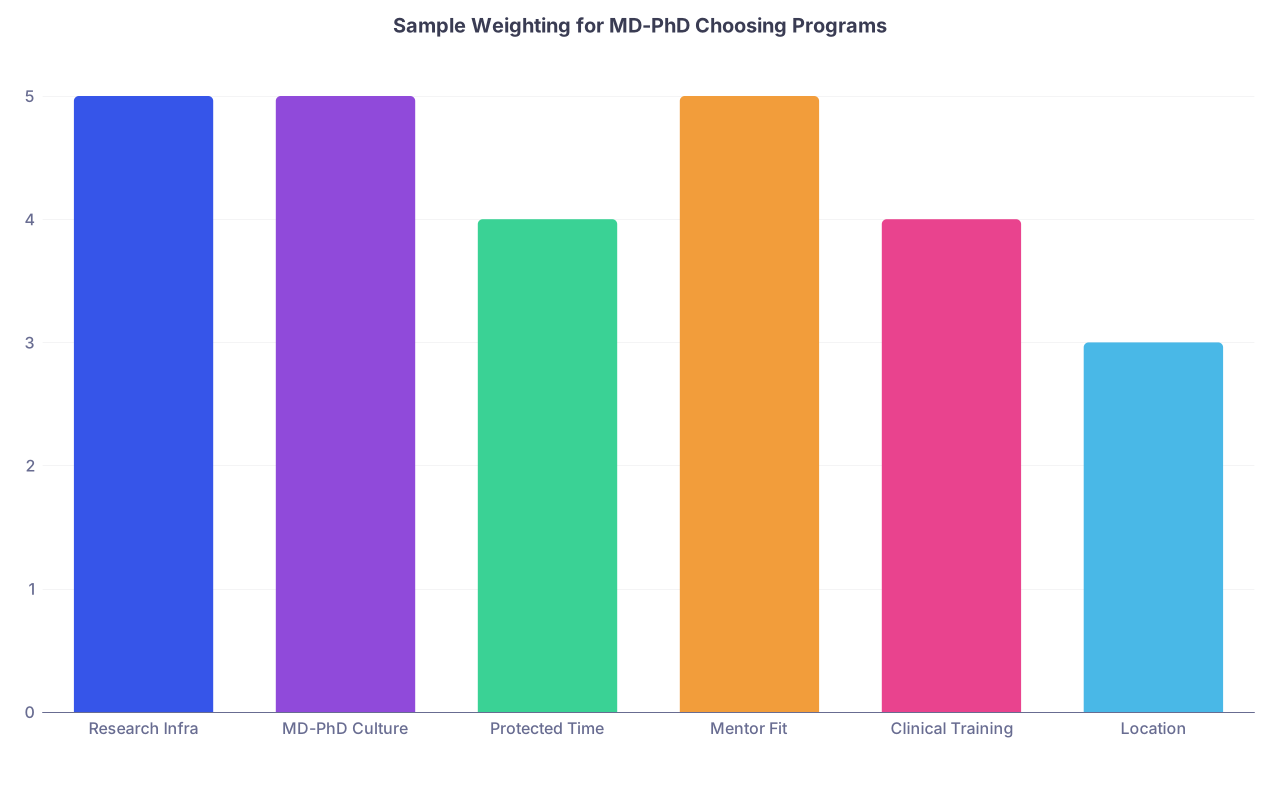
Use a simple scoring system for each program you’re seriously considering. For your top 10–15, rate 1–5 (low to high) on:
- Research infrastructure (labs, T32, grants, cores)
- Culture for MD-PhDs / surgeon-scientists
- Realistic protected time
- Mentor fit in your specific area
- Case volume and clinical training
- Location / personal life fit
| Category | Value |
|---|---|
| Research Infra | 5 |
| MD-PhD Culture | 5 |
| Protected Time | 4 |
| Mentor Fit | 5 |
| Clinical Training | 4 |
| Location | 3 |
Decide your weights. If you are Category 1, research components should collectively be at least 50–60% of the decision.
Then be ruthless. If a program:
- Scores high clinically but low on research infrastructure and culture, and
- You want a PI-level research career,
that program should not be in your top three just because you “liked the vibe.”
11. Concrete example: choosing between three offers
Let’s say you end up with three real options:
- Program A: Top 10 name, 2 mandatory research years, multiple R01-funded surgeons, history of K08s from residents. City is okay, not your favorite.
- Program B: Mid-tier academic, 1 optional research year, some outcomes research, decent fellowships. City is great.
- Program C: High-volume clinical powerhouse, no structured research years, residents do occasional retrospective projects. City you love.
You’re a bench-heavy MD-PhD in immunology who wants transplant or surgical oncology and dreams of an R01.
The correct rank order is A > B > C. Every time.
If you pick C > A because “I really loved the residents and the city,” you’re turning your research into a hobby.
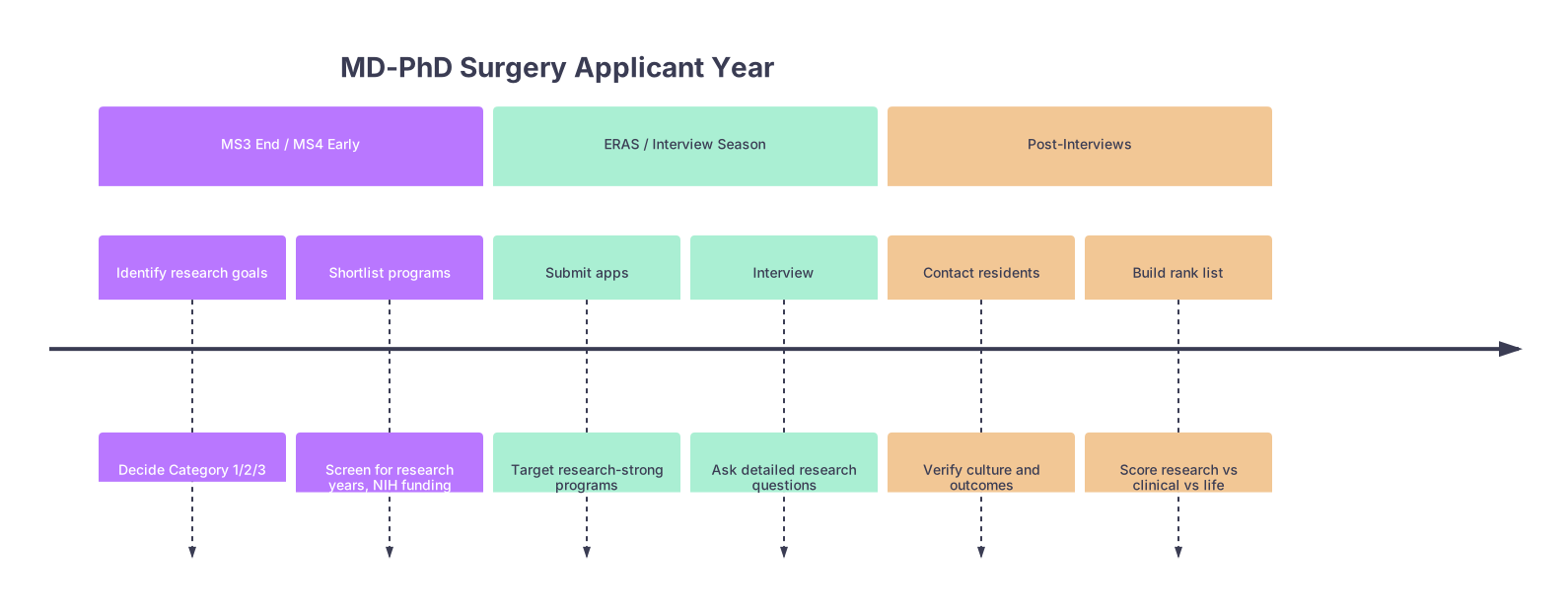
12. Timeline and action plan for MS3–MS4 MD-PhDs
Here’s how to structure this across the year.
| Period | Event |
|---|---|
| MS3 End / MS4 Early - Identify research goals | Decide Category 1/2/3 |
| MS3 End / MS4 Early - Shortlist programs | Screen for research years, NIH funding |
| ERAS / Interview Season - Submit apps | Target research-strong programs |
| ERAS / Interview Season - Interview | Ask detailed research questions |
| Post-Interviews - Contact residents | Verify culture and outcomes |
| Post-Interviews - Build rank list | Score research vs clinical vs life |
And throughout this, keep doing what MD-PhDs do:
- Stay involved in at least one active project.
- Publish or submit something during MS4 if you can.
- Use your existing mentors to reality-check your list. Many have seen cohorts cycle through and know which programs actually produce surgeon-scientists.
13. Where to compromise—and where not to
You can compromise on:
- Your exact research topic (you might pivot from your PhD field).
- Your preferred city.
- Having the perfect mentor for your sub-sub-niche.
You should not compromise on:
- Having actual, protected research years if you want to be PI-level.
- Being in a department that respects research enough to make your work sustainable.
- Having at least 1–2 strong potential mentors with real track records.
If you’re in the “I want to run a lab and operate” camp, residency choice is one of the few truly leverage-point decisions you get. After that, inertia and institutional culture start dragging you in whatever direction you’ve chosen.
Pick the place that makes the surgeon-scientist path the default, not the exception.
With that, you’ll have set the stage. The next battles will be what you do with those research years, how you pick projects, and how you survive being a junior attending with a lab. But that’s a story for another day.