The worst way to plan surgical away rotations is to “wait until VSLO opens and figure it out.” If you do that, you’ll miss prime spots, scramble for letters, and end up on whatever service had space—not the ones that help you match.
Here’s the reality: from January to August, every month has a specific job if you want strong away rotations that actually move the needle for a surgical residency match.
You’re choosing surgery. Good. Now let’s build the timeline.
Big Picture: January–August at a Glance
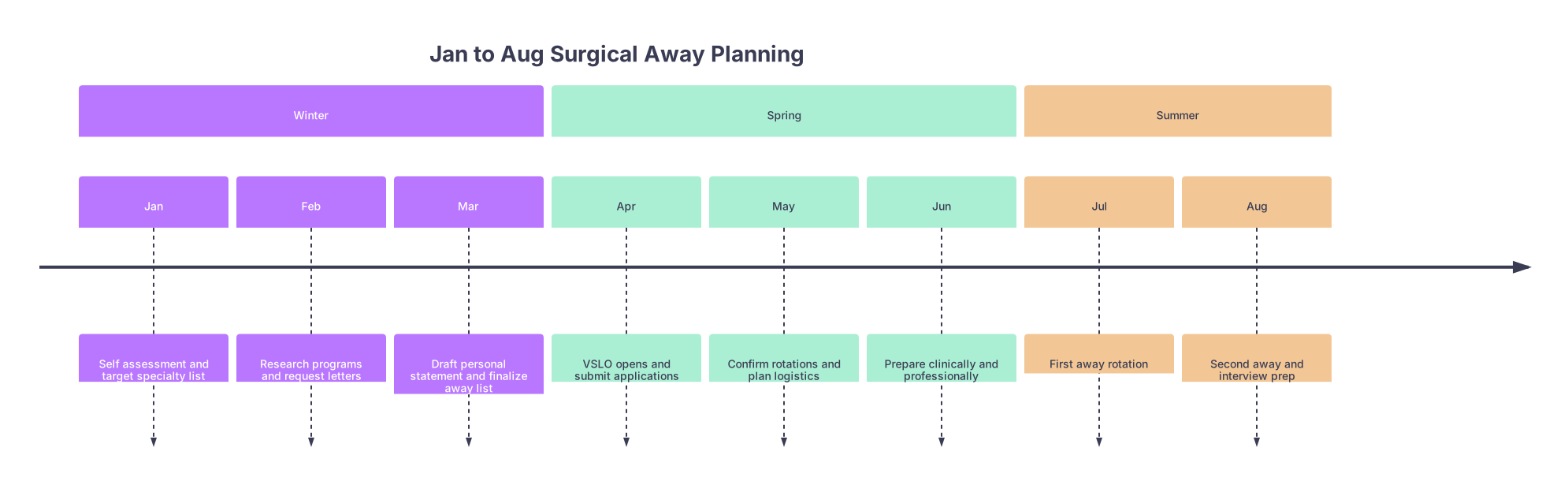
| Period | Event |
|---|---|
| Winter - Jan | Self assessment and target specialty list |
| Winter - Feb | Research programs and request letters |
| Winter - Mar | Draft personal statement and finalize away list |
| Spring - Apr | VSLO opens and submit applications |
| Spring - May | Confirm rotations and plan logistics |
| Spring - Jun | Prepare clinically and professionally |
| Summer - Jul | First away rotation |
| Summer - Aug | Second away and interview prep |
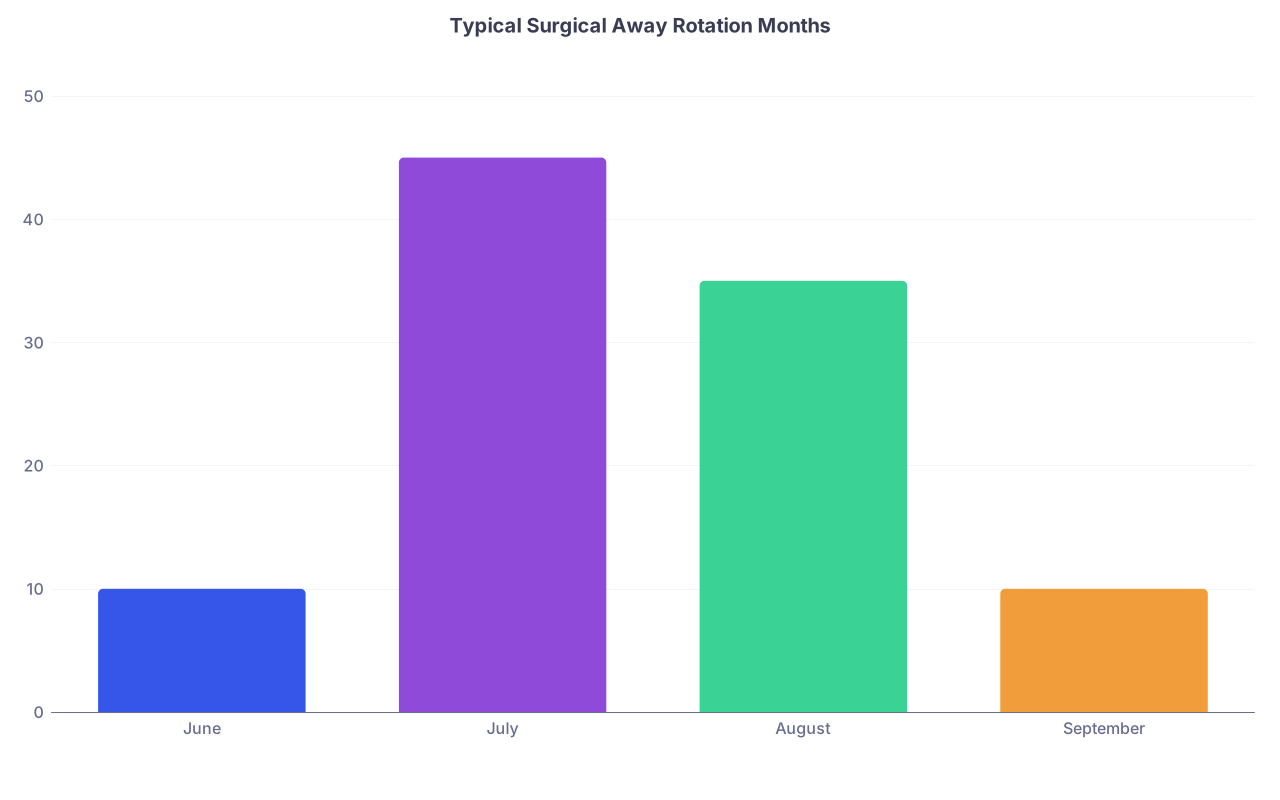
| Category | Value |
|---|---|
| June | 10 |
| July | 45 |
| August | 35 |
| September | 10 |
Most students doing competitive surgical fields (ortho, ENT, plastics, neurosurg, vascular, general surgery at big names) will:
- Do 1–2 aways between July–September
- Use January–April to line everything up
- Use May–June to sharpen skills so they do not drown on day one
Now we go month by month.
January: Choose Your Lane and Get Real
At this point you should stop “thinking about surgery” and decide what kind of surgeon you are actually aiming to be. Programs and timelines differ a bit by field.
Week 1–2: Clarify your target specialty
Sit down with your transcript, Step scores, and an honest sense of your work ethic.
Ask yourself:
- Am I really gunning for ortho/ENT/plastics/neurosurg/urology?
- Or am I aiming for general surgery (which is still competitive at the top tiers)?
Then:
- Pick 1 primary surgical specialty
- Pick 1 backup path (e.g., gen surg vs trauma research year, or gen surg vs prelim)
You do not have to announce this to the world yet. But your planning will be different if you want ENT at a top-20 vs community general surgery.
Week 2–3: Get data and feedback
At this point you should:
- Pull your Step 1/2 (or shelf) scores and basic class rank/quartile
- Compare them to typical matched applicants in your field
| Specialty | Competitive Score Range | Very Competitive |
|---|---|---|
| General Surgery | 235–245 | 250+ |
| Orthopedic Surg | 245–255 | 255+ |
| ENT | 245–255 | 255+ |
| Neurosurgery | 245–255 | 255+ |
| Plastic Surgery | 245–255 | 255+ |
Then book 1–2 quick meetings:
- Your surgery clerkship director
- A faculty mentor in your chosen field (or the closest thing your school has)
You’re asking three things:
- Based on my numbers and evals, how realistic is my target field?
- How many aways do you recommend for me specifically?
- Are there programs you think I should absolutely target or avoid?
If they’re vague, push a bit: “If I were your kid, what would you tell me about my chances?”
Week 4: Map your capacity
Before you get seduced by shiny names, you need constraints:
- When is your home sub‑I in surgery? (Often May–July)
- What are your graduation / required rotation months?
- What personal constraints do you have? (family, visas, finances)
Make a quick calendar from May–December and block:
- Required rotations
- Board exams
- Family events you truly cannot miss
At this point you should have:
- 1 target surgical specialty
- A realistic sense of competitiveness
- A skeleton calendar with potential away months (usually July–September, sometimes October)
February: Build Your Program List and Letter Strategy
February is research and relationship month. Quiet work now saves you from panicked emails in May.
Week 1–2: Build a first‑pass program list
Aim for:
- 4–8 programs you’d seriously consider for aways
- A mix of stretch, realistic, and safety choices
Look at:
- Past match lists from your school—where have people in your specialty actually matched?
- Regional ties (your home state, where your partner works, etc.)
- Program size and culture (community vs large academic, malignant vibes vs supportive)
Use:
- FREIDA
- Program websites
- Your specialty’s student interest group resources
- Senior students who just matched—gold mine
You’re not marrying these programs yet; you’re just identifying realistic targets.
Week 2–3: Decide your away strategy
Common strategies I see:
Very competitive specialty (ortho/ENT/plastics/neurosurg):
- 2 aways, sometimes 3
- One at a dream or near‑dream program
- One at a realistic target where you can shine
General surgery, middle‑of‑the‑road application:
- 1 away if home program is strong
- 2 aways if you lack a home program or want a specific region
At this point you should commit on paper:
- Number of aways you’ll attempt
- Months you’ll aim for (e.g., July + August)
- Whether you need an away to demonstrate regional interest (e.g., moving from East to West Coast)
Week 3–4: Line up letters and home sub‑I
Away applications often require:
- 1–2 letters (home surgery faculty or chair, sometimes from your specialty)
- A statement that you’ve completed a core surgery clerkship
- Sometimes Step 1 or COMLEX scores
Use February to:
- Identify 2 letter writers (ideally: one department leader, one who saw you on the wards)
- Email them about writing a strong letter for aways by late March/early April
- Ask what they need from you (CV, personal statement draft, list of programs)
You also need to:
- Confirm with your school when you can schedule your home sub‑I in your specialty
- Push for an early sub‑I (May/June) if possible; it strengthens your application and letters
If you do nothing else this month: secure letter writers and clarify your home sub‑I timing.
March: Finalize Targets and Prepare Applications
March is decision and paperwork month. You’re not submitting yet, but you are building everything so you can submit fast when VSLO opens.
Week 1: Refine program list
At this point you should narrow to 4–6 serious away targets.
For each program, answer:
- Why this place? (Specific faculty, fellowship pipeline, region, reputation)
- What month are you planning to request? (Have 1 backup month in mind)
- Are there special requirements? (Step 2 score, vaccines, extra forms, early deadlines)
Make a simple spreadsheet with:
- Program name
- Specialty and service preferences (e.g., ortho sports vs trauma)
- Preferred month / backup month
- Application requirements
- Contact person
Week 2: Draft your away‑specific personal statement/paragraph
Most away applications don’t need a full ERAS personal statement, but some want a short statement of interest. Either way, writing now saves time.
Draft:
- A 1–1.5 page generic surgery PS you can mine later for ERAS
- A 1–2 paragraph “Why this specialty and what I’m looking for in a rotation” blurb
Avoid fluff like “I’ve always wanted to be a surgeon.” Focus on:
- Evidence that you know what the field entails
- Concrete clinical/research experiences that tie to the field
- What kind of resident/team you thrive with
You’ll later customize the final paragraph for specific programs if needed.
Week 3: Gather documents and clearances
At this point you should be collecting the annoying but essential stuff:
- Immunization records, titers, TB tests
- BLS/ACLS certifications
- Background check info if your school doesn’t handle it
- COVID / flu vaccination documentation
Make sure your CV is updated and professional. One page is fine; two max if you have a lot of research.
Week 4: Nudge letter writers and confirm timelines
By late March:
- Confirm your letter writers know your target submission date (ideally early April)
- Send them your CV, personal statement draft, and program list
- Ask if they prefer specific program info to tailor letters
You’re not being annoying; you’re preventing the classic “my letter isn’t in VSLO and the deadline is tomorrow” disaster.
April: VSLO Opens and You Hit Submit. Early.
This is where students who started in January separate from the ones who didn’t.
Week 1: VSLO / institutional setup
At this point you should:
- Log into VSLO/VSAS as soon as your school gives access
- Add your basic profile, upload CV, photo, and transcripts if needed
- Double‑check requirements for each target program in VSLO (they change year to year)
Each program will have:
- Available months and services
- Specific document requirements
- Application open/close dates
Make sure your spreadsheet matches reality.
Week 2: Finalize applications and rank your month choices
For each program:
- Pick your first‑choice month (usually July or August; some fields like ortho love August)
- Choose a second‑choice month if offered
- Decide which specific services within the department you’ll request (e.g., trauma vs colorectal vs MIS for gen surg; joints vs spine vs hand for ortho)
Fill in:
- Personal statements or short answers
- CV upload
- Any supplemental questions (e.g., “why our program?”—keep it tight and specific)
If a program is ultra‑competitive and you’re a borderline applicant, consider seeking:
- An advocate at your home institution who knows someone there
- A brief email to the program’s student coordinator after submission highlighting your interest and ties
Do not cold‑email the PD with a three‑page life story. They don’t have time.
Week 3–4: Submit—do not wait for perfection
At this point you should submit to your main programs as soon as everything is ready, even if letters are still pending. Many programs consider applications on a rolling basis.
Aim:
- Initial submissions: mid–late April
- Letters in VSLO: by early May
Once submitted, track:
- Application status in VSLO
- Any email confirmations
- Program-specific portals (some require duplicates outside VSLO)
May: Confirm Rotations and Handle Logistics
May is about converting applications into confirmed dates and building a life plan around them.
Week 1–2: Monitor responses and adjust
At this point you should be:
- Checking email (including spam) daily for offers or requests
- Updating your spreadsheet with: offered/denied/waitlisted
If you’re getting crickets by mid‑May from all your stretch programs:
- Add 1–2 more realistic or regionally smaller programs
- Talk to mentors about whether your list is off‑balance
Do not panic‑apply to 15 new aways. Surgical PDs know when you’re flailing.
Week 2–3: Lock in schedule with your school
As soon as you get an away offer:
- Accept quickly if it’s a top choice month and program
- Notify your dean’s office/registrar to approve it as an away elective
- Block those dates firmly in your fourth‑year schedule
Coordinate:
- Your home sub‑I (ideally before or between aways)
- Any critical requirements you must finish for graduation
If you end up with two aways back-to-back (e.g., July + August), be honest with yourself about burnout. It’s doable but not fun. Plan recovery days where you can.
Week 3–4: Travel, housing, and money
Now you have to be an adult.
At this point you should:
- Price out flights/train vs driving
- Look for housing options:
- RotatingRoom
- Program’s student housing (ask the coordinator)
- Residents with extra rooms
- Short‑term rentals, but watch your budget

Build a simple budget per rotation:
- Travel
- Housing
- Food/transport
- Misc (parking, scrubs, laundry, etc.)
If needed:
- Apply for specialty society scholarships (e.g., AAOS, ACS, specialty-specific minority scholarships)
- Ask your school about away rotation funds; many have quiet pots of money they don’t advertise aggressively
June: Get Clinically Sharp Before You Show Up
June is your last month to avoid being the “lost student” on day one.
Week 1–2: Review core surgical skills
At this point you should:
- Re-read basic surgical anatomy relevant to your field (e.g., upper extremity for ortho, neck anatomy for ENT)
- Review common postop complications and ward management
- Do targeted question banks (e.g., TrueLearn, NMS, or specialty-specific) focusing on:
- Perioperative management
- Antibiotics
- Fluids and electrolytes
- Pain control
If you have a home sub‑I in June, treat it like a dress rehearsal for your away.
Week 2–3: Prep for the specific rotation
For each away:
- Read the program’s website—understand their structure, fellowships, and scope
- Ask prior students for a “survival guide” (someone at your school has rotated there)
- Learn the common OR cases at that site (e.g., lots of bariatrics vs trauma vs oncologic cases)
Make a small personal playbook:
- Pre-op orders templates
- Common postop note templates
- Standard presentations for consults (“This is a 65-year-old male with a history of…”)
Week 3–4: Set expectations and goals
At this point you should decide:
- Your top 3 goals for the rotation (e.g., get a strong chair letter, get to second assist on bread-and-butter cases, show that you function like an intern on the floor)
- What feedback you’ll ask for mid-rotation (“What can I do to act more like an intern on your service?”)
Also:
- Clean up your scrub cap, OR shoes, and basic gear—show up looking like you belong, not like you’re borrowing everything for the first time
- Plan for early mornings and long days; adjust your sleep schedule the week before
July: First Away Rotation – All Eyes on You
July is game time. Programs are seeing how you work on their turf with their interns and nurses.
Week 1: Show up ready and humble
Day 1–3 priorities:
- Learn the team: who’s the chief, who are the juniors, who secretly runs the service (often the senior resident)
- Learn the system: EMR order sets, rounding structure, pre-round expectations
- Be early. Always.
At this point you should:
- Take detailed notes on your patient list, preferences of attendings, and workflow quirks
- Ask your senior: “What does a great student look like on this service?” then do exactly that
Week 2–3: Prove consistency, not heroics
Programs do not want away students who:
- Show up for big cases and disappear for scut
- Argue about orders or act like mini-attendings
- Social-climb with attendings while ignoring interns
They want:
- Reliable, pleasant, hard workers who help the team function better
- Students who read at night about their cases and show improvement
Mid-rotation (end of week 2):
- Ask your senior/chief for feedback: “What one or two things should I change to be a stronger sub‑I?”
- Then visibly adjust. People remember that.
Week 4: Ask for a letter and express interest clearly
Last few days:
At this point you should:
- Identify 1–2 faculty who’ve actually seen you work
- Ask in person:
- “I’ve really enjoyed working with you and I’m very interested in [Program]. Would you feel comfortable writing me a strong letter of recommendation for residency?”
Do not:
- Ask for letters from someone who barely knows you
- Leave without clearly stating interest to the PD or APD if appropriate:
- “I’d be excited to train here; this has been my favorite rotation so far.”
August: Second Away and Early Interview Setup
If you’re doing a second away in August, you’re tired but also smarter.
Week 1: Fix what you didn’t like about your first away performance
Before day 1, write down:
- What went well on your first away (e.g., notes, presentations, procedures)
- What didn’t (e.g., reading, stamina, being proactive)
At this point you should be intentional:
- Decide 2 behaviors to change (e.g., always having the next patient ready on rounds, pre-reading tomorrow’s OR schedule and key steps)
- Apply the lessons from July immediately
Week 2–3: Strategically show interest
You don’t have to be fake enthusiastic. But if you like the place:
- Go to conferences and be awake, not just present
- Ask residents directly about quality of life, fellowship match, research culture
- If you have regional ties, mention them casually (not as a rehearsed line)
This month is also when ERAS is opening and interview season is on the horizon.
Parallel tasks:
- Finalize your full ERAS personal statement, guided by what you liked/disliked on your aways
- Confirm with your letter writers (home and away) that they’ll upload by your ERAS deadline
- Build your initial residency application list, leveraging what you’ve learned from aways
Week 4: Close the loop and mentally shift to application mode
End of second away:
At this point you should:
- Again, ask for letters from people who know your work
- Email the program coordinator a brief thank you and reiterate your interest if genuine
- Update your program spreadsheet with:
- Culture impressions
- Research opportunities
- “Would I actually be happy here?” rating
Then:
- Take 3–4 days of genuine rest if you can. Because interview season is about to demand a different kind of energy—performative, polished, relentless.

Quick Timeline Recap
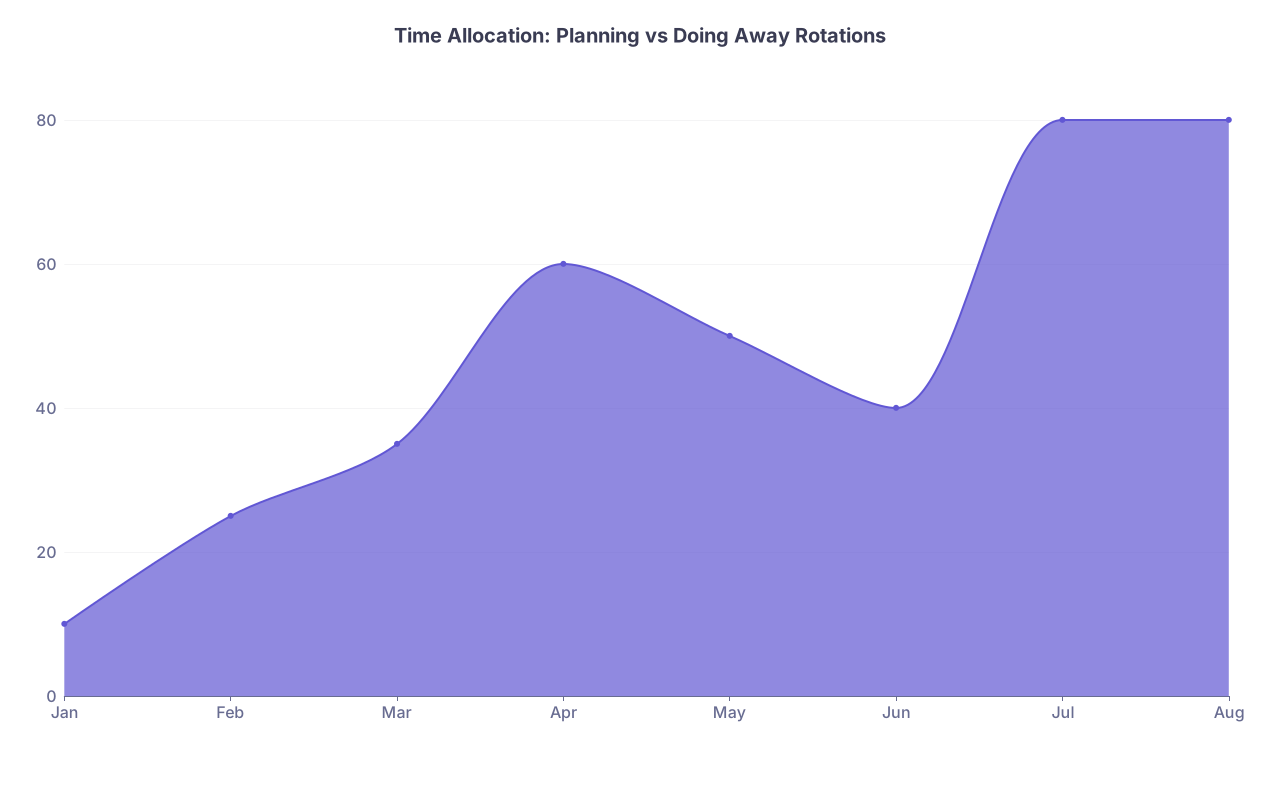
| Category | Value |
|---|---|
| Jan | 10 |
| Feb | 25 |
| Mar | 35 |
| Apr | 60 |
| May | 50 |
| Jun | 40 |
| Jul | 80 |
| Aug | 80 |
By month, here’s what you should have done:
- January–February: Decide your specialty, get honest feedback, secure letter writers, and map your schedule.
- March–April: Build and submit away applications early, with all documents and clear goals.
- May–June: Lock in dates, housing, travel, and sharpen your clinical game.
- July–August: Execute on the rotations themselves—consistent hard work, targeted feedback, and clear interest where you’d actually want to match.
If you remember nothing else:
- Start in January; April is too late for a clean process.
- Use aways to prove you function like an intern, not to “network” your way in.
- Ask for strong, specific letters before you leave each rotation—silence kills applications more than a single mediocre eval ever will.