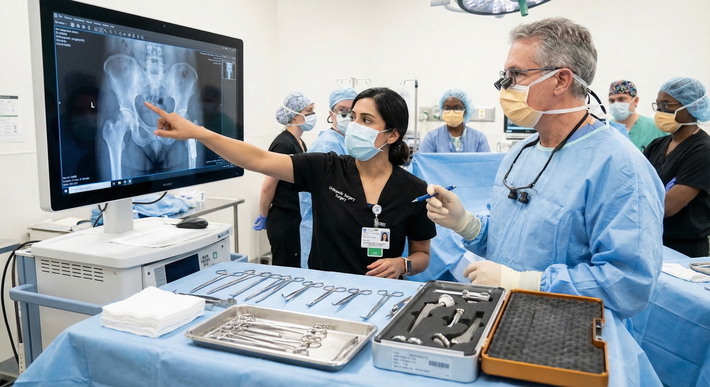
The myth that only thick‑skinned, aggressive robots survive surgery is doing real damage to a lot of good future surgeons.
If you’re worrying you’re “too soft” for surgical culture, you’re not alone. I’ve heard this exact phrase — “too soft” — so many times it’s basically background noise on surgery rotations.
Let me be blunt: the fear isn’t stupid. Surgical culture can be brutal. But the way you’re probably judging yourself right now? That part is mostly wrong.
What “Too Soft” Usually Really Means
Most people who say “I’m too soft for surgery” are actually saying:
- “I care a lot and I take things personally.”
- “I internalize criticism and replay it in my head at 2 a.m.”
- “When an attending snaps at me, I feel it in my chest.”
- “I hate conflict and I don’t want to become a jerk to survive.”
Same.
You’re not afraid of the work. You’re afraid of the way people treat each other and what it might do to you.
Here’s the ugly part: some of those fears are valid. I’ve seen:
- Residents humiliated on rounds in front of the whole team.
- Medical students reduced to tears in stairwells after being yelled at for something they didn’t even control.
- Nurses getting snapped at because a surgeon was pissed about something totally unrelated.
But here’s the piece nobody explains clearly when you’re still a student: there’s a big difference between being “soft” and being unsafe, and programs actually care about the latter more than the former.
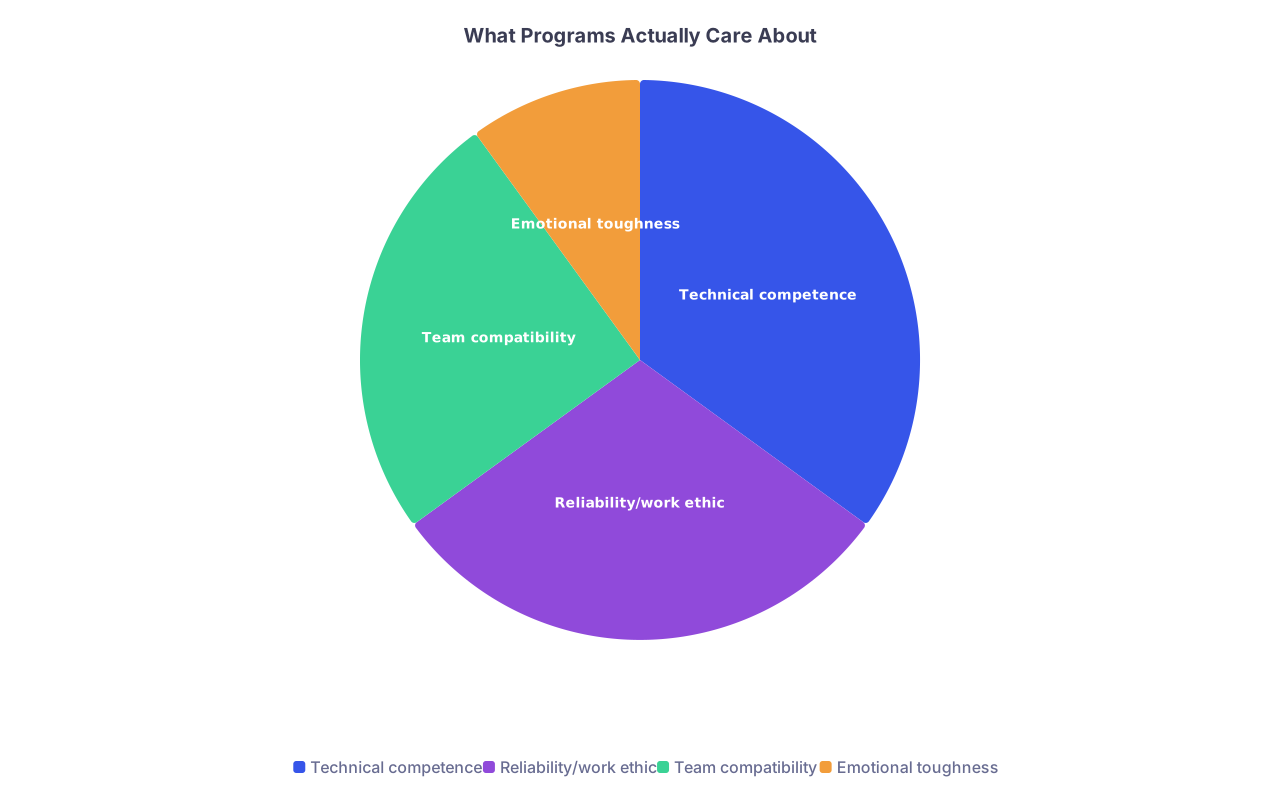
| Category | Value |
|---|---|
| Technical competence | 35 |
| Reliability/work ethic | 30 |
| Team compatibility | 25 |
| Emotional toughness | 10 |
Your internal monologue is usually screaming about that last slice — emotional toughness — and ignoring the others.
The Hard Truth About Surgical Culture (Without Sugarcoating)
Let’s not pretend this specialty is gentle.
Common realities:
- You will be spoken to sharply. Sometimes unfairly.
- People will be stressed, sleep-deprived, and not at their best.
- Mistakes will be called out in front of other people.
- Patients will crash, and it will be intense and messy.
Some programs are toxic. Full stop. Chronic screaming, public humiliation, retaliating against people who speak up — that’s not “old school,” that’s dysfunction.
But there’s also:
- Programs where chiefs apologize when they’re out of line.
- Attendings who teach hard concepts without tearing you down.
- Teams where people say “thank you” and mean it.
- Residents who protect students from stupid abuse.
The problem is, as a student, you often rotate on one or two services, see one malignant attending, and your brain generalizes it to: “This is surgery. I will die here.”
You have to separate:
- Your genuine sensitivity
- One rotation’s culture
- What’s true of the entire field

| Step | Description |
|---|---|
| Step 1 | Bad interaction on surgery |
| Step 2 | Shame and self doubt |
| Step 3 | Ask others quietly |
| Step 4 | Compare with other services |
| Step 5 | Pattern or one off |
| Step 6 | Consider program fit |
| Step 7 | Keep surgery on the table |
| Step 8 | Conclusion |
Most anxious students jump straight from A to C. No pause. No context. Just “I can’t hack it.”
Soft vs Unsafe: The Only Distinction That Really Matters
Programs don’t reject people because they’re kind or get emotional sometimes. They reject people who can’t be trusted when things go sideways.
Let’s sort this out:
Being “soft” often looks like:
- You replay criticism and feel bad about it.
- You tear up when something is very intense or unfair.
- You worry about hurting people’s feelings.
- You hate being yelled at and freeze for a moment.
- You need some time to decompress after a rough case or death.
Being unsafe looks like:
- You shut down and can’t function when someone is firm with you.
- You crumble so hard under feedback that you avoid responsibility.
- You disappear or withdraw when things get stressful.
- You can’t speak up when you see something wrong because you’re too scared.
- You let your emotions spill over into patient care decisions.
One is a temperament. The other is a liability.
| Pattern | Soft but Functional | Unsafe in Training |
|---|---|---|
| Reaction to criticism | Feels bad, reflects, improves | Spirals, avoids, blames, or shuts down |
| Under stress | Anxious but still shows up and helps | Paralyzed, disappears, or lashes out |
| Around conflict | Uncomfortable but can adapt | Cannot advocate or communicate clearly |
| Emotional response | May cry later in private | Breaks down in front of patient care tasks |
If you read the “unsafe” column and think, “Oh God, that’s me sometimes,” that doesn’t automatically disqualify you from surgery. It just means you have work to do on coping skills before and during residency.
Not that you should flee to a “nicer” specialty you don’t even like.
How to Reality‑Check Your “Too Soft” Fear (Step by Step)
Let’s make this concrete. Here’s a way to test whether the fear is data or just your anxiety yelling.
1. Audit your actual experiences, not your stories
Think back to your surgical exposure so far:
- How many days were truly awful vs normal?
- Who specifically made you feel small? One person? A group?
- Did anyone on the team treat you kindly or support you?
If it was:
- One attending known as “old school”
- One infamous chief
- One day when everything went wrong
That’s not enough to condemn the entire specialty or yourself.
If you’ve done:
- Multiple rotations
- At different hospitals
- And the culture felt consistently punishing and joyless
OK, that’s a different signal. But even then, it could be local culture, not all of surgery.
2. Ask the people who’ve actually seen you under stress
Not your equally anxious classmates. Ask:
- A resident you trust
- A reasonable attending
- A mentor from another rotation who knows your baseline
You don’t need to say, “Am I too soft?” You can say:
“I really like surgery, but I worry about whether my temperament fits. How do you see me handling stress and feedback?”
Watch their face before their words. Most people can’t hide that first micro‑reaction.
If multiple people say:
- “You’re actually pretty calm when things get busy.”
- “You take feedback seriously and bounce back.”
- “I’d trust you on my team.”
Then your “soft” label is probably coming from you, not reality.
If they say things like:
- “Sometimes you seem really overwhelmed.”
- “You tend to get quiet and disappear when things get tense.”
- “I’m not sure you’re speaking up when you’re uncertain.”
That’s not a death sentence. That’s a roadmap.

3. Stress‑test yourself in smaller, safer ways
Before you commit to five to seven years of this, you can run experiments.
Examples:
- Volunteer to stay for a late case and pay attention to how you feel at 11 p.m.
- Ask for real, unfiltered feedback from a resident you trust.
- Put yourself in situations where someone might push back on you (politely challenge a plan, ask clarifying questions on rounds).
After each one, ask:
- Did I still function?
- Did I recover after I went home?
- Did it ruin me for days or just shake me for a bit?
You don’t need to love the stress. You just need to be able to recover from it.
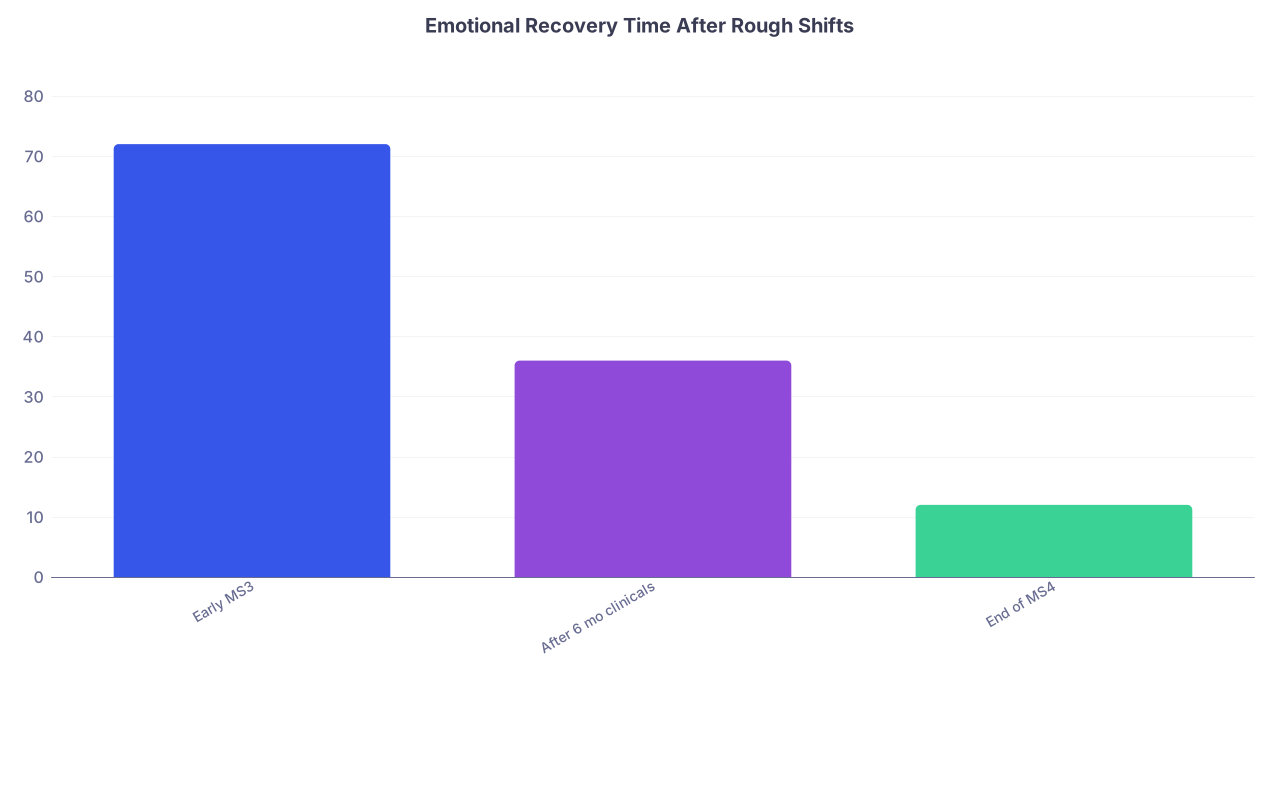
| Category | Value |
|---|---|
| Early MS3 | 72 |
| After 6 mo clinicals | 36 |
| End of MS4 | 12 |
Most people get faster at emotional recovery as they go. You might be judging yourself based on how you felt your first week on surgery, which is like evaluating your running ability the first time you step on a treadmill and nearly fall off.
Choosing a Surgical Program That Won’t Break You
If you’re sensitive, the program you choose matters more. You can’t “mindset” your way out of a malignant environment.
Here’s what to actually look for (and what’s just marketing fluff).
Red flags you shouldn’t gaslight yourself about
Things that are not “just how surgery is”:
- Residents constantly say they’re “fine” but look dead inside.
- Nobody ever admits weakness or asks for help.
- You hear open bragging about “breaking” interns or students.
- You never see attendings apologize. For anything.
- Every critique is public and shaming, never private and constructive.
Students love to rationalize this stuff as “gritty.” It’s not. It’s lazy leadership.
Green flags that matter more than prestige
Pay attention if you see:
- Chiefs stepping in to shut down bullying or unreasonable behavior.
- Seniors quietly checking in on juniors after a rough case.
- A PD who can talk specifically about wellness structures, not just “we care about wellness here.”
- Residents who are tired but still kind to nurses, techs, and students.

Ask pointed questions on interview day
Don’t ask, “Is your culture supportive?” They’ll all say yes. Ask things that force specifics:
- “Can you tell me about a time a resident struggled and how the program responded?”
- “What happens here if an attending consistently yells at residents or students?”
- “How do you handle it when someone makes a mistake in the OR?”
You’re not looking for perfection. You’re looking for evidence they don’t normalize cruelty.
Training Your “Softness” Into a Strength
You don’t have to become a different person to be a surgeon. But you probably do need to build armor that doesn’t turn you into stone.
Let’s be concrete about skills you can work on now.
Separate content from delivery.
Bad delivery, useful message. If an attending says, “What are you doing? That’s wrong,” your brain screams “I’m worthless.” Train yourself to ask: “What exactly was wrong? What’s the actual lesson?” Write it down later. Critique = data, not identity.Control your exposure.
If one attending repeatedly shreds you with no teaching, protect your mental health. Ask to work more with other faculty. Talk to chiefs. You’re not weaker for needing that. You’re smart.Have a decompression ritual.
Short, concrete: sit in your car for 5 minutes, phone on airplane mode, 3 slow breaths, name one thing you did well that day — even if it’s “I kept showing up.”Choose your “cry space” and people.
You don’t need to be tearless to be respected. You just need to not break down in the middle of patient care. Find a bathroom, stairwell, call room. Text one trusted person: “Today sucked. I survived.”Practice tiny acts of assertiveness.
You don’t have to roar. Just start with: “I’m not sure I understand — could you explain why we’re doing X instead of Y?” Your goal is to prove to yourself that your voice doesn’t shatter when challenged.

| Stage | Activity | Score |
|---|---|---|
| Awareness | Notice triggers | 3 |
| Awareness | Name feelings | 3 |
| Skills | Separate content from tone | 4 |
| Skills | Practice small assertiveness | 3 |
| Protection | Set decompression routine | 4 |
| Protection | Identify safe mentors | 5 |
Your sensitivity isn’t the enemy. Indiscriminate sensitivity — where everything gets in and stays — is the problem. You’re learning how to filter, not how to stop feeling.
When the Fear Might Actually Be Telling You “No”
Let’s be honest about this too. Sometimes the fear is data. It might be saying:
- You’re already at your psychological limit from life/trauma/health stuff.
- The idea of being in the hospital 60–80 hours a week fills you with dread, not excitement.
- You don’t actually like the OR that much; you just like the status of being a surgeon.
- Every time you imagine being a PGY‑2 on trauma call, your entire body says “absolutely not.”
If that’s you, it’s not “quitting” to pick something else. It’s self‑preservation. And you’re allowed to prioritize staying whole over proving you can survive any environment.
But if your honest internal monologue sounds more like:
- “I love the OR, but I’m scared of the people.”
- “I like the work, but I’m scared I’ll get crushed emotionally.”
- “I feel alive on surgery, but I’m scared I’ll have to become someone I hate.”
Then you’re not “too soft” for surgery. You’re thoughtful about the cost. That’s different.

Final Perspective
A lot of the “toughest” surgeons I know are actually the most fragile. They’ve just built this hard, sharp shell that keeps everyone out, including themselves.
The ones I’d want cutting on me? They’re often exactly the sort of people who once thought, “Maybe I’m too soft for this.”
Years from now, you won’t remember every time someone snapped at you on rounds. You’ll remember the moments you chose not to abandon yourself — whether that meant staying in surgery on your own terms, or walking away because keeping your humanity mattered more.
FAQ (Exactly 6 Questions)
1. What if I cried on my surgery rotation — does that prove I’m too soft?
No. Crying on surgery proves you’re human in a high‑stress, emotionally intense environment. The real questions are: did you still show up, did you still care for patients, and were you able to recover? I’ve seen residents who never cry but implode in other ways — substance use, rage, total detachment. Tears aren’t the metric. Function and recovery are.
2. Do programs secretly rank applicants by how “tough” they seem?
They rank you by reliability, teachability, and how you fit into their workflow. If you show up on time, own your mistakes, handle feedback without defensiveness, and aren’t a chaos magnet, you’re already above a lot of applicants. Posturing as a “hard‑ass” is actually a turn‑off in many places; it reads as inflexible and potentially toxic.
3. What if I freeze when someone yells at me — is that a dealbreaker?
Freezing under sudden aggression is a normal nervous system response, especially if you’ve got prior trauma. It’s not a permanent trait. You can work on this: therapy, simulations, role‑playing hard feedback, exposure to controlled stress. The dealbreaker is refusing to work on it and insisting everyone else must handle you with kid gloves in all situations.
4. Should I avoid very competitive surgical specialties (ortho, neurosurg) if I’m “soft”?
Not automatically. Competitiveness ≠ cruelty. Some “big name” or “tough” specialties have surprisingly supportive cultures at certain programs. Others are nightmares. You need program‑level intel, not stereotypes. Talk to residents, not just faculty. Ask pointed culture questions. Don’t rule out something you love solely because of its reputation; rule it out if the actual people seem miserable.
5. How do I explain being sensitive or having mental health struggles in interviews without tanking my chances?
You don’t need to disclose everything. Frame it as growth: “In the past, I struggled with X under stress. I’ve worked on Y concrete strategies (therapy, boundaries, feedback processing), and now I’m able to do Z.” Programs care that you understand your limits and have coping tools. They don’t need your full psychiatric chart. Avoid raw, unresolved stories; focus on what you’ve learned.
6. What if I decide surgery isn’t for me — does that mean I failed?
No. It means you collected data, took your own limits seriously, and chose a life you can actually live. That’s not failure; that’s maturity. The real failure would be forcing yourself into a specialty that slowly erodes you because you were more afraid of “quitting” than of losing yourself. There are a lot of ways to be a great doctor. Surgery is one. It’s not the only one.