
The idea that “only gunners match ophtho and ortho” is lazy, wrong, and honestly harmful. The data do not back it up. What they do show is this: competitive specialties reward smart strategy, not performative suffering.
You do not need to be the loudest person in the anatomy lab or the first one in the hospital every single day for 4 years to match orthopedics or ophthalmology. You do need to understand what programs actually select for and allocate your effort accordingly.
Let’s dismantle the myth step by step.
What “Gunnergy” Actually Gets You (and What It Doesn’t)
Every med school has the archetype: the ortho-bound MS2 who tells everyone their UWorld percent correct, lives in the library, and makes passive-aggressive comments about “people who don’t really want it.”
Here’s the uncomfortable truth: some of those people don’t match. Even with the 250+ Step scores. Even with 10+ pubs.
Why? Because “gunnery” is a style, not a strategy.
Programs do not have a checkbox for:
- 4:30 a.m. daily pre-rounding
- Bragging about 80-hour study weeks
- Talking loudly on rounds about fracture classifications
They rank you based on a combination of measurable and observed factors: board scores, clinical evaluations, letters, research productivity, interview performance, and whether you seem like someone they can stand being on call with at 2 a.m. That last part gets underestimated by gunners and overestimated by chill people. Both groups are wrong in different directions.
Competitive fields are competitive. They are not exclusively for people with one personality type.
What the Numbers Actually Say About Ortho and Ophtho
Let’s look at reality instead of hallway mythology.
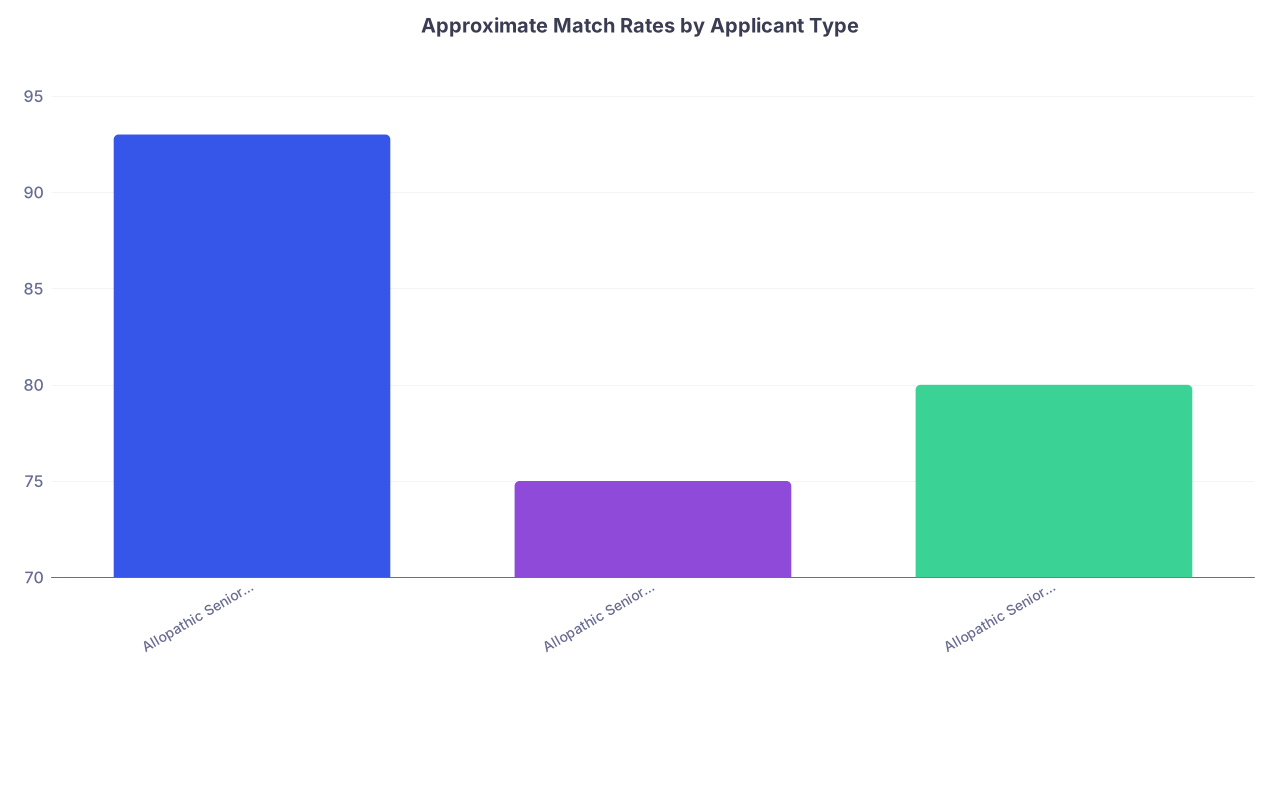
(Exact numbers shift slightly year to year, but the patterns hold. I’m pulling from recent NRMP and SF Match data trends, not a rumor from your class GroupMe.)
| Category | Value |
|---|---|
| Allopathic Seniors - All | 93 |
| Allopathic Seniors - Ortho | 75 |
| Allopathic Seniors - Ophtho | 80 |
Those numbers move around each cycle, but they consistently show this: yes, ortho and ophtho are more competitive than average. No, they’re not some magical realm where only superhumans get in and everyone else dies in the prelim-match wilderness.
The real levers look more like this:
| Factor | Ortho (Matched US MD) | Ophtho (Matched US MD) |
|---|---|---|
| Step 2 CK (ballpark) | ~250 median at many places | High 240s–low 250s |
| Research experiences | 5–8+ (many low-level) | 4–7+ |
| AOA / honors | Helpful but not mandatory | Helpful but not mandatory |
| Home / away rotations | 1 home + 1–3 aways | 1 home + 1–2 aways |
Now notice what’s not in that table:
- “Screams answers on rounds”
- “Lives in library 14 hours/day”
- “Never says no to anything ever”
Programs care about consistent high performance and fit, not cosplay of a 1990s surgical stereotype.
Myth: You Need to Be a Hyper-Extroverted Alpha
The loudest ortho-bound student in your class is not the average ortho resident.
I’ve sat in resident rooms where:
- The quiet, methodical MS4 with a 240-something and 4 projects matched a top program.
- The high-decibel, self-branded “gunner” with a stronger board score didn’t even get an interview there because the residents remembered him as “the guy who interrupted the chief three times.”
Same story in ophtho:
- Thoughtful, slightly awkward but teachable MS4 → strong letters, matched well.
- Overrehearsed “I’m so passionate about microsurgery” person who clearly wanted derm + something surgical as backup → weaker fit, worse outcomes than their CV predicted.
Personality matters. But the fantasy that only loud, aggressive, hyper-extroverted people get in is just that—a fantasy. Programs actually skew toward:
- Reliable
- Hard-working
- Collegial
- Teachable
You can be introverted and still check every one of those boxes. A surprising number of ophtho attendings are quietly intense, not extroverted salespeople.
Myth: You Must Sacrifice Your Entire Life for 4 Years
“Ortho and ophtho are only for people who are willing to give up everything else.” No. They are for people willing to be intentional.
Here’s what I see with people who match these fields versus people who burn out chasing them.
Matched ortho/ophtho applicants usually:
- Study hard, but they’re efficient. They aren’t bragging about hours; they’re tracking results.
- Protect some non-medical sanity: lifting, running, music, partner, something.
- Say “no” to the wrong research and “yes” to the right mentors.
- Optimize a few key rotations instead of trying to impress literally every attending in the hospital.
The people who flame out tend to:
- Spend months doing low-yield research with no pathway to publication because they’re afraid to say no.
- Chase every “opportunity” just to look busy on paper.
- Let their preclinical grades or Step 2 CK slip because they’re chasing an extra poster.
- Burn bridges by overextending and under-delivering.
You don’t need to sacrifice everything. You do need to stop playing at being busy and start being selectively ruthless with where your energy goes.
Where Outcomes Really Diverge: Strategy, Not Suffering
Let’s talk about where competitive applicants actually separate themselves. It’s not the number of hours they claim to study.
1. Early, Realistic Positioning
The smartest students do a brutally honest check around mid-MS2:
- Where are my scores trending?
- How are my clinical skills and feedback so far?
- Does this specialty actually fit my temperament and what I enjoy daily?
And then they adjust. Up or down.
I’ve seen:
- A student who loved the OR, started MS2 with mediocre practice scores, retooled their study approach, pulled a solid Step 2, stacked ortho-relevant research, and matched ortho.
- Another who wanted ophtho, could not get their standardized test performance above a certain level, pivoted early to ENT where they had a phenomenal mentor and matched happily.
Both outcomes were wins because they used data, not ego. Gunners cling to the original fantasy. Serious applicants change course or double down intelligently.
2. Letters and How You Act on Rotations
Clinical performance is where a lot of “gunners” quietly die.
Attendings and residents don’t write:
“Scores are great, but I’d never want to be on call with this person again.”
But that’s the subtext behind a lot of lukewarm letters.
On away rotations and sub-Is, the people who get monster letters:
- Show up prepared, but not obnoxious.
- Are relentlessly dependable. If they say they’ll follow up a lab, it gets done.
- Know when to hustle and when to get out of the way.
- Are curious without grilling attendings during the critical part of a case.
The gunner mistake is thinking you impress people by aggressively showing how much you know. The high-yield move is making the team’s life easier while quietly making it obvious you learn fast.
3. Research: Depth > Random Volume
The myth says: “You need 10–20 pubs to match ortho/ophtho.”
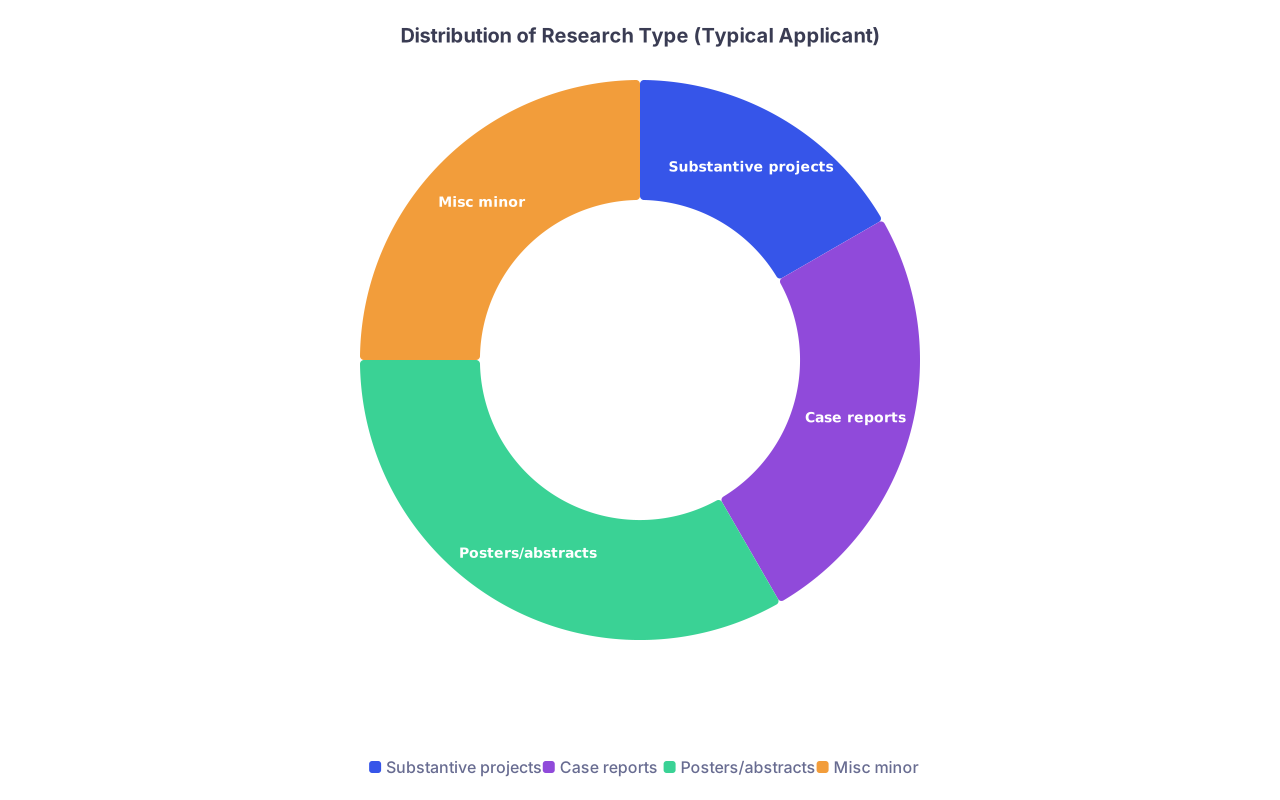
Reality: a shocking amount of “research” on these CVs is case reports, poster abstracts, and minor co-authorships that took 5 emails and a day of work.
Programs can tell who:
- Did 1–2 substantial projects with a known faculty member and can discuss them intelligently. vs.
- Collected 12 one-off side hustles with no clear narrative.
| Category | Value |
|---|---|
| Substantive projects | 2 |
| Case reports | 3 |
| Posters/abstracts | 4 |
| Misc minor | 3 |
If you have the option:
- 2–3 real projects with one or two faculty who will go to bat for you will beat 10 flimsy line items supervised by people who barely remember your name.
The gunner pattern is research FOMO. The successful pattern is picking a lane and staying in it long enough to matter.
The Hidden Filter: Professionalism and Likeability
You want a secret that almost no one posts on Reddit because it’s not sexy?
By the time you’re at interviews, many ortho and ophtho programs are making decisions on:
- Red flags in professionalism
- Resident impressions from pre-interview dinners
- How you handle “pressure” questions without turning weird or arrogant
I’ve watched rank list meetings. Three scenarios:
- Stellar applicant, good interview, residents liked them → ranked high.
- Stellar applicant on paper, weird vibe, residents unenthused → slides down the list.
- Slightly less shiny stats, residents loved working with them on an away rotation → gets bumped up.
“Only gunners match” completely misses this social reality. Residents don’t want to spend 5 years with someone who treats every call shift like a Step 2 OSCE.
You can be intense about your work and still be normal. That combination outperforms “hyper intense and kind of unbearable” more often than not.
MD vs DO, US vs IMG: Still Not About “Wanting It More”
This is where people really lie to themselves.
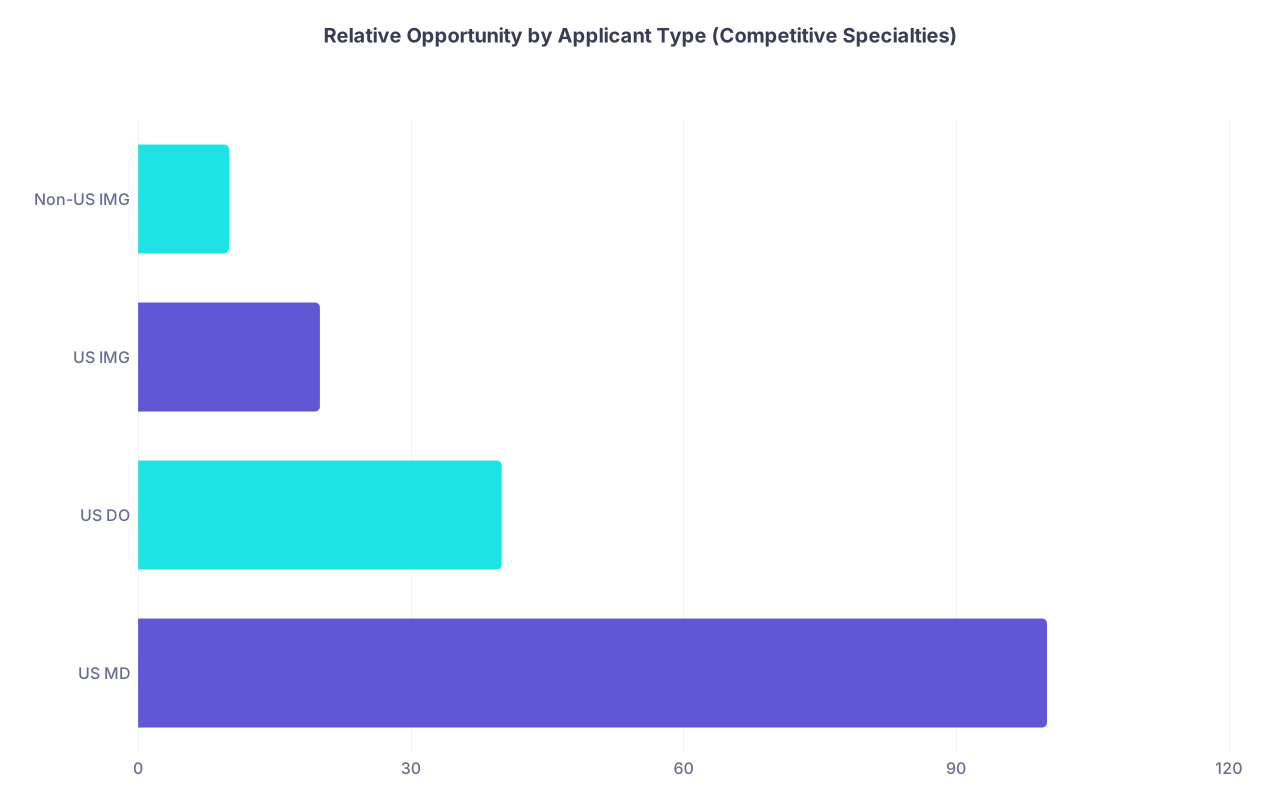
If you’re DO or IMG trying for ortho or ophtho, the problem is not that you don’t “want it” as much as the MD gunner. The problem is:
- Fewer program slots realistically open to your applicant type.
- Fewer home/away rotations and mentors with pull.
- Program biases that still exist, especially in certain geographic regions.
| Category | Value |
|---|---|
| US MD | 100 |
| US DO | 40 |
| US IMG | 20 |
| Non-US IMG | 10 |
That’s not effort. That’s structural access.
Can DOs and IMGs match ortho and ophtho? Yes, every year. But the ones who do:
- Ruthlessly target programs that have actually taken people like them before.
- Network early and intelligently.
- Have airtight Step 2 and rotation performance.
- Often have a very compelling story or mentor backing.
No amount of screaming “I want it more” on rounds beats a program’s historical behavior. You play the board that exists, not the fantasy one in your head.
So What Actually Predicts Matching Ortho/Ophtho?
Let’s compress this into reality-based factors you can actually control.
| High-Yield Behaviors | Overrated 'Gunnergy' Moves |
|---|---|
| Strong Step 2 CK with a consistent study plan | Bragging about study hours |
| 1–2 great letters from specialty attendings | Collecting 6 generic letters |
| 2–4 meaningful research projects | 10+ superficial CV line items |
| Excellent performance on home + 1–2 aways | Doing 4 aways and burning out |
| Being reliable, teachable, not a jerk | Talking constantly to seem engaged |
If you want a mental model, use this:

| Step | Description |
|---|---|
| Step 1 | Interest in Ortho or Ophtho |
| Step 2 | Invest in boards and core clerkships |
| Step 3 | Reassess specialty or improve study system |
| Step 4 | Find 1-2 real mentors |
| Step 5 | Join 2-4 meaningful projects |
| Step 6 | Home rotation |
| Step 7 | 1-2 targeted aways |
| Step 8 | Strong letters and fit |
| Step 9 | Smart, broad enough rank list |
| Step 10 | Step 2 trajectory strong? |
Nothing in that flowchart says “must be the most visibly intense person in your class.” It says: competent, consistent, strategic.
The Bottom Line: Stop Worshipping “Gunners,” Start Studying the Game
Let me be blunt: “Only gunners match ortho/ophtho” is the kind of thing people say when:
- They matched and want to mythologize their own effort.
- They didn’t match and need a story where they “just didn’t want it enough.”
- They’re MS1s larping about competitiveness without ever having read a match report.
The data and real-world outcomes say something else:
- Ortho and ophtho are competitive, but not reserved for one personality type. They’re reserved for people with consistent performance, smart targeting, and decent human skills.
- “Gunnergy” as a performance—bragging, martyrdom, obsessing over optics—is a distraction. High-yield strategy is boring: good scores, smart mentors, targeted research, solid rotations, not being awful to work with.
- You don’t have to become someone you hate to match a competitive specialty. You do have to stop believing hallway myths and start acting on what programs actually value.
You want ortho or ophtho? Good. Drop the mythology, pull the data, and behave like someone running a serious, strategic campaign—not like a cartoon of a “gunner” from a meme page.