
How Department Chairs Secretly Judge Your CME Choices and Habits
It’s early February. Annual reviews are coming up. You just clicked “submit” on your institution’s online CME attestation: 32 hours logged, boxes checked, certificates uploaded. You think, “Perfect. I’m compliant. Done.”
You’re not done.
Because at some point this month, your department chair (or division chief, or section head) is going to open a summary of your CME history. Not always the full detail, but more than you think. And then they’re going to do something no one talks about: they’re going to judge you on it.
Let me walk you through how that judgment actually works. What they’re really looking for. And what silently dings you when you think “CME is just a checkbox.”
What Chairs Actually See (And How They Get It Wrong – Or Right)
Let me clear a misconception: most chairs are not opening a detailed spreadsheet of every single talk you watched on Tuesday nights. They do not have time, and they do not care that much.
But they see patterns. And patterns are what get you labeled.
Here’s how it usually looks behind the scenes:
Your institution’s CME office sends a yearly summary to departmental leadership. For smaller departments, it can literally be a table with each faculty member, number of hours, required categories, and (depending on the system) highlight of “internal vs external” activities and major conferences.
For some chairs, that’s it. They scan for red flags: non-compliance, chronic lateness, people needing exemptions.
Others – and you should assume yours is in this group – click into individual records when they:
- Are doing a promotion or reappointment review
- Are writing a major letter (for leadership, external position, big grant)
- Have concerns about your performance, clinical judgment, or professionalism
- Are deciding who is “academic track material” versus “workhorse clinician”
And when they do click, they start interpreting. Hard.
The Unspoken Categories Chairs Put You In
Every chair I’ve worked with, sooner or later, develops mental “types” of CME behavior. No one writes this down. They do it in their head. But it’s remarkably consistent across institutions.
Let me lay out the archetypes they won’t admit to, but absolutely use.
| CME Pattern Type | Chair's Silent Label | Career Impact Risk |
|---|---|---|
| Bare Minimum Checker | Compliant but Unimpressive | Moderate |
| Box-Click Online Only | Low Engagement Clinician | Moderate-High |
| Specialty Deep Diver | Serious About Craft | Positive |
| Leadership & Systems | Future Leader Potential | Very Positive |
| Random / Disorganized | Lacks Focus or Direction | High |
1. The Bare Minimum Checker
You:
- Hit exactly the required number of hours
- All in the last quarter of the year
- Mostly local or mandatory hospital stuff
- No standout conferences, no longitudinal programs
Chair’s internal dialogue sounds like this:
“Okay, they’re responsible enough to be compliant. But this is someone who treats CME as a chore, not a tool. Probably not pushing themselves clinically. Good worker bee, not a future leader.”
You don’t get punished for this. But you do not get remembered either. When opportunities come up – task forces, pilot projects, leadership roles – your name is not top of mind.
2. The Box-Click Online CME Hoarder
Your transcript is filled with:
- 1.0 hour online modules from random platforms
- Lots of “general medical” topics only loosely tied to your specialty
- No conferences, no workshops, no in-person engagement
I’ve watched chairs scroll through these and literally mutter, “They’re just clicking boxes.” And yes, they assume:
- You’re doing the modules at 1.25x speed while answering emails
- You’re not engaging in real discussion or case-based learning
- You’ll do the minimum to get credit, maximum convenience
Does that mean they think you’re a bad clinician? No. But when there’s a safety incident or questionable judgment call, this pattern suddenly matters. They’ll say in a closed-door meeting:
“Look, they technically do their CME, but it’s all low-effort online stuff. I’m not seeing serious engagement with advancing their practice.”
That framing hurts you when you most need people in your corner.
3. The Specialty Deep Diver
You consistently attend:
- The major national meeting in your field (every year or two, not once a decade)
- High-yield subspecialty conferences or workshops
- Activities clearly linked to your clinical niche (e.g., echo, EP, IBD, stroke, etc.)
Chair reaction:
“Okay. This person takes their specialty seriously. They’re staying current. They’re building a reputation in a defined area.”
That “defined area” phrase is gold. It shows up in promotion letters all the time: “Dr. X has engaged in focused CME that reinforces a clear clinical niche in [area].”
You look like someone with a clinical brand, not a wandering generalist.
4. The Leadership & Systems Track Person
Your CME choices include:
- Quality improvement, patient safety, health systems science
- Leadership development courses (often through the institution)
- Teaching/education-focused CME, faculty development, DEI workshops
- Maybe an MBA-lite style certificate or mini-fellowship
This is the group chairs get quietly excited about.
Behind closed doors, during succession planning, comments sound like:
“They’re already plugging into leadership CME. We should start grooming them for division director in a few years.”
“Look at the pattern – not just clinical. They’re taking the institutional courses we offer. They get the bigger picture.”
You’re sending a signal: “I see myself as part of the system, not just a worker in it.”
5. The Random CME Tourist
Your transcript:
- Bounces between topics with no clear center
- Has scattered one-off things: dermatology update, financial wellness, rare tropical diseases, coding and billing, integrative medicine, etc.
- Lacks depth in your specialty
Chairs notice incoherence. I’ve seen one literally say, flipping through:
“What are they actually trying to be good at?”
This can make you look unfocused. Like you don’t have a plan for your own professional development.
A bit of variety is fine. Pure randomness, year after year, is not.
The Three Things They Judge First (Whether They Admit It or Not)
Strip away all the fluff. When a chair is looking at your CME over multiple years, three questions run through their mind.
1. Are you clinically safe and serious?
Translation: Are you doing CME that actually sharpens your clinical judgment, or just checking boxes?
Signals that say “safe and serious”:
- Repeating important core specialty meetings, not just a one-time visit
- Participating in workshops or case-based sessions, especially in high-risk areas
- Doing CME related to any sentinel events or near-misses you’ve been involved in
Yes, that last one happens. If there’s a major incident, risk management and leadership absolutely look at whether you’ve done targeted CME afterwards. This can be framed either as remediation – or, if you initiate it, as professionalism.
2. Do you look like someone with a professional identity?
Chairs like faculty who have a story.
“She’s our go-to for complex heart failure.”
“He’s really built up expertise in perioperative medicine.”
“They’re the one you call about difficult IBD cases.”
Your CME pattern either reinforces that story or blurs it.
If you’re cardiology and every year your CME is heart failure, cath, imaging, guideline updates? That’s clear.
If you’re cardiology and your CME looks like a Halloween grab bag – a little hospitalist medicine, a random rheum update, some billing webinars – there’s no signal. You look like you’re drifting.
3. Are you investing in anything beyond yourself?
This is where leadership, education, and system-level CME comes in.
Chairs notice:
- Faculty development CME (teaching, mentorship, assessment)
- Quality/safety training
- DEI or professionalism-related CME, especially if you’re in any leadership-adjacent role
They’re not counting hours. They’re looking for a pattern that says: “This person isn’t just here to do RVUs and leave.”
How Different Types of Chairs Interpret The Same CME Log
Not all chairs think the same way. But there are recurring “types” here too. I’ve watched identical CME transcripts get very different commentary depending on who’s holding the chair title.
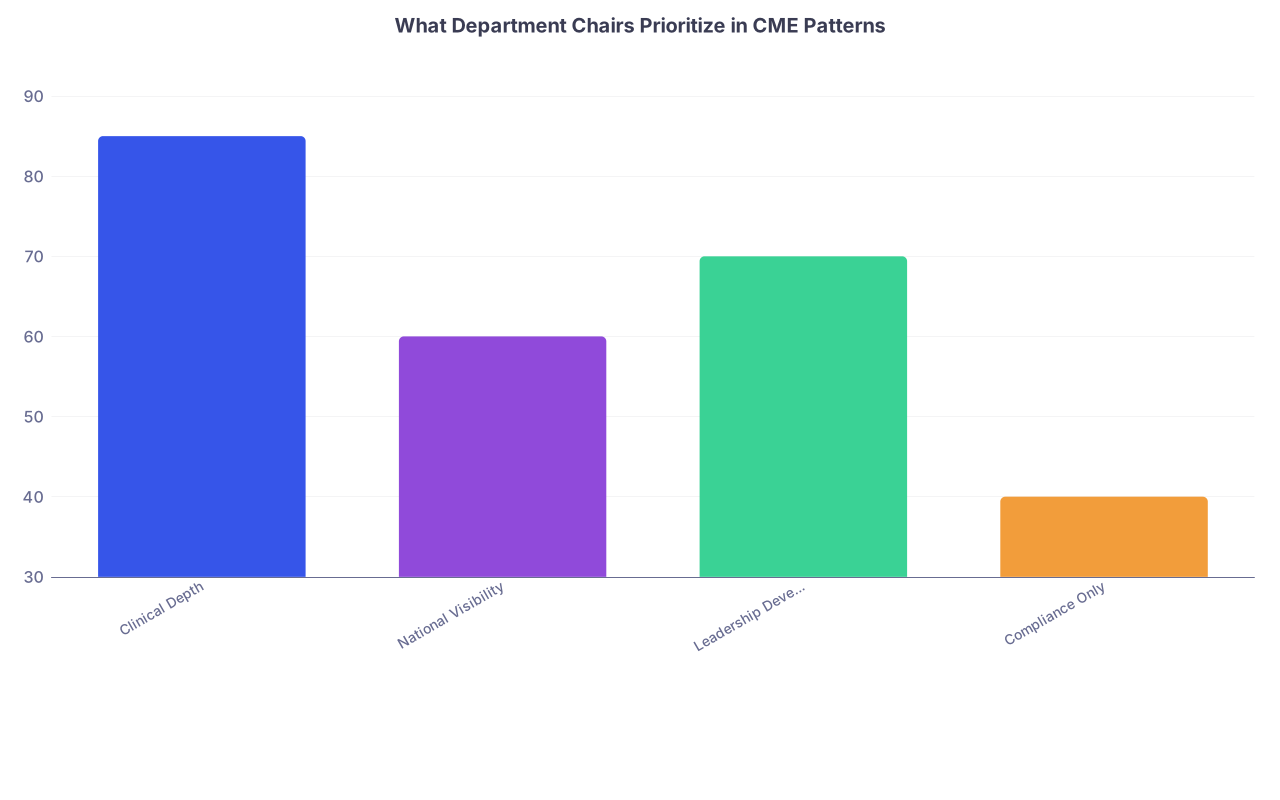
| Category | Value |
|---|---|
| Clinical Depth | 85 |
| National Visibility | 60 |
| Leadership Development | 70 |
| Compliance Only | 40 |
The Old-School Clinician Chair
Usually mid- to late-career, grew up in the “Case of the Week” and print-journals era.
What they focus on:
- Major national or subspecialty meetings
- Specialty-specific, clinically oriented CME
- Procedural updates, guideline revisions
They’re impressed by: consistent attendance at serious specialty meetings and procedure-focused courses.
They couldn’t care less about: generic online “professionalism” modules, unless required for some institutional reason. They think most of those are fluff.
The Research-Heavy Academic Chair
They live in the world of grants and publications. They’re half-embarrassed by CME, but they still look.
What they notice:
- CME tied to your research or niche expertise (e.g., neuromodulation, CAR-T, advanced imaging)
- National or international courses that indicate networking with other thought leaders
- Any CME where you are faculty or speaker
They’re impressed by: “Oh, they’re on the program for that course now” or “They went to the same advanced course all the heavy-hitters attend.”
They glaze over reading: routine hospital compliance CME, basic clinical update hours. To them, that’s just noise.
The System-Oriented / Administrative Chair
These are the people in close orbit with the CMO, talking quality metrics and service lines.
They care about:
- CME around quality improvement, health systems, patient safety
- Leadership tracks, especially those offered internally or by recognized bodies (AAMC, specialty societies)
- CME that aligns with departmental strategic goals (e.g., new service line, EMR upgrades, outpatient expansion)
They’re impressed by: faculty who, unprompted, take courses on things like lean process, clinical operations, or change management.
They’re quietly annoyed by: faculty who never do anything outside their narrow clinical bubble and then complain about system problems.
Specific CME Moves That Make Chairs Sit Up
Here’s what I see repeatedly trigger positive comments in closed-door meetings.
Longitudinal Programs Over One-Off Clicks
A year-long or multi-month certificate program in, say, medical education, leadership, quality, or a focused clinical area looks very different than 20 one-hour videos.
Chairs see:
Commitment. Follow-through. Intentional development.
Even if the content isn’t dramatically better, the signal is.
Being Faculty for CME
Once your name shows up as “Speaker,” “Panelist,” or “Course Director” for CME, you cross into a different category. Now your CME log isn’t just about “what you’re learning.” It shows what you’re teaching the field.
When chairs write promotion letters, they love being able to say: “Dr. X has been invited faculty at multiple CME programs in [area], reflecting regional/national recognition of their expertise.”
That’s code for: “Not just another clinician. This one’s got status.”
Strategic CME After Problems
I’ve watched this save careers.
Someone has a clinical error. Or a professionalism complaint. Or a communication meltdown.
If, on their own initiative, they do relevant CME (serious stuff, not fluff) and then reflect on it in their annual review or remediation plan, chairs can reframe them as:
“Teachable. Reflective. Improving.”
Versus “Defensive. Static. Risky.”
The CME content might be identical. The timing and framing change the entire story.
How To Quietly Upgrade The Way You’re Being Judged
I’ll be blunt: you don’t need drastically more CME hours. You need better signal in what you already do.
Think of it in three shifts.
Shift 1: From Random to Themed
Pick one or two themes you want to be known for – clinically or professionally. Then bias your CME choices toward those.
You want to be the “go-to person for complex diabetes?” Then your log should show repeated, deep engagement with that: advanced diabetes conferences, endocrine workshops, case-based learning on complex metabolic care.
You want leadership roles? Then every year, something in leadership, operations, or systems should be on your transcript. Not once. Every year.
Shift 2: From Last-Minute to Ongoing
Chairs can’t always see when you did CME, but they can often tell when everything got crammed at the end of the reporting period. Or you’ll admit it in conversation.
The pattern of “every December I panic-log 15 hours” screams: “I don’t treat this as serious development.”
Better:
- One major conference or course a year
- A few high-quality webinars or workshops spread through the year
- Maybe one long-format program every couple of years (certificate, leadership course)
You’re not doing more. You’re spacing it like a serious professional rhythm.
Shift 3: From Silent to Strategic in Your Reviews
CME is ammunition for your narrative. Use it.
In your annual review or promotion packet, tie your CME choices to your trajectory:
- “I attended X and Y to deepen my role as our clinic’s lead in [area].”
- “I pursued the leadership course because I’m increasingly involved in [committee/initiative].”
- “Post-incident review, I sought targeted CME in [topic] and have incorporated [specific change] into my practice.”
Chairs remember that. It shows intention. It also lets them parrot your story in bigger rooms: P&T, dean’s council, search committees.
Quick Visual: What A “Strong” CME Year Looks Like
Not maximal. Just smart.
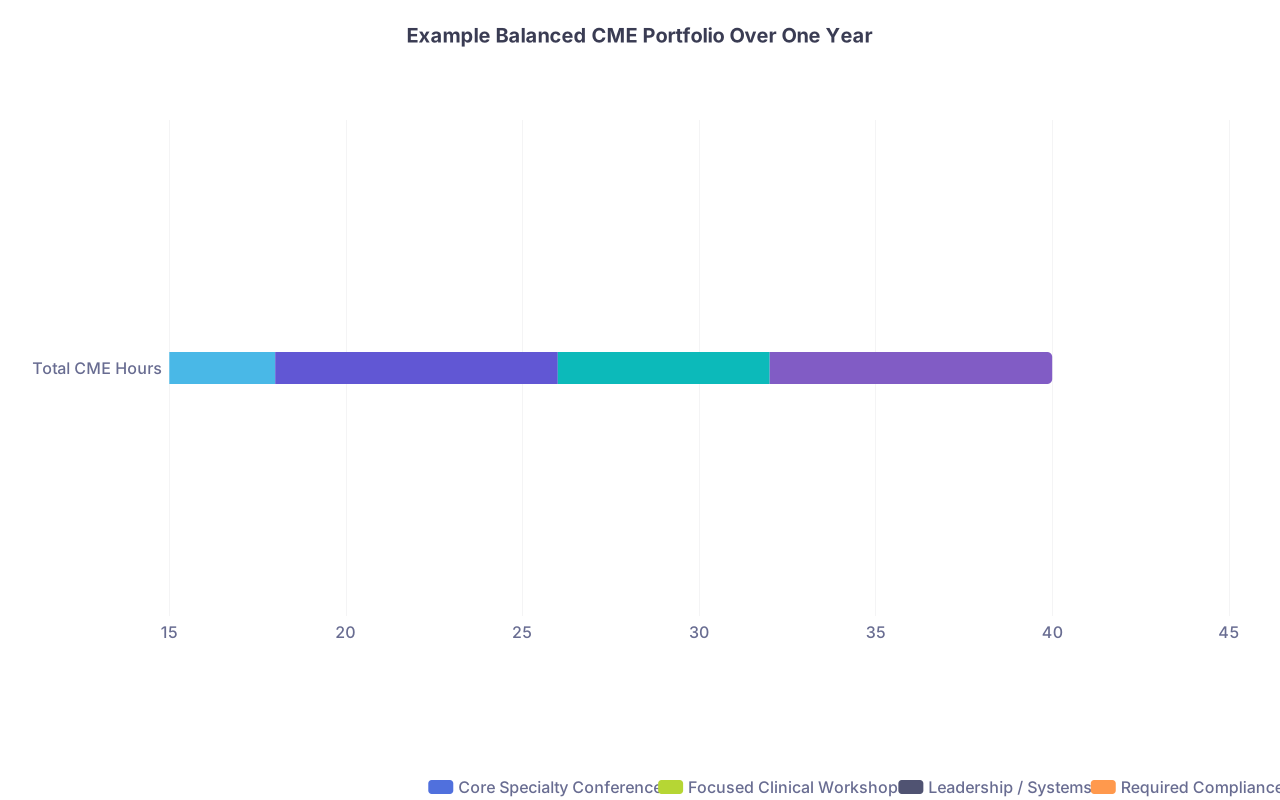
| Category | Core Specialty Conference | Focused Clinical Workshops | Leadership / Systems | Required Compliance |
|---|---|---|---|---|
| Total CME Hours | 18 | 8 | 6 | 8 |
Total: 40 hours. Not crazy. But the proportion is telling: most in your specialty, some leadership/systems, compliance handled but not dominating.
You’d be surprised how many faculty do the inverse: mostly compliance and cheap online general CME, very little depth.
Chairs see that contrast instantly when two CVs are side by side.