

The hardest part of the couples match isn’t filling out ERAS together. It’s when one of you starts getting interviews…and the other doesn’t.
That’s the nightmare scenario no one really prepares you for. Programs talk about “supporting couples.” Advisors say “rank wisely.” But what if it’s October, or November, and one inbox is filling up while the other is still dead silent?
Let’s actually talk about that.
Because honestly, that’s what keeps most of us up at 2 a.m. refreshing our emails and pretending it doesn’t feel like a referendum on our relationship.
The Fear You’re Probably Too Embarrassed To Say Out Loud
You’re not just worried about where you’ll match.
You’re worried about:
- Resenting each other
- One of you “holding the other back”
- Having to choose between your relationship and your career
- People secretly thinking, “Well, obviously one of them is the weaker applicant”
- Sitting on the couch together when one person’s phone dings with an interview…and the other’s doesn’t
I’ve seen couples go through this. The email era version of emotional torture: one person’s ERAS email count creeping up to 12, 15, 20 while the other is still at 3. Or 0.
And here’s the unromantic truth: the couples match doesn’t care about your relationship. The algorithm is math. It’s not a therapist, it’s not “fair,” and it definitely doesn’t “reward love.”
So yes, sometimes only one person gets interviews.
But that’s not the end of the story.
Step One: Stop Pretending This Is NBD
You can’t “positive vibes” your way out of this. If one of you is at 15 interviews and the other is at 2, that is going to hurt. No matter how supportive you both are.
And if you try to pretend you’re fine? It’ll just leak out sideways.
You need to say the ugly parts out loud. Things like:
- “I’m scared I’m dragging you down.”
- “I feel guilty that I’m excited about my invites.”
- “I’m worried you’ll resent me if I push for us to stay coupled.”
- “I’m ashamed I’m the one not getting interviews.”
I’ve seen couples implode over resentment that never got words. One partner scrolling through a Reddit thread: “My partner has 18 invites and I have 0 — I’m so happy for them but I’m dying inside,” and then going home and just…being quiet. Tense. Short.
So yeah, have the hard conversation. Sooner than you think you need to.
And if you’re thinking, “We don’t need that, we’re fine,” that’s usually when you do.
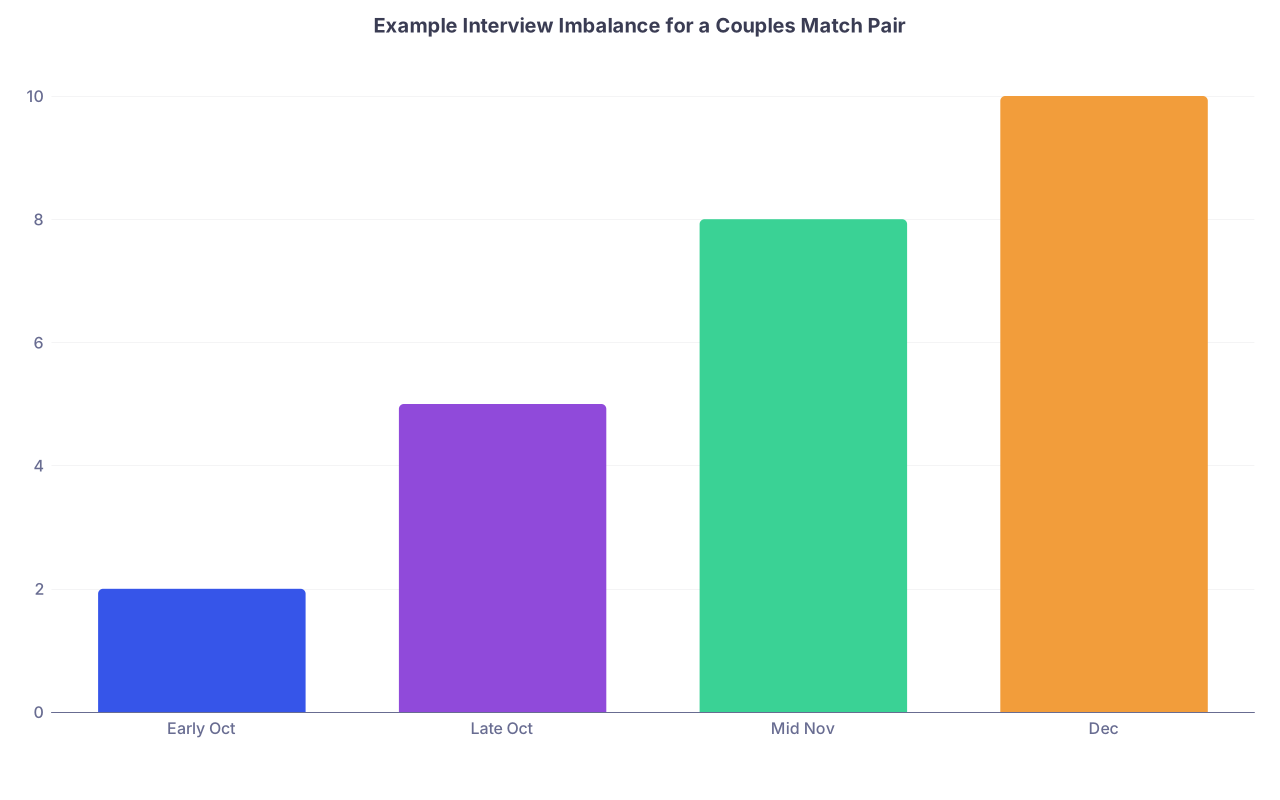
| Category | Value |
|---|---|
| Early Oct | 2 |
| Late Oct | 5 |
| Mid Nov | 8 |
| Dec | 10 |
(Imagine Partner A is at 10 by December…Partner B might still be at 2. That gap feels way bigger than these numbers.)
What Actually Happens If Only One Of You Gets A Lot Of Interviews?
Let’s strip the emotion out for a second and talk mechanics. Because the logistics actually shape the emotional fallout.
Here are the main scenarios I’ve watched play out in real life:
| Scenario | What It Looks Like |
|---|---|
| Stay Coupled, Both Compromise | Stronger partner ranks lower-tier or fewer programs to keep options aligned |
| Stay Coupled, Stronger Carries | Stronger partner applies super broadly and uses their interviews to pull both up |
| Decouple Before Rank List | Each submits solo lists; relationship stays together but not in algorithm |
| Plan for Reapplication Year | One matches, the other intentionally aims to reapply next cycle |
None of these is “perfect.” Every option has a cost. That’s why this feels so suffocating: there is no clean, painless choice.
So what do you actually do?
Before You Decide Anything: Get Real About Your Baseline
You’re going to be tempted to make decisions based on today’s interview count. Mid-October panic. Early November despair.
Slow down.
Programs release invites in waves. Some are insanely late. Some screen weirdly. Some ACGME IDs are cursed, I swear. I’ve seen:
- A partner sitting at 1 interview on November 10 suddenly get 6 invites between Thanksgiving and mid-December
- A DO applicant with zero university interviews until a random December Tuesday, then 3 invites in 3 days
- One partner that looked “doomed” early on end up with 9 interviews vs their partner’s 12 — not equal, but workable
So before you start talking about decoupling or sacrificing careers, gather facts:
- How many programs did each of you apply to?
- Are you both getting screened out, or is it truly lopsided?
- Are you in very different specialties (e.g., Ortho vs FM) or roughly similar competitiveness?
- Any red flags (low Step, failed exam, leave of absence) that explain things?
If you’re comparing 15 vs 2, that’s different from 10 vs 7. But you need to zoom out and see if the trend is stable or still evolving.
The Conversation You Actually Need To Have (Not the Fake One)
The fake conversation is:
“We’ll figure it out, we’ll be fine, love will win, we believe in each other.”
The real conversation sounds more like:
- “What are our hard lines? Would you rather be apart for a year or risk not matching at all?”
- “If only one of us matches, who is more willing to take a research year, prelim year, SOAP, or reapply?”
- “Are we okay doing different specialties in different cities for a while, or is staying physically close a non‑negotiable?”
This is where it gets savage. Because sometimes one person:
- Deeply wants a competitive specialty they’ve worked toward for years
- Has the kind of application where they’re clearly more likely to match anywhere
- Is less geographically flexible because of family/visa/obligations
- Or is quietly thinking, “I don’t want to blow up my career for this relationship, but I feel guilty saying that”
Say the quiet part. You have to.
Better to say:
“If it becomes clear I have many more options, I don’t want you to give up your whole path to anchor to me. I’d rather we decouple in the algorithm and stay together in real life.”
That’s not cold. That’s honest.

| Step | Description |
|---|---|
| Step 1 | Notice big gap in interviews |
| Step 2 | Wait & keep applying broadly |
| Step 3 | Have serious talk |
| Step 4 | Stay coupled, accept risk |
| Step 5 | Plan for reapplication/prelim year |
| Step 6 | Decouple in algorithm, stay couple in life |
| Step 7 | Still early season? |
| Step 8 | Both willing to risk for same city? |
| Step 9 | One willing to reapply/do prelim? |
How To Emotionally Survive Being “The Weaker Applicant”
Let’s not sugarcoat it. Being the one with fewer interviews feels awful. Like your worth is being measured in Outlook notifications.
You’ll probably:
- Feel guilty every time your partner asks, “Any new emails?”
- Avoid social media because everyone’s posting interview counts
- Question if you even deserve to be in medicine
Here’s the thing no one says: interview numbers are a trash metric for personal value and only a half-decent metric for applicant quality. They’re massively influenced by:
- Where you rotated
- Institutional biases
- Weird filters (some programs auto-screen out by Step, some don’t)
- If you’re IM vs Psych vs Ortho vs Derm vs FM
- Timing, luck, total chaos
I’ve watched:
- Rock‑solid IM applicants sit at 4 interviews while their average‑ish partner in Psych had 12
- An FM applicant married to a Surgery applicant — FM had 18 invites, Surgery had 6, but guess who kept saying “I’m so sorry I’m not doing better”? The surgeon
- An IMG with a killer CV get completely ignored by half the places that adored their US‑grad partner with weaker stats
Your brain will tell you: “I’m the problem. I’m the drag. I’m not enough.”
Reality: this system is noisy and brutal and not remotely fair.
You can still:
- Be an excellent physician
- Match later (SOAP, reapply, prelim-to-categorical)
- Have a real career
- Not be “less than” your partner, even if this year makes it feel that way
But you’re going to have to watch your self-talk like a hawk. Because this process will absolutely try to convince you otherwise.
How To Not Be The Smug One With 15 Interviews
If you’re the one with more interviews, you’re in a different kind of hell.
You’re grateful. And guilty. And walking on eggshells.
You might:
- Hide new invites for a few hours
- Downplay it (“Oh, it’s just a community program, probably not great”)
- Feel like you don’t get to be excited because they’re hurting
You’re not wrong. But you can handle this without:
- Minimizing your success
- Or shoving your good news in their face
What actually helps:
- Ask them how they want to hear about new invites. Immediately? At the end of the day? Not at all unless they ask?
- Don’t complain about logistics (travel, hotel hunting) in front of them unless they clearly want to help
- Don’t say, “You’ll get some soon, I’m sure!” with zero basis — that feels like pity, not support
- Do say, “I know this is lopsided right now. I want us to keep talking about what feels okay and what doesn’t.”
And one hard truth: if you start acting like their disappointment is “ruining” your joy, that will corrode things fast. They already feel like a burden. Don’t prove them right.

When Should You Seriously Consider Decoupling?
No one ever wants to bring this up first. It feels like saying, “I care about my career more than you.”
But staying coupled no matter what isn’t automatically noble. Sometimes it’s just self‑destructive.
You should at least talk about decoupling if:
- One partner has many more interviews (e.g., 15 vs 1–2)
- The lower-interview partner is in a very competitive specialty with multiple red flags
- You both agree that having zero match for one of you is worse than being in different cities for a bit
- Your advisor/program director is strongly hinting that staying coupled is tanking your odds
Decoupling in the algorithm does not mean breaking up. It means:
- You each submit your own rank list
- The algorithm ignores you as a pair
- You still try for the same region or close cities, but you don’t let the math tie you together
Is that scary? Yes. Are you guaranteeing long‑distance? No. You’re just increasing the chance that at least both of you match somewhere.
I’ve seen couples do this and:
- Both match in the same city anyway
- Match one city apart and commute on weekends
- One match and one reapply, and they stay together just fine
And I’ve also seen couples insist on staying strictly coupled and end up with:
- One match / one SOAP chaos
- Or one match / one complete no‑match and a brutal year of fallout
There’s no right call. But pretending decoupling is off the table “because if we’re meant to be, we’ll match together” is magical thinking, not a strategy.
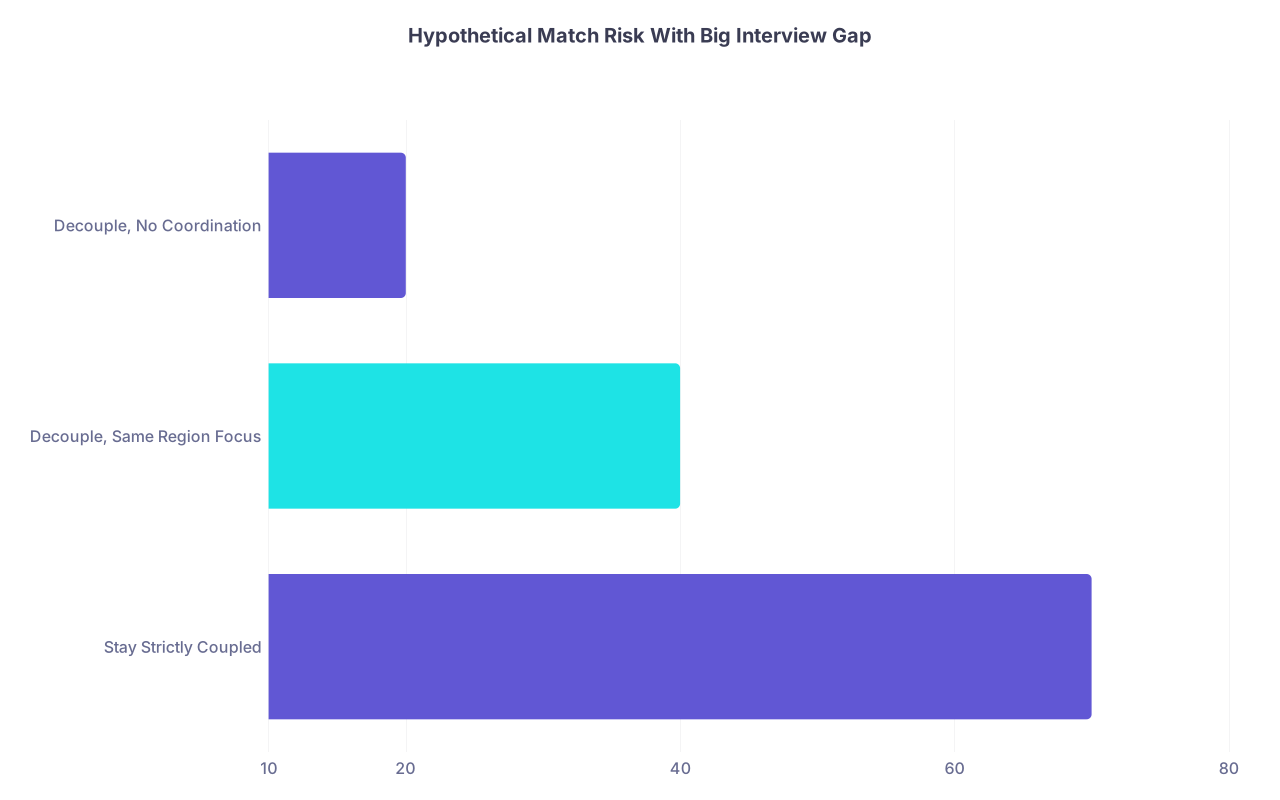
| Category | Value |
|---|---|
| Stay Strictly Coupled | 70 |
| Decouple, Same Region Focus | 40 |
| Decouple, No Coordination | 20 |
(Think of these as “risk of at least one of you not matching.” Not exact numbers, but you get the idea: strict coupling is risky when one person has few interviews.)
What If One Of You Straight Up Doesn’t Match?
This is the scenario everyone is terrified of but no one plans for until it happens.
If one match / one doesn’t, you’ll go through stages: panic, blame (self or each other), catastrophizing, weird numbness.
You need a very unromantic, practical plan:
Will the matched partner still go?
- Almost always: yes. Turning down a residency spot is extreme and usually a bad career move.
What’s the unmatched partner’s Plan B?
- SOAP?
- Research year?
- Prelim year with reapplication?
- Different specialty next cycle?
How will you handle distance if that’s part of the equation?
- Travel expectations
- Financial reality (flights are not cheap on a resident salary)
- Communication habits (not just vibes and hope)
I’ve watched couples go through one-partner-no-match and stay together just fine. It was ugly for a year. Pride took a hit. But they stabilized.
The couples that fall apart usually do so because:
- They never talked about this possibility, so it felt like betrayal when one partner still went to residency
- The unmatched partner internalized it as “I’m dead weight” and started pulling away
- Or the matched partner started acting like they were “ahead” in life now
You can avoid some of that if you talk now, when it’s hypothetical, not on Match Day when someone’s sobbing on the floor.

How To Not Let This Poison Your Relationship Long-Term
This season is temporary. The scar tissue from it…is not.
If you want to survive the imbalance and come out still liking each other, not just technically “together,” you need a few ground rules.
No “you’re holding me back” comments. Even as a joke.
Those land like a gut punch and sit there for years.No martyrdom.
“I’ll just give up everything for you, I guess,” isn’t romantic. It’s resentful.Name the power shift.
The one with more options will feel like they’re “in control.” The other will feel “dependent.” Talk about it explicitly:
“I know it feels like I have more leverage right now. I don’t want to use that against you.”Protect each other from comparison.
Nosy classmates, family, random attendings will say things like, “Oh, who has the better stats?” Shut that down.
“We’re focusing on finding good fits for both of us, not comparing.”Remember: this is one brutal year, not your entire life story.
In three years, nobody will care how many interviews you had. They’ll care if you’re good at your job and not a disaster to work with.
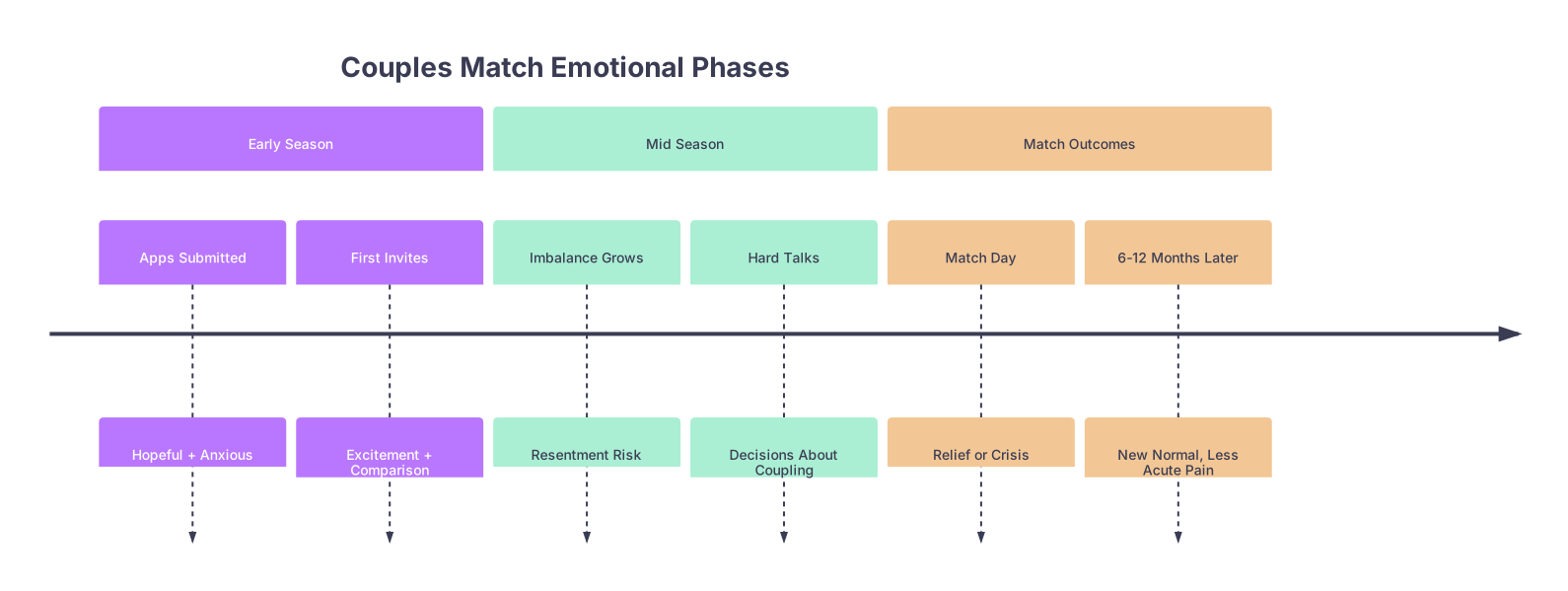
| Period | Event |
|---|---|
| Early Season - Apps Submitted | Hopeful + Anxious |
| Early Season - First Invites | Excitement + Comparison |
| Mid Season - Imbalance Grows | Resentment Risk |
| Mid Season - Hard Talks | Decisions About Coupling |
| Match Outcomes - Match Day | Relief or Crisis |
| Match Outcomes - 6-12 Months Later | New Normal, Less Acute Pain |
Let’s Be Honest About The Worst-Case Scenario
You’re probably already thinking it, so let’s just say it.
Worst case:
- One of you matches somewhere you like
- The other doesn’t match at all
- You’re in different cities
- The unmatched partner is humiliated and depressed
- The matched partner feels guilty 24/7
- You’re both exhausted, broke, and wondering if you made all the wrong choices
Can a relationship survive that? Yes. I’ve seen it.
Is it guaranteed to? No. Some couples break under that weight.
But here’s the part you’re not giving yourself credit for: you are both already doing something brutally hard. Med school, couples match, this insane training path. You’re not fragile. You’re tired and scared, which is different.
You can:
- Make a rational plan instead of just hoping for magic
- Keep talking even when it feels repetitive and uncomfortable
- Accept that sometimes the “less romantic” choice (decoupling, distance for a while) is actually the caring one

Bottom Line: What If Only One Of You Gets Interviews?
Three things I don’t want you to forget:
- A lopsided interview count is common and brutal, but it doesn’t automatically mean someone is “worse” or the relationship is doomed. It means the system is messy.
- You need specific, honest conversations about risk, decoupling, and Plan B before you’re in full-on crisis. Hidden resentment damages more than any algorithm.
- Your relationship can survive imbalance — even no match for one partner — if you treat this as a joint problem to solve, not a silent competition to win or lose.
You’re allowed to be scared out of your mind. Just don’t let that fear make all your decisions for you.


