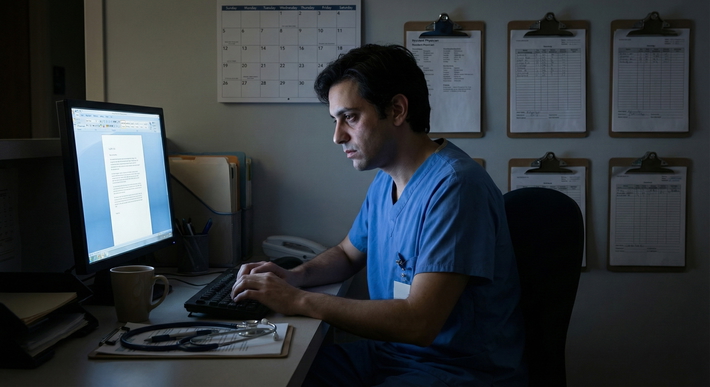
What happens when you hand over your entire medical chart, thinking it will “prove” your disability, and then your accommodation request still gets denied—or worse, narrowed and questioned?
If you are asking for disability accommodations in medical school, residency, or any health‑care setting, there is one mistake I see again and again:
People drown committees in intimate medical detail, thinking more information = stronger case.
It usually does the opposite.
Let me walk through how that goes wrong, why committees quietly love when you over-share (because it makes their job easier, not yours), and what you should do instead.
The Core Mistake: Confusing “Medical Story” With “Accommodation Evidence”
Most applicants believe they need to:
- Explain exactly what happened medically
- Provide every test, note, and consult
- Show their entire “journey” to diagnosis
They think if the committee really understands their suffering, the committee will be compelled to help.
That is not how accommodation decisions are made.
Accommodations are based on:
- Whether you have a qualifying disability
- How that disability functionally limits you in the relevant setting
- Whether a requested modification is reasonable and effective
Notice what is not on that list:
- Every MRI you have ever had
- Every failed medication trial
- Every page of therapy notes
- Your childhood trauma narrative
Those may be real and painful. They are just not what the decision hinges on.
When you over-share, you make three dangerous things easier for the institution:
- To medicalize your story and ignore your functional limits
- To cherry pick minor improvements as evidence you “do not need” help
- To question your credibility based on side comments or old notes
You hand them ammunition you did not need to provide.
, Entire lab history, Old imaging, Personal narrative emails](https://cdn.residencyadvisor.com/images/articles_svg/chart-common-document-types-that-are-over-shared-2016.svg "Common Document Types That Are Over-Shared")
| Category | Value |
|---|---|
| Full chart printout | 90 |
| [Raw therapy notes](https://residencyadvisor.com/resources/disability-accommodations/seven-documentation-errors-that-get-exam-accommodations-denied) | 80 |
| Entire lab history | 75 |
| Old imaging | 70 |
| Personal narrative emails | 85 |
How Over‑Sharing Backfires: Real Patterns I Keep Seeing
I want you to see specific failure modes. Because they are predictable.
1. Old documentation gets used against you
Scenario I have seen more than once:
- Student applies for Step 2 CK accommodations for ADHD and anxiety
- Sends: 80+ pages including:
- College counseling notes
- Old psych intake from age 16
- Past accommodation denials from another school
- Every medication trial note since high school
What the committee focuses on:
- One line from an early note: “Symptoms improved significantly with medication; grades good this term.”
- Another line: “Patient denies functional impairment at this time.”
- A year where there was no treatment at all.
Then they say: “Functional limitations are not consistently documented; symptoms appear controlled with treatment at times. Request denied.”
That “helpful history” turned into a weapon.
2. “Improvement” language erodes your case
Clinicians document like this all the time:
- “Doing better overall”
- “Panic attacks less frequent”
- “Sleep improved with CBTI”
- “No suicidal ideation today”
Those phrases are clinically true and often positive.
But committees love them for a different reason:
They use them to argue: “The condition is well‑managed, so no additional time/environmental modification is necessary.”
You gave them ammunition they did not need.
3. Irrelevant medical detail distracts from functional limits
I saw a resident request reduced call nights due to Crohn’s disease.
They submitted:
- Surgical reports
- Colonoscopy findings
- Pathology reports
- Serial CRP and ESR values
- 10 years of GI clinic notes
What was not clearly documented:
- How many nights per month they were waking up with severe abdominal pain
- Average time in the bathroom per episode
- How night call exacerbated flares
- How often fatigue impaired their ability to safely work
So the committee sees: “Disease currently quiescent on biologic therapy. Stable.”
And concludes: “No objective evidence of current functional limitation requiring schedule change.”
Massive detail. Very little about the one thing that matters: functional impairment in the training environment.
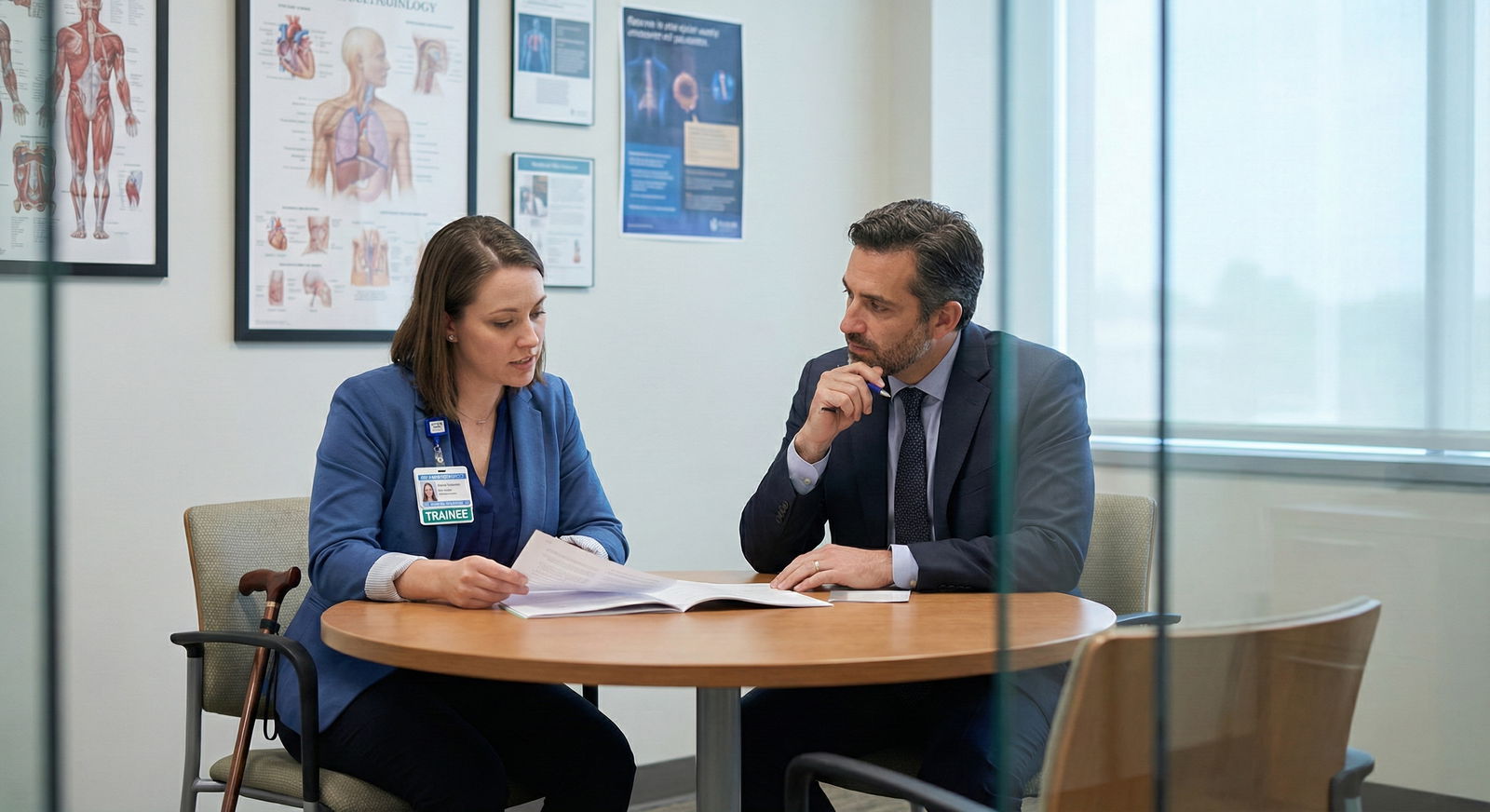
The Documentation You Actually Need (And What To Hold Back)
You do not need to prove you are “sick enough” by oversharing intimate detail. You need to prove functional limitation in a specific context.
Focus on three pillars
Diagnosis with credibility
- Formal diagnosis from an appropriate provider (psychologist, psychiatrist, neurologist, etc.)
- Not a self-diagnosis or casual comment in a random clinic note
Functional limitations
- How the condition affects you in the actual task environment
- Specific, measurable, and tied to job or exam demands
Nexus between limitation and requested accommodation
- Clear explanation why this modification is necessary
- Concrete link, not a vague “would help me feel better”
Documents that help you
A concise provider letter (1–4 pages) that:
- States diagnosis and duration
- Describes current severity and stability
- Lists specific functional impairments (e.g., sustained attention, reading speed, written output, stamina, visual processing)
- Explicitly supports the specific accommodation(s) requested
Recent, targeted evaluations
- Neuropsych testing that clearly shows processing speed, working memory, reading rate, etc., mapped to the exam demands
- Objective measures that match your story (not just “patient reports…”)
Performance history in relevant contexts
- Score reports showing large discrepancy between standard time and accommodated conditions
- Documented patterns of functional difficulty (e.g., OSCE feedback, repeated failures clustered where your limitations make sense)
Documents that often hurt more than help
Be very careful with:
Raw therapy/counseling notes
- Loaded with highly personal detail, side comments, emotional content
- Often inconsistent and not written for disability determinations
- Can suggest you are “improving” or “coping well” in ways that undercut your case
-
- Hundreds of pages; committees will skim selectively
- Old off‑hand remarks (“no concerns with school currently”) get amplified
- Irrelevant history (e.g., childhood PCP notes) clutters the file
Voluminous lab/imaging results
- Rarely speak directly to functional limits
- Can quietly signal “disease is biochemically controlled”
If you are asked for “all records,” push back and clarify:
“What exactly do you need to determine functional limitations and appropriate accommodations?”
You are allowed to ask that.
| Type of Document | Usually Helpful | Often Risky |
|---|---|---|
| Concise provider letter | Yes | No |
| Targeted neuropsych report | Yes | Sometimes |
| Full EMR printout | Rarely | Yes |
| Raw therapy notes | Rarely | Yes |
| Prior score reports | Yes | No |
The Privacy Trap: Why Over‑Sharing Is a Boundary Problem Too
Beyond strategy, there is another issue: privacy.
You have a legal right to reasonable accommodations. You do not have to give a dean your entire psychiatric history to earn that right.
Distinguish need to know from voyeurism
There are three separate groups:
Disability / student affairs office
- Role: determine eligibility and reasonableness
- May need diagnosis and functional detail
- Does not need raw, intimate therapy narratives in most cases
Faculty / supervisors
- Role: implement agreed accommodations
- Usually told only: “Student approved for X accommodations.”
- Should not receive your medical records at all
Licensing / board bodies (e.g., USMLE, NBME, COMLEX, state boards)
- Role: determine exam accommodations or license eligibility
- Need evidence of a disability and functional impact
- Still do not need every raw counseling note unless there is a very specific, clearly explained reason
Oversharing collapses those boundaries. Once those records leave your clinician’s office, control is gone. They can be:
- Uploaded to institutional systems
- Read by administrators you will later see in other roles
- Brought up in remediation or professionalism discussions
I have seen residents stunned when a remediation committee references a detail from a document they submitted only for an accommodation request three years earlier.
That is not theoretical. That is how institutional memory actually works.

| Step | Description |
|---|---|
| Step 1 | Identify Need |
| Step 2 | Review Policies |
| Step 3 | Talk to Clinician |
| Step 4 | Obtain Targeted Letter |
| Step 5 | Submit to Disability Office |
| Step 6 | Provide Focused Documents |
| Step 7 | Ask What is Needed |
| Step 8 | Decision |
| Step 9 | Request for More Info |
How To Talk To Your Clinician So They Do Not Accidentally Sabotage You
Your clinicians are trained to treat you, not to protect you from bureaucratic misuse of their notes. They over-document. They are optimistic. They want to show progress.
You must guide them a bit.
Be explicit about the purpose
Say something like:
“I am applying for testing accommodations. They need documentation of my diagnosis and how it functionally affects test‑taking, not my entire psychiatric history. Could you write a concise letter focusing on functional limitations and recommended accommodations, instead of sending your full notes?”
Key elements to request in that letter:
Clear statement of:
- Diagnosis
- Duration (e.g., “symptoms present since childhood”)
- Chronicity (e.g., “lifelong condition, not situational”)
Functional limitations:
- “Has reduced processing speed, taking approximately 1.5–2x longer than peers to read and comprehend dense medical texts.”
- “Experiences marked exacerbation of symptoms under timed, high‑stakes testing, resulting in physiological and cognitive decompensation (panic, impaired recall, need for frequent restroom breaks).”
Explicit link to requested accommodations:
- “Based on the above, I strongly recommend 50% extended time and a separate, reduced‑distraction testing environment as necessary to provide equal access.”
This is far more powerful than including 60 pages of raw session notes.
What you do not want them to do
- Submit their full chart “to be thorough”
- Overemphasize how much better you are compared with the worst past episodes
- Use vague language that downplays impairment: “mild,” “transient,” “seems okay,” “coping well” without context
If their standard template letter is weak, ask for a revision. You are not being demanding; you are protecting your legal rights and your privacy.
Red Flags In Requests For Documentation
Not every request for “more information” is reasonable. Some are fishing expeditions. Some are lazy.
Watch for these red flags:
“Send us all your mental health records.”
Translation: “We do not want to think about what is actually necessary.”“We need full notes from every therapist you have ever seen.”
No. Past providers from 8–10 years ago rarely matter unless your current diagnosis depends on that longitudinal data.“We will only consider your application with your complete EMR.”
Push back. Ask them to identify specific data elements required to determine functional limitations.
A firm but calm response:
“I am happy to provide documentation that addresses diagnosis and functional limitations relevant to my requested accommodations. Could you please specify exactly what information you require to make this determination, so I can work with my provider to submit focused records?”
If they insist on something obviously excessive, that is often a sign you should:
- Involve disability support advocates
- Consult your student ombudsperson or legal counsel
- At minimum, delay sending raw, deeply personal records while you get advice
You will not get a second chance to un‑share something.

Strategic Sharing: Practical Steps To Avoid Over‑Sharing
You need a simple, repeatable process so you do not panic and dump your entire life story every time an institution asks for “documentation.”
Use this sequence:
Step 1: Clarify the decision standard
Before you send anything, answer:
- Who is the decision‑maker? (school, residency, NBME, state board)
- What exactly are they deciding? (exam accommodations, schedule change, leave, etc.)
- What criteria do they say they use? (look at written policies, technical standards)
Step 2: List what is actually required
From their own documentation, identify:
- Required diagnosis information (by whom, how recent)
- Required evidence of functional limitation
- Any specific test types they want (e.g., adult normed ADHD battery, visual acuity measures)
Stick to that. Not your entire medical autobiography.
Step 3: Assemble a targeted packet
Usually:
Cover letter / personal statement:
- Brief, functional narrative (1–2 pages)
- Focus on how you function, not your emotional trauma history
Primary clinician letter:
- As above: diagnosis, functional impairment, recommended accommodations
Objective testing or supporting data:
- Only those that relate directly to the function you are asking to be accommodated
Past accommodation history:
- Prior approval letters from college, MCAT, etc., if they strengthen your case
Step 4: Pre‑screen for self‑sabotage
Before you send anything, look for:
- Irrelevant detail (e.g., “broke up with partner, mood low”)
- Old notes from times when you denied any impairment
- Language that dramatically minimizes your current issues
If a document contains material that is both:
- Not required for the decision
- Potentially harmful or deeply personal
Then it probably should not be in the packet.
If you are forced to provide something broad (e.g., “records from the last 3 years”), talk to your provider about summarizing or abstracting, rather than sending verbatim psychotherapy notes.
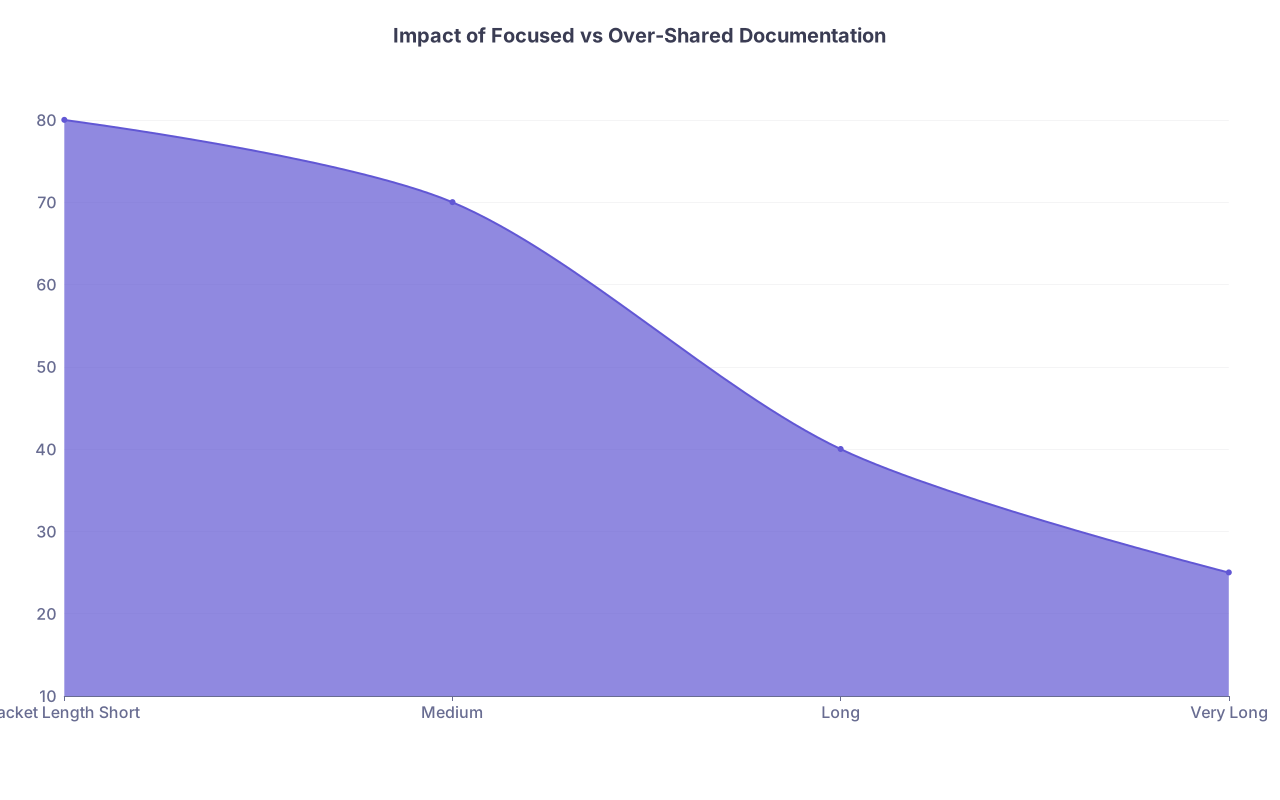
| Category | Value |
|---|---|
| Packet Length Short | 80 |
| Medium | 70 |
| Long | 40 |
| Very Long | 25 |
The Future: Where Disability Accommodations Should Be Headed
Right now the system often punishes you for being honest and detailed. That is backwards.
But change is slowly happening.
We are seeing:
- Increased recognition that functional assessments should trump raw diagnosis labels
- More pushback on demands for raw psychotherapy records (especially in higher ed and licensing contexts)
- Growing awareness about privacy harms and long‑term use of health information in academic medicine
The future, if we do it right, looks like:
- Standardized, function‑focused forms for clinicians to complete
- Clear separation between:
- Health treatment record
- Disability documentation
- Better training for deans, program directors, and exam boards on how to interpret documentation without prying into irrelevant personal history
We are not there yet. Until we are, you have to protect yourself by being more strategic than the system expects.
FAQs
1. What if my disability office insists on full records or therapy notes?
Do not reflexively comply. Ask for clarification in writing:
- What exact information do they need to determine functional limitation and reasonable accommodations?
- Why are summaries or targeted letters insufficient?
If they still demand raw notes, you have options:
- Ask your therapist to write a comprehensive summary letter instead
- Involve your school’s ombudsperson or a student advocacy office
- In high‑stakes cases (e.g., licensing boards), consider getting independent legal advice before sending raw psychotherapy records
The worst mistake is to hand everything over casually, then discover later how it is used.
2. Can I redact parts of my records before sending them?
Sometimes, yes—carefully. If an agency or institution demands specific records, you can:
- Remove clearly irrelevant, highly personal content (e.g., details of unrelated trauma when the issue is ADHD testing accommodations)
- Black out names of third parties (family members, partners) mentioned in notes
But be smart: heavy redactions can raise suspicion. That is why targeted letters and summaries are almost always better than giving broad records then trying to censor them yourself.
3. Will providing less information make me look like I am hiding something?
No—if what you provide is:
- Directly relevant
- Well‑organized
- Clinically credible
Strong, concise documentation looks professional, not evasive. What undermines credibility is:
- Disorganized data dumps
- Massive packets with inconsistent stories
- Records that say you are “doing fine” while you claim severe impairment
You are not in a confessional. You are making a structured, legal request. Treat it that way.
4. What if my past notes genuinely minimize my symptoms?
This happens a lot. People under‑reported for years, or clinicians downplayed.
You cannot erase history, but you can contextualize it:
- Have your current clinician explain the discrepancy:
- “Patient historically minimized symptoms due to stigma and fear of consequences in training environments.”
- Emphasize longitudinal patterns of difficulty, not just past language
- Provide functional examples that bridge the gap between old documentation and current reality
But do not volunteer ten years of minimizing notes unless you absolutely must. The more irrelevant, contradictory history they see, the easier it is for them to rationalize a denial.
Key points to walk away with:
- More medical detail does not equal a stronger case; targeted, function‑focused documentation does.
- Oversharing—especially raw therapy notes and full EMRs—arms institutions with material they can use to minimize, question, or delay your accommodations.
- Protect yourself by controlling what you share, clarifying what is truly required, and working with clinicians to produce concise, focused letters instead of data dumps.