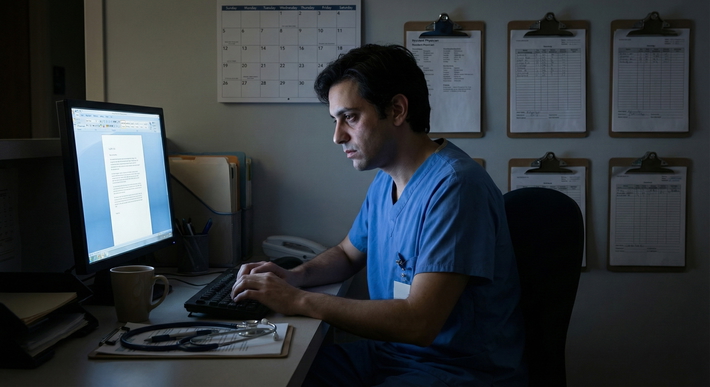
Twenty‑five percent of people with long COVID report being unable to return to their prior level of work more than a year after infection.
Now layer that onto graduate medical education. Rotations. Night float. Trauma call. Suddenly this is not an abstract public health problem. It is the resident next to you on rounds who cannot remember the second antibiotic you just said. Or you.
Let me break this down specifically: long COVID in GME is no longer rare, it is under‑recognized, under‑accommodated, and badly handled by many programs that still think “if you passed Step 1, you can push through this.” That approach is legally risky and clinically unsafe.
We are going to focus on one question: how do you treat long COVID as a disability in residency and fellowship, and what do appropriate cognitive and fatigue accommodations actually look like in the real structure of GME?
1. Long COVID in Trainees: What It Actually Looks Like On the Ground
| Category | Value |
|---|---|
| Fatigue | 65 |
| Brain fog | 45 |
| Dyspnea | 36 |
| Headache | 30 |
| Sleep issues | 32 |
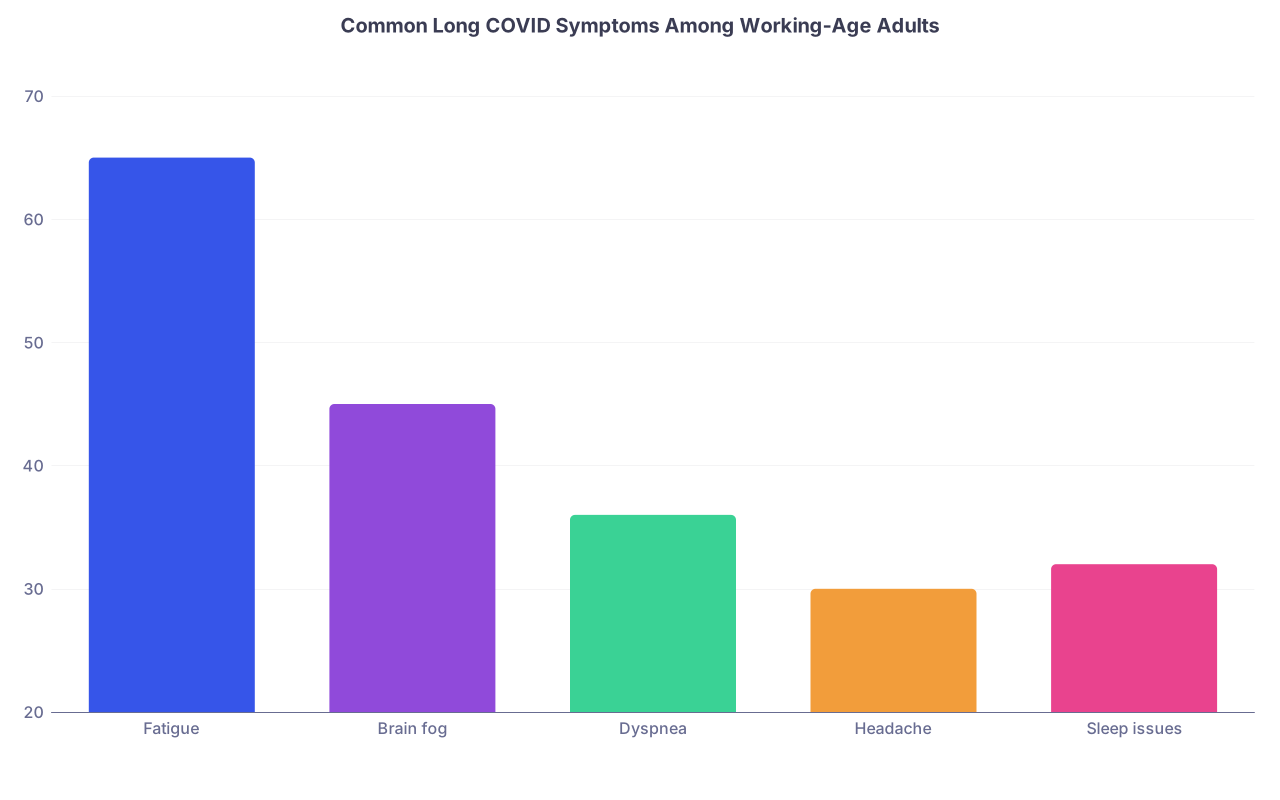
Long COVID is not one disease. It is a messy cluster of post‑acute sequelae after SARS‑CoV‑2 infection. In GME, the patterns that actually derail training are dominated by two domains: cognition and energy.
Residents do not walk into your office saying “I have post‑exertional malaise.” They say things like:
- “I used to pre‑round on 12 patients easily; now after 6 I cannot remember labs without looking again.”
- “By post‑call conference, I literally cannot follow what the attending is saying.”
- “I read the same paragraph of UpToDate five times and it still doesn’t stick.”
The cognitive piece: “brain fog” is not vague if you ask the right questions
The common functional cognitive problems in long COVID that show up in residency:
Slowed processing speed
That intern who takes 5 minutes to write a simple note that used to take 1 minute. The resident who freezes when asked to summarize an ICU patient succinctly.Working memory impairment
Hard time holding 3–4 pieces of data in mind long enough to synthesize a plan. You explain a 4‑step dressing change; they remember 1–2 steps consistently.Attention and divided attention problems
Multitasking falls apart. Sign‑out while responding to pages while updating orders? That is when you start seeing near‑misses.Word‑finding and verbal fluency issues
Residents sounding less articulate, searching for words mid‑presentation, or losing their train of thought. Not about knowledge. About access to it under time pressure.
This is often invisible outside high‑load situations. They might be perfectly fine at home reading for an hour. Put them on a 24‑hour call and they crash cognitively by 3 a.m.
The fatigue piece: beyond “I am tired”
Persistent fatigue in long COVID is not classic “residency fatigue” from lack of sleep. The pattern is more like:
- Disproportionate exhaustion after relatively modest effort
- Next‑day “crash” after a heavy call shift or string of clinics
- Post‑exertional symptom exacerbation: more brain fog, dizziness, palpitations, myalgias, even after mental rather than purely physical exertion
This is where programs get into trouble. They assume this is normal “PGY‑2 tired.” So they throw wellness platitudes instead of formal accommodations. That is not just insensitive. It may violate disability law if the condition substantially limits major life activities.
2. When Long COVID Becomes a Disability in GME (Legally and Practically)
You do not get accommodations just because you had COVID. You get accommodations when you have documented functional limitations that fit disability criteria and you go through the actual institutional process.
The legal backdrop in plain language
In the United States, residents and fellows are employees and learners. That means:
- ADA (Americans with Disabilities Act) and Section 504 of the Rehabilitation Act apply.
- Long COVID can qualify as a disability if it substantially limits one or more major life activities (thinking, concentrating, working, walking, etc.).
The key words: substantially limits and major life activities. Not “I feel a bit slower.” Think:
- Cannot complete pre‑rounding within duty‑hour expectations without errors.
- Needs extended time to process and document patient encounters.
- Experiences cognitive crashes that make safe overnight call impossible more than occasionally.
Programs do not decide by vibes. They must base decisions on documentation and an interactive process, usually routed through institutional disability services or employee health.
Documentation that actually helps
Weak note: “Resident reports brain fog after COVID, please provide accommodations.”
Stronger, functional note:
- “Resident has post‑COVID condition with demonstrated deficits in processing speed and working memory on neuropsychological testing (processing speed index 1.5 SD below expected).”
- “Fatigue and post‑exertional symptom exacerbation after >10 hours continuous cognitive work, with next‑day worsening of symptoms.”
- “These limitations affect the ability to perform extended overnight duties safely. Time‑limited high‑intensity multitasking (e.g., cross‑cover of >20 inpatients) markedly increases error risk.”
You want documented:
- Diagnosis or working diagnosis (e.g., post‑acute sequelae of SARS‑CoV‑2, ME/CFS‑like picture post‑COVID, dysautonomia/POTS related to long COVID).
- Objective or semi‑objective findings:
- Neuropsych testing, even brief screening
- 6‑minute walk, orthostatic vitals, heart rate variability in POTS
- Specialist notes (neurology, PM&R, infectious disease, pulmonary, cardiology)
- Clear functional limitations tied to major residency tasks.
Vague, nonspecific letters lead to token “we will support wellness” language and no meaningful changes.
3. The Accommodation Process in GME: Who Actually Does What

| Step | Description |
|---|---|
| Step 1 | Resident discloses symptoms |
| Step 2 | Contact disability or GME office |
| Step 3 | Submit medical documentation |
| Step 4 | Interactive meeting |
| Step 5 | Approve accommodations |
| Step 6 | Discuss leave or schedule change |
| Step 7 | Implement with PD and chief |
| Step 8 | Essential functions met with changes |
People assume the program director is the gatekeeper. Often they are not. In a reasonably functional institution, the workflow looks more like this:
Resident or fellow:
- Discloses to disability services / HR / GME office (depending on structure).
- Provides documentation.
- Clarifies where they are struggling: call, documentation, cognitive load, reading, clinics.
Disability/ADA office:
- Reviews documentation.
- Determines whether the condition qualifies as a disability.
- Proposes accommodation options that do not remove essential functions.
Program director / department:
- Identifies essential functions of the specialty and the program. This matters.
- Example: Ability to perform in‑house overnight call may be essential in some surgical residencies but not for a pathology fellow.
- Confirms what adjustments are feasible without undue hardship or compromising patient safety.
- Identifies essential functions of the specialty and the program. This matters.
GME:
- Oversees that accommodations are consistent with institutional policies, ACGME requirements, and duty hour rules.
- Sometimes arbitrates when PD and disability office disagree.
If the PD is trying to manage this solo, you are already off track. That is how you end up with illegal questions (“Are you sure residency is right for you?”) and inconsistent treatment.
4. Cognitive Accommodations: Concrete Options That Actually Work in Training
| Need/Impairment | Possible Accommodation in GME |
|---|---|
| Slowed processing speed | Extra time for documentation, reduced patients |
| Working memory deficits | Structured templates, checklists, written instructions |
| Attention/multitasking | Limit cross-cover volume, fewer simultaneous tasks |
| Fatigue after mental load | Protected breaks, no consecutive 28-hour shifts |
This is where people get stuck. They know what extended test time looks like on USMLE. They have no idea how to translate that to “I am PGY‑3 on MICU and my brain hits a wall at hour 14.”
So let me be specific.
4.1 Structuring information input and output
These are relatively low‑cost, high‑yield adjustments:
Written handoffs and plans
- Require that senior/attending provide written or templated plans for complex patients when possible.
- Resident keeps task lists and plans in structured format.
Standardized templates and checklists
- Use detailed note templates not just for billing but as cognitive scaffolding.
- For example, ICU note template that forces systematic review of each organ system so working memory load is reduced.
Reduce “on the fly” recall demands where feasible
- Let resident have notes/laptop available for case presentations and sign‑outs.
- Allow looking up medication doses rather than expecting instant recall, as long as it is done safely and not in emergencies.
These are entirely compatible with high‑quality care and are already used by many non‑disabled trainees. For long COVID, they move from “optional efficiency tools” to “necessary accommodations.”
4.2 Modifying cognitive load, not eliminating core experiences
Programs panic: “If we reduce their patient load, they will not graduate competent.” That is a lazy argument.
The goal is to modulate peak cognitive load and multitasking density, not to remove exposure altogether.
Examples that I have seen implemented:
Adjust patient caps on demanding rotations
- On wards: cap at, say, 8 primary patients instead of 12, while preserving exposure by longer rotation duration or additional rotations.
- In clinic: fewer double‑booked slots, slightly longer visit lengths, especially for complex new patients.
Task‑based restructuring
- On busy days, assign the resident to a defined role: procedures, admissions only, or discharges only, rather than juggling all simultaneously.
- In the ED, place them in lower‑acuity zones with more predictable pace.
Protected “recovery” periods within shifts
- Two 15–20 minute protected breaks in a 12‑hour shift where they step away from clinical work, with clear backup coverage by co‑resident or APP.
- This is not “wellness lounge time.” This is part of their accommodation plan.
You do not need to advertise these changes to the entire team. You need a clear schedule structure and coverage plan, documented and known to chiefs and faculty leads.
4.3 Call and night work: the flashpoint
This is where programs either get creative or get punitive.
The reality: some long COVID residents cannot safely perform 24‑ or 28‑hour in‑house calls, especially repeated within a week. Post‑exertional exacerbation plus sleep deprivation equals real patient safety risk.
Common, reasonable accommodations include:
Conversion of 24‑hour calls into:
- 16‑hour max in‑house with mandatory post‑shift break and backup coverage from another resident or nocturnist, or
- Split‑call models where they cover evening admissions but leave before deep night hours, with another physician taking over.
Reduced frequency of overnight call
- Fewer total overnight calls per month with compensatory shifts in day coverage, clinics, or academic time so duty hours and education remain full‑time.
Strategic scheduling
- No back‑to‑back 24‑hour calls.
- Ensure at least 2 true days off (not masking as “post‑call”) after heavy call blocks.
Is call an “essential function”? Sometimes yes, sometimes no. Neurology programs have moved residents to weekend day coverage instead of night call. Some internal medicine programs redistribute cross‑cover responsibilities. You need to map this against your specialty’s essential functions and have a serious conversation with your GME office, not hide behind “we have always done it this way.”
5. Fatigue‑Focused Accommodations: Energy Budgeting in a Duty‑Hour World
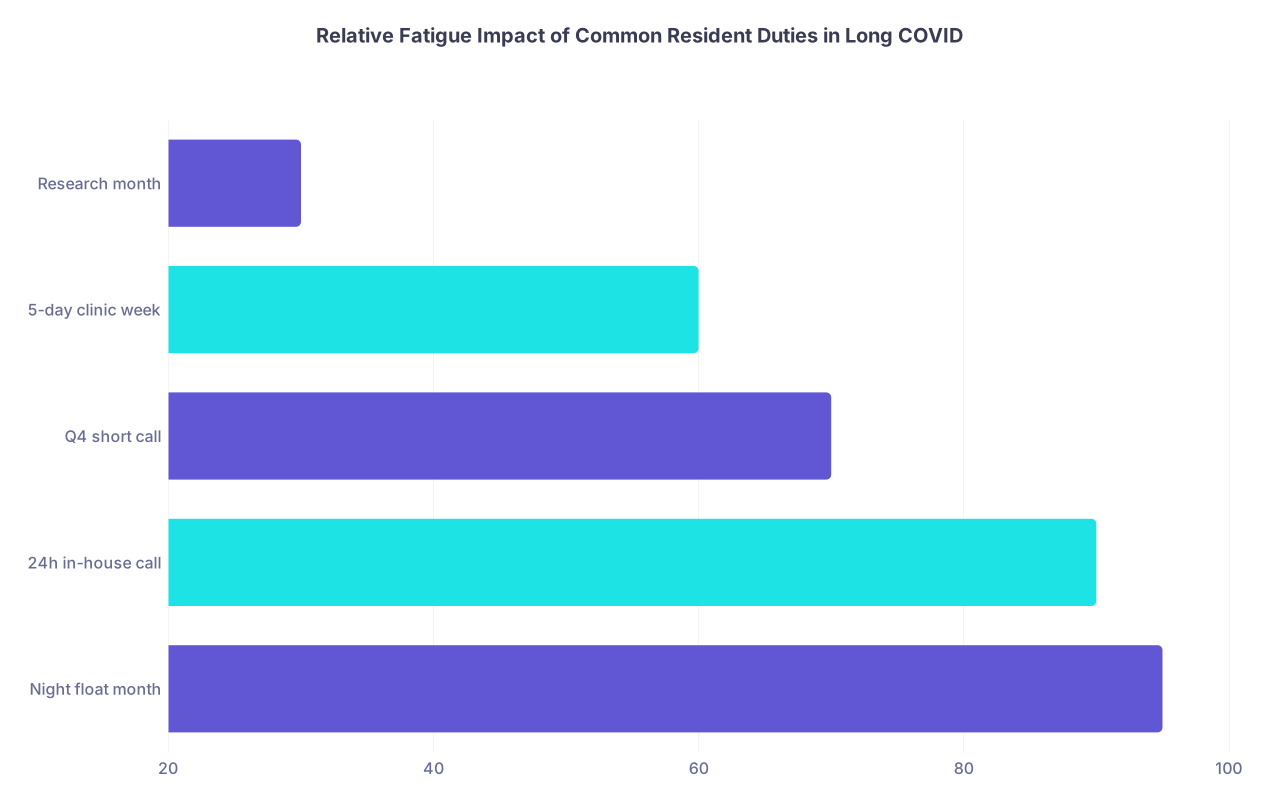
| Category | Value |
|---|---|
| Night float month | 95 |
| 24h in-house call | 90 |
| Q4 short call | 70 |
| 5-day clinic week | 60 |
| Research month | 30 |
Long COVID fatigue is like working with a smaller daily battery and a very slow charger. GME schedules were built for people with industrial generators.
The aim is not to cut hours below ACGME standards. The aim is to shape how those hours are distributed.
5.1 Scheduling strategies that actually help
I have seen these work when done thoughtfully:
Avoid maximal intensity blocks stacked together
- Do not schedule ICU → ED → night float in three consecutive months for someone with long COVID.
- Interpose lower‑intensity rotations (clinic, electives, research) as “physiologic buffers”.
Shorten continuous duty segments where possible
- Replace some 28‑hour calls with 16‑hour or 12‑hour shifts, with coverage redistribution.
- Emphasize shift‑based coverage models instead of traditional marathon calls, especially in internal medicine and pediatrics where that is more feasible.
Protect genuine rest days
- Do not treat “post‑call” as a rest day if the resident has been awake 24 hours. Count that as duty time, not wellness.
- Make sure days off are not filled with mandatory non‑clinical activities that sap energy (full‑day retreats, mandatory in‑person lectures that could be recorded).
5.2 Micro‑level accommodations during shifts
Small adjustments, big impact:
Guaranteed short breaks
- Eat and hydrate. Sit in a quiet room away from monitors for 10–15 minutes. Twice per long shift, minimum.
- This must be operationalized: who covers pages, who knows when they are on break.
Reduced “float” expectations
- Many programs treat certain residents as the “catch all” for last‑minute holes. Long COVID residents should not be primary targets for that.
- Build into the chief schedule that this person should not be first in line for unexpected extra coverage.
Environmental tweaks (less glamorous but real)
- Access to a space to briefly lie flat if orthostatic intolerance or POTS‑like symptoms are part of the picture.
- Option to sit during rounds whenever possible, rather than forced standing for 3 hours.
None of this is extraordinary. Nursing schedules have incorporated similar accommodations for chronic illness for years. GME is just catching up.
6. Balancing Competency, ACGME Requirements, and Real Limits
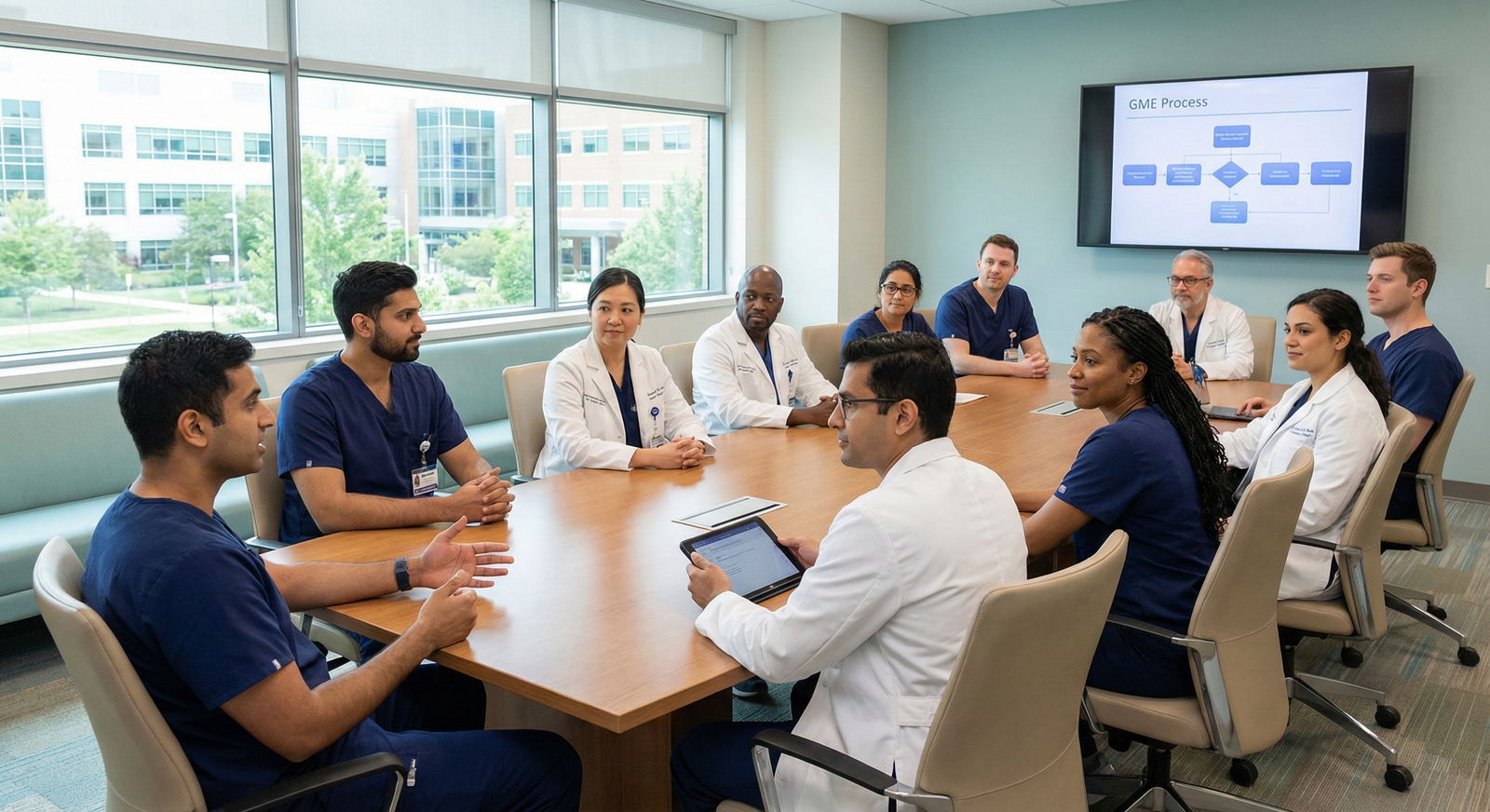
People love to throw “milestones” and “essential functions” around without being precise.
Let us be clear:
- ACGME requires adequate clinical experience, duty hour compliance, and milestone attainment by graduation.
- It does not require every resident to do identical schedules, identical call structures, or identical patient caps.
You can accommodate by:
Extending training by several months or a year if needed
- This is common for parental leave, serious illness, or research tracks. Long COVID is not special in that sense.
Redistributing experience
- Maybe fewer brutal ICU nights but more day‑time ICU months.
- More ambulatory care and consults; fewer cross‑cover marathons.
Supplementing clinical experience with simulation and structured case‑based learning
- Particularly for procedural specialties where fatigue may limit physical endurance in OR but knowledge and decision‑making can still be trained heavily in sim labs.
The question program leadership should ask is not: “Can this resident survive a typical schedule?”
The question is: “Can this resident, with reasonable modifications, meet the core outcomes of the specialty safely within a revised timeline?”
If the honest answer is no, you talk frankly about extended leave, part‑time options (where allowed), or transition plans. But you do not jump there without trying serious, institutional‑level accommodations first.
7. Practical Playbook: If You Are the Resident, PD, or Chief
7.1 If you are the resident with long COVID
You need to be strategic, not stoic.
Document patterns early
- Track days when fatigue or brain fog significantly impairs your work.
- Note triggers: consecutive nights, >10 patients, night float, didactics after call.
Get real medical evaluation
- Push past “your labs are fine, this is just stress.”
- Aim for at least one specialist who can document functional impairment, not only “normal MRI, normal labs”.
Go through formal channels
- Disability or GME office, not just a casual hallway conversation with your PD.
- You want a paper trail and institutional backing, not informal “we will try to be nice” that disappears with leadership turnover.
Be concrete about what you need
- “I cannot do anything overnight” is too broad.
- “After 16 consecutive work hours, my cognitive performance drops and I make errors; I need call limited to 16 hours maximum with coverage thereafter” is something they can work with.
Expect some resistance and ignorance
- Many faculty still think long COVID is exaggerated.
- That is their problem, not a reason to give up on accommodations.
7.2 If you are a program director
Stop improvising in isolation.
Pull in disability/HR/legal early
- You want their explicit guidance on what is reasonable, not an informal “we did our best.”
Define essential functions explicitly
- Write down what you consider non‑negotiable in your specialty: e.g., ability to manage emergencies, participate in overnight coverage at some point, complete a minimum number of procedures.
- This written description matters if there is ever a dispute about what must be accommodated.
Train chief residents and key faculty
- They are the ones building schedules and assigning work in real time.
- If they do not understand the parameters of an approved accommodation, you will see passive resistance or accidental violations.
Monitor impact, adjust over time
- Some trainees improve with time and rehab; accommodations might be tapered or modified.
- Others worsen under sustained load; they may need more protection or transitions.
7.3 If you are a chief resident
Your job is translating policy into daily reality.
Protect confidentiality, but enforce structure
- You do not need to broadcast a diagnosis. You do need to say, “X has a modified call schedule approved by GME; this is not negotiable.”
Build scheduling templates that do not punish others unfairly
- Accommodations do not mean another intern absorbs 5 extra calls with no discussion.
- Advocate for institution‑level solutions: more nocturnists, APPs, or cross‑coverage pools rather than just redistributing pain.
Watch for subtle discrimination
- Comments like “They’re not pulling their weight” or “Maybe they’re not cut out for this specialty” creep in fast.
- Challenge that. Tie discussions back to performance and milestones, not to how many 28‑hour calls someone can grind through.
8. Looking Forward: GME Has To Catch Up To Chronic, Fluctuating Disability
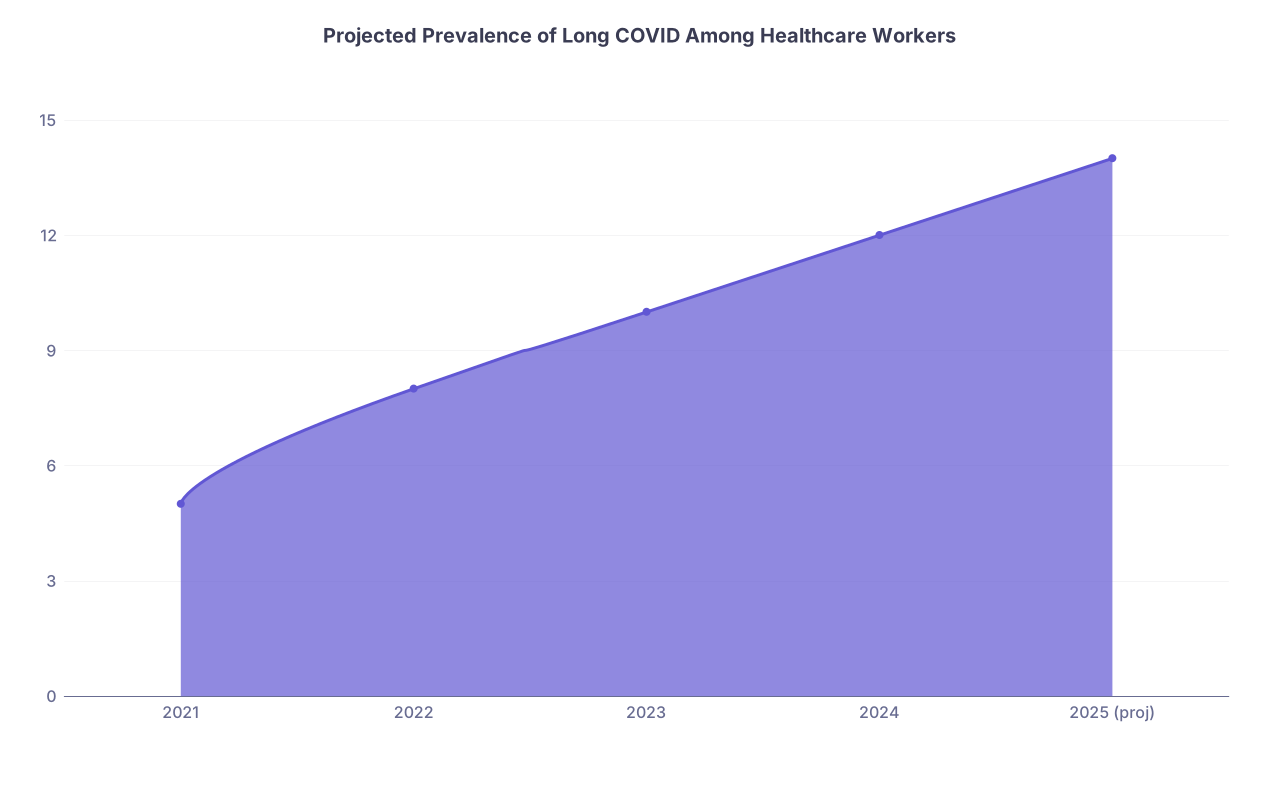
| Category | Value |
|---|---|
| 2021 | 5 |
| 2022 | 8 |
| 2023 | 10 |
| 2024 | 12 |
| 2025 (proj) | 14 |
Long COVID is not a one‑off pandemic artifact. It is a preview. GME is going to see more trainees with:
- Post‑infectious syndromes (long COVID, post‑EBV, post‑flu).
- Dysautonomia, ME/CFS‑like conditions.
- Other chronic, waxing‑waning cognitive and fatigue disorders.
Old models of “you either handle a full‑throttle schedule or you wash out” are not just cruel. They are obsolete.
Forward‑thinking programs will:
Build default flexibility into schedules
- More shift‑based models.
- Built‑in redundancy for coverage.
Normalize disability accommodations as part of GME culture
- Residents already get parental leave, part‑time research years, and remediation time for knowledge gaps.
- Cognitive and fatigue accommodations should be just as unremarkable.
Track outcomes
- How do residents with long COVID who are properly accommodated perform long‑term?
- My experience: many become highly meticulous, systems‑oriented physicians because they have been forced to operate with narrow cognitive margins.
Advocate upward
- ACGME, specialty boards, and hospitals need data to adjust guidelines.
- Programs that actually document what works will shape future standards.
Key Takeaways
- Long COVID in GME often shows up as real, measurable deficits in processing speed, working memory, and fatigue tolerance that can qualify as a disability under ADA when formally documented.
- Effective accommodations are not vague kindness; they are specific structural changes to call, clinic density, patient caps, and information flow that preserve essential functions while reducing peak cognitive and energy demands.
- Programs that treat long COVID as a legitimate disability and use formal processes—rather than ad hoc “favor trades”—will protect patients, retain good trainees, and be better prepared for the future wave of chronic, fluctuating illnesses in the physician workforce.