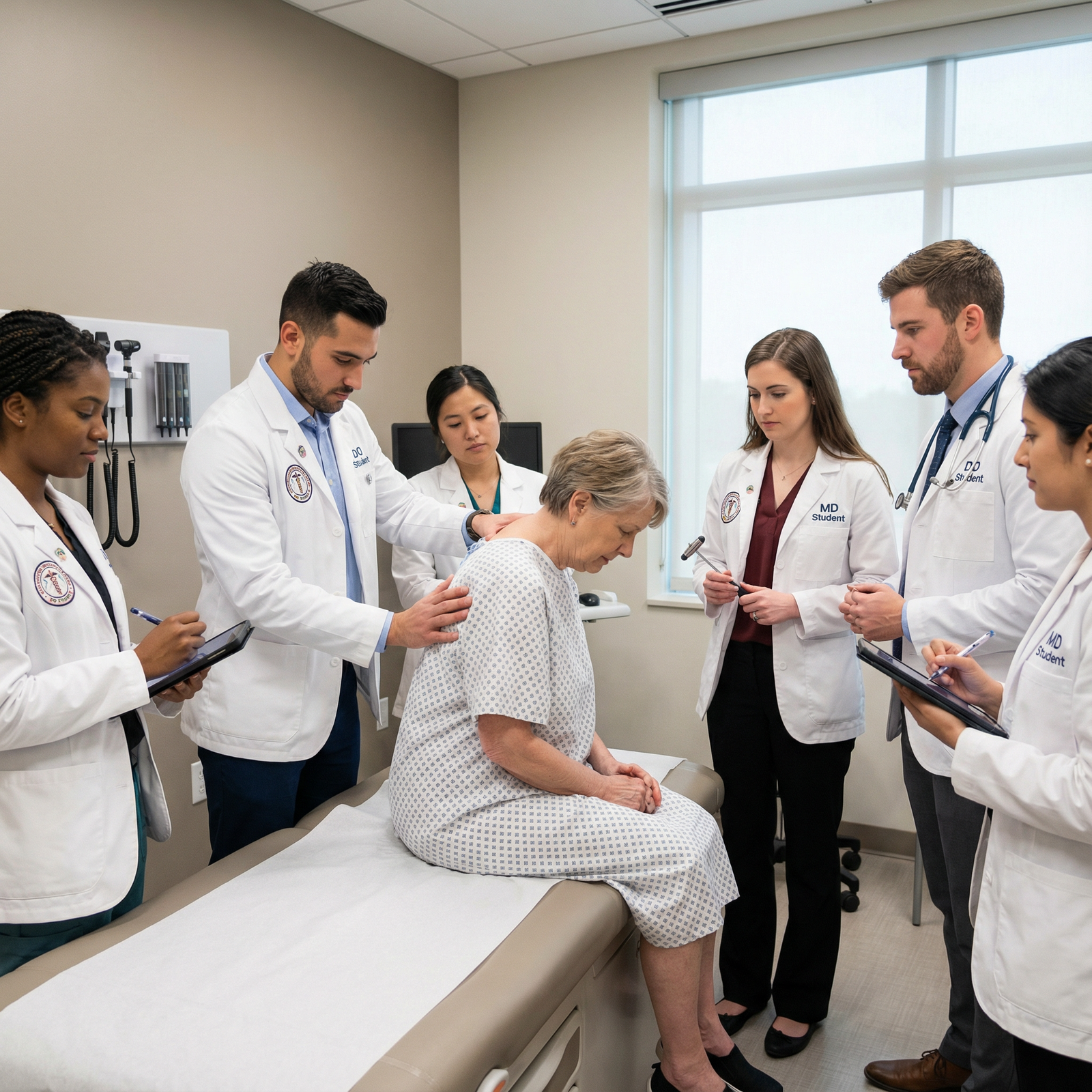
The worst MSK career plans are built on vibes and school letters instead of reality.
If you’ve got an athletics or performance background and you’re eyeing musculoskeletal (MSK) careers, you’re already ahead of most applicants. You actually know what “my hamstring is tight” feels like, not just how to spell “musculoskeletal.” But you can absolutely waste that advantage by picking DO vs. MD for the wrong reasons, or by not aligning your choice with the way MSK training really works.
Let me walk you through what to do if you’re in this exact situation: former athlete/dancer/lifter/performer, now premed or early med student, trying to choose or maximize DO vs. MD for an MSK-focused career.
We’re talking sports med, PM&R (physiatry), pain, ortho, maybe primary care with heavy MSK. Not fantasy-land. Real paths.
1. Start With the Only Question That Matters
Forget the message-board noise. Start here:
What exact MSK role do you picture yourself in, on a random Tuesday, five years after residency?
Not a fantasy job. A Tuesday.
Examples:
- You’re on the sideline at a D1 football game, covering acute injuries, clinic the rest of the week.
- You’re in a PM&R clinic doing ultrasound-guided injections, EMGs, chronic tendinopathy workups.
- You’re in an ortho group, seeing consults and doing scopes, fractures, reconstructions.
- You’re a primary care doc with a sports niche, lots of weekend warriors and high school/college athletes.
Once you answer that, the DO vs. MD question gets way more concrete.
Rough mapping from Tuesday job → training path
| Tuesday Job Vision | Typical Path | Competitiveness |
|---|---|---|
| [Ortho surgeon (ACLs, fractures)](https://residencyadvisor.com/resources/do-vs-md/wanting-ortho-neuro-or-derm-choosing-do-vs-md-based-on-your-starting-point) | Ortho Surgery Residency | Very high |
| Non-op sports doc (team coverage, injections) | FM/IM/PM&R → Sports Med Fellowship | Moderate |
| PM&R MSK/pain (nerve, spine, rehab) | PM&R → MSK/Pain/Spine Fellowship | Moderate-High |
| [Primary care with MSK focus](https://residencyadvisor.com/resources/do-vs-md/committed-to-primary-care-when-do-may-actually-fit-better-than-md) | FM or IM with extra MSK training | Lower-Moderate |
Now, here’s the blunt version:
- For ortho surgery, the letter on your degree (DO vs. MD) still matters. A lot.
- For non-op sports, PM&R, pain, and MSK-heavy primary care, DO vs. MD matters less than:
- Your board scores
- Your clinical performance
- Your networking and mentorship
- Your research and proof you actually care about MSK
So don’t start with “Should I do DO or MD?” Start with “Which path will give me the strongest application for the exact MSK lane I want?”
2. Where DO Shines for MSK: OMM Is Not Just Marketing Copy
If you have a serious athletics/performance background, a DO degree can be a huge asset. Not because of vibes. Because of skill set.
You get required, longitudinal training in osteopathic manipulative medicine (OMM/OMT) — hands-on assessment and treatment of the MSK system.
If you actually lean into it (most DO students don’t), you can:
- Develop palpation skills earlier and better than many MD peers.
- Learn functional anatomy in 3D, not just on paper.
- Learn to think in biomechanical patterns instead of just “X-ray normal, here’s an NSAID.”
This is especially powerful if you’ve been:
- A D1/D2 athlete
- A serious powerlifter or CrossFitter
- A dancer or performer (ballet, modern, circus, etc.)
- A personal trainer, strength coach, or PT aide
Because you already think in movement patterns and injury language.
How to truly leverage OMM as a future MSK doc
If you’re going DO and want MSK, do not treat OMM like a box to check. Weaponize it.
At a DO school:
- Join the OMM or sports med interest groups early.
- Go to every optional OMM lab you can stomach. You build skill by reps, not by memorizing Fryette’s principles.
- Ask your OMM faculty where the MSK-heavy rotations are: sports clinics, pain, PM&R, ortho, manual medicine clinics.
- Look for chances to treat student athletes, dancers, or performers during rotations or school clinics.
If you do it right, by third/fourth year you should be:
- Comfortable assessing biomechanics head-to-toe.
- Competent with basic manual treatments: muscle energy, HVLA, soft tissue, counterstrain.
- Able to discuss cases in a way that impresses MSK attendings because you actually understand movement.
That’s the DO advantage if you use it. If you coast through OMM and then never touch it again, you gave away your edge.
3. Where MD Still Has An Edge: Doors, Not Brains
Let’s not pretend the playing field is fully level. It’s better than 10 years ago, but not equal.
For MSK-related training:
Orthopedic surgery
- Hyper-competitive.
- Some programs are DO-friendly. Many are not.
- MD applicants from certain schools get an easier first look.
If your Tuesday dream job is “ACL reconstructions and fracture care all week,” MD makes that path smoother on average. Not impossible as a DO – there are DO ortho surgeons – but your margin for error is slimmer.
PM&R
PM&R is more DO-friendly than ortho, but:
- Top-tier university PM&R programs (e.g., Mayo, Spaulding, Kessler-type places) often skew MD-heavy.
- Strong MD schools with big rehab, pain, neuro, or ortho departments help you plug into research and networks earlier.
You can absolutely match PM&R as a DO. Many do. But again, MD sometimes gets you better institutional name recognition and built-in research ecosystems.
Sports medicine fellowships
Most are off FM, IM, EM, or PM&R. Here the bottleneck is less DO vs. MD and more:
- Did you do real sports coverage?
- Do your letters come from known sports people?
- Do you have research or case reports in sports/MSK?
- Did you crush residency and Step/COMLEX?
4. Board Exams: The Non-Negotiable For Competitive MSK
You can’t talk about DO vs. MD and MSK careers without talking about exams. Because programs filter by scores. Period.
For now, the landscape looks like this:
- MD students: USMLE Step 1 (pass/fail), Step 2 CK (scored).
- DO students: COMLEX Level 1/2/3 required; USMLE Step 2 CK strongly recommended if you want competitive residencies (ortho, PM&R at big-name places, sports fellowships at academic centers).
Here’s a realistic score vs. competitiveness snapshot for MSK-oriented fields:
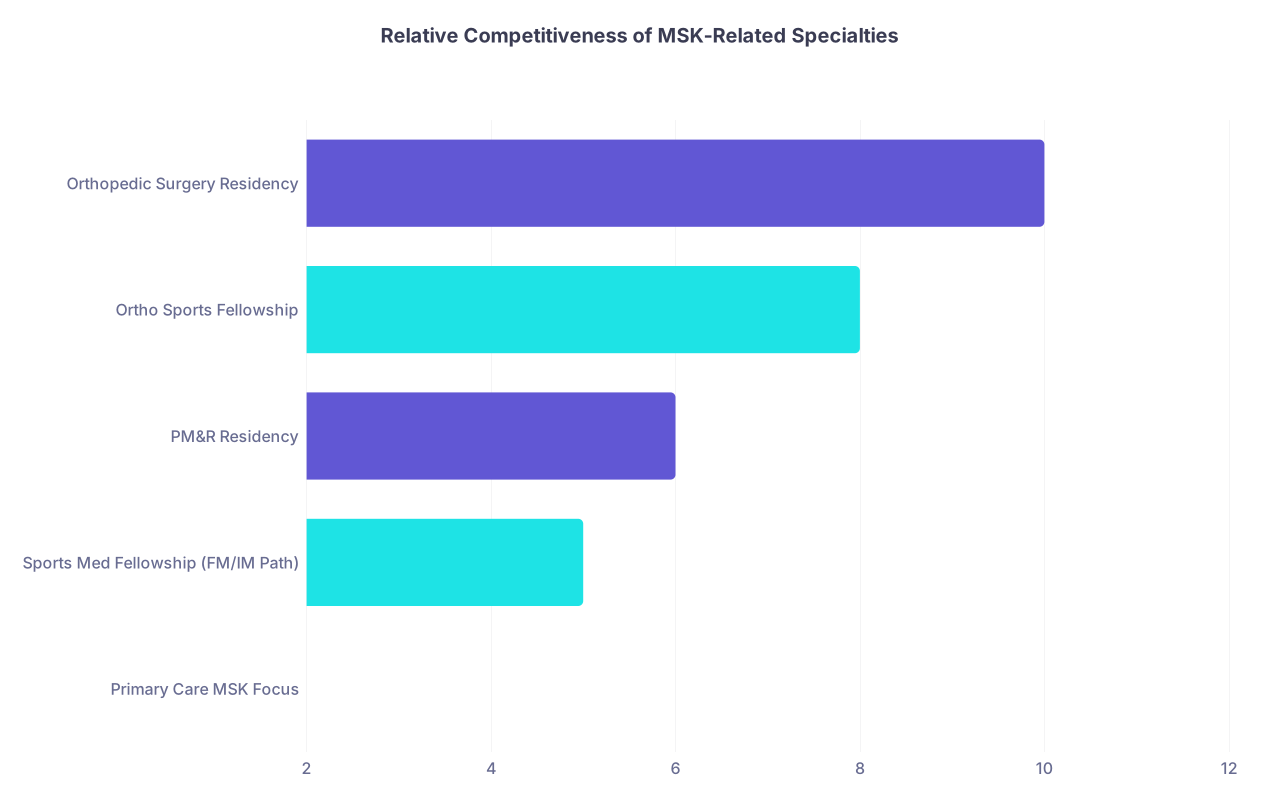
| Category | Value |
|---|---|
| Primary Care MSK Focus | 2 |
| Sports Med Fellowship (FM/IM Path) | 5 |
| PM&R Residency | 6 |
| Ortho Sports Fellowship | 8 |
| Orthopedic Surgery Residency | 10 |
(Scale 1–10, very rough, just to visualize where the pressure is.)
If you’re DO and serious about MSK in a competitive lane (ortho, top PM&R, high-end sports), your practical move:
- Plan to take USMLE Step 2 CK in addition to COMLEX.
- Study with USMLE-style resources from day one, not “COMLEX-only” paths.
- Aim to be clearly above average, not barely passing.
Programs like objective numbers. They understand USMLE better than COMLEX. You meet them where they are.
5. Using Your Athletics/Performance Background Strategically
Your athletic/performance history isn’t a cute personal statement story. It’s your brand. If you build it right.
This is where a lot of applicants screw up. They mention “I played soccer in college” and then… nothing. No through-line.
Here’s how to turn that background into MSK firepower, regardless of DO vs. MD.
As a premed (before you start med school)
Do this now:
Get MSK-adjacent experience: PT tech, athletic training room aide, strength coach assistant, yoga/Pilates instructor, dance instructor, etc.
Shadow multiple MSK clinicians:
- A sports med physician (FM/PM&R/IM/EM background)
- A PT or AT
- An ortho surgeon
- Ideally a DO who actually uses OMM with athletes
When you craft personal statements/secondaries:
- Tie your performance history to specific clinical observations.
- Show you understand athlete/performer culture, not just the injuries.
- Explicitly connect your background to why MSK work makes sense for you long-term.
Choosing DO vs. MD at the application stage
Here’s the practical split:
You should lean DO if:
- You’re genuinely excited about hands-on treatment and manual skills.
- You like the idea of treating athletes/performers with both injections/meds and manual work.
- You’re okay with needing to over-perform (scores, research, networking) for the most competitive programs.
- You already know you’re interested in non-op sports, PM&R, MSK-heavy primary care, or integrative MSK.
You should lean MD if:
- Your heart is set on orthopedic surgery or elite academic PM&R and you want maximum program access.
- You’re not that interested in manual techniques; you’d rather lean on imaging, injections, surgery, rehab coordination.
- You’re applying from a position where you can realistically target strong MD schools (stats, extracurriculars, timing).
Reality: the safest path if you’re uncertain is apply broadly to both DO and MD, then once you have acceptances, revisit this article and decide based on specific schools and your updated goals.
6. If You’re Already in Med School: How To Course-Correct
Different situation: you’re already at a DO or MD school, and now realizing you want an MSK career. You’re not screwed. But you need a plan.
If you’re a DO student
Your playbook:
Stop treating OMM as a joke.
- Identify the best OMM faculty — the ones actually seeing athletes or complex MSK patients. Attach yourself to them.
Decide early if you’re aiming high-competition (ortho, top PM&R) or moderate (FM/IM with sports, average PM&R, primary care with MSK emphasis).
If aiming high-competition:
- Plan USMLE Step 2 CK. Build your study plan now.
- Get involved in MSK/sports research early — retrospective case series, sideline injury patterns, whatever you can get.
Use your athlete/performer background:
- Volunteer for sports coverage (high school, local college, community events) when your school or mentors offer it.
- Start documenting cases you see (de-identified) and what you learned — this will feed your personal statement, ERAS app, and interviews.
If you’re an MD student
You don’t have structured OMM, but you also don’t have that mandatory time sink. Use that to your advantage.
Your playbook:
Learn functional anatomy better than your classmates.
- Use clinical movement/anatomy resources (e.g., sports PT texts, rehab-oriented anatomy) in parallel with your courses.
Plug into MSK early:
- Join sports med, PM&R, ortho interest groups.
- Shadow in sports/PM&R clinics where possible, especially ones that use ultrasound and dynamic exam.
If you miss the manual skills:
- Take elective workshops in musculoskeletal ultrasound, manipulation (some FM/PM&R departments teach this), or even appropriate PT continuing ed as an observer.
You can absolutely be the “movement-savvy” MD even without OMM. You just have to deliberately build those skills.
7. How Program Directors Actually Think About DO vs. MD in MSK Fields
You’ll never get this blunt on a school website, but here’s the vibe I’ve heard directly from attendings and PDs:
Ortho PD at a large academic center:
“We’ll look at a DO file if the scores and letters jump off the page. But we get enough high-scoring MDs that we don’t have to go hunting.”PM&R PD at a mid-tier program:
“We’ve got great DOs. But we really want to see USMLE so we can compare apples to apples. COMLEX alone makes it harder.”Sports Med fellowship director (FM background):
“I do not care if you’re DO or MD. I care if you’ve done real coverage and your letters prove you can take care of athletes.”Community FM sports doc:
“Our DOs who actually use OMT with shoulder/neck/back cases are busy forever. Patients love them. I wish more of them didn’t drop it after residency.”
Translate that into your action items:
- For ortho: MD is structurally advantaged. DO is workable only with strong stats, networking, and often geographic flexibility.
- For PM&R: DO vs. MD is closer to neutral if you give PDs USMLE data and strong MSK exposure.
- For sports med fellowships: DO vs. MD is almost neutral; your MSK footprint matters more.
- For primary care MSK: It’s about your training mentors and skill set, not the letters.
8. Concrete Paths Based on Your Starting Point
Let’s be hyper-specific. Find yourself below and follow the script.
Scenario A: Former D1 athlete, premed, stats are decent but not Ivy-level
Goal: MSK-heavy career, probably non-op sports or PM&R. Open to primary care sports.
What to do:
Apply to a mix of DO and MD schools.
Prioritize:
- DO schools with strong OMM and sports/PM&R faculty.
- MD schools attached to strong ortho/PM&R departments with sports fellowships.
In interviews: hammer your athlete experience and MSK interest as a coherent story.
Once accepted:
- If the DO school has real MSK/OMM integration and mentors you like → lean DO.
- If the MD school is significantly stronger institutionally and you’re not obsessed with OMM → lean MD.
Scenario B: Ex-dancer/performance artist, premed, lower stats, stronger story
Goal: MSK-heavy primary care, sports, or PM&R. Interested in hands-on work.
What to do:
- Heavily consider DO. Your non-traditional background + OMM + MSK focus is a strong brand.
- Get more MSK-adjacent experiences now: PT clinic, Pilates/yoga with injury-prone clients, shadow sports/PM&R docs.
- Plan early for high performance on boards; a strong USMLE Step 2 CK as a DO opens PM&R and sports doors.
Scenario C: Pre-PT turned premed, obsessed with ortho surgery
Goal: Ortho surgeon, no question.
What to do:
Apply primarily MD, with DO as a safety net only if:
- You commit to USMLE
- You fully understand that DO → ortho is an uphill path requiring excellent performance.
If you end up DO:
- Crush boards, get early ortho research, and be geographically flexible.
- Talk to DO ortho residents/fellows directly before you commit mentally.
9. Timeline: How To Build an MSK-Oriented Profile From Now Until Match
Here’s the rough arc from premed to residency with MSK in mind:

| Period | Event |
|---|---|
| Premed - Shadow MSK clinicians | Shadow |
| Premed - Gain sports/MSK experience | Work |
| Premed - Apply DO + MD schools | Apps |
| Med School Years 1-2 - Learn anatomy deeply | M1 |
| Med School Years 1-2 - Engage in OMM or MSK electives | M1-M2 |
| Med School Years 1-2 - Start MSK/sports research | M2 |
| Med School Years 3-4 - Choose MSK-heavy rotations | M3 |
| Med School Years 3-4 - Take USMLE Step 2 CK (DOs) | M3 |
| Med School Years 3-4 - Do away rotations in MSK fields | M4 |
| Med School Years 3-4 - Apply to MSK-linked residencies | M4 |
| Residency - Maximize sports/MSK rotations | R1-R3 |
| Residency - Coverage and procedures | R2-R3 |
| Residency - Apply to sports/MSK fellowships | R3 |
10. DO vs. MD for MSK Careers: The Real Bottom Line
If you skimmed everything else, read this:
- If you want ortho surgery at almost any cost → MD is objectively the more forgiving route.
- If you want non-op sports, PM&R, pain, or MSK-heavy primary care → DO or MD can work very well. DO adds built-in manual skills if you actually use them.
- Your athletics/performance background is an asset only if you align your training, experiences, and narrative around MSK consistently. Otherwise it’s just nostalgia.
Most people overestimate the power of the letters and underestimate the power of:
- Early MSK exposure
- Quality mentors
- Smart board strategy
- Actually becoming good at examining and treating the MSK system
Today, right now, you can do one simple thing: write down your “random Tuesday” five years after residency, then list what training path most realistically gets you there from where you are. DO vs. MD is just one lever in that plan — but you finally know how to pull it on purpose.