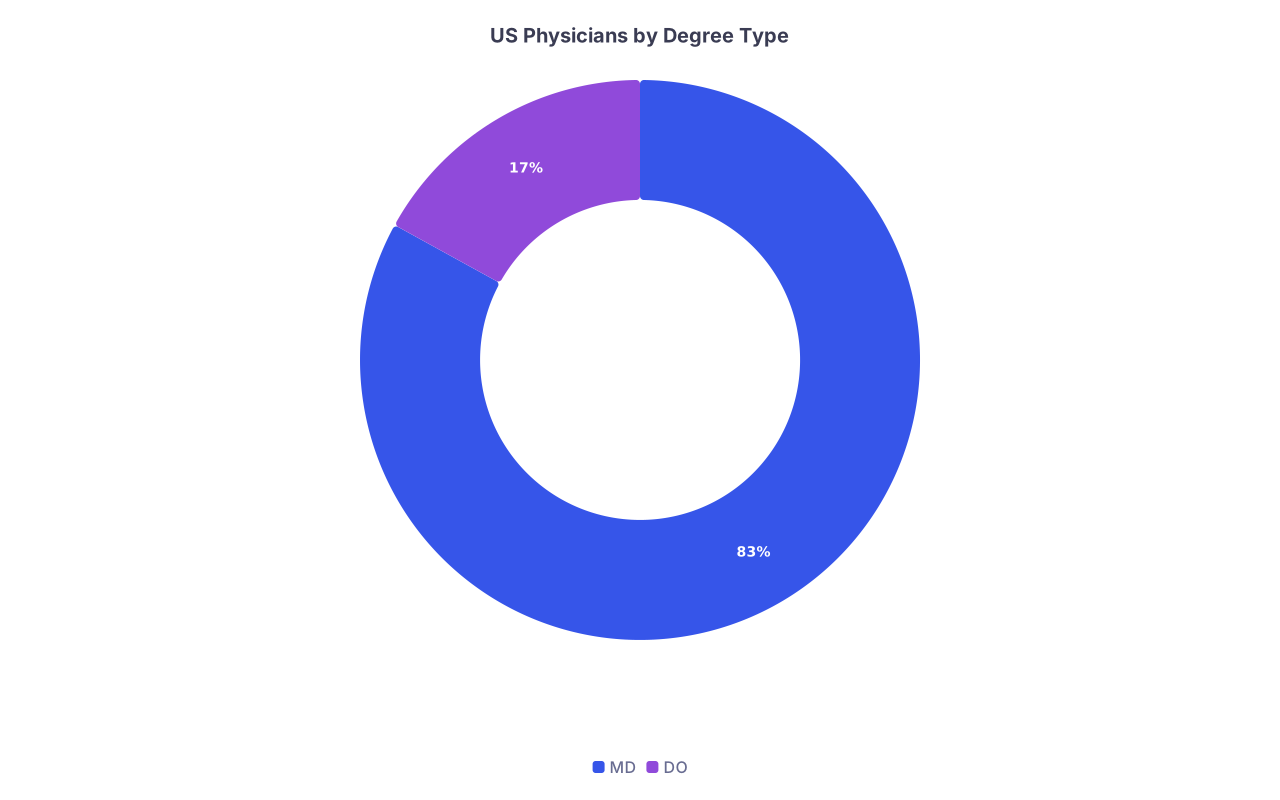
| Category | Value |
|---|---|
| MD | 83 |
| DO | 17 |
The idea that “MD and DO licenses are exactly the same everywhere” is almost true—and that “almost” is where the landmines live.
If you are the kind of premed who asks “What are the weird exceptions?” instead of settling for “They’re equivalent,” you are already ahead of 80% of your peers.
Let me walk you through the actual edge cases, the historical junk still on the books, and the modern traps that still bite DOs (and occasionally MDs) when it comes to state licensing.
1. The Big Picture: MD vs DO Licensing Reality
At the 30,000-foot level, this is the current reality in the United States:
- Every U.S. state and territory licenses DOs and MDs as unrestricted physicians.
- DO and MD degrees from accredited U.S. schools are treated as equivalent for the basic license to practice medicine and surgery.
- The old “DOs limited to manipulation” era is dead. That was dismantled decades ago.
So why does this topic still matter? Because the path to that license, and the fine print on certain requirements, can diverge in small but very practical ways.
The friction points tend to cluster around four things:
- Which exams you take (USMLE vs COMLEX, or both).
- How state boards handle COMLEX-only applicants.
- Older or lazily written regulations that still say “NBME/USMLE” instead of “equivalent exam.”
- International work, visas, or odd federal/state hybrids (like military + state licensing).
If you want a clean, low-friction future, you pick strategically now.
You do not want to be the PGY‑4 who discovers a state you need for fellowship has some obscure COMLEX quirk.
2. Exams: COMLEX vs USMLE and Where States Get Weird
Let us start with testing, because this is where most DO-related licensing confusion actually lives.
The short version
- MDs: USMLE Step 1, Step 2 CK, Step 3. Straightforward.
- DOs: COMLEX Level 1, Level 2-CE, Level 3. Optionally add USMLE Steps if you want max portability.
Most states now explicitly accept COMLEX for licensure. But the details are not identical.
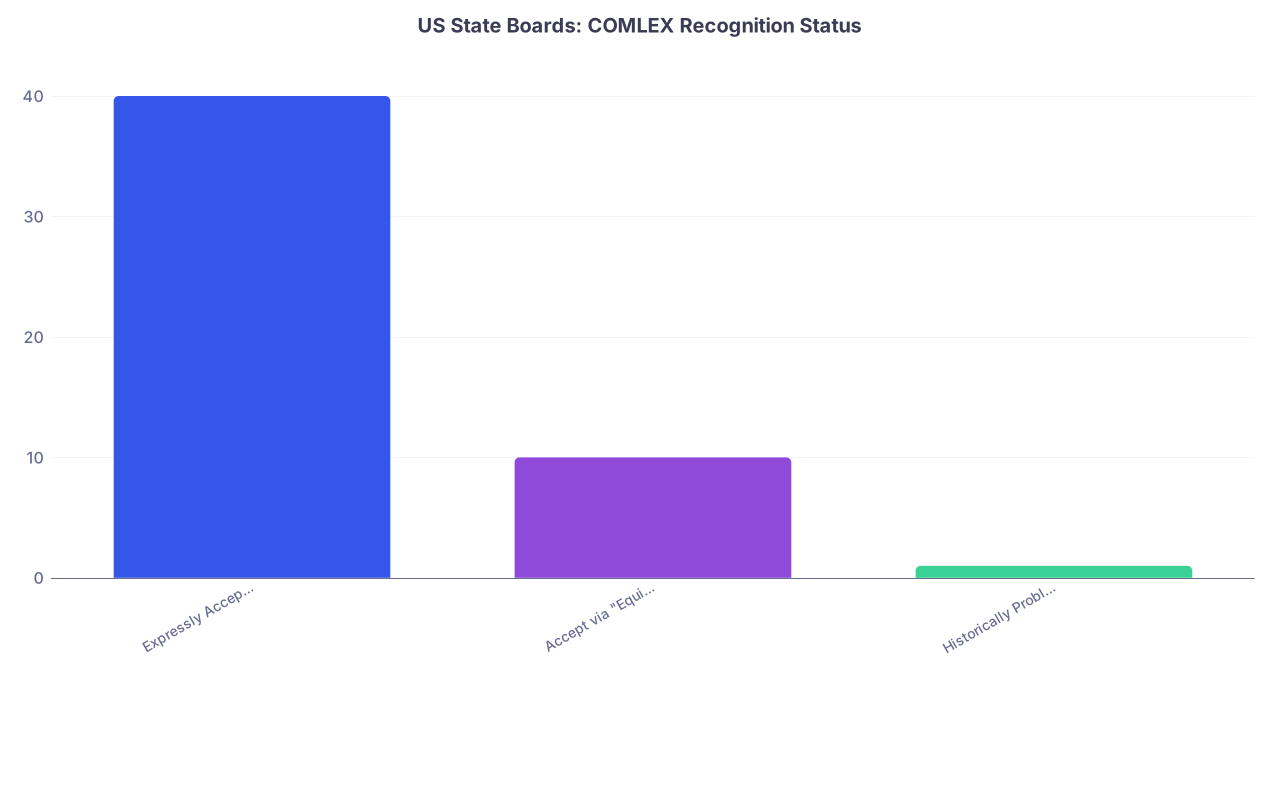
| Category | Value |
|---|---|
| Expressly Accept COMLEX | 40 |
| Accept via "Equivalent" Language | 10 |
| Historically Problematic (Now Fixed) | 1 |
That third bar—“historically problematic”—is where people get bitten by blogs and Reddit posts that are ten years out of date.
States that were once problematic (and what actually changed)
Historically, a few states were notorious because their statutes explicitly listed NBME/USMLE but not COMLEX, or had murky language about “equivalent” exams. Over the last decade, most of that got cleaned up.
Examples you will see repeatedly in old threads:
- California
- Florida
- Michigan
- Texas
- Delaware
Today, all of these accept COMLEX for DO licensure. The issues now are more about paperwork lag, staff confusion, or website wording than formal exclusion.
Let me give you a type of problem that still does happen in practice:
- The statute says “NBME or other examination deemed equivalent by the board.”
- The website mentions USMLE 20 times and COMLEX exactly once.
- A clerk on the phone says, “We prefer USMLE,” because that is what they are used to.
- The board, on paper, has already approved COMLEX and will license you. But you walk away from the phone call thinking you are ineligible.
This is why, for DOs, I tell students: never trust only the front-page FAQ. You read the board rules or call and ask specifically:
“Does your board accept COMLEX Level 1, Level 2-CE, and Level 3 as a complete pathway to licensure for graduates of COCA-accredited U.S. osteopathic schools?”
If they say yes (and they almost always do now), you are fine. If they waffle, you ask them to point you to the statute or published board policy.
Subtle exam-timing quirks
Some boards are picky about:
- Maximum time between first and last exam (e.g., 7–10 years to complete all Steps/Levels).
- Number of attempts allowed: e.g., failing Step or Level 3 more than 3–4 times may block licensure or require special board review.
- Whether all exams must be from the same series (USMLE-only vs COMLEX-only vs mixed).
Where DOs get into trouble is the mixing:
- Step 1 + COMLEX Level 2-CE + COMLEX Level 3
Some states have sloppy language like “All parts of the same examination sequence.” Does that block you? Usually not, but a few boards may need to do a case-by-case review.
If you are DO and you are going to mix exam pathways, do it with intent:
- Take the full COMLEX series + optionally USMLE Step 1 and/or Step 2 CK for residency competitiveness.
- For licensing, keep COMLEX as your official complete sequence when dealing with state boards.
Do not be the person with half a USMLE sequence, half a COMLEX sequence, and no clear “complete” pathway on paper.
3. State-by-State Nuances That Actually Matter
You do not need a 50‑state treatise. You need to understand the types of variation, then check specifics for any state you care about.
3.1 Early licensure vs “postgraduate training” requirements
States differ on how much GME you must have to get an unrestricted license:
- Some require 1 year of ACGME/ACGME-I/osteopathic PGY‑1.
- Some require 2 or 3 years for IMGs but only 1 year for U.S. grads (MD and DO).
- A few insist on 2+ years regardless.
For DOs vs MDs, the nuance is usually not the degree. It is how they treat:
- AOA-only programs that merged into ACGME.
- Transitional years, prelim years, and osteopathic internships.
| State | US MD Requirement | US DO Requirement | Notes |
|---|---|---|---|
| State A | 1 year | 1 year | COMLEX fully accepted |
| State B | 1 year | 1 year | Language still says “USMLE”, but policy includes COMLEX |
| State C | 2 years | 2 years | Stricter for all US grads |
| State D | 3 years (IMG) | 1 year | MD/DO distinction only by US vs IMG |
The real nuance: older language sometimes refers to “osteopathic internships” or “AOA-approved programs” and treats them differently. After the single GME accreditation system, that terminology is aging badly.
If you match into a formerly AOA-only program that is now ACGME-accredited, most boards handle it as any other ACGME training. But you still want your GME program to be crystal clear in their documentation when filling out state forms.
3.2 Scope-of-practice language that looks scarier than it is
Some legacy statutes still have weird wording:
- “The practice of medicine and surgery (MD)” versus “the practice of osteopathic medicine and surgery (DO).”
- Separate boards: “Board of Medicine” and “Board of Osteopathic Medicine.”
This can read like DOs are second-class. Functionally, they are not. Both are full physician licenses. The difference is governance and cultural baggage, not scope.
Where it might matter:
- Disciplinary actions and how they are published.
- Fees, CME category rules, board meetings (you deal with a different bureaucracy).
But in terms of what you can prescribe, what procedures you can do, and whether you can be an attending? Equivalent.
3.3 Oddball paperwork issues
These seem small but cause very real headaches:
- Some boards want your medical school transcript to explicitly say “Doctor of Osteopathic Medicine (DO)” and list COCA accreditation. If your school registrar uses minimal wording, you may be emailing back and forth to clarify.
- Some international credentialing agencies or local hospitals (particularly abroad) ask: “License to practice allopathic medicine?” and do not initially recognize osteopathic medicine as the same. That is more of an international-regulation problem than a state-licensing problem, but you feel it in your career choices.
4. Historical Baggage: Places Where DOs Were Once Restricted
If you go deep enough into DO vs MD lore, you will hear about things that sound absurd today:
- States that once barred DOs completely.
- States that merged DO and MD boards in ways that destroyed DO schools (California’s infamous 1962 “Merger”).
- Hospitals that banned DOs from staff privileges.
This is all academically interesting, but you care about what is still actionable.
4.1 California’s legacy
California is one of the most frequently cited in DO-against lore. Historically:
- DOs were barred from using the title “physician and surgeon.”
- There was a forced path to convert DO degrees to MD.
- The osteopathic licensing board was dissolved after the California Medical Association shenanigans in the 1960s.
Modern reality:
- DOs are fully licensed physicians and surgeons in California.
- COMLEX is accepted.
- DOs train and practice there without meaningful restriction.
The only thing that remains is historical awareness and the occasional older physician who still remembers the politics and grumbles about it.
4.2 States that “came online” late for DOs
Hawaii and a few others were late adopters historically. But that was resolved long before your application cycle.
Where this sometimes still leaks into modern life: local hospitals or insurance panels that used to avoid DOs and simply never updated their informal habits. That is not a licensing problem; it is an old-school bias problem.
5. Edge Cases That Blindside Residents and Fellows
Now we get to the part that actually bites people.
You can sail through med school convinced everything is equal… and then hit a weird combination of board certification, fellowship, and state law where the edges rub.
5.1 Trying to get a license in a state with partial or unclear COMLEX language
Scenario I have personally seen:
- DO resident, COMLEX-only, training in a big academic internal medicine program.
- Applies for a license in a state where the board website is heavily USMLE-centric and says something vague like “Scores from NBME, USMLE, or equivalent exam approved by the board.”
- Clerk initially says, “You need USMLE.”
- After weeks of stress, letters from GME and program directors, and a board review, they issue the license based on COMLEX.
Key lesson: the law and the clerk are not always in sync. Boards move slower than residency program culture.
Do you need USMLE as a DO to avoid all possible friction? No. But if you are targeting hyper-competitive specialties, coastal academic jobs, or frequent interstate moves, USMLE Step 2 CK at least is a strong insurance policy.
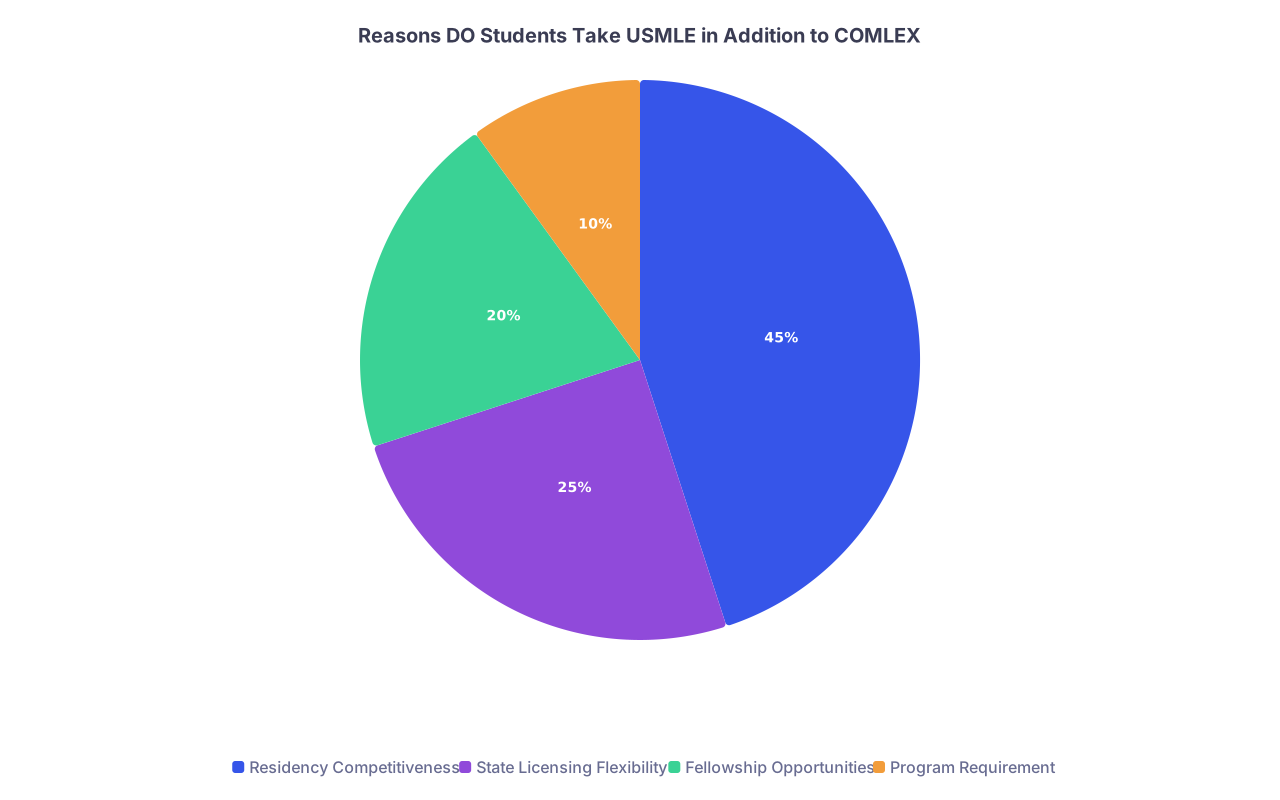
| Category | Value |
|---|---|
| Residency Competitiveness | 45 |
| State Licensing Flexibility | 25 |
| Fellowship Opportunities | 20 |
| Program Requirement | 10 |
5.2 Fellowship programs with outdated exam assumptions
Some subspecialty fellowships, especially those historically fed by MD-heavy residencies, may:
- List “USMLE Scores” as an application requirement without mentioning COMLEX.
- Have internal score filters built only around USMLE.
Is that legal discrimination? Debatable. Is it common? Less so each year, but it still happens.
What actually happens on the ground:
- Many of these programs will consider COMLEX scores once you email and ask.
- A few will quietly drop your application rather than adapt their system.
If you plan on trying for, say, an ultra-competitive cardiology fellowship in a conservative academic environment, having at least USMLE Step 2 CK can mean one less battle to fight.
5.3 International licensing and visas
This is where the DO vs MD distinction can become very real.
Many foreign ministries of health, especially in countries that do not have a domestic osteopathic physician equivalent, think:
- “MD = physician”
- “DO = chiropractor / physical therapist-level provider”
You and I know that U.S. DOs are fully licensed physicians. Many foreign bureaucracies do not—unless they have built specific agreements or learned it over time.
Consequences:
- Some countries will not grant you full license initially.
- Some will label you as “osteopath” and restrict your clinical practice.
- Some will accept you once you show your U.S. unrestricted license and specialty board certification (e.g., ABIM, ABEM), but the process is longer and more annoying than for MDs.
If long-term international work is a major goal (e.g., Australia, parts of Europe, certain Gulf states), you must research that country’s stance on U.S. DOs, not just U.S. states. And yes, there are odd regulations there.
6. Premed Decision-Making: How Much Should Licensing Nuances Affect MD vs DO Choice?
Here is the blunt truth: for a typical U.S. practice career, the difference in state licensing between MD and DO is now functionally minimal.
But you are not asking about “typical.” You are asking about edge cases and weird rules. That is where the calculus shifts slightly.
If you are leaning DO, ask yourself:
- Am I willing to take USMLE Step 2 CK (and maybe Step 1) in addition to COMLEX to maximize flexibility?
- Am I okay doing a bit more paperwork legwork and clarification when dealing with less modern institutions or states that are slow to update language?
- Am I comfortable potentially having to explain my degree more often internationally or in ultra-conservative circles?
If yes, then DO is absolutely viable and rational.
If you are torn between similarly-ranked MD and DO programs:
Licensing nuance is a tiebreaker, not a primary driver. But if all else is truly equal:
MD will probably give you a slightly smoother paper trail across:
- International licensing
- Very old-school programs or hospital HR departments
- Legacy systems still coded for “USMLE only”
DO will give you:
- The option to sit for COMLEX only (if you really dislike the idea of extra exams).
- Extra training in OMT if that appeals to your practice style.
Most of the time, you should pick based on:
- School quality and match outcomes.
- Supportive culture.
- Tuition and location.
But if your dream scenario is: academic cardiology fellowship, frequent interstate licensing, plus potential work in another country—then MD does remove a few small but real frictions.
7. Practical Strategy: How to Stay Out of Licensing Trouble as a Future DO
Let me keep this concrete.
During premed and application phase
- If you are strongly DO-leaning, identify 3–4 states you might realistically want to live in long term.
- Go to each state’s medical or osteopathic board website:
- Find their statutes or rules section.
- Confirm COMLEX is listed or clearly accepted.
- If anything looks ambiguous, write it down. You may not solve it now, but you will know to investigate again in med school.
During medical school (DO)
- Decide by early second year whether you are going to take USMLE. Do not decide the month before applications.
- If you take both COMLEX and USMLE, keep a clean record:
- No six attempts per step.
- Do not mix them randomly; have at least one full, clean series for licensing.
During residency
- When you accept a residency, look at:
- The state you will train in.
- The state(s) you might want to work in immediately after.
- Before PGY‑2, check the licensing requirements of those states:
- PG training length required.
- Exam series accepted and maximum attempts.
- Any oddball DO vs MD language.
If you discover an issue, this is when you have leverage. Program directors are much more willing to help a PGY‑2 with a licensing nuance than a brand-new attending who suddenly needs credentials in four weeks.
8. Regulatory Trends: The Direction This Is All Heading
The long-term trend is obvious: convergence and simplification.
- The single GME accreditation system has already blurred MD vs DO residency tracks.
- Major state boards have steadily revised language from “USMLE” only to “USMLE or COMLEX.”
- Specialty boards increasingly treat MD and DO training as parallel and equivalent, focusing more on program accreditation than degree letters.
I do not expect new restrictive DO-specific state rules to appear. The political and legal climate is moving the opposite way.
Where you are still likely to see “odd regulations” in the next decade:
- Legacy countries and smaller international jurisdictions that do not update fast.
- Small employer credentialing offices that rely on outdated templates.
- A few slow-moving U.S. boards that are still rewriting statutes from the 1980s.
So, yes, the worst of the DO vs MD licensing war is over. But the cleanup phase always lasts longer than people think.

| Step | Description |
|---|---|
| Step 1 | Premed |
| Step 2 | MD School |
| Step 3 | DO School |
| Step 4 | USMLE 1 + 2 CK |
| Step 5 | COMLEX 1 + 2-CE |
| Step 6 | Optional USMLE 2 CK |
| Step 7 | Residency |
| Step 8 | USMLE 3 or COMLEX 3 |
| Step 9 | State License (MD or DO) |

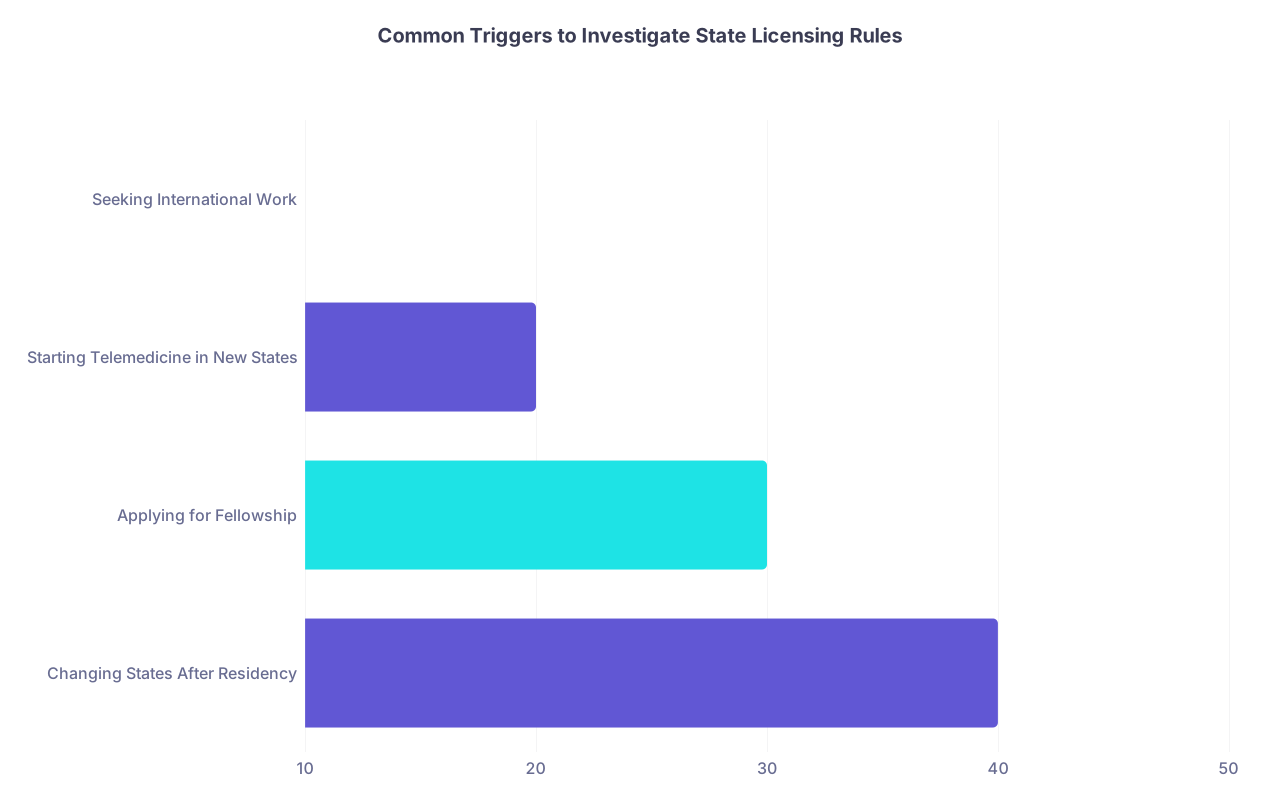
| Category | Value |
|---|---|
| Changing States After Residency | 40 |
| Applying for Fellowship | 30 |
| Starting Telemedicine in New States | 20 |
| Seeking International Work | 10 |

FAQ (Exactly 4 Questions)
1. As a future DO, do I absolutely need to take USMLE in addition to COMLEX for state licensing?
No. Almost all U.S. states now explicitly accept COMLEX for DO licensure. You do not need USMLE purely for licensure in the typical case. USMLE is strategic mainly for: competitive residency, certain fellowships, and smoother handling in a small minority of states or institutions with outdated assumptions.
2. Are there any U.S. states where DOs cannot get a full, unrestricted license to practice medicine and surgery?
No. Every U.S. state and territory licenses DOs as full physicians with equivalent prescribing and procedural authority to MDs. Some states have separate boards or legacy wording, but the end product—the license and scope—is equivalent.
3. Can mixing exams (some USMLE, some COMLEX) cause licensing problems?
It can cause paperwork problems. Some states prefer that all parts of your exam series be from one sequence (all USMLE or all COMLEX). If you mix, you want at least one sequence that is clearly complete—e.g., all three COMLEX levels—so boards have a clean story. A half-finished USMLE series plus partial COMLEX is what creates headaches.
4. For international work, is being a DO significantly harder than being an MD?
In many countries, yes, it can be more complicated. Some foreign regulators do not recognize the U.S. DO as equivalent to MD without extra documentation or may initially misclassify you as a manual-therapy provider. Often this can be resolved with proof of U.S. unrestricted licensure and board certification, but the process is generally smoother for MDs. If long-term overseas practice is a major goal, you should research specific country rules before deciding and may lean MD if you have comparable options.
Key takeaways:
- In the U.S., MD and DO end up with essentially equivalent state licenses; the real differences live in exam pathways and small bureaucratic quirks.
- DOs are smart to understand COMLEX acceptance, consider USMLE for flexibility, and plan ahead for any states or countries they care about.
- The trend is toward full convergence, but legacy language and habits still create enough edge cases that you should treat this as a planning problem, not an afterthought.