The wrong thank‑you email can quietly move you from “maybe” to “no.”
Program directors won’t tell you this. They’ll say thank‑you emails don’t matter much. But I’ve watched borderline applicants sink themselves with sloppy, needy, or tone‑deaf follow‑ups that confirmed every doubt the faculty already had.
You’re not going to make that mistake.
Below are seven common thank‑you email phrases that quietly damage your residency chances—and what to say instead so your follow‑up helps you, or at least stays safely neutral.
1. “Thank you for taking time out of your busy schedule…”
This is the canned airline-announcement version of gratitude. Everyone uses it. It sounds polite. It also screams: “I pulled this from Google and sent the same sentence to 12 programs.”
The problem isn’t that it’s offensive. It’s that it’s empty and generic. When a PD reads the same phrasing 40 times in a week, your email becomes white noise.
Worse, I’ve seen versions that sound almost sarcastic: “Thank you for taking time out of your very busy schedule.” You don’t want any sentence that could, in a slightly different tone, be read as annoyance.
The hidden risk: this phrase is usually attached to a fully generic email, and generic emails are one of the small “fit” signals that nudge people away from you when they’re deciding between two similar candidates.
Better approach: drop the “busy schedule” cliché completely and reference something real.
Instead of:
Thank you for taking time out of your busy schedule to interview me.
Try:
Thank you for speaking with me on Monday and sharing more about your experience with the night float system.
Or:
I appreciated the chance to talk with you about how your program supports residents pursuing medical education fellowships.
Notice the difference. Specific. Human. Not copy‑pasted.
2. “This is my top choice / I will rank you #1” (when it’s not 100% true)
This one can absolutely torpedo you.
Applicants think, “They want to hear they’re my top choice, so I’ll say it.” I’ve seen this blow up in two ways:
- The same vague “top choice” language goes to multiple programs and gets compared.
- A resident or coordinator casually asks where else you’re interviewing, and your prior comments don’t line up.
The moment a program suspects you’re being dishonest, your stock drops. Fast. It doesn’t matter how strong your board scores are—no one wants to rank someone they think will play games.
And then there’s the more subtle damage: overpromising about rank intentions can make you look naive about the match process. People who know how the Match works don’t make detailed rank declarations lightly.
If they catch you exaggerating, you’ve just told them:
- You’re willing to say what you think they want to hear.
- You don’t fully understand (or respect) how the Match is supposed to work.
- Your “professionalism” on paper might not translate to actual integrity.
If a program truly is your #1, you can say that. Once. To one program. Carefully.
| Situation | What you write |
|---|---|
| True #1 program | Clear but honest enthusiasm |
| In your top 3–5, but not #1 | Strong interest, no rank promise |
| Just okay / backup | Polite, neutral, no future-oriented language |
Instead of:
Your program is my top choice and I will be ranking you #1.
Use if absolutely true:
I remain extremely interested in your program and plan to rank it very highly.
Or, for genuine #1 (to be sent only once, later in the season, not in a same-day thank-you):
After interviewing widely this season, your program has become my top choice, and I intend to rank it first.
Do not blast “top choice” language to multiple places. Programs do compare notes. More often than you think.
3. “I would be honored to train at your prestigious institution”
“Prestigious.” “World-class.” “Renowned.” This sounds like praise. It often reads as insecurity.
Here’s what goes through a PD’s head when they see this kind of flattery:
- You care more about brand name than day-to-day training.
- You may be ranking programs mostly by reputation lists.
- You’re trying too hard.
Residents and faculty already know how their program is viewed. They don’t need you to butter them up. When every second email praises their “world-class training,” it blends into a pile of sycophantic noise.
I’ve literally heard an attending say, scrolling through emails, “If one more person calls us ‘prestigious’ I’m deleting the rest.”
The deeper problem: this phrase often appears in emails that show zero actual understanding of the program. It’s a lazy substitute for substance.
Instead of:
I would be honored to train at your prestigious institution.
Try:
I would be excited to train in a program that combines strong critical care exposure with early autonomy in the MICU.
Or:
I’d be grateful for the opportunity to train in a place that supports both community-focused care and robust academic mentorship.
Notice: you’re praising features that matter to you, not their ego.
4. “I look forward to hearing from you soon” (or anything that pressures a response)
You think you’re just being polite. But there’s an underlying tone: “Please email me back. Quickly.”
Programs are drowning during interview season:
- Clinics to run
- Wards to supervise
- Notes to finish
- Meetings
- And then… 150+ applicant emails
So when your thank‑you ends with:
I look forward to hearing from you soon.
or worse:
I eagerly await your response.
It can read as needy and slightly entitled, like you expect personal follow‑up or reassurance. They are not going to tell you where you sit on the list. And they don’t have time for long back-and-forths.
I’ve watched faculty skim to the bottom of an email, see this kind of line, and say, “We’re not emailing back, right?” They rarely reply at all. That’s normal. No reply is not a bad sign. It’s just bandwidth.
Your job with a thank‑you is to:
- Express gratitude.
- Reinforce fit.
- Then quietly step away.
You don’t need to invite a response. They know how to reach you.
Instead of:
I look forward to hearing from you soon.
Use:
Thank you again for your time and consideration.
Or simply end with:
Sincerely,
[Your Name]
No pressure. No timeline.
5. “I wanted to reach out again…” (repeated follow‑ups that cross the line)
One thank‑you email per interviewer is fine. Optional but fine. Multiple emails to “stay on their radar”? That’s how you cross from enthusiastic to annoying.
Here’s the pattern I’ve seen too many times:
- Day of / day after: decent thank‑you email. Good.
- Two weeks later: “Just wanted to follow up and reiterate my interest…” Mildly irritating.
- After rank lists are certified: another email asking where they stand. Now you’ve made them uncomfortable and maybe a little frustrated.
Those second and third messages almost never change anything in your favor. But they absolutely can hurt you if they make you look needy, clueless about the Match rules, or not respectful of boundaries.
And phrases like:
I wanted to reach out again to reiterate…
or:
Just following up on my previous email…
send a subtle signal that you expect individualized attention.
Programs read repeated “reaching out” as:
- An inability to tolerate uncertainty.
- Poor judgment about professional boundaries.
- A risk that you’ll be a high-maintenance resident.
If you have new, legitimate information (Step 2 score, new publication, rank-lists-are-not-submitted-yet letter of intent), that’s different. But even then, you don’t frame it as “following up on my previous email.” You frame it as an update, once.
Instead of:
I wanted to reach out again to reiterate how interested I am in your program.
If you must send a true update (sparingly):
I wanted to share a brief update since our interview: my Step 2 CK score was released (###), and I remain very interested in your program.
Then stop. One update. That’s it.
6. “I really loved talking to the resident, she seemed so nice”
You’re trying to be warm. Relatable. Human. The problem is the impression it gives: superficiality.
Thank‑you emails that sound like:
I really enjoyed meeting the residents; they all seemed so nice and fun!
read like you’re choosing a college dorm, not a training program where you’ll be dealing with death, crises, and 28‑hour calls.
Do you want residents who are decent human beings? Yes, obviously. But if your only commentary about them is that they are “cool,” “fun,” or “nice,” it can look like you weren’t paying attention to the actual training environment.
What faculty care about is whether you noticed:
- Educational culture
- Resident support
- Clinical exposure
- Autonomy vs supervision
- Research/teaching/leadership structure
A vague “everyone was so nice” is fluff. Not harmful on its own, but in combination with other shallow phrases, it can make you seem less serious or less mature.
Compare:
Weak:
I loved how nice everyone was and how fun the residents seemed.
Stronger:
I appreciated how candid the residents were about the workload and how supported they feel by the attendings, especially during ICU months.
or:
It was encouraging to hear the residents describe strong camaraderie on night float and how they look out for each other on busy shifts.
You’re saying: I saw more than just smiles. I listened.
7. “Please let me know if there’s anything else I can do to demonstrate my interest”
This sounds humble. It isn’t. It puts work back on them.
You’re essentially saying: “Give me homework. Tell me how to impress you more.”
PDs are not going to assign you tasks, hop on another Zoom, or read another “Why your program” essay. They already have everything they need: your ERAS file, your interview performance, whatever notes they took.
Phrases like:
Please let me know if there’s anything else I can do to show my interest.
or:
I’m happy to provide any additional materials to support my candidacy.
add nothing and can actually suggest you don’t understand how standardized this process is.
Programs must follow strict rules. They’re not allowed to ask you to do extra things to “prove” yourself after interviews. The more you imply you’re willing to jump through extra hoops, the more uncomfortable you make them.
A cleaner, safer way to end the email:
Instead of:
Please let me know if there’s anything else I can do to demonstrate my interest.
Use:
Thank you again for the opportunity to interview.
or:
I appreciate your time and the insight into your program.
Short. Professional. Done.
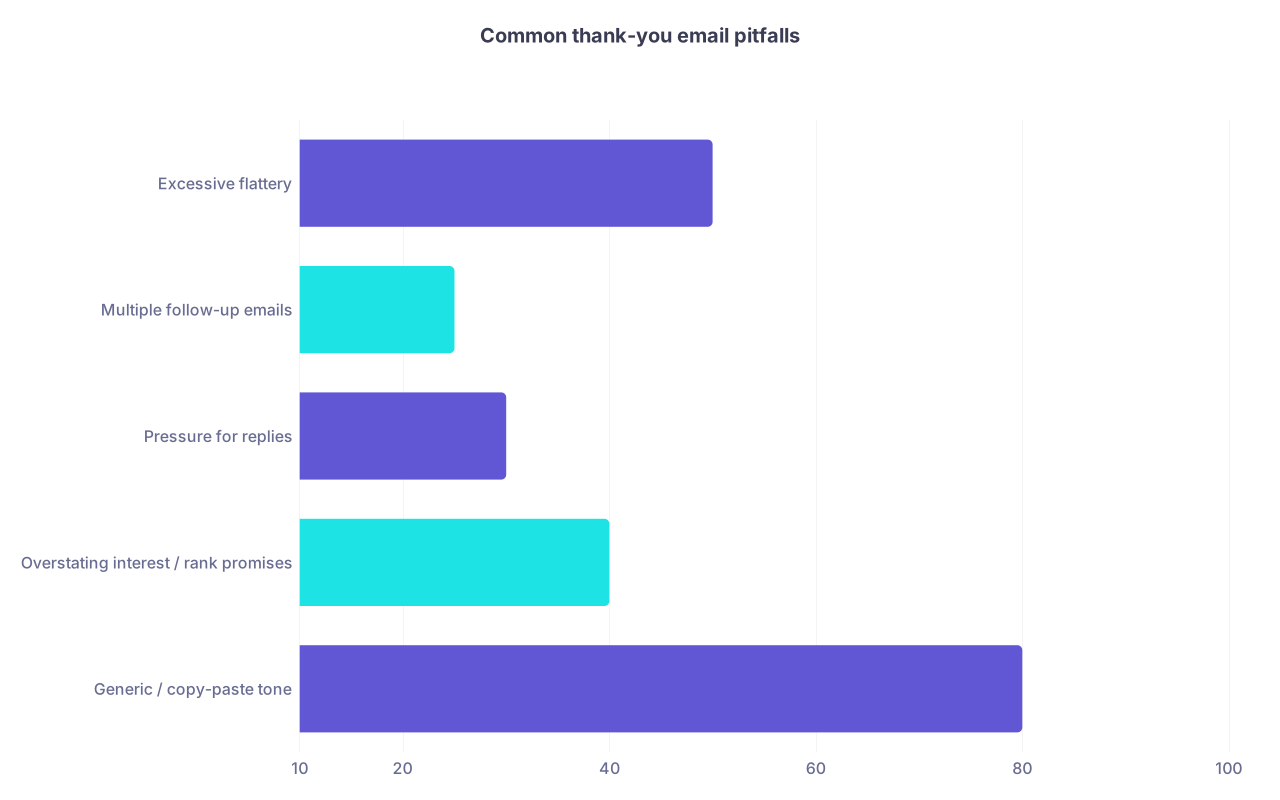
| Category | Value |
|---|---|
| Generic / copy-paste tone | 80 |
| Overstating interest / rank promises | 40 |
| Pressure for replies | 30 |
| Multiple follow-up emails | 25 |
| Excessive flattery | 50 |
How These Phrases Add Up And Quietly Hurt You
Any one of these phrases alone may not kill your chances. The real damage happens when they stack.
Picture this email (I’ve seen versions of it many times):
Dear Dr. Smith,
Thank you for taking time out of your busy schedule to interview me. Your prestigious program is my top choice and I will be ranking you #1. I really loved talking to the residents, they all seemed so nice!
I look forward to hearing from you soon. Please let me know if there’s anything else I can do to demonstrate my interest.
Sincerely,
[Name]
What does this say about the applicant?
- Generic (“busy schedule”).
- Over-flattering (“prestigious”).
- Dishonest or naive (“I will be ranking you #1” sent to multiple programs).
- Superficial (residents are “nice” with no substance).
- Slightly demanding (“look forward to hearing from you soon”).
- Boundary-blurring (“anything else I can do to demonstrate my interest”).
Will anyone scream and toss your file out? No. But if you were on the bubble, this can nudge you onto the wrong side of “meh.”
Whereas a cleaner, grounded email signals:
- Professionalism.
- Emotional maturity.
- Respect for their time.
- Real understanding of the program.

| Step | Description |
|---|---|
| Step 1 | Interview Performance: Borderline |
| Step 2 | Small negative nudge |
| Step 3 | Lower on rank list |
| Step 4 | Small positive nudge |
| Step 5 | Higher on rank list |
| Step 6 | Email Tone |
When faculty are splitting hairs between two similar candidates, tiny professionalism signals matter more than you think.
What A Strong, Safe Thank‑You Email Actually Looks Like
You don’t need to write a masterpiece. You just need to avoid landmines and sound like a normal, thoughtful future colleague.
Basic template that doesn’t sabotage you:
Subject: Thank you – [Your Name], [Specialty] Interview on [Date]
Dear Dr. [Last Name],
Thank you for taking the time to speak with me on [day]. I enjoyed learning more about [specific aspect of program you discussed—e.g., the ICU curriculum, your approach to resident mentorship, the global health track].
Our conversation about [1 concrete point you remember] reinforced my interest in training at a program that [connect it to your goals].
I appreciate your time and consideration.
Sincerely,
[First Last, Medical School]
AAMC ID: #######
Notice what’s missing:
- No ranking promises.
- No pressure for a reply.
- No empty flattery.
- No “please let me know if there’s anything else I can do.”
You sound like an adult colleague in training. That’s exactly what you want.

Extra Red Flags To Scrub Out Before You Hit Send
Since we’re here, let me be blunt about a few more quiet killers I’ve seen too often in follow‑ups:
- Using nicknames for interviewers you just met (“Hi Mike” to the PD Michael Smith). Too casual.
- Typos in the program name or specialty (yes, people have emailed “Thank you for the wonderful psychiatry interview” to an internal medicine program).
- Obvious mail-merge mistakes: wrong program name, wrong city, wrong faculty name.
- Overly emotional lines: “I would be devastated not to match here,” “I’ve dreamed of your program since childhood.” No. Keep your dignity.
- Overlong essays in your thank‑you. 3–6 sentences is plenty. No one is grading you on word count.
And the worst of all: CC’ing multiple interviewers in one email when the program structure clearly expects individual notes. It comes across as lazy, like a blast marketing email.
If you need a mental check: imagine the PD opening your email on their phone between patients. If any sentence would make them roll their eyes, delete it.
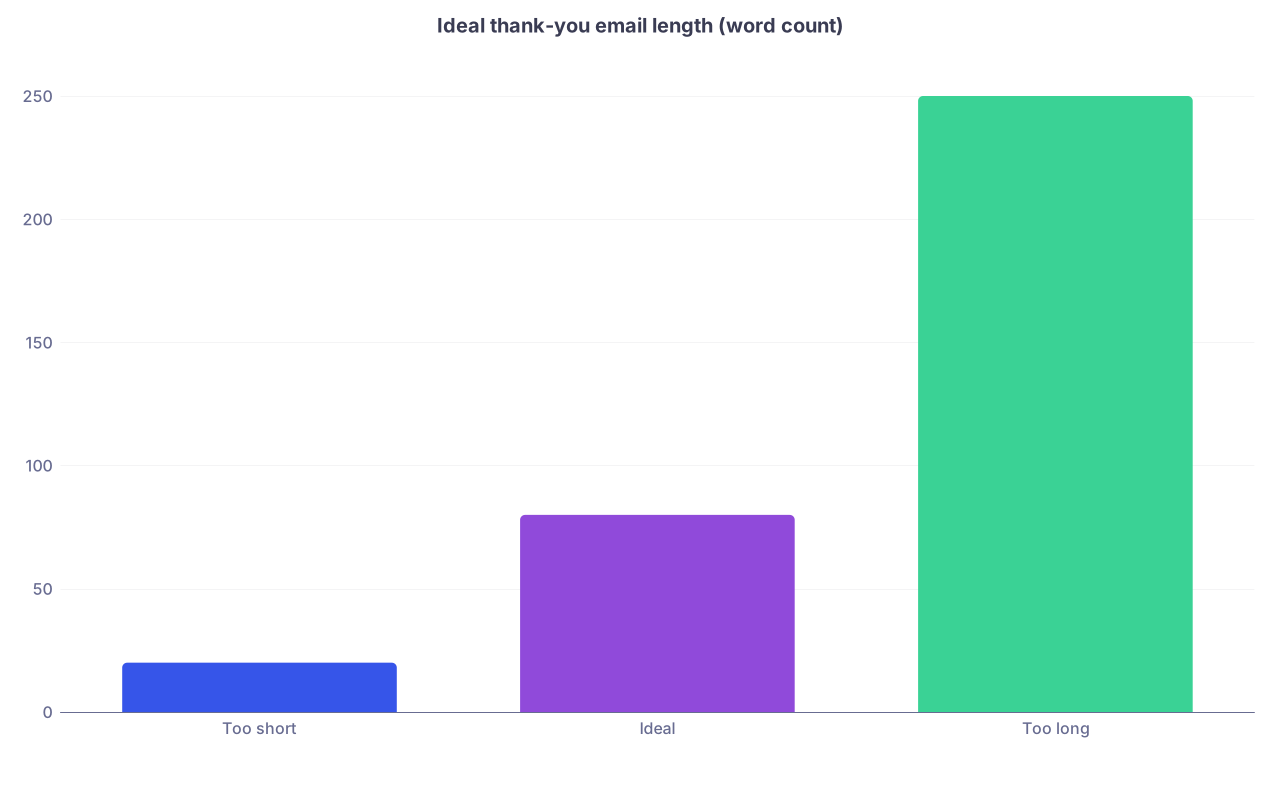
| Category | Value |
|---|---|
| Too short | 20 |
| Ideal | 80 |
| Too long | 250 |
Your Move Today
Open your thank‑you drafts—or write one from scratch if you haven’t yet—and do one surgical pass:
Highlight and delete any of these:
- “busy schedule”
- “prestigious” / “renowned” / “world-class”
- “top choice” / “rank you #1” (unless 100% true and used once)
- “look forward to hearing from you soon”
- “reach out again” / “just following up”
- “so nice and fun”
- “anything else I can do to demonstrate my interest”
Replace them with 1–2 specific details you remember from the interview and a clean, low‑drama closing.
Five minutes of editing now can prevent your thank‑you email from quietly undermining a season’s worth of hard work.