The idea that you must anoint one “#1 program” in your follow-up messages to match well is wrong. And in some cases, it is flat-out harmful.
Let me be blunt: the Match doesn’t care what you whispered in an email. It cares what you put on your rank list. Programs don’t get bonus points because you wrote “You’re my top choice.” They care about how you interviewed, what your application showed, and whether their internal committee liked you enough to rank you highly.
You’ve probably heard some version of this nonsense on the trail:
“You have to tell at least one program they’re your number one or you won’t match.”
“Everyone sends a love letter. If you don’t, they’ll assume you’re not interested.”
“Pick one program and go all-in, it moves you way up their list.”
I’ve watched applicants follow that advice, panic-pick the wrong “#1,” and then tie themselves in knots when their actual rank list didn’t match the email they sent. I’ve also seen people match just fine without ever declaring a “#1” to anybody.
Let’s dismantle this myth properly.
What Actually Determines Whether You Match
Before you obsess over follow-up wording, you need to understand the machine you’re feeding.
The NRMP algorithm is applicant-favoring. It tries, systematically and brutally, to give you the highest program on your certified rank list that will also rank you high enough. Not the one you complimented the most. Not the one you sent a poem to. The one you ranked.
Programs, in turn, create rank lists based on:
- Application file: board scores (where still visible), clerkship performance, letters, research, personal statement
- Interview performance and “fit”
- Standardized assessments or screens (SLOEs, MSPE, red flags)
- Their internal politics and priorities (home students, diversity, couples, niche interests)
“Love letters” and “you’re my #1” emails sit at the bottom of this hierarchy. For many programs, they’re background noise.
And there’s data to back this up. Look at NRMP’s Program Director Survey over multiple years. When PDs are asked what factors influence their rank decisions, “Post-interview communication” and “Applicant’s stated interest in the program” land far below things like:
| Factor | Relative Importance (Higher = More Important) |
|---|---|
| Interview performance | Very high |
| Letters of recommendation | Very high |
| MSPE / clerkship performance | Very high |
| USMLE/COMLEX scores | High |
| Fit with program culture | High |
| Stated interest / follow-up | Low–moderate |
No serious PD is building their rank list purely around who sent the most dramatic “you’re my #1” message. If they are, that’s not a program you should be trying to game your way into.
The Myth of the “#1 Program” Declaration
Here’s the core myth:
“If you don’t explicitly tell a program they’re your #1, they will automatically assume you’re not interested and rank you lower.”
Reality is messier.
Programs know a few uncomfortable truths:
- Applicants interview at multiple places. Shocking, I know.
- Applicants sometimes tell more than one program “you’re my #1.”
- Applicants are under enormous pressure and get terrible advice from older residents who graduated in a different era.
- The NRMP Match Communication Code of Conduct explicitly tries to protect against coercive “tell us your rank” dynamics.
Most programs have adapted. Many have official policies:
- “We do not factor post-interview communication into our rank list.”
- “We do not track or weigh ‘top choice’ declarations.”
- “We discourage love letters.”
Do all of them follow this perfectly? Of course not. But if you think they’re sitting in a ranking meeting saying, “Well, Candidate 173 said we’re #1, bump them above Candidate 26 who crushed the interview but didn’t say those magic words,” you’re living in a fantasy.
What they care about more is whether you:
- Seemed genuinely interested in their program and could articulate why
- Asked thoughtful questions
- Understood their patient population, training structure, and culture
- Weren’t a walking red flag on Zoom
That interest can be expressed perfectly well without the “you’re my #1” theater.
What the Data and Real-World Behavior Show
Let’s look at what we actually observe year after year:
- Plenty of applicants match at programs they never sent a follow-up email to at all. Zero. Nothing.
- Plenty of applicants send heartfelt “you’re my #1” emails and don’t match there.
- Applicants frequently match at their #1 ranked program, regardless of whether they declared it in writing, because the algorithm is built to favor the applicant’s list.
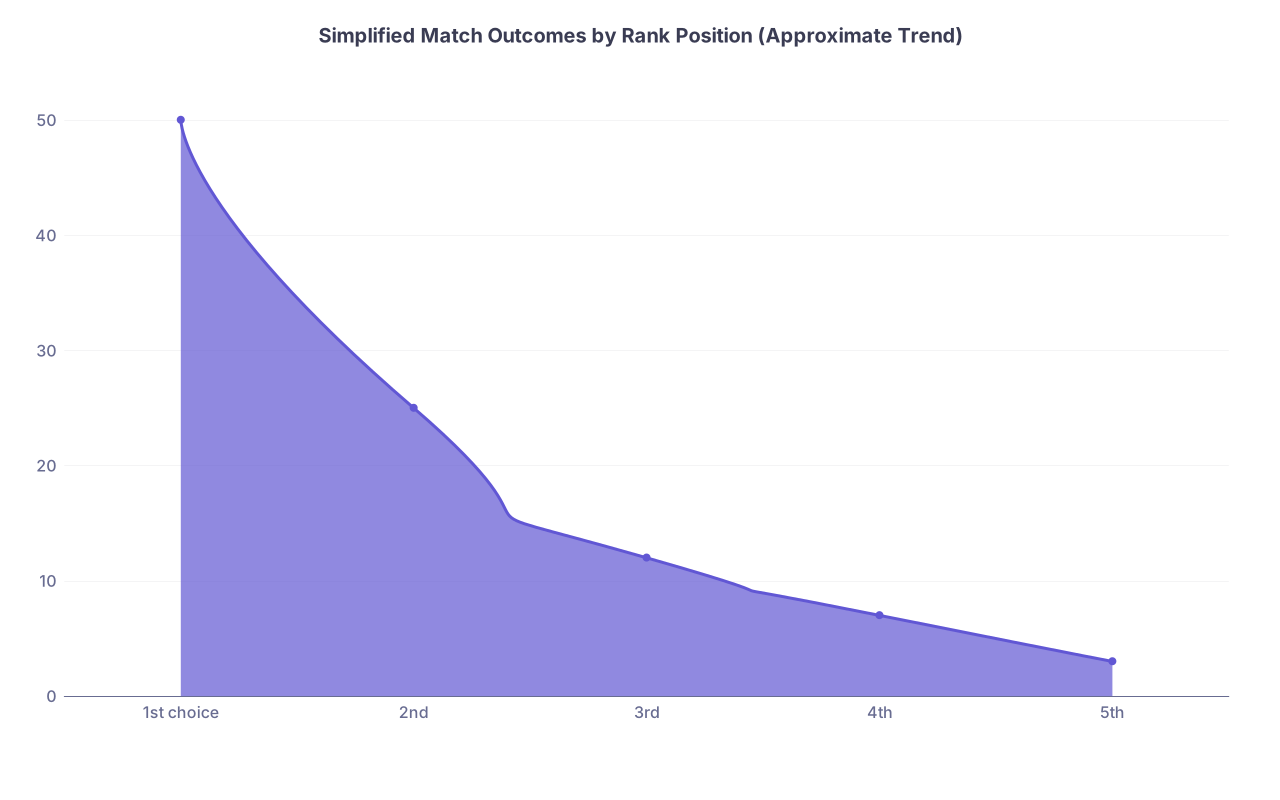
NRMP publishes match outcome data by applicant type and rank position. One pattern is very consistent: you’re most likely to match at your higher-ranked programs because you put them higher, not because you emoted hardest in an email.
| Category | Value |
|---|---|
| 1st choice | 50 |
| 2nd | 25 |
| 3rd | 12 |
| 4th | 7 |
| 5th | 3 |
This isn’t exact per specialty, but the overall trend is clear across years: your best shot is where you rank highest and where they rank you high enough. The emails matter far less than applicants think.
And here’s the dirty little secret I’ve heard straight from PD and APD mouths after ranking meetings:
- “We had 80+ ‘top choice’ emails. They’re meaningless now.”
- “We stopped logging those — it just made us annoyed.”
- “The best use of follow-up is to clarify fit and signal professionalism, not to hear ‘you’re number one’ for the 50th time.”
So no, you are not sabotaging your match odds by refusing to play ranking confessional with every program director in your inbox.
When a “You’re My #1” Message Can Actually Backfire
Now the uncomfortable part. Declaring a #1 can hurt you if you’re sloppy or panicky.
Here’s how I’ve watched applicants shoot themselves in the foot:
They tell multiple programs they’re #1.
Faculty talk. APDs switch institutions. Residents have friends in other programs. When your identical “you’re my #1” email shows up in two different PD inboxes, you’re not “strategic.” You’re untrustworthy.They overpromise and under-rank.
Applicant: emails Program A in January: “You’re my clear #1.”
Reality: in February, they panic or change their mind and put Program B first.
Match result: they match at B.
Guess what Program A thinks when they see that in NRMP outcome data over a few years? They stop believing applicants. That doesn’t help future candidates from your school either.They sound desperate or manipulative.
Some “love letters” read like relationship ultimatums. Long paragraphs, emotional language, comparisons to other programs. That doesn’t convey interest; it conveys lack of judgment.They waste everyone’s time with nothing to say.
A message that says, essentially, “Thanks, you’re my #1” without any specifics about why or what aligns doesn’t add value. It just adds noise.
If you’re going to declare a #1 anywhere, you’d better:
- Mean it
- Be willing to back it up on your rank list
- Not copy-paste the same sentiment to multiple places
- Understand that the return on investment is modest at best
Otherwise, you’re playing a high-risk, low-yield game for almost no actual gain.
What Follow-Up Is Actually For (And How to Use It Well)
So if you do not need to declare a #1 to match well, what should you do after interviews?
Think of follow-up as professional maintenance, not romantic pursuit.
There are three genuinely useful things follow-up can do:
Signal normal, professional interest.
A short thank-you email to key interviewers or the PD/PC that:- Thanks them for their time
- Mentions 1–2 specific aspects of the program you appreciated
- Confirms continued strong interest
That’s it. No drama. No promises.
Clarify or update relevant information.
Did you get a new publication? New leadership position? Pass a major exam? This is appropriate content for an update email if the program allows it.Correct misconceptions / add context.
If something came up on interview day that you feel you didn’t explain well, a brief, focused clarification can actually help.
Notice what’s missing: “I must tell one program they’re my #1 or I’m doomed.”
Most programs read follow-up like this:
- “Professional, polite, specific” → positive signal
- “Generic, formulaic, obviously mass-sent” → neutral
- “Overly intense, contradictory, or misleading” → negative
Your goal is to hit the first bucket and move on with your life.
When (and How) It Might Make Sense to Name a #1
I’m not going to say you should never tell a program they’re your top choice. That’s too dogmatic. There are narrow situations where it’s reasonable.
Use this filter:
- You have a clear top choice. Not “top 3.” Not “top tier.” A single, consistent #1.
- You’ve thought it through over time, not in a 24-hour dopamine spike right after an especially charming interview day.
- You fully intend to rank them #1 and will not change that based on gossip, Reddit, or a friend’s cousin’s opinion.
- You can articulate why they are #1 in a way that goes beyond flattery.
If all that is true, then a single concise email to that program — not a novel, not a massive confession — is reasonable. Something like:
- Thank you for the interview
- One or two specific program features that align with your goals
- A straightforward statement that you intend to rank them first
- A professional closing
Done. No over-explaining. No hinting that they “owe” you anything now. No sending similar messages elsewhere.
But again: this is optional. Not required. Not a secret unlock code to the algorithm.
A Smarter Way to Think About Risk and Signal
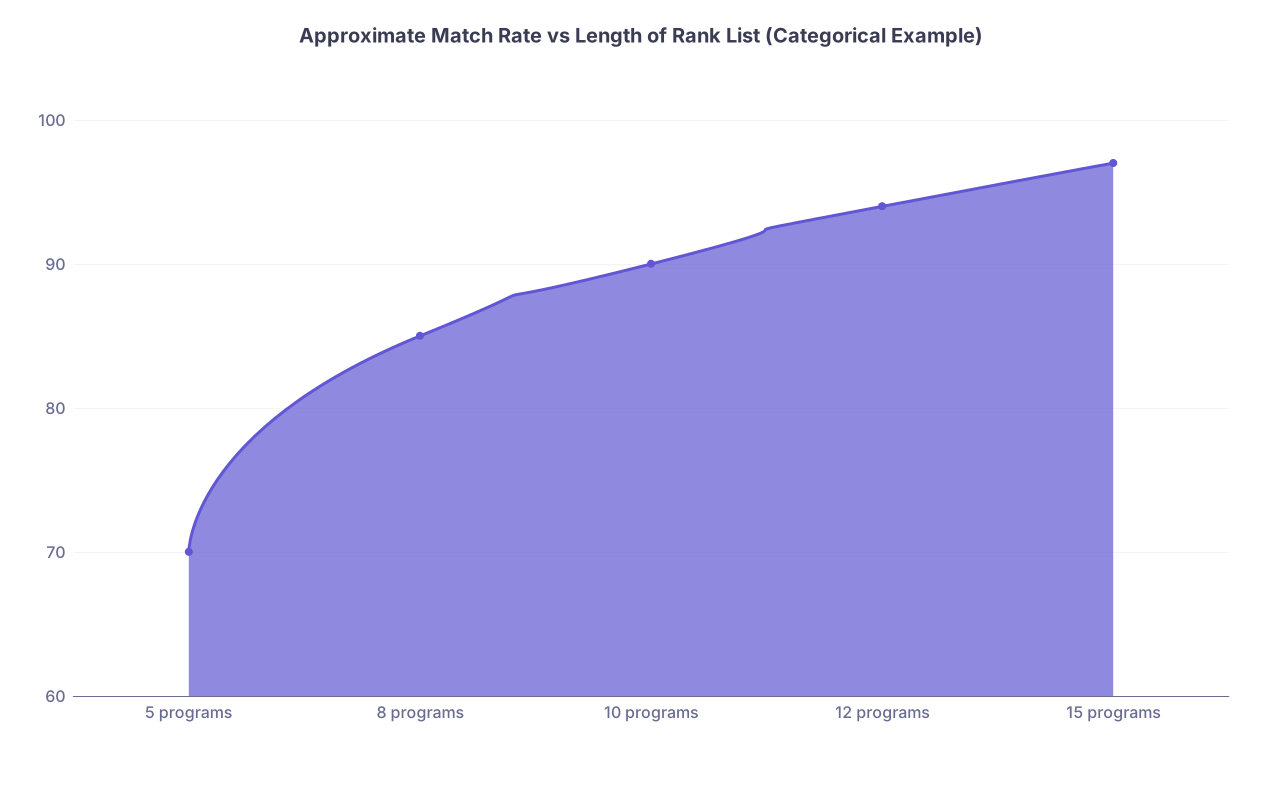
Most applicants catastrophically overestimate the power of post-interview emails and underestimate the power of their actual rank list length and strategy.
If you’re deciding between:
- Spending hours crafting emotionally fraught “you’re my #1” letters
vs. - Expanding your rank list thoughtfully by a few solid, safe programs
The second option wins every time for match probability.
| Category | Value |
|---|---|
| 5 programs | 70 |
| 8 programs | 85 |
| 10 programs | 90 |
| 12 programs | 94 |
| 15 programs | 97 |
Again, these are illustrative numbers, but they mirror real NRMP patterns: adding more realistically rankable programs does far more for your odds than any email could.
If you want to “improve your chances,” your priority list should look like:
- Interview well
- Rank honestly based on where you actually want to train
- Have a sufficiently long rank list of realistic programs
- Send brief, professional, specific follow-ups where appropriate
The “declare a #1” obsession doesn’t crack the top three.
How to Avoid Common Follow-Up Traps
A few patterns I’ve seen sink otherwise strong applicants:
- They ask PDs how high they’re ranked or try to barter information. That’s a fast way to seem naïve or entitled.
- They send weekly “just checking in” emails. That doesn’t show enthusiasm; it shows poor boundaries.
- They contradict themselves between programs, sometimes because they lose track of what they’ve said where.
- They treat the whole thing like a dating app, assigning way too much emotional weight to every bit of perceived “signal.”
A saner approach:
Write your thank-you emails within 24–72 hours of each interview. Keep a simple document noting who you emailed and what you said. Don’t overcomplicate it.
If you eventually decide to tell one program they’re your true #1, document that and don’t repeat it elsewhere. That way, if anyone ever compares notes (and sometimes they do), you don’t look ridiculous.
A Quick Reality Check on Power Dynamics
One last point: a lot of this myth grows out of insecurity. Applicants feel powerless, so they cling to anything that feels like control — including the magical “#1” email.
Here’s the reality: your power is in your preferences. The algorithm is literally designed to respect those.

| Step | Description |
|---|---|
| Step 1 | You make rank list |
| Step 2 | Programs make rank lists |
| Step 3 | NRMP algorithm runs |
| Step 4 | Tries to place you at highest program on YOUR list that ranks you |
| Step 5 | Match result |
Notice what’s not in that diagram: “Program reads email and the algorithm changes accordingly.”
Programs may adjust their list slightly if they’re genuinely on the fence and your interest clarifies something at the margin. But they cannot and do not hack the algorithm for applicants based on who wrote the best love letter.
So stop acting like your entire future hangs on whether you type the words “you are my #1” into Outlook.
The Takeaway
Strip away the noise and you’re left with this:
- You do not need to declare a “#1 program” in your follow-up to match well. The Match algorithm respects your ranked list, not your inbox drama.
- Follow-up is best used for professional gratitude, specific interest, and relevant updates — not emotional ultimatums.
- If you choose to tell one program they’re your top choice, mean it, do it once, keep it brief, and understand it’s optional, not magic.
Focus on your rank list and your honesty, not performative declarations. That is what actually moves your match odds.