
Love letters do not rescue a weak residency application. They mostly make anxious applicants feel busy and give programs more email to ignore.
Let me be blunt: the cult of “I’m ranking you #1” emails is wildly overhyped, badly understood, and often misused. You’ve probably heard some version of: “My friend didn’t get into her top program until she sent a love letter.” Or, “You have to tell at least one place they’re your #1 or you’ll get passed over.”
That mythology survives because it’s comforting. Not because it’s supported by data.
Here’s what the evidence, the match rules, and real program behavior actually show.
What Programs Really Do With Your Post‑Interview Emails
Most applicants imagine PDs and coordinators carefully reading every word of every post‑interview email, putting little gold stars next to “strong interest” and hearts next to “you’re my #1.” Reality is less romantic.
I’ve sat in ranking meetings where the “post‑interview communication” column looks like this:
- “Thank-you, generic”
- “Thank-you, mentioned specific faculty”
- “Strong interest / area connection”
- “No email”
And 40 other columns that matter a lot more: interview performance, letters, fit, board scores, dean’s letter, faculty comments, red flags, etc.
Does anyone open your three‑paragraph manifesto about being “truly honored and deeply impressed”? Sometimes. Does it move you 15 spots up the list? Almost never.
Here’s the practical hierarchy that actually operates in many programs:
- Interview and file strength determine most of your spot.
- Faculty impressions and internal advocacy fine‑tune it.
- Post‑interview communication occasionally breaks ties at the margins.
Not romantic. Just how limited attention and time work.
What the Data and Match Rules Actually Say
Let’s anchor this with something more solid than anecdotes.
The NRMP is not subtle about post‑interview games. They have explicit guidelines and a long history of applicant and program surveys. A few key realities, stripped of spin:
The Match algorithm favors the applicant’s rank list, not the program’s. That means:
- Telling a program “You’re my #1” does not magically improve your outcome beyond them already ranking you where they think you belong.
- Your best move is always to rank in your true preference order, not to contort your list to match your emails or their hints.
Programs are prohibited from requiring or pressuring you for commitments. Applicants are prohibited from being misled about guarantees. NRMP literally warns about “coercive or misleading communications”.
In recent NRMP Program Director Surveys, program directors consistently rank these as top factors:
- USMLE/COMLEX scores
- MSPE/Dean’s letter
- Interview performance
- Letters of recommendation
- Clerkship grades
Post‑interview emails? Not on the main list. Occasionally show up under “other” or “post‑interview contact” as a minor consideration.
Here’s a rough comparison of relative weight, based on PD surveys and real ranking meetings I’ve seen:
| Factor | Approximate Impact |
|---|---|
| Interview performance | Very high |
| Letters / MSPE comments | High |
| Board scores | Moderate–high |
| Fit with program needs | High |
| Post‑interview emails | Low–very low |
That “love letter” you’re obsessing over? It lives firmly in the “low–very low” column.
The Myths About “I’m Ranking You #1” Letters
Let’s dismantle the big ones.
Myth 1: “If I don’t send a love letter, I’ll get passed over”
Reality: Plenty of applicants match at programs they never emailed. Because their application and interview were strong, and the program liked them.
I’ve watched an applicant (call him A) send no follow‑up beyond a simple thank‑you and match at a top‑tier IM program. Another applicant (B) sent a detailed “I will 100% rank you #1” email to a mid‑tier program… and matched there. B then claimed the email “made the difference.”
Maybe. More likely: he was already in the safe zone on their list, and he just anchored on the one thing he felt “in control” of.
Survivorship bias is brutal here. The people who send love letters and still don’t match at the program don’t go around telling that story.
Myth 2: “Programs expect you to send one top‑choice email”
Some do like to be told they’re highly ranked. Many don’t care. Some are openly skeptical because they’ve been burned by applicants telling three programs “you’re my #1.”
The NRMP rules also make explicit rank‑order promises a gray zone. Programs are not supposed to solicit commitments, and applicants are not supposed to be misled. Most PDs know this and are cautious.
And here’s what PDs quietly say in committee: “I basically ignore ‘you’re my #1’ unless I already really liked them and we’re deciding between a few similar people.”
So no, there’s no universal expectation that “serious applicants” must send a single, solemn “top choice” declaration. That’s social media folklore.
Myth 3: “A strong love letter can fix a mediocre interview”
It cannot. A post‑interview email is not an appeal court.
If your interview went poorly, a polished letter doesn’t override the actual human beings who sat with you for 30 minutes and walked away thinking, “Odd fit,” or “Not very engaged.”
At best, a thoughtful follow‑up can:
- Clarify a misunderstood point.
- Re‑emphasize a genuine connection or geographic tie.
- Signal that you’re not “interviewing everywhere, ranking wherever.”
But it does not convert a fundamentally weak impression into a strong one. Programs are not that easily manipulated.
When Interest Emails Can Actually Help
Now let’s flip it. There are a few realistic, narrow situations where explicit interest can matter. They’re not magic, but they’re not zero.
1. You’re in the “we like them, but so will others” bucket
Every program has a group of applicants they believe are likely to match “up” at more competitive programs. People say things like, “She’s great, but she’s going to go to X or Y if she gets the chance.”
If you’re one of those — strong file, strong interview, broad list — a clear, honest “I would be very happy to match here and plan to rank you highly” can soften that assumption. They might bump you a few spots because they’re less afraid of “wasting” a high rank on someone who’s not interested.
Notice the nuance: this is about reducing perceived risk, not creating desire out of thin air.
2. You have a strong tie the program is undervaluing
Geographic/family ties and true career alignment sometimes aren’t obvious from ERAS. If you went to med school in the region but plan to stay long‑term because of a partner’s job, that matters to them. Same with, say, a very specific research/clinical niche the program is building.
If you make that clear in a coherent, specific way — not in a sentimental “I loved your city’s vibe” way — it can nudge you from “good generic applicant” to “good plausible long‑term fit.”
3. You’re on the bubble between two similar candidates
This is the sliver of truth most myths are built on.
Sometimes late in the process, a PD or APD literally says, “We have three people at this spot who are basically tied. Any of them email us with specific interest?” If one person has clearly communicated genuine enthusiasm and the others were silent or generic, that can break the tie.
Not always. But it happens.
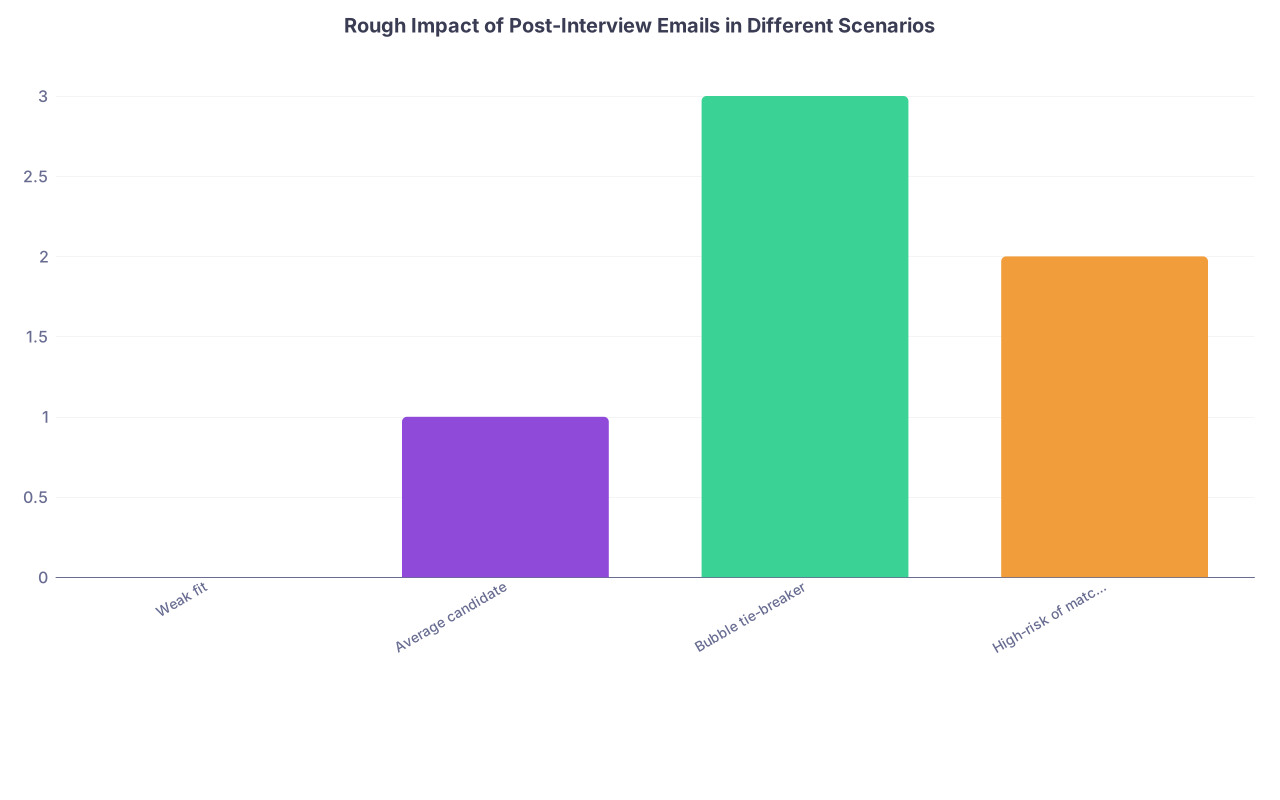
| Category | Value |
|---|---|
| Weak fit | 0 |
| Average candidate | 1 |
| Bubble tie-breaker | 3 |
| High-risk of matching up | 2 |
Scale 0–3 is relative potential impact. No, this is not a randomized trial. It’s how programs describe their behavior when they’re being honest.
How to Email Without Being Needy, Misleading, or Cringe
The bigger problem with love letters isn’t that they never help. It’s that most are badly written, ethically sloppy, or transparently manipulative.
Here’s what works like a sane adult, not a desperate applicant.
1. Separate “thank-you” notes from “interest” emails
You do not need to confess your undying loyalty 24 hours after the interview.
Send your thank‑yous within a week. Short, specific, normal. That’s basic professionalism.
If you want to send a more explicit interest signal, do it later in the season when you actually have a sense of your rank list. Late December to late January is typical.
2. Stop lying about “you’re my #1” to multiple programs
Yes, people do this. PDs know people do this. And they talk.
NRMP rules aside, it’s just bad professional hygiene. You’re entering a small field. Lying early is a dumb brand strategy.
If you’re going to say “I will rank you #1,” mean it. And only say it to one program. If you’re not sure or don’t want to lock yourself in, use accurate but softer language:
- “I will be ranking your program very highly.”
- “Your program is among my top choices.”
- “I can strongly see myself training at your program.”
Those are honest, non‑binding signals of real interest.
3. Say something that proves you actually paid attention
Most love letters fail here. They’re template‑level generic. “I was deeply impressed by your commitment to education and research.” Translation: you remember nothing.
Reference 1–2 concrete things from the day that genuinely matter to you:
- A specific clinic or rotation structure.
- A fellow or resident’s comment about culture.
- Research or QI infrastructure.
- Unique schedule, call system, or curriculum.
Then explain why that matches your priorities in a sentence or two. If you can’t do this without faking it, you probably don’t actually care about the program that much.
4. Keep it short. You’re not writing a novel.
Four to eight sentences is plenty. You’re confirming interest, not submitting a second personal statement.
Something like:
- Appreciation
- One or two specific callbacks
- Clear, truthful interest level
- Optional brief personal/context tie
- Polite close
That’s it.
Realistic Expectations: What These Emails Will Not Do
Let me set proper boundaries around your hopes.
An explicit interest email will not:
- Turn a clear “no” into a “yes.”
- Overcome glaring academic red flags.
- Fix a bad or awkward interview.
- Override a terrible letter of recommendation.
- Force a program to rank you above better‑fit, stronger candidates who also want to be there.
At best, it will:
- Keep you from being downgraded purely out of fear you’re not interested.
- Clarify your genuine enthusiasm in a stack of otherwise similar applicants.
- Help a program justify ranking you slightly higher when they already like you.
That’s not nothing. It’s just a lot smaller than the stories on Reddit make it sound.
Timing, Programs, and Strategy: Where Applicants Mess This Up
The other mistake is tactical: people shotgun love letters everywhere, too early, with no prioritization.
If you interviewed at 14 programs and send 9 “you’re my top choice” style emails, you’ve just:
- Watered down your sincerity.
- Increased your risk of contradicting yourself.
- Burned time and stress on a low‑yield move.
Better framework: think in tiers.
| Program Tier | Typical Communication Approach |
|---|---|
| True top 1 | One honest “#1” email (if you choose) |
| Top 3–5 | Clear “rank you highly” interest emails |
| Middle / backups | Standard thank-you only |
| Safety interviews | Thank-you, no extra unless genuine tie |
This assumes you have enough interviews that “tiers” even make sense. If you’re barely at the minimum interview number for your specialty, the calculus changes; you might want to signal interest a bit more broadly, but still honestly.
And timing? Think late‑December through January for explicit rank‑related language. Before then, your own list is still a moving target.
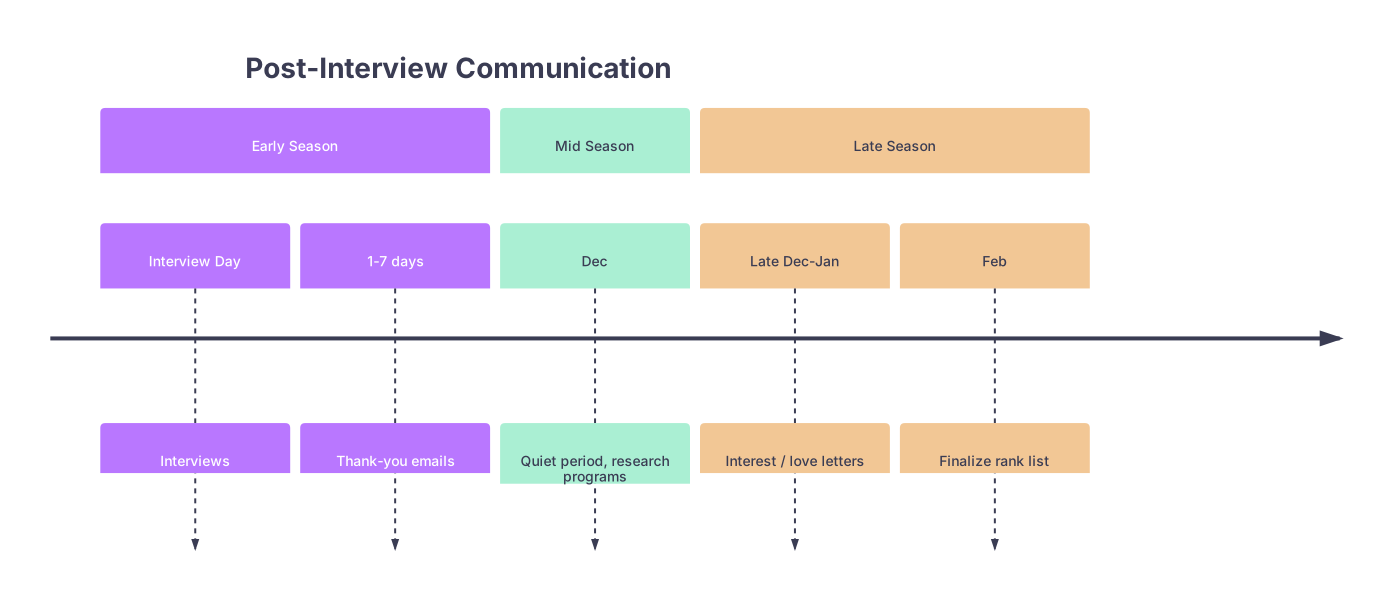
| Period | Event |
|---|---|
| Early Season - Interview Day | Interviews |
| Early Season - 1-7 days | Thank-you emails |
| Mid Season - Dec | Quiet period, research programs |
| Late Season - Late Dec-Jan | Interest / love letters |
| Late Season - Feb | Finalize rank list |
Special Cases: Couples Match, Signals, and Competitive Specialties
A few quick realities for the edge scenarios everyone overthinks.
Couples match: Programs know your list gets complicated. Interest emails that explain how their program fits into your couple’s geography can be helpful. But again, it’s about clarity, not begging.
Signaling (official preference signals in some specialties): Those already tell programs you’re serious. A subsequent love letter is redundant unless you have something new and specific to say.
Hyper‑competitive specialties (Derm, Ortho, ENT, etc.): Here, rank lists are tight, and many applicants would kill for any spot. Programs know you want them. Your explicit “you’re my #1” means less when every other email says the same. Specific fit and faculty advocacy still beat generic love.
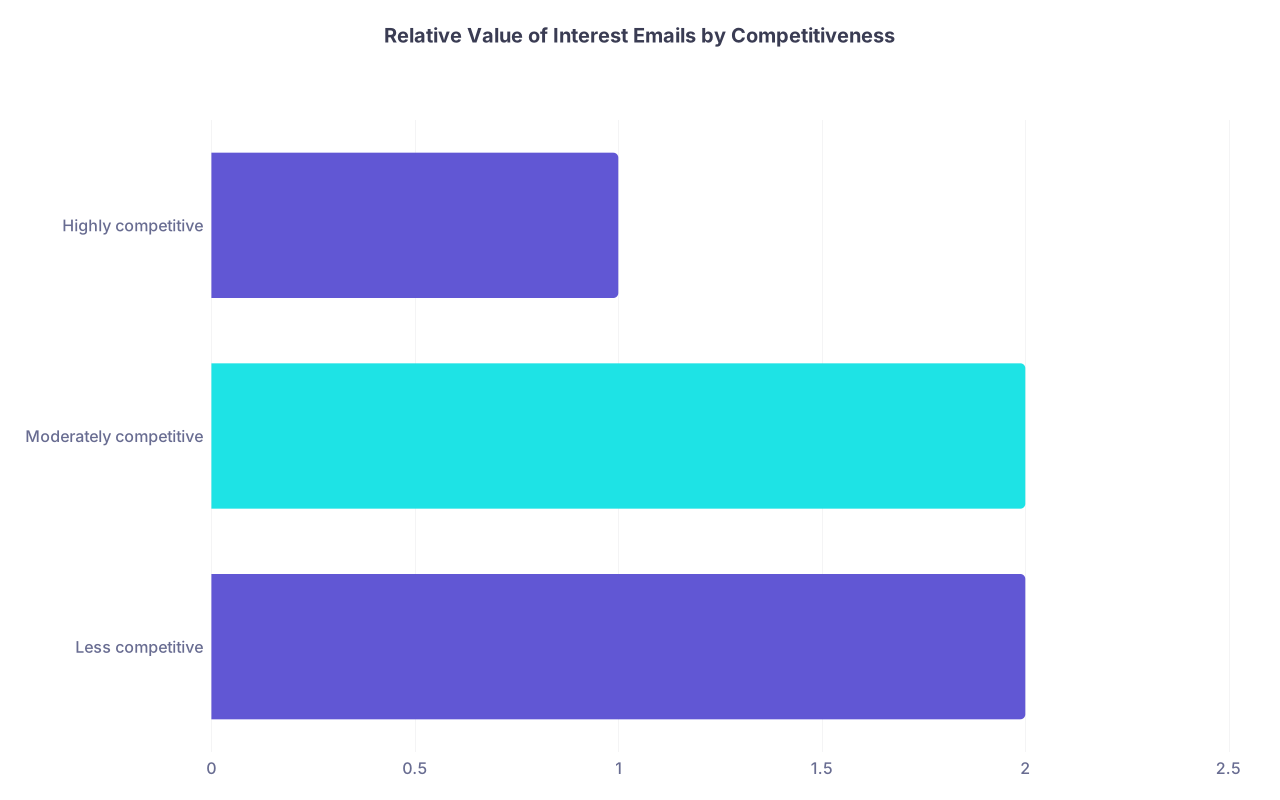
| Category | Value |
|---|---|
| Less competitive | 2 |
| Moderately competitive | 2 |
| Highly competitive | 1 |
Again, scale is relative. In extremely competitive fields, everyone is signaling interest; your email gets lost in the noise unless it’s unusually specific or backed by strong internal advocates.
The Short Version: What You Should Actually Do
If you’ve skimmed everything, here’s the distilled, unromantic playbook.
- Send prompt, specific thank‑you notes after each interview. Professional baseline.
- Pick one program at most for a true “I will rank you #1” email, if you want to send one and mean it.
- For a few other top programs, send concise, honest interest emails saying you’ll rank them highly and why, with 1–2 real specifics.
- Don’t send manipulative or copy‑pasted love letters to every program. It doesn’t work and makes you look unserious.
- Then stop obsessing over emails and spend your energy on building a rational rank list in your true order of preference.
Two or three well‑aimed, honest, specific emails can slightly help at the margins. Twenty generic love letters will not save you.
That’s the real story.