62% of program directors say thank-you notes “rarely or never” influence their rank list decisions.
So why are applicants still agonizing over stationery weight vs. Gmail drafts like it’s 1998?
Because you’re hearing advice from two groups who don’t live in the real world of residency selection anymore:
- Old-school attendings who matched before ERAS was online
- Forums where “this worked for me” is treated like randomized controlled data
Let’s cut through the mythology and look at what actually happens on the program side now.
What The Data (And PDs) Actually Say
Let me start with the punchline: almost no one is moving you up or down their rank list because you sent a beautiful handwritten card instead of an email.
Surveys from NRMP, individual specialty organizations, and program director panels all basically converge on the same points:
- Most PDs don’t systematically track thank-yous at all
- When they do track, it’s usually just “followed up / did not follow up”
- Format (email vs handwritten) is almost never recorded, much less used
The Association of Program Directors in Internal Medicine has presented multiple sessions where PDs literally say: “I don’t have time to read your note, much less change your rank because of it.” That’s the real quote, not the polite version.
Here’s a rough picture of how programs treat thank-yous now:
| Program Behavior | Approx. Share of Programs |
|---|---|
| Skim but don’t record | ~40% |
| Don’t care / barely notice | ~30% |
| Track as “professionalism” only | ~20% |
| Rarely factor into ranking | ~10% |
Are those exact numbers? No. But they’re consistent with survey data and what PDs say on record at meetings and in podcasts.
The key point: the presence of a thank-you may be noted in some places. The format almost never is.
The Big Myth: Handwritten = More Sincere, More Impact
You’ve probably heard this one from an older attending or advisor:
“Send handwritten notes. It shows effort. It stands out.”
That was plausible in 2005. Now? It’s mostly nostalgia.
Here’s what’s actually working against handwritten notes in 2025:
Timing
Handwritten notes are slow. By the time your card gets delivered, three other interview days have happened. The real discussion about you as a candidate? Already done, often the same day as your interview or within the week.Logistics
Cards get:- Lost in mailrooms
- Delivered to the hospital address when faculty are mostly at the clinic
- Opened by admin staff and never forwarded
I’ve watched coordinators toss envelopes into a stack with CME flyers and pharmaceutical junk. You think your heartfelt note is special. To them it’s paper in a pile.
Accessibility
Email lives:- In the program coordinator’s searchable inbox
- In the PD’s account, easy to pull up when they vaguely remember “That applicant who followed up on our underserved clinic”
Handwritten? It’s in a recycling bin unless someone’s unusually sentimental.
Cultural Shift
The current generation of PDs and APDs are not emotionally attached to paper. They’ve been living in EMRs and email threads for two decades. One PD said in a panel I attended:
“If I get a handwritten note, I just think: this is one more thing on my desk.”
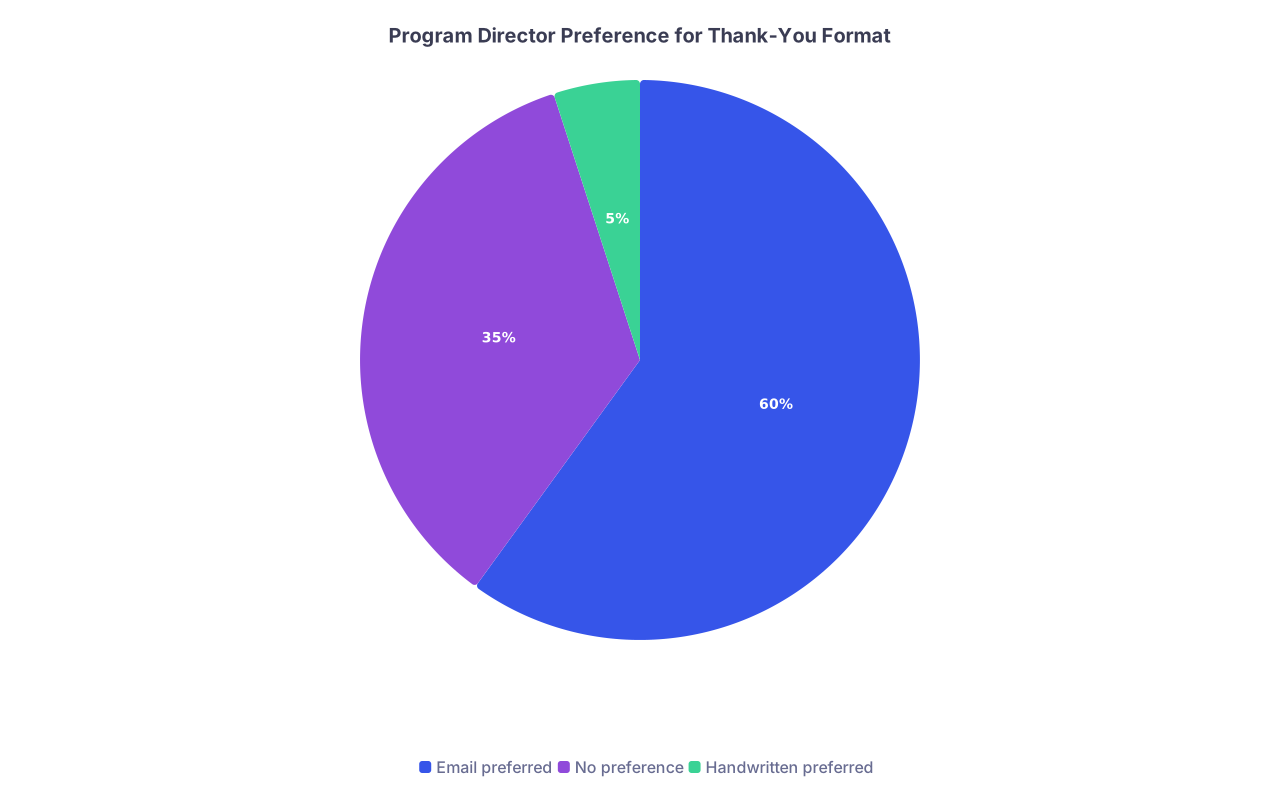
Let’s visualize how often program directors actually prefer email vs handwritten, based on modern norms and what they say:
| Category | Value |
|---|---|
| Email preferred | 60 |
| No preference | 35 |
| Handwritten preferred | 5 |
Yes, a tiny minority still love handwritten. But you’re playing the odds. And the odds favor email.
What Programs Actually Care About (It’s Not Your Penmanship)
Most programs care about three things regarding post-interview follow-up:
Professionalism
Are you:- Polite
- Sane
- Not sending love letters, gifts, or desperate multi-paragraph rank promises
A short, coherent email shows more professionalism than an elaborate card that arrives three weeks late.
Communication clarity
If you mention something substantive—interest in a track, a spouse’s job search, visa needs—it’s easier for the program to act on that in email. They can forward it to:- The chief residents
- The program coordinator
- The PD
- A specific faculty member (e.g., research mentor in your field of interest)
They cannot forward your handwritten note without… typing it up themselves. No one’s doing that.
Fit & genuine interest
Thank-you messages occasionally help clarify:- “I’m truly ranking you highly because of X, Y, Z that fit my goals”
- “Your physician-scientist track is exactly what I’m looking for because…”
This is easier to articulate and easier to save in an email. Handwritten notes look nice; email actually carries useful information.
The One Real Advantage of Handwritten Notes (That Hardly Matters)
I’ll give handwritten notes one thing: in very small, very old-school programs, a card can play well with a certain type of faculty.
Think:
- Single-hospital community programs with a PD who still carries a paper planner
- Very traditional surgical departments where someone still dictates notes into a recorder
In those rare cultures, a card might get shown around as “Look how thoughtful this applicant was.” But even there, that’s more “aw, nice kid” than “bump them up five spots.”
And that’s the point: even where handwritten is liked, it’s not a power move. It’s a courtesy.
Where Email Completely Destroys Handwritten
Let’s be blunt. If your goal is to be efficient, remembered, and not annoying, email is the superior tool.
Here’s why.
1. Speed and relevance
You can email:
- Same day
- The next morning
- While details are fresh in your head and theirs
You can say something specific like:
- “I appreciated Dr. Patel walking me through your QI curriculum and the resident-led M&M structure”
- “Hearing about the advocacy track and state-level policy work confirmed this is exactly the kind of training environment I want”
No one remembers that level of detail a week later when your card arrives.
2. Searchability and documentation
I’ve seen this scenario more than once:
- Rank meeting is coming up
- A faculty member says, “There was that applicant really interested in our addiction med clinic, what was their name?”
- Program admin searches their email for “addiction” and your thank-you pops up
Now, compare that to: “Didn’t someone send a card about addiction medicine?”
Then everyone stares at each other and shrugs.
Email creates a searchable trace. Paper creates clutter.
3. Less risk of weirdness
You can easily overshoot with handwritten:
- Very fancy stationery that feels over-the-top
- Long emotional paragraphs that land as… awkward
- Writing to 10+ faculty and getting someone’s name or title wrong in ink
Email is easier to keep:
- Short
- Neutral-professional
- Correct (names, pronouns, titles fixed before sending)
What Actually Moves The Needle (Spoiler: It’s Content, Not Medium)
Programs aren’t asking: “Did they send a note?”
They’re asking: “Do we want them here?”
Your thank-you only helps if it reinforces an already-good impression or fixes a point of confusion.
Here’s where email can actually be useful:
You forgot to mention a relevant thing on interview day
“I realized I didn’t get a chance to discuss this during the interview, but your rural track aligns with my prior work at [clinic]. I’d be excited to continue that at your program.”You’re clarifying genuine interest
“After seeing the resident camaraderie and your global health elective structure, I’m confident this program fits what I’m looking for in training.”You’re following up on something specific
“Thank you for suggesting I read Dr. Wu’s work on resident burnout. I’ve started that paper and really appreciate the recommendation.”
None of this works better in cursive on cardstock. In fact, the longer the content, the more ridiculous it feels in a physical card.
How Often Applicants Overestimate Thank-You Impact
Applicants routinely act like thank-you strategy is a major lever in the Match.
Reality: it’s rounding error.
If your file is:
- Strong enough to be in the top group: a nice, specific email might slightly reinforce the good impression.
- Borderline: a thank-you generally doesn’t save you.
- Problematic (bad interview, red flags): sending the world’s best Crane-style stationery note will not undo that.
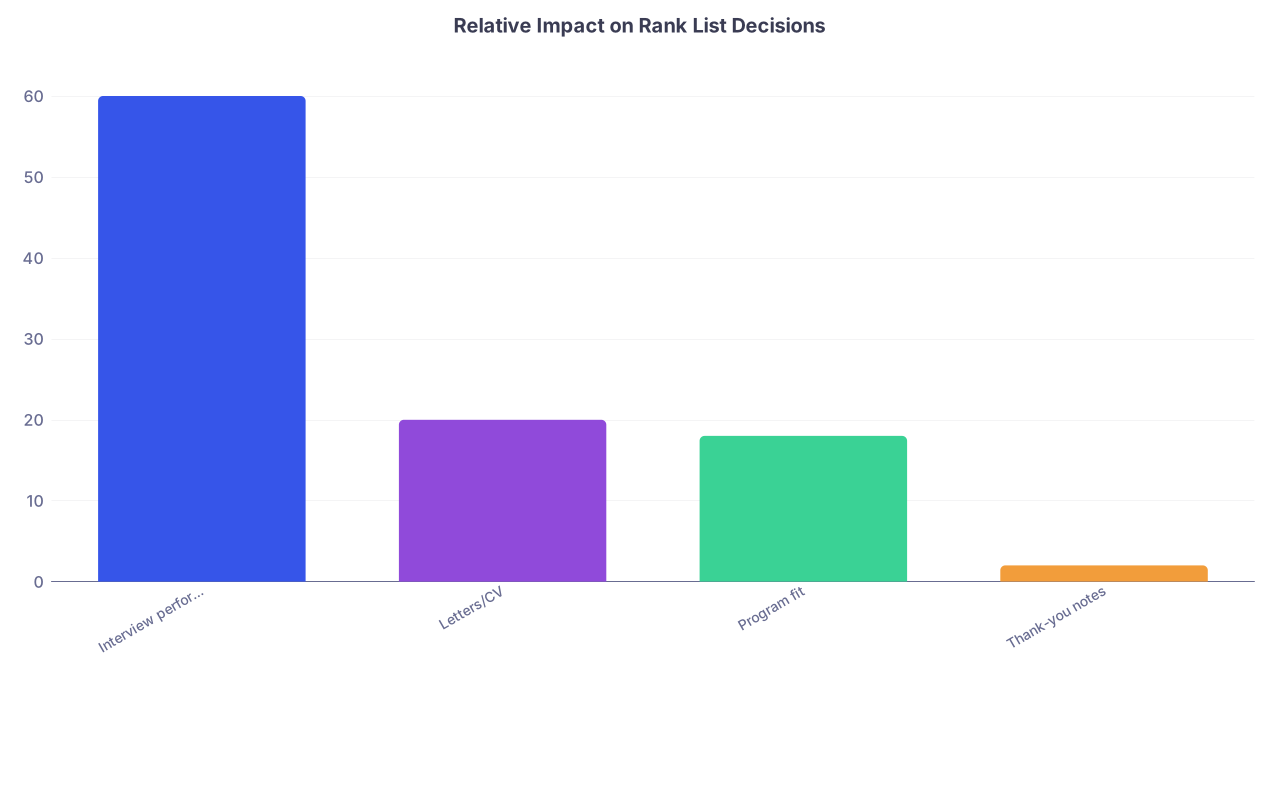
Here’s roughly how much different factors matter in rank decisions:
| Category | Value |
|---|---|
| Interview performance | 60 |
| Letters/CV | 20 |
| Program fit | 18 |
| Thank-you notes | 2 |
Again, not perfect numbers. But that 2% is about where thank-yous live in reality. And format (handwritten vs email) is a fraction of that 2%.
So What Should You Actually Do?
Here’s the practical, non-myth version.
When to send
- Within 24–72 hours after the interview
- Sooner is fine. Later than a week and it becomes background noise.
Who to email
- Program director
- Program coordinator (they’re the ones who keep everything running; ignoring them is dumb)
- Anyone you had a substantial one-on-one conversation with (faculty, chief residents, sometimes even an especially engaged resident)
You don’t need 10 separate custom essays. But you also shouldn’t send one mass BCC. That screams lazy.
What to write
3–6 sentences is enough.
Structure it like this:
- Thank them for their time and the opportunity to interview.
- Mention one or two specific things from the day that genuinely resonated.
- Briefly restate your interest or how you see yourself fitting.
- Optional: one line of follow-up if they offered help (“Thanks again for inviting me to reach out with further questions.”)
That’s it. No ranking promises. No “you are my top choice” to five different programs (yes, PDs talk). No drama.
What NOT to stress over
- Handwritten vs email → email wins on practicality and actual impact
- Fancy fonts, signatures, backgrounds → you are not designing a wedding invitation
- Perfect originality → this is professional courtesy, not a creative writing contest
When a Handwritten Note Is Actually Reasonable
I’m not saying never write a card. I’m saying don’t confuse it with a strategy.
You can justify a handwritten note if:
- A mentor at the program went out of their way for you (put in hours of personal effort)
- A place where you rotated as a medical student truly shaped your training
- You have an ongoing, multi-year relationship with someone there and you want to acknowledge that beyond the interview context
Even then? I’d still send an email for the program-related follow-up. And treat the handwritten card as a personal thank-you, not part of your match tactics.
The Bottom Line: What Programs Honestly Prefer Now
Let me condense this for you:
- Programs overwhelmingly prefer email for thank-you notes: faster, searchable, and easier to share. Handwritten cards are rare, sometimes charming, but functionally irrelevant.
- The content of your message matters far more than the medium. Specific, concise, professional emails that reinforce fit are useful. Format almost never moves your rank.
- Thank-you notes are courtesy, not currency. They rarely change your position. Send good emails, stop fetishizing stationery, and put your real energy into interview performance and authentic program fit.