
The myth of the magical handwritten thank-you note is wildly overblown. Let me tell you what actually happens to that card once it hits the program office.
Some of you imagine a program director carefully opening your envelope, pausing, smiling, and saying, “Wow, this student really stands out.” Reality is much duller, and sometimes a little ugly. I’ve watched this process at multiple programs—big-name university departments, mid-tier community sites, and everything in between. The pattern is the same.
If you understand what really happens behind the scenes, you’ll stop obsessing over stationery and start using follow-up the way smart applicants do: strategically, with intent, and without wasting everyone’s time.
Step 1: How Your Thank-You Actually Arrives
Let’s start at the mailroom level, because yes, that part matters.
At most programs there are three paths your “thoughtful” gesture can take:
- Physical mail (the classic handwritten card)
- Direct email to interviewer(s)
- Email to generic program inbox or coordinator
Here’s the first secret: physical mail is the least reliable. Not because people hate it, but because the workflow is messy and low-priority.
What really happens with physical cards
Scenario I’ve seen dozens of times:
The envelope arrives at the hospital mailroom. It sits in a bin with vendor flyers, pharma junk, and interdepartmental envelopes. Twice a day (if you’re lucky), someone runs that pile up to the department.
In the department office, a secretary or coordinator glances at it:
“Another interview thank-you?”
“Yep.”
“Drop it on her desk.”
Now there are several options:
- The coordinator opens it, sees it’s from an applicant, and puts it in a “to distribute” pile
- It gets rubber-banded with other random mail for the PD’s mailbox
- It sits unopened for days, sometimes weeks, during peak interview season
If you sent it to a faculty member who’s rarely on site (research heavy, multiple clinics, split hospital sites), it may never physically get into their hands before rank list certification. I’m not exaggerating. I’ve seen cards delivered after rank lists were already locked.
Compare that to email: the coordinator hits forward; it lands in the attending’s inbox in five seconds. No walk. No mailroom. No pile. No delay.
Pretty handwriting doesn’t fix broken workflow.
Step 2: How Coordinators Actually Treat Thank-Yous
Residency coordinators are the gatekeepers you never think about. During interview season they’re drowning—interview schedules, canceled flights, last-minute faculty swaps, ERAS updates, NRMP tasks.
Your card is a low-priority task in a high-intensity season.
Here’s the behind-the-scenes reality from coordinator desks:
- Many coordinators don’t log thank-yous anywhere.
- Some keep a folder on their desk with all thank-yous tossed together.
- A minority will scan particularly “interesting” notes into your file, usually if they mention something unusual (significant updates, clear intent to rank highly, or strong prior connection).
Occasionally you’ll hear this:
Coordinator: “Hey, Dr. S, another thank-you from that Hopkins student you liked.”
PD: “Just toss it in my box, I’ll look later.”
(Later never comes.)
The ones coordinators do remember are outliers:
- The grotesquely over-the-top card (“glitter, wax seal, 2-page letter”)—usually mocked, not admired.
- The card with a genuine, specific connection (“Thank you again for sharing how you went through IVF during residency; it meant more than you know”). That might get a, “She was the one who talked to you about fertility, right?” and spark a brief positive association.
But structurally? Your card is not being systematically added as “points” in some hidden score.
Step 3: What Faculty Actually Do With Your Notes
This is where the fantasy really breaks.
Most faculty fall into one of five categories when it comes to thank-you messages:
They skim, smile, and toss.
“Nice kid,” they think, then into the recycling bin it goes.They skim and do nothing because the rank list is already basically set.
By the time your card arrives, most interviewers have already submitted their impressions or rankings to the program.They briefly mention it in passing at a ranking meeting.
“Oh yeah, that’s the guy who sent a handwritten card. Seemed polite.” The comment gets a few nods. Then they move on.They ignore it completely.
The envelope sits in a pile. They feel vaguely guilty. They never actually open it.Rare but real: they remember you more clearly.
This happens if your note is specific and ties back to a conversation that stuck with them. Not “Thank you for your time,” but “I’ve been thinking about your advice about handling unexpected bad outcomes on call…”
In other words: the note itself rarely moves your rank. But it can occasionally sharpen an impression that already exists.
If they already liked you, it makes them think, “Yep, that person was thoughtful.”
If they didn’t like you, the card doesn’t fix that. At all.
Step 4: Does Anyone Ever Record It in Your File?
Sometimes. But not how you imagine.
Programs fall into three basic camps:
| Program Type | Handling of Thank-Yous | Impact on Rank |
|---|---|---|
| Structured academic | Occasionally logged or scanned | Minimal to small |
| Typical community | Ignored or loosely noted | None to minimal |
| Hyper-organized flagship | Rarely formalized, but discussed if notable | Small, context-dependent |
In highly structured academic programs, a coordinator might write a quick note in your file:
“Sent thank-you email 1/22; expressed strong interest; updated Step 2 score.”
Notice what matters there: not the existence of a thank-you, but the content.
If your follow-up includes something substantive—a new publication accepted, Step 2 score improvement, updated visa status, a clear statement of interest (“I intend to rank your program very highly”)—that may actually get mentioned in a meeting.
But just “thank you for your time, I really enjoyed meeting everyone”? That’s noise. Everyone says that.
I’ve seen rank meetings where the PD goes down the list and the only follow-up comment about a note is:
“Yeah, they sent a nice thank-you, but so did half the group.”
It becomes background.
Step 5: Timing vs. Content – Which Matters More
People obsess over timing. “Should I send it the same night? Next day? Handwritten vs. email?” You’re asking the wrong question.
Let me be blunt: content matters more than modality, and timing only matters in relation to one thing—when the rank list is being finalized.
Here’s how it actually plays out chronologically:
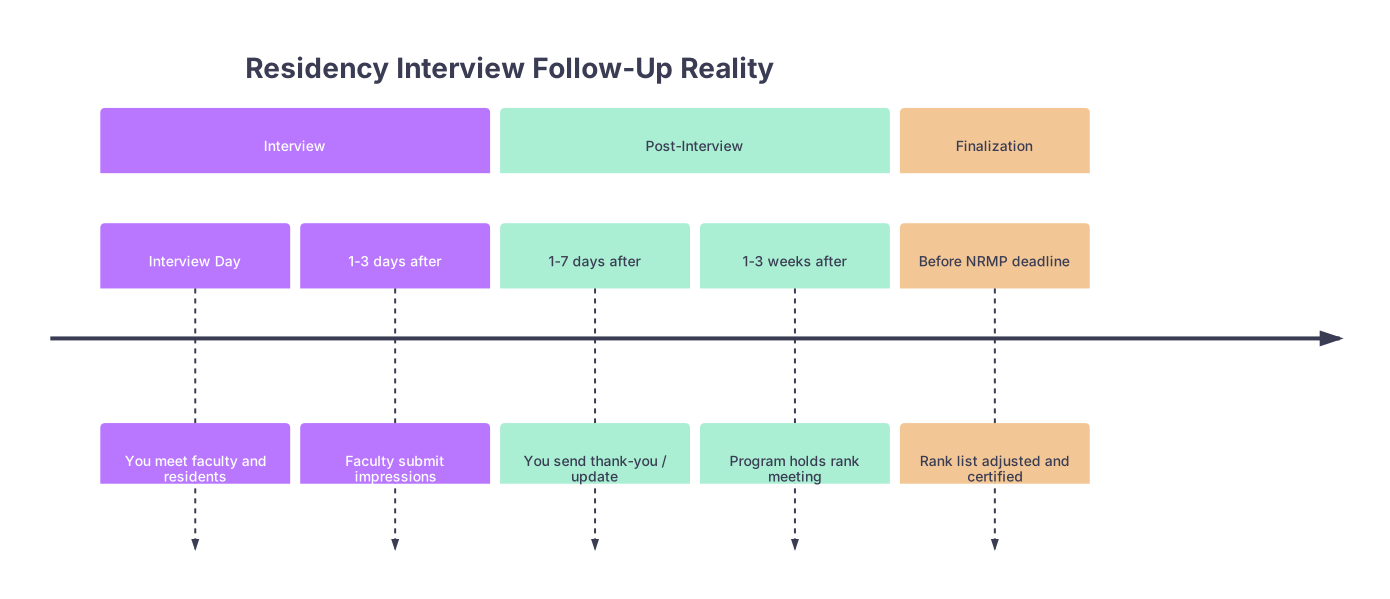
| Period | Event |
|---|---|
| Interview - Interview Day | You meet faculty and residents |
| Interview - 1-3 days after | Faculty submit impressions |
| Post-Interview - 1-7 days after | You send thank-you / update |
| Post-Interview - 1-3 weeks after | Program holds rank meeting |
| Finalization - Before NRMP deadline | Rank list adjusted and certified |
If your follow-up lands:
- Before faculty submit impressions – It barely matters. Their memory is already fresh from the interview.
- Before the main rank meeting – This is the only window where a strong, specific follow-up can potentially tilt a borderline decision.
- After the rank list is essentially done – Your card becomes a nice gesture with little operational impact.
But again, the content is the difference between forgettable and useful.
“Thank you for your time” = polite wallpaper.
“Since our interview, I accepted a position as first author on X trial and wanted to update you” = that occasionally gets attention.
“I intend to rank your program first” = at some places, that line actually gets read out loud in the room.
Just not as often as you think.
Step 6: Handwritten vs Email – What No One Tells You
Here’s the part you’ll never see on official advice pages.
Program directors and coordinators like efficiency. They’re not scoring you on paper choice and penmanship. They care if:
- You’re normal, mature, and not weirdly intense.
- You communicate like a functional professional.
- You don’t create extra work with your follow-up.
Handwritten thank-you:
- Slower to arrive
- Harder to distribute to multiple interviewers
- Almost never scanned or documented
- More likely to be delayed or lost
- Can feel over-produced if it reads like a Hallmark audition
Email thank-you:
- Faster, easier, searchable
- Can be forwarded to multiple people instantly
- Easy to paste into a file or notes
- Simple to respond with a quick line if someone feels like it
Faculty quietly prefer email. They won’t say it in the brochure, but ask them over coffee and they’ll tell you.
The only time a handwritten note really stands out in a good way is when it’s tied to something genuinely personal that came up during the day and your tone is simple, direct, and human. No theatrics. No script.
Step 7: How Your Note Can Actually Backfire
Nobody talks about this, but it should be obvious: weird follow-up can hurt you.
I’ve watched this happen:
- Card arrives written like a love letter. Multiple exclamation points, dramatic language, “I’ve dreamed of your program for years!!!” The faculty member laughs, then gets slightly uncomfortable.
- A student sends separate, inconsistent “You are my top choice” messages to three programs in the same city. Guess what? Faculty talk. Word gets around. It’s not a good look.
- Another applicant sends a four-paragraph emotional essay about their life trauma, long after the interview ended, in a thank-you note. It reads as an attempt to manipulate sympathy. The group’s reaction? “Why didn’t they just say this during the interview if it was relevant?”
Overly intense, overly long, or strangely personal notes raise a small but real red flag: “Is this person going to be high-maintenance?”
That matters far more than whether the card is pretty.
Step 8: What “Helps a Little” vs “Does Nothing”
Let’s be precise. Here’s the unvarnished breakdown of what your thank-you/follow-up actually does:
Helps a little (sometimes):
- Brief, specific email to each interviewer referencing something real from your conversation
- A line expressing genuine interest, especially if you’re truly likely to rank them highly
- Concise update with new objective data (Step 2 score, publication, changed partner match plan, updated visa situation)
- Respectful signaling of preference to one top program you’re serious about
Does almost nothing:
- Generic “Thank you for your time, I enjoyed meeting you and loved your program” variations
- Handwritten card that says nothing specific beyond the standard fluff
- Over-produced, overly formal or poetic notes that read like you copied them from Reddit
Actively hurts:
- Sending emotionally manipulative messages
- Excessive follow-up to multiple people at the same program repeatedly
- Inconsistent claims about where you’ll rank different programs
- Anything that feels like you don’t understand professional boundaries
Your goal is not to “stand out” with your thank-you. Your goal is to confirm one thing: you are normal, thoughtful, and reliable. That bar is lower than you think—and a surprising number of applicants still trip over it.
So What Should You Actually Do?
Strip away the noise and this is what I advise top applicants who want to play this game like adults:
Send short, specific email thank-yous to your interviewers within 24–72 hours. One paragraph each. That’s it.
Use the coordinator or program inbox if you don’t have direct contact info. “Could you kindly forward this brief note to Dr. X?” They will. In 10 seconds. Email wins again.
In at most one or two programs that you truly could see yourself ranking first, send a clear, honest signal of high interest later in the season. One email. Not a campaign.
Use follow-up strategically for updates that actually matter: improved Step 2, new first-author paper, changed couples match plans, a shift in visa status. Those get noticed.
If you love paper and want to send one handwritten note, fine. But make it additive, not your primary communication. Think of it as a personal touch, not a core strategy.
Your ranking depends on your interview performance, letters, scores, fit, and how you came across as a potential colleague. The thank-you is a whisper at the margins. Don’t treat it like a megaphone.
Behind the Curtain: What PDs Say When You’re Not in the Room
Let me give you the kind of blunt comment you’ll hear in an actual rank meeting:
“We got a nice thank-you from them, but honestly, they already interviewed strong. I’d keep them where they are.”
Or:
“I know they sent three emails. They’re clearly very interested. But they were still quiet on interview day, and I don’t see them thriving here.”
Or the most common:
“Yeah, lots of them sent thank-yous. Doesn’t really change much.”
The ugly truth: if you’re counting on a handwritten note to save a mediocre interview, you’re already lost. Programs rarely move someone up purely because they wrote a pretty card.
Occasionally, on the margins, a thoughtful follow-up will nudge a borderline candidate slightly higher or make someone easier to remember in a positive way. That’s the real ceiling of its power.
So use it for that: as a light nudge. Not as your foundation.