
Program directors are not impressed by your post‑interview emails. They are screening them for red flags.
If you treat follow‑up messages as a chance to “boost your rank,” you are already doing it wrong.
I have watched PDs read these emails out loud in their offices. I have seen coordinators forward them to the rank committee with a single line: “Yikes.” Post‑interview communication can help you, but it is much better at hurting you.
Let me walk you through the mistakes that quietly sink otherwise solid applicants.
The Biggest Myth: “A Good Email Can Move My Rank”
Post‑interview, your leverage is not what you think it is.
Here is the reality most applicants do not want to hear: post‑interview emails rarely move you up the list, but they can absolutely move you down.
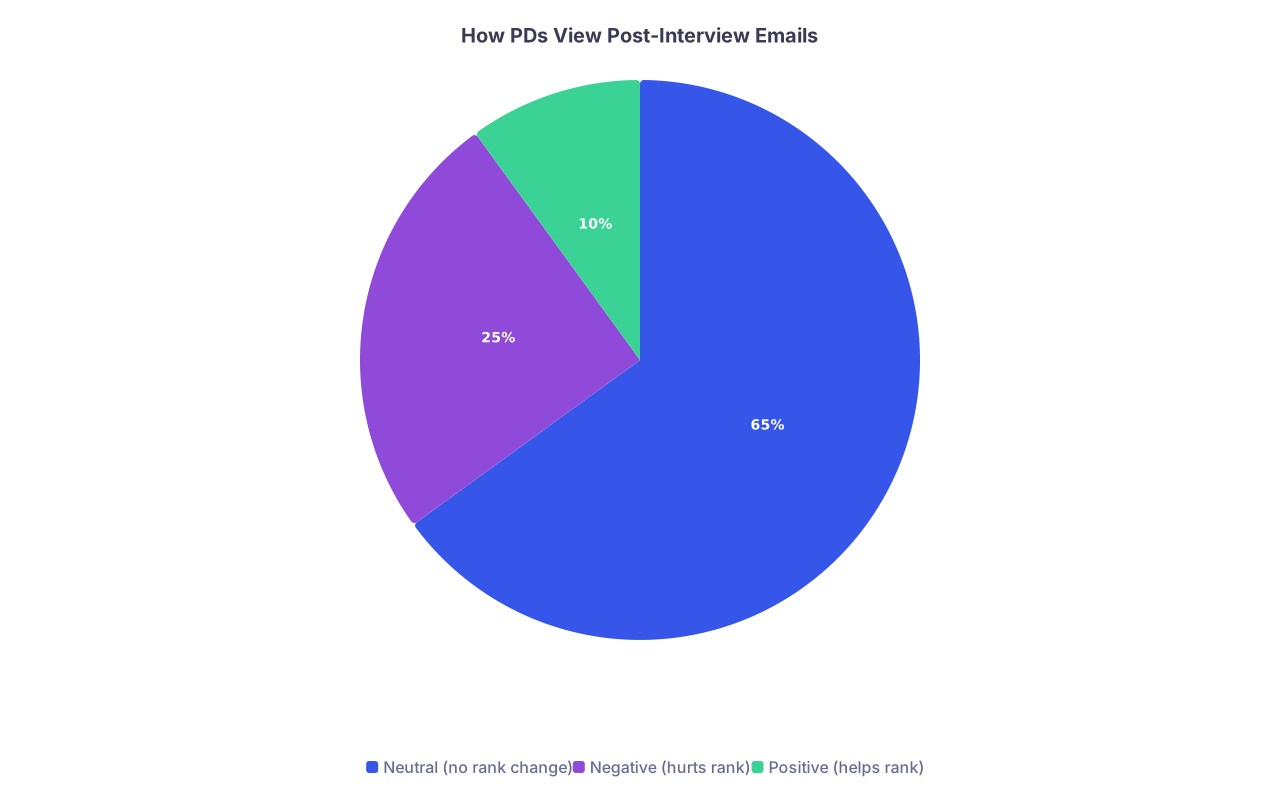
| Category | Value |
|---|---|
| Neutral (no rank change) | 65 |
| Negative (hurts rank) | 25 |
| Positive (helps rank) | 10 |
Most programs are operating under:
- A rank list built primarily on application + interview day
- Institutional or NRMP communication policies (some PDs barely read these emails)
- A strong desire to avoid match violations
So what happens when your name comes up after a cringeworthy email?
“The interview was fine, but that follow‑up… I’m not sure about judgment.”
That is all it takes.
The goal of your post‑interview communication is simple:
Do not trigger doubt.
Anything that raises questions about your honesty, professionalism, judgment, or ability to follow instructions is dangerous. The “wow, what a great email!” upside is tiny. The “weird, needy, or unprofessional” downside is huge.
So everything that follows is about one thing: not getting flagged.
Red Flag #1: Over‑Promising, “You’re My #1” Games, and Match Violations
This is the fastest way to make a grown PD visibly annoyed.
Problem: Declaring love you cannot back up
The classic mistake:
- “You are my top choice and I will rank you #1.”
- Sent to two or three different programs.
- From the same email address.
- To faculty who actually know each other.
I have literally heard: “Did you get that ‘you’re my #1’ email from [name]? Because I did too.” Followed by an eye‑roll and a note in the file: “Questionable integrity.”
Do not assume programs exist in separate universes. Attending A trained with Attending B at another institution. PDs talk. APDs talk. Coordinators talk even more.
Where it crosses into NRMP trouble
You are allowed to express genuine interest. You are not allowed to make or request binding commitments outside the Match.
Red flag phrases:
- “If you rank me first, I will rank you first.”
- “I promise I will match if you move me up your list.”
- “Can you tell me where I stand on your rank list?”
These are not just annoying. They make you look naive about Match rules and can be reported as potential violations.
Safe vs unsafe language
| Intent | Safe Wording | Red Flag Wording |
|---|---|---|
| Strong interest | "Your program is my top choice." | "I guarantee I will rank you #1." |
| Genuine enthusiasm | "I would be thrilled to train here." | "I will definitely match at your program." |
| Appreciation | "Thank you for the opportunity to interview." | "Please move me higher on your rank list." |
| Clarifying interest | "I remain very interested in your program." | "Tell me how high I am on your rank list." |
If you are going to tell a program they are your top choice, do it once, mean it, and document it for yourself so you do not repeat the same line elsewhere. Multiple “you’re my #1” emails are a character red flag, not a strategy.
Red Flag #2: Needy, Repetitive, or Boundary‑Violating Messages
There is a thin line between “professional follow‑up” and “why is this person emailing again?”
The “too many touches” problem
One thank‑you email per interviewer is fine. A single follow‑up to the PD or PC is fine.
Here is where it becomes a problem:
- You send a thank‑you to every interviewer.
- Then a second message two weeks later “just checking in.”
- Then a third message after you interview elsewhere, trying to compare programs in writing.
- Then one more “update” with minor news that does not matter.
Now your name is not “dedicated.” It is “excessive.”
Programs are busy. Every extra email forces someone to think about whether they need to answer. Annoyance is not what you want associated with your name during rank meetings.
Crossing personal boundaries
Another subtle red flag: blurring professional lines.
Examples I have actually seen or heard described:
- Inviting an interviewer to connect on Instagram or Facebook
- Sending casual texts to a faculty member who gave out a number only for logistics
- Emailing a resident repeatedly on their personal email asking, “Any idea where I am on the list?”
- Overly personal comments: “I felt such a special connection with you,” after a standard 20‑minute Zoom interview
Residency is high‑stress. PDs watch for people who struggle with boundaries. Your email should not suggest you are going to be the one texting the chief at 1 a.m. about scheduling drama.
How often is reasonable?
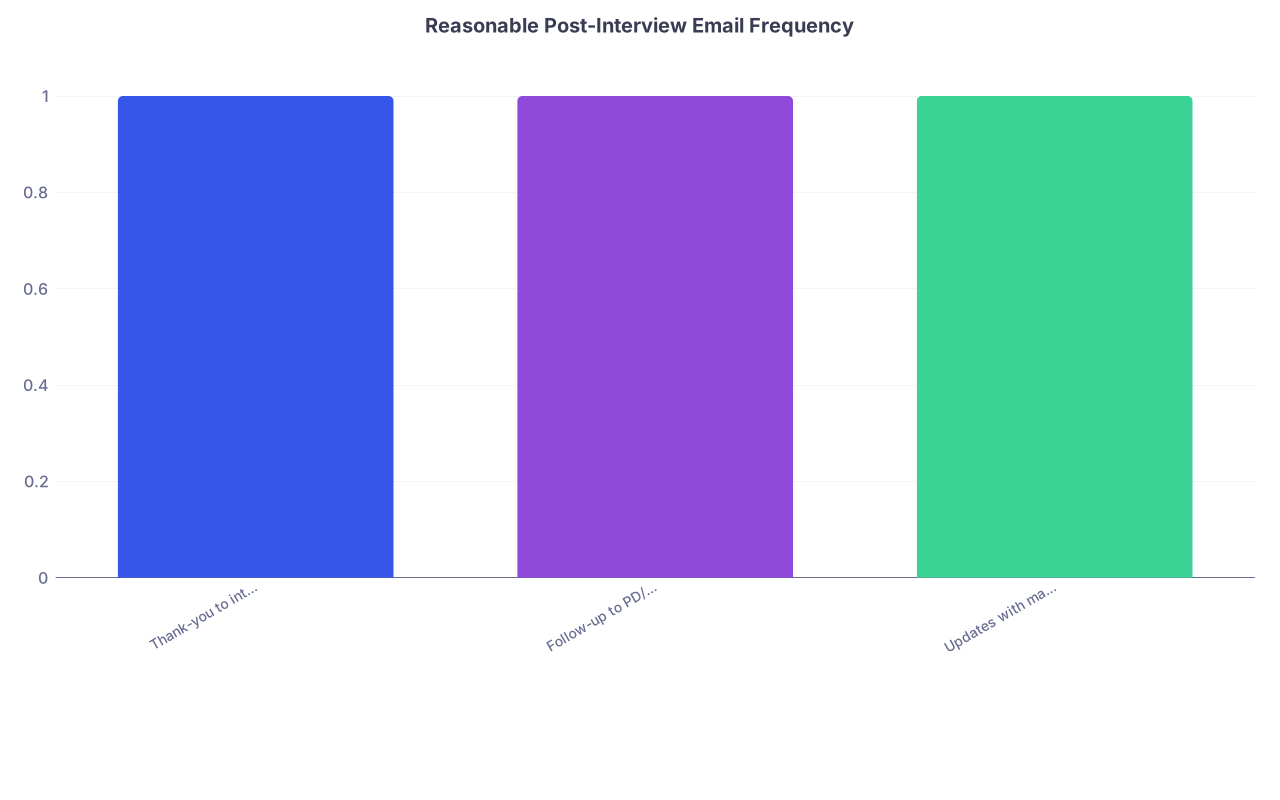
| Category | Value |
|---|---|
| Thank-you to interviewer | 1 |
| Follow-up to PD/PC | 1 |
| Updates with major news | 1 |
One of each. Not per week. Total.
Anything beyond that should have a very good reason, and “anxiety about the Match” is not a good reason.
Red Flag #3: Sloppy, Generic, or Misaddressed Emails
If you cannot send a clean email when you have unlimited time, PDs will assume your notes and orders will look similar at 3 a.m.
The forwarded template disaster
This one happens every year:
- Subject: “Thank you for the interview at [PROGRAM]”
- Body: you forget to change [PROGRAM].
- Or you leave another institution’s name in the text.
- Or worse, you forward a previous email and do not remove the other program’s header.
I have seen faculty read these aloud in committee and say: “If they do not care enough to get our name right, I do not care enough to rank them highly.”
Sloppy mechanics = professionalism concerns
You are not expected to write poetry. But you are expected to:
- Use proper capitalization
- Avoid obvious spelling errors, especially in program or faculty names
- Use paragraphs
- Not send from a joke email address you made in college
- Not use subject lines like “Hey!” or “Quick question”
If your email looks like a text message to a friend, you are handing PDs a ready‑made concern about your professionalism and communication skills.
The “copy‑paste thank‑you” problem
Faculty can spot a generic thank‑you in seconds:
- “Dear Interviewer, thank you for taking the time to meet with me. I enjoyed learning more about your program.”
- Zero references to anything specific discussed
- Sent at the exact same time as identical emails to four other interviewers (yes, they compare)
Generic is not fatal, but it is unimpressive. However, mis‑personalized is worse than generic. The real mistake is trying to fake personalization and failing.
Concrete rule: if you cannot correctly remember what you talked about with that person, keep it neutral instead of guessing. Misremembering their research, their role, or their subspecialty makes you look careless.
Red Flag #4: Oversharing, Trauma Dumps, and Emotional Pressure
Your post‑interview email is not the place to unload your life story or pressure the program emotionally.
Too much personal detail
There is a line between context and oversharing. Crossing it makes people uncomfortable and uncertain about your emotional boundaries.
Red flag patterns:
- Long paragraphs about family illness, financial crisis, relationship problems
- Attempts to generate guilt or sympathy: “If I do not match at your program, I do not know what I will do.”
- Confessions: “I cried after our interview because I want this so badly.”
This does not come across as “passionate.” It reads as unstable. PDs worry about how you will handle stress, feedback, and call nights.
Using personal hardship to pressure
I have seen emails that basically say:
“Given my disadvantaged background and all I have gone through, I hope you will give me special consideration and move me up your rank list.”
No one is unsympathetic to genuine hardship. Many PDs actively want to support trainees from tough backgrounds. The problem is tone and timing. When it comes in a post‑interview message explicitly linked to ranking, it feels manipulative.
If hardship is relevant, it belongs in your application, personal statement, or during the interview conversation—not as a last‑minute emotional lever.
Red Flag #5: Trying to Negotiate, Compare, or Extract Insider Info
You are not shopping for a car. You do not negotiate your rank or your position on their list via email.
Asking for rank list status
This one is simple. PDs hate it.
Questions that immediately get you mentally downgraded:
- “Can you tell me approximately where I stand on your rank list?”
- “Am I in the top part of your list?”
- “Should I rank you first to maximize my chance to match there?”
Even if a program wanted to answer (most do not), the NRMP rules and institutional policies stop them. You are asking them to either ignore you or break policy. Neither makes you look good.
Comparing offers in writing
Another bad habit: sending emails that basically say:
“I like your program, but another program has more research / better hours / a fellowship. What can you offer?”
Even if your thought process is valid, putting that comparison in writing makes you look transactional and immature about how the Match works. No PD wants to become a character in your pros‑and‑cons spreadsheet.
You choose where to rank. They choose where to rank. The negotiation is built into the algorithm. Not into your inbox.
Red Flag #6: Aggressive “Updates” That Add No Real Value
Updates can be appropriate. They are also overused, annoying, and sometimes backfire.
The fake‑update phenomenon
Here are examples of weak updates that do not help and sometimes hurt:
- “Just wanted to let you know I completed another rotation in internal medicine and really enjoyed it.” (So did everyone.)
- “I attended a conference” with no meaningful accomplishment attached.
- “I continue to be very interested” sent every 2–3 weeks.
Faculty are busy. Reading repeated, low‑value updates creates irritation, not goodwill.
Good updates share material changes:
- New accepted publication (not just submitted)
- Major award or national presentation
- Significant new leadership role
- USMLE Step 2 score if it is strong and not yet in your application
Even then, one well‑written update is enough.
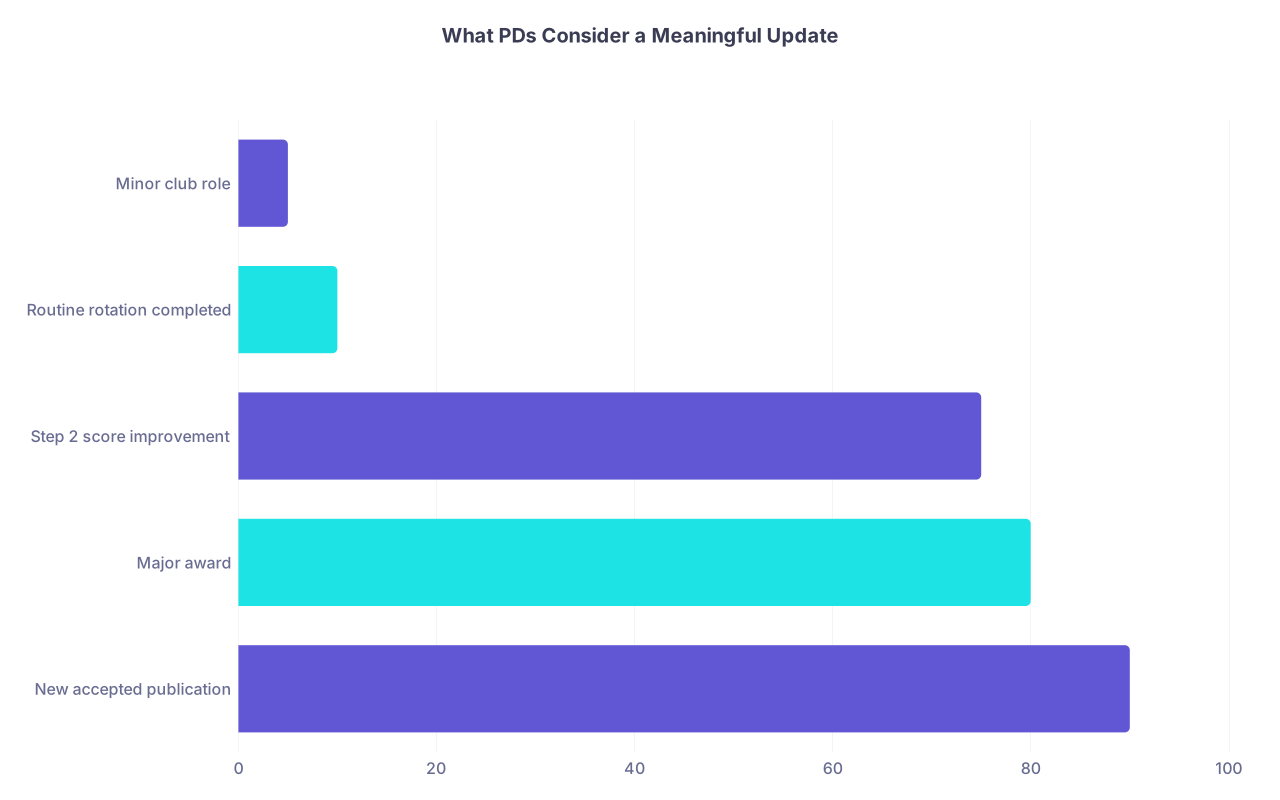
| Category | Value |
|---|---|
| New accepted publication | 90 |
| Major award | 80 |
| Step 2 score improvement | 75 |
| Routine rotation completed | 10 |
| Minor club role | 5 |
If you have to convince yourself an update is important, it probably is not.
Red Flag #7: Disrespecting Stated Communication Policies
This one is unbelievably common and completely avoidable.
Many programs explicitly state:
- “We do not respond to post‑interview communication.”
- “Please direct all communication to the program coordinator, not individual faculty.”
- “We follow NRMP guidelines and will not discuss rank lists.”
Then what do applicants do?
- Email the PD, APD, chief residents, and random faculty anyway
- Ask about rank lists despite clear instructions
- Get annoyed when no one replies and send follow‑ups
You just announced: “I either did not read or do not respect your policies.”
That is not how you convince people you will follow hospital, duty hour, or documentation rules.
When a program says, “We do not respond,” they mean it. Silence is not an insult. It is compliance.
What a Non‑Red‑Flag Email Actually Looks Like
Let me show you what is not a problem. This is the kind of email that will not hurt you and might leave a mild positive impression.
Example: Simple thank‑you to an interviewer
Subject: Thank you for the interview
Dear Dr. Smith,
Thank you for taking the time to speak with me on January 5 during my interview at [Program Name]. I appreciated hearing about your work with the resident QI curriculum and your perspective on how the program supports residents interested in hospital medicine.
Our conversation reinforced my strong interest in [Program Name]. I would be grateful for the opportunity to train there.
Sincerely,
[Your Name], MS4
[School]
No ranking promises. No demands. No updates that do not matter. No emotional pressure.
Example: Legitimate update to PD / PC
Subject: Application update – accepted publication
Dear Dr. Lee and Ms. Johnson,
Thank you again for the opportunity to interview with [Program Name] on December 12. I remain very interested in your residency program.
I wanted to share a brief update on my application. A manuscript for which I am first author, “Rates of [Topic] in [Population],” has been accepted for publication in [Journal Name]. This project grew out of my interest in [brief connection if relevant].
I appreciate your consideration of my application.
Best regards,
[Your Name]
Again, clean, factual, and not pushy.
Timing, Silence, and Your Own Anxiety
Let me be blunt. Most of the worst post‑interview emails are written out of panic.
- You see classmates getting “love letters” from programs.
- Someone on Reddit claims their email moved them up the list.
- Your anxiety spikes when you do not hear anything for weeks.
So you send something you regret.
Here is the truth: the Match algorithm does not reward anxiety. Or over‑communication. Or “hacking” the system with clever wording.

| Step | Description |
|---|---|
| Step 1 | Interview Day |
| Step 2 | Initial Relief |
| Step 3 | Silence from Programs |
| Step 4 | Anxiety Increases |
| Step 5 | Regret / Red Flags |
| Step 6 | Neutral Outcome |
| Step 7 | Possible Rank Drop |
| Step 8 | Rank Based on Interview |
| Step 9 | Send Extra Emails? |
You are much safer with:
- One thoughtful thank‑you
- One legitimate update if you have real news
- Nothing that tries to manipulate rank lists
Silence from a program after interview day means nothing. Programs vary wildly in their communication habits. Some send “we love you” notes to half their list. Others send nothing to anyone. The only time you should adjust your rank list is based on your own priorities and gut feeling from the interview, not their email style.
When You Should Not Email At All
Do not send a post‑interview email if:
- You are only doing it because Reddit told you to.
- You cannot think of anything specific or sincere to say.
- You are tempted to ask about your rank status.
- You feel an urge to “fight” for your spot or “prove” how much you care.
- You already sent multiple messages and have nothing new and significant to add.
In all those cases, the safest and smartest move is restraint.
Nobody on a rank committee has ever said, “We should move this applicant down because they did not send enough emails.”
Quick Reality Check: What Actually Matters
Just to put this in perspective:
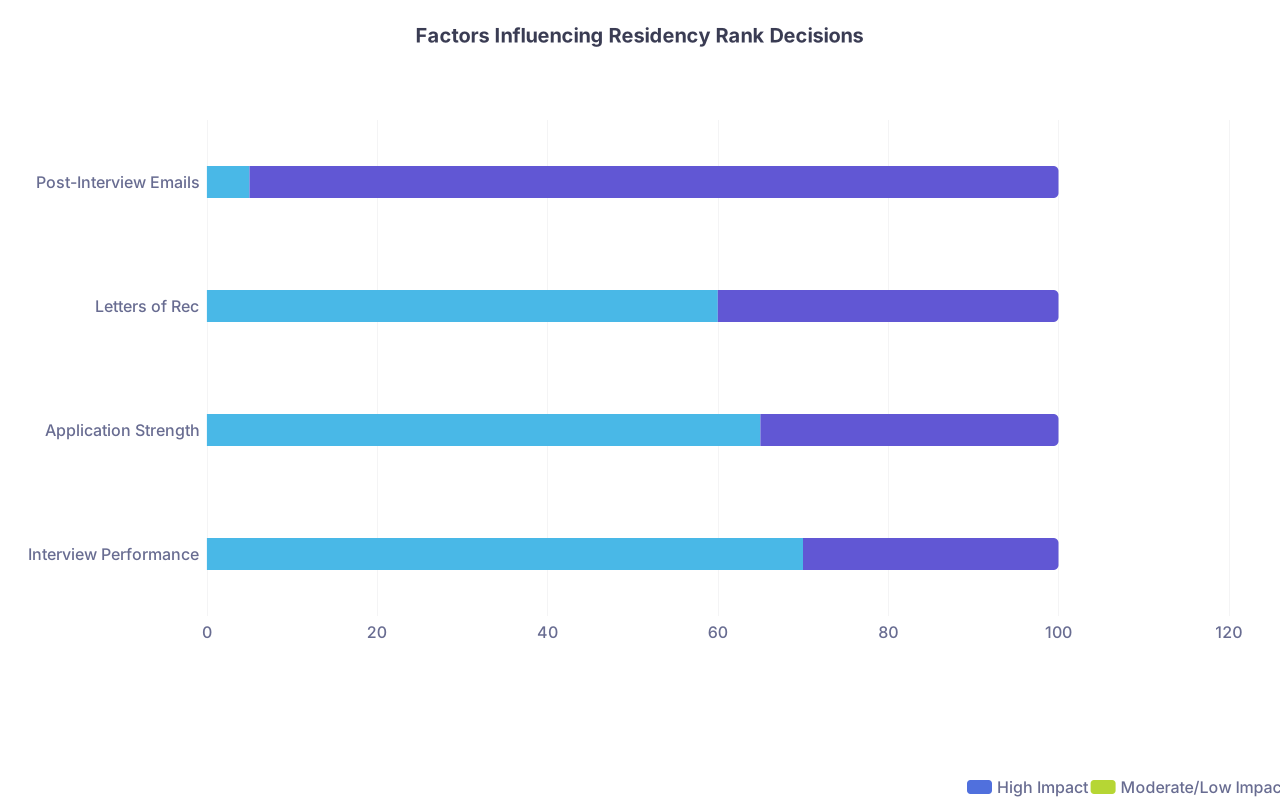
| Category | High Impact | Moderate/Low Impact |
|---|---|---|
| Interview Performance | 70 | 30 |
| Application Strength | 65 | 35 |
| Letters of Rec | 60 | 40 |
| Post-Interview Emails | 5 | 95 |
Your interview day, your record, and your letters dominate the decision. Your emails mostly exist to not cause trouble. Nothing more glamorous than that.
Final Thoughts: What To Actually Remember
You do not need to be perfect. You just need to avoid obvious self‑inflicted wounds.
Three core points:
- Post‑interview emails almost never move you up, but they can absolutely move you down. Prioritize “no red flags” over “wow factor.”
- Avoid the big mistakes: fake or multiple “you’re my #1” promises, asking about rank lists, excessive or needy communication, oversharing, and ignoring stated policies.
- Keep it boringly professional: one clean thank‑you, one meaningful update if you have real news, and then let your interview and application speak for themselves.
Protect your rank by not sabotaging it in the subject line.