

The biggest myth about hand surgery is that your income is “about the same” whether you come from ortho or plastics. It is not. The route you choose heavily shapes your case mix, payer mix, call obligations, and ultimately your earning potential.
Let me break this down specifically.
You are not just picking a fellowship. You are locking yourself into a referral ecosystem. Orthopedic-based hand surgeons and plastic-based hand surgeons often live in completely different financial worlds, even with the same “hand surgeon” label on their badge.
This is the part no one explains clearly when you are a PGY‑2 just trying to survive trauma call.
1. The Two Routes Into Hand Surgery: Ortho vs Plastics
Hand surgery is a subspecialty certification, but the feeder paths are rigid:
- Orthopedic surgery residency → Hand surgery fellowship
- Plastic surgery residency → Hand surgery fellowship
- (Less common now) General surgery → Hand → often weaker market positioning
The boards recognize all of them, but the market does not treat them equally in all settings.
Orthopedic Route: The Default for High-Volume Trauma and Elective Nerve/Compression
Orthopedic-based hand surgeons usually:
- Do an ACGME ortho residency (5 years)
- Match into an ACGME hand fellowship (1 year)
- Sit for subspecialty CAQ (Certificate of Added Qualification) in Hand
Their training is heavily weighted toward:
- Fractures (distal radius, metacarpals, phalanges)
- Wrist pathology (scaphoid nonunions, perilunate injuries)
- Tendon lacerations and reconstructions
- Compressive neuropathies (carpal, cubital, Guyon’s)
- Degenerative conditions (CMC arthritis, MCP/PIP DJD)
- Elbow trauma and reconstruction in some fellowships
They usually live on the ortho side of the call pool. That matters for both work hours and trauma volume, which then drives RVUs and income.
Plastics Route: Niche, Soft Tissue, Microsurgery-Heavy
Plastic-based hand surgeons:
- Do integrated or independent plastic surgery training (6–7 years total)
- Then a 1‑year hand fellowship (some fold microsurgery more deeply into this year)
- Same subspecialty exam options, but a different brand
They tend to be stronger out of the gate in:
- Soft tissue coverage (flaps, complex defects)
- Congenital hand differences
- Brachial plexus and complex nerve reconstruction (depending on fellowship)
- Replantation, microvascular work in many centers
- Aesthetic integration (scar management, post-traumatic deformity)
They often live in the plastics call pool, which may mean:
- Fewer bread‑and‑butter distal radius fractures
- More complex reconstruction and soft tissue consults
- Easier pivot into aesthetic or hybrid aesthetic/reconstructive practice
The core difference: ortho gets you the spine of bread-and-butter high‑volume RVU work; plastics gets you softer tissue expertise and more flexible branding for cosmetic work.
2. Income Basics: A Realistic Ortho vs Plastics Hand Snapshot
You want numbers. Let us put reasonable, modern ballpark numbers on the table. These will vary regionally and by practice type, but the pattern is very consistent.
| Route | Practice Type | Typical Total Compensation (USD) |
|---|---|---|
| Ortho-Hand | Private Ortho Group | $650,000 – $1,000,000+ |
| Ortho-Hand | Hospital Employed | $450,000 – $700,000 |
| Plastics-Hand | Private Plastics Group | $550,000 – $900,000 |
| Plastics-Hand | Hospital Employed | $400,000 – $650,000 |
| Mixed (Hand + Cosmetic) | Private Practice | $800,000 – $1,500,000+ |
Notice a few things:
In a pure hand role inside a big ortho group, ortho-based hand surgeons often out-earn plastics-based hand surgeons simply because of:
- Referral volume from other orthopedists
- Higher trauma loads
- More predictable high-volume compressive neuropathy ± arthritis surgery
Plastics-based hand surgeons who layer in cosmetic work can dramatically out-earn almost everyone if they build the right market and brand. But that is not guaranteed, and it is not “automatic” income.
Hospital-employed roles compress the spread. Salaries are more standardized, with RVU bonuses on top, but the truly eye‑watering numbers usually appear in private groups and partnerships.
3. How Training Route Shapes What You Actually Do (And Bill For)
Forget the brochure description of hand surgery. Income is dictated by case mix + payer mix + setting.
Ortho-Based Hand: High RVU Bread-and-Butter
An ortho hand surgeon in a busy community group will often have a schedule dominated by:
- Carpal tunnel releases (open or endoscopic)
- Trigger finger releases
- De Quervain’s, ganglion excisions
- Distal radius ORIFs
- Metacarpal/phalangeal fractures
- CMC arthroplasties
- Cubital tunnel decompressions/transpositions
These are not glamorous. They are repetitive, high‑demand, and algorithmic. Perfect for efficiency and RVU stacking.
Now layer in trauma call: hand and wrist fractures, tendon and nerve lacerations, occasional revascularizations or replantation (in the right center). Every night on call feeds your RVU bank for months.
Plastics-Based Hand: Complex Recon, Less Bread-and-Butter (Unless You Force It)
A plastics-based hand surgeon, especially one in a plastics department, might see more of:
- Complex soft tissue defects requiring flaps
- Post‑oncologic hand/wrist reconstruction
- Brachial plexus and nerve reconstruction
- Congenital hand anomalies (more at children’s hospitals)
- Secondary reconstruction of deformity (post-burn, post-trauma)
These are beautiful, technically satisfying cases. They can pay well on a per-case basis. But they are not high-frequency at most institutions.
Where plastics hand can completely change the game: combining hand with cosmetic or high-end private-pay work.
- One well-done cosmetic case can match a full OR block of insured tendon lacerations, depending on your market.
- A plastics-trained hand surgeon in a wealthy metro area who becomes the go-to for “hand rejuvenation,” scar revisions, and upper extremity aesthetics can create a hybrid practice with far higher ceiling.
4. Practice Settings: Where Orthopedic Hand Dominates vs Where Plastics Hand Wins
Your income is not just specialty + fellowship. It is where you plug yourself into the system.
Ortho-Driven Settings
Large private orthopedic groups
- Ortho-based hand has a major structural advantage.
- You are the internal referral endpoint for every hand/wrist issue from 10–40 general ortho and sports surgeons.
- Case mix heavy in fracture and compression neuropathy, which are high-volume.
Multi-specialty groups anchored by ortho
- Same story. The ortho surgeons will often prefer an ortho-hand colleague they “speak the same language” with.
- You are more likely to be on the core trauma call rotation.
Community hospitals without academic plastics presence
- Hand = “ortho problem” by default.
- Plastics may only be called for soft-tissue disasters or coverage issues.
In these environments, ortho route → stronger positional negotiating power, higher volume, higher ceiling.
Plastics-Driven or Mixed Settings
Academic centers with strong plastic surgery departments
- Complex micro, replantation, brachial plexus, congenital – these lean toward plastics.
- Faculty salary compression applies, but prestige cases and grant-funded work tilt your profile.
Children’s hospitals with congenital focus
- Many congenital hand leaders come from plastics backgrounds.
- Income less extreme, but niche expertise and referral base can still be strong.
Cosmetic-reconstructive hybrid practices
- Here plastics-trained hand surgeons win on branding.
- You can do:
- Hand trauma/nerve/tendon work
- Scar revision
- Aesthetic hand rejuvenation (fat grafting, fillers, lasers)
- Upper extremity aesthetics as a gateway (brachioplasty, etc.)
In those settings, plastics route → more flexible, more self-determined income trajectory.
5. Call, Trauma, and RVUs: Why Ortho Usually Wins on Raw Volume
If you want to understand income differences, follow the call. Call is not just pain; it is production.
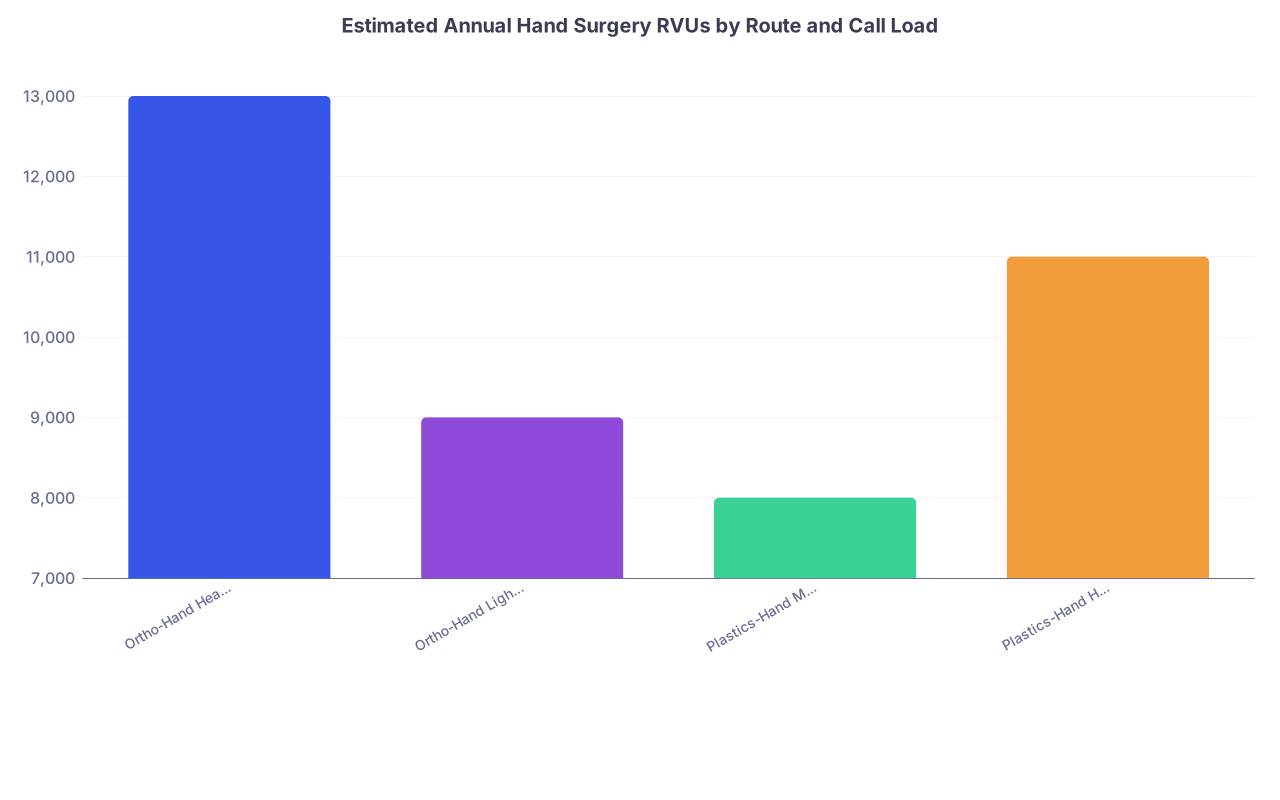
| Category | Value |
|---|---|
| Ortho-Hand Heavy Call | 13000 |
| Ortho-Hand Light Call | 9000 |
| Plastics-Hand Moderate Call | 8000 |
| Plastics-Hand Hybrid (Hand+Cosmetic) | 11000 |
These are illustrative, not universal, but the pattern holds:
- Orthopedic hand on heavy trauma call can easily generate 12k–15k RVUs yearly.
- Plastics hand with moderate call but high-complexity cases might be 8k–10k RVUs, unless they aggressively take all-comers.
- Plastics hand with a cosmetic blend: the RVU math stops really mattering because you are adding cash-pay work that is completely off that ledger.
RVU-based employed comp often uses conversion factors like $45–$70 per RVU in hand surgery markets, though this bounces around by region and employer type. Do the math:
- 12k RVUs × $55/RVU = $660,000
- 15k RVUs × $60/RVU = $900,000
You see why a high-volume ortho-hand surgeon in private or partnership-adjacent settings can crack 7 figures fairly routinely.
6. Geography and Market Dynamics: Urban vs Suburban vs Rural
Where you practice warps the orthopedics vs plastics income equation.
Urban Academic Center
- Salaries compressed.
- Ortho vs plastics route matters more for prestige and case mix than for absolute dollars.
- Hand call is often “shared” or triaged between services, but big replant centers often have plastics-micro folks as anchors.
Urban Private-Ortho Dominant
- Ortho-hand can be extremely lucrative.
- Highly marketed “hand center” within big ortho group.
- Plastics-hand either:
- Fights for referrals
- Or deliberately pivots toward aesthetic/upper-extremity niche
Suburban Markets
- Classic pattern: single large ortho group controls musculoskeletal referrals from PCPs and urgent cares.
- Hospital-employed plastics may see consults for complicated wounds; ortho-hand cleans up the fractures and routine nerve compressions.
- This is where the ortho route advantage in income is very obvious and very repeatable.
Rural and Small Town
- If there is only one hand surgeon and that surgeon can handle trauma and elective work, they will be busy regardless of route.
- But ortho training often makes hospitals and referring docs more comfortable funneling “everything bony” your way.
- Plastics-hand may be overqualified for soft tissue work and underutilized for fracture work if local culture defaults to “ortho handles bones.”
7. Negotiation Power: How Route Affects Your Leverage
Let us talk contracts. You are not a med student anymore; you are a very expensive asset walking into a negotiation.
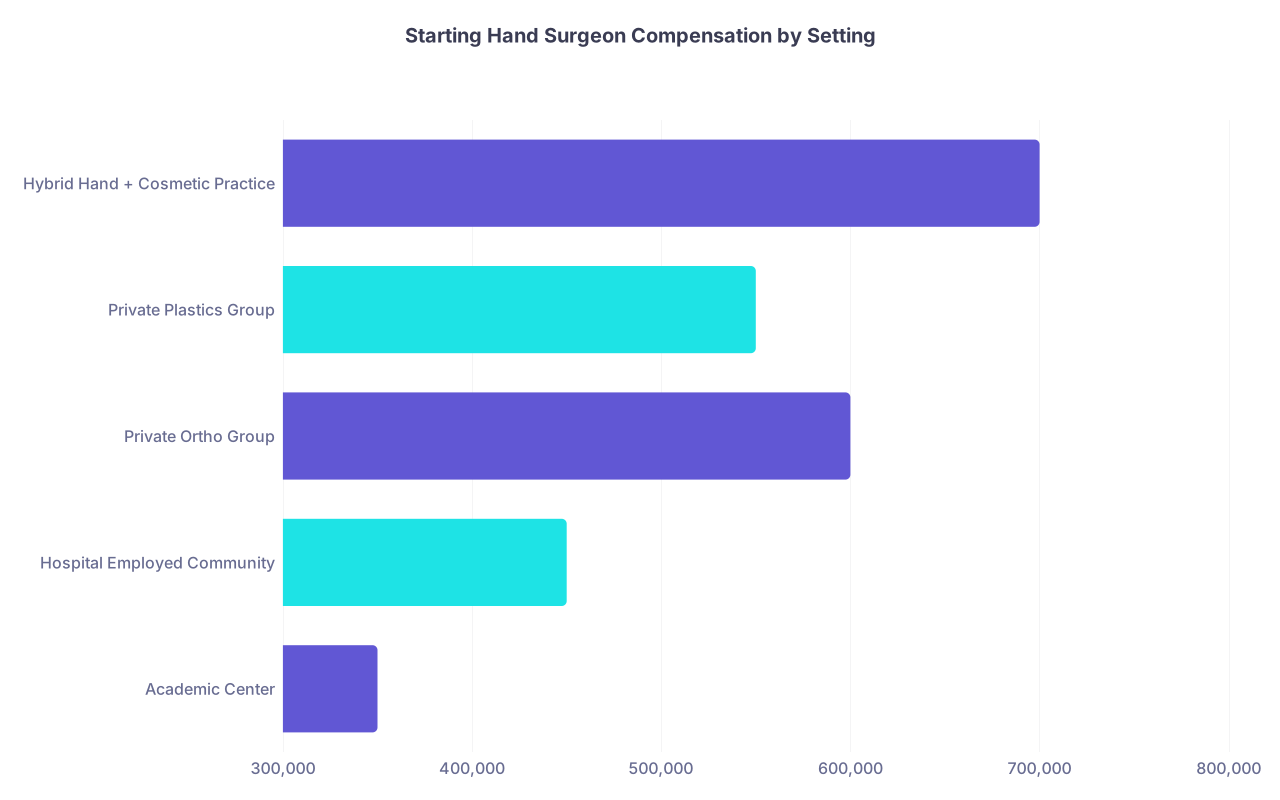
| Category | Value |
|---|---|
| Academic Center | 350000 |
| Hospital Employed Community | 450000 |
| Private Ortho Group | 600000 |
| Private Plastics Group | 550000 |
| Hybrid Hand + Cosmetic Practice | 700000 |
Again, generalized, but the hierarchy is pretty consistent.
Ortho-Hand Leverage
Advantages:
- You are revenue-dense.
- You plug seamlessly into an ortho group’s existing volume, often instantly profitable.
- You cover trauma call, which hospitals will pay real money for.
I have seen ortho-hand offers with:
- Base $500k–$650k
- Production incentive kicking in around 8k RVUs
- Total realistic income in mid‑600s to 800s within 2–3 years
- Partnership track that opens the 7‑figure range
Plastics-Hand Leverage
More nuanced.
- If you are purely reconstructive/hand and trying to join an ortho group: you will be compared directly to ortho-trained hand colleagues. That hurts your leverage in some markets.
- In plastics groups or hospital-employed plastics roles, you are not just “the hand person,” you are “another plastics FTE,” and the group may value cosmetic and breast work more than your distal radius expertise.
Where plastics-hand regains leverage:
- When you bring a real cosmetic skill set and documented revenue from cash-pay work.
- When you can credibly say: “I will fill your OR with high-margin aesthetic + self-pay hand/upper extremity work, plus reconstructive coverage.”
Then your RVU numbers underrepresent your total contribution, and leverage shifts sharply in your favor.
8. Lifestyle and Burnout: Income Comes At A Price
If you only look at the top-line income numbers, you will pick ortho-hand in a big group, work 70 hours a week, and hate your life by 45.
Be more deliberate.
Ortho-Hand Lifestyle Pattern
- Clinic heavy. OR heavy. Call heavy.
- Lots of urgent add-ons, short cases, and non-stop EMR.
- On the other hand, your cases are efficient and reproducible. You can design a template to protect time off once established.
Burnout triggers I see:
- Endless workers’ comp and disability fights.
- High-volume RSI (repetitive strain injury) patients.
- Being “the hand person” who gets dumped on by everyone else’s call.
Plastics-Hand Lifestyle Pattern
Very bimodal.
- Pure reconstructive hand in a busy urban center: lifestyle can be just as brutal as orthohand, especially if you are doing replant/micro.
- Hybrid reconstructive + cosmetic: you can often tilt your practice toward elective, scheduled cases with higher margins and more control.
Burnout triggers:
- Constant fight for referrals if you are competing with ortho-hand for fractures.
- Identity crisis: Are you a “plastics person” or a “hand person”? If you stay stuck in the middle, you drift.
The big difference: plastics route gives you more levers to shift toward elective, higher-control work once you are established. Ortho route gives you more brute-force RVU and volume options.
9. So Which Route Makes More Money Overall?
If you force me to answer bluntly:
For a pure hand-surgery career focused on trauma + bread-and-butter compressive neuropathy in a typical U.S. market → Ortho-based hand surgeons, on average, earn more.
For a hybrid practice that blends hand with cash-pay cosmetic and high-end reconstructive niche work in a major metro → Plastics-based hand surgeons have the highest ceiling.
- A plastics-only, reconstructive-only hand surgeon out-earning a high-volume ortho-hand colleague in the same city who owns equity in a large ortho group and takes heavy call. Volume plus ownership wins.
What you do see:
- Plastics-trained hand surgeons in New York, LA, Miami, Chicago, etc., with strong cosmetic practices clearing well into 7 figures on a mix of:
- Cosmetic breast and body work
- Aesthetic and reconstructive upper extremity
- Some hand, selectively chosen
They are not “hand surgeons” in the narrow sense anymore. They are brand-driven plastic surgeons who also do sophisticated hand work.
10. Strategic Recommendations By Personality and Goal
You are trying to decide your path. Let me be specific.
Choose ortho → hand if:
- You like bone, biomechanics, hardware, and do not mind clinic volume.
- You want a structurally reliable path to high income in almost any geographic market.
- You are comfortable living inside large ortho groups and negotiating as part of that ecosystem.
- You do not care about doing purely cosmetic work.
Choose plastics → hand if:
- You are drawn to soft tissue, microsurgery, and complex reconstruction.
- You want the long-term option of building a cosmetic or hybrid practice.
- You are realistic that pure reconstructive hand work via plastics may not automatically match the RVU firehose of a big ortho group, unless you build a niche center.
- You want branding flexibility – you can market yourself as a plastic surgeon who does elite hand work rather than “just the hand person.”
If your only question is “Who makes more money in hand surgery, ortho or plastics?” you are thinking too narrowly. The better question is:
“What ecosystem do I want to live in, and how do I want my case mix to look when I am 45 and finally in full control of my practice?”
11. Quick Visual: Training Timeline and Decision Points

| Step | Description |
|---|---|
| Step 1 | Med School |
| Step 2 | Orthopedic Surgery 5y |
| Step 3 | Plastic Surgery 6-7y |
| Step 4 | Hand Fellowship 1y |
| Step 5 | Private Ortho Group |
| Step 6 | Private Plastics Group |
| Step 7 | Academic Center |
| Step 8 | Hybrid Hand plus Cosmetic |
| Step 9 | Residency Choice |
| Step 10 | Practice Type |
This is the real fork in the road: not just ortho vs plastics, but where that road drops you into the practice landscape.
12. Key Takeaways
- Route matters because it locks you into different referral patterns, case mix, and call structures, which directly shape income.
- Ortho-based hand surgeons typically earn more in straightforward, pure-hand roles, especially in private orthopedic groups and community markets.
- Plastics-based hand surgeons have a higher potential ceiling if they combine hand skills with cosmetic and high-end reconstructive branding, but that requires deliberate practice design, not just a degree.


