
Only 42% of residents going into pain management can correctly rank long‑term earnings for anesthesia, PM&R, and neurology pain pathways when you factor in academic vs private, interventional volume, and call burden. Most guess wrong. Consistently.
Let me break this down specifically: if you are eyeing pain management for the money, the letters on your badge (MD vs DO, Anesthesia vs PM&R vs Neurology) matter less than you think. But how you practice, where you practice, and who controls the procedural room schedule matter a lot more than anyone tells you on interview day.
The Ground Rules: What We’re Actually Comparing
We are talking about pain management as a final destination, not general anesthesia, general PM&R, or general neurology.
For all three tracks, assume:
- You finish a one‑year ACGME pain fellowship (anesthesiology-based, neurology-based, or PM&R-based).
- You practice interventional pain in a typical U.S. metro or large regional market.
- You are not doing 90% EMG clinic as a “pain” neurologist or 90% inpatient rehab as a “pain” physiatrist. We are comparing real interventional pain practice patterns.
The question you actually care about:
“If I know I want to do pain, which residency pathway sets me up for the highest earnings with the best control over my practice?”
Earnings ≠ just W‑2 number. It is:
- Base salary and bonuses
- RVU productivity and procedure mix
- Ownership/equity in ASC or practice
- Call (or lack of it)
- Market perception and referral flow
And the punchline up front:
Top‑end earning potential: Anesthesia ≥ PM&R > Neurology
Median, realistic earnings: Interventional anesthesia ≈ interventional PM&R > interventional neurology
Call and lifestyle at similar earning levels: PM&R ≈ Neurology > Anesthesia
Now let’s lay out the numbers before the politics.
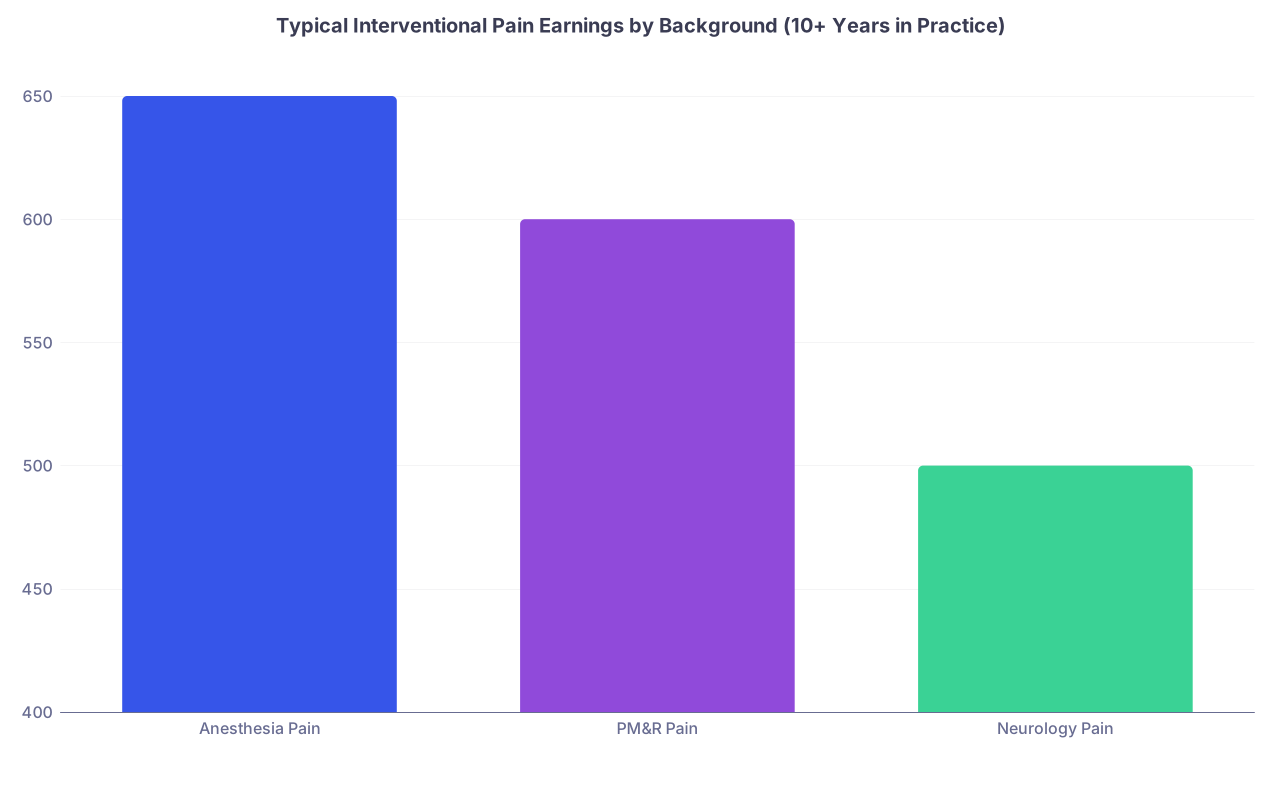
| Category | Value |
|---|---|
| Anesthesia Pain | 650 |
| PM&R Pain | 600 |
| Neurology Pain | 500 |
These are rough, realistic ballparks (W‑2 + distributions) for busy, procedure‑heavy attendings in average U.S. markets, not unicorn private equity stories and not 0.8 FTE academic roles.
Pathway 1: Anesthesiology → Pain – The Procedural Alpha
Anesthesiology has historically dominated interventional pain. Many ASC owners and old‑guard pain practices have anesthesia roots. You feel that on day one of fellowship.
Earnings Profile
Starting out (first 1–3 years post‑fellowship):
- Employed multispecialty or hospital practice:
350–500k total comp for honest interventional work (mix of procedures + clinic). - High‑volume private group with ASC access:
450–700k+ once panels fill and you are allowed to run full procedure days.
At maturity (7–10+ years, high‑volume, ASC involvement):
- Common range: 600–900k total comp (W‑2 + distributions).
- Upper outliers (ASC equity, high neurostim/Vertiflex/kypho volume): 1M+ is absolutely real. Seen it multiple times.
Why the ceiling is so high:
Procedural throughput culture. Anesthesia people think in terms of lists, times, turnovers. That translates very well to an ASC environment where you are doing:
- 18–35 injections per day on heavy block days
- Multiple spinal cord stimulator trials and implants per month
- High volumes of RFAs, SI joint injections, minimally invasive lumbar decompressions
Easier ASC buy‑in optics. Surgeons and other proceduralists mentally categorize anesthesia‑trained pain as “one of us” in an OR/ASC setting. This makes equity and co‑ownership conversations smoother.
Flexibility to cover OR anesthesia early on. Some young attendings take mixed roles (3 days pain, 2 days OR) with hefty compensation, then gradually shift to full pain as panel grows.
| Career Stage | Setting | Typical Total Comp |
|---|---|---|
| New grad (Year 1–2) | Hospital employed | 350–450k |
| Early career (Year 3–5) | Private group, partial ASC use | 450–650k |
| Mature (Year 7–10+) | ASC equity, high intervention | 650–900k+ |
| Top outlier | Multi‑ASC, heavy devices | 1M+ |
Hidden Downsides
This is where most students get blindsided.
Call follows you.
Unless you intentionally exit anesthesia call during your job negotiations, you can end up:- Doing pain clinic by day.
- Covering OR or OB call nights/weekends.
- Getting paid decently for it, but paying in sleep and burnout.
Market saturation in some cities.
Certain metros are littered with anesthesia‑trained pain groups that built mini‑empires. Trying to enter those markets:- You may be blocked from hospital/ASC privileges.
- You fight over dwindling epidural volume.
- You get squeezed into satellite clinics with lower acuity and lower reimbursement.
Identity drift.
I have seen anesthesia‑trained pain physicians pulled back to 50% OR coverage because the group “needed” it. Translation: your pain training becomes an internal locums flex.
Training Fit
If you love:
- Procedures
- Needles
- Fast decisions in semi‑controlled chaos
Anesthesia → Pain aligns naturally. On fellowship, you usually start procedures faster, are more comfortable with fluoroscopy environment, and often get favored for stim implants in mixed‑background programs.
If you are primarily interested in the cognitive, longitudinal aspects of complex pain phenotypes and less in high‑volume procedures, pure anesthesia might feel thin during residency.
Pathway 2: PM&R → Pain – The Quiet Workhorse With Underrated Money
PM&R (physiatry) pain is chronically underestimated by students. Mostly because they do not rotate on legit interventional physiatry services. They see inpatient TBI or stroke rehab and think, “These people are not making anesthesia money.”
Wrong conclusion.
Earnings Profile
New grad PM&R pain attending:
- Academic with mixed EMG + procedures: 300–400k (sometimes less).
- Community practice or ortho group with robust procedures: 350–500k.
Mature interventional physiatrist with strong procedural mix and possibly ASC ownership:
- Very common: 500–750k
- In ASC‑heavy models, 800k+ is realistic, especially if you:
- Control your own imaging suite or ASC time.
- Own part of the ancillaries (PT, imaging, DME, etc.).
The top‑end ceiling can rival anesthesia pain in the right environment. Difference is cultural, not structural.
PM&R pain attendings who lean heavily procedural (and do not get trapped doing 90% clinic + EMG) produce:
- Similar RVUs to anesthesia pain.
- Similar or identical wRVU compensation.
- Better odds of no call and better work‑life balance.
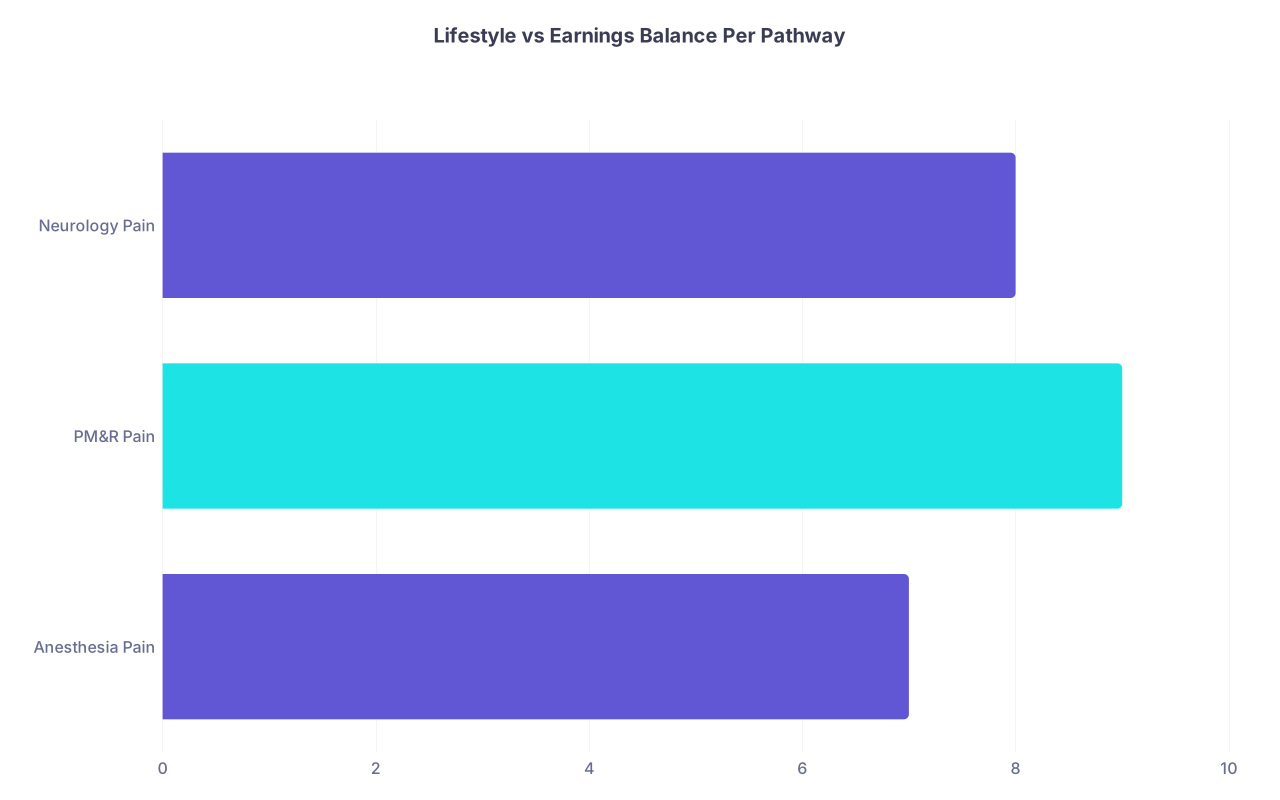
| Category | Value |
|---|---|
| Anesthesia Pain | 7 |
| PM&R Pain | 9 |
| Neurology Pain | 8 |
(Scale 1–10: composite of earnings potential vs lifestyle control. Not scientific, but captures reality I have seen.)
Why PM&R Pain Works Financially
Rehab‑centered referral networks.
PM&R residents live in the world of:- Ortho spine
- Neurosurgery
- Sports
- Workers’ comp
- Chronic musculoskeletal pain
Those are exactly the pipelines you need for a high‑volume interventional practice.
Multi‑modal mindset = more billable services.
PM&R‑trained pain physicians often:- Run EMG labs
- Oversee PT/OT programs
- Manage bracing, injections, biologics
- Handle spasticity management (pump refills, Botox, etc.)
This diversifies revenue streams and protects you somewhat when injection reimbursement gets cut.
Less baggage from the OR world.
You are not being dragged back into general OR coverage. You are not the default “just cover the board” person. That freedom has direct lifestyle and indirect earning benefits (more focus on building your pain practice).
| Pattern Type | Procedure Share | Typical Total Comp |
|---|---|---|
| Academic mix | 20–40% | 300–450k |
| Community clinic‑heavy | 40–60% | 350–550k |
| ASC‑integrated practice | 60–80% | 500–750k+ |
Where PM&R Pain Falls Short
Perception bias in some markets.
In older, anesthesia‑dominated markets, PM&R pain may be seen (wrongly) as “less interventional,” which can make:- ASC negotiations slower.
- Hospital leadership default to anesthesia for block coverage and device trials.
Risk of getting trapped in low‑acuity clinic.
A lot of PM&R grads fall into:- 30–40 patients/day of low‑reimbursing back pain follow‑ups.
- Limited procedure blocks controlled by ortho groups. This absolutely caps your earnings in the 300–450k band even with long hours.
EMG temptation.
EMG lab work is reliable and billable. But if you become “the EMG person,” your procedural pain practice can stagnate or never even fully happen.
Training Fit
PM&R fits best if:
- You like rehabilitation, function, biomechanics, and MSK.
- You want to own long‑term patient relationships.
- You prefer a clinic‑based identity rather than OR‑based.
Financial upside is very respectable, especially as you move toward more invasive procedures (stim, kypho, minimally invasive decompression) and ASC access.
If you want the highest probability of no call, good money, and tolerable days, PM&R pain is often the sweet spot.
Pathway 3: Neurology → Pain – Niche, Underserved, Lower Ceiling
Neurology to pain is the smallest pipeline of the three. A lot of neurology‑trained “pain” physicians end up more in headache, neuropathic pain, EMG, and general neuro than in high‑volume spinal interventional work.
When neurologists do manage to get strong interventional training, they can be excellent—especially with complex neuropathic phenotypes and central sensitization. But the earnings story is different.
Earnings Profile
New grad neurology pain attending:
- Academic neuro‑pain with heavy clinic: 280–380k.
- Community neuro group with some procedures: 320–450k.
Mature neurology‑trained pain with legitimate interventional volume:
- Typical: 450–600k in favorable environments.
- Outliers reaching 650–700k exist but are less common than anesthesia/PM&R equivalents.
You do see high earners, but the density of very high‑income neurology pain docs is lower.
Why the Ceiling Tends To Be Lower
Residency culture is less procedural.
Anesthesia and PM&R residents:- Spend years with needles in their hands.
- Live in fluoroscopy or procedure rooms. Neurology residents:
- Live on wards, ICU consults, outpatient neuro clinic, EEG/EMG labs.
None of that is a direct gateway to epidural steroid injections or stim implants.
Result: you may enter fellowship technically and culturally behind your anesthesia/PM&R co‑fellows, and that gap does not always fully close.
Referral networks skew differently.
Neurologists own:- Stroke
- Seizure
- Movement disorders
- Dementia
- Headache
Those patients are not the core revenue drivers for interventional spine practices. The surgeons and PM&R/ortho folks often keep spine pain referrals in their own ecosystems.
Market expectations.
Many groups and hospitals see a neurologist and think:
“Great, migraine clinic, EMG, maybe occipital nerve blocks”
They do not immediately picture:- Lumbar TFESIs
- SCS implants
- Kyphoplasty
- SI joint fusions
You can fight this perception. But you will be swimming upstream.
When Neurology → Pain Makes Sense
If you:
- Love neurology in its own right.
- Are truly obsessed with neuropathic pain, CRPS, central pain syndromes, headache.
- Are willing to accept that you might end up with a more clinic‑heavy, lower‑volume interventional profile.
Then neurology → pain gives a niche that is intellectually rich but typically less lucrative.
I have seen one particularly sharp neurology‑trained pain doc in a private group in the Midwest making ~650k with a busy interventional schedule. But he is the exception, not the rule.
Calling Out Some Myths
Let me be blunt about a few things residents repeat that are half‑true at best.
Myth 1: “Anesthesia pain always makes the most money.”
Reality:
- Median difference between anesthesia and PM&R pain at similar procedural volume is not huge.
- The people clearing 900k+ tend to have:
- Ownership in ASCs.
- Good payer mixes (commercial heavy, few low‑pay Medicaid).
- Aggressive adoption of high‑margin devices and minimally invasive spine procedures.
You can do that from anesthesia or PM&R. Neurology less often, but not impossible.
Pathway changes your baseline probability of landing in that scenario, not the theoretical maximum.
Myth 2: “PM&R pain is just outpatient back pain clinic with weak procedures.”
Reality:
- That describes poorly structured jobs where ortho or hospital systems throttle procedure access.
- I have seen PM&R pain docs running:
- Full‑day fluoroscopy suites.
- 2–3 stim implants per week.
- Robust SI/medial branch/RFA volumes. Making anesthesia‑level money with better lifestyle.
The PM&R problem is not capability. It is marketing and self‑advocacy in negotiations.
Myth 3: “Neurology pain isn’t real interventional pain.”
Reality:
- Some neurology pain docs are light on interventions, yes.
- But the limiting factor is fellowship quality and later practice environment, not the letters on the diploma.
- A neurology resident who:
- Chooses a heavy‑procedural ACGME pain fellowship.
- Prioritizes jobs with fluoroscopy/ASC access.
- Tolerates being the “odd one out” in procedural culture.
Can absolutely practice full‑spectrum interventional pain.
But the median neurology‑>pain trajectory ends up more clinic and EMG heavy, with correspondingly lower earnings.
How Fellowship and First Job Choice Change the Money
Your fellowship and first job often matter more than your residency background for your 10‑year earning trajectory.
Fellowship Variables That Affect Earnings
Case mix:
Fellowships heavy in:- SCS (trials and implants)
- Intrathecal pumps
- Kypho/vertebral augmentation
- Minimally invasive decompressions Set you up for high‑margin procedures.
Attending practice patterns:
If most faculty are content doing mainly TFESIs and facet injections, you may not be exposed to the procedural complexity that drives the upper quartile of income.ASC integration:
Programs tied to ASCs teach you the business and logistics of outpatient procedures. Academic‑only programs often ignore this completely, which hurts you later when you try to negotiate ownership or space.
First Job Structures
| Job Type | Call | Ownership | Typical Ceiling |
|---|---|---|---|
| Hospital employed | Yes | None | 450–550k |
| Large multispecialty | Low | Rare | 500–650k |
| Ortho/Neuro spine group | Low | Possible | 600–800k |
| Private pain + ASC equity | Low | Yes | 700–1M+ |
Anesthesia, PM&R, and Neurology grads all step into these buckets. But anesthesia and PM&R grads are overrepresented in the high‑ceiling, ASC‑heavy setups.
Neurology grads are more common in neuro groups and academic pain centers, which often cap out in the mid 400s to low 500s unless there is an unusual structure.
So Which Pathway Should You Choose If You Care About Money?
Let’s be direct.
If your top priority is maximizing earning potential with a high chance of ASC equity, and you:
- Like procedures.
- Tolerate fast‑paced days.
- Do not mind some call early in career.
Then:
Anesthesiology → Pain is the most straightforward path to the highest ceiling.
If your top priority is strong earnings with more predictable lifestyle and minimal call, and you:
- Like MSK, spine, and function.
- Want to run a balanced clinic plus procedure life.
- Prefer to avoid the OR culture long term.
Then:
PM&R → Pain is probably the best blend of money, autonomy, and sanity.
If your top priority is neuropathic pain/neurology itself, and you:
- Are willing to accept:
- More clinic.
- Slightly lower average income.
- Harder fight for heavy procedural roles.
Then:
Neurology → Pain is a reasonable but niche route, financially middling on average.
The catastrophic mistake is picking a residency you dislike, purely for a perceived small earnings edge later. You will not grind for 7–8 years in a specialty you hate just to maybe add 50–100k to your eventual comp. Almost nobody does. They burn out or pivot.
Quick Way to Sanity‑Check Your Choice
Ask yourself three questions honestly:
“If pain disappeared as an option tomorrow, would I still be happy in this base specialty?”
- If no for anesthesia: be very careful.
- PM&R and neurology at least remain tolerable for many if pain falls through.
“Do I see myself in an OR/ASC half the week, or in clinic most of the week?”
- OR/ASC bias → anesthesia or PM&R.
- Clinic bias with complex neuro patients → neurology.
“Am I willing to negotiate aggressively and move for the right practice?”
- High earners move cities, change groups, and push for equity.
- If you want to stay in one oversaturated academic coastal city, do not fantasize about 900k pain money regardless of pathway.
Key Takeaways
- Top‑end earnings are highest for anesthesia and PM&R pain, with neurology pain usually trailing due to practice patterns, not formal limits.
- Lifestyle and control over your schedule are generally best in PM&R and neurology backgrounds; anesthesia carries more call risk if you are not deliberate.
- Residency choice should track your real clinical interests, not a small perceived income gap; your fellowship quality and first job structure will shape your actual earning curve far more than the specialty printed on your residency diploma.