
The belief that you can “figure out fellowship later” during residency is the fastest way to quietly lock yourself out of the highest-paying specialties.
By the end of PGY-1, the doors to ortho spine, IR, EP, advanced GI, and structural heart are already starting to close. By the end of PGY-2, many are shut. You either run a deliberate 3‑year plan, or you drift into whatever is left.
I am going to walk you through those 3 years, chronologically, with explicit “at this point you should…” milestones geared toward landing top-paying fellowships in:
- Cardiology (especially interventional / structural, EP)
- Gastroenterology (advanced / interventional)
- Pulmonary/critical care
- Interventional radiology and MSK/spine
- Ortho subs (spine, sports)
- Derm procedurals (Mohs, cosmetics)
- Pain medicine (from PM&R, anesthesiology, neurology)
- Some high-paying surgical subs (vascular, plastics, etc.)
If your residency is IM, EM, PM&R, anesthesia, radiology, surgery, or ortho, this applies directly. If you are in something else, you can still adapt the framework.
Overview Timeline: Years 1–3 at a Glance
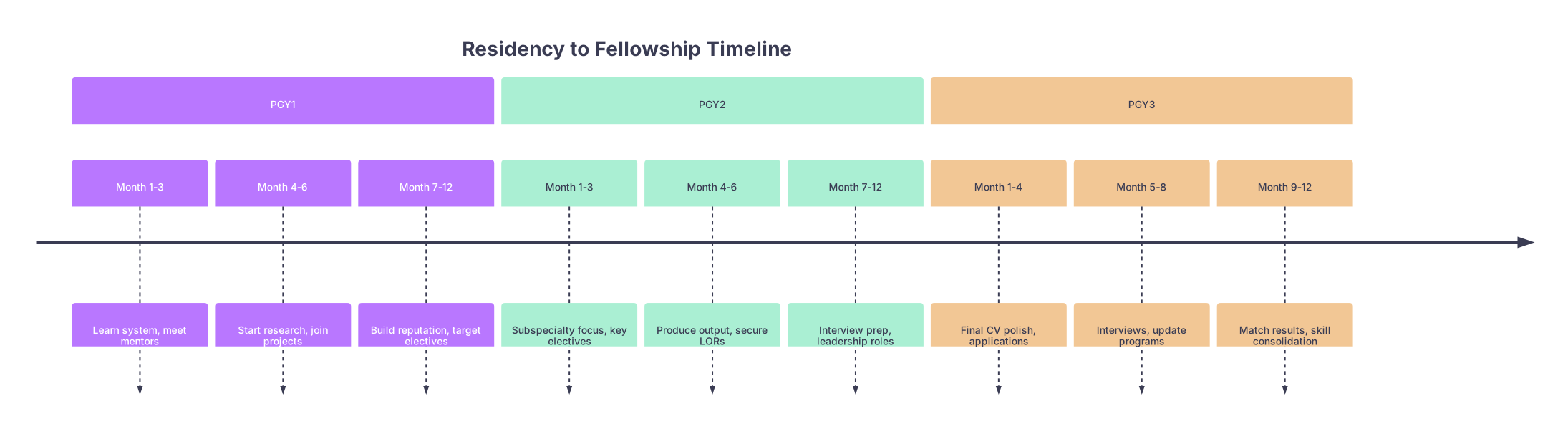
| Period | Event |
|---|---|
| PGY1 - Month 1-3 | Learn system, meet mentors |
| PGY1 - Month 4-6 | Start research, join projects |
| PGY1 - Month 7-12 | Build reputation, target electives |
| PGY2 - Month 1-3 | Subspecialty focus, key electives |
| PGY2 - Month 4-6 | Produce output, secure LORs |
| PGY2 - Month 7-12 | Interview prep, leadership roles |
| PGY3 - Month 1-4 | Final CV polish, applications |
| PGY3 - Month 5-8 | Interviews, update programs |
| PGY3 - Month 9-12 | Match results, skill consolidation |
At each block, I will tell you:
- What you must decide
- What you must do
- What must be on paper (CV, ERAS, letters) by that time
PGY-1: Positioning Yourself Before Anyone Notices You
PGY-1 is when most residents say “I’m just trying to survive.” That is understandable. It is also the trap.
The highest-earning fellows you will meet did three things early: found a niche, found a mentor, and got on a project.
Months 1–3: Learn the System, Identify the Landscape
At this point you should:
Figure out who runs your future.
For each target subspecialty at your institution, identify:- Fellowship program director
- 1–2 high-volume, well-known attendings
- The “research engine” person (often not the director)
Example: In IM:
- Interventional cards: Dr. X (PD), Dr. Y (structural heart)
- GI: Dr. Z (advanced endoscopist known regionally)
Look like a competent, low‑maintenance intern.
On wards, your brand must be:- Shows up early
- Knows their patients cold
- Does not whine
- Answers pages
Nobody writes a strong letter for “smart but careless.” I have watched stellar board scores get buried by “great potential, but…”
Quietly sample subspecialties.
Not by “shadowing” endlessly. By:- Asking chiefs: “Which rotations show me the most cards/GI/ICU/procedural volume?”
- Observing how those attendings interact with residents. Do they actually teach or just farm scut?
At the end of Month 3 you should:
- Know which 2 subspecialties you are most serious about.
- Have a short list of 3–4 attendings you want to impress.
Months 4–6: Attach Yourself to People and Projects
This is when you move from anonymous intern to “the resident doing good work with Dr. ___.”
At this point you should:
Join at least one concrete project.
Not “I am interested in research.” A real thing, with a deadline.Good options:
- Chart review of procedural outcomes (PCI, colonoscopy, ablations)
- Case series of rare interventions
- Q.I. project involving procedural efficiency, complication tracking
Bad options:
- Massive RCT you join as “sub-investigator #17”
- Vague “maybe we’ll write this up” promises
Plan PGY-2 and early PGY-3 electives to match your fellowship.
Talk to your program director early.You want:
- 1–2 blocks in your target field at home institution
- 1 outside rotation (especially if home is weak in your target area)
Start building a track record with the fellowship PD.
Do not “ask for a letter.” Instead:- Show up on their service
- Pre-round, know imaging, know labs
- Ask 1–2 specific questions per day, not endless basic ones
By the end of Month 6 you should:
- Be listed on 1 project (ideally with your name on the IRB or draft).
- Have your elective schedule requested for PGY-2.
- Be visible to at least one key subspecialist as a hard worker.
Months 7–12: Build Credibility and a Paper Trail
Second half of PGY-1 is where many zones diverge: some coast, some start pulling away.
At this point you should:
Get something accepted or submitted.
Aim for:- Abstract for a regional/national meeting (ACC, ACG, ATS, RSNA, etc.)
- Case report or small series submitted
Do not obsess over impact factor. Early output is about signaling that you can complete work.
Track your case and procedure exposure.
Especially for:- EM → ICU, resuscitations, procedures
- Anesthesia → regional blocks, critical cases
- Radiology → IR consults, procedures
- Ortho → cases assisting high-volume subs (sports, spine)
Keep a simple log: date, case type, your role. You will use this later in personal statements and interviews.
Decide your primary fellowship target by the end of PGY-1.
Dreaming of being “cards or GI or pulm” makes you look unfocused. You can have a backup in your head. But on paper, commit.
By the end of PGY-1 you should have:
| Category | Target Status by End of PGY-1 |
|---|---|
| Subspecialty Focus | 1 primary, 1 backup |
| Projects | ≥1 active with clear next step |
| Scholarly Output | ≥1 submitted or accepted abstract |
| Key Mentors | 1–2 attendings know you well |
| Electives | PGY-2 subspecialty blocks planned |
PGY-2: Converting Potential into a Competitive Application
PGY-2 is decisive. This is when you transform from “promising” to “obviously fellowship-bound.”
You cannot wait until PGY-3 to start.
Months 1–3: Hit Hard on Subspecialty Rotations
At this point you should:
Schedule your most critical subspecialty rotations early PGY-2.
Example patterns:- IM → cards/GI/ICU in first half of PGY-2
- Anesthesia → cardiac anesthesia, complex cases
- EM → MICU/SICU, cardiac/trauma heavy sites
- Radiology → IR/neurorad early enough to get letters
Behave like an unofficial fellow on those services.
Not “gunner annoying,” but:- Volunteer for procedures
- Stay late for interesting cases
- Read on cases the night before and come back with 1–2 insights
I have watched PDs decide who is “fellowship material” based on who scrubbed back in for the late STEMI or the 2 am GI bleed.
Ask for targeted feedback by Month 3.
Example script:
“I am very interested in interventional cards fellowship. What do I need to do over the next year to be competitive from this program?”Then shut up and listen. You will hear their internal rubric: number of publications, board scores, leadership.
By the end of Month 3 you should:
- Have 1–2 attendings in your subspecialty who say openly, “You should absolutely do this fellowship.”
- Know precisely what your program’s successful fellows have on their CV.
Months 4–6: Output, Leadership, and Letters
This is the most critical 3–6 month block of residency for future income potential. This is when fellowship applications are essentially written, even if not submitted yet.
At this point you should:
Turn projects into products.
You are not “doing research.” You are generating:- 1 manuscript submitted or in late draft
- 1–2 abstracts submitted to major meetings
- Posters and oral presentations lined up
For competitive, high-paying fellowships, your CV needs multiple lines, not a single poster from MS2.
Lock in letter writers.
You need 3–4 strong letters, typically:- Program director
- Subspecialty PD or senior attending in your field
- Research mentor (especially in your subspecialty)
- Optional: another strong clinical attending
At this point you should directly ask 1–2 key attendings:
“Do you feel you know me well enough to write a strong letter of recommendation for [X] fellowship?”If anyone hesitates, thank them and do not use them.
Take on at least one visible role.
PDs of high-paying subspecialties like people who run things:- Chief resident (especially for surgical, EM, IM)
- Schedule committee, QI lead, ICU committee
- Resident liaison for a key service (e.g., procedure service)
You are signaling maturity, reliability, and ability to handle fellowship-level independence.
By the end of Month 6 (mid-PGY-2 for 3-year residencies) you should:
- Have at least 2 strong letters verbally committed.
- Be first or second author on 1 paper in progress.
- Be listed on 2–4 scholarly items total (papers, abstracts, chapters).
Months 7–12: Prepare Your Fellowship “Story” and Application Skeleton
This stretch overlaps heavily with application season for some specialties. You cannot wing it.
At this point you should:
Clarify your subspecialty niche inside the fellowship.
Programs like clarity. Examples:- Cards: interventional + structural, or EP with strong procedures
- GI: advanced endoscopy / ERCP / EUS
- Pulm/CC: ECMO-heavy ICU, procedure-heavy practice
- IR: complex oncologic interventions, MSK/spine, PAD
Draft your fellowship personal statement framework.
Not fluff. A clear, chronological arc:- Early clinical experience that hooked you
- Key rotation(s) where you performed at a high level
- Concrete experiences (research, QI, cases) that show commitment
- Specific career plans (academic vs high-volume private practice)
Know your numbers and how they stack up.
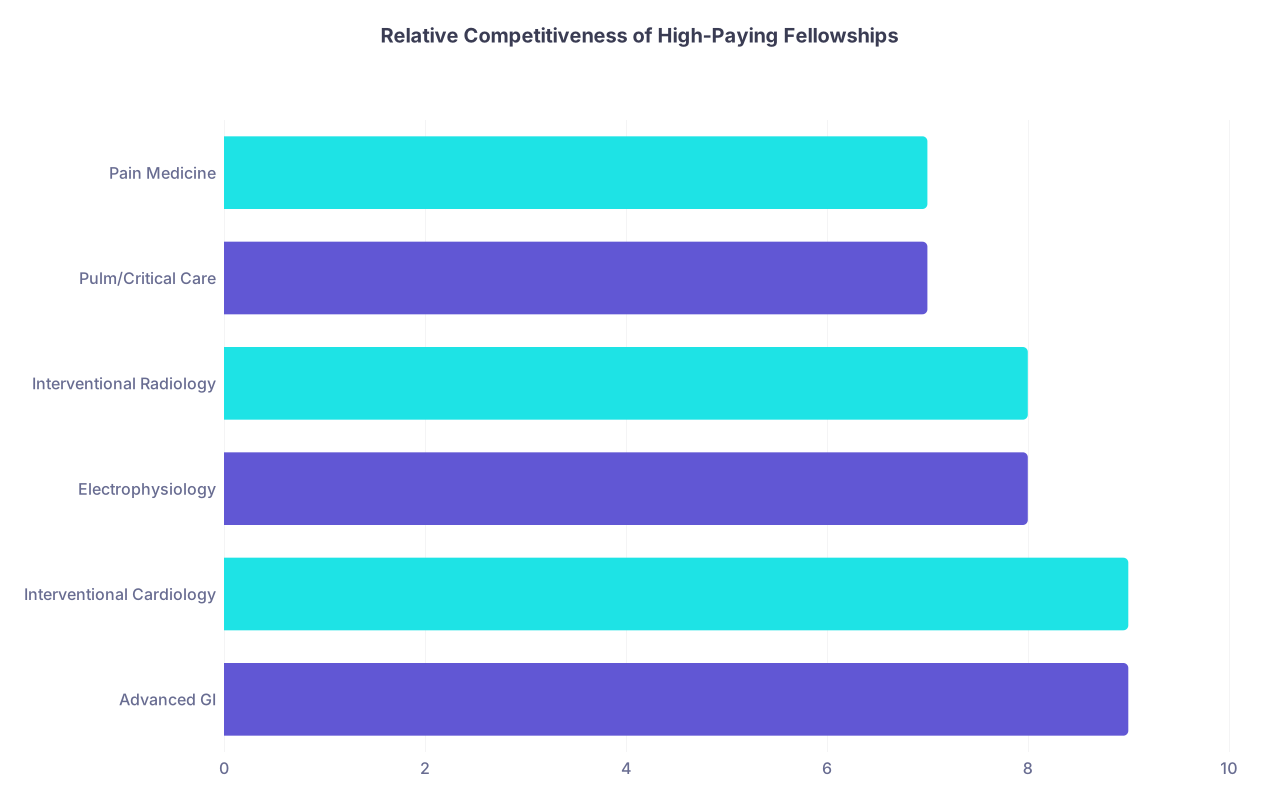
Board scores, in-training exams, program reputation—these matter more for some fellowships than others.Typical reality:
| Category | Value |
|---|---|
| Advanced GI | 9 |
| Interventional Cardiology | 9 |
| Electrophysiology | 8 |
| Interventional Radiology | 8 |
| Pulm/Critical Care | 7 |
| Pain Medicine | 7 |
(Scale 1–10: very rough. But you get the picture.)
By the end of PGY-2 you should:
- Have a nearly complete CV that would not be embarrassing if frozen in time.
- Know exactly which programs you will target for fellowship.
- Have a first draft of your personal statement and a list of experiences to highlight in interviews.
PGY-3: Execution, Applications, and Locking in the Match
PGY-3 is not for scrambling. It is for polishing, submitting, and not blowing it.
Timelines differ slightly by specialty, but the general shape is similar.
Months 1–4: Final Prep and Application Submission
At this point you should:
Finalize your program list strategically.
Balance:- Dream programs (top academics, big-name centers)
- Solid mid-tier with good case volume
- Safety programs you would actually attend
For high-paying fellowships, you want enough applications:
| Fellowship Type | Typical Application Range |
|---|---|
| Interventional Cardiology | 25–40 programs |
| Advanced GI | 30–50 programs |
| Pulm/Critical Care | 20–35 programs |
| Interventional Radiology | 25–40 programs |
| Pain Medicine | 20–30 programs |
Lock letters and ERAS/portal submissions early.
Your job by Month 2 of PGY-3:- All letters requested and uploaded
- Personal statement finalized
- CV cleaned for typos and padding (yes, they notice)
Tighten your clinical brand.
Word travels. I have seen fellowship PDs call your PD the same day your application arrives.You want your PD to be able to say, without hesitation:
- “Hard worker”
- “Team player”
- “Safe and independent clinically”
Not “smart but unreliable” or “interested in procedures but not detail-oriented.” Those are instant death phrases for procedural subs.
Months 5–8: Interviews, Ranking, and Damage Control
This is where your earlier work pays off—or where you feel the holes you left.
At this point you should:
Treat each interview like a high-stakes case.
Before each one:- Review faculty bios and major publications
- Know their clinical strengths (e.g., “We have a big TAVR program,” “We do a lot of ERCP”)
- Prepare 2–3 intelligent questions specific to that program
Have crisp, practiced answers to predictable questions:
- Why this subspecialty?
- Academic vs private plans?
- Tell me about a complication / difficult case.
- Tell me about a conflict with a colleague and how you handled it.
- Weaknesses in your application and what you did about them.
Rambling answers are common. Fix this. Practice out loud.
Update programs strategically.
New abstract accepted? Paper published? Send brief, specific updates to top-choice programs. Do not spam everyone with every minor update.Be honest but tactical in “interest” communication.
If you tell a program they are your top choice, mean it. Word gets around when residents tell this to five different places.
By the end of Month 8 (post-interview stretch) you should:
- Have your rank list solidified based on:
- Case volume
- Alumni job outcomes
- Faculty culture
- Geographic needs (do not lie to yourself here)
Months 9–12: Match, Transition, and Last Chances to Improve
The match (or offer process, for some non-matched fellowships) will sort itself out. Your focus now: do not coast.
At this point you should:
Keep performing clinically.
Late PGY-3 is when residents often mentally check out. Bad idea.- Serious late professionalism or clinical issues can still tank offers.
- Final evaluations and narrative comments still get read.
Fill any skill gaps you know you have.
Going into:- Interventional cards but still shaky on hemodynamics? Fix it.
- Advanced GI but weak on reading cross-sectional imaging? Fix it.
- IR but limited ultrasound skills? Fix it.
Build a deliberate “fellowship readiness” reading and case-review plan.
Clarify your first 5 years after fellowship.
Top-paying fellowships are not the end. They are leverage.- Academic but heavy procedural volume vs pure private practice
- Negotiating for protected procedure time vs clinic load
- Geographies that actually pay well for your skillset
Use late PGY-3 to talk honestly with recent grads about actual compensation and job satisfaction, not brochure numbers.
Case Volume and Income: Why This Grind Matters
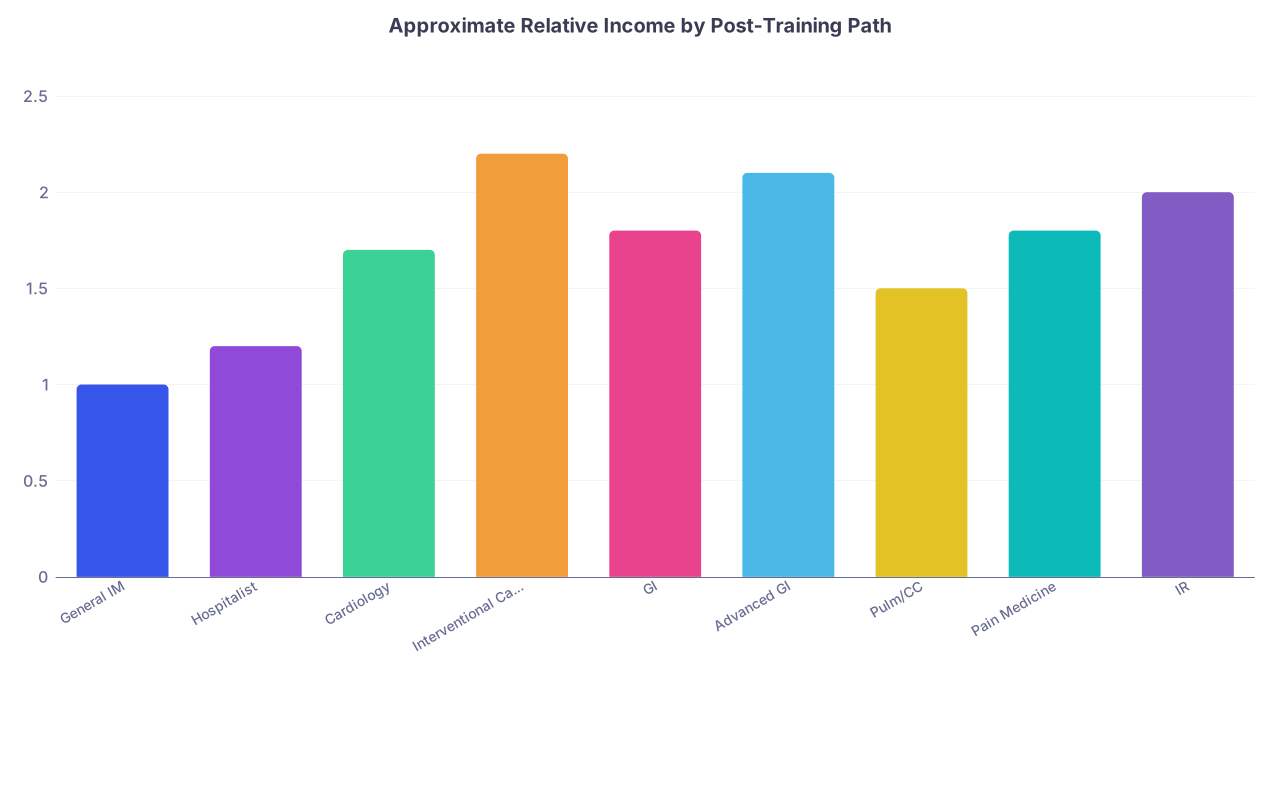
You are doing all this for more than a title. The end game is high procedural volume and leverage.
| Category | Value |
|---|---|
| General IM | 1 |
| Hospitalist | 1.2 |
| Cardiology | 1.7 |
| Interventional Cardiology | 2.2 |
| GI | 1.8 |
| Advanced GI | 2.1 |
| Pulm/CC | 1.5 |
| Pain Medicine | 1.8 |
| IR | 2 |
(Values are rough multipliers relative to a baseline general IM outpatient salary of 1.0. Real numbers will vary by region and job, but the pattern holds.)
You are not just chasing fellowship prestige. You are building:
- The procedural skillset that commands top compensation.
- The track record that lands the better jobs within those subspecialties.
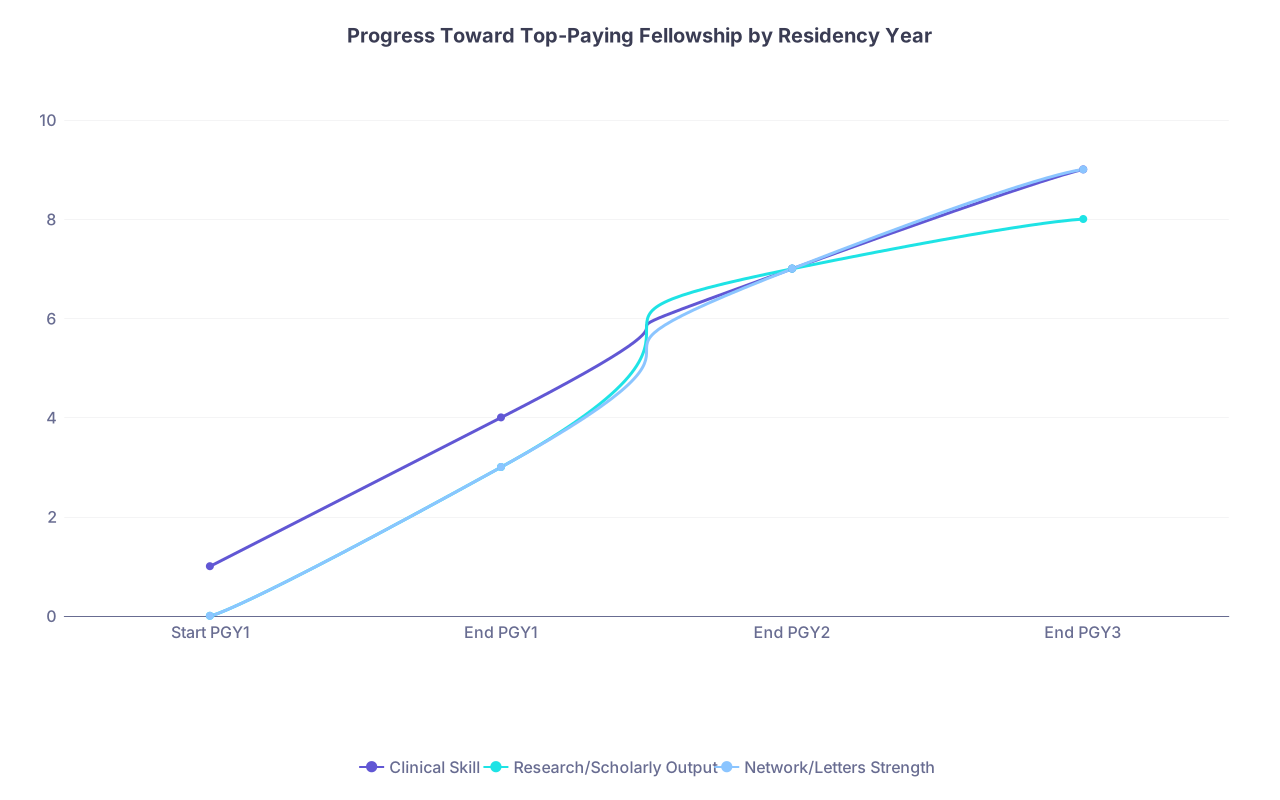
Final Checklist: Year-by-Year Milestones
| Category | Clinical Skill | Research/Scholarly Output | Network/Letters Strength |
|---|---|---|---|
| Start PGY1 | 1 | 0 | 0 |
| End PGY1 | 4 | 3 | 3 |
| End PGY2 | 7 | 7 | 7 |
| End PGY3 | 9 | 8 | 9 |
At the end of each year, you should be able to say:
PGY-1:
- I know my target subspecialty and main mentors.
- I am on at least one project with real output.
- My reputation is “hard-working, reliable,” not “smart but scattered.”
PGY-2:
- I have strong subspecialty evals and ≥2 committed letter writers.
- I have multiple abstracts/papers/major QI projects.
- I know exactly which fellowship programs I am targeting and why.
PGY-3:
- My application is not rushed; it is polished and intentional.
- Interviews went to programs that fit my volume and career goals.
- My clinical skills are at a level that will not embarrass me on Day 1 of fellowship.

Do Not Forget the Human Side
Last piece. The miserable high-earner is real.
You are choosing a path that will likely dictate:
- Your call schedule for decades
- Your tolerance for night work and emergencies
- Your risk of burnout
So during this 3‑year sprint toward high-paying fellowships:
- Watch the attendings in your target field.
Who looks exhausted at 50? Who still enjoys the cases? - Ask about their actual week: clinic days, lab days, weekends, admin load.
- Be honest about your own tolerance for 2 am bleeds, emergent STEMIs, or 4-hour ablations.

Boiled Down: The Three Things That Actually Matter
Decide early and commit.
By end of PGY-1 you should have a primary subspecialty target and be acting like it.Produce and be seen.
In PGY-2, you must convert rotations and relationships into real output and strong letters. Quiet, anonymous excellence is not enough.Execute cleanly in PGY-3.
No last-minute scrambling, no sloppy applications, no late professionalism issues. Treat the fellowship process like the biggest case of your residency. Because for your income and career trajectory, it is.