
The worst way to choose a high‑paying specialty is to wander through MS3 and “see what clicks.” You do not have that kind of time.
If you want a real shot at the most lucrative fields—dermatology, plastic surgery, orthopedics, ENT, neurosurgery, interventional radiology, radiology, anesthesiology—you need to weaponize your MS3 rotation calendar. Month by month. Week by week. Down to specific days when you should be in someone’s office asking for a letter.
Below is the rotation calendar I wish more students used when they quietly tell me, “I think I want something competitive… but I also don’t want to close doors.” This is how you keep doors open and still make a serious run at the highest paid specialties.
Big Picture: Your MS3 Year as a Money-Focused Test Drive
Before we go month-by-month, anchor the entire year around two questions:
- Which high‑income specialties do you actually experience in a meaningful way?
- By the end of MS3, do you have:
- 1–2 strong advocates (letters) in at least one lucrative field?
- A credible story for that specialty on your CV?
- Enough exposure to decide without panicking in MS4?
Your clinical year is usually 10–12 months of core rotations plus maybe an elective block. You cannot “deep dive” everything. You will be forced to prioritize.
At this point you should accept one hard truth:
If you want a top‑earning, competitive specialty, your calendar must favor it early. Not equally. Not “I’ll see how surgery goes first.” Early.
To see what you are targeting, here is a quick snapshot of some of the highest paid specialties based on recent data:
| Specialty | Typical US Median Compensation (approx) | Competitiveness |
|---|---|---|
| Neurosurgery | $800K+ | Extreme |
| Orthopedic Surgery | $650K+ | Extreme |
| Plastic Surgery | $600K+ | Extreme |
| Dermatology | $550K+ | Very high |
| Otolaryngology (ENT) | $500K+ | Very high |
| Interventional Radiology | $550K+ | Very high |
You are not choosing only based on salary. But if you pretend salary is irrelevant, you will not plan aggressively enough.
Pre‑MS3: 2–3 Months Before Rotations Begin
At this point you should be doing quiet reconnaissance.
2–3 months before MS3 (usually Feb–Apr of MS2):
Get the rotation schedule draft.
- Find out:
- Which blocks are fixed cores (IM, Surgery, OB/GYN, Psych, Peds, Family).
- Which blocks are flexible or elective.
- Whether there is an “early elective” option during MS3.
- Find out:
Rank which lucrative specialties actually interest you.
Aim for 2–3 serious contenders:- Surgical: Ortho, Plastics, ENT, Neurosurgery.
- Procedure-heavy but not classic surgery: Interventional Radiology, Interventional Cardiology (will come via IM), Pain (Anesthesia pathway).
- Lifestyle + pay: Dermatology, Radiology, Anesthesiology.
Strategically place Surgery and key exposures early.
- If you are even remotely considering any high‑pay surgery or IR:
You want General Surgery in the first half of MS3. - You also want:
- Radiology elective or shadowing.
- Dermatology clinic half‑days.
- Anesthesia exposure.
- Not all will be formal rotations. Some will be informal half‑days you arrange.
- If you are even remotely considering any high‑pay surgery or IR:
Identify one “anchor department” per specialty.
- Email the student coordinator or a friendly resident:
- “I am an incoming MS3, very interested in [Derm/Ortho/ENT]. Are there recommended clinics or attendings for students to get early exposure or research?”
- Write these names down. You will need them when the year starts.
- Email the student coordinator or a friendly resident:
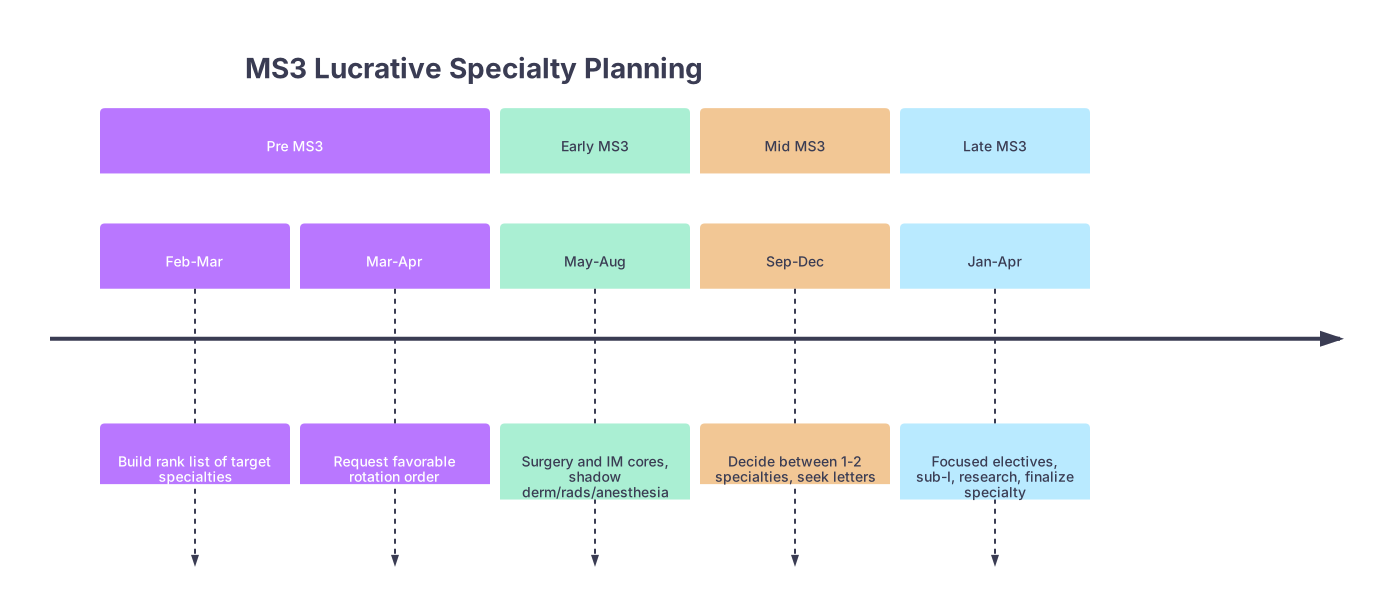
| Period | Event |
|---|---|
| Pre MS3 - Feb-Mar | Build rank list of target specialties |
| Pre MS3 - Mar-Apr | Request favorable rotation order |
| Early MS3 - May-Aug | Surgery and IM cores, shadow derm/rads/anesthesia |
| Mid MS3 - Sep-Dec | Decide between 1-2 specialties, seek letters |
| Late MS3 - Jan-Apr | Focused electives, sub-I, research, finalize specialty |
Months 1–3 of MS3: Front-Load Exposure to Procedures and High-End Fields
At this point you should be using every spare half‑day to test drive lucrative fields, not going home early because clinic ended at 2.
Month 1: Whatever rotation you start on
Your formal rotation might be anything: Internal Medicine, OB/GYN, Family, etc. Fine. Your job this month:
- Lock in 2–3 half‑days of shadowing in different high‑income fields:
- Ask your clerkship director or student coordinator:
- “I am strongly considering dermatology/ortho/ENT. Is there any issue with me spending a half‑day a week in that clinic when ward duties allow?”
- Most will say yes if you are honest and your core performance is solid.
- Ask your clerkship director or student coordinator:
Focus on:
- 1 half‑day: Dermatology clinic (bread and butter, see if you tolerate endless rashes).
- 1 half‑day: Radiology or Interventional Radiology reading room / angio suite.
- 1 half‑day: Anesthesiology in the OR (airways, lines, vibe of the specialty).
Weeks 3–4 of Month 1:
You should start a short project in one of these:
- Case report with a derm attending.
- Small quality project with an IR fellow.
- Chart review idea with an ortho or ENT resident.
Nothing huge. You just need a “hook” that justifies continued contact.
Months 2–3: Surgery early if at all possible
If your school will let you, place General Surgery here. You need to know if you can handle:
- 4:30–5:00 am pre‑rounds.
- Long OR days.
- High‑intensity personalities.
At this point during the Surgery rotation you should:
Week 1:
- Identify:
- One orthopedic surgeon.
- One plastic surgeon.
- One ENT or neurosurgeon if available.
- Ask the chief or coordinator:
- “Can I scrub with the ortho/ENT team on my call days or when my service is light? I am very interested in competitive surgical subspecialties.”
Weeks 2–3:
- Spend at least 2 full days with each of:
- Ortho team.
- Plastics or ENT.
- Keep a small notebook:
- Cases you liked.
- Times the hours felt tolerable vs miserable.
- How the residents talked about their lives and loans.
- This is your reality check against salary fantasies.
Week 4–6 (end of Surgery):
- You must be on at least one attending’s radar:
- “I am considering [Ortho/Plastics/ENT]. I really enjoyed working with you. I would like to come back in MS4 for an acting internship or sub‑I. Is that realistic?”
- If someone says, “Absolutely, email me in January,” that is the beginning of a letter writer.

Months 4–6: Internal Medicine, Psych, Peds – Quietly Positioning Yourself
At this point you should have:
- A rough ranking in your head: “Right now, I am leaning Derm vs Ortho” (or Derm vs Radiology, etc.).
- At least one attending in a surgical or procedural field who remembers your name.
Now you pivot to using “lighter” rotations to build your real application.
Internal Medicine (ideally in this window):
Even if you do not plan on IM, use it strategically:
- For Interventional specialties (IR, Interventional Cards, GI):
- Ask to follow consultants:
- “Can I spend one day a week following Cardiology or GI consults?”
- Hunt down:
- Cath lab days.
- Advanced endoscopy days.
- Ask to follow consultants:
- For Radiology/Anesthesia:
- When on call, try to sit in the radiology reading room or anesthesia pre‑op clinic.
Weeks 2–4 of IM:
- Choose one lane:
- “I am starting to lean toward Dermatology.”
- “I am more excited about Radiology than anything else.”
- Once you decide on your lead candidate:
- Email that department’s coordinator:
- “I am an MS3 currently on IM, and I am seriously considering [Derm/Rads/Anesthesia]. Are there specific clinics or research meetings I can attend this month?”
- Email that department’s coordinator:
Pediatrics / Psychiatry / Family Medicine rotations in this window:
No, they are not usually the highest paid. But they can help you:
- Peds + Derm:
- Look for pediatric derm clinics.
- Peds + ENT:
- Tonsil/adenoid days, pediatric airway clinics.
- Psych + Pain / Anesthesia:
- Get a feel for patients with chronic pain, psych comorbidity. Helps for pain fellowships and anesthesia interviews.
Goal by the end of Month 6:
- 1–2 specialties left standing for serious pursuit.
- At least one small research or case project started in that field.
- One probable letter writer in a competitive specialty or related department.
Months 7–9: Decision Zone and Letter-Hunting
At this point you should stop pretending you are “totally open to anything.” That story kills MS4 planning.
Month 7: Force the decision between 1–2 fields
Common high‑income forks in the road:
- Derm vs Radiology
- Rads vs Anesthesia
- Ortho vs Neurosurgery vs ENT
- Surgery subspecialty vs IR
You do not need a perfect answer, but you do need:
- A clear primary target.
- A backup specialty that still pays well (e.g., Anesthesia, Rads, Hospitalist IM with procedures, EM in some regions).
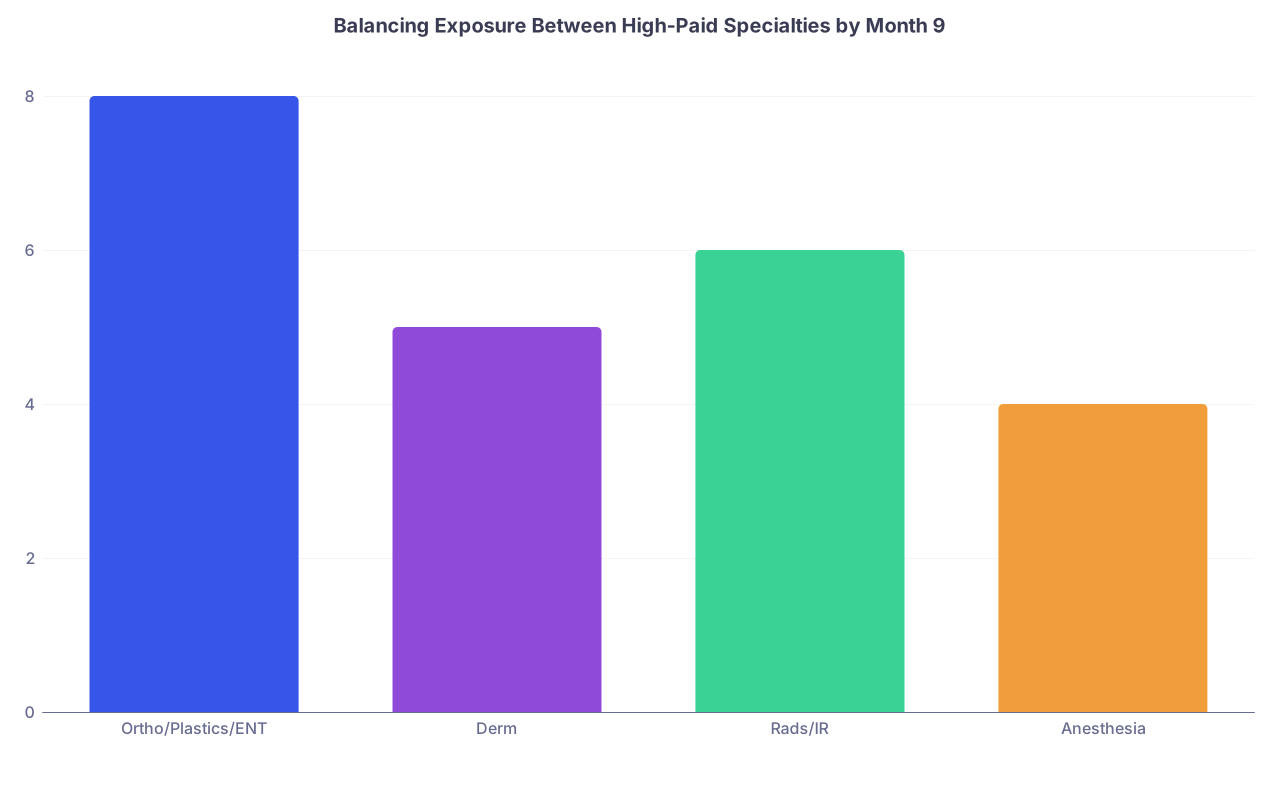
| Category | Value |
|---|---|
| Ortho/Plastics/ENT | 8 |
| Derm | 5 |
| Rads/IR | 6 |
| Anesthesia | 4 |
(Values roughly reflecting how many weeks of meaningful exposure you should aim for by Month 9.)
Month 7–8: Nail down letters
On each rotation now, especially any elective or subspecialty time, you should:
- Identify one attending early:
- Work directly with them as much as possible.
- Ask for feedback mid‑rotation: “How can I improve this month?”
- Final week:
- “I am planning to apply in [Derm/ENT/Radiology/Anesthesia]. If you feel you know my clinical work well enough, I would be honored to have a strong letter of recommendation from you.”
Do not say “letter” without “strong.” It gives them an out if they were lukewarm.
Aim by end of Month 9:
- 2 letters from your chosen specialty or closely related.
- 1 departmental letter from IM or Surgery.
- 1 “character” letter from someone who can talk about your work ethic and reliability.
Late MS3 (Months 10–12): Electives, Sub-I Setup, and CV Shaping
At this point you should be acting like a pre‑resident in your chosen lane.
If you are leaning surgical (Ortho, Plastics, ENT, Neurosurg):
Use any elective / free blocks for:
- Early MS4 sub‑I planning:
- Confirm dates with the service: “I would like to do my acting internship with your team in July/August of MS4.”
- Extra OR time now:
- Even if not on a formal rotation, scrub into your target specialty once a week.
- Finish or at least advance a research project:
- Abstract submission.
- Case report draft.
If you are leaning Derm:
You need:
- As much clinic exposure as possible:
- Medical derm.
- Surgical derm.
- Cosmetic exposure if available (even just observing).
- A concrete scholarly product:
- A poster, abstract, or case series.
If you are leaning Radiology / IR:
You should:
- Spend multiple days in the reading room:
- Ask residents to quiz you.
- Learn how they think, not just what the images look like.
- IR exposure:
- Even 5–6 half‑days in the IR suite plus a small project can be enough to write convincingly about it.
If leaning Anesthesia:
Focus on:
- Airway skills.
- OR flow.
- Pain clinic exposure.
- Join journal club if they have one.
Zooming In: Week-by-Week Priorities Inside Rotations
The day‑to‑day “where should I stand” decisions matter more than students think.
Here is a generic 4‑week rotation structure, tuned for someone chasing high‑pay specialties:
| Week | Primary Goal | Specific Actions |
|---|---|---|
| 1 | Identify targets | Spot 1–2 attendings and 1 resident in your interest |
| 2 | Demonstrate value | Show up early, volunteer for cases, ask smart questions |
| 3 | Signal interest | Explicitly state your specialty interest to key people |
| 4 | Convert to future opportunity | Ask for letter / sub‑I / research / shadowing |
Week 1–2 behaviors on every rotation:
- Arrive 15–30 minutes earlier than most.
- Read about 1–2 patients the night before and have a plan.
- Ask the resident:
- “Who on this service is really involved with [Derm/Ortho/ENT/IR]? I am hoping to work with them.”
Week 3:
- Tell that attending:
- “I am seriously considering [X], and I have really enjoyed seeing how you run your clinic/OR. Is there any way I could continue to work with you after this rotation, maybe on a small project?”
Week 4:
- Ask directly about:
- Letters.
- Sub‑I.
- Away rotations (especially for Ortho, ENT, Plastics, Derm).

Daily Habits During MS3 That Signal You Are “Competitive Specialty Material”
Lucrative fields are pattern‑recognition heavy. Faculty are watching for patterns in you as well.
At this point you should be doing this every day (or close):
- Read 10–15 minutes about at least one of your patients’ problems.
- Jot down:
- One question to ask rounds/clinic.
- One follow‑up task you can own (lab tracking, imaging follow‑up, calling a consult).
- In OR or procedures:
- Show up before the attending.
- Know the indication, anatomy, and steps.
- In clinic:
- Learn efficiency:
- Present concisely.
- Help with notes or patient education.
- Learn efficiency:
You are training yourself to look like a future derm/ortho/IR resident, not just “another good student.”
Reality Check: Lifestyle, Loans, and What You Actually Like
This calendar is unapologetically skewed toward high‑income fields. You still have to live your actual life.
Some red flags I have seen:
- Student loves the idea of orthopedic salaries but visibly wilts from 5:30 am to 7:00 pm days.
That will not magically improve in residency. - Student says they want dermatology but hates repeated, subtle diagnostic thinking and chronic complaints.
Then they will be miserable and overpaid. Not a trade worth making.
At this point (late MS3), pull back once and ask:
- “On which rotations did I feel most like myself even when exhausted?”
- “Which teams had seniors whose life I could tolerate in 5–10 years?”
High income loses its charm fast if you hate your normal Tuesday.

One-Year Calendar Summary: Where You Should Be When
Here is the stripped‑down, time‑anchored view:
| Timeframe | You Should Have / Be Doing |
|---|---|
| Pre‑MS3 (2–3 mo) | Rotation order set, 2–3 target specialties identified |
| Months 1–3 | Surgery + early shadowing in Derm/Rads/Anes/Ortho/ENT |
| End of Month 3 | 1 potential letter writer in a high‑pay field |
| Months 4–6 | IM, Peds, Psych used to refine interests, start small projects |
| End of Month 6 | Down to 1–2 serious specialty targets |
| Months 7–9 | Letters actively requested, research/abstracts progressing |
| End of Month 9 | Clear primary specialty + realistic backup |
| Months 10–12 | Electives tailored to target field, sub‑I / away plans set |
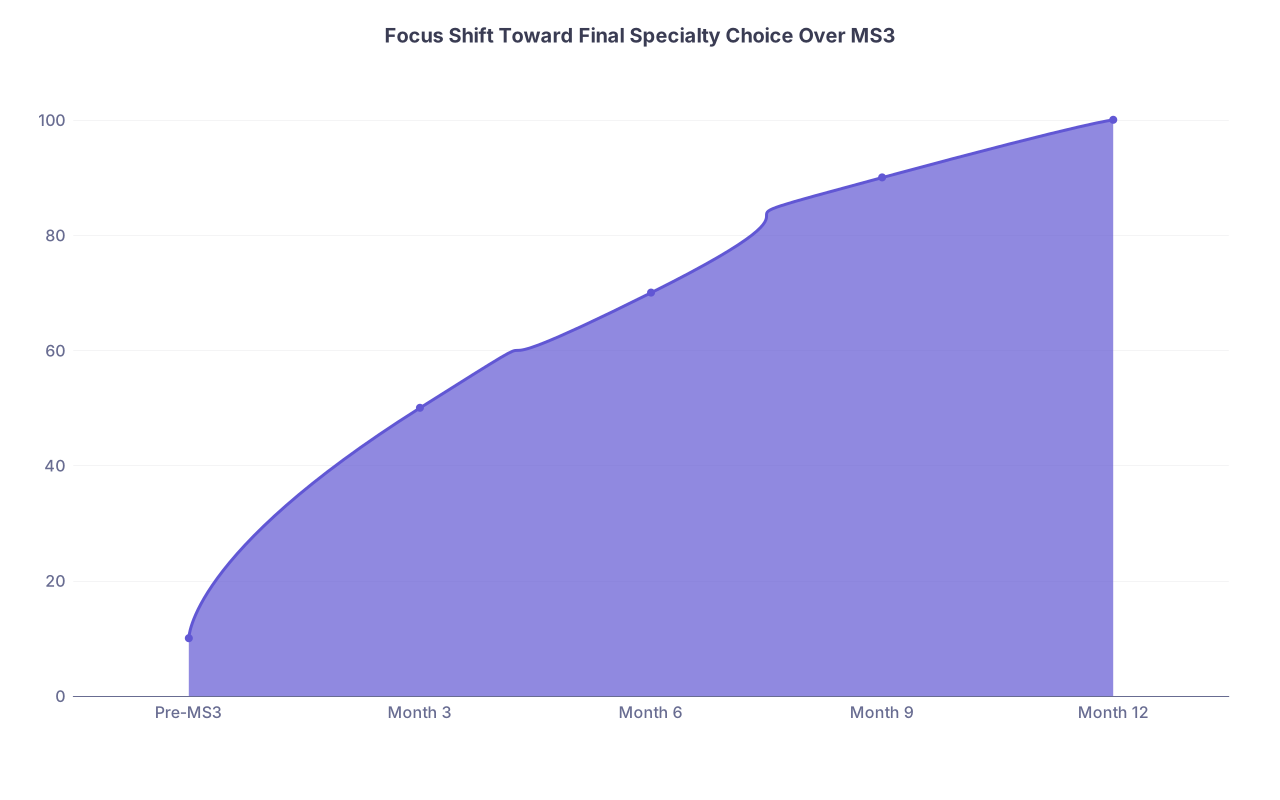
| Category | Value |
|---|---|
| Pre-MS3 | 10 |
| Month 3 | 50 |
| Month 6 | 70 |
| Month 9 | 90 |
| Month 12 | 100 |
(Values represent percentage clarity about your final specialty choice. By Month 9, you should be ~90% sure.)
What You Should Do Today
Do not just “think about this.” Planning beats vibes.
Today, do one concrete thing:
Open your school’s rotation schedule (or email the clerkship office if you do not have it yet) and map the first six months of MS3. Then write in the margins, for each block, the specific high‑income specialty exposure you will add (shadowing, clinic, OR days, research meeting). If any block has nothing, fix it now—send one email to a coordinator or resident before you close your laptop.