
The worst financial mistakes high-earning physicians make happen before they ever get a real paycheck.
You can match into ortho, derm, neurosurgery, IR, plastics—pull $600k+ in a few years—and still feel broke for a decade if you bungle your debt decisions now. I’ve watched that movie more than once. Same plot every time: “I thought I’d just pay it off later.”
This timeline fixes that.
You’re going to walk from MS1 through PGY3 with a clear, stepwise debt strategy specifically for future high earners in the highest paid specialties. The goal is simple:
- Maximize flexibility
- Minimize irreversible mistakes
- Set yourself up so when your income spikes, your loans fall like dominoes
Let’s do this chronologically.
Big Picture: Your Debt Strategy Phases
Before we zoom in month-by-month, you need the basic arc.
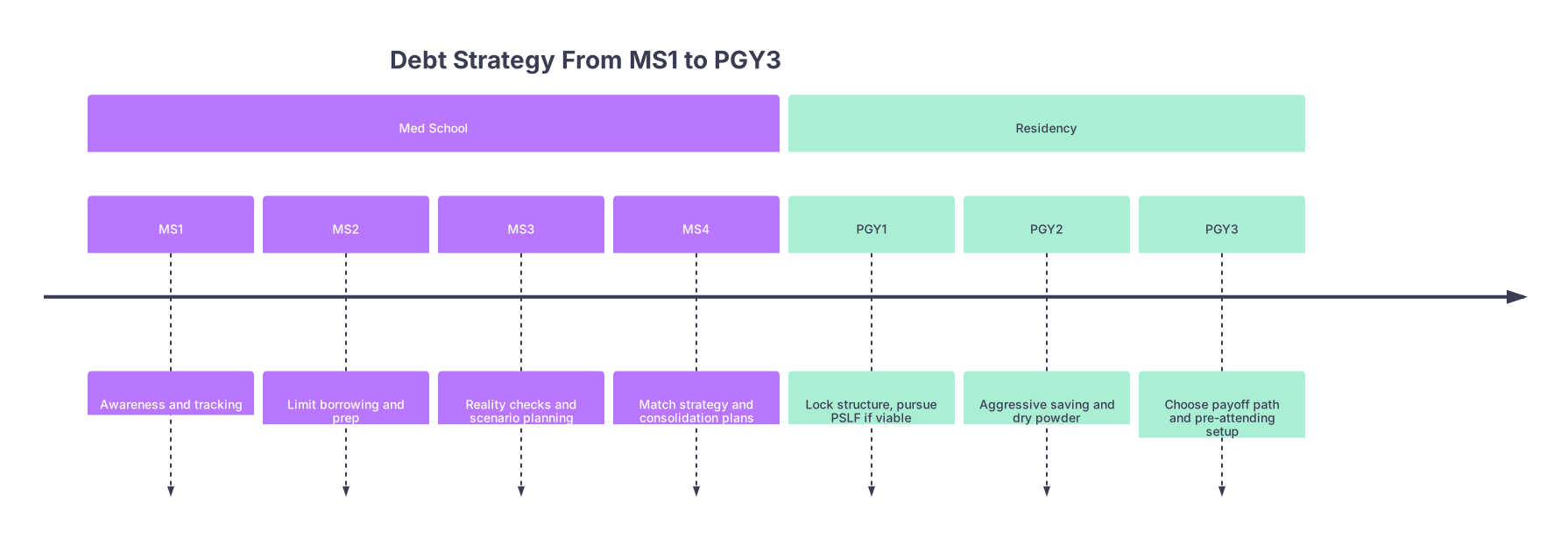
| Period | Event |
|---|---|
| Med School - MS1 | Awareness and tracking |
| Med School - MS2 | Limit borrowing and prep |
| Med School - MS3 | Reality checks and scenario planning |
| Med School - MS4 | Match strategy and consolidation plans |
| Residency - PGY1 | Lock structure, pursue PSLF if viable |
| Residency - PGY2 | Aggressive saving and dry powder |
| Residency - PGY3 | Choose payoff path and pre-attending setup |
If you remember nothing else:
Delay irreversible moves until residency. But start tracking and positioning in MS1.
MS1: Foundation Year – Awareness, Not Aggression
At this point you should stop guessing and start measuring. You’re not paying things down yet; you’re building a clean blueprint.
Month 1–2 of MS1
At this point you should:
List every current and expected loan:
- Federal Direct Unsubsidized
- Grad PLUS
- Any lingering undergrad loans
- Private loans (if you made that mistake—do not add more)
Create a simple debt tracker:
- Use a Google Sheet or Notion, with:
- Lender
- Type (Direct Unsub, PLUS, private)
- Interest rate
- Balance
- Capitalization rules
- Use a Google Sheet or Notion, with:
Run a conservative debt projection:
- Assume:
- 4 years med school fully funded by loans
- Interest accrues throughout
- 0 payments in school (aside from optional interest payments)
- Set rough target:
- If you’re heading toward ortho, neurosurg, IR, derm, ENT, plastics, rad onc, cards: expect $250–500k at graduation if you’re not careful.
- Assume:
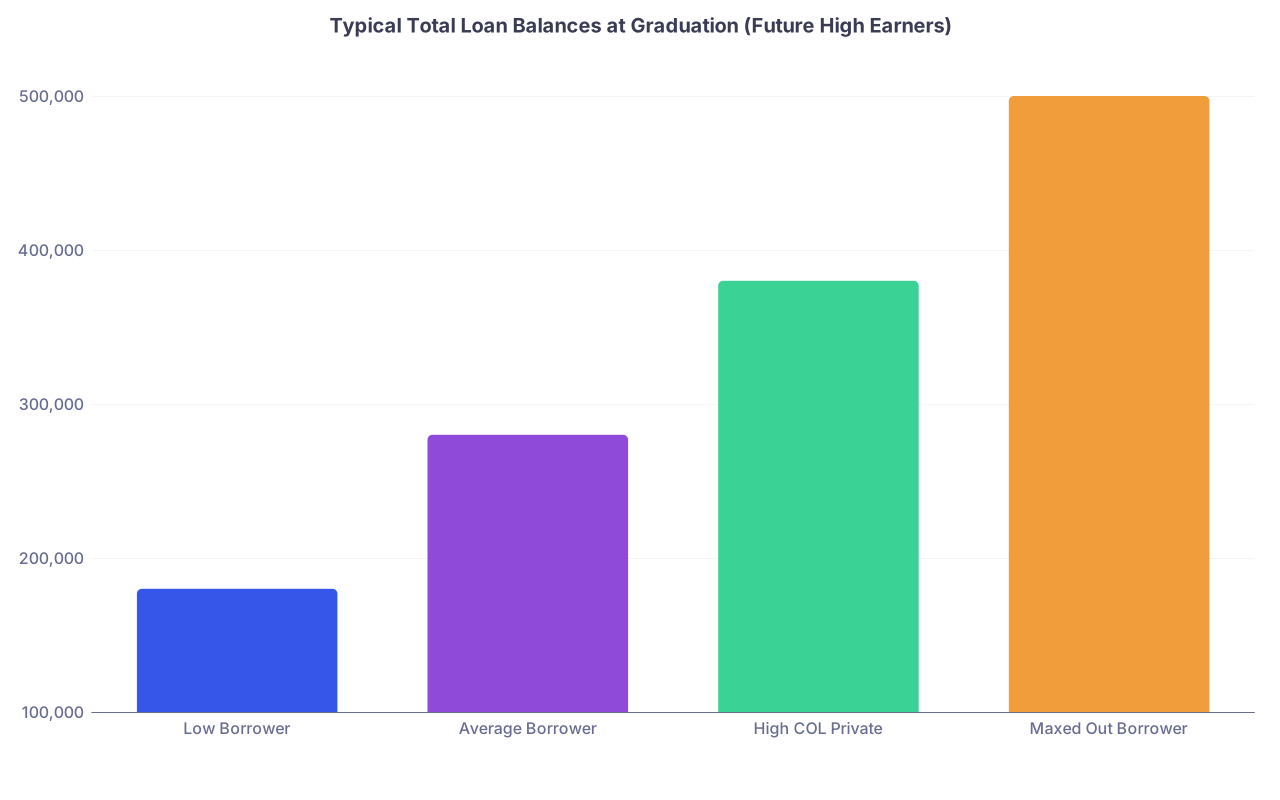
| Category | Value |
|---|---|
| Low Borrower | 180000 |
| Average Borrower | 280000 |
| High COL Private | 380000 |
| Maxed Out Borrower | 500000 |
Already feel a little sick seeing that? Good. That discomfort will save you six figures.
Mid MS1 (Month 3–8)
At this point you should stabilize lifestyle and borrowing.
Decide your monthly burn rate:
- Tuition + mandatory fees (fixed)
- Rent (cap it; you do not need the luxe complex near campus)
- Food (cook 60–70% of meals)
- Transportation (used car if needed, or none)
- “Fun” line (set it; don’t pretend it’s zero)
Translate lifestyle into semester loan requests, not vibes:
- Don’t just accept the full amount because “it’s offered”
- Calculate: cost of attendance – other resources (family support, savings, small work if allowed)
Avoid these MS1 sins:
- Opening multiple 0% credit cards “for points”
- Financing a new car “because I’ll be a doctor”
- Taking out extra Grad PLUS for investing (I’ve seen this. It goes badly.)
Late MS1 (Month 9–12)
At this point you should understand forgiveness vs payoff paths at a basic level. Do not overcomplicate, just know your lanes:
- Lane 1: PSLF + IDR (you work 10 years at a 501(c)(3) / academic / VA)
- Lane 2: Refinance + fast payoff after training as high earner
- Lane 3: Hybrid (IDR during residency, reevaluate PGY3–5)
You’re not choosing yet. You’re just learning vocabulary:
- REPAYE / SAVE vs PAYE vs IBR
- What counts as qualifying payments
- Why consolidation timing matters (we’ll hit that PGY1)
Do this once in MS1 so you’re not totally lost later.
MS2: Limiting the Damage While You Study
You’re juggling Step 1 and clinical prep. That’s fine. Your debt decisions here should be mostly automatic if MS1 went right.
Early MS2 (Month 1–4)
At this point you should tighten, not loosen, your borrowing.
Audit your MS1 spending:
- Where did you actually overshoot? Food? Rideshares? Rent?
- Cut 10–15% from that category, not everything.
Decide on interest-only payments (optional but powerful if family help exists):
- If your parents or partner can cover $100–300/month interest on unsubsidized loans, that can stop some capitalization bloat.
- If money is tight, it’s fine not to. Don’t starve to pay interest during MS2.
Do NOT chase PSLF planning too hard:
- You still don’t know specialty
- You still don’t know if you’ll be at academic vs private
You’re just trying to keep balances from exploding, not win the game yet.
Step Study Period
During dedicated, at this point you should:
Freeze lifestyle creep:
- You’re vulnerable here: DoorDash, Uber, “I’m too busy to cook.”
- Plan one weekly treat, not daily chaos.
Avoid new obligations:
- No new car.
- No expensive lease starting just before MS3 clinicals.
Re-check projected graduation debt:
- Update your tracking sheet
- Compare against realistic high-earner plan:
- Example: “If I match ortho and earn $600k by PGY6, can I kill $400k in 5–7 years?” (Yes, with intention. No, if you spend like your co-residents.)
MS3: Reality Check – Specialty and Scenario Planning
This is the year the fantasy meets the floor. You see actual attendings. You see lifestyles.
At this point you should start running specialty-specific debt scenarios.
Early MS3 (First 3–4 months of clinicals)
- Pay attention to:
- Which attendings are still paying loans 10–15 years out
- Where they work (academic vs private vs hybrid)
- How they talk about money (“I’m stuck here for PSLF” vs “I refinanced and killed it in 3 years”)
Quietly ask one or two residents you trust:
- “Are you doing PSLF or planning to refinance later?”
- “Any debt decisions you regret from med school?”
You’ll get unfiltered answers in work rooms at 2 am.
Mid MS3 – When You Have a Shortlist of Specialties
At this point you should build two concrete paths:
Path A: Academic / PSLF-leaning
- Likely specialties: academic neurosurg, academic ortho, IR at teaching hospital, rad onc, etc.
- You expect:
- 10 years at qualifying employers
- Slightly lower salary than pure private practice, especially early
Path B: Private / Big Income-leaning
- Likely: private ortho group, private plastics, high-end derm, neuro group, etc.
- You expect:
- Very high income after training
- Little or no PSLF benefit
- Refinance and nuke strategy
| Path | Typical Setting | Core Strategy | Key Risk |
|---|---|---|---|
| A - PSLF | Academic / VA / 501(c)(3) | Minimize payments on IDR, maximize forgiveness | You leave nonprofit early |
| B - Refinance | Private practice / PE-backed group | Refinance and pay off in 3–7 years | Lifestyle creeps, payoff drags out |
You’re not binding yourself to anything yet. You’re just deciding which path feels more likely so you don’t blindly walk into the wrong structure later.
Late MS3
At this point you should estimate your attending income range for your target specialty:
Ortho / neurosurg / plastics / IR / ENT / cards:
- Realistic attending comp (not first job necessarily, but stable):
- $500k–$1M+, depending on geography and practice type
- Realistic attending comp (not first job necessarily, but stable):
Derm / rad onc:
- Often $400k–$800k+ with major variation
Knowing that, rough rule:
If you expect > $450k long term and are leaning private practice:
- PSLF is usually less attractive unless your debt is astronomical.
If you expect academic track, long-term, or are PSLF-locking from day one:
- IDR + PSLF is often superior to fast payoff.
Store these assumptions. We’ll use them heavily PGY1–3.
MS4: Match Year – Positioning for Day One of Residency
MS4 is where future high earners often get cocky and sloppy. Don’t.
Early MS4 (After Match List Submitted)
At this point you should:
- Build two residency financial forecasts:
- Scenario 1: PSLF-focused residency (academic program)
- Scenario 2: Non-PSLF / private-leaning residency
Include:
Expected PGY1–3 salary (look up your program’s actual pay)
City cost of living
Whether your employer is a 501(c)(3) (critical for PSLF)
Decide your residency lifestyle floor:
- What is the minimum standard of living that doesn’t make you miserable?
- Rent range, transportation, food, baseline “fun”
You’re setting guardrails now so you don’t blow up your future because co-residents are leasing BMWs.
After the Match – You Know Your City and Employer
At this point you should:
Confirm if your residency employer is PSLF-eligible:
- Nonprofit hospital / academic center / VA = yes
- For-profit hospital chain = no
If PSLF is possible:
- Start leaning heavily toward IDR + PSLF-friendly moves
If PSLF is off the table:
- Assume you’ll be doing refinance + aggressive payoff as attending
We will lock this in PGY1. Do not consolidate or refinance yet unless you know exactly why.
PGY1: Structural Decisions – This Year Matters Enormously
This is where many people permanently screw themselves. At this point you should optimize structure, not payoff speed.
Month 1–2 of PGY1
As you start residency:
- Get your full loan inventory again (balances, types, servicers)
- Make sure you still have:
- All federal loans eligible for IDR
- No rogue private consolidations from undergrad
Now:
Consolidation Decision (Federal Only)
You consolidate if:- You have multiple federal loans with different servicers and want simplicity
- You want to start the PSLF clock cleanly
- You have older FFEL / Perkins loans that aren’t PSLF-eligible and you want them to be
You do NOT consolidate into a private loan yet. That kills PSLF options forever.
Choose an IDR Plan
For most new grads, it will be:- SAVE (REPAYE successor) for lowest payments and interest subsidy
- Occasionally PAYE if you need payment capped and are PSLF aiming, but SAVE is usually superior now
File your employment certification form for PSLF (if employer is eligible)
- Start year 1 of 10
- Even if you’re not 100% sure you’ll stay; optionality is free
Month 3–12 of PGY1
At this point you should focus on cash flow resilience, not hero payments.
You’re a resident. You will not “pay off” $300k on $65k salary. Don’t pretend.
Priority stack:
Emergency fund first
- Target: $2–5k initial buffer, then to one month’s expenses
- Fund this before extra loan payments
Retirement account basics
- If match is offered, try to contribute enough to get free money
- If no match, small Roth IRA contributions can make sense—but not required yet if you’re barely afloat
Loan payments = IDR minimum only (for PSLF path or hybrid)
- Let SAVE give you interest subsidies
- Keep payments low and predictable
For non-PSLF future private practice high earners:
- I still like IDR during residency for flexibility
- Extra payments can be helpful but only after emergency fund is built
- Don’t refinance privately in PGY1 unless:
- You are 95% certain you won’t do PSLF
- You get a resident-friendly low fixed rate
- You understand you are killing PSLF forever
PGY2: Build “Dry Powder” – Don’t Rush the Payoff
By PGY2 you know your specialty trajectory and you have some rhythm. At this point you should hoard flexibility.
Early PGY2
You should:
Reassess your projected attending income:
- Subspecialty? Fellowship? Geographic preferences?
- Example: Ortho + big city private group vs ortho + academic Midwest program—these are not the same financial lives.
Recalculate:
- Total projected loan balance at the end of training (with IDR payments)
- Years remaining to 10 years PSLF by then
This is where the math often becomes obvious:
If you’ll hit year 7–9 of PSLF by end of fellowship:
- Throwing away PSLF is usually insanely expensive
If you’re at year 3–4 of PSLF and planning private practice after residency:
- PSLF value may be much smaller, and a refinance later makes more sense
Mid–Late PGY2
At this point you should shift from “survive” to “position to attack.”
Set a savings target:
- Future high earners should aim to stockpile $10–30k by late residency, earmarked as “loan attack / transition fund”
- This is your dry powder to:
- Move for a job
- Cover uninsured gaps
- Or slam a chunk of principal day one as attending
Avoid lifestyle creep that feels justified:
- Fancy apartment “because I’m PGY2 now”
- “We deserve” vacations funded by credit cards
For PSLF-bound:
- Keep IDR payments minimal
- Maximize documentation: annual recertifications, employment forms
For refinance-bound:
- Keep loans in federal system for now (IDR is a quasi-insurance policy)
- Focus on liquidity and optionality
PGY3: Commit to a Direction and Prepare for the Jump
This is the turning point year, especially for 3-year residencies (IM, peds, EM) and some prelim + advanced transitions.
At this point you should lock in your high-earner debt strategy.
Early PGY3
You should:
Decide your first 3–5 years post-training setting:
- Academic vs private vs hybrid
- Likelihood you stay in PSLF-qualifying roles through year 10
Run hard numbers:
Scenario 1 – You will likely complete PSLF (10 years total):
- Action:
- Stick with SAVE or similar IDR
- Do not refinance
- Minimize payments, maximize tax planning
- Start planning for massive tax-efficient investing once loans are forgiven
Scenario 2 – You’re finishing residency/fellowship with only 3–5 qualifying PSLF years and going private:
- Action:
- Treat PSLF as a nice discount, nothing more
- Plan to refinance within 6–18 months of becoming an attending
- Prepare to throw 30–40% of your post-tax attending income at loans for 3–5 years
Late PGY3 – 6–12 Months Before Attending Income
At this point you should:
Set a written payoff or PSLF plan. Not vibes. Written.
If PSLF:
- Count remaining qualifying years
- Confirm employer type for your first attending job
- Don’t let a slightly higher private salary lure you into losing six-figure forgiveness
If refinance-and-kill:
- Decide your payoff horizon:
- 2–3 years (surgical strike)
- 5–7 years (still aggressive)
- Choose a target percentage of income for debt service (often 20–40% of net pay for high earners)
- Decide your payoff horizon:
Get your financial “housekeeping” ready:
- Clean up any high-interest consumer debt
- Finalize a realistic first-attending budget:
- Housing
- Loans
- Retirement
- Taxes (watch bracket jumps for high earners)
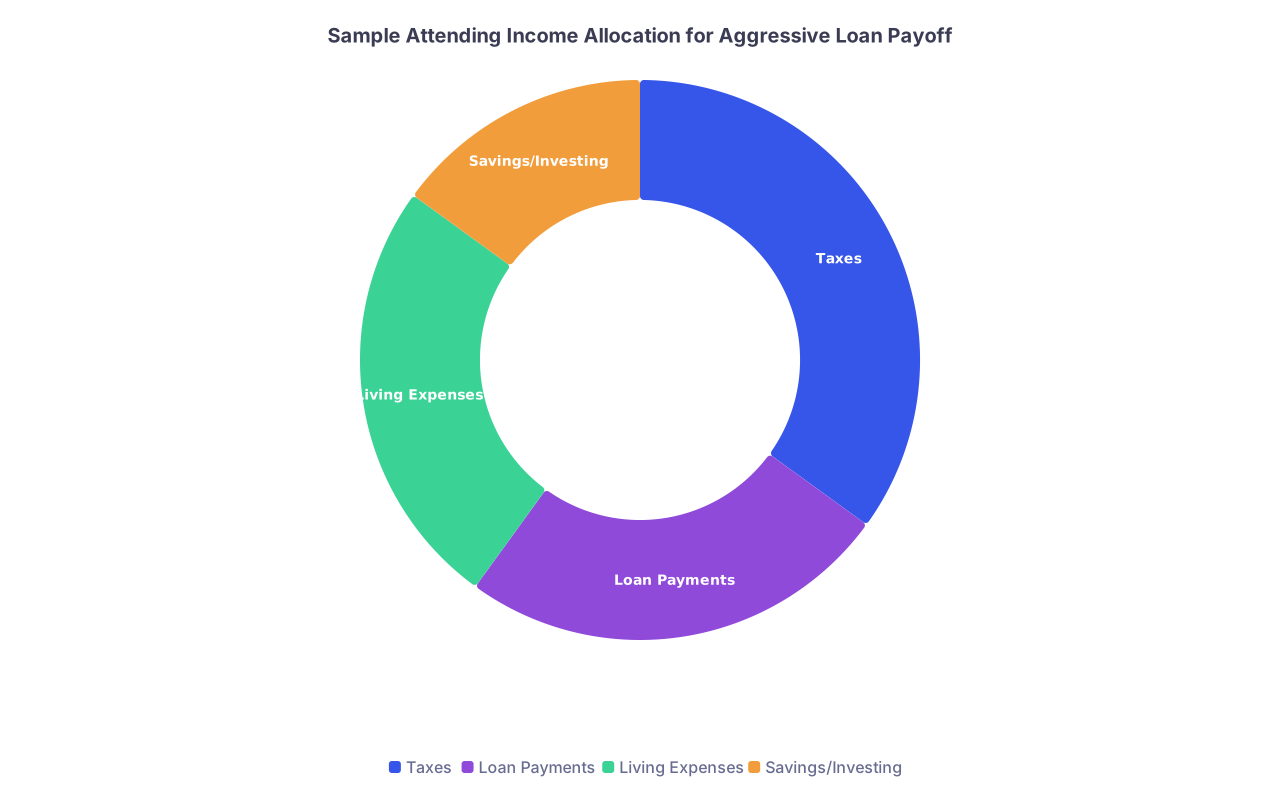
| Category | Value |
|---|---|
| Taxes | 35 |
| Loan Payments | 25 |
| Living Expenses | 25 |
| Savings/Investing | 15 |
Notice: 25% to loans. For a $600k income, that’s enormous firepower. That’s why you planned all this.
The Core Principles You Should Carry Forward
By the time you finish PGY3, your loan trajectory is basically scripted. The only question is whether you wrote it on purpose.
Three things to remember:
MS1–MS4 are about minimizing damage and maximizing flexibility, not heroic payments. Track, cap lifestyle, learn the rules. Don’t lock yourself into private refinancing too early.
PGY1 is the structural year. Get on the right federal plan, decide on PSLF eligibility, file forms, and protect optionality. Do not let a rushed refinance kill a six-figure benefit.
As a future high earner, your real power is concentration, not perfection. Once you’re making $500k–$1M+, a focused 3–7 year attack obliterates even huge balances—but only if you’ve avoided dumb mistakes and built some dry powder during training.
At each point in this timeline, your job is simple: make the next right move that keeps future you dangerous, not boxed in.