
The biggest mistake academic physicians make is treating the jump to private practice like a job change instead of a multi‑year business strategy.
You are not just switching employers. You are changing your risk profile, income structure, lifestyle, and in the highest‑paid specialties (ortho, neurosurgery, cardiology, GI, derm, radiology, anesthesia), you are stepping into an environment where every inefficiency costs real money. Sometimes five figures a month.
Here is the timeline I would use if you told me: “I am in academic practice now, and I want to be in a higher‑paying private practice role within 12–24 months without blowing up my reputation or my sanity.”
24–18 Months Before Transition: Quiet Reconnaissance and Self‑Assessment
At this point you should decide if you are serious and start acting like it—without announcing anything.
Month 24–22: Hard Reality Check
Clarify your “why” in concrete numbers
- Target income: e.g., “I make $320k in academic cardiology; I want $650k+ in private.”
- Lifestyle boundaries: max call nights per month, clinic days, procedure volume.
- Geographic non‑negotiables: states or metro areas you will and will not consider.
Assess your current leverage
- Reputation: Are you known as the “go‑to” EP cardiologist or the “nice but replaceable” generalist?
- Clinical niche: Complex spine vs generic ortho. Interventional vs noninvasive. Advanced endoscopy vs bread‑and‑butter GI.
- Volume: Pull hard data from your EMR or billing:
- Cases per month by CPT
- RVUs per year
- Payer mix
If you cannot pull your own RVUs, you are already at a disadvantage in private practice.
- Identify your non‑compete and contract traps
- Get your current academic contract and find:
- Non‑compete radius and duration
- Moonlighting restrictions
- Notice period (90 days vs 180 vs 12 months)
- Intellectual property (if you have grants/devices/algorithms)
- Pay a healthcare attorney for a 1–2 hour review. Worth it.
- Get your current academic contract and find:
| Clause Type | What To Look For |
|---|---|
| Non-compete | Radius, duration, scope |
| Notice period | 90 vs 180+ days |
| Moonlighting | Written vs vague restrictions |
| Tail coverage | Who pays, cost cap |
| Bonus clawbacks | Time bound, pro-rated |
Month 21–18: Market Scouting (Silently)
At this point you should start mapping the landscape of higher‑paying roles.
- Identify realistic destinations by specialty
For highest‑paid fields, the money is usually in:
- Orthopedics / Neurosurgery – high‑volume private groups, spine centers, ASC ownership.
- Interventional Cardiology / EP – private cardiology groups, heart institutes, OBL/ASC hybrid models.
- GI – private GI groups with endoscopy centers, often PE‑backed.
- Dermatology – multi‑site private/PE practices, Mohs‑heavy groups.
- Radiology / Anesthesia – large private groups with hospital contracts, telerad groups, anesthesia management companies.
- Get real compensation data, not rumors
Start building your own dataset:
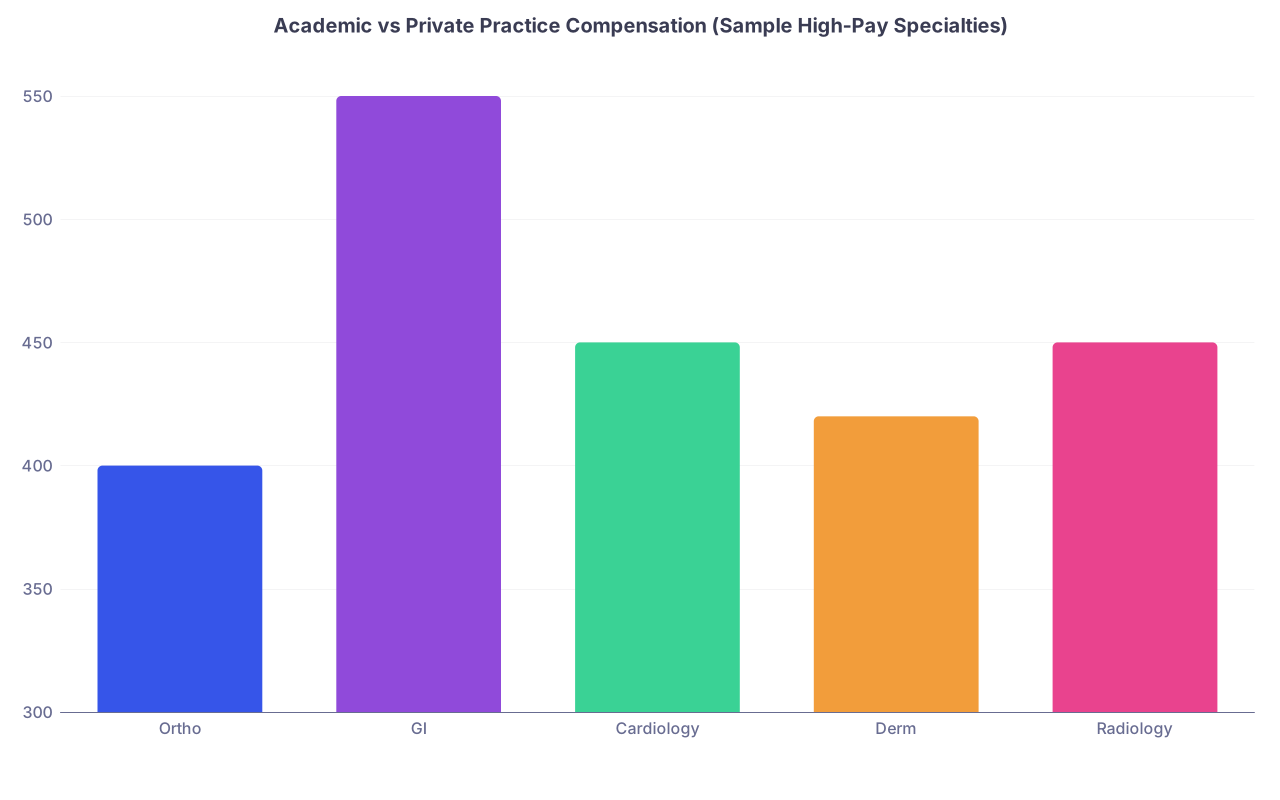
| Category | Value |
|---|---|
| Ortho | 400 |
| GI | 550 |
| Cardiology | 450 |
| Derm | 420 |
| Radiology | 450 |
Assume those academic numbers above are conservative. Private practice typically doubles them, sometimes more with ownership.
How to get real numbers:
- Text alumni: “Off the record, what is your realistic total comp year 3–5?”
- Ask recruiters for ranges tied to RVUs (“$70–$90 per wRVU, 11k RVUs expected”).
- Conferences: hallway conversations, not official panels.
- Define your target model
Decide which practice model you are actually aiming for:
- Classic partnership track group
- Hospital‑employed but productivity‑heavy
- PE‑backed roll‑up
- Telerad / remote, if radiology
- Hybrid academic/private arrangements (rare but exist in some markets)
If you do not choose a model now, you will waste a year exploring jobs you would never take.
18–12 Months Before Transition: Positioning and Relationship Building
At this point you should start acting like someone who might leave, but still doing your current job well.
Month 18–15: Build Transferable Value
Increase your measurable productivity
- Ask to see your last 12 months of RVUs.
- Identify low‑yield activities to shed:
- Committees that do nothing for your CV.
- Free consults for other departments that do not generate billing.
- Add 1 extra block of your highest‑yield work:
- More caths instead of extra clinic.
- More scopes instead of another teaching conference.
Clean up your clinical documentation
- Private practice groups care about what you actually bill, not how brilliant your notes sound.
- Standardize:
- Templates that hit all billable elements.
- Clear procedure indications and complexity.
Refine your niche
- If you are “the person” for:
- TAVR
- Complex revision spine
- Advanced ERCP/EUS
- Mohs for complex facial lesions
- You are more valuable than a generic “I do all of it” academic generalist.
- If you are “the person” for:
Month 15–12: Quiet Networking and Exploratory Conversations
At this point you should start talking to people who live where you want to go.
- Targeted outreach
- Former co‑fellows in private practice.
- Senior residents who took high‑paying jobs.
- Faculty who left academics 3–5 years ago.
Ask specific questions:
- “What are your real first and third year incomes?”
- “How much call? How many cases per week?”
- “What surprised you about leaving academics?”
Discreet recruiter engagement
- Work with 2–3 reputable physician recruiters, not 12.
- Give them:
- Preferred regions
- Minimum base and structure (e.g., $500k base + RVU bonus, partnership year 2–3)
- Hard no’s (no 1:3 home call for neurosurgery, for example)
Start your exit financial prep
- Build 3–6 months of cash cushion to cover:
- Moving costs
- Gap between jobs
- Tail coverage if needed
- Maximize retirement contributions now while academic benefits may be richer.
- Build 3–6 months of cash cushion to cover:
12–6 Months Before Transition: Formal Job Search and Contract Reality
Now you move from “maybe” to “I am leaving.” Still quietly, but with clear intent.
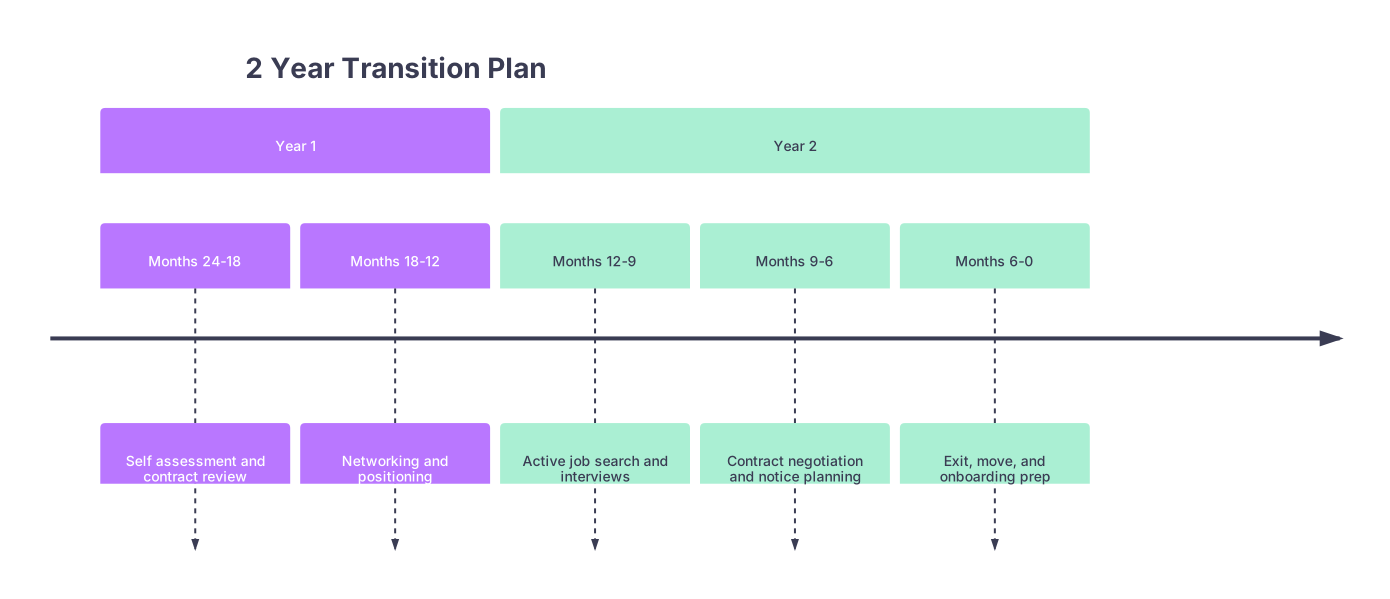
| Period | Event |
|---|---|
| Year 1 - Months 24-18 | Self assessment and contract review |
| Year 1 - Months 18-12 | Networking and positioning |
| Year 2 - Months 12-9 | Active job search and interviews |
| Year 2 - Months 9-6 | Contract negotiation and notice planning |
| Year 2 - Months 6-0 | Exit, move, and onboarding prep |
Month 12–9: Actively Interviewing
At this point you should be taking calls and visiting practices.
Filter aggressively before visiting
- Ask for:
- Sample contract
- Compensation formula
- Current partner incomes (range, not names)
- Call schedule and coverage details
- If they refuse to talk numbers at all before a visit, that is a red flag in high‑pay specialties.
- Ask for:
On‑site visits (1–2/month max) On the visit you must:
- Ask to see real schedules from the last month.
- Meet at least one recent hire and one senior partner alone.
- Ask these questions:
- “How many physicians left in the last 5 years and why?”
- “What is the weakest part of this group?”
- “Show me a real partner distribution statement.”
Track options systematically Build a simple comparison table:
| Practice | Base + Bonus Structure | Partnership Year | Call Burden | Year 3 Target Income |
|---|---|---|---|---|
| Group A | $550k + RVU over 10k | 2 | 1:6 | $900k |
| Group B | $500k + collections % | 3 | 1:4 | $750k |
| Group C | $600k salary, no equity | N/A | 1:5 | $650k |
Month 9–6: Contract Negotiation and Notice Planning
This is where physicians either protect themselves or get crushed.
Get a real healthcare attorney now
- Not your cousin who does real estate.
- You need someone who:
- Negotiates physician contracts weekly
- Understands RVUs, collections, tail insurance, ASC equity
Key contract items for highest‑paid specialties
- Compensation
- RVU rate (e.g., $70–$90 per wRVU)
- Draw vs true base
- Collections percentage and overhead assumptions
- Partnership
- Buy‑in amount and what you are buying (goodwill vs hard assets vs ASC equity)
- Voting rights
- Path to equal share (or never equal)
- Malpractice
- Who pays tail if you leave?
- Claims‑made vs occurrence
- Compensation
Back‑calculate your notice date
- If your academic contract requires 180 days’ notice, and your new practice needs you by July 1:
- You must give notice by early January.
- Build in at least:
- 30–60 days for credentialing
- 30–60 days for state license if new state
- If your academic contract requires 180 days’ notice, and your new practice needs you by July 1:
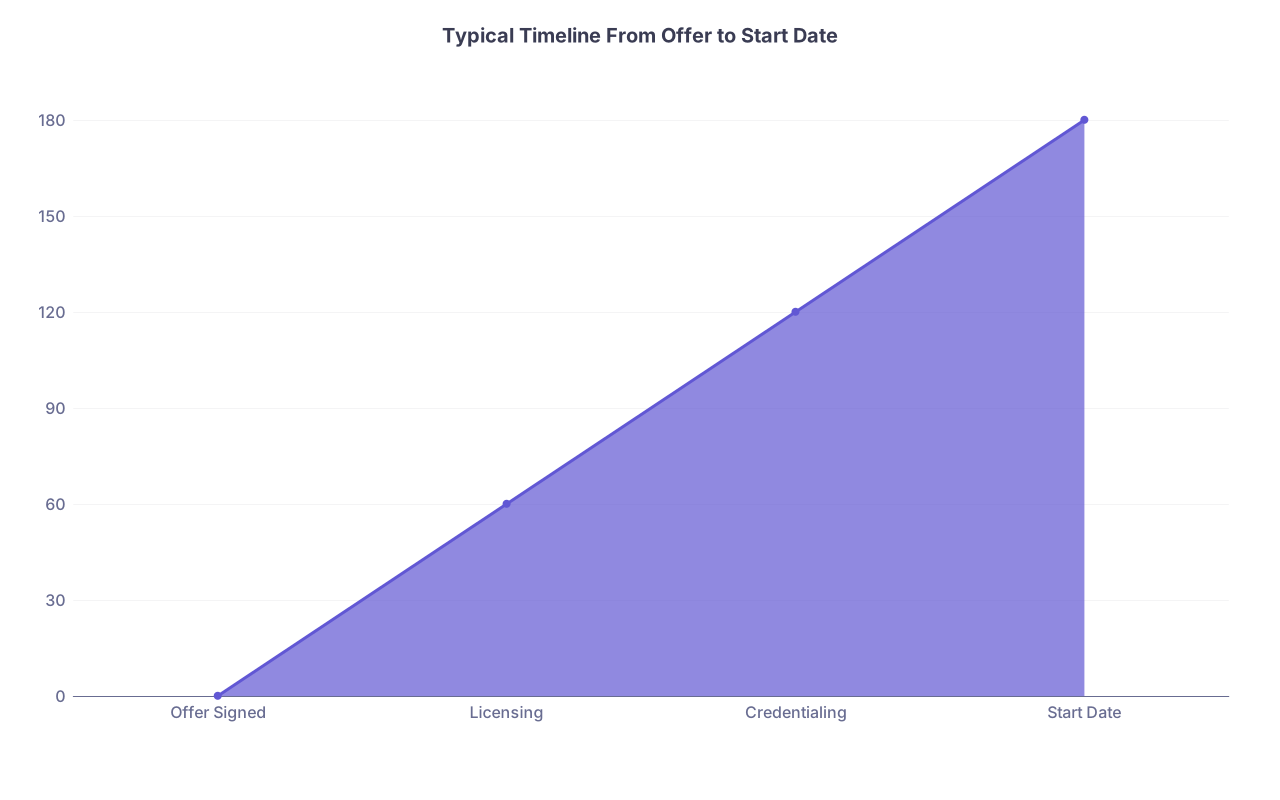
| Category | Value |
|---|---|
| Offer Signed | 0 |
| Licensing | 60 |
| Credentialing | 120 |
| Start Date | 180 |
- Decide your disclosure strategy
- Tell department leadership only after:
- You have a signed offer letter or contract.
- You and your lawyer have vetted key terms.
- Never “float” your possible departure as leverage unless you are willing to walk.
- Tell department leadership only after:
6–0 Months Before Transition: Exit Clean, Enter Ready
At this point you should have a signed contract with your new practice and a clear start date.
Month 6–4: Announce and De‑Risk the Exit
Formal notice to your department
- Written letter with:
- Final working date
- Appreciation, even if mixed feelings
- Keep it boring and professional. You will meet these people at conferences for the next 20 years.
- Written letter with:
Plan a sane clinical ramp‑down
- Stop scheduling long‑term follow‑ups past your end date.
- Transition complex patients early:
- Advanced heart failure, complex oncology‑adjacent cases, long‑term pain contracts.
- Protect your last 4–6 weeks from:
- New complex cases that will blow up after you leave.
Resolve academic loose ends
- Authorship agreements: finalize now.
- IRB protocols: hand off to someone explicitly.
- Grants: clarify your role post‑departure (often zero).
Month 4–2: Operational Prep for Private Practice
At this point you should turn into a small business operator in your head.
Understand how you will be paid
- Get your new group to walk you through:
- How RVUs are tracked and reported to you
- How collections affect your bonus
- Lag time from work done to payment (often 60–120 days)
- Get your new group to walk you through:
Malpractice and insurance
- Confirm:
- Tail coverage on your academic job is arranged and documented.
- New malpractice coverage start date is set.
- Get your own copies of:
- Final malpractice certificates
- Any incident reports or letters that might follow you.
- Confirm:
Licensing and payer enrollment
- Track:
- State license issuance
- DEA address changes
- Payer credentialing (Medicare, major commercial plans)
- Coordinate with the new practice so you do not start with a full schedule and zero ability to bill.
- Track:
Personal logistics
- If moving:
- Lock housing 1–2 months before start.
- School transitions if you have kids.
- If staying local:
- Think through referral dynamics with former colleagues. You want them comfortable sending you patients.
- If moving:
First 90 Days in Private Practice: Survive the Shock, Build Momentum
Do not romanticize this phase. The first 3 months feel like learning medicine again, but with money on the line.
Week 1–2: Onboarding and System Learning
At this point you should slow down clinically and focus on systems.
- Learn:
- EMR shortcuts that affect billing.
- How to enter charges properly (don’t leave this to guesswork).
- How scheduling works for procedures vs clinic.
- Meet:
- Practice manager
- Billing lead
- OR / ASC scheduler These people have more direct impact on your income than any department chair ever did.
Week 3–8: Volume Ramp‑Up With Guardrails
You will feel pressure (internal and external) to fill your schedule immediately. Do it intelligently.
Gradual volume ramp
- Weeks 3–4: 60–70% of your eventual target volume.
- Weeks 5–8: 80–90%.
- After week 8: full.
Track three metrics weekly
- Number of:
- New consults
- Procedures
- No‑shows / cancellations
- Number of:
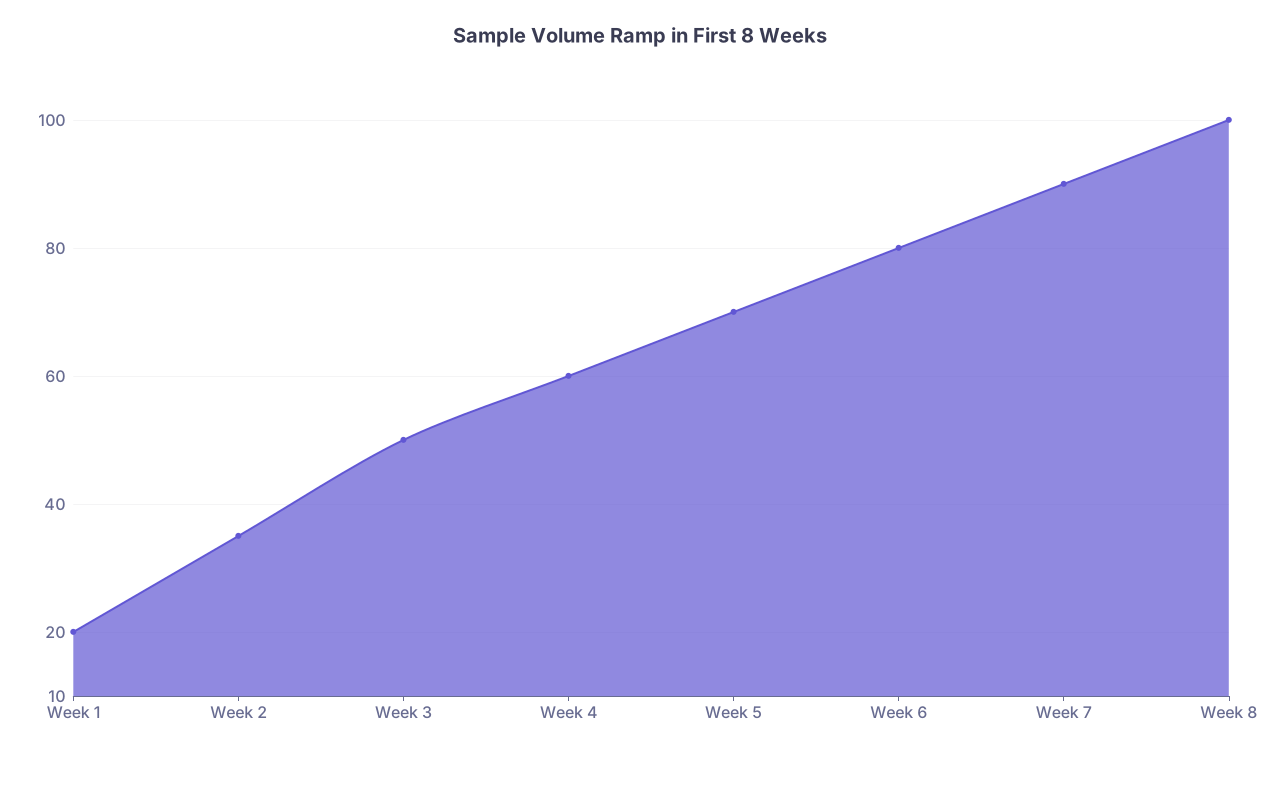
| Category | Value |
|---|---|
| Week 1 | 20 |
| Week 2 | 35 |
| Week 3 | 50 |
| Week 4 | 60 |
| Week 5 | 70 |
| Week 6 | 80 |
| Week 7 | 90 |
| Week 8 | 100 |
- Establish referral relationships
- First month: aim to personally visit or call:
- 10–20 primary care or referring specialists.
- Do not show up empty:
- Short, clear one‑pager of what you do specifically (e.g., “Complex spine, revision cases, not primary simple lumbar”).
- Follow up with clean, fast consult notes. That is what builds trust.
- First month: aim to personally visit or call:
Month 2–3: Financial Reality Check
At this point you should start seeing early financial signals, even if full collections lag.
Review your first compensation statement
- Verify:
- RVUs credited match your cases.
- Any guarantee / draw is being applied correctly.
- Sit down with the practice administrator to:
- Understand any discrepancies.
- Adjust scheduling if you are leaving money on the table (wrong visit codes, under‑coding procedures).
- Verify:
Adjust work patterns
- If you consistently:
- Overrun clinic by 2–3 hours → too many new patients vs follow‑ups.
- Have long gaps in procedural blocks → scheduling template issue.
- Fix templates now. Otherwise bad habits lock in.
- If you consistently:
Guard against burnout
- Highest‑paid specialties can rapidly become highest‑burnout if:
- Call is heavier than advertised.
- Case complexity exceeds OR / staff support.
- First 90 days is when you still have some leverage to negotiate tweaks:
- Call redistribution
- Additional APP support
- More block time or better block placement
- Highest‑paid specialties can rapidly become highest‑burnout if:

Year 1 in Private Practice: Stabilize Income and Evaluate Fit
Do not wait until partner track decision time to realize you chose poorly.
Quarter 2–4: Monitor Trajectory, Not Just Snapshots
At this point you should look at trends, not one‑off paychecks.
- Quarterly metrics review
- RVUs per month, plotted over time.
- Collections vs expectations.
- Net income vs original projections.
If by month 9–12 you are nowhere near the ramp‑up promised, something is off:
- Weak referral network.
- You were slotted into a saturated market niche.
- Practice over‑recruited.
Clarify partnership pathway early
- By the end of year 1, you should know:
- Exact buy‑in amount.
- Expected partner income range.
- Any second‑class partner structures (non‑equal shares, limited voting rights).
- By the end of year 1, you should know:
Decide if you double down or plan an early pivot
- If trajectory is strong, invest:
- Extra time in ASC or imaging equity opportunities.
- Reputation building in your niche.
- If trajectory is weak and leadership is evasive, quietly restart networking before you sink 5 years into a dead‑end model.
- If trajectory is strong, invest:

Putting It All Together: The 2‑Year Transition Playbook
If you want the higher pay of private practice without chaos, treat this as a staged campaign, not a leap of faith.
- First, do the quiet groundwork 24–12 months out: know your numbers (RVUs, income, constraints), understand your current contract, and decide which private practice model you actually want.
- Then, execute a structured search 12–6 months out: interview selectively, negotiate hard with expert help, and time your notice so your exit is clean and non‑dramatic.
- Finally, treat the first 12 months in private practice as a build phase: focus on systems, volume ramp, referral relationships, and cold‑eyed financial tracking. If the trajectory is wrong, correct early.
That is how you move from academic to higher‑paying private practice with intention instead of regret.