
The first 24 months as an attending will either lock you into a mediocre earning trajectory or launch you into the top income tier of your specialty. There is no neutral setting.
I am going to walk you month by month through what actually moves the needle on income growth for high-paying specialties—ortho, neurosurgery, ENT, GI, IR, cards, EM, anesthesia, etc.—assuming you are finishing training in the next 6–12 months or just started. The principles apply broadly, but I am unapologetically biased toward what helps you earn more, sooner, without destroying your life.
We will treat your first two years like a structured fellowship in making your time valuable.
Months -12 to 0: The Pre‑Attending Setup (Yes, Your Income Growth Starts Before You Finish)
At this point you should stop thinking like a resident and start thinking like a revenue unit. That sounds harsh. It is also how your employer, private group, or hospital already views you.
Months -12 to -9: Contract and Job Positioning
Your biggest income jumps later will come from leverage. Leverage starts now.
Your priorities in this window:
- Choose the right job structure
- Private group with partnership track
- Employed with RVU-heavy compensation
- Hybrid models (e.g., hospital employed with call stipends and procedural bonuses)
If your specialty is high-paid and procedure-heavy (ortho, GI, IR, neurosurg, ENT, anesthesia), the highest lifetime earnings usually come from:
- Partnership in a busy private group
- Or an employed job where you control volume and have upside via RVUs or production bonuses
Low‑leverage choices:
- Pure salary, no bonus
- No transparency on partnership
- “Trust us, it’s generous” without written numbers
Contract checklist (income-growth specific) At this point you should insist on clarity about:
- Base salary (Year 1 and Year 2)
- Bonus structure:
- RVU rate or collections percentage
- Thresholds (when bonus starts)
- Partnership track:
- Timeline (2 years? 3 years?)
- Buy‑in amount (cash? sweat equity?)
- Documented partner comp ranges (last 3 years, de‑identified)
- Non‑compete:
- Geography and duration
- How restrictive it actually is if you leave and try to stay in town
- Call pay:
- Stipend per shift / per weekend
- Internal vs external call
- Side work allowed:
- Moonlighting?
- Consulting / expert witness?
- Ownership in surgery centers, imaging, urgent care?
Run projections, not vibes
You should build a simple table comparing offers. If you do not, you will underestimate future income differences by six figures.
| Feature | Offer A (Private) | Offer B (Employed) | Offer C (Academic) |
|---|---|---|---|
| Base Salary Year 1 | $450k | $400k | $320k |
| Bonus Potential Year 1 | $150k | $100k | $20k |
| Partnership Year | 3 | N/A | N/A |
| Partner Comp Range | $750–900k | N/A | $350–400k |
| Call Stipend (per 24h) | $1,200 | $800 | $0 |
You are not choosing a first job. You are choosing your baseline for the next decade.
Months -9 to -6: Skill Positioning and Reputation
At this point you should deliberately decide what you want to be “known for” your first two years. That brand pays later.
Examples:
- Ortho: complex shoulder, sports, joints, trauma workhorse
- GI: advanced ERCP/EUS vs high-volume bread-and-butter scoper
- IR: PAD, oncology, venous work, dialysis access
- Cards: high-volume PCI vs EP vs imaging guru
- EM: fast-track closer, high-throughput doc, airway expert
- Anesthesia: cardiac, regional, OB workhorse
Your actions now:
- Target electives that build productive skills (e.g., more OR time in bread‑and‑butter cases that generate volume)
- Get faculty who are plugged into high-earning practices to vouch for you
- Start asking attendings about:
- Real partner numbers
- What they regret about first contracts
- How long it took to ramp to full productivity
Months 0–3: Onboarding for Maximum Future Income (Not Maximum Comfort)
First day as attending. You are either in survival mode or too relaxed. Both hurt your income trajectory if you stay there.
Month 0: Orientation and Intel Gathering
At this point you should treat the first 30 days as reconnaissance.
Your goals:
- Understand how money moves in your practice
- Learn who controls volume
- Build trust without becoming a pushover
Week 1–2: Ask blunt, targeted questions
To your practice manager / admin:
- “How are my RVUs tracked and reported? Monthly dashboard?”
- “What was the median RVU for new attendings here last year?”
- “Who decides clinic templates and OR block allocation?”
To senior partners:
- “What did you do in year one that sped up your path to partner / high income?”
- “What would you absolutely avoid if you could go back?”
To schedulers:
- “How do new patient slots get prioritized?”
- “What makes you decide who to offer cancellations and add-ons to?”
You think this is small stuff. It is not. Your scheduler can shift tens of thousands of dollars in your direction over a year with a few clicks.
Month 1–3: Build Foundation: Volume + Efficiency
At this point you should focus on responsible volume growth and workflow discipline, not perfectionism.
Clinic templates
- Start slightly tighter than feels comfortable:
- Example for ortho / ENT / GI:
- 1–2 new patients per hour
- 2–4 follow‑ups per hour
- EM / anesthesia: work with shift counts and procedure exposure
- Example for ortho / ENT / GI:
- Ask for:
- Protected “new patient” slots daily
- Same-day add‑on slots for referrals (huge goodwill, huge volume driver)
- Start slightly tighter than feels comfortable:
OR / procedural allocation
- Push early for:
- Regular block time (even partial block)
- Clear process to request add‑ons
- Show you can start on time and end on time. OR managers reward predictable surgeons with more block.
- Push early for:
Time discipline (boring but critical)
- Hard stop on charting times. Do not let notes spill into late night daily.
- Template your notes, orders, and post‑op instructions during Month 1.
- Set up quick‑text phrases in the EMR that shave 10–15 seconds per note. Over a year, this is hours.
Your income outcome in Year 2 will be heavily correlated with how ruthless you are about shaving waste out of your workday in these 3 months.
Months 3–6: Ramping Volume and Strategic “Yes”
By Month 3 you should not be in “I am just learning the system” mode anymore. This is ramp‑up season.
Month 3–4: Targeted Volume Expansion
At this point you should:
Aggressively capture referrals
- Tell referring PCPs / hospitalists:
- “I will see your patients within 48–72 hours for X conditions.”
- Give your cell or direct line to 5–10 high‑volume referrers.
- Show up:
- PCP meetings
- Tumor boards
- Trauma conferences
- You are not networking. You are instructing the system where to send work.
- Tell referring PCPs / hospitalists:
Optimize schedule mix
- Aim for:
- High‑RVU / high‑margin work weighted earlier in the week
- Low‑cognitive, quick follow‑ups or post‑ops later in the day
- Example:
- GI: front-load scopes / advanced cases, back-load clinic or follow-ups
- Ortho: heavy OR day + one “short case add‑on” afternoon weekly
- Aim for:
Be the reliable “yes” at first—strategically
- First 6 months:
- Take extra call (within reason)
- Accept late add‑ons that others avoid
- But track:
- Which “yes” leads to repeat referrals
- Which “yes” is just charity for the system
- First 6 months:
Cut the unproductive “yes” later. Keep the ones that generate volume and goodwill.
Month 5–6: Data Review and Micro‑Negotiations
At this point you should have hard numbers on your productivity.
Ask for:
- 3–6 month RVU report (monthly breakdown)
- Payer mix
- Case mix (CPT distribution)
- Collection rates if relevant
Now you do three things:
Identify your high‑yield work
- Which procedures / cases produce the most RVUs per hour of your life?
- Which clinic visit types are time‑sinks with low reimbursement?
Adjust templates
- Add more:
- Visit types and procedures with high RVU/hour
- Blocks for profitable work (e.g., scopes, caths, OR)
- Reduce:
- Long, low‑revenue follow‑up slots
- “Chatty” visits that can be protocol‑driven with APP support
- Add more:
Start tiny negotiations
- Ask for:
- Slightly more block time where you are consistently filling and overrunning
- More new patient slots (document long wait times as leverage)
- Protected procedure time if you generate good margins
- Ask for:
Income growth is not one big negotiation. It is 12–18 small ones layered on top of performance.
Months 6–12: Turning from New Hire to Production Engine
Now you are dangerous. You know the system. You know where the money is. At this point you should deliberately step out of “grateful newbie” mode.
Months 6–9: Build Leverage and Optionality
Your priorities now:
- Maintain quality and safety
- Increase throughput
- Protect your personal bandwidth
Streamline your team
- Train your MA / nurse / PA / NP to:
- Pre‑load notes
- Queue orders
- Handle standard post‑op or post‑procedure questions using protocols
- If your partner has a more efficient workflow, steal it. Shamelessly.
- Train your MA / nurse / PA / NP to:
Develop one high‑value niche
- Examples:
- Ortho: becoming the go‑to for complex trauma or revisions
- GI: taking on ERCP call no one else wants
- IR: building a PAD clinic with standardized workups
- Cards: becoming the EP who actually communicates with PCPs
- You want colleagues and OR schedulers to say:
- “For X, you want Dr. You.”
- Examples:
This niche is your bargaining chip at 12–24 months.
- Avoid the academic trap unless you truly want it
- Teaching and committees pay terribly in most non‑academic settings.
- Do a bit. Do not drown in it.
- Say yes sparingly: pick one role that raises your value (e.g., quality committee with real visibility, not a random “fun” committee).
Month 9–12: First True Income Review
By Month 9–12, you should schedule a formal check‑in with leadership. If they do not suggest it, you should.
Bring:
- RVU totals vs contract expectations
- Volume trends (new patients, procedures)
- Evidence of:
- Shortened wait times in your clinic
- High patient satisfaction (if tracked)
- Extra call or coverage you have provided
Your talking points:
- “My RVUs are at X% of target already.”
- “I would like to discuss:
- Increasing block time on [specific day]
- Formalizing my role in [niche you built]
- Adjusting my new patient slots given current wait times”
You are not asking for a favor. You are presenting evidence that the practice makes more money by letting you do more.
Months 12–18: The First Big Fork – Re‑Negotiate, Double Down, or Prepare to Walk
Year 2 is where most attendings either:
- Cement a strong income trajectory
- Or realize they signed up for a slow lane and stay stuck because they are scared to move
Month 12–15: Compensation Reality Check
At this point you should have:
- A full 12 months of RVU or collections data
- Call, procedural, and clinic volumes
- A very clear sense of how hard you are working
Now compare to market data (MGMA, specialty‑specific comp surveys, whisper networks).
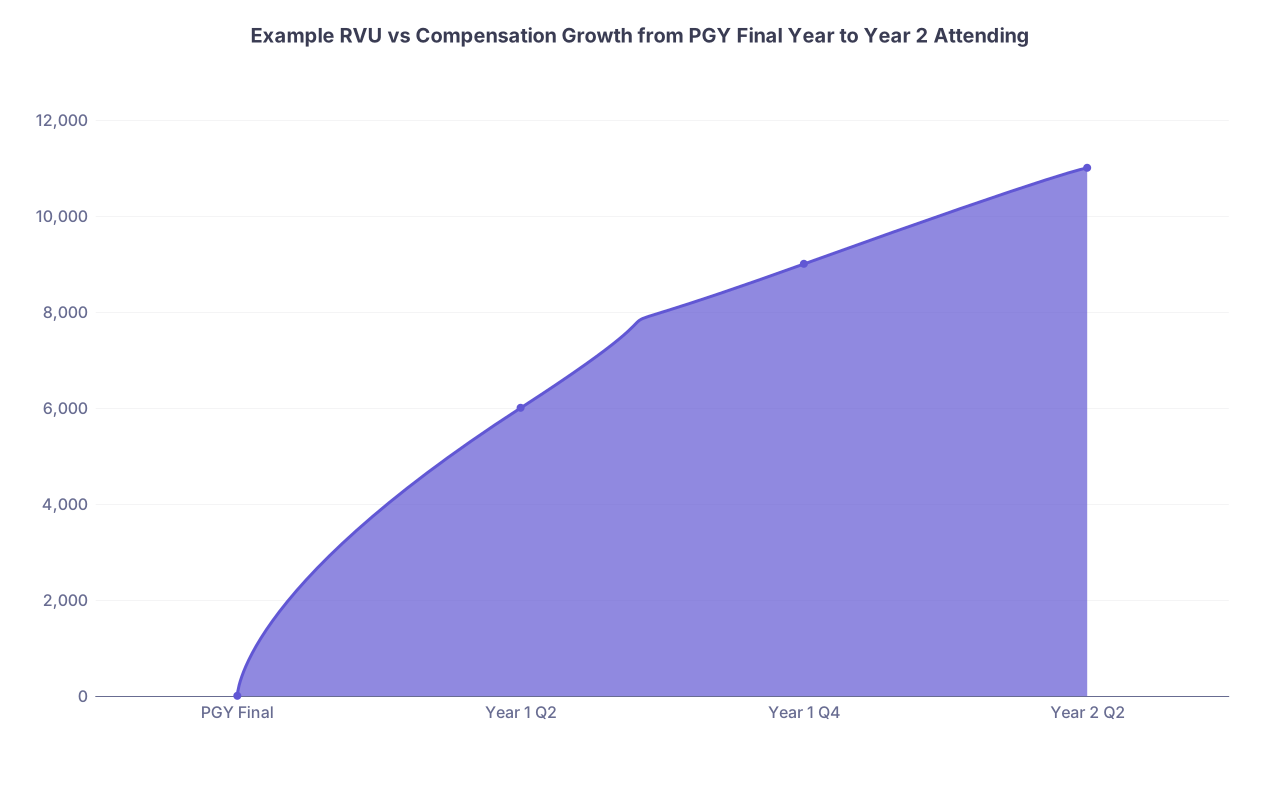
| Category | Value |
|---|---|
| PGY Final | 0 |
| Year 1 Q2 | 6000 |
| Year 1 Q4 | 9000 |
| Year 2 Q2 | 11000 |
Ask yourself bluntly:
- Am I underpaid relative to my productivity?
- Am I on a realistic track to partner income (if private)?
- Is my RVU or volume growth being constrained artificially (no block, bad scheduling, politics)?
If the answer to any of those is yes, you should start preparing one of two paths:
- Internal renegotiation
- External options (quietly)
Months 13–15: Internal Renegotiation (If the Basics Are Good)
If:
- You like your location
- Call is tolerable
- Culture is bearable
- But money / autonomy is lagging
At this point you should request a formal comp review, anchored in data.
Your specific asks might include:
- Increased RVU rate for work above a threshold
- Lower RVU threshold for bonuses if you are already surpassing it
- Guarantee of:
- Additional block time
- Or dedicated procedural sessions
- Clear written pathway to:
- Partnership (with numbers)
- Higher tier salary
Approach:
- Lead with contribution:
- “In my first year, I generated X RVUs / Y collections, increased our capacity for [procedure/service], and took Z additional calls.”
- Then propose:
- “Given this performance, I would like to move to [specific structure] starting Month 18 / Year 2.”
Vague requests get vague promises. Concrete asks force concrete responses.
Months 15–18: External Options (If You Hit a Wall)
If leadership stalls, lowballs, or gaslights you:
- “Everyone starts low”
- “It will even out”
- “We do not share partner numbers”
At this point you should quietly re‑enter the market.
Steps:
Update CV, gather metrics (RVUs, case logs)
Reach out to:
- Recruiters specializing in your specialty
- Colleagues at nearby systems or groups
- Vendors who know which groups are busy (device reps, pharma, etc.)
Target:
- Groups with documented higher partner comp
- Systems that support your niche and provide better infrastructure
You are not committed to moving. But the existence of credible alternatives is what gives you real leverage, both financially and psychologically.
Months 18–24: Locking in the High Trajectory
At this point you should either be:
- On a solid path in your current job with improved terms
- Or actively transitioning to a better position
Now the focus shifts from “more work” to “higher value per unit of work.”
Months 18–21: Raise Your Hourly Yield
Look at your schedule ruthlessly.
Cut low‑yield waste
- Offload:
- Repetitive, low-paying follow‑ups to APPs (with protocols)
- Non-billable phone chats that could be visits
- Standardize:
- Pre‑op and post‑op instructions
- Refill protocols
- Shorten:
- Visit lengths where outcomes are unchanged (use checklists)
- Offload:
Increase high-margin time
- Ask:
- “How can I swap one low‑yield clinic half-day for a procedural session?”
- Build:
- Regular “add‑on” block each week where you can slot profitable work
- Ask:
Refine your referral flywheel
- Identify your top 10 referrers
- Thank them directly. Ask:
- “What makes it easy or hard to send patients my way?”
- Address their pain points:
- Fast access slots
- Clear communication letters
- Direct line for complicated cases
Months 21–24: Strategic Extras and Future Upside
By now, your base clinical income path should be clear. This is where you layer on selective extras that scale.
At this point you should consider:
Side revenue streams that complement your specialty
- Procedure-related:
- Ownership in ASC, imaging, lab? (if legal and ethical, and if volume supports it)
- Intellectual:
- Expert witness work in your specialty
- Paid talks for industry (stay clean with disclosure)
- System roles:
- Medical directorships with real stipends (not $5k/year nonsense)
- Procedure-related:
Deciding what not to do
- Say no to:
- Committees that do not pay and do not affect your income, schedule, or reputation
- Random unpaid “projects” that burn weekends
- Protect bandwidth for either:
- High-value clinical work
- Or non-clinical work that scales (ownership, expertise, systems roles)
- Say no to:
Planning the next 3–5 years
- Partner timeline if private:
- Confirm date, buy-in, and expected comp
- Promotion or tier increase if employed:
- Clarify metrics and timeline
- Geographic options:
- Are you tied to this city long term?
- Is your family situation stable enough to consider relocation if future offers are dramatically better?
- Partner timeline if private:
Quick Visual: Your First 24 Months as Attending – Income Growth Timeline
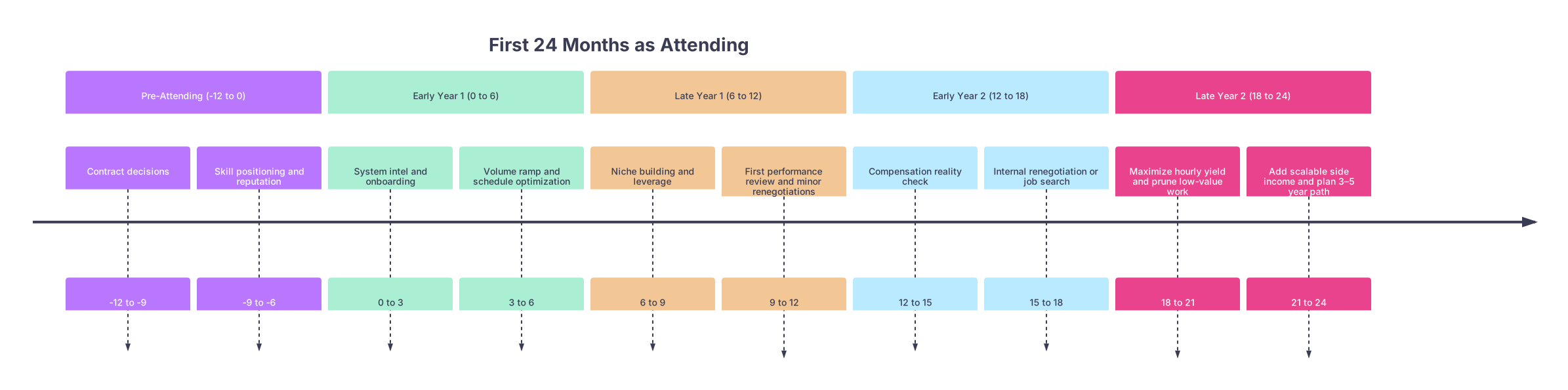
| Period | Event |
|---|---|
| Pre-Attending (-12 to 0) - Contract decisions | -12 to -9 |
| Pre-Attending (-12 to 0) - Skill positioning and reputation | -9 to -6 |
| Early Year 1 (0 to 6) - System intel and onboarding | 0 to 3 |
| Early Year 1 (0 to 6) - Volume ramp and schedule optimization | 3 to 6 |
| Late Year 1 (6 to 12) - Niche building and leverage | 6 to 9 |
| Late Year 1 (6 to 12) - First performance review and minor renegotiations | 9 to 12 |
| Early Year 2 (12 to 18) - Compensation reality check | 12 to 15 |
| Early Year 2 (12 to 18) - Internal renegotiation or job search | 15 to 18 |
| Late Year 2 (18 to 24) - Maximize hourly yield and prune low-value work | 18 to 21 |
| Late Year 2 (18 to 24) - Add scalable side income and plan 3–5 year path | 21 to 24 |
Daily and Weekly Habits That Quietly Add $50–100k/Year
The big moves matter. But the grind does too. A few that consistently separate top earners from the rest:

Daily
- Start clinic on time. Every day.
- End each half‑day by:
- Cleaning up your in‑basket
- Signing notes
- Reviewing next day’s schedule for add‑on potential
- Identify one bottleneck and fix it within the week:
- Slow room turnover
- Repetitive patient questions -> add them to standard handouts
Weekly
- Review your schedule 1–2 weeks ahead:
- Move high-yield cases into better positions
- Fill gaps with profitable work or referrers’ patients
- Spend 10 minutes checking your:
- RVU dashboard
- No-show rates
- Add‑on capacity
Monthly
- Look at trends:
- New patient counts
- Procedure volumes
- Call coverage vs compensation
- Choose one small optimization project:
- New template tweak
- New protocol for post‑op care
- One clinic slot converted into procedure time
These are unglamorous. They are also the difference between a ceiling of $400k and a ceiling of $800k in many high‑paid specialties over time.
One More Thing No One Told You About Income Growth
Your future income is not just about what you earn. It is what you keep and what you can walk away from.
So parallel to everything above, by Month 24 you should also:
- Kill high-interest debt aggressively
- Build a real emergency fund (6–12 months expenses)
- Avoid inflating your lifestyle so much that you cannot switch jobs or say no to toxic shifts
Financial freedom is the ultimate leverage in contract conversations. Employers can smell when you are dependent on every dollar.
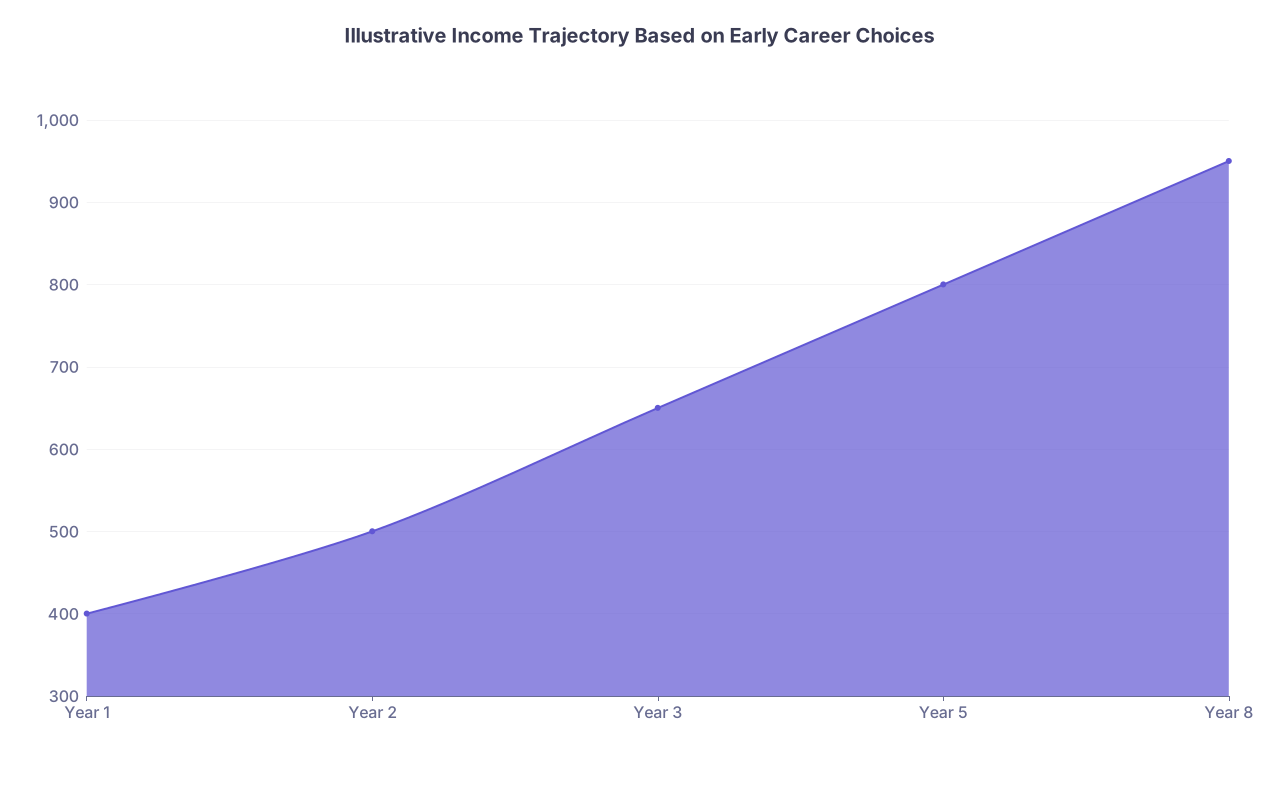
| Category | Value |
|---|---|
| Year 1 | 400 |
| Year 2 | 500 |
| Year 3 | 650 |
| Year 5 | 800 |
| Year 8 | 950 |

Your Next Step Today
Do one concrete thing today that moves you toward a higher-income trajectory:
- If you are still in training: pull out your top two job offers and build a simple 5‑year comparison on paper—base salary, bonus, partnership, call. Which one actually wins?
- If you are in your first year: email your admin and request your last 3–6 months of RVU and volume reports.
- If you are in your second year: schedule a formal meeting with leadership for a compensation review and start outlining your data.
Pick one. Do it before you go to bed. Your 24‑month self will either thank you—or wish you had started now.