
The most dangerous mistake in a gap year is drifting through it and then panic‑applying to 120 programs you never actually wanted.
You can do much better than that.
This is how you use a full 12‑month gap year to set smart program count targets and then actually become competitive for the number you choose—month by month, week by week.
Big Picture: Where Your Program Count Should Land
Before we zoom into the timeline, you need a reality check on typical ranges. People lie about this on Reddit; NRMP data does not.
For categorical IMGs and US grads in competitive vs non‑competitive fields, reasonable final targets usually fall around:
| Applicant Type | Less Competitive (FM, Psych, IM community-heavy) | Moderate (IM academic, Peds, OB) | Competitive (Derm, Ortho, ENT) |
|---|---|---|---|
| Strong US MD/DO | 15–30 | 25–40 | 40–70 |
| Average US MD/DO | 25–40 | 35–60 | 60–90 |
| Strong IMG | 40–70 | 60–90 | 90–120 |
Your gap year should be about moving yourself UP a row (from “average” to “strong”) so you can apply to fewer, better‑chosen programs. Not about accepting you’re weak and just blasting ERAS.
Now let’s walk the 12 months.
Month 12: Brutal Assessment & Early Target Range
At this point you should stop pretending and run your actual numbers.
Week 1–2: Data Collection
Sit down with:
- USMLE/COMLEX scores (or practice scores if waiting)
- Transcript and class rank if available
- Research output (submitted, accepted, in progress)
- Clinical experience: US vs foreign, recency
- Visa status if relevant
- Specialty interest(s) – at least a short list
Then compare yourself against NRMP data and program filters. Be concrete:
- Step 1: Pass only? You’re in the new world—fine. Step 2 now carries more weight.
- Step 2 CK:
- 250+ – you have leverage
- 235–249 – solid
- 220–234 – workable but you need strategic breadth
- <220 – you’ll need an aggressive and carefully curated list
Week 3: Initial Program Count Range
From that, set an initial range, not a final number. For example:
- “I’m an average US DO applying IM + backup FM: 30–45 programs total.”
- “I’m a strong IMG applying Psych only: 70–90 programs.”
Capture this in a simple chart so you can refine over time.
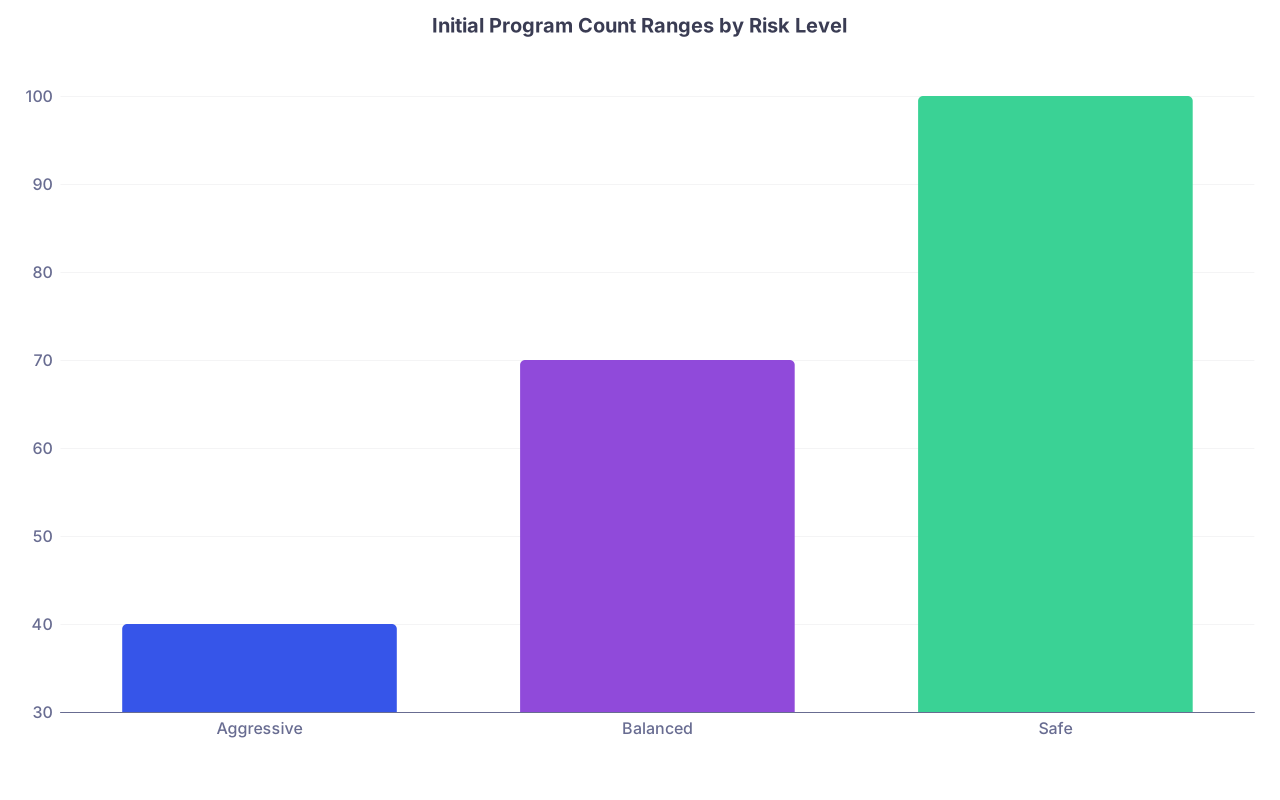
| Category | Value |
|---|---|
| Aggressive | 40 |
| Balanced | 70 |
| Safe | 100 |
Week 4: Define Your Risk Profile
Decide your tolerance:
- Aggressive: Fewer programs, heavier on “reach” schools.
- Balanced: Mix of reach/target/safety, typical for most.
- Defensive: High program count, mostly safeties, used after prior unmatched cycles.
Lock this in. Write it down. It will dictate your final target count later.
Months 11–10: Specialty Choice & Breadth Decisions
At this point you should stop vaguely “considering” specialties and commit to a real structure.
Month 11: Single vs Dual Specialty Plan
You can’t set a realistic program count until you know how many specialties you’ll apply to.
- Single specialty + no prior attempts → lower total program count, deeper research.
- Single specialty + prior SOAP/unmatched → maintain moderate‑high count.
- Two specialties → your total count goes up, but count per specialty can go down.
Example targets at this point:
- Single specialty IM strong US MD:
- Early range: 25–35 internal medicine programs.
- IM + FM for an average IMG:
- Early range: 40–50 IM + 25–35 FM → 65–85 total.
Month 10: Pre‑List Prototype
Start a rough list prototype—not yet a spreadsheet with 100 rows, just buckets:
- “Top‑reach” programs (10–20%)
- “Target” programs (50–60%)
- “Safety/forgiving” programs (20–30%)
Do this by:
- Checking program websites for:
- Step 2 CK cutoffs
- IMG friendliness
- Visa sponsorship
- Looking at FREIDA and program interview lists from prior years (talk to seniors; they’ll tell you who actually interviews).
The exact names don’t matter yet. What matters:
- You can realistically see yourself applying to enough programs in your range.
- There are enough safeties available for your profile.
Months 9–8: Upgrading Yourself to Reduce Program Count
At this point you should be using the gap year to either (a) reduce how many programs you need to apply to, or (b) justify a competitive specialty with a higher count.
Month 9: Score and CV Optimization
Ask one hard question: “If I applied today, how high would my program count need to be to match?”
If the answer is “100+” and you’re not an IMG in ENT, you probably need to upgrade your file.
Use this phase for:
- Step 2 CK retake planning (if you haven’t taken it yet)
- Research output: at least 1–2 projects where you’ll actually get your name on a paper or abstract
- US clinical experience: 1–3 months of hands‑on or robust observerships
This directly shifts your bracket. Example:
Before gap‑year upgrades:
- Average IMG, Psych: needs 90–110 programs.
After 6–9 months of solid USCE + 2 posters + better Step 2:
- Same person now safely targets 60–80.
That is the entire point of planning this early.
Month 8: Re‑Evaluate Range With Real Progress
By Month 8, update your projected competitiveness:
- Step 2: actual score or realistic practice trend
- At least one tangible CV upgrade from the gap year
- Strong letter(s) in progress from your current work
Then adjust your working program count target:
- Slightly reduce if your profile has improved.
- Keep or increase if:
- Second attempt applicant
- Significant red flags
- Very limited geographical flexibility
Months 7–6: Geographic Strategy & Financial Reality
At this point you should connect fantasy with money and geography.
Month 7: Map Out Geography
Program count is not abstract. It’s tied to where you’re willing (or unwilling) to live.
Do this explicitly:
Draw three circles:
- Places you strongly prefer
- Places you’re neutral about
- Places you’d only choose if necessary
Within each region, estimate how many programs in your specialty:
- Are IMG‑friendly (if relevant)
- Accept your scores (filter by minimums)
- Sponsor visas (if you need one)
This will show you quickly if your “I only want East Coast mid‑size cities” fantasy supports your target program count.
If you can only find 22 programs in your preferred zones and your safe target is 50–60? You either:
- Expand geography, or
- Increase total program count by adding a second specialty.
Month 6: Financial Modeling of Program Count
Now you attach dollar signs.
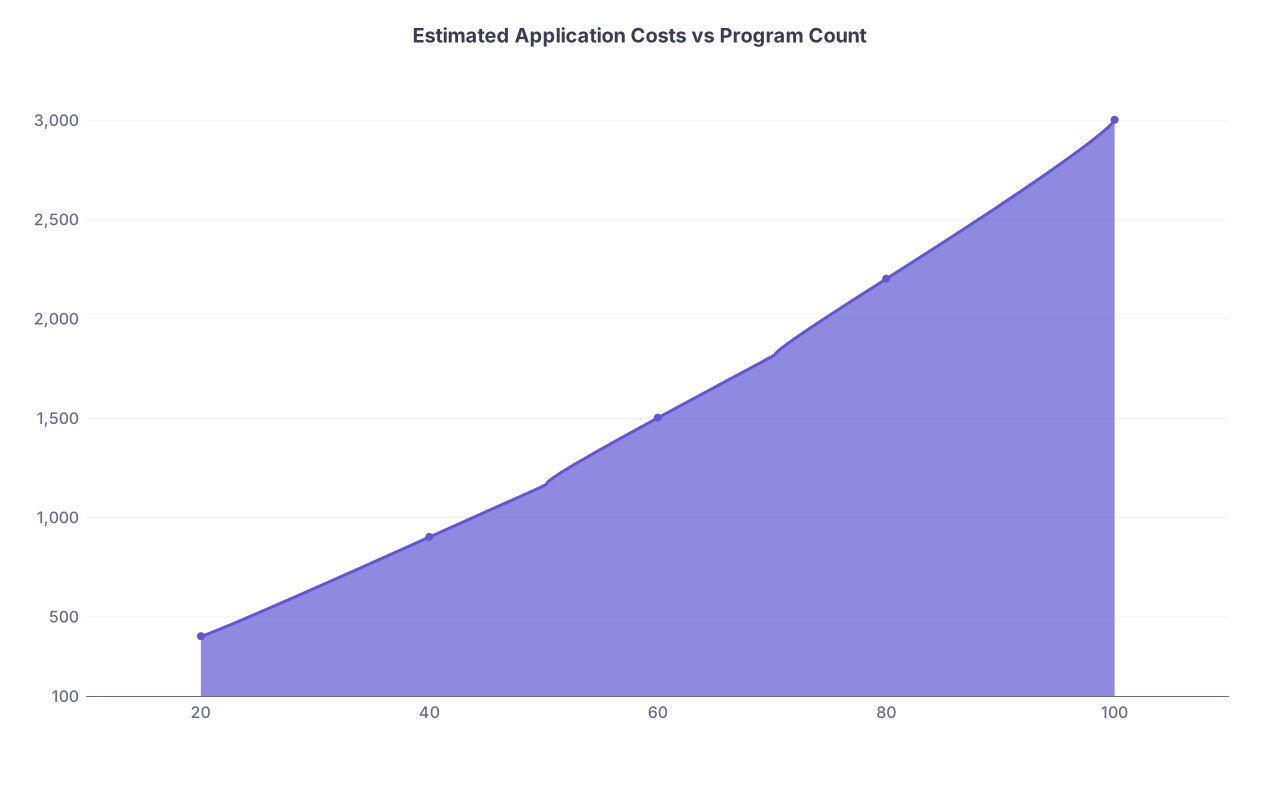
| Category | Value |
|---|---|
| 20 | 400 |
| 40 | 900 |
| 60 | 1500 |
| 80 | 2200 |
| 100 | 3000 |
Estimate:
- ERAS fees at different program counts
- Extra costs:
- Transcript fees
- USMLE transcript fees
- Possible travel (if in‑person interviews return in more places)
Set a hard financial ceiling now:
Example: “I will not apply to more than 70 programs total unless I increase my budget by $X.”
This prevents September‑panic where you tack on 30 extra low‑yield programs at midnight because of anxiety.
Months 5–4: Building the Actual List Skeleton
At this point you should stop thinking and start listing.
Month 5: Create the Master Spreadsheet
Now you build a real, structured list. Columns might include:
- Program name
- City/state
- Specialty
- IMG‑friendly (Y/N)
- Visa (Y/N/Unknown)
- Step 2 minimum
- Recent interview evidence (from seniors, forums, etc.)
- Your interest level (1–3)
- Category: Reach / Target / Safety
This is where your program count target stops being abstract.
From that sheet, construct:
Initial shortlist per specialty, numerically:
- Psych (IMG, improving file):
- Reach: 10–15
- Target: 30–40
- Safety: 15–20
- Total: 55–75
- Psych (IMG, improving file):
Lock a provisional total at this point, something like:
- “I’m building toward 60–70 total programs unless something major changes.”
Month 4: Gap Analysis Against Your Target
By Month 4, your sheet should show something very clear:
- Do you actually have enough realistic target + safety programs to reach your numeric goal?
- Or are you planning 80 programs but 50 of them are fantasy reaches?
If you’re short on safety programs:
- Broaden geography
- Add more community‑heavy or smaller programs
- Consider adding a second, less competitive specialty
If you’re absurdly overloaded (e.g., 140 programs lined up for IM as an average US MD):
- You are not being strategic; you’re being scared.
- Start pruning:
- Cut low‑interest locations
- Cut programs with heavy Step 2 or research expectations you can’t meet
- Cut programs that never interview applicants like you (ask seniors, check match lists)
Months 3–2: Finalizing Program Count & Tiering
At this point you should be tightening, not expanding, unless something big changes.
Month 3: Commit to a Program Count Band
You’re now about 90 days out from ERAS opening.
This is where you commit to a band, like:
- “My final total will be 55–65 programs.”
- “Given I’m a reapplicant IMG, my band will be 80–100.”
Then structure that band:
- 10–20% reach
- 50–60% target
- 20–30% safety
Example for a US DO applying IM + FM, final band 50–60:
- IM:
- 5–7 reach university programs
- 18–22 solid community/affiliate programs
- 8–10 safety programs with clear history of DOs
- FM:
- 2–3 reach university‑based programs
- 10–12 target community programs
- 7–8 safety programs (rural, unfilled history, DO‑heavy)
You should see the distribution in your sheet. If half your programs are reach, your “program count” doesn’t matter; you just built a fantasy list.
Month 2: Pre‑ERAS Sanity Check
At this point:
- Your Step scores are known.
- Your letters are mostly identified.
- Your CV is mostly fixed.
Reassess:
If your reality is better than expected (e.g., Step 2 came back 250+ when you were expecting 235), you can:
- Slightly decrease total program count, or
- Shift some safeties into targets and add a few more reach.
If your reality is worse (e.g., 218 Step 2, borderline passes, no publications):
- Either increase your count within your financial ceiling, or
- Change your specialty breadth (add a safer field).
Do not ignore new data because you’re emotionally attached to a number you chose six months ago.
Month 1: Finalize and Lock Your Numbers
At this point you should stop tweaking and start executing.
Week 4–3: Final List Lock
One month before ERAS opens, your program list should be:
- Named
- Tiered
- Cleaned of duplicates and obvious bad fits
Lock:
- Exact count by specialty
- Example: 38 IM, 18 FM → 56 total.
- Tiers by count
- 8 reach, 34 target, 14 safety.
Mark any “conditional adds”: programs you’d only add if:
- You don’t get early interview signals.
- You underperform on a late exam.
- You suddenly expand geography.
These are your backup slots—you don’t have to search from scratch if things wobble.
Week 2–1: Dry Run and Budget Confirmation
Go through a mock submission:
- Can you actually afford your current count given ERAS fee tiers?
- Are there 5–10 programs you’d drop first if you had to trim $200–300?
This is where most people are sloppy. They:
- Overspend on a bloated list, then
- Regret applying to 20 places they’d never move to.
If you’ve followed the previous months, your list should be lean, intentional, and within a planned range.
Application Month: Micro‑Adjustments, Not Chaos
When ERAS finally opens:
- Your program count should move by at most ±5–10 from your planned number.
- You’re fine‑tuning, not reinventing.
At this point you should:
- Add or remove a small number of programs based on:
- Newly updated websites (rarely major changes)
- Last‑second intel from mentors or seniors
But you should not be up at 2 a.m. adding 35 random community programs in states you can’t find on a map. That’s what a year of planning was designed to prevent.
Quick Timeline Snapshot
Here’s the whole 12‑month arc in one view:
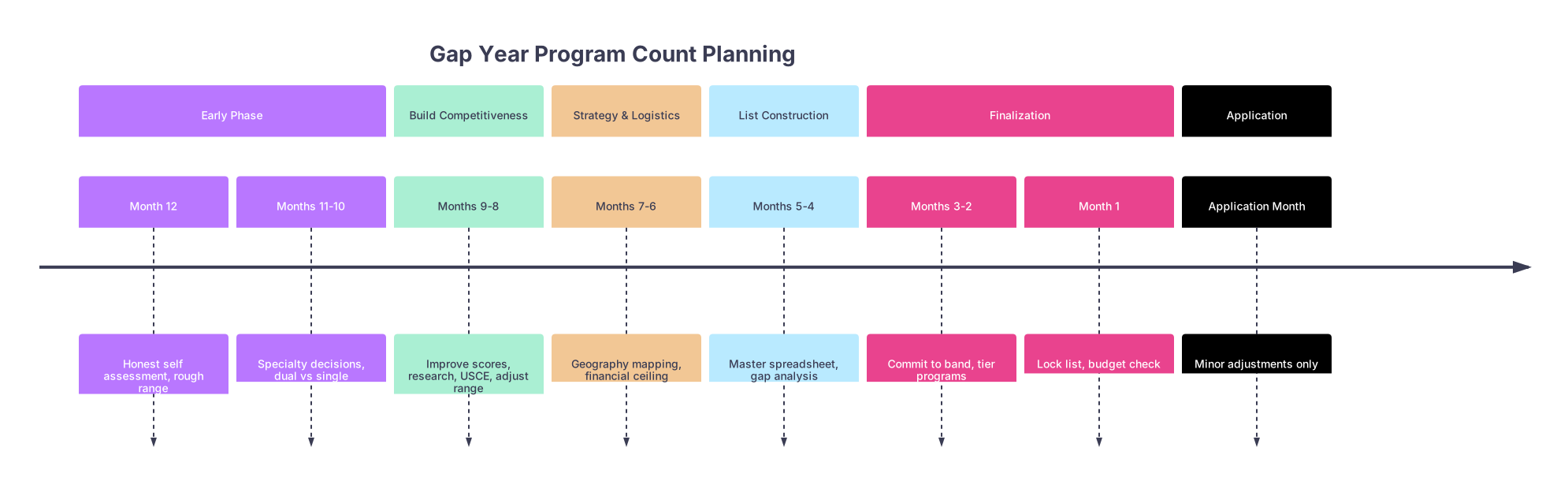
| Period | Event |
|---|---|
| Early Phase - Month 12 | Honest self assessment, rough range |
| Early Phase - Months 11-10 | Specialty decisions, dual vs single |
| Build Competitiveness - Months 9-8 | Improve scores, research, USCE, adjust range |
| Strategy & Logistics - Months 7-6 | Geography mapping, financial ceiling |
| List Construction - Months 5-4 | Master spreadsheet, gap analysis |
| Finalization - Months 3-2 | Commit to band, tier programs |
| Finalization - Month 1 | Lock list, budget check |
| Application - Application Month | Minor adjustments only |
FAQs
1. Is there such a thing as applying to too many programs?
Yes. Once you pass a certain point, extra programs add stress and cost without meaningful benefit. If your list is full of places you’d never move to, programs that never interview your profile, or locations you know you’ll rank at the bottom, those applications are just anxiety taxes. Smart applicants aim for a strategic range with a realistic mix of reach/target/safety—not “as many as possible.”
2. How should reapplicants adjust program count targets?
Reapplicants usually need more programs, but not just more of the same. You should:
- Expand your safety pool and sometimes add a less competitive specialty.
- Cut programs that already rejected you if nothing in your file has changed.
- Only increase your total count if you’ve actually fixed something (scores, USCE, letters).
Blindly going from 60 to 120 the next cycle without a better application just multiplies the rejection emails.
3. What if my finances can’t support the “recommended” number of programs?
Then you tighten fit and targeting, not abandon the cycle. You:
- Prioritize programs that historically interview and match applicants like you.
- Sharpen your geography preferences to regions that are IMG‑friendly or DO‑friendly.
- Aggressively build your safety list within your budget.
I’ve seen people match with 25–30 well‑chosen programs while their classmates struck out after applying to 80+ random ones. Thoughtful targeting beats brute force when money is tight.
Key points:
- Start your gap year by honestly placing yourself in a competitiveness bracket and setting a range, not a magic number.
- Use the year to upgrade your file so you can apply to fewer, better‑matched programs, not just more of them.
- By the time ERAS opens, your program count should already be decided within a narrow band—leaving you calm enough to focus on the quality of your application, not the size of your list.