
The way faculty judge your program list size on Rank Day is harsher—and more calculated—than anyone tells you.
You’ve heard all the public messaging: “Rank programs in your true order of preference.” “Don’t game the algorithm.” “There’s no such thing as too many programs.” That’s what they say on webinars. That’s the official script.
Behind closed doors, when faculty and program directors talk about applicant rank lists, they absolutely look at how many programs you ranked. They draw conclusions about your risk, competitiveness, judgment, and sometimes your honesty. And yes, it can quietly influence how comfortable they feel ranking you highly.
Let me walk you through what actually goes through their heads.
How Programs See Your Rank List (And What They Actually Know)
First truth: Programs do not see your entire rank list.
They see exactly two things through ERAS/NRMP:
- That you ranked them
- The position you ranked them (1st, 4th, 12th, etc.)
They do not see the total number of programs you ranked. There’s no column on their screen that says “Applicant ranked 22 programs total.”
So how am I telling you they judge your list size?
Because faculty and PDs are not stupid. They infer it. Constantly.
Here’s how that works in real life:
- You tell the interviewer, “You’re one of my top choices,” but then they see they’re 9th on your list. They immediately know you ranked many more above them.
- You say you’re “only ranking a handful of programs,” and then they see you put them at 10. They know your story doesn’t match the math.
- You hint you’re “regional only, family reasons,” but they know they’re on the West Coast and they’re sitting at #13. That means you’re applying somewhere else heavily.
They reconstruct your approximate list size by where you rank them and what story you sold them on interview day. When that doesn’t line up, they start talking: in selection committee, in the hallway, over coffee.
That’s where the quiet judgment starts.
The Hidden Stereotypes Behind “Short” vs “Long” Lists
Faculty have mental buckets. Unfair sometimes, but very real. When they see where they fall on your list, they mentally place you into one of a few categories.
The Very Short List: 1–5 Programs
This is the list that makes attendings nervous for you.
They usually assume one of three things:
- You’re couples matching into something restrictive and backed yourself into a corner.
- You’re overconfident and listened to bad advice.
- You had personal/visa/geographic constraints and didn’t handle them strategically.
I’ve watched PDs say in committee:
“He only ranked four programs? In this specialty? That’s… bold.”
Translation: risky, possibly naïve.
The judgment they quietly make about a very short list:
- “They didn’t understand the match risk.”
- “Their school didn’t advise them well.”
- “If they don’t match, they’re going to be in serious trouble.”
For competitive specialties (derm, ortho, ENT, plastics, rad onc, urology): ranking only 3–5 programs signals either arrogance or desperation. Nobody will say that to your face. They’ll say it in the workroom.
For moderately competitive (EM, gen surg, OB/GYN, anesthesia): 3–5 is still on the very short side unless you’re a 260+ / AOA / glowing letters / home program rockstar.
For family med / psych / peds / IM categorical: 3–5 is possible for strong US MDs with strong ties to a geographic area, but even then, faculty quietly pray you don’t regret it.
The Middle-Length List: 8–15 Programs
This is the “mature, realistic” range for many solid applicants in most core specialties.
When faculty see they’re, say, #6 out of what they assume is 8–12 programs, they think:
- “This person understands their chances.”
- “They have preferences but a safety net.”
- “They’re not panicking, but they’re not reckless.”
Program directors like applicants in this zone. Not because of the match algorithm, but because it screams: good advising, decent self-awareness, not catastrophizing but not delusional.
And yes—they extrapolate. If you ranked them 5th and earlier mentioned “I’ll probably rank 10–12 programs total,” that checks out. Consistency builds trust.
The Very Long List: 20–30+ Programs
This is where it gets messy. Especially post–Step 1 pass/fail, with everyone more anxious.
What faculty say out loud:
- “Yeah, that’s normal now, everyone’s applying to more.”
What they actually think when they see they’re #19?
- “They’re terrified they won’t match.”
- “Probably lower scores or weaker letters than we realized.”
- “They’re not that into us, we’re a backup of a backup.”
There’s a particular kind of quiet eye-roll when they know they are sitting at #20+ on someone’s list. They may still rank you. But no one in that room believes you “love their program” if you put them 24th.
I’ve seen this exact line in committee more than once:
“We’re 21st on their list. If we rank them high, we’re doing them a favor, not ourselves.”
That’s the unofficial mental model, even though the algorithm doesn’t care about your overall list length.
How Different Programs React to Where You Rank Them
Here’s where subtleties matter. Not all programs interpret the same data the same way.
Some are pragmatic. Some are needy. Some are insecure. Some are ruthlessly data-driven.
| Program Type | If They’re Ranked Low | Quiet Interpretation |
|---|---|---|
| Big-name academic | Meh, used as reach | “We’re their dream, not vice versa” |
| Mid-tier academic | Mildly offended | “They preferred others like us” |
| Community-heavy | Shrug | “We’re their safety” |
| Newer program | Sensitive | “We’re plan C or D” |
| Highly competitive | Indifferent | “Of course they ranked many” |
Big-Name Academic Programs
If you rank a top-tier place #10, they do not care. Honestly.
They assume everyone ranked MGH, UCSF, Hopkins, Mayo, Penn, etc., somewhere. They know they’re on a lot of “reach” lists. Being 10th to you is not an insult. You’re still flattered you got an interview there; they know the power dynamic.
The only time they side-eye is when you spend interview day fawning, say “you’re my dream program,” then you stick them at #12. Faculty remember that. They may not punish you directly, but they categorize you as “not fully honest.”
Mid-Tier Academic and Strong Community Programs
Here’s where ego kicks in.
If you told them you loved their mix of academics and lifestyle, “you’re really at the top of my list,” and they see they’re 9th or 11th, they do judge:
- “They were just saying what we wanted to hear.”
- “Yet again, another student playing us.”
They won’t email you to complain. But the next year when the PD tells residents, “Don’t read too much into love letters from applicants,” it’s partly because of you and people like you.
New or Struggling Programs
These are the ones most sensitive about being ranked low. They’re watching their unfilled positions, their reputation, their numbers.
When they see they’re #18 or #23, they mentally file you under “only here because they’re desperate.” Some still rank you highly—they need to fill. But they don’t think of you as truly choosing them.
How Many Programs You Should Rank (The Part Nobody Will Say Directly)
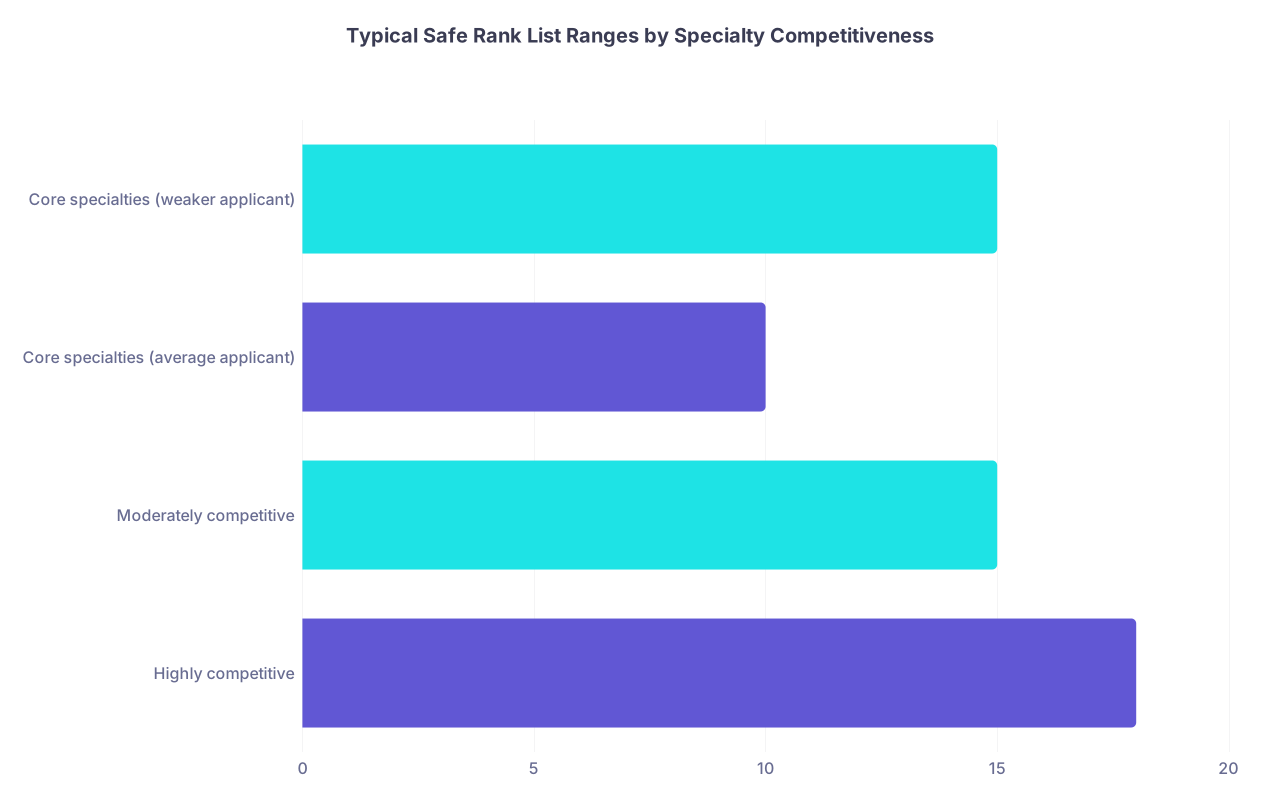
Let me be blunt: there is such a thing as “too few” and “pointlessly many.” But the exact number depends on your specialty, your profile, and where you’d actually be willing to train.
| Category | Value |
|---|---|
| Highly competitive | 18 |
| Moderately competitive | 15 |
| Core specialties (average applicant) | 10 |
| Core specialties (weaker applicant) | 15 |
Those are ballpark safe minimums, not targets you must hit. And faculty know these ranges.
Here’s how they silently judge based on your likely number:
- Rank fewer than the informal norm for your specialty → they think you’re either under-advised or delusional about risk.
- Rank an absurd number (35–50+) in a non-ultra-competitive field → they assume you’re panicking, unselective, or hiding some big weakness.
But there’s a critical nuance: programs are less concerned about your exact number than about your signal:
- Do your choices show a coherent strategy? Region, type of program, academic vs community.
- Did you apply only to super-elite places with stats that don’t match?
- Or did you shotgun absolutely everywhere with no pattern?
If your list looks chaotic, they assume your decision-making is too.
The Real Risk of a Tiny Rank List (And How Faculty Talk About It)
Faculty see rank list size as a proxy for how you handle risk. Whether that’s fair or not.
When a student they liked doesn’t match and they later learn that student only ranked three or four programs, the reactions are brutal:
“If they had asked me, I’d have told them to rank at least 10.”
“Why didn’t their dean step in?”
“They threw away their career over pride.”
I’ve seen chiefs stay late trying to find last-minute SOAP positions for a student who confidently told everyone, “I’m only ranking my top four. If I don’t get one of those, I’ll try again next year.” That student did not “try again next year.” They took what they could get in SOAP and swallowed hard.
Faculty remember those stories. So when they meet you and you hint you’re only ranking “a few programs,” they don’t admire your standards. They quietly worry they’re going to be saving you from yourself in March.
Long Lists: When “Safety” Starts to Look Like Panic
On the other extreme, when they infer you’ve ranked 25–30+ programs in a core specialty, it triggers another set of assumptions.
They might think:
- You have red flags (low Step 2, failed Step 1, professionalism issue).
- You had poor clinical comments that didn’t make it into your final narrative.
- Your home institution discouraged you from aiming too high, and you overcorrected.
Faculty have watched enough match cycles to know: strong, well-advised US MDs in IM, Peds, FM, Psych, etc., rarely need 30 programs. If you ranked that many, something in your application or advising was off.
Will they punish you? Usually no. But do they subconsciously lower their estimate of your strength? Very often, yes.
The Specific Moments Where Your List Size Comes Up
Nobody’s scrolling your whole rank list. But certain triggers make faculty think about how many programs you probably ranked.
1. When You Send “Love Letters”
You email: “You are my number one choice.”
Then on rank review day, they see they’re 7th.
Faculty are not stupid. They know you probably sent that same email to multiple places. But when the gap is huge—“#1” vs #7—they conclude one thing: you’re willing to lie outright.
Next year, those same attendings tell their PD: “Do not trust these post-interview emails. They mean nothing.” You contributed to that cynicism.
2. When You Say “I’ll Only Be Ranking a Few Programs”
Some of you say this trying to sound selective or committed.
Faculty hear: “I don’t understand the match statistics.”
If they then see you ranked them 8th, they do the math. You either:
- Changed your mind and added more programs last minute (fine, but signals poor planning), or
- Lied about how many you’d rank (again, honesty problem).
3. When You Over-Sell “Geographic Restriction”
You claim: “All my family is here, I’m only ranking this region.”
They later see they’re 15th. In a saturated city. They know there aren’t 14 programs within your strict little region.
That means one of two things:
- You weren’t honest about your geographic limits.
- Or you ranked so many programs that even your tight region gave you a double-digit list.
Either way, your story cracks.
A Quiet But Important Point: Rank Only Places You’d Actually Go
Faculty universally agree on one thing: do not rank a place you’d be miserable attending.
They’ve watched residents show up clearly hating where they matched, dragging through three miserable years, sometimes quitting. PDs are not blind to this.
When your list size suggests you just threw every interview onto the rank list with no filter, some faculty worry you’re not truly considering fit, just survival. They want residents who actually want to be there, not people who view their program as a punishment.
So while they may mock the student who only ranks three programs, they also side-eye the applicant who seems to have ranked 40.
There’s a sweet spot: enough to be safe, not so many that it screams panic or zero discernment.
How To Look Smart, Not Reckless, From the Faculty Side
You can’t control exactly how they infer your rank list. But you can control the story they walk away with.
A few principles that match what PDs talk about when you’re not in the room:
Have a plausible number for your specialty.
If they ask how many programs you think you’ll rank, answer in a range that matches your risk profile.- Solid US MD in IM, Peds, Psych, FM: “Probably around 10–15.”
- Slightly weaker candidate or IMG in those: “Maybe 15–20 or so, depending on how I feel after visits.”
- Competitive specialties: “I’m casting a fairly wide net to be safe.”
Align your story with your actual plan.
If you know you’re going to rank 20+, do not sit there saying “just a handful.” It will bite you when they later see you at #14.Don’t weaponize “you’re my #1” unless you mean it.
Faculty remember that language. If you want to show interest, say “I’ll be ranking you very highly.” That gives you room while still signaling enthusiasm.Ask your dean or advisor for numbers. Then add a little cushion.
Behind closed doors, deans have very specific guidance: “With your profile, I’d want at least 12 programs ranked.” Listen. Then do 14–15. That’s how the students who match smoothly operate.
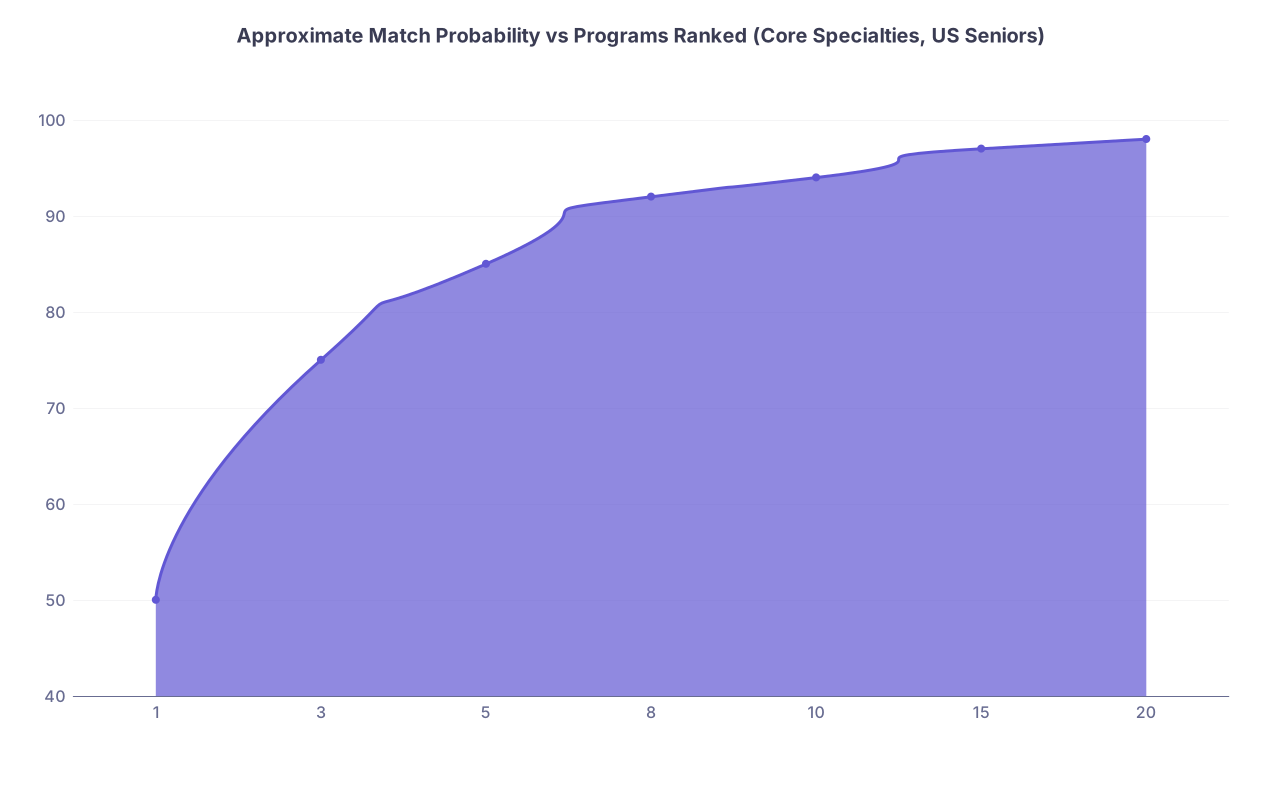
Visual: How Students Actually Match vs Rank List Length
Most PDs have seen some version of this data in NRMP charts, even if you haven’t.
| Category | Value |
|---|---|
| 1 | 50 |
| 3 | 75 |
| 5 | 85 |
| 8 | 92 |
| 10 | 94 |
| 15 | 97 |
| 20 | 98 |
Do not get hung up on the exact numbers. They vary by specialty and year.
The pattern is what matters: huge jump from 1 to 5, modest gains 5 to 10, then diminishing returns after 15–20 for typical US seniors in core fields.
Faculty know this curve. So when they hear you plan to rank only three, they cringe. When they suspect you ranked 30 in a mid-competitive specialty, they assume you’re well below average or poorly advised.
Bottom Line: What Faculty Really Judge About Your List
They don’t see your whole rank list. But they absolutely judge what they can infer about its size.
They judge:
- Whether your choices show any strategy or just blind fear.
- Whether your words on interview day matched the math on Rank Day.
- Whether you understand risk, or you’re gambling your career on vibes.
- Whether you actually want them, or they’re just one of 25 interchangeable backups.
You can’t control their biases, but you can stop feeding them ammunition.