
The red flags in your program list will hurt you before your personal statement ever gets read.
You can have a strong Step score, honors in medicine, and glowing letters—and still get quietly filtered out because your list screams: “I do not understand how this game works.”
Let me walk you through the patterns that make committees uneasy. Not theoretical. The stuff that actually gets whispered in selection meetings:
“Why did they apply to only three programs?”
“This looks like a panic shotgun list.”
“This range makes no sense for their profile.”
You do not want to be the applicant they say that about.
The Core Mistake: Treating Program Count Like a Vibe, Not a Strategy
Residents do this every year:
- Pick a random number of programs (“40 sounds reasonable”)
- Sort by location only
- Dump everything into ERAS without a coherent plan
Then they are shocked when interviews are either:
- Way too few
- Or from programs they never really wanted
Committees notice chaos. A chaotic list suggests:
- Poor judgment
- Lack of self-awareness
- Possible future problems with planning and expectations
No one wants to match a future problem.
Before we get into detailed patterns, anchor yourself with this: there is no universal “right” number of programs—but there are clearly wrong ways to build your list.
Red Flag Pattern #1: Way Too Few Programs (The Overconfident Gambler)
If I had to pick the single most dangerous mistake, it is this one.
The “I’ll Be Fine With 10–15” Crowd
Common scenario:
- Mid-tier stats
- Middle of the class
- Solid but not special CV
- Applies to 10–15 programs in IM, EM, or Anesthesiology
They tell me: “Everyone says the specialty is less competitive now.”
They are wrong. Or at least, they are misunderstanding what that means.
Programs see this and quietly worry:
- “Does this person understand match risk?”
- “Will they be this unrealistic about other things—like patient load, exams, procedures?”
Even if they never see your full list, the effect of too few programs is obvious: you do not show up in their interview pool at all.
For most U.S. MD seniors, your “danger zone” for too few looks roughly like this:
| Specialty Competitiveness | Very Risky Low Count | Safer Minimum Range* |
|---|---|---|
| Less competitive (FM, Psych, Peds) | < 15 | 18–25 |
| Moderate (IM, Anes, Neuro) | < 20 | 25–35 |
| Competitive (EM, OB/GYN, DR) | < 30 | 35–45 |
| Very competitive (Derm, Ortho, Rad Onc, Plastics) | < 40 | 50+ |
*Assuming U.S. MD, roughly average or slightly above-average application profile. DO, IMG, low Step, or red flags need more.
If you are DO, IMG, or have any performance concerns (repeated exams, leaves, professionalism issues), you cannot safely live at the bottom of those ranges.
The Silent Killer: Failing To Adjust For Your Actual Profile
This is where people blow it:
- 225–235 Step 2 trying to match categorical surgery with 20 programs
- Average psych applicant with no research limiting to 10 “cool city” places
If your advisor said “apply broadly” and you translated that as “I will apply to 14 dreamy universities instead of 8,” you missed the point.
Rule of thumb (yes, a real one):
- If you are below your specialty’s median Step 2 or have any fail/leave/concern →
Add 10–20 programs beyond what your “ideal self” thinks is enough.
Not doing that is not brave. It is reckless.
Red Flag Pattern #2: The Panic Shotgun (Way Too Many, Poorly Chosen)
On the other extreme is the person who applies to 120 programs because “I am scared.”
Committees can see shotgun patterns in your behavior:
- You apply to their program despite no geographic ties, no mention of them anywhere, and no alignment with your CV
- Your personal statement is a generic template that could work for 100 programs
- Your signals (for signal-based specialties) are scattered randomly
Is applying to 100+ always bad? Not necessarily. For IMGs or highly competitive specialties, it can be necessary.
Where it becomes a red flag is when:
- The list has no coherence
- You span wildly different program tiers that do not match your profile at all
- You ignore obvious reality about competitiveness
Programs do not like being clearly used as a backup stepping stone. They know when they are on your “panic list.”
Signs Your Shotgun List Will Backfire
Watch for these:
- You cannot articulate why you applied to at least half your programs
- You rely entirely on “I would go anywhere” as a strategy
- Your AOA, research, and scores clearly fit strong academic programs, but you also applied to tiny community programs with zero research because “more is better”
- Or the reverse: modest stats, but you spammed every brand-name university program “just in case”
That incoherence signals poor judgment.
Red Flag Pattern #3: Tier Mismatch – Living At the Extremes
This one quietly bothers committees more than you think: your list shows you either do not understand where you stand, or you are in denial.
The usual offenders:
- All-reach fantasy list
- All-safe, zero-challenge list
Both raise questions.
1. The All-Reach List
Example profile:
- Step 2: 240
- No AOA
- Decent but not standout research
- Wants IM in a large urban center
Then applies to:
- MGH
- UCSF
- Hopkins
- Penn
- Columbia
- Northwestern
- And 5 more like that.
Total list: 10–12 programs.
The problem is not ambition. The problem is math. They are trying to match where applicants with:
- 255+
- Strong research with first-author pubs
- Multiple honors rotations at home and away
are also applying.
Programs see an application like this and—if they bother to review it at all—sense miscalibration. You are swinging for the fences without a backup plan.
2. The All-Safe List
Opposite problem:
- Step 2: 260+
- AOA, strong research, national presentations
- Applies only to low to mid-tier community programs “to reduce stress”
You may think this is harmless. It is not. A few PDs will genuinely wonder:
“Why did this very strong applicant only apply to places that do not align with their CV? Are there professionalism or interpersonal issues not visible on paper?”
Harsh? Yes. Real? Also yes.
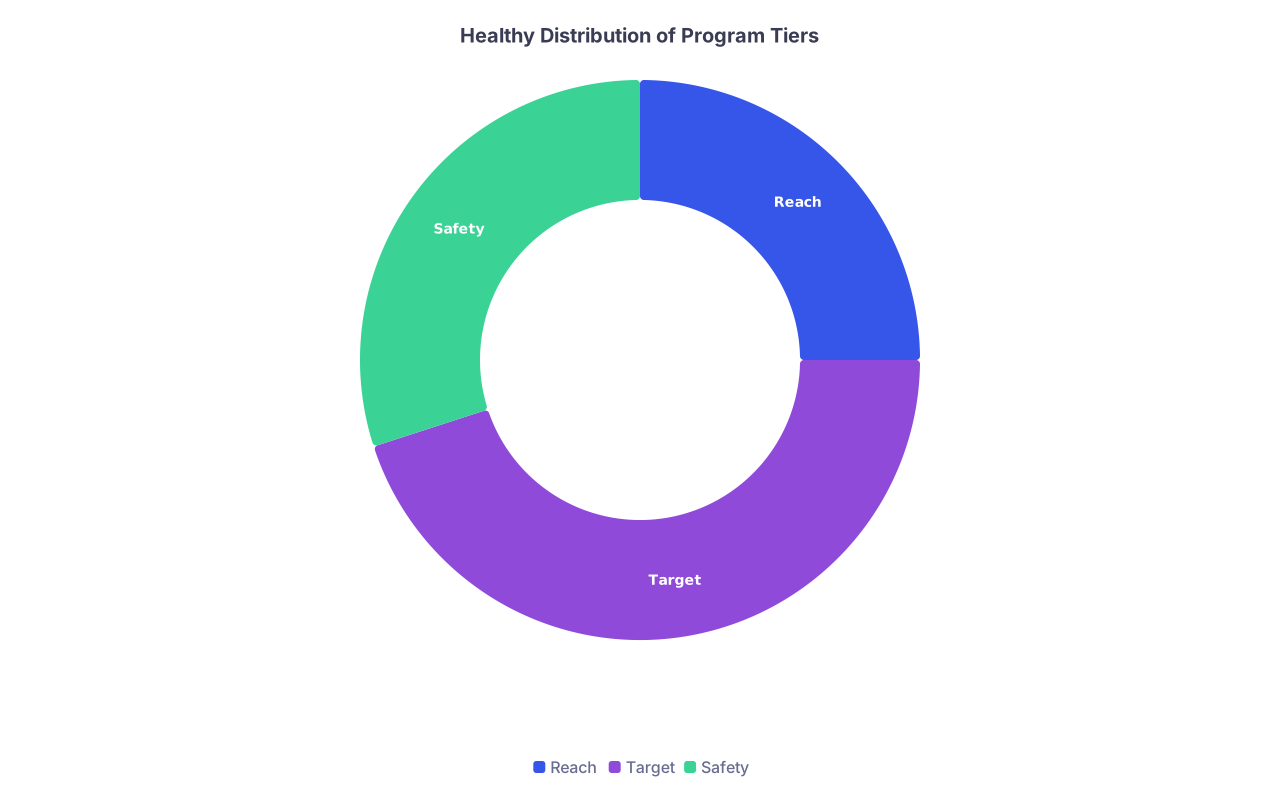
Balanced lists are the antidote.
| Category | Rough Proportion | Example (Total 40 Programs) |
|---|---|---|
| Reach | 20–30% | 8–12 |
| Target/Core | 40–50% | 16–20 |
| Safety/Backup | 20–30% | 8–12 |
How you define reach/target/safety depends on:
- Your metrics vs. program medians
- Research intensity
- Home med school reputation
- IMG vs MD vs DO
If your list is 80–90% reach, you are begging for a cruel March email.
Red Flag Pattern #4: Geographic Chaos or Geographic Fantasy
Program directors care deeply about one silent question:
“Will this person actually come here and be reasonably happy for 3–7 years?”
Your geographic pattern answers that more loudly than you realize.
Geographic Chaos: No Coherent Story
Here is the pattern that worries committees:
- 1–2 programs in each of 20 different states
- No clear clusters
- No explanation anywhere in your application tied to those locations
This looks flighty and unserious. Like you just dumped names into ERAS without thought.
Even worse:
- You mention being strongly tied to the Northeast in your personal statement
- Yet half your applications are to programs in the Midwest and West with zero explanation
Programs see the mismatch. They assume:
- “We are a backup. If they match closer to family, they will rank us low.”
Result: You lose interview spots.
Geographic Fantasy: Only Glamour Cities
Another recurring disaster:
- You apply only to NYC, Boston, SF, LA, Chicago, Seattle, Austin
- You have mid-tier stats, no special edge, and zero regional ties
Those cities are brutally over-applied to. Committees in these regions know they are aspirational destinations. They get 3000+ apps for 12 spots.
If your entire list is “fun cities you visited once,” you are playing a very stupid game.
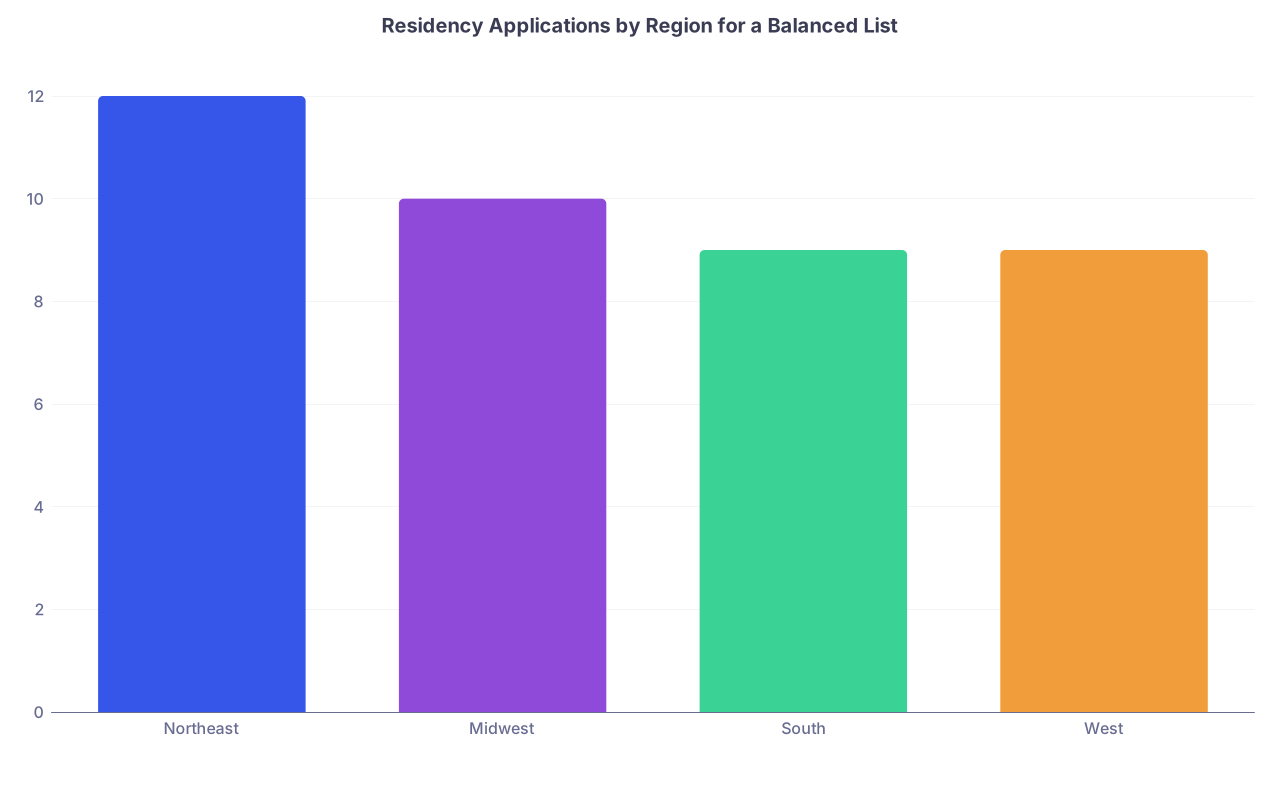
You want clusters:
- 8–15 programs in a given region
- A believable story—family, partner, undergrad, med school, or meaningful connections
| Category | Value |
|---|---|
| Northeast | 12 |
| Midwest | 10 |
| South | 9 |
| West | 9 |
Clustering like this makes you look intentional, not desperate.
Red Flag Pattern #5: Specialty Count and Backup Plans That Make No Sense
How many programs you apply to is not just raw numbers. It is how many specialties you are scattering those numbers across.
The “Fake Backup” Problem
Ugly scenario I have seen in real life:
- Applicant wants EM
- Applies to ~30 EM programs and ~3 IM programs “as backup”
Programs put this together:
- IM PD sees: “Applied to 3 IM programs only, clearly not serious about us.”
- EM PD sees: “If EM does not work, they will bail to IM.”
Both sides lose trust. You end up with weak traction in either specialty.
If you truly need a backup specialty, then:
- You need a real backup list (15–30+ programs, depending on your risk)
- You need at least some tailored signals—letters, personal statement, experiences—that make that backup believable
Sprinkling 2–3 random programs in a backup specialty is worse than not applying to that backup at all.
Multi-Specialty Overload
Applying to 3 or more specialties is usually a blazing red flag unless you are in a truly unusual situation with excellent advising.
Common self-destruction:
- 15 EM, 15 Anesthesia, 10 IM, 5 Neuro
- No coherent story
- Generic personal statement
You look unfocused. Committees are already afraid of people who will jump ship mid-residency. Do not feed that fear.
Red Flag Pattern #6: Ignoring Signal Systems, SOAP Risk, and Interview Math
This is where people pretend numbers do not apply to them.
Not Matching Application Volume To Interview Targets
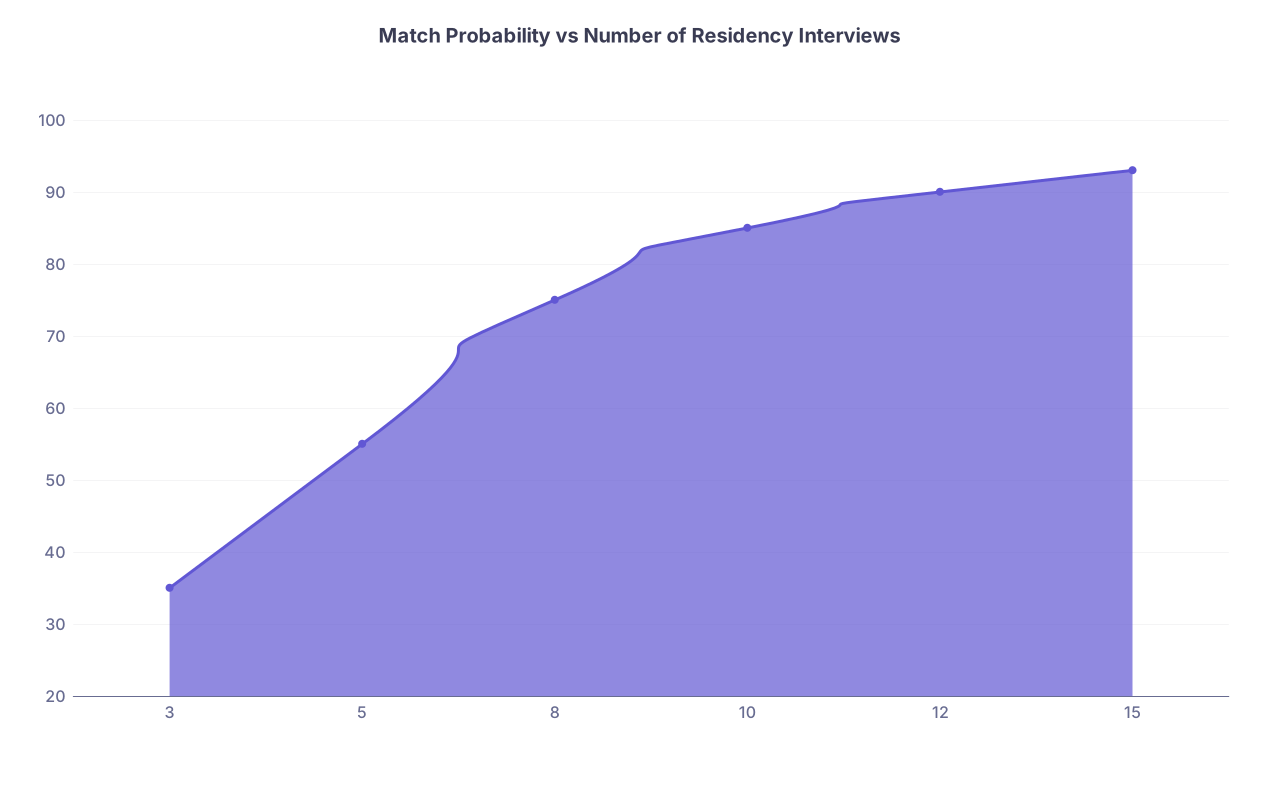
There is a rough, unspoken math to this:
For most specialties:
- 10–12 interviews → usually safe
- 8–10 → still decent odds
- < 6 → very real risk of not matching
Your application count is supposed to help you get to those interview numbers.
| Category | Value |
|---|---|
| 3 | 35 |
| 5 | 55 |
| 8 | 75 |
| 10 | 85 |
| 12 | 90 |
| 15 | 93 |
Yet every year:
- Someone applies to 20 programs in a moderately competitive specialty
- Gets 3–4 interviews
- Is shocked when they do not match
They never connected the dots: their initial program count made this almost inevitable.
Ignoring Signaling Systems (Where They Exist)
For specialties using preference signaling (like EM, some IM subspecialties, others depending on the year), a sloppy pattern is a big red flag:
- You send signals to only top-brand programs that are all reach for you
- Or you scatter them randomly without regard to where you are most competitive
Programs absolutely look at signals. Using them badly screams inexperience.
If you are going to use your limited signals:
- At least half should be to programs where you sit in the realistic/target range
- Only a minority to pure reaches
Otherwise, you are burning some of your most valuable leverage on fantasy.
Red Flag Pattern #7: Timing Mismatch – Applying Too Early or Too Late With Too Few Programs
Your numbers and timing interact. A lot of applicants forget this.
Applying Late With a Lean List
If you are submitting:
- Primary app late September or October
- With only 20–25 programs in a mid/upper-competitive specialty
You have doubled your risk. Programs are often half-done sending invites by then.
A late, thin list looks to programs like:
- You did not plan
- You may be a future administrative headache
If you are submitting late for any reason (Step 2 delay, personal issues, etc.), you must compensate by:
- Broadening your list
- Targeting more safety and mid-tier programs
Applying Early With Overconfidence
Opposite error:
- You submit the second ERAS opens
- Your Step 2 is marginal for the specialty
- You apply to a slim, lofty list
Now you are early… and still doomed.
Early submission does not rescue a fundamentally unrealistic program list.
How To Build a List That Does NOT Raise Red Flags
Let me flip this into positive action—because just telling you what is wrong does not help if you are sitting there with ERAS open.
Here is the basic, no-nonsense process that works:

| Step | Description |
|---|---|
| Step 1 | Assess Stats and CV |
| Step 2 | Define Specialty Risk |
| Step 3 | Choose Target Interview Goal |
| Step 4 | Set Program Count Range |
| Step 5 | Cluster by Geography |
| Step 6 | Balance Reach Target Safety |
| Step 7 | Adjust for Late Apps or Red Flags |
| Step 8 | Review With Advisor |
Step 1: Honest Self-Assessment
You need to know:
- How your Step 2 compares to recent matched applicants in your specialty
- Any academic or professionalism issues
- Your school’s match history in this specialty
If your med school has a residency advisor, use them. They often know specific thresholds for specific programs.
Step 2: Set an Interview Target
For most people:
- Aim for 10–12 interviews in your primary specialty
- If dual-applying, you need a credible interview count in both (for example 8+ in primary, 6+ in backup)
Once you know how many interviews you want, you build a program count that gives you a realistic probability of hitting that number.
Step 3: Decide Program Count Range
Use this as a starting template for a single specialty (adjust upward if DO/IMG/concerns):
| Risk Level / Profile | Suggested Range |
|---|---|
| Strong applicant, less competitive specialty | 18–25 |
| Average applicant, moderate specialty | 30–40 |
| Below-average applicant OR competitive specialty | 45–60+ |
| IMG / Significant red flags | 60–100+ |
Then modify based on:
- Geographic flexibility (more flexible = fewer programs needed)
- Strength of your home program and away rotations
Step 4: Build Geographic Clusters
Pick 2–4 main regions and actually commit. For example:
- Northeast cluster: 10–15
- Midwest cluster: 8–12
- South cluster: 8–12
- West cluster: small handful if you have some tie
Do not spread yourself into 15 regions with 1–2 programs each. That pattern is messy and unconvincing.
Step 5: Check For Tier Balance
Once your rough list is built, mark each program:
- R = Reach
- T = Target
- S = Safety
If:
- You have > 50% R → you are asking for trouble
- You have < 20% T → your list is unanchored
- You have zero S → you are playing “match or SOAP” roulette
Fix it before you submit.
| Category | Value |
|---|---|
| Reach | 25 |
| Target | 45 |
| Safety | 30 |
Three Patterns That Instantly Make Your List Safer
If you are overwhelmed, start with these non-negotiables:
Add 10–15 programs if:
- You are at or below average for your specialty
- You are applying to competitive metro areas only
- Or you have any academic hiccups
Cluster geography into at least 2 regions where you have a credible story (family, training, partner, prior life).
Ensure at least 25–30% of your list are realistic safeties
Not programs you secretly think you are “too good for.” Programs where your metrics land you clearly above their recent median.
None of these will hurt you. All of them protect you.
FAQ (Exactly 3 Questions)
1. Do program directors actually see how many programs I applied to?
Not directly as a raw number. But they see patterns through where you did aways, where you signal (if applicable), your geographic story, and your interview responses. A chaotic or unrealistic application strategy shows up in those patterns and in who actually interviews them. You do not get a printout saying “they applied to 83 programs,” but your choices still speak loudly.
2. Is there such a thing as applying to so many programs that it hurts me?
Yes, if the volume leads to sloppy, incoherent choices. If your list is so bloated that you cannot send appropriate signals, tailor personal statements (for at least some programs or regions), or communicate a believable geographic/specialty commitment, committees will read that as desperation and lack of focus. Raw number alone is less of a red flag than a mismatch between that number and your apparent strategy.
3. How many programs should I apply to if I really do not care where I end up?
“I will go anywhere” helps—if your actions match the claim. That means: broad geographic clusters with believable coverage, a realistic mix of reach/target/safety, and enough total programs based on your stats and specialty competitiveness. For many average applicants in moderately competitive specialties, that ends up in the 35–50 range. But do not use “I will go anywhere” as an excuse for a lazy, unplanned list. It should expand your options, not justify chaos.
Open your draft program list today and mark each program as Reach, Target, or Safety—and then count how many you actually have in each category; if your reaches are more than one-third of the total, you need to fix that before you hit submit.