
You did not go unmatched because you “forgot to apply to three more programs.”
If you are reapplying, blindly doubling your list is lazy strategy and a good way to burn money and energy without fixing the real problem.
Let me walk you through how to decide exactly how much to increase your list—and when not to—based on your actual situation, not some Reddit myth.
Step 1: Get Honest About Why You Didn’t Match
Before touching numbers, you need diagnosis. Otherwise you’re just prescribing more drugs for the wrong disease.
There are five common unmatched profiles:
- Strong stats, applied too narrow or too late
- Middle-of-the-road applicant, applied reasonably, decent interview numbers but no match
- Clearly under the usual bar (low scores, red flags), applied “average” number of programs
- Severe red flags or major career change (SOAP, visa, prior failures, disciplinary issues)
- Switching specialties
Which are you? Be brutally honest.
Here’s the core rule:
If your application quality and target list were wrong → you fix those first and increase your list modestly.
If your underlying competitiveness is significantly below target specialty norms → you increase your list a lot and maybe change specialties.
Let’s anchor some baseline numbers first.
Step 2: Baseline Numbers for Reapplicants
These are rough ranges I’ve seen make sense for reapplicants to common specialties. Not gospel, but a reality check.
| Specialty | Low Range | Typical | Aggressive |
|---|---|---|---|
| Internal Medicine | 60 | 80 | 120+ |
| Family Medicine | 35 | 50 | 80+ |
| Pediatrics | 40 | 60 | 80+ |
| Psychiatry | 60 | 80 | 120+ |
| General Surgery | 60 | 80 | 120+ |
| Neurology | 50 | 70 | 100+ |
If you’re an IMG, reapplying, or have red flags, you’re almost always in the “Typical” to “Aggressive” column. Especially for anything even mildly competitive.
Now let’s answer your question: how much to increase?
Step 3: Start With Your Previous Cycle Numbers
You need three numbers from last year:
- Programs applied to
- Interview invites
- Interviews attended
And then: what specialty, and what’s your profile (US MD vs DO vs IMG, scores, red flags, visa).
Now use this rule:
For reapplicants, your goal is usually a 30–70% increase in meaningful programs, not a random 100% increase in total apps.
Meaningful = programs where you’re at least somewhat in the ballpark for:
- Scores / attempts
- Visa status
- IMG/DO friendliness
- Grad year
- Required experiences (USCE, letters, etc.)
Let’s walk scenarios.
Step 4: Scenario-Based Recommendations
Scenario A: You Applied Too Narrow
Example:
- US MD, no red flags, decent scores
- Applied to 25 IM programs (all big academic, mostly top 40 names)
- Got 3 interviews, didn’t match
You didn’t fail. Your strategy did.
For you:
- Increase total IM programs to 60–80
- Add a wider mix: community, mid-tier academic, different regions
- Consider adding a backup specialty (e.g., FM)
Your increase isn’t about doubling. It’s about fixing distribution. You were fishing only in one tiny, very crowded part of the lake.
Scenario B: You Are an Average Applicant Who Got Few Interviews
Example:
- US DO or AMG with average scores, no major red flags
- Internal Medicine
- Applied to 60 programs last year
- Got 4–5 interviews, ranked them all, no match
This is the “painful middle” group. Not obviously uncompetitive, but didn’t get enough looks.
Your move:
- Increase IM programs to 80–100
- Focus on IMG/DO-friendly, community-heavy list, not just brand names
- Fix your application: stronger letters, better personal statement, tighter experiences, stronger MSPE/program director letter if possible
Do not jump from 60 → 160 blindly. Often the real issue is:
- You had a weak personal statement or generic letters
- You did not apply on Day 1
- Your list ignored DO/IMG data
So: 30–60% increase, not 200% increase.
Scenario C: You’re Under the Bar for Your Specialty
Example:
- IMG or DO
- Psychiatry or Internal Medicine
- Step 2: 214, one prior attempt on Step 1
- Applied to 80 psych programs
- Got 2–3 interviews, no match
Here’s the truth: psych has gotten more competitive. An IMG with low scores and attempts is fighting uphill.
You have two levers:
- Volume
- Specialty choice
For psych reapplication:
- Increase psych programs to 120–140+
- Apply day one
- Absolutely use every IMG-friendly program list you can find
- Simultaneously consider adding FM or IM with 60–80+ programs if your primary goal is simply to match
If you switch to IM or FM completely:
- IM: 100–140 programs
- FM: 60–90 programs
Here, yes, your list increase may be 70–100%+. Because your fundamental competitiveness is below average for psych.
Scenario D: You Have Major Red Flags
Examples:
- Prior discipline or professionalism issue
- Multiple exam attempts
- Big unexplained gap
- Very old grad year (5–10+ years out)
- Need visa sponsorship and are an IMG with low scores
This is where people dramatically underestimate how many programs they need.
Typical move here (if not switching to the most forgiving specialties):
- Primary specialty list: 120–180 programs (if field has that many)
- Backup specialty: another 80–120 programs
- Hyper-focused on programs that have actually taken people with your profile before (older grad year, Step attempts, etc.)
And you don’t just “add more.” You:
- Email programs where your story might matter and ask if they consider your situation
- Network with alumni and faculty aggressively
- Fix everything possible: better USCE, clearer explanation of red flags, stronger LORs
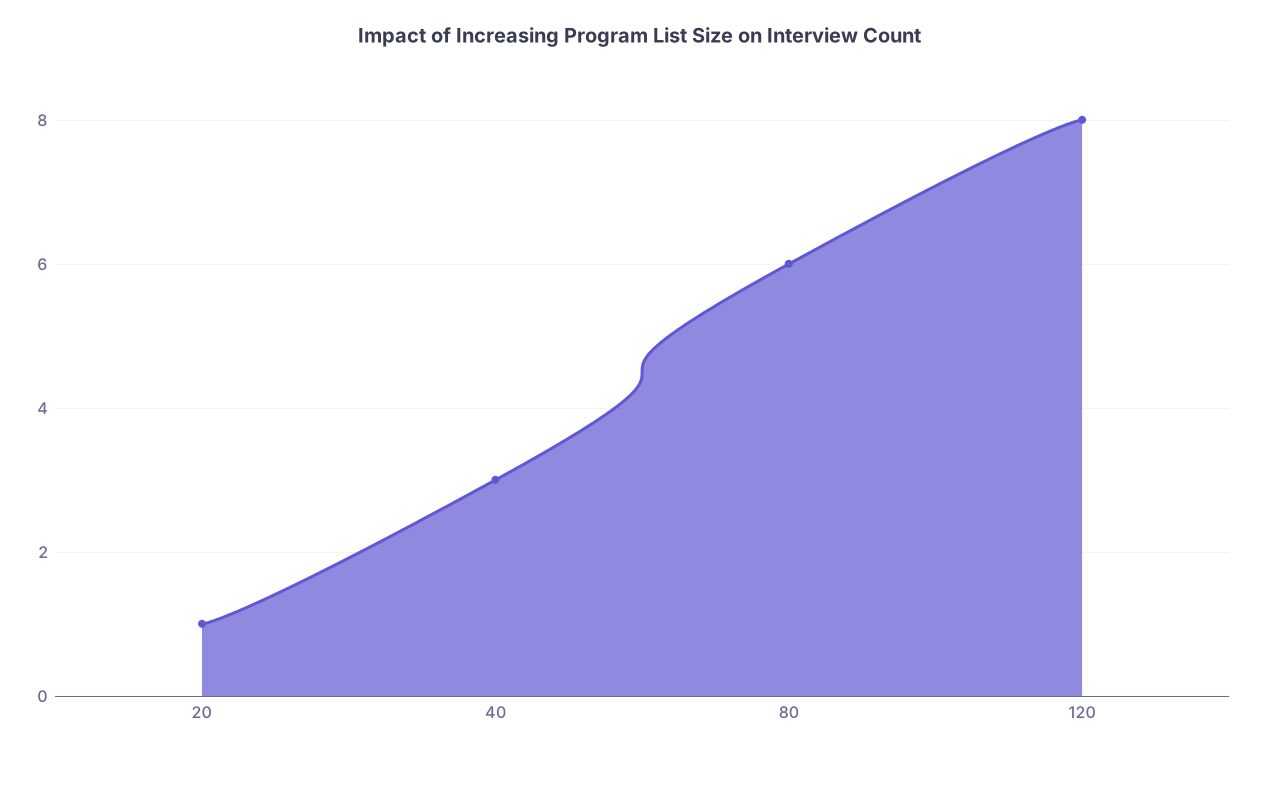
| Category | Value |
|---|---|
| 20 | 1 |
| 40 | 3 |
| 80 | 6 |
| 120 | 8 |
Notice: doubling apps doesn’t double interviews forever. Returns diminish. Especially if half your new apps are to programs that will never rank you.
Scenario E: You’re Switching Specialties
Example:
- You applied to general surgery, went 0/40 on interviews
- Strong work ethic but average scores, limited research, not from a big-name school
- Now you’re thinking about reapplying surgery vs switching to IM
Here’s the hard call:
- If you were 0/40 in something like surgery or ortho as a US grad, and nothing major has changed, staying in that specialty usually means you now need 80–120+ surgery programs and probably still a low chance.
- Switching to IM or FM can convert you from “long shot” to “solid, if you apply broadly.”
If you stay in surgery:
- Go from 40 → 80–100+ programs if they exist
- Add prelim surgery and prelim medicine programs
- Add some categorical IM/FM as safety
If you switch to IM:
- Treat yourself as a fresh applicant and land around 80–110 programs for IM
Your “increase” here is actually: fewer in old specialty, a lot in new one.
Step 5: Use Interview Yield to Decide How Much to Increase
Here’s a quick framework I use when advising reapplicants.
Look at last year:
- Interview rate = interviews received ÷ programs applied
Then apply this rule:
- If your interview rate was > 15%: Your list size was probably okay; focus on interview skills and rank strategy. Increase total programs by 0–30%.
- If your rate was 5–15%: Mixed issue; increase programs by 30–70% and fix your application.
- If your rate was < 5%: You’re being auto-screened or fundamentally filtered out. You either need a very large list increase (70–120%+), a specialty change, or both.
| Prior Interview Rate | Meaning | List Increase |
|---|---|---|
| > 15% | Apps okay, other issues | 0–30% |
| 5–15% | Mixed problems | 30–70% |
| < 5% | Major competitiveness gap | 70–120% or change |
Example:
Last year you applied to 60 IM programs, got 3 interviews → 5% rate.
- That’s low.
- This cycle, you should be around 90–120 IM programs, plus application overhaul.
Not 65. Not 300. Somewhere where math and sanity meet.
Step 6: Do Not Increase Garbage Programs
More is only helpful if they’re actual options, not fantasy.
You should ruthlessly screen programs before you add them:
- Do they take your degree type (DO/IMG)?
- Have they taken your grad year recently?
- Do they sponsor your visa type?
- Do they list “no attempts” or Step 1 pass first-try as hard filters?
- Is your Step 2 even close to their posted averages?
If the answer is “no” to multiple of those, that program is not “more options.” It’s a paid rejection.

Step 7: Add a Backup Specialty the Right Way
If you went unmatched once, you have to be honest about risk tolerance.
Backup specialty is not a shame. It’s a strategy.
Typical primary/backup combos that make sense:
- Psych primary → IM or FM backup
- IM primary → FM backup
- Surgery primary → IM or prelim surgery + prelim medicine
- OB/GYN primary → IM or FM backup
- Neurology primary → IM backup
What not to do:
- Apply to 30 psych + 20 IM and call IM your “backup.” That’s not serious.
- Apply to a competitive specialty + 10 derm apps “just to try.”
If you truly want a backup:
- Primary specialty: still aim for your 80–120+ (if needed)
- Backup specialty: at least 50–70 meaningful programs for IM/FM, more if you have red flags/IMG
| Category | Value |
|---|---|
| Primary Specialty | 70 |
| Backup Specialty | 30 |
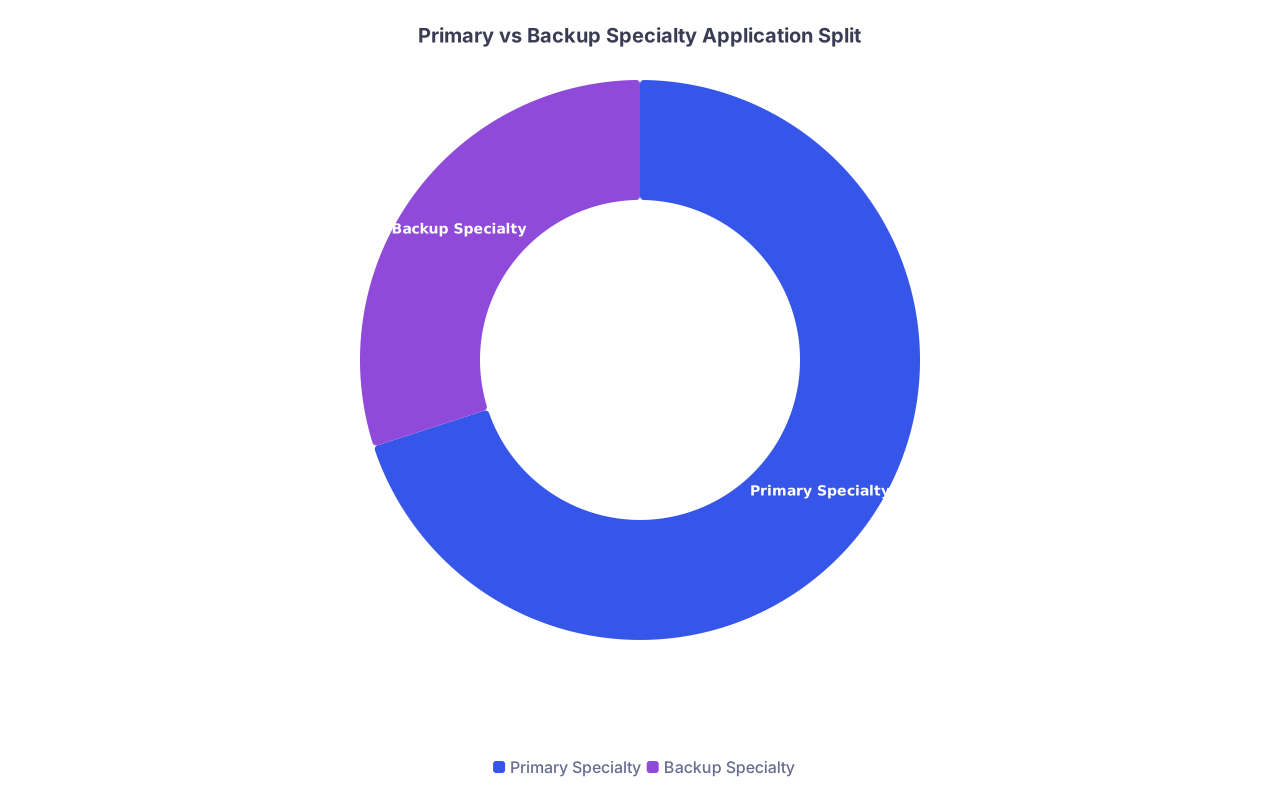
That 70/30 is a decent starting point. Some people go 60/40 if they’re truly ready to pivot.
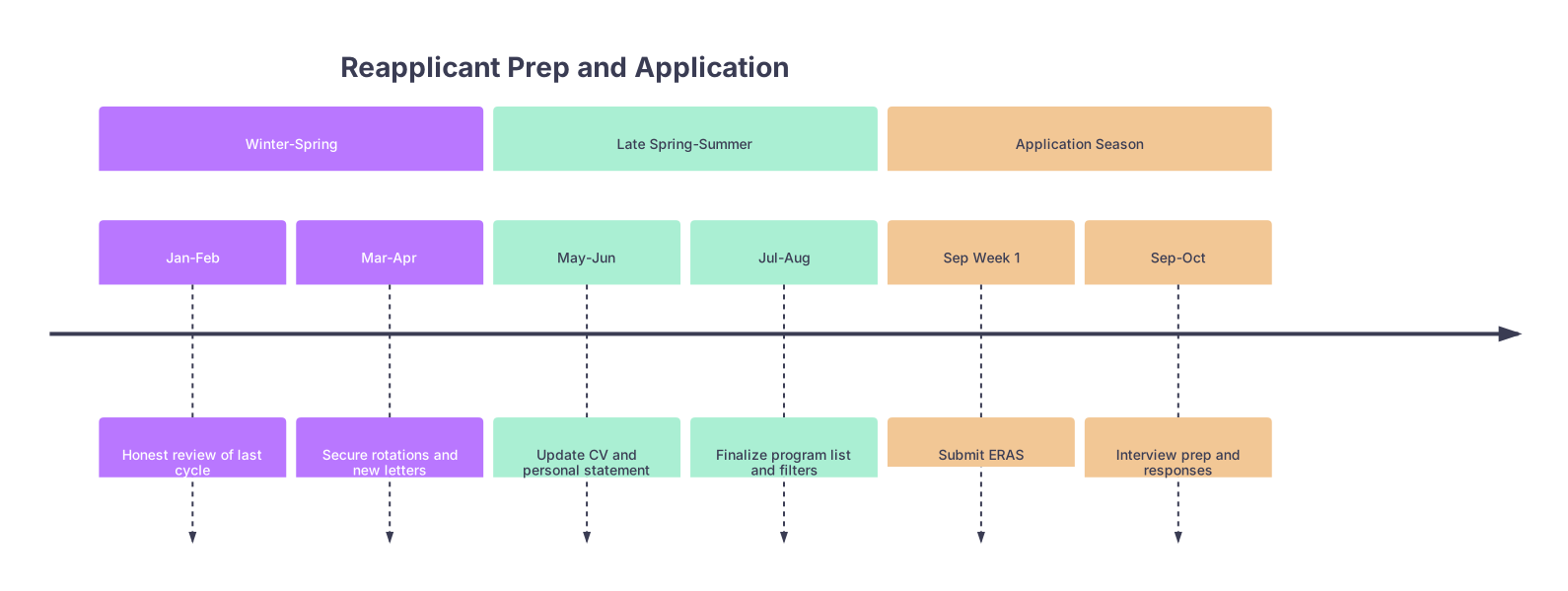
Step 8: Timing and Application Quality Matter More Than Going From 120 → 180
I’ve seen this mistake over and over:
- Last year: 60 programs, September submit, generic PS, average letters → few interviews
- This year plan: 150 programs, same PS template, same generic letters, still not ready on September 15.
That’s not a new strategy. That’s the same failure, more expensive.
As a reapplicant, your prior non-match is already a silent red flag. You have to show growth.
Fix these, before you obsess about whether 110 vs 130 programs is enough:
- Submit on day one (or within that week)
- Clean, focused personal statement that clearly addresses why this specialty and what changed
- New or updated letters from US clinicians or faculty who actually know your work
- If you failed an exam or had a gap, a concise, honest explanation that shows what’s changed
- Evidence of recent clinical activity (USCE, observerships, research, or active practice abroad)
| Period | Event |
|---|---|
| Winter-Spring - Jan-Feb | Honest review of last cycle |
| Winter-Spring - Mar-Apr | Secure rotations and new letters |
| Late Spring-Summer - May-Jun | Update CV and personal statement |
| Late Spring-Summer - Jul-Aug | Finalize program list and filters |
| Application Season - Sep Week 1 | Submit ERAS |
| Application Season - Sep-Oct | Interview prep and responses |
If you do not fix these, increasing 50+ programs is just giving more people a chance to say no.
Step 9: Budget, Sanity, and Diminishing Returns
Let’s be practical. ERAS fees are not imaginary.
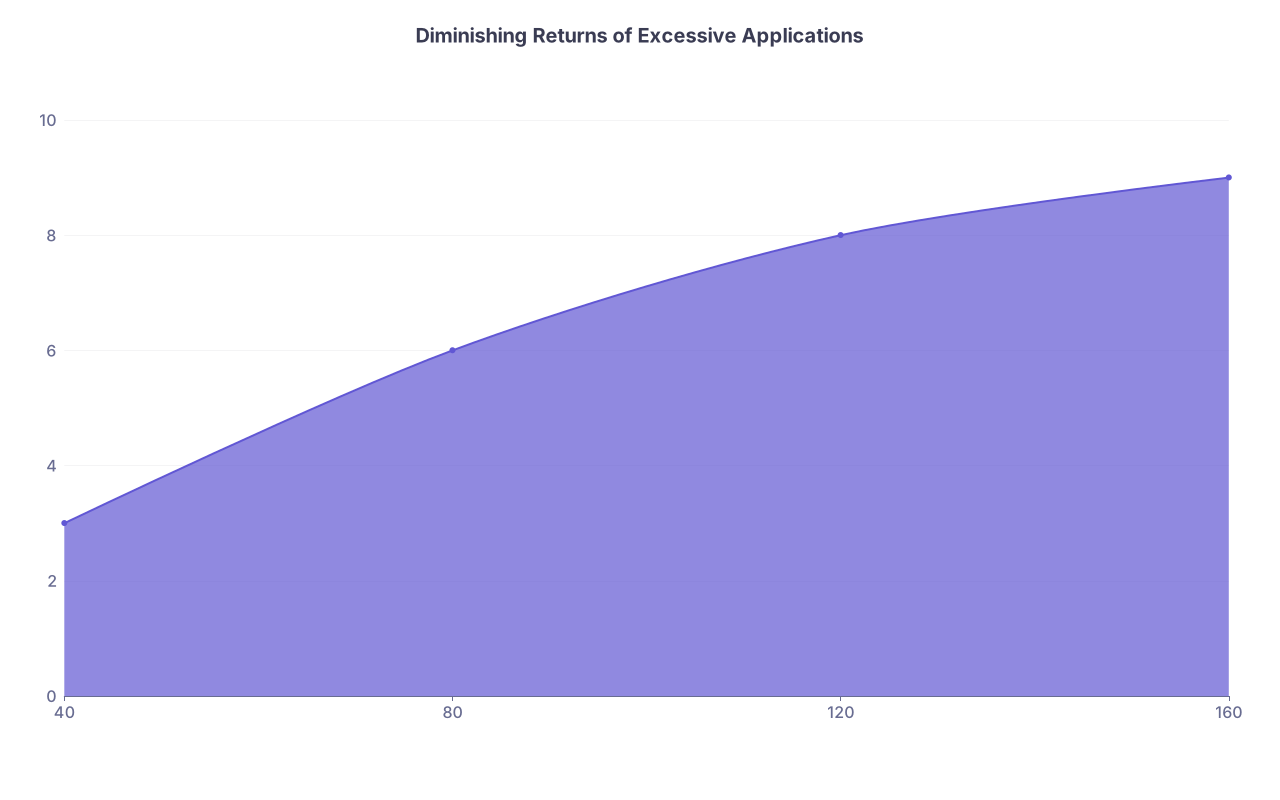
Past about 100–120 programs in one specialty, for most people, the curve starts to flatten:
- Early programs you add are solid, realistic fits
- The later ones become: clearly not taking your profile, wrong region, or super malignant
There are exceptions—high-risk profiles, IMG with attempts, etc.—but if you find yourself at 180 programs in one specialty and you’re not changing anything else… pause.
Ask:
- Would that money be better spent on an extra US rotation?
- Or an interview coaching session?
- Or a test prep resource if you’re retaking something?
Volume helps. But it does not replace improving your actual candidacy.
| Category | Value |
|---|---|
| 40 | 3 |
| 80 | 6 |
| 120 | 8 |
| 160 | 9 |
Concrete Examples: “How Much Should I Increase?”
Let’s make this brutally concrete.
Example 1: US DO, IM, Undermatched
- Last year: 55 IM programs, 6 interviews, ranked all, no match
- Stats: step 2 232, no fails, good clinical record
You actually had a decent interview yield. So:
- This year: 70–85 IM programs
- Focus on better mix of community + university-affiliated
- Spend real time on interview prep and maybe mock interviews
- No need to jump to 130 unless something worsened
Example 2: IMG, Psych, Low Interviews
- Last year: 80 psych programs, 2 interviews
- Step 2: 221, one Step 1 attempt, needs visa, grad year 2019
Your numbers are below average for psych, and your interview rate is low.
- This year (if staying psych): 120–150 psych programs
- Plus 60–80 IM or FM as backup
- And aggressively improve: new USCE, updated strong letters, application narrative
Example 3: US MD, Surgery → Considering IM
- Last year: 40 gen surg apps, 0 interviews
- Step 2: 238, average research, no major red flags
Surgery is probably not realistic without a miracle.
Options:
- If stubbornly staying in surgery: 80–100 surgery, plus prelim + some IM
- If switching to IM: 80–100 IM programs (not 40), with a narrative explaining the change and highlighting transferrable skills
FAQs
1. I applied to 100+ programs last year and still went unmatched. Should I go to 200?
Not automatically. If you already applied broadly (100+ meaningful programs) and had very few interviews, the issue is less “number of programs” and more “fundamental competitiveness” or application quality. Consider:
- Switching to a less competitive specialty
- Dramatically strengthening your profile (scores, recent USCE, letters)
- Having someone experienced review your entire ERAS and program list
Going from 100 → 200 in the same specialty, without changing anything else, rarely transforms outcomes.
2. Do I need a backup specialty if I’m reapplying?
If you’ve already gone unmatched once, I strongly recommend at least thinking seriously about a backup. You don’t have to, but relying on one specialty after a failed cycle is a high-risk bet, especially if that specialty has tightened (like psych, OB/GYN, EM). If your main goal is matching somewhere this year, a backup specialty with 50–80+ apps is a rational move.
3. How do I know if a program is “IMG-friendly” or “DO-friendly” enough to include?
Look at their actual residents, not just the website fluff. Check:
- Program website or social media: do you see IMG/DO grads?
- FREIDA or similar: do they list visa sponsorship, recent IMG grads?
- NRMP data and forums where people compile IMG-friendly lists
If a program hasn’t had an IMG/DO in 5+ years, and you’re an IMG/DO, it’s usually not worth an application unless there’s a very specific connection.
4. Does reapplying to the same programs hurt me?
No, not inherently. Programs expect reapplicants. What hurts you is reapplying with basically the same file. If you:
- Improved scores, gained new USCE, updated letters, and
- Tightened your personal statement and experiences
then reapplying to the same programs is absolutely reasonable, especially if you had prior interviews there.
5. Is there any point in emailing programs before applying?
Yes—but only if you’re targeted and respectful. For example:
- Asking about whether they consider older grads or multiple attempts
- Clarifying visa sponsorship
- Briefly highlighting that you’re a reapplicant with meaningful new improvements
Do not send long life stories or beg emails. One short, polite inquiry can help you avoid wasting applications on programs that will never consider your profile—and that’s just as valuable as “increasing your list.”
Key takeaways:
- Do not just double your list; increase it 30–70% in a targeted way based on your prior interview yield and true competitiveness.
- Fix your application quality and specialty strategy first; throwing more apps at the same problem is expensive denial.
- Consider a backup specialty and a broad, realistic program list if you’ve already gone unmatched once—your goal is not ego, it’s a training spot.