
The biggest unspoken reason strong applicants fail to match isn’t a bad personal statement or a weak letter. It’s this: they apply broadly, then interview like they only applied to five programs.
You think you’re “playing it safe” by submitting 60–80 applications. But your interview behavior screams “I’m only serious about 10.” Programs hear that loud and clear.
Let me walk you through how people quietly sabotage themselves with this exact pattern—and how you’re going to avoid it.
The Core Problem: Wide on Paper, Narrow in Reality
On ERAS, everything looks great. You applied to:
- 70 internal medicine programs
- 45 family medicine programs
- 40 general surgery programs
Whatever your specialty, the same trap appears: you cast a huge net with applications, then behave like you’re only really considering a tiny, handpicked subset once invites start to roll in.
The silent killer is this combination:
- Over-applying “just in case,” then
- Selectively responding to, scheduling, and preparing for only a narrow band of “favorite” or “name-brand” programs.
Programs see this as:
- Disinterest
- Low likelihood to rank them
- A risky use of their interview slot
And they act accordingly: fewer invites, more cancellations, more waitlist purgatory. Then you sit in February wondering why your “broad” strategy didn’t protect you.
The Numbers You’re Probably Misunderstanding
Let’s be blunt: your sense of “enough” interviews is often wrong.
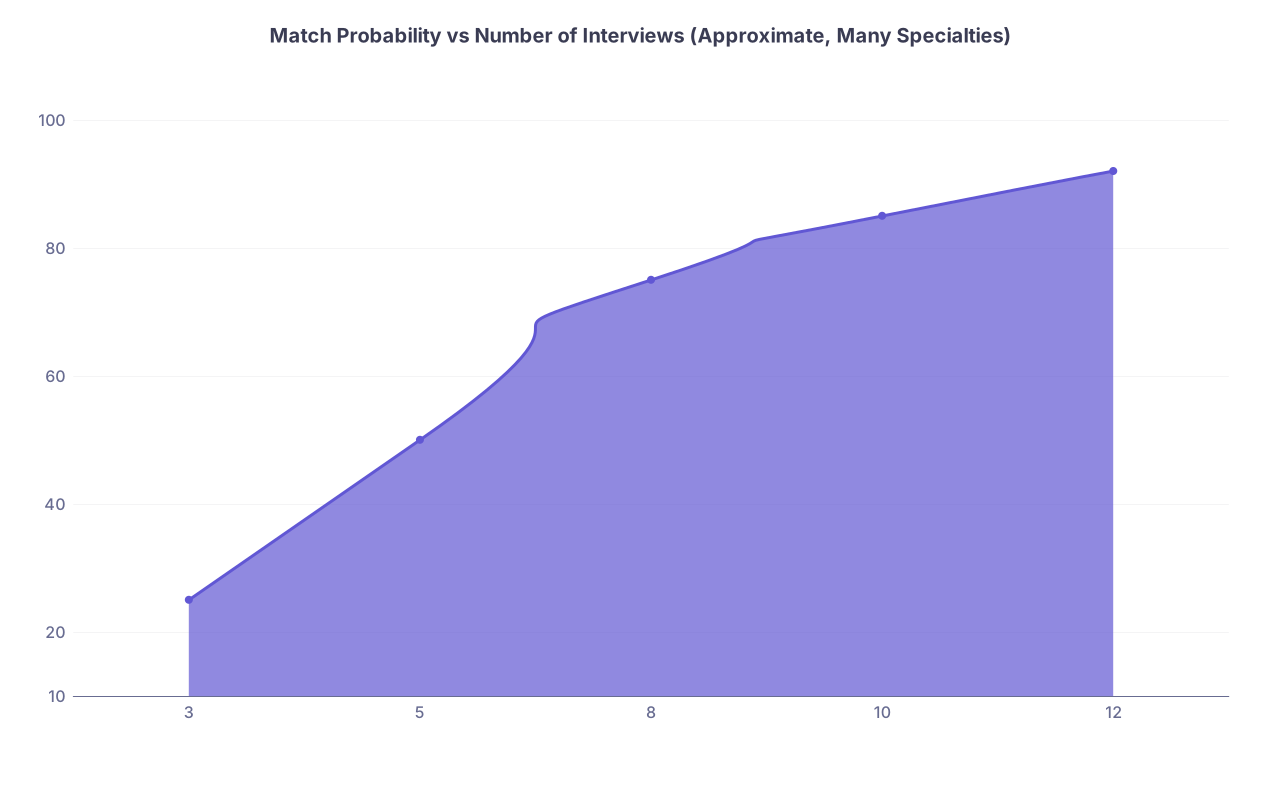
| Category | Value |
|---|---|
| 3 | 25 |
| 5 | 50 |
| 8 | 75 |
| 10 | 85 |
| 12 | 92 |
These are rough, cross-specialty style numbers—but the pattern holds: your match probability climbs with interviews, not with number of applications. Yet most applicants obsess over the size of the application list and then casually cancel interviews like they grow on trees.
Common disaster pattern:
- Apply to 70+ programs
- Get 12 invitations
- Accept 8, cancel 4 because of “travel,” “fit,” or “too community”
- End up ranked at 7 places (because one interview felt off)
- Fail to match and feel blindsided
You didn’t fail because you weren’t competitive. You failed because you behaved like someone who could afford to be picky in November when you absolutely couldn’t.
Mistake #1: Treating Some Interviews as “Beneath You”
This is the part applicants rarely admit out loud but you can hear it in their voice.
“I mean, I got an interview there, but it’s kind of a backup.”
“I don’t really see myself in a community program.”
“It’s not that academic. I’m not sure I’d be happy there.”
Meanwhile: their Step score is average for the specialty, they’re IMG or DO in a competitive field, or they have red flags. But their interview behavior says “I’m aiming higher only.”
Here’s what happens when you think this way:
- You delay responding to “backup” interviews.
- You cancel them early for convenience.
- You under-prepare because “I’ll never rank them highly anyway.”
- You act less engaged on interview day.
Programs are not stupid. They can tell when they’re your safety school. And they react by:
- Ranking you lower (if at all)
- Putting you in the “unlikely to come here” bucket
- Giving their limited spots to applicants who seem genuinely interested
The painful part? Sometimes your “backup” ends up being exactly where you would have matched—if you hadn’t treated them like a backup.
Mistake #2: Front-Loading Prestige, Back-Burning Safety
This one is incredibly common and incredibly dangerous.
Timeline looks like this:
- October–November: You aggressively schedule every big-name or “top tier” program ASAP.
- Mid–late November: You start getting more mid-tier and community invites. You accept a few.
- Early December: You’re exhausted, and you’ve already mentally ranked your favorites. You start declining the “lower” invites.
Then January hits. The big-name programs interview you…and don’t love you as much as you thought. You end up ranked—but low. Meanwhile, those programs you cancelled? They gave your interview slot to someone who would gladly train there.
You basically played all your chips on a small group of programs and walked away from the ones that were most likely to rank you high.
This is how people who “had 10–12 interviews” still go unmatched.
Mistake #3: Not Matching Interview Volume to Application Volume
If you apply to 80 programs and only interview at 6, you didn’t actually apply broadly. You just paid broadly.
There should be some logical relationship between:
- How competitive you are
- How competitive your specialty is
- How many applications you submit
- And how many interviews you’re willing to attend
Instead, here’s what I see:
- Students terrified about not matching, sending out 70–100 apps
- Those same students complaining about being “burnt out” at 7 interviews
- Then cherry-picking only the most desirable 6–8 interviews and cancelling the rest
If you are going to play the “broad” game on applications, you have to be prepared to play the “broad” game on interviews too. Otherwise you’re wasting money and wasting match probability.
Mistake #4: Ignoring Your True Risk Category
Not everyone needs 20 interviews. Not everyone can safely match with 6.
The dangerous move is not knowing which group you’re in and then interviewing too narrowly for your actual risk.
Here’s a simplified framework. It’s not perfect, but it’s better than vibes.
| Applicant Risk Category | Typical Profile Examples | Safer Interview Target |
|---|---|---|
| Low Risk | US MD, solid scores, no red flags, non-ultra-competitive specialty | 8–10+ |
| Moderate Risk | US DO, average scores, a few weaker rotations, IMG in less competitive field | 10–14+ |
| High Risk | Low scores, significant gaps, multiple red flags, highly competitive specialty | 14–18+ or more |
The mistake isn’t being low, moderate, or high risk. The mistake is acting like low risk when you’re not.
If you’re:
- An IMG in internal medicine
- A DO applying to EM or Ortho
- A US MD with multiple exam failures
…and you’re turning down interviews in November because “it’s kind of far” or “I’m not sure about the location,” you’re playing with fire. You do not have the margin to interview narrowly.
Mistake #5: Over-Ranking “Fit” Before You Even Show Up
I’m not anti-fit. I am anti-fantasy-fit.
People reject interviews based on:
- City stereotypes (“I’d never live in Detroit”)
- Second-hand comments from random Reddit threads
- One bad Glassdoor comment about the hospital
- Their partner’s vague preferences
Meanwhile, the same people have:
- Never spoken to a resident there
- Never visited the city
- No actual idea how the program runs day to day
You are not great at predicting where you’ll be happy until you’ve actually spent a full day talking to residents and faculty. I’ve seen multiple applicants fall in love with programs they initially considered “safety” or “undesirable location.”
Cancelling those interviews preemptively is like refusing to meet someone because you didn’t like their LinkedIn headshot.
Go see them. Then decide.
Mistake #6: Underestimating How Bad a Non-Match Hurts
You need to be very clear on what happens if you don’t match.
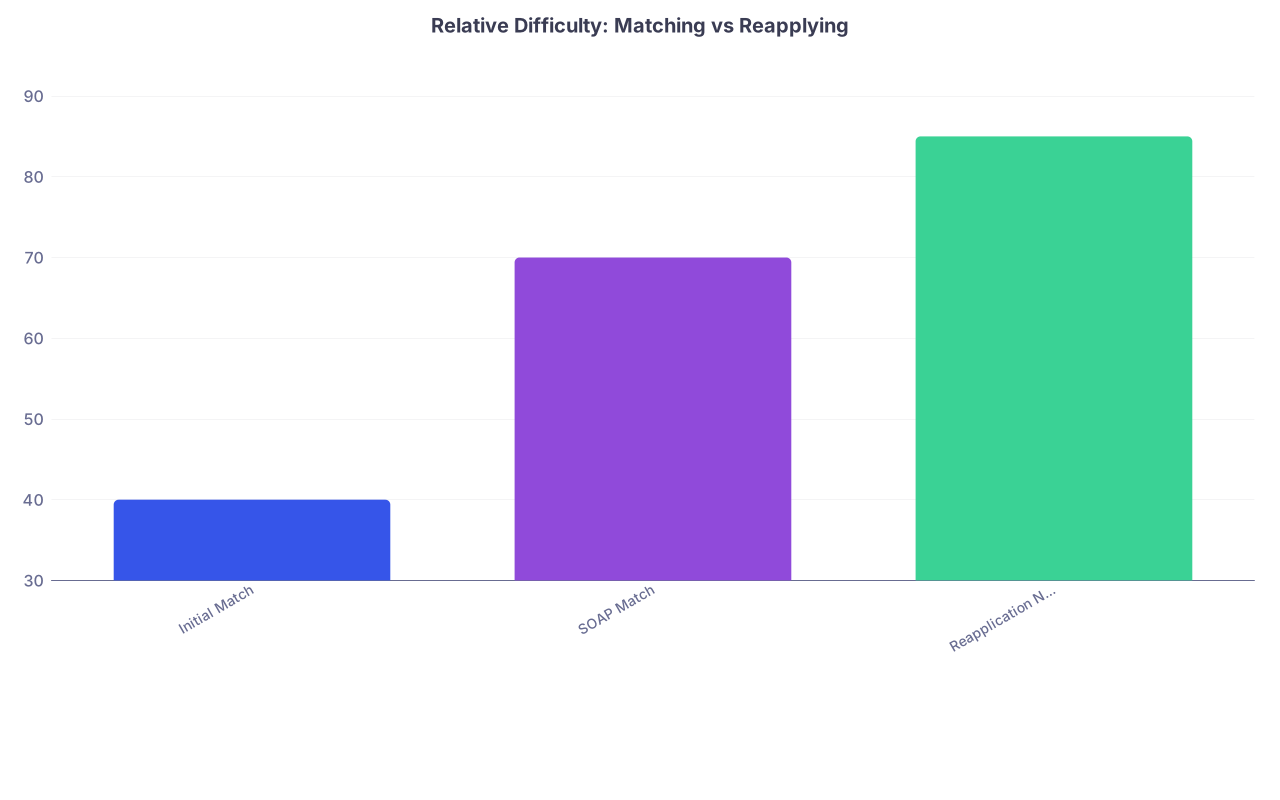
| Category | Value |
|---|---|
| Initial Match | 40 |
| SOAP Match | 70 |
| Reapplication Next Year | 85 |
The numbers here are conceptual—what I’m showing you is relative difficulty, not exact percentages. Matching the first time is simply easier than:
- Going through SOAP, or
- Reapplying next year after a gap and a non-match on your record
Why does this matter? Because I see applicants behaving as if:
- “If I don’t match, I’ll just reapply stronger.”
- “I can always SOAP into something good.”
Reality check:
- SOAP is brutal, chaotic, and deeply limiting.
- Some specialties basically don’t exist in SOAP.
- Reapplicants carry a scarlet letter unless they’ve done substantial remediation.
So when you cancel a less-preferred interview in December, ask yourself very explicitly:
“Would I rather attend this program for 3–5 years, or roll the dice and potentially not match at all?”
For many applicants, if they’re honest, they’d rather match at the “less ideal” program than be on the outside looking in. But they don’t act like it until it’s too late.
Smart Strategy: How to Apply Broadly and Interview Broadly Enough
You don’t fix this by applying to fewer programs. You fix it by aligning your interview behavior with your actual risk.
1. Decide Your Minimum Comfortable Interview Number Before Invites Arrive
Not the ideal number. The minimum number where you can sleep at night.
For many non-competitive, US MD internal medicine applicants, that might be 8–10.
For IMGs or higher-risk applicants, it might be 12–15+.
Write it down. Stick it near your desk.
Now here’s the rule:
You do not cancel any interview that you would be willing to attend for residency until you’ve met or exceeded that number.
Yes, even if it’s not your dream city.
Yes, even if it’s community and not academic.
You can always rank it low later. You cannot un-cancel an interview they gave away.
2. Respond to Every Invite Like It’s from Your Top Choice
Programs absolutely track response patterns.
Red flags from applicants:
- Taking 5–7 days to respond without explanation
- Asking for multiple reschedulings “because of conflict”
- Acting casual or disengaged in communication
Better approach:
- Respond within 24 hours when humanly possible
- If you can’t commit immediately, communicate clearly and respectfully
- Don’t overbook and then “trade up” by cancelling later; that behavior gets noticed
Frankly, if you’re sloppy about interview scheduling, you’re telegraphing that their program is not a priority. Some coordinators and PDs remember that when rank lists are discussed.
3. Tier Your Programs—but Don’t Live Only in Tier 1
Yes, you should have tiers. No, your behavior shouldn’t ignore half your list.
Rough approach:
- Tier 1: Dream programs (reach and target)
- Tier 2: Solid programs where you’d be genuinely happy
- Tier 3: Safety/less ideal programs you would still attend rather than not match
The mistake? Treating Tier 3 as if you’d never actually go there. Then you match nowhere, and suddenly those Tier 3 programs look awfully attractive in hindsight.
For high- or moderate-risk applicants:
You must be willing to attend interviews in all three tiers, especially early in the season.
4. Protect Your Stamina Without Shrinking Your List Too Far
Interview fatigue is real. But the solution isn’t to chop your interview list down to 5.
Use smarter filters:
- Group interviews geographically to reduce travel (or time-zone fatigue for virtual).
- Set a maximum per week (e.g., 3–4) rather than cancelling entire programs.
- Take recovery days seriously instead of winging it.
If you hit a point where your mental health is absolutely at risk, that’s a different conversation. But most applicants I see shrink their list out of convenience, not crisis.
5. Prepare Well for Every Interview You Attend
Another sneaky way people interview too narrowly: they technically attend 10 interviews but only really prepare for 5.
Programs notice this too:
- You know details about your top choices.
- You’re vague and generic with the rest.
If a program sees you as disengaged, your rank position tanks. That interview barely counts.
Attending 10 interviews but truly engaging and preparing for only 5 is not the same as having 10 meaningful interviews. You don’t get credit for just showing up to smile on Zoom.
What To Do if You Already Interviewed Too Narrowly
If you’re reading this mid-season and realizing you’ve already cancelled too much, here’s damage control.

| Step | Description |
|---|---|
| Step 1 | Realize interviews too few |
| Step 2 | Stop cancelling now |
| Step 3 | Email coordinators about waitlists |
| Step 4 | Ask mentors to reach out |
| Step 5 | Focus on preparing deeply |
| Step 6 | Signal strong interest |
| Step 7 | Less than safe minimum? |
- Stop cancelling anything you’re remotely willing to attend.
- Let mentors know your situation; they may reach out to programs.
- Email a small number of programs where you previously had contact, expressing continued interest (professionally, not desperately).
- Prepare extremely well for remaining interviews—every single one of them counts more now.
The Real Question You Have to Answer Honestly
It boils down to this:
Would you rather:
- Attend a program that’s lower on your initial preference list, in a less exciting city, maybe community-based, maybe not “prestigious”…
or - Not match, scramble in SOAP, or spend a year explaining why you’re reapplying?
If you truly would rather go unmatched than attend some of the programs currently offering you interviews—fine. Own that decision. That’s a values choice.
But if the honest answer is, “I’d rather match somewhere than nowhere,” then your interview behavior needs to reflect that. You can’t pretend you’re above certain programs and still expect the Match to bail you out.

Quick Reality Checks Before You Cancel Any Interview
Before you hit send on that “regret to inform you I must decline” email, ask yourself:
- Am I already above my safe minimum interview number for my risk category?
- Would I attend this program rather than go unmatched this year?
- Am I basing this decision on real information or just reputation and hearsay?
- Am I acting like someone with guaranteed offers? Because I’m not.
If you cannot confidently say, “I’d be okay if I don’t match this year,” err on the side of interviewing more, not less.
Add this mental rule:
When in doubt, keep the interview. You can always rank them lower. You can’t get the slot back.
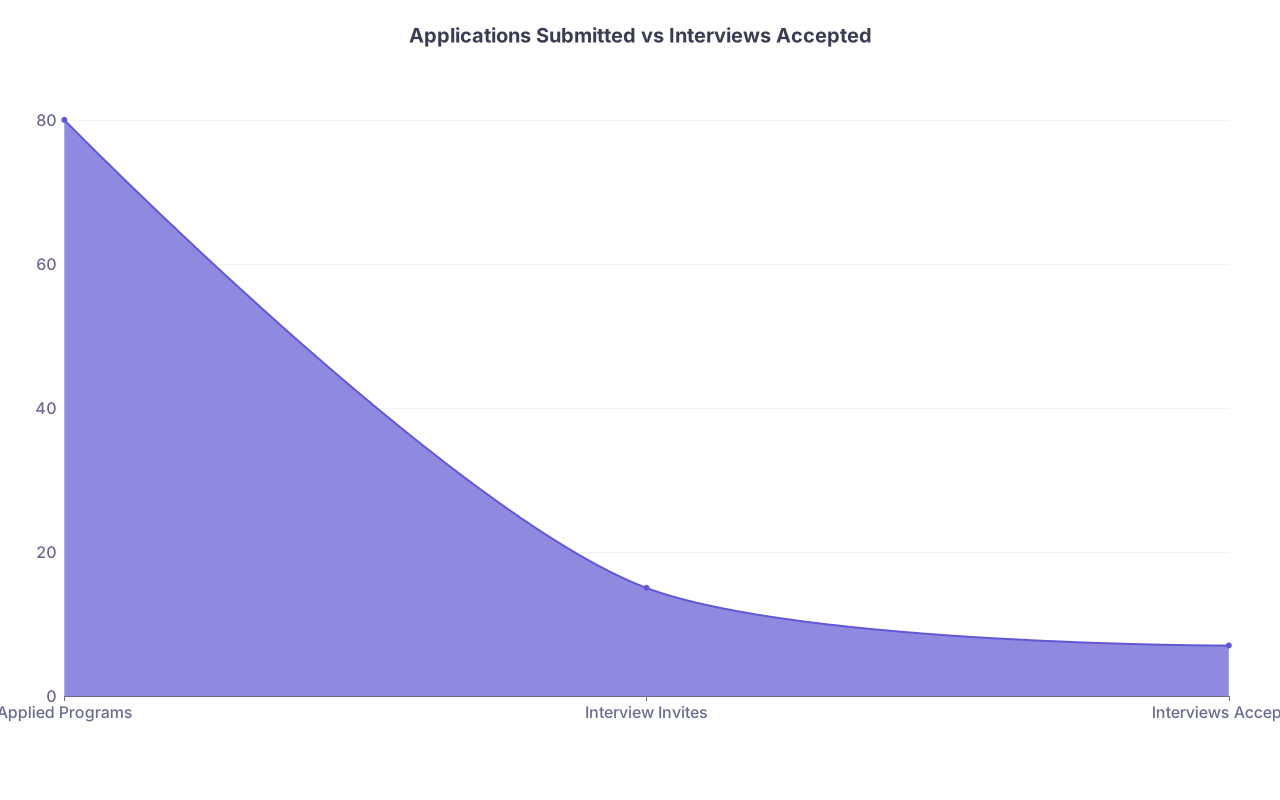
| Category | Value |
|---|---|
| Applied Programs | 80 |
| Interview Invites | 15 |
| Interviews Accepted | 7 |
This graph is what kills people: huge application numbers, moderate invites, tiny number of interviews actually accepted or taken seriously. Don’t become that graph.

FAQ (Exactly 3 Questions)
1. Is there ever a good reason to cancel an interview?
Yes, but they’re rarer than people think. Legit reasons: clear program malalignment with your non-negotiables (e.g., you must be near a medically fragile family member and this city is impossibly far), a serious health or family emergency, or discovering true toxicity through multiple, credible sources. Convenience, vague “fit,” or chasing a shinier name usually are not good enough reasons if you’re still below a safe interview number.
2. How many interviews do I actually need to feel reasonably safe?
For many US MDs in non-competitive specialties, around 8–10 solid interviews can be enough. For DOs, IMGs, or higher-risk candidates, aim for 12–15+ when possible. That’s not a guarantee, but it’s a safer zone. The fewer strengths you have on paper, the more interviews you should try to keep.
3. What if I already only have 5–6 interviews and it’s late in the season?
Then you treat each one like it’s gold. Do not cancel any unless you absolutely would not attend even if it were your only option. Prepare obsessively. Show genuine interest. Ask mentors to advocate for you at programs where they have connections. And mentally prepare for SOAP or a strategic reapplication—but don’t make it worse by throwing away interviews you already have.
Final Takeaways
- Applying broadly doesn’t save you if you interview narrowly. The match follows your interviews, not your application count.
- Until you hit a safe interview number for your risk level, every reasonable program that offers you a spot deserves serious consideration—not knee-jerk cancellation.
- It’s almost always better to match at a less-than-perfect program than to sit out a year because you acted like you had options you didn’t actually have.